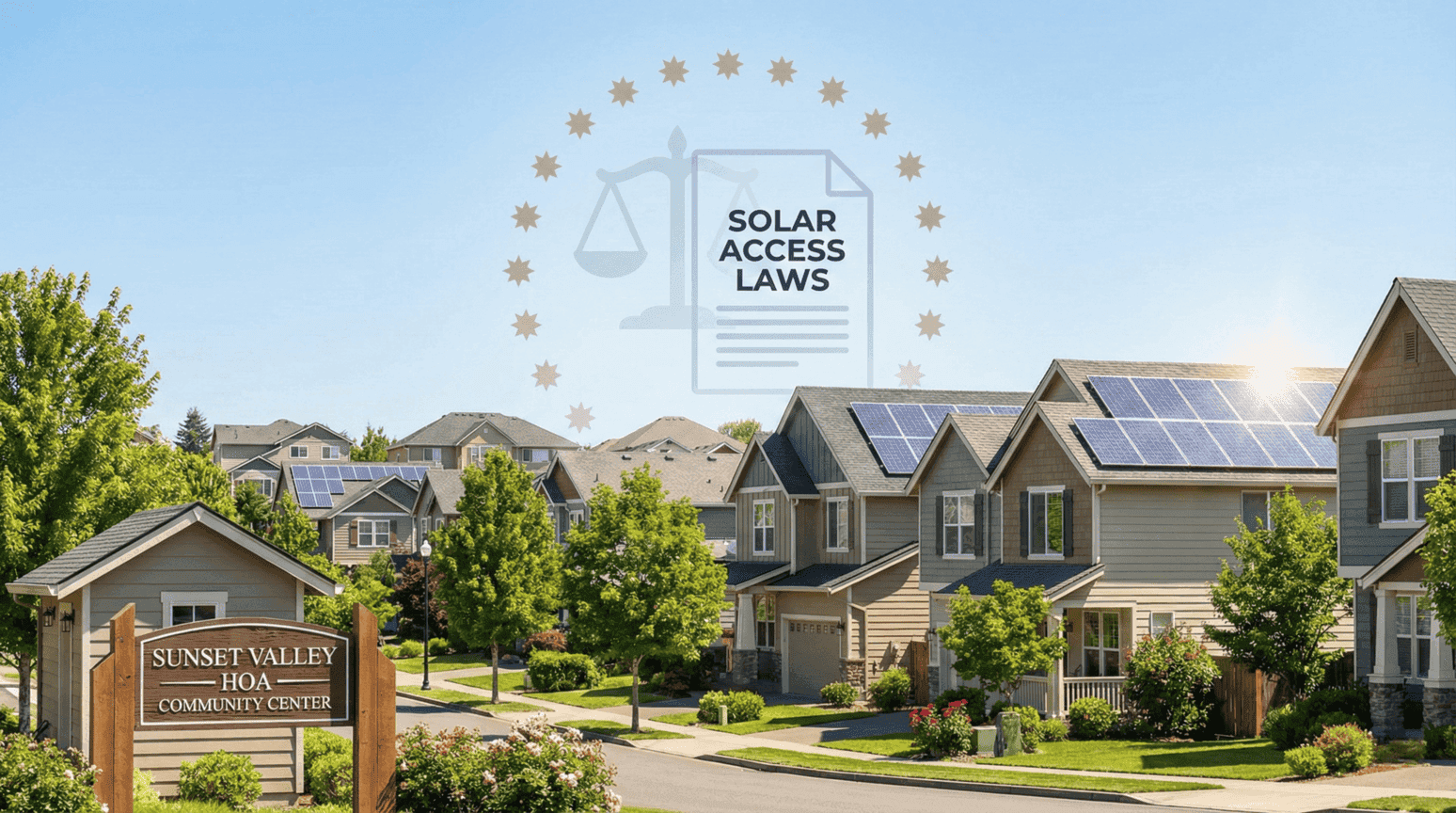
Can your HOA legally stop you from installing solar panels? The answer depends entirely on where you live. Solar access laws exist in 38 states plus Washington D.C. and the U.S. Virgin Islands, protecting homeowners’ rights to install solar energy systems despite HOA restrictions. These laws typically prevent homeowners associations from banning solar panels outright, though they often allow “reasonable restrictions” for aesthetic or safety purposes.
States with the strongest solar access protections include California, Arizona, Florida, Texas, and Illinois, where legislation explicitly prohibits HOAs from denying solar installations that don’t significantly impact system cost or efficiency. Meanwhile, states without solar access laws, including Alabama, Alaska, Mississippi, Nebraska, Oklahoma, Pennsylvania, and South Carolina, allow HOAs to potentially ban solar panels entirely through covenants and restrictions.
Key protections in solar access laws:
- HOAs cannot prohibit installations that meet reasonable aesthetic guidelines
- Restrictions must not significantly increase system costs or decrease efficiency
- Homeowners can appeal denied applications in most protected states
- Solar easements allow property owners to legally protect sunlight access
If you’re considering solar panels, first check your state’s specific solar access laws and review your HOA’s governing documents. Even in states with strong protections, you’ll likely need to submit installation plans for HOA review and approval. Working with an experienced solar installer familiar with local regulations and HOA negotiations significantly increases your chances of a smooth approval process.
This comprehensive state-by-state guide details exactly which solar access protections exist in your location, what restrictions HOAs can legally enforce, and how to navigate the approval process successfully.

Understanding Solar Access Laws
Solar access legislation comes in various forms but encompasses any regulation that safeguards your right to install solar energy systems. These laws typically prevent homeowners associations from imposing restrictions on solar panels that would substantially impact installation costs or system efficiency. Most legislation permits HOAs to implement reasonable guidelines for visual appeal or safety considerations. These protections are established at state, county, or municipal levels.
Many jurisdictions allow homeowners to establish solar easements with neighboring property owners, guaranteeing that vegetation or future construction won’t cast shadows on solar installations once they’re in place.
State-by-State Solar Access Legislation
Since state regulations evolve over time, it’s essential to review your HOA’s specific policies directly and collaborate with a knowledgeable professional solar provider that understands local regulations. Protection levels and requirements differ significantly even among states with established access laws.
Alabama – Alabama has not established official solar access or easement legislation.
Alaska – Alaska lacks solar access laws, although property owners retain the ability to establish solar easements.
Arizona – Arizona’s solar access protections, which date back several decades, were strengthened through 2007’s Senate Bill 1254. This legislation mandates that “an association shall not prohibit the installation or use of a solar energy device” while allowing associations to “adopt reasonable rules regarding the placement of a solar energy device if those rules do not prevent the installation, impair the functioning of the device or restrict its use or adversely affect the cost or efficiency of the device.”
Arkansas – Despite Senate Bill 145 being nicknamed “The Arkansas Solar Access Act” for facilitating solar adoption statewide, Arkansas lacks specific access laws addressing HOA regulatory authority.
California – The California Solar Rights Act “limits the ability of covenants, conditions, and restrictions, typically enforced by homeowner associations (hereinafter “HOAs”), and local governments to restrict solar installations,” with numerous municipalities implementing additional specific requirements at city and county levels.
Colorado – Colorado’s solar access and easement regulations originated in 1979 and received updates through the Colorado Common Interest Ownership Act in 2021. This legislation “adds specificity to the requirement that HOAs allow installation of renewable energy generation devices (e.g., solar panels) subject to reasonable aesthetic guidelines.”
Connecticut – Incorporated into the Connecticut Clean Air Act in 2023, Connecticut became the final New England state to enact solar access protections, although HOAs “may adopt rules on the size and placement of solar installations.”
Delaware – Created in 2009, Delaware Code Title 25 specifies the state’s solar access regulations, which restrict HOA authority to enforce only reasonable limitations that do “not significantly increase the cost of the roof mounted system for obtaining solar energy or significantly decrease the system’s efficiency or specified performance.”
Florida – Florida Senate Statute Section 163.04 declares that a “property owner may not be denied permission to install solar collectors or other energy devices by any entity granted the power or right in any deed restriction, covenant, declaration, or similar binding agreement to approve, forbid, control, or direct alteration of property with respect to residential dwellings and within the boundaries of a condominium unit. Such entity may determine the specific location where solar collectors may be installed on the roof within an orientation to the south or within 45° east or west of due south if such determination does not impair the effective operation of the solar collectors.”
Georgia – While Georgia’s Solar Easements Act of 1978 enables system owners to negotiate sunlight access, the state has not enacted HOA-restrictive solar access legislation.
Hawaii – Hawaii’s Energy Resources Code 196-7 mandates that “no person shall be prevented by any covenant, declaration, bylaws, restriction, deed, lease, term, provision, condition, codicil, contract, or similar binding agreement, however worded, from installing a solar energy device on any single-family residential dwelling or townhouse that the person owns.”
Idaho – Idaho House Bill 158 establishes that “no homeowner’s association may add, amend, or enforce any covenant, condition, or restriction in such a way that limits or prohibits the installation of solar panels or solar collectors on the rooftop of any property or structure therein within the jurisdiction of the homeowners association. a homeowners association may adopt reasonable rules regarding the placement of solar panels or solar collectors if those rules do not prevent the installation of the device and pair the functioning of the device or restrict its use or adversely affect the cost or efficiency of the device.”
Illinois – Enacted in 2021, Illinois’ Homeowners’ Energy Policy Statement Act mandates that “any power by the governing entity of a homeowners’ association, common interest community association, or condominium unit owners’ association which prohibits or has the effect of prohibiting the installation of a solar energy system is expressly prohibited.”
Indiana – House Enrolled Act 1196 strengthened solar access protections in Indiana, enabling residents to challenge HOAs that attempt to deny installations. While Indiana HOAs “may prohibit the installation, use, or removal of a solar energy system under certain circumstances,” the 2022 legislation restricts these circumstances and establishes an appeals process for homeowners.
Iowa – Iowa has not implemented HOA-level restrictions, though Law Chapter 564A details how residents can apply for solar easements.
Kansas – Kansas has not enacted solar access laws, but property owners may establish solar easements according to statute 58-3801.
Kentucky – Kentucky enacted solar easement legislation in 1982, but the state has not codified HOA restrictions.
Louisiana – Passed through HB 751, Louisiana’s solar access legislation “prohibits any person or entity from unreasonably restricting the right of a property owner to install or use a solar collector.”
Maine – Established in 2009, Maine’s Solar Rights grant residents the “right to install and use solar energy devices” with restrictions only permitted for reasonable concerns such as public safety and building damage.
Maryland – Maryland Real Property Code §2–119 prevents HOAs from establishing restrictions or conditions for solar installations that “significantly increase the cost of a solar system, and/or significantly decrease the system’s efficiency.”
Massachusetts – Massachusetts law Chapter 40A declares that “no zoning ordinance or by-law shall prohibit or unreasonably regulate the installation of solar energy systems or the building of structures that facilitate the collection of solar energy, except where necessary to protect the public health, safety or welfare.”
Michigan – Michigan passed legislation in 2024 that restricts HOAs from implementing solar panel installation limitations that would raise system costs by $1,000 or reduce output by 10%.
Minnesota – Minnesota established MN law 500.30, which permits residents to create solar easements, and in 2023 enacted solar access legislation allowing HOAs to impose “reasonable restrictions” on solar panels without banning them entirely.
Mississippi – Mississippi has not established solar access or easement laws.
Missouri – HOAs “may adopt reasonable rules regarding the placement of solar panels or solar collectors to the extent those rules do not prevent the installation of the device or adversely affect its functioning, use, cost, or efficiency” according to Missouri Senate Bill 820.
Montana – Montana lacks solar access laws, though residents can establish solar easements.
Nebraska – Despite previous proposed legislation, Nebraska currently has no solar access laws governing HOA authority.
Nevada – “A governing body shall not adopt an ordinance, regulation or plan or take any other action that prohibits or unreasonably restricts or has the effect of prohibiting or unreasonably restricting the owner of real property from using a system for obtaining solar energy on his or her property” according to Nevada’s Solar Easement and Rights Law.
New Hampshire – Although New Hampshire maintains detailed solar easement laws and efforts have been made toward access legislation, currently no restrictions exist on HOA authority to prevent PV installations in the state.
New Jersey – New Jersey enacted its first statewide solar access and solar easement laws in 2017. Current legislation limits HOA authority to prohibit solar installations, restricting any “covenant, bylaw, rule or regulation prohibiting the installation of solar collectors” on individually-owned property versus community property.
New Mexico – New Mexico’s Solar Rights Act protects residents’ solar access as a “property right,” invalidating covenants and restrictions that prevent reasonable PV installations.
New York – “A homeowners’ association may not adopt or enforce any rules or regulations that would effectively prohibit, or impose unreasonable limitations on, the installation or use of a solar power system” according to New York’s Senate Bill S4742A.
North Carolina – Enacted in 2007, North Carolina’s Senate Bill 670 established NC solar access laws mandating that “no city ordinance shall prohibit, or have the effect of prohibiting, the installation of a solar collector that gathers solar radiation as a substitute for traditional energy for water heating, active space heating and cooling, passive heating, or generating electricity for a detached single-family residence” with several specific exceptions.
North Dakota – While North Dakota solar easement laws permit state residents to create easements, no HOA access regulations have been established.
Ohio – Effective in 2022, Senate Bill 61 codified Ohio’s solar access laws. “Unless specifically prohibited in the declaration, an owner may install a solar energy collection device on the owner’s dwelling unit…” Additionally, HOAs may implement “reasonable restrictions concerning the size, place, and manner of placement of solar energy collection devices.” HOAs maintain the ability to ban solar panels, but such action requires amending the HOA declaration, which demands a higher vote threshold than standard board votes.
Oklahoma – Oklahoma has not established residential solar access laws.
Oregon – Oregon legislation declares that attempts to prohibit solar access are “void and unenforceable as a violation of the public policy to protect the public health, safety, and welfare of the people of Oregon.” Similar to other states, the statute (94.778 – Prohibition against installation of solar panels void and unenforceable) also permits HOAs to impose “reasonable size, placement or aesthetic requirements.”
Pennsylvania – Pennsylvania has not enacted solar access laws.
Rhode Island – Although Rhode Island residents can establish solar easements, no statewide solar access laws regulate HOAs.
South Carolina – South Carolina has not established solar access laws restricting HOA authority.
South Dakota – South Dakotans can create solar easements, but statewide access laws have not been implemented.
Tennessee – Tennessee lacks laws limiting HOA restrictions to prevent solar access, however, the state permits residents to establish solar easements.
Texas – Except for circumstances such as public safety threats, Texas Property Code 202.010 mandates that “a property owners’ association may not include or enforce a provision in a dedicatory instrument that prohibits or restricts a property owner from installing a solar energy device.”
Utah – Utah Solar Access Code details the reasonable restrictions HOAs can impose on solar panel systems, including specific provisions for standalone homes and property owners of a “dwelling attached to other dwellings.”
Vermont – Established in 2009, Vermont State Law § 544 mandates that “No deed restrictions, covenants, or similar binding agreements running with the land shall prohibit or have the effect of prohibiting solar collectors, clotheslines, or other energy devices based on renewable resources from being installed on buildings erected on the lots or parcels covered by the deed restrictions, covenants, or binding agreements.”
Virginia – Evolving through multiple forms since its original enactment in 2008, Virginia Law § 55.1-1820.1 states “no association shall prohibit an owner from installing a solar energy collection device on that owner’s property unless the recorded declaration for the association establishes such a prohibition.”
Washington – RCW 64.38.055, commonly known as the Washington Solar Rights Law, prohibits HOAs from preventing solar panel installations that comply with “applicable health and safety standards and requirements imposed by state and local permitting authorities.”
West Virginia – WV Code § 36-4-19 protects access rights, stating any HOA covenant, restriction, or condition “that effectively prohibits or restricts the installation or use of a solar energy system is void and unenforceable.”
Wisconsin – Wisconsin law 236.292 declares “All restrictions on platted land that prevent or unduly restrict the construction and operation of solar energy systems” are void, including those imposed by HOAs and deed restrictions.
Wyoming – Although Wyoming lacks specific solar access laws, the Wyoming Solar Rights Act (Chapter 22) defines solar rights as “property rights” that cannot be reasonably denied by local governments.
Washington, D.C. – Washington DC’s solar access legislation is found in the District of Columbia Code § 8–1774.51, which restricts the “authority of homeowners associations, condominium owners associations, and cooperative housing associations to prohibit the installation and use of solar energy collection devices.”
US Territories – Solar access laws prevent HOA restrictions in the U.S. Virgin Islands.

Obtaining HOA Approval for Solar Installation
Even in states with solar access protections, you may need to coordinate with your homeowners association to get your solar panel installation approved and completed. You might need to complete documentation and submit installation plans to your HOA for review. Keep in mind that solar access laws frequently include exceptions for “reasonable restrictions” on solar systems.
A knowledgeable and reputable residential solar design specialist can guide you through this process. Understanding common mistakes when applying for solar permits can help you avoid delays and ensure your application meets both HOA and Authority Having Jurisdiction requirements.
Solar Permit Solutions
Need Solar Permit Plans?
Professional, permit-ready solar plan sets delivered fast. Residential and commercial projects across all 50 states.
Conclusion
Understanding your state’s solar access laws is a critical first step before beginning your solar panel installation journey. While the landscape of solar regulations varies significantly across the United States, the overall trend demonstrates growing recognition of homeowners’ rights to harness clean, renewable energy. If you reside in a state with robust solar access protections, you can move forward with confidence knowing that your HOA cannot arbitrarily deny your installation. However, even with these protections in place, maintaining open communication with your homeowners association and following their reasonable aesthetic or safety guidelines will help ensure a smooth approval process.
For those living in states without comprehensive solar access laws, don’t let the absence of legislation discourage you from exploring solar options. Many HOAs recognize the environmental and financial benefits of solar energy systems and may be willing to work with you to find acceptable solutions. Consulting with an experienced solar design professional familiar with local regulations and HOA negotiations can make all the difference in successfully navigating the approval process.
As solar technology continues to advance and become more affordable, additional states are likely to enact or strengthen their solar access protections. Staying informed about legislative changes in your area and understanding your rights as a property owner will empower you to make the best energy decisions for your home and future. Resources like Solar United Neighbors provide valuable advocacy and guidance for homeowners navigating HOA relationships, while comparative legal analysis from international jurisdictions offers additional perspective on solar access frameworks.
FAQs
Need Solar Permit Plans?
Professional, permit-ready solar plan sets delivered fast. Residential and commercial projects across all 50 states.
Frequently Asked Questions
Numerous states have enacted solar access legislation that prevents HOAs and other entities from prohibiting solar panel installation, though they may impose reasonable system restrictions. In other states, HOAs may retain that authority. Even in states with laws protecting solar installation rights, HOAs may require application submission for their review. Working with professionals who understand solar permit requirements can streamline the approval process.
In states without solar access laws, an HOA or housing covenant may possess the authority to prevent you from installing solar panels. Based on your roof's age and material composition, you may encounter difficulty finding an installation company willing to install solar panels without roof replacement. Understanding solar installation revisions that might be required can help you prepare for potential challenges.
Access laws restrict building and zoning limitations on solar panels, while easement laws enable homeowners to legally preserve their access to sufficient sunlight through agreements with other property owners. These legal frameworks work together to protect your right to solar energy generation.
No, although the absence of access laws can permit homeowner associations (HOAs) and other organizations to deny installations, solar panels are legal throughout the United States. However, unpermitted systems are illegal to operate in many American jurisdictions, even in states with solar access laws. Understanding state-specific PE stamp requirements ensures your system meets all regulatory standards.
If your HOA denies your solar installation request, first review your state's solar access laws to determine if the denial violates your legal rights. In states with solar access protections, you may be able to appeal the decision by demonstrating that your proposed installation meets all reasonable requirements. Document all communications with your HOA, gather supporting evidence such as system specifications and installation plans, and consider consulting with a solar installation professional who has experience navigating HOA disputes. Research on legal frameworks addressing solar access can provide additional context for your appeal. In some cases, you may need to seek legal advice to understand your options, especially if your state's laws clearly protect your right to install solar panels. For DIY solar projects, understanding liability risks is particularly important when facing HOA challenges.
The HOA approval timeline for solar panel installations varies widely depending on your association's specific procedures and meeting schedules. Some HOAs can review and approve straightforward applications within 30 days, while others may take 60-90 days or longer, particularly if they meet quarterly or require architectural committee review followed by board approval. To expedite the process, submit complete application packages with detailed installation plans, equipment specifications, and visual renderings showing how the panels will appear on your property. In states with solar access laws, some legislation includes provisions that limit how long HOAs can take to respond to solar installation requests, preventing indefinite delays that effectively function as denials. Resources like climate change legal frameworks demonstrate the broader policy context supporting renewable energy adoption. Consider working with providers offering off-grid solar system design if HOA restrictions prove particularly challenging for grid-tied systems.

SPS Editorial Team
Solar Permit Solutions
Solar Permit Solutions provides professional solar permit design services for residential, commercial, and off-grid installations across all 50 states. Our team ensures permit-ready plan sets delivered fast.
Related Articles
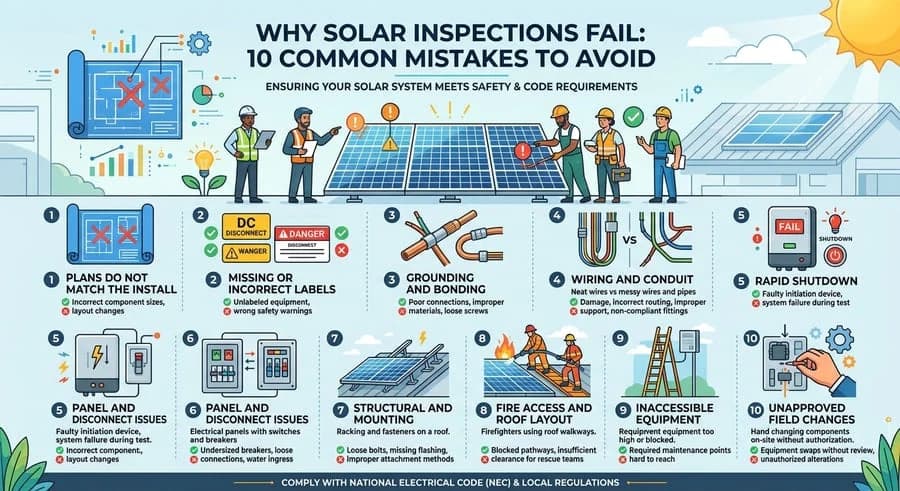
Why Solar Inspections Fail: 10 Common Mistakes to Avoid
Discover the 9 critical reasons solar inspections fail and how to avoid costly m...

Solar Grounding And Bonding: How To Pass Inspection Every Time
Learn how to pass solar grounding and bonding inspections every time. Avoid comm...
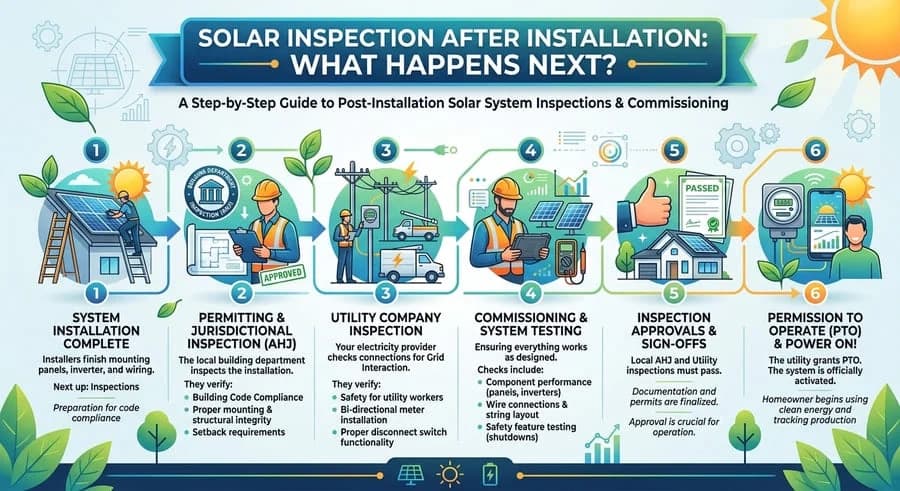
Solar Inspection After Installation: What Happens Next?
Learn how to pass your solar inspection by following essential tips for obtainin...