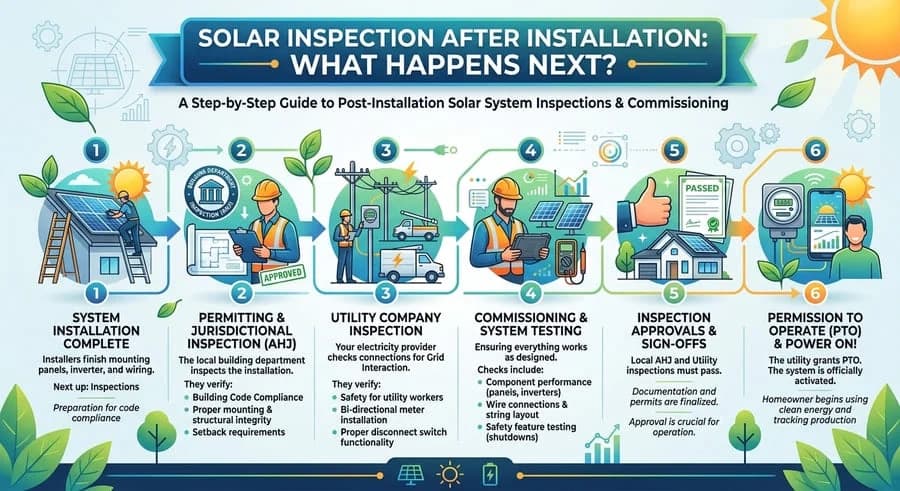

Grid integration for corporate solar systems is the mandatory process of connecting commercial solar installations to the utility power network, typically taking 2-12 months and costing $12,500 to $600,000+ depending on system size and infrastructure requirements. This process involves six critical phases: preliminary studies, application filing, utility review, contract negotiation, construction verification, and final operational clearance.
Commercial solar projects cannot legally operate or sell excess power without completing grid integration approval. The process requires compliance with IEEE 1547 standards, UL 1741 inverter certifications, and specific utility interconnection agreements. Businesses must submit detailed engineering plans, electrical diagrams, site layouts, and equipment specifications through their utility provider’s application system.
Key factors affecting grid integration success include system size (projects under 250 kW typically approve faster), existing grid capacity at the installation site, local utility policies, and available infrastructure. Projects exceeding 500 kW often require costly grid upgrades ranging from $20,000 to $500,000+, while smaller installations may only face $2,500-$15,000 in total interconnection fees.
This comprehensive guide breaks down the entire grid integration process, providing actionable strategies to accelerate approvals, minimize costs, and avoid the common pitfalls that delay 40% of commercial solar projects. Whether developing rooftop arrays, ground-mount systems, or solar parking structures, understanding grid integration requirements determines project viability and profitability.
Defining The Grid Integration Framework
Grid connection represents both the regulatory and technical procedures needed to link a business solar power installation with the regional power network.
This process guarantees that the solar installation:
- Transfers surplus power safely
- Accesses grid electricity during necessary periods
- Functions according to established utility requirements
- Without obtaining proper connection authorization, solar installations cannot function legally or engage in net metering programs
Essential Reasons Grid Integration Matters For Corporate Solar
Understanding the importance of grid connection from project inception proves essential:

Comprehensive Roadmap For Corporate Solar Grid Integration
The grid connection procedure generally involves these phases:
Phase 1: Preliminary Studies And System Evaluation
Prior to submitting official documentation:
- Perform capability assessments
- Evaluate network availability at the location
- Recognize necessary infrastructure improvements
Certain utilities provide preliminary assessment documentation for fees ranging from $300 to $1,000.
Phase 2: Filing The Grid Integration Request
Required documentation includes:
- Comprehensive installation specifications
- Power system schematics
- Location blueprints
- Equipment details
Documentation gets submitted via the utility’s digital system or physical paperwork following IREC procedures.
Phase 3: Provider Evaluation And System Studies
Utilities evaluate:
- Engineering viability (network capacity effects)
- Protection measures (isolation safeguards, emergency shutoffs)
- Network limitations (substation and distribution capabilities)
Assessment categories:
- Expedited Processing (smaller installations typically below 500 kW)
- Comprehensive Network Analysis (bigger installations requiring detailed studies)
Phase 4: Contract Finalization And Terms
Following successful technical assessment:
- Terms negotiation occurs with the utility provider
- Discussions cover schedules, infrastructure expenses, operational parameters, and coverage needs
Phase 5: System Build And Testing
Following provisional authorization:
- Installation of the solar equipment proceeds
- Utility verification becomes mandatory before final clearance
Phase 6: Final Authorization To Energize
Following positive verification:
- The utility provides Operational Clearance
- System activation begins generating financial returns through proper installation
Solar Permit Solutions
Commercial Solar Design Services
Professional permit plan sets for commercial installations. PE-stamped, code-compliant, fast delivery.
Typical Provider Specifications And Compliance Standards
While utilities differ, most business solar connections demand adherence to:
Budget Planning For Grid Integration: Cost Breakdown
Business solar connection expenses fluctuate considerably based on: