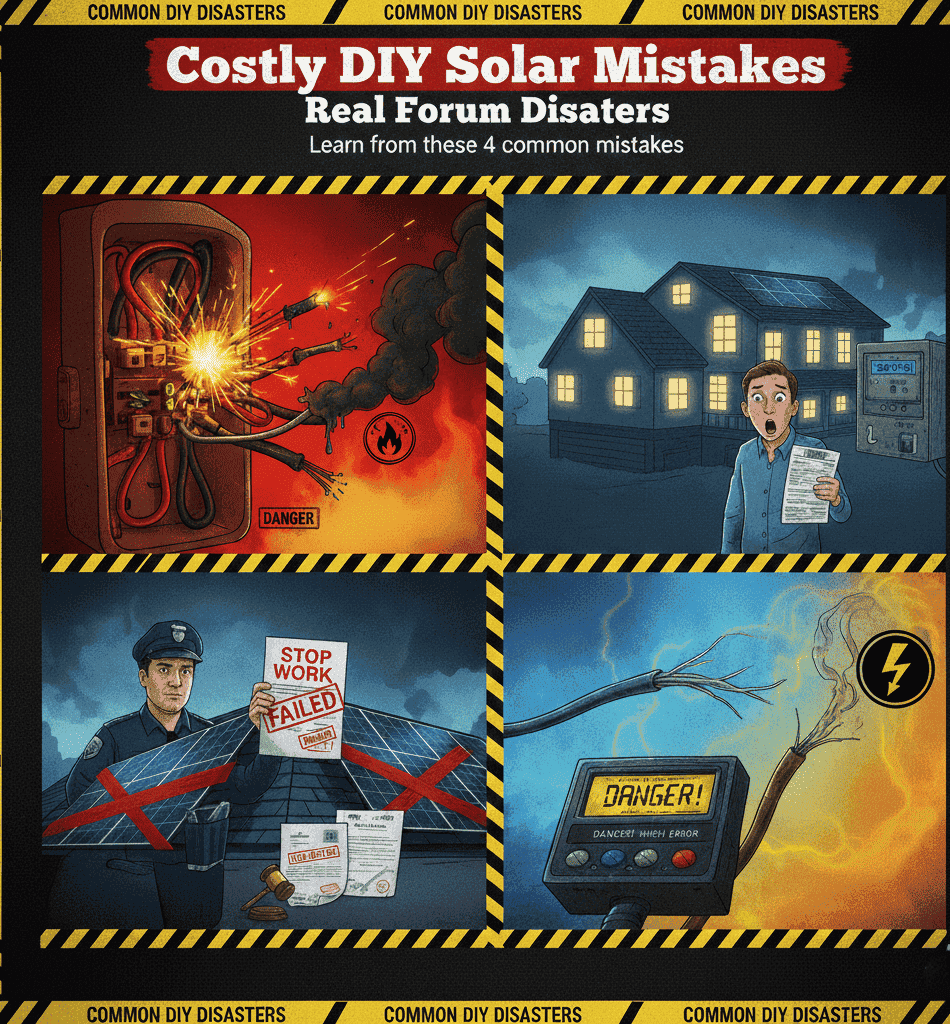
The most common DIY solar mistakes include loose electrical connections that cause fires, undersized systems that fail to meet energy needs, skipped permits that void insurance and create legal issues, and improper wire gauges that damage expensive equipment. According to research from the National Renewable Energy Laboratory, up to 50% of solar installations contain wiring errors. Recovery costs range from $450 for minor repairs to over $50,000 for fire damage or failed home sales due to unpermitted work.
Avoiding these mistakes requires completing a 12-month energy audit before purchasing equipment, using torque wrenches to manufacturer specifications, obtaining all required building and electrical permits, and calculating open circuit voltage at your coldest expected temperatures. DIY solar forum veterans consistently advise: don't spend a penny until you have a complete system plan, and always design for future expansion. For comprehensive guidance on the permitting process, review our solar permit services.
Real Forum Disaster
A DIY Solar Forum member discovered connections that had loosened over time during a routine check. One connector showed visible signs of arcing and heat damage with melting insulation. A forum veteran posted their standard advice: "Wiggle every connection on your system every few months. A bad connection could start a fire or reduce performance drastically. It's incredibly common to find these on newly built systems." Understanding proper solar cable types and specifications is critical for preventing these issues.
What Went Wrong
Electrical lugs were not tightened to manufacturer specifications. No torque wrench was used during installation, and connections were never verified afterward. Thermal cycling from temperature changes caused gradual loosening while improper sealing allowed moisture infiltration. These failures often stem from ignoring rapid shutdown and AFCI requirements that protect against electrical hazards.
How to Avoid This Mistake
Purchase a torque wrench rated for electrical work and follow manufacturer torque specifications exactly. Physically wiggle each connection after tightening to verify security. Create a maintenance schedule to inspect all connections quarterly. Use proper weatherproof enclosures and document all connection points with photos.
Recovery Costs
Minor repairs including replacement junction box and professional inspection run $450 to $1,200. Major recovery involving damaged inverters or fire damage remediation can reach $10,000 to $50,000 or more. Voided homeowner's insurance claims due to unpermitted work mean full replacement costs come out of pocket. The EPA provides guidance on solar panel disposal when replacing damaged equipment.
Real Forum Disaster
Forum members consistently report installing systems too small to meet actual energy demands. One homeowner spent $8,000 on a system covering only 60% of their electricity needs after estimating usage based on summer bills without accounting for winter heating loads or their planned electric vehicle purchase. Resources like EnergySage can help homeowners accurately calculate their energy requirements before purchasing equipment.
A veteran forum contributor summarized: "The biggest mistake I see people make is buying stuff before having a complete plan. Don't spend a penny until you know everything that you need. And always plan for future expansion."
What Went Wrong
No comprehensive energy audit was performed before purchasing equipment. Calculations used summer electricity bills only, ignoring seasonal variations. Future energy needs including electric vehicles and home additions were not considered, and systems were designed around budget rather than actual requirements. The IEA Renewables 2024 report highlights that proper system sizing remains one of the most critical factors in residential solar success.
How to Avoid This Mistake
Review 12 months of utility bills to determine average daily and monthly energy consumption. Design your system to cover your highest consumption month. Factor in planned additions such as electric vehicles or workshop equipment and claim the federal residential clean energy credit to offset costs. Add 20% to 30% buffer capacity for system degradation and unexpected loads.
Recovery Costs
Expanding an undersized system requires additional panels at $300 to $500 each, upgraded inverters at $1,000 to $4,000, and additional batteries at $1,200 to $5,000 each. Total expansion costs typically range from $2,500 for minor upgrades to $15,000 for major system overhauls. Before expanding, review our guide on electrical panel types for solar interconnection to ensure compatibility.
Real Forum Disaster
One forum member learned this lesson when attempting to sell their home. The unpermitted solar installation was flagged during inspection, requiring either complete system removal or retroactive permits with full inspections. Their unpermitted installation also voided homeowner's insurance coverage for solar related incidents. Many jurisdictions have adopted streamlined permitting through programs recognized by SolSmart, making compliance easier than ever.
What Went Wrong
Building and electrical permits were skipped to avoid fees. Utility company interconnection approval was never requested. The installation did not meet local building codes or National Electrical Code requirements, and the insurance company was never notified of the solar installation. Understanding whether solar permits are necessary in the US is essential before starting any installation project.
How to Avoid This Mistake
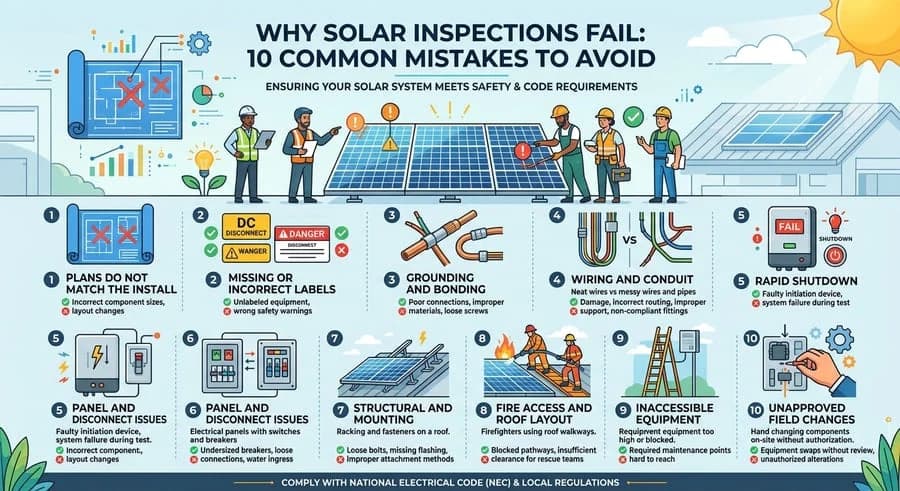
Contact your local building department before purchasing equipment to understand permit requirements and check the average solar permit timeline by state. Obtain all required permits and submit interconnection applications to your utility following proper grid connection procedures. Schedule all required inspections before activating your system and learn how to pass your solar inspection on the first attempt. Notify your homeowner's insurance and keep all documentation for future reference.
Recovery Costs
Retroactive permit fees with penalties cost $200 to $1,000. Code violation fines range from $500 to $5,000 depending on jurisdiction. System modifications to meet code requirements run $1,000 to $10,000. Complete system removal if compliance is impossible costs $2,000 to $5,000 plus $1,000 to $5,000 for roof repairs. Lost home sales or reduced prices can exceed $50,000. Understanding how long it takes to get a solar permit helps with proper project planning.
Real Forum Disaster
A forum member shared: "Misunderstood calculating VoC for complete strings when installing panels for the first time. Had to disconnect a panel per string later to not run into problems when colder in the winter." Another learned about wire sizing the hard way: "Learning that even good size DC battery cables is not enough. 70mm2 and up says 'Hello!' Don't use automotive cables, fuses, or busbars for 48V systems." Proper documentation through a solar single line diagram helps prevent these calculation errors.
One dangerous incident involved connecting both battery wires to a single pole disconnect instead of a two pole disconnect: "Magic smoke was released from the charge controller."
What Went Wrong
Open circuit voltage calculations did not account for cold weather conditions when voltage increases. Wire gauges were undersized for current loads, causing voltage drop and heat buildup. Automotive grade components were used instead of solar rated equipment, and basic electrical knowledge gaps led to dangerous wiring configurations. The REN21 Global Status Report emphasizes that proper technical training remains critical for safe renewable energy installations worldwide.
How to Avoid This Mistake
Calculate open circuit voltage at the coldest expected temperature, not just standard test conditions. Use voltage drop calculators to select appropriate wire gauges and understand supply side connection requirements. Purchase only UL listed components rated for solar applications from reputable manufacturers. Study basic DC electrical principles before attempting any installation.
Recovery Costs
Replacement charge controllers cost $200 to $800. Rewiring with proper gauge cables runs $500 to $2,000. Replacement inverters damaged by overvoltage cost $1,000 to $4,000. Battery damage from improper charging can reach $1,500 to $10,000. State specific requirements vary, so check guides for solar permits in Texas or California solar panel permitting based on your location.
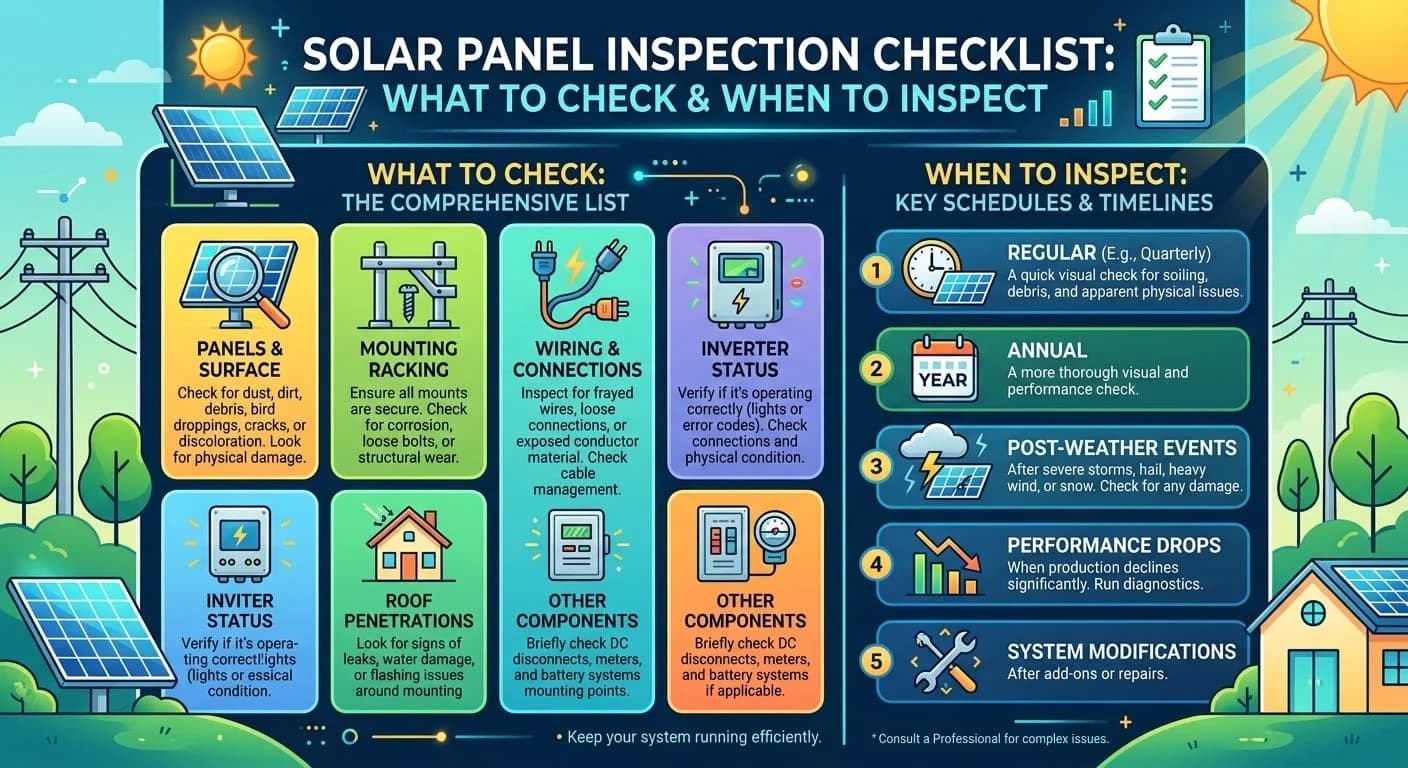
DIY solar installation offers the promise of significant cost savings and the satisfaction of building your own energy independence. However, as real forum disasters demonstrate, the path from planning to power generation is filled with expensive pitfalls that catch even experienced DIY enthusiasts off guard. The NC State Energy Office residential solar tips provide excellent state level guidance for avoiding common installation problems.
The most common mistakes share a root cause: inadequate planning and rushing into equipment purchases before fully understanding system requirements. Loose connections create fire hazards that can destroy homes. Undersized systems leave homeowners frustrated and facing expensive expansion costs. Skipped permits create legal nightmares that surface during home sales or insurance claims. Improper wire sizing and voltage calculations damage expensive equipment and create safety hazards. Working with your local AHJ solar requirements from the start prevents most of these issues. The Union of Concerned Scientists emphasizes that proper installation is key to maximizing renewable energy benefits.
The good news is that every one of these disasters is preventable. Invest time in comprehensive energy audits before purchasing a single component. Use proper tools like torque wrenches and follow manufacturer specifications exactly. Obtain all required permits and schedule inspections. Study electrical fundamentals and voltage calculations before connecting anything. Create maintenance schedules to catch problems before they become catastrophic.
Remember what experienced forum members consistently advise: an eraser is cheap, but returns and repairs are costly. Complete your entire system design on paper before spending any money. The result of careful planning and proper installation is a reliable solar power system that delivers clean energy, reduces utility bills, and provides true energy independence for decades to come.
What is the most common DIY solar installation mistake?
The most widespread mistake is inadequate planning, specifically underestimating energy needs. Without a detailed energy audit covering all 12 months of utility bills, many DIYers install systems that are too small to meet their actual demands. This leads to disappointment and costly upgrades that often exceed what proper initial sizing would have cost. Always calculate your highest consumption month and add 20% to 30% buffer capacity before purchasing equipment.
Do I really need permits for a DIY solar installation?
Yes, almost all jurisdictions require permits for electrical work and structural modifications involved in solar installations. Skipping permits might seem like a way to save time and money, but it creates serious consequences, including code violation fines, voided homeowner's insurance, problems selling your home, and safety risks from uninspected work. According to industry standards, adhering to technical requirements and permitting processes is vital for both safety and grid stability. A permit ensures your installation is inspected for compliance with safety codes that protect your home and family.
How often should I inspect my DIY solar system connections?
Experienced solar forum members recommend inspecting all electrical connections at least quarterly, or every three months. During each inspection, physically wiggle every connection to check for loosening. Loose connections are incredibly common on newly built systems and can develop over time due to thermal cycling from temperature changes. A bad connection creates arcing that poses serious fire risks and can reduce system performance drastically. Use a torque wrench to retighten any connections that have loosened to manufacturer specifications.
What tools are essential for a safe DIY solar installation?
Essential tools include a torque wrench rated for electrical work to achieve proper connection tightness, a multimeter for voltage and continuity testing, wire strippers and crimpers sized for solar cables, and appropriate personal protective equipment. You also need voltage drop calculators to properly size wire gauges for your run lengths and current loads. Never use automotive grade cables, fuses, or busbars for solar systems. Invest in UL listed components specifically rated for solar applications. Quality tools and components cost more upfront but prevent expensive equipment damage and dangerous failures.
Can I install solar panels myself without any electrical experience?
While physically mounting solar panels is achievable for most DIYers, the electrical work requires solid understanding of DC electrical principles, voltage calculations, proper grounding, and code requirements. Forum disasters consistently involve DIYers who underestimated the complexity of electrical connections. Mistakes like improper grounding, wrong wire gauges, or voltage calculation errors can destroy expensive equipment or create life threatening hazards. If you lack electrical experience, consider hiring a NABCEP certified professional for the electrical portions while handling mechanical mounting yourself. Many jurisdictions require licensed electricians for final grid connections regardless of who installs the panels.
How much can DIY solar mistakes actually cost to fix?
Recovery costs vary dramatically based on the mistake severity. Minor issues like loose connections caught early cost $450 to $1,200 for repairs and professional inspection. Undersized systems require $2,500 to $15,000 for expansion including new panels, inverters, and batteries. Permit violations can cost $700 to $3,000 for retroactive permits, but if your system cannot be brought to code, removal and roof repair costs reach $7,000 to $10,000. The most expensive consequences involve fire damage remediation at $10,000 to $50,000 or more, lost home sales exceeding $50,000, or medical expenses from electrical shock that can reach $100,000. Proper planning and installation practices cost far less than fixing preventable mistakes.
Need Professional Solar Permit Design Services?
Avoid costly DIY mistakes with professionally engineered solar permit packages. Solar Permit Solutions provides comprehensive engineering services, PE stamped plans, and utility interconnection support across all 50 states. Our NABCEP certified designers create code compliant permit packages that pass inspection the first time. Whether you need help with SDG&E solar interconnection or any other utility, contact us today to learn how our solar permit design services can protect your investment.
We are dedicated to providing top-notch solar permit services to homeowners, business owners, DIY, and solar installers. Contact us today.