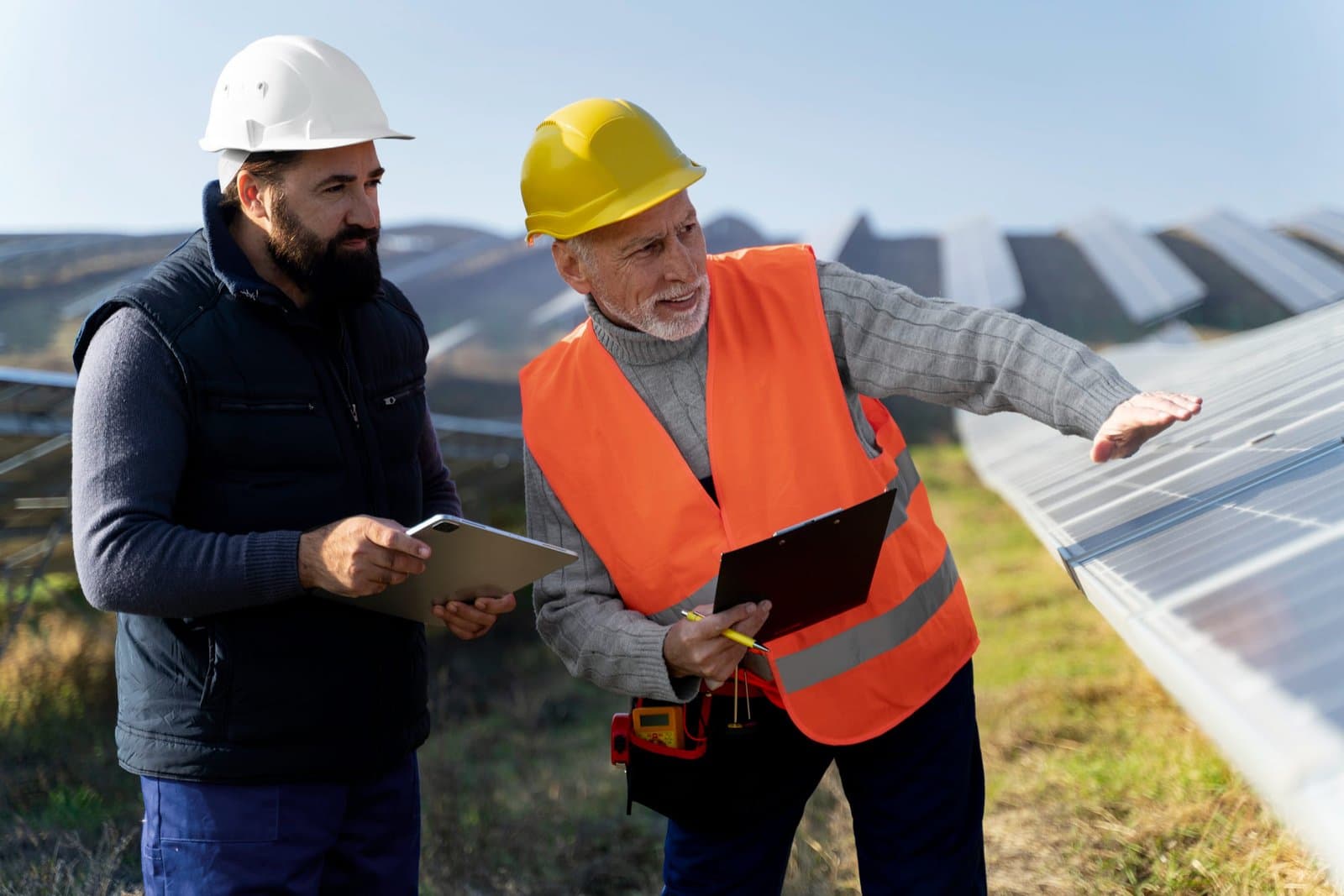
Solar inspections are mandatory evaluations conducted by the Authority Having Jurisdiction (AHJ) and utility companies to verify that solar panel installations meet building codes, electrical standards, and interconnection requirements before systems receive Permission to Operate (PTO).
Key facts about solar inspections:
- Solar systems cannot generate power until passing both AHJ and utility inspections
- Inspection duration ranges from 30 minutes to 2 hours depending on system complexity
- Failed inspections cause project delays and increase costs through re-permitting and modifications
- Common failure reasons include improper labeling, incorrect wire sizing, inadequate grounding, and fire pathway violations
- Systems must remain off until receiving official PTO approval from all parties
The solar inspection process involves three critical stages:
- Pre-inspection preparation – Determining the AHJ, ensuring plan compliance with local codes, obtaining solar permits, and coordinating with utilities
- Onsite evaluation – Inspectors verify installation quality, equipment compatibility, proper grounding, breaker sizing, fire pathways, and safety labeling
- Post-inspection activation – Systems receive PTO approval, allowing official activation and power generation
Solar inspection requirements vary by jurisdiction, with residential installations typically requiring less comprehensive evaluation than commercial systems. The inspection verifies that the installed system matches the permitted plan set and complies with manufacturer specifications, local building codes, and utility interconnection standards.
Passing solar inspections proves essential for installers to maintain operational efficiency, protect project budgets, and ensure customer satisfaction. Failed inspections can set back installation timelines significantly and require costly system modifications or complete re-permitting through the AHJ approval process. Contact us for expert assistance with your solar permitting needs.
Why Solar System Inspections Matter
The AHJ and utility determine inspection requirements based on project location. These entities aim to ensure installations match the permitted plan set details and comply with local building codes and interconnection requirements.
Utility inspections function as separate evaluations requiring coordination with utility providers, though many utilities now implement remote or digital inspection methods to reduce field delays and serve more customers efficiently. After the AHJ and utility complete and approve their inspections, the system receives clearance to activate and start generating clean power.
Failed inspections stem from various issues, ranging from minor problems like missing labels on disconnect switches to major concerns requiring a return to the plan set process to ensure design compliance with AHJ requirements. This situation means repeating the lengthy permitting process and potentially implementing costly system modifications.
After system activation, subsequent inspections typically occur between installers and homeowners when operational issues arise.
Preparing for Your Solar System Review
The solar inspection process consumes significant time within company operations, from design through installation. Solar installation professionals must understand how to frame solar panel inspection when discussing development costs and installation timelines with customers.
Every step in the solar inspection process contributes to PV system success. Solar companies can prepare for inspections by implementing proper processes and personnel to account for every installation detail, following industry standards, local guidelines, and best practices. Explore more solar insights to enhance your inspection readiness.
Pre-Inspection Preparation Steps
Pre-Inspection Preparation Steps:
Determine the AHJ before beginning plan set design and permitting for the installation location.
Verify that plans comply with local building codes, electrical, fire, residential, and wind codes, plus utility interconnection requirements.
Submit plans to the AHJ and obtain a permit authorizing system installation and related work.
Apply for a separate interconnection permit with the electric utility serving the property. (Some utilities require AHJ-approved permits before accepting interconnection applications.)
Schedule the installation with the homeowner after receiving permit approvals.
Confirm the system installation matches the permitted design, as some modifications may require re-permitting before inspection.
Contact the AHJ and utility to coordinate inspections, potentially requiring homeowner presence and additional schedule coordination.

Solar Permit Solutions
Skip the Permit Headaches
We design plan sets that pass inspection the first time. Code-compliant, PE-stamped, accepted by AHJs nationwide.
Understanding the Onsite Evaluation Process
Published resources provide examples of solar inspection components for evaluators and installers.
During onsite solar inspections, evaluators assess installation quality, equipment compatibility, building code compliance, and verify systems match permitted specifications.
Licensed electricians must attend electrical inspections in certain regions.
Inspectors frequently verify that required fire pathways from plans exist on the roof. This verification may involve roof access to measure distances from modules to roof edges.
Some AHJs require contractors to provide system access, necessitating ladder setup for roof or attic inspection of the system and attachments.
When examining solar panels, building inspectors verify proper installation according to manufacturer specifications, local AHJ requirements, environmental factors, and structure type considerations.
Beyond panels, solar inspectors confirm proper sizing and equipment types throughout the system. This includes appropriate grounding, breaker size, wire gauge and type, conduit size and type, and additional components.
Inspectors also verify that properly functioning disconnect means are installed to code in readily accessible locations, enabling emergency system shutoff.
Buildings must display proper safety labels identifying system parts and features to pass inspection.
Post-Inspection Actions and Best Practices
After receiving “Permission to Operate” (PTO) approval from all parties, the renewable energy system can officially activate.
At this stage, customers should learn how to monitor system performance to detect potential issues from damage or component malfunctions.
While inspection approval marks the installation timeline conclusion, maintaining customer contact generates positive reviews and potential referral business.
Streamlining the Solar Approval Process
The best solar inspections remain invisible to homeowners. This requires considering selling, plan set design, and permitting from the project start while maintaining tight scheduling. Available tools streamline this process for companies and customers.
Automatic AHJ Identification: Automated AHJ identification and database systems use project addresses to identify the Authority Having Jurisdiction and provide easy access to track and reference requirements when creating new projects.
Plan Sets: On-demand plan set services deliver permit-ready plan sets within 24 hours or less.
Streamlined processes from design and sales through permitting approval help reduce time and costs typically associated with producing accurate, detailed, and inspection-ready site designs.
Conclusion
The inspection process represents a lengthy but important component of helping customers transition to solar energy. At both application and construction review stages, the optimal preparation method for any solar inspection involves acquiring the knowledge and tools to efficiently design and install systems meeting local safety standards.
Professional plan set services give solar businesses the capability to create inspection-ready site plans on-demand at any time. With integrated AHJ requirements complementing industry-leading PV design software, solar companies can accelerate their inspection process and other key business operations.
FAQs
Skip the Permit Headaches
We design plan sets that pass inspection the first time. Code-compliant, PE-stamped, accepted by AHJs nationwide.
Frequently Asked Questions
Solar inspections generally take between 30 minutes to 2 hours, depending on system size and complexity. Smaller residential systems often require less time, while larger commercial installations need more thorough evaluation. The duration also depends on whether the inspector finds any issues requiring documentation or if the homeowner needs to be present for utility coordination.
The most common inspection failures involve improper labeling, incorrect wire sizing, inadequate grounding, missing or improperly placed disconnect switches, and fire pathway violations. Many failures also occur when the installed system doesn't match the permitted plans or when required safety equipment is missing. Ensuring all components meet manufacturer specifications and local code requirements before scheduling inspection helps avoid these issues.
No, solar systems must not be activated before receiving official approval from both the AHJ and utility. Operating a system without Permission to Operate (PTO) violates local regulations and can result in penalties, void warranties, or create safety hazards. The system must remain off until inspectors verify all components meet code requirements and interconnection standards.
Responsibility for re-inspection fees typically falls on the installation contractor, though this varies by jurisdiction and contract terms. Some AHJs charge re-inspection fees ranging from $50 to $200 or more per visit. Contractors often absorb these costs as part of their quality assurance process, making thorough pre-inspection checks essential for protecting project budgets and timelines.
Yes, commercial solar inspections involve more comprehensive evaluations than residential projects. Commercial systems face stricter structural requirements, more complex electrical configurations, and additional safety protocols due to larger system sizes and higher voltage levels. Commercial inspections may also require specialized engineering certifications, detailed load calculations, and coordination with multiple utility departments that residential installations don't typically need.
Systems damaged after inspection and PTO approval require assessment by the installation contractor and potentially the insurance provider. Minor damage may not require re-inspection, but significant structural or electrical damage typically needs AHJ review before the system can resume operation. Installers should document the system's post-inspection condition and maintain communication with customers about monitoring performance for any weather-related issues.
Successful inspection preparation starts with accurate plan sets that match actual installation details. Installers should conduct internal pre-inspections using the same checklist AHJ inspectors use, verify all labels are properly placed, ensure wire and conduit sizes match permits, and confirm fire pathways meet requirements. Maintaining clear communication with the AHJ about their specific requirements and scheduling inspections promptly after installation completion also helps streamline the approval process.

SPS Editorial Team
Solar Permit Solutions
Solar Permit Solutions provides professional solar permit design services for residential, commercial, and off-grid installations across all 50 states. Our team ensures permit-ready plan sets delivered fast.
Related Articles
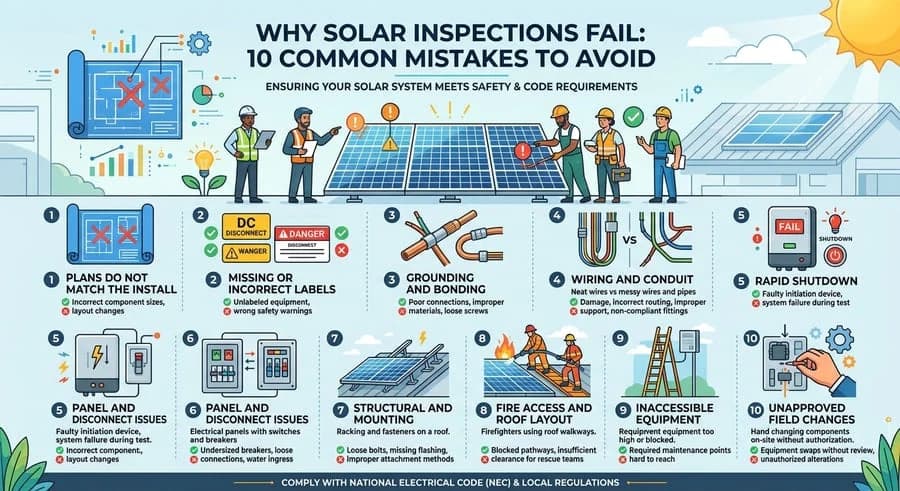
Why Solar Inspections Fail: 10 Common Mistakes to Avoid
Discover the 9 critical reasons solar inspections fail and how to avoid costly m...
Solar Grounding And Bonding: How To Pass Inspection Every Time
Learn how to pass solar grounding and bonding inspections every time. Avoid comm...
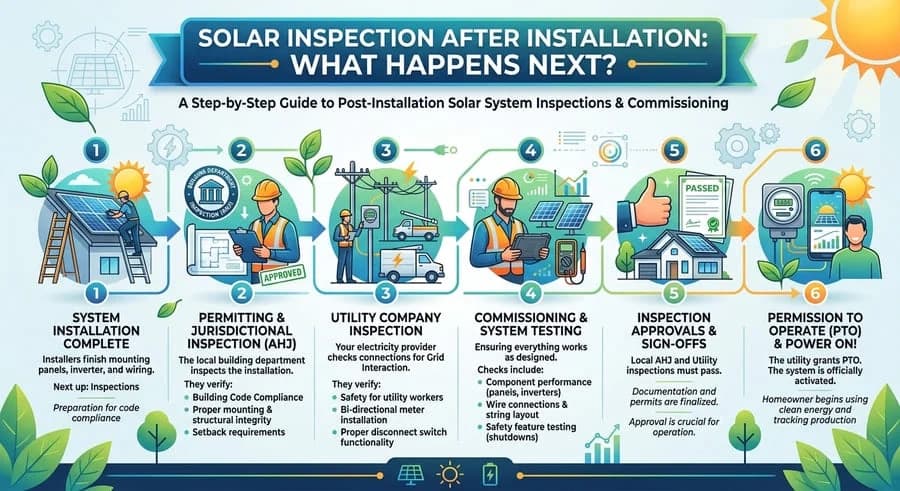
Solar Inspection After Installation: What Happens Next?
Learn how to pass your solar inspection by following essential tips for obtainin...