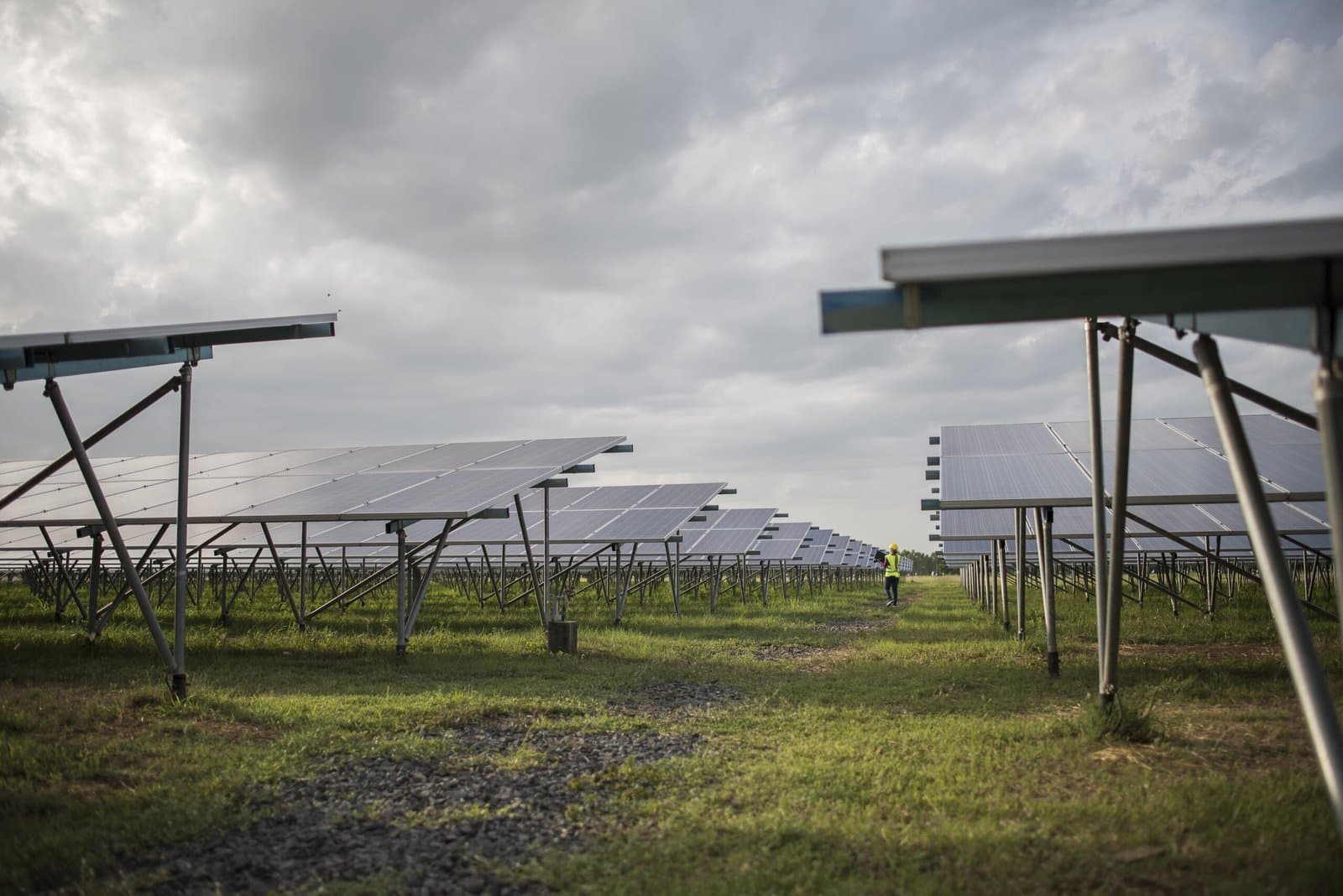
Industrial solar solutions are large-scale solar energy systems that power factories, manufacturing plants, and industrial operations while reducing operational costs by 50% to 90%. These systems convert sunlight into electricity using photovoltaic panels, helping businesses achieve energy independence and meet sustainability goals.
Businesses are transitioning to industrial solar power for three primary reasons: significant cost reduction through eliminated or reduced electricity bills, environmental compliance with corporate sustainability targets, and protection against fluctuating energy prices. With solar panel lifespans of 25 to 30 years and return on investment typically achieved within 5 to 10 years, industrial solar systems offer both immediate and long-term financial benefits.
This guide provides actionable insights into industrial solar power systems, covering system types (grid-tied, off-grid, and hybrid), implementation requirements, cost-saving strategies, and industry-specific applications across manufacturing, healthcare, retail, agriculture, and data center sectors.
Understanding Industrial Solar Power Systems
Industrial solar solutions involve large-scale solar energy systems designed to power industrial operations, factories, and manufacturing plants. These systems capture solar energy to produce electricity, deliver thermal energy for heating purposes, and decrease dependence on fossil fuels.
Industries demand substantial energy volumes for production processes, positioning industrial solar power as a cost-effective and sustainable alternative to traditional energy sources. These solutions encompass photovoltaic (PV) systems, solar thermal systems, and hybrid solar configurations that integrate with existing power grids or function in off-grid applications.
Categories of Solar Energy Systems for Industrial Use
Industrial solar power systems capture solar energy to satisfy the considerable energy requirements of industrial operations. These systems can be classified based on grid connectivity and solar panel technology.
Based on Grid Connectivity:
Grid-Tied Systems: These systems connect to the local utility grid, enabling industries to draw electricity from the grid when solar production falls short and to supply excess solar energy back into the grid. This configuration is common in both residential and commercial sectors, offering a balance between self-generated solar power and grid dependability.
Off-Grid Systems: Built for complete independence from the utility grid, these systems operate solely on solar panels and typically incorporate battery storage to maintain a continuous power supply, particularly during periods without sunlight. They are perfect for remote industrial locations where grid access is unavailable. Learn more about off-grid system design.
Hybrid Systems: Merging elements of both grid-tied and off-grid configurations, hybrid systems connect to the utility grid while including battery storage. This arrangement enables industries to store surplus solar energy for use during peak demand or power outages, strengthening energy security and optimizing cost savings.
Based on Solar Panel Technology:
Monocrystalline Solar Panels: Manufactured from a single silicon crystal, these panels are recognized for their high efficiency and durability. Their uniform dark appearance and rounded edges are distinctive characteristics. While they deliver superior performance, they come at a higher price compared to other panel types.
Polycrystalline Solar Panels: Created by melting multiple silicon fragments together, these panels have a characteristic blue, speckled appearance. They are more budget-friendly than monocrystalline panels but generally demonstrate lower efficiency and a shorter lifespan.
Thin-Film Solar Panels: These panels are produced by depositing one or more layers of photovoltaic material onto a substrate. They are less expensive and more flexible than crystalline-based panels, making them suitable for large-scale installations where space is not a limitation. However, they typically have lower efficiency and require more space to generate equivalent power output.
Key Advantages of Industrial Solar Energy Adoption
1. Substantial Reduction in Operating Expenses
One of the most compelling reasons industrial solar solutions represent the future of energy is the potential for significant cost savings. By generating power independently, businesses can dramatically reduce or eliminate electricity bills. As solar technology becomes more affordable, the return on investment for solar installations continues to improve, making it a financially viable solution for industries of all sizes.
2. Positive Environmental Contributions and Green Operations
Solar energy is a clean, renewable resource that produces no harmful emissions or climate change contributions. Industries face increasing pressure to meet sustainability targets, and solar energy serves as a key component of reducing carbon footprints. By adopting industrial solar solutions, companies can make a meaningful impact on their environmental footprint, aligning with global efforts to combat climate change.
3. Self-Sufficient Power Generation
Industrial solar solutions enable businesses to become less reliant on external power suppliers and the fluctuating energy prices from the grid. By generating electricity independently, companies gain more control over their energy consumption, reducing vulnerability to energy shortages or price hikes and ensuring a more stable energy supply.
4. Access to Tax Benefits and Renewable Energy Programs
Many governments worldwide offer financial incentives, tax rebates, and grants to encourage the adoption of renewable energy sources like solar power. Industrial solar solutions allow businesses to take advantage of these subsidies, making it easier and more affordable to transition to solar energy.
5. Enhanced Real Estate Asset Worth
Installing solar panels can increase the value of industrial properties. Buildings equipped with solar energy systems are considered more sustainable and energy-efficient, making them more attractive to buyers or tenants. This long-term investment not only saves on energy costs but also boosts the property’s market value.
6. Adaptable and Expandable Energy Infrastructure
Industrial solar systems are highly scalable and can be customized to meet the unique energy demands of a business. As energy needs grow, companies can expand their solar capacity by adding additional panels or storage solutions. This scalability provides businesses with the flexibility to adapt as they evolve and grow.
7. Strengthened Brand Reputation and Market Position
Businesses that invest in solar energy enhance their reputation as environmentally conscious and forward-thinking. Corporate social responsibility (CSR) is becoming increasingly important to consumers, employees, and investors, and adopting solar energy can improve a company’s public image and attract more eco-conscious customers.
8. Uninterrupted Electricity Supply
Solar energy, especially when paired with energy storage solutions, can provide businesses with a continuous and reliable power supply. This is particularly beneficial for industries that require uninterrupted power for critical processes, ensuring operations run smoothly even during periods of low sunlight or grid outages.
9. Employment Opportunities and Market Expansion
The shift toward renewable energy, including industrial solar solutions, is helping drive job creation in various sectors. From manufacturing and installation to maintenance and research, the solar industry is providing new employment opportunities, contributing to local economies and global growth.
10. Cutting-Edge Innovation and Performance Improvements
The solar industry is continuously evolving, with new technologies making solar energy more efficient and cost-effective. Innovations such as bifacial solar panels, energy storage solutions, and smart grid technology are improving the performance of industrial solar systems, making them a more reliable and attractive option for businesses.
Solar Permit Solutions
Commercial Solar Design Services
Professional permit plan sets for commercial installations. PE-stamped, code-compliant, fast delivery.
Essential Factors for Solar System Implementation
1. Energy Requirements Assessment: Begin by conducting a comprehensive analysis of facility energy consumption patterns. This assessment should identify peak usage periods, total energy consumption, and potential areas for energy efficiency improvements. Understanding these factors is essential for designing a solar system that effectively meets industrial needs.
2. Site Evaluation: Evaluate the proposed installation site to determine its suitability for solar energy production. For rooftop installations, assess the roof’s structural integrity, orientation, and shading. Ground-mounted systems require geological and topographical surveys to analyze soil stability and terrain. These evaluations help optimize system design and ensure safety.
3. Financial Planning and Funding Options: Explore various financing models such as Power Purchase Agreements (PPAs), leasing, or direct ownership. Each option has distinct implications for upfront costs, long-term savings, and maintenance responsibilities. Understanding these models enables informed decision-making aligned with financial strategy.
4. Regulatory Compliance and Planning Permissions: Investigate local regulations and obtain necessary permissions for solar installation. While many solar projects are considered permitted developments, it’s prudent to consult with local authorities to ensure compliance and avoid potential legal issues.
5. Grid Connection and Energy Export: Coordinate with the local Distribution Network Operator (DNO) to secure approval for grid connection. This process involves technical assessments to ensure the grid can accommodate the system’s energy export, which may impact project timelines.
6. System Design and Technology Selection: Choose appropriate solar technologies and design configurations that align with energy goals and site conditions. Factors to consider include panel efficiency, inverter compatibility, and potential integration with energy storage solutions. Collaborating with experienced engineers ensures a system tailored to specific requirements. Explore professional services for optimal system design.
7. Maintenance and Operational Considerations: Plan for ongoing maintenance to sustain system performance and longevity. Establishing a maintenance schedule and understanding warranty terms are vital for ensuring the system operates efficiently throughout its lifespan.
8. Environmental and Community Impact: Assess the environmental impact of solar installation, including potential effects on local ecosystems and communities. Engaging with stakeholders and addressing concerns proactively fosters community support and facilitates smoother project implementation.

Sectors Maximizing Solar Power Benefits
1. Manufacturing and Technology: Manufacturing and technology companies often have energy-intensive processes, such as operating data centers and research facilities. By implementing industrial solar solutions, these businesses can better manage their high electricity demands and significantly reduce operational costs. Solar energy offers an efficient, renewable alternative, helping industries meet their energy needs sustainably while lowering long-term expenses.
2. Retail and Commercial Establishments: Retailers, including supermarkets, shopping malls, and gas stations, consume large amounts of energy due to lighting, HVAC systems, and refrigeration. Industrial solar solutions provide an excellent opportunity for these businesses to cut down on electricity bills and improve their environmental footprint. By adopting solar energy, commercial establishments can not only lower operational costs but also enhance their brand image as environmentally responsible businesses.
3. Healthcare Facilities: Hospitals and pharmaceutical companies depend on a continuous power supply to operate critical systems and maintain research integrity. Industrial solar solutions, particularly when combined with energy storage systems, offer a reliable and cost-effective energy option. Solar power ensures that healthcare facilities can remain operational even during power outages, while reducing energy costs and improving sustainability.
4. Data Storage Centers: Data centers require a substantial amount of energy to power servers and maintain optimal temperatures. Implementing industrial solar solutions can help these centers offset a significant portion of their energy costs. By switching to solar energy, data storage facilities can reduce their reliance on grid power, lower their operational expenses, and minimize their environmental impact.
5. Agricultural Sector: Agrivoltaics, the integration of industrial solar solutions with agricultural activities, enables farmers to generate renewable energy while using their land for crop cultivation or livestock grazing. This innovative approach enhances land-use efficiency, supports sustainable farming practices, and helps reduce operating costs. Industrial solar solutions can significantly improve the sustainability and profitability of agricultural operations.
6. Warehousing and Storage Facilities: Warehouses and storage facilities often have high energy demands, particularly for climate-controlled environments. Industrial solar solutions can help manage these energy requirements by providing a reliable, cost-effective source of power. With solar installations, businesses in the warehousing and storage sector can lower energy bills, reduce their carbon footprint, and improve their overall energy efficiency.

What Lies Ahead for Industrial Solar Technology
The future of industrial solar solutions is filled with immense potential, as businesses across various sectors increasingly recognize the benefits of transitioning to renewable energy sources. Several key trends suggest that industrial solar solutions will continue to play a pivotal role in shaping the future of energy. One of the main advancements is in solar research, where innovations such as bifacial solar panels and perovskite solar cells are expected to boost energy generation while lowering costs.
These advancements will make industrial solar solutions even more appealing to large-scale businesses, enabling them to maximize energy output. Additionally, energy storage systems are becoming a crucial element of industrial solar solutions, allowing companies to store excess energy for use during non-sunny hours. As new storage technologies, such as solid-state batteries, develop, industrial solar solutions will become even more reliable and efficient, supporting 24/7 energy needs.
Moreover, the rise of decentralized energy networks is set to revolutionize how industries utilize solar power. Instead of relying on centralized power plants, industries will deploy their own solar systems, reducing energy transmission losses and even allowing them to sell surplus energy back to the grid. This trend will accelerate the adoption of industrial solar solutions, making businesses more energy-independent. Financially, the decreasing costs of solar installations and the expansion of government incentives and tax rebates will make industrial solar solutions more accessible to companies of all sizes. As these solutions become more affordable, industries will continue to invest in renewable energy, contributing to a more sustainable global economy.
Sustainability will remain a driving force for industrial solar solutions as businesses focus on achieving their Net Zero carbon goals. Solar power, being clean and renewable, will be essential in helping industries reduce their carbon footprints. Furthermore, the integration of smart technologies, such as IoT and AI, into industrial solar solutions will enhance energy management, improving operational efficiency and maximizing savings. As the demand for renewable energy rises, developing nations in regions worldwide will increasingly adopt industrial solar solutions due to abundant sunlight and lower costs. In addition, multinational corporations will implement these solutions globally, contributing to the expansion of solar energy in industries worldwide.
Conclusion
Industrial solar solutions are set to revolutionize the way businesses approach energy consumption. With advancements in technology, energy storage integration, and the increasing push for sustainability, solar energy is becoming an essential component for industries aiming to reduce costs, enhance efficiency, and meet environmental goals. As the future unfolds, more industries are expected to embrace renewable energy, contributing to a cleaner, greener, and more sustainable world.
For businesses ready to transition to solar power, now is the time to act. Professional solar services can help companies achieve energy independence, reduce operational costs, and meet sustainability objectives. Contact experts to learn how customized solutions can transform your energy infrastructure. Together, a brighter and more sustainable future can be built.
FAQs
Commercial Solar Design Services
Professional permit plan sets for commercial installations. PE-stamped, code-compliant, fast delivery.
Frequently Asked Questions
Industrial solar solutions can reduce electricity costs by 50% to 90%, depending on the system size, energy consumption patterns, and grid connectivity. Businesses that generate their own solar power can significantly lower or even eliminate monthly utility bills. The exact savings vary based on factors such as local electricity rates, available sunlight, and whether the system includes battery storage. Most industrial solar installations achieve return on investment within 5 to 10 years.
Industrial solar panels typically last 25 to 30 years or more with proper maintenance. Most manufacturers offer performance warranties guaranteeing that panels will maintain at least 80% to 85% of their original efficiency after 25 years. While panel performance gradually decreases over time, they continue to generate electricity well beyond their warranty period. Regular cleaning and maintenance can help maximize their lifespan and efficiency throughout their operational life.
Yes, industrial solar systems can provide power during cloudy weather, though at reduced efficiency compared to sunny conditions. Panels can still generate 10% to 25% of their normal output on overcast days. For nighttime operation or periods without sunlight, hybrid and off-grid systems incorporate battery storage solutions that store excess energy generated during the day. This stored energy ensures continuous power supply for critical industrial operations around the clock.
Industrial solar systems require minimal maintenance compared to other energy generation equipment. Primary maintenance tasks include periodic cleaning of panels to remove dust, debris, and bird droppings that can reduce efficiency. Annual inspections should check electrical connections, inverter performance, and mounting hardware integrity. Most systems only need professional servicing once or twice per year. Monitoring systems can track performance remotely and alert operators to any issues requiring attention.
Multiple financing options exist for industrial solar installations, making them accessible to businesses of various sizes. Common options include Power Purchase Agreements (PPAs), where a third party owns the system and sells electricity to the business at a fixed rate. Solar leasing allows businesses to rent the equipment with minimal upfront costs. Direct purchase provides full ownership and maximum long-term savings. Additionally, many governments offer tax credits, rebates, and grants that can offset 20% to 40% of installation costs.
Grid-tied systems benefit industrial facilities by providing energy flexibility and cost optimization. These systems allow businesses to draw power from the grid when solar production is insufficient while feeding excess solar energy back to the grid for credits through net metering programs. This arrangement eliminates the need for expensive battery storage while ensuring uninterrupted power supply. Grid-tied systems also offer lower upfront costs compared to off-grid alternatives and enable facilities to offset peak demand charges by using solar power during expensive peak hours.
The size of a solar system for an industrial facility depends on several factors including total energy consumption, available installation space, budget, and energy goals. A typical industrial facility consuming 100,000 kWh monthly might require a 200 to 300 kW system. Facilities should conduct a comprehensive energy audit to determine peak usage patterns and identify efficiency improvements. Professional solar installers can design systems scaled to meet specific needs, whether covering 30% or 100% of energy requirements, with the flexibility to expand capacity as business needs grow.
Common solar permit mistakes include incomplete documentation, incorrect system specifications, failure to meet local building codes, and missing electrical diagrams. Applicants often underestimate the time required for permit approval or submit plans that don't comply with HOA regulations. Working with experienced professionals helps avoid these permitting errors and ensures smooth project approval. Understanding permit timelines and equipment requirements is crucial for successful installations.
Yes, DIY solar installations carry significant insurance and liability considerations that many homeowners overlook. Installing solar panels without proper permits can void homeowner's insurance policies and create legal liabilities. Professional installations ensure compliance with safety standards, building codes, and insurance requirements. Additionally, understanding HOA regulations is essential for residential and commercial properties within governed communities.

SPS Editorial Team
Solar Permit Solutions
Solar Permit Solutions provides professional solar permit design services for residential, commercial, and off-grid installations across all 50 states. Our team ensures permit-ready plan sets delivered fast.
Related Articles
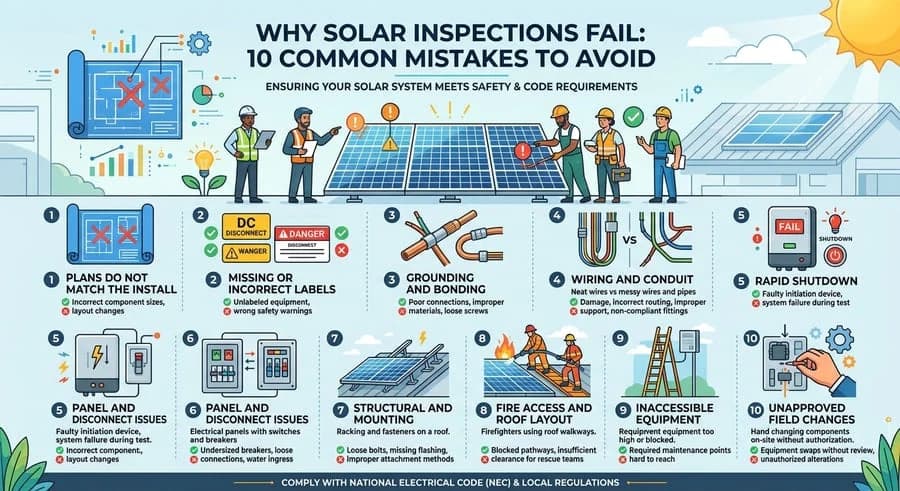
Why Solar Inspections Fail: 10 Common Mistakes to Avoid
Discover the 9 critical reasons solar inspections fail and how to avoid costly m...
Solar Grounding And Bonding: How To Pass Inspection Every Time
Learn how to pass solar grounding and bonding inspections every time. Avoid comm...
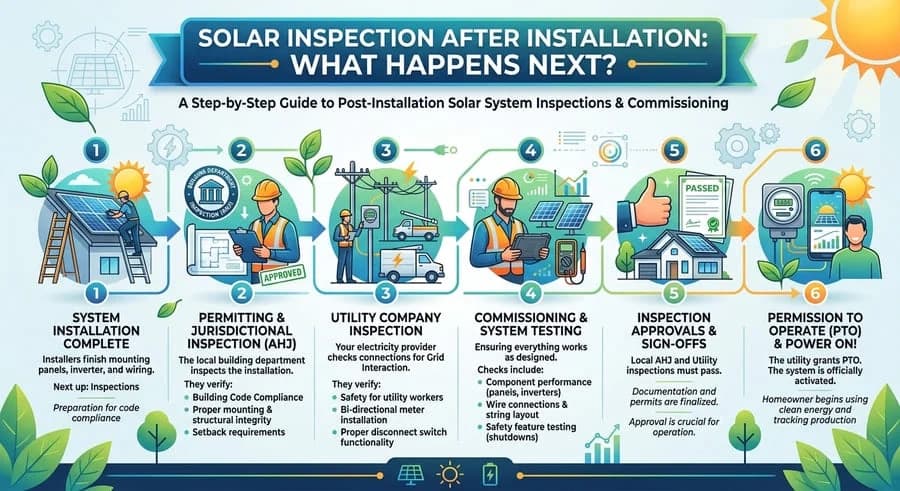
Solar Inspection After Installation: What Happens Next?
Learn how to pass your solar inspection by following essential tips for obtainin...