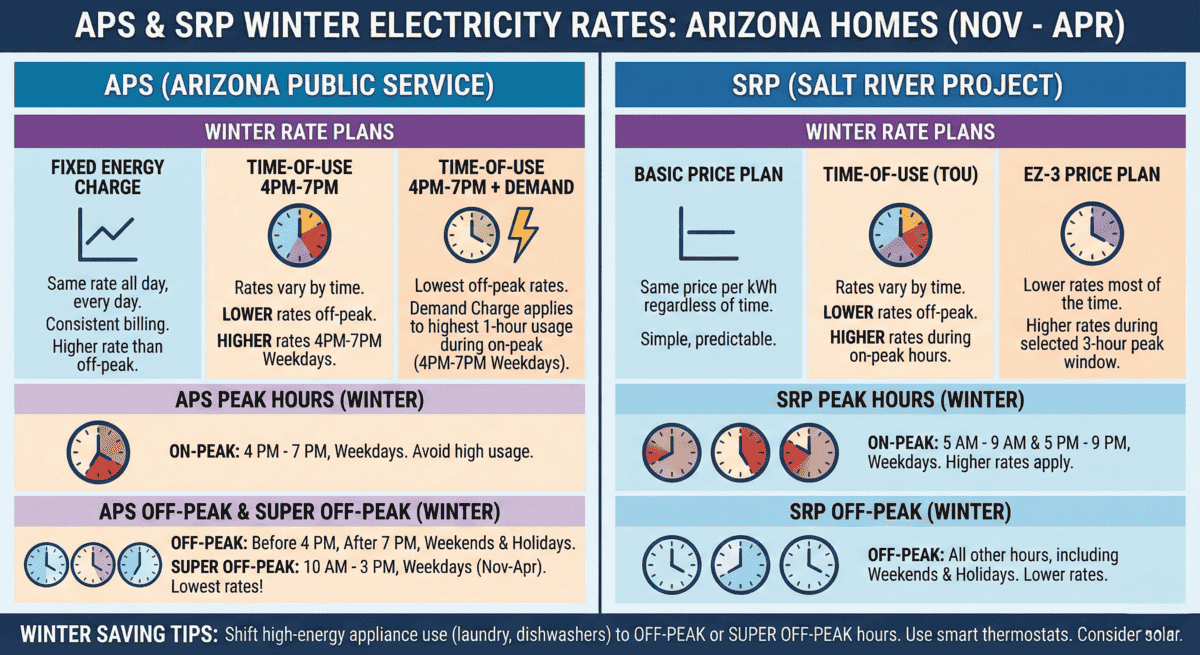
Arizona electricity rates vary seasonally, with both Arizona Public Service (APS) and Salt River Project (SRP) implementing distinct winter rate structures typically running from November through April. Winter rates generally feature lower per-kilowatt-hour costs than summer peak pricing, though time-of-use plans mean electricity expenses still fluctuate based on consumption timing throughout the day.
Key Facts About Arizona Winter Electricity Rates:
- APS winter rates include off-peak, on-peak, and super off-peak pricing tiers based on time-of-use schedules
- SRP winter rates offer reduced baseline tier costs and decreased peak hour premiums compared to summer months
- Both utilities have increased rates consistently over the past decade, with projections indicating continued hikes through 2026
- Arizona electricity costs rise approximately 3-5% annually, outpacing national averages
- Grid access fees and infrastructure charges apply regardless of seasonal rate changes
Average Arizona Winter Rate Components:
Arizona homeowners seeking predictable energy expenses increasingly turn to solar installation, which delivers immediate savings and long-term protection against rising utility costs. With over 300 days of annual sunshine, Arizona provides ideal conditions for residential solar production, with systems typically recovering costs within 6-8 years through electricity savings. For homeowners ready to explore their options, Solar Permit Solutions streamlines the entire permitting process from start to finish.
This guide explains how APS winter rates and SRP winter rates function, what Arizona homeowners can expect from seasonal billing changes, and strategies for reducing electricity expenses through conservation measures and solar energy investment.
What to Anticipate from Your APS Winter Statement
Arizona homeowners receiving service from APS should prepare for several elements influencing their winter power statements:
- Baseline consumption charges stay steady but can climb rapidly with heightened usage
- Demand fees may apply for residences with elevated instantaneous power draw
- Grid connection fees persist regardless of consumption amounts
- Seasonal modifications reflecting winter operational expenses
APS has steadily increased pricing over the past ten years, with forecasts suggesting ongoing hikes through 2026 and further as infrastructure expenses grow and clean energy requirements necessitate major utility investments. According to NREL solar research, distributed solar generation helps reduce strain on utility infrastructure while providing homeowners with cost stability.
How SRP Winter Rates Affect Arizona Homeowners
Salt River Project functions under a distinct pricing framework from APS, yet SRP winter pricing similarly creates challenges for Arizona homeowners pursuing predictable energy expenses.
SRP Winter Pricing Options
SRP provides multiple pricing plan choices, with most residential customers selecting between standard household service and time-of-use options. Throughout the colder months, SRP modifies its pricing to accommodate seasonal energy patterns.
- Standard Residential Plan: Incorporates tiered pricing where costs rise as monthly consumption exceeds baseline allotments.
- Time-of-Use Plans: Deliver reduced pricing during off-peak windows but apply premium costs during high-demand periods.
- Customer Generation Plans: Tailored specifically for homeowners with solar systems, featuring distinct pricing frameworks for surplus energy generation.
SRP Fall Pricing and Winter Transitions
SRP fall pricing initiates the shift from summer peak costs to winter baseline expenses. This transitional window often delivers temporary relief from summer’s steepest electricity expenses, though pricing remains considerably higher than in prior years.
Arizona homeowners observe the most notable changes during this seasonal shift:
- Decreased peak hour premiums compared to summer months
- Reduced baseline tier expenses for standard household plans
- Ongoing grid connection fees applying regardless of consumption patterns
- Infrastructure investment charges supporting continued utility system enhancements
Understanding how long solar permits take helps homeowners plan their transition to solar energy before the next rate increase takes effect.
Climbing Electricity Costs: The Long-Term Forecast
Both APS and SRP encounter growing pressure to raise pricing due to multiple converging elements affecting Arizona’s energy landscape. The IEA Renewables 2024 report confirms that distributed solar adoption remains one of the most effective strategies for consumers seeking protection against rising utility costs.
Infrastructure Investment Demands
Arizona’s expanding population requires substantial electrical grid enhancements. Both utilities must invest billions in transmission lines, substations, and distribution infrastructure to accommodate growing communities statewide.
Solar Permit Solutions
Need Solar Permit Plans?
Professional, permit-ready solar plan sets delivered fast. Residential and commercial projects across all 50 states.
Solar Provider Market Consolidation
The solar sector in Arizona has undergone significant consolidation, with numerous smaller installation firms shuttering or being purchased by larger organizations. This consolidation diminishes competition and potentially restricts homeowner choices for solar installation. Homeowners should verify installer credentials through the NABCEP certified professional directory before committing to any solar project.
As fewer solar providers operate throughout Arizona, several outcomes develop:
- Decreased solar installation capacity restricts new renewable energy benefits contributions to the grid
- Heightened grid reliance as fewer homeowners shift to solar power
- Elevated utility pricing to offset reduced distributed energy generation
Regulatory Shifts and Clean Energy Requirements
Arizona’s renewable energy standards mandate utilities source growing percentages of their electricity from renewable sources. While advantageous for environmental objectives, these requirements demand substantial investment in utility-scale renewable projects and supporting infrastructure.
How to Lower Your Electric Bill in Arizona
Arizona homeowners possess several approaches for decreasing their electricity expenses, with solar power representing the most effective long-term solution. Resources like EnergySage help homeowners compare quotes and understand their options before making installation decisions.
Immediate Energy Conservation Approaches
- Optimize thermostat configurations during colder months to decrease heating expenses without compromising comfort.
- Upgrade to energy-efficient appliances consuming less electricity during peak pricing windows.
- Apply time-of-use tactics by moving energy consumption to off-peak periods when feasible.
- Seal air gaps and enhance home insulation to minimize heating and cooling requirements.
Long-Term Energy Independence Through Solar
Solar power installation delivers the most comprehensive solution for reducing your electric statement in Arizona while safeguarding against future pricing increases. Reading our solar permit services guide ensures your installation process moves forward without unnecessary delays.
- Immediate savings commence once your solar system goes live, decreasing monthly grid electricity consumption.
- Long-term rate protection shields your residence from utility pricing increases historically averaging 3-5% yearly.
- Energy independence lessens dependence on utility providers and their evolving pricing frameworks.
- Property value enhancement contributes significant resale worth to your residence while delivering ongoing operational savings.
Solar Power in 2026: Market Forecast and Opportunities
The solar power landscape throughout Arizona continues developing, with 2026 representing a pivotal window for homeowners contemplating energy independence. Reviewing the solar installation timeline helps set realistic expectations for project completion.
Federal Tax Incentive Modifications in 2026
While the federal solar tax credit phases down after 2025, the long-term savings from solar installation continue delivering value for decades. Even without the 30% Residential Clean Energy Credit, solar power systems generate substantial returns through electricity savings and protection against climbing utility pricing. Homeowners in other states can reference guides like our California solar permitting guide or Texas solar permit requirements for region-specific information.
Utility Pricing Trajectory
Both APS and SRP project ongoing pricing increases through 2026 and beyond. Historical figures reveal Arizona electricity costs climbing faster than national averages, making solar power’s fixed-cost framework increasingly appealing.
Technology Advancements and Cost Decreases
Solar panel efficiency continues advancing while installation expenses decline. Battery storage technology delivers additional value by storing surplus solar generation for use during peak pricing windows. When panels eventually reach retirement age, the EPA solar panel disposal guidelines ensure proper recycling and responsible management.
Why Solar Makes Sense for Arizona Homeowners
Arizona’s plentiful sunshine establishes ideal conditions for solar power generation, making residential solar permit design particularly effective for long-term energy savings.
Climate Benefits of Mild Winters
Arizona receives over 300 days of sunshine yearly, delivering consistent solar power generation throughout the year. Colder months still produce substantial solar electricity, helping counterbalance seasonal pricing shifts.
Net Metering Advantages
Both APS and SRP provide net metering programs crediting homeowners for surplus solar power generation. These credits help counterbalance electricity consumption during windows when solar panels are not generating power. Meeting solar permit requirements ensures your system qualifies for these valuable utility programs.
Long-Term Investment Worth
Solar systems typically recover their costs within 6-8 years through electricity savings, then deliver decades of additional value. With utility pricing climbing consistently, solar’s payback timeline continues shrinking. Communities participating in SolSmart solar permitting programs often experience faster approval processes and reduced soft costs.
Take Command of Your Energy Future
Arizona homeowners face a straightforward decision: continue accepting yearly electricity pricing increases from APS and SRP, or invest in solar power systems delivering decades of predictable, affordable electricity. Working with a solar permit specialist simplifies the transition process considerably.
With fewer solar providers operating throughout Arizona and utility pricing climbing steadily, the opportunity for securing energy independence at optimal costs continues narrowing. Solar systems completed before widespread market consolidation benefit from competitive pricing and established installation expertise. Whether you need professional solar permit design or solar design services, experienced professionals can guide your project from concept to completion.
Your residence’s energy expenses will continue climbing with traditional utility service. Solar power delivers a proven solution for controlling these costs while contributing to Arizona’s clean energy objectives. Companies providing nationwide solar permit services ensure homeowners across the country can access streamlined permitting support.
Ready to discover how solar can transform your residence’s energy expenses? Visit our solar permitting resources to learn more, or contact our solar permit experts to uncover your customized solar savings potential and take the initial step toward energy independence. For those seeking commercial solar permit design, our team handles projects of all sizes and complexities.
Conclusion
Arizona homeowners face a critical decision point regarding their household energy expenses. Both APS winter rates and SRP winter rates continue climbing year after year, placing increasing financial pressure on residents throughout the state. Understanding how these seasonal pricing structures function empowers homeowners to make informed choices about their energy consumption and long-term cost management.
While immediate conservation strategies like optimizing thermostat settings, upgrading to energy-efficient appliances, and shifting usage to off-peak hours provide temporary relief, these approaches cannot fully offset the trajectory of rising utility costs. Infrastructure investments, regulatory mandates, and solar industry consolidation all point toward continued rate increases through 2026 and beyond.
Solar energy installation remains the most effective long-term solution for Arizona homeowners seeking predictable electricity expenses and protection against future rate hikes. With over 300 days of annual sunshine, Arizona provides ideal conditions for residential solar production, delivering immediate savings while enhancing property values.
The window for securing competitive solar installation pricing continues narrowing as market consolidation reduces available providers. Homeowners who act now position themselves to lock in energy independence before utility rates climb further and installation options become more limited.
Taking control of your energy future starts with understanding your options. Evaluate your current electricity expenses, explore solar installation possibilities, and make the investment that protects your household budget for decades to come.
FAQs
What are APS winter rates, and when do they take effect?
APS winter rates represent the seasonal pricing structure Arizona Public Service implements during colder months, typically running from November through April. These rates generally feature lower baseline costs compared to summer peak pricing but still include multiple tiers based on consumption levels. Most APS customers participate in time-of-use plans where electricity costs fluctuate depending on when power gets consumed throughout the day, with off-peak hours offering the lowest pricing and on-peak periods carrying higher charges.
Need Solar Permit Plans?
Professional, permit-ready solar plan sets delivered fast. Residential and commercial projects across all 50 states.
Frequently Asked Questions
APS winter rates represent the seasonal pricing structure Arizona Public Service implements during colder months, typically running from November through April. These rates generally feature lower baseline costs compared to summer peak pricing but still include multiple tiers based on consumption levels. Most APS customers participate in time-of-use plans where electricity costs fluctuate depending on when power gets consumed throughout the day, with off-peak hours offering the lowest pricing and on-peak periods carrying higher charges.
SRP winter rates provide reduced baseline tier expenses and decreased peak hour premiums compared to summer pricing. Salt River Project adjusts its rate structure seasonally to reflect changing energy demand patterns, with winter months typically delivering lower per-kilowatt-hour costs. However, grid connection fees and infrastructure investment charges remain consistent regardless of season. Homeowners on time-of-use plans benefit from lower off-peak pricing during winter, though on-peak periods still carry premium costs during high-demand morning and evening hours.
Arizona electricity rates continue rising due to several converging factors affecting the state's energy landscape. Both APS and SRP must invest billions in transmission lines, substations, and distribution infrastructure to accommodate Arizona's expanding population. Renewable energy mandates require substantial utility investments in clean energy projects and supporting systems. Additionally, solar industry consolidation has reduced distributed energy production, increasing grid dependence and placing upward pressure on rates for all consumers. Historical data reveals Arizona electricity costs climbing faster than national averages, with projections indicating continued increases through 2026 and beyond.
Arizona homeowners can lower winter electric bills through several immediate and long-term strategies. Optimize thermostat settings to reduce heating expenses without sacrificing comfort, and upgrade to energy-efficient appliances consuming less electricity during peak pricing windows. Shift energy-intensive activities to off-peak hours when rates drop lowest, and seal air gaps while enhancing home insulation to minimize heating demands. For maximum long-term savings, solar energy installation provides the most comprehensive solution, delivering immediate consumption reductions and protection against future rate increases that historically average 3-5% annually.
Solar energy remains highly worthwhile for Arizona homeowners in 2026 despite federal tax credit reductions. Arizona receives over 300 days of sunshine yearly, creating ideal conditions for consistent solar production throughout all seasons. Solar installations typically recover their costs within 6-8 years through electricity savings, then deliver decades of additional value. With utility rates projected to keep climbing and solar panel efficiency continuing to improve while installation costs decline, the long-term return on investment grows increasingly attractive. Battery storage technology adds further value by storing excess production for use during peak pricing periods.
APS and SRP operate under distinct rate structures with different pricing tiers, time-of-use schedules, and fee components. APS serves the greater Phoenix metropolitan area and much of northern and southern Arizona, while SRP primarily covers the East Valley and surrounding regions. Both utilities offer time-of-use plans with varying on-peak and off-peak hour definitions. SRP provides Customer Generation Plans specifically designed for solar homeowners, while APS offers its own net metering programs. Rate levels, demand charges, and seasonal adjustment fees differ between providers, making direct comparison essential for homeowners evaluating their electricity expenses.
The optimal time for solar installation in Arizona is before utility rates climb further and while competitive installation pricing remains available. With solar industry consolidation reducing the number of providers operating statewide, homeowners who act sooner benefit from greater installer competition and established expertise. Additionally, locking in solar installation before widespread market consolidation ensures access to quality equipment and experienced installation crews. From a production standpoint, Arizona's abundant sunshine delivers strong solar generation year-round, meaning any season works well for installation. The financial benefits begin immediately once systems activate, making earlier installation advantageous for maximizing lifetime savings.

SPS Editorial Team
Solar Permit Solutions
Solar Permit Solutions provides professional solar permit design services for residential, commercial, and off-grid installations across all 50 states. Our team ensures permit-ready plan sets delivered fast.
Related Articles
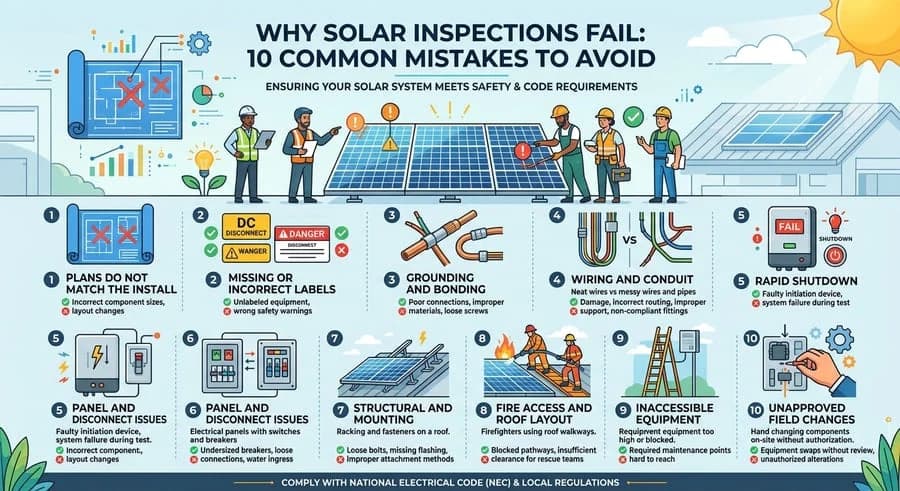
Why Solar Inspections Fail: 10 Common Mistakes to Avoid
Discover the 9 critical reasons solar inspections fail and how to avoid costly m...
Solar Grounding And Bonding: How To Pass Inspection Every Time
Learn how to pass solar grounding and bonding inspections every time. Avoid comm...
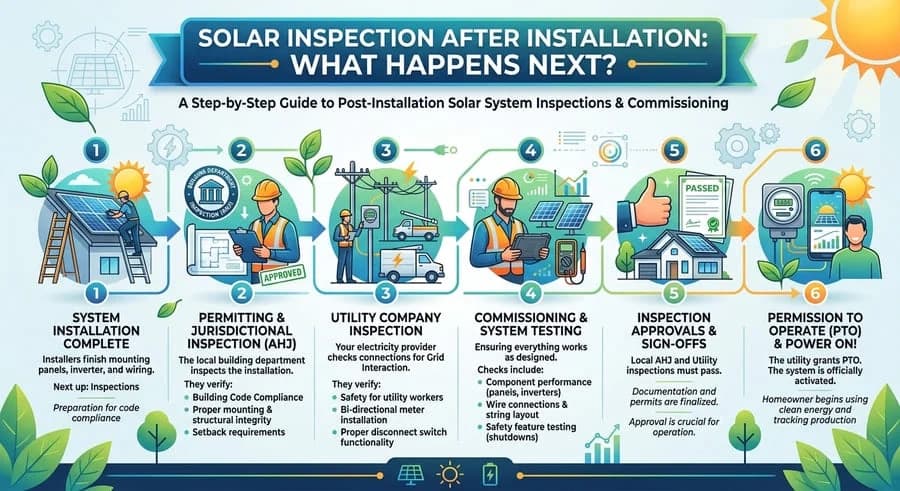
Solar Inspection After Installation: What Happens Next?
Learn how to pass your solar inspection by following essential tips for obtainin...