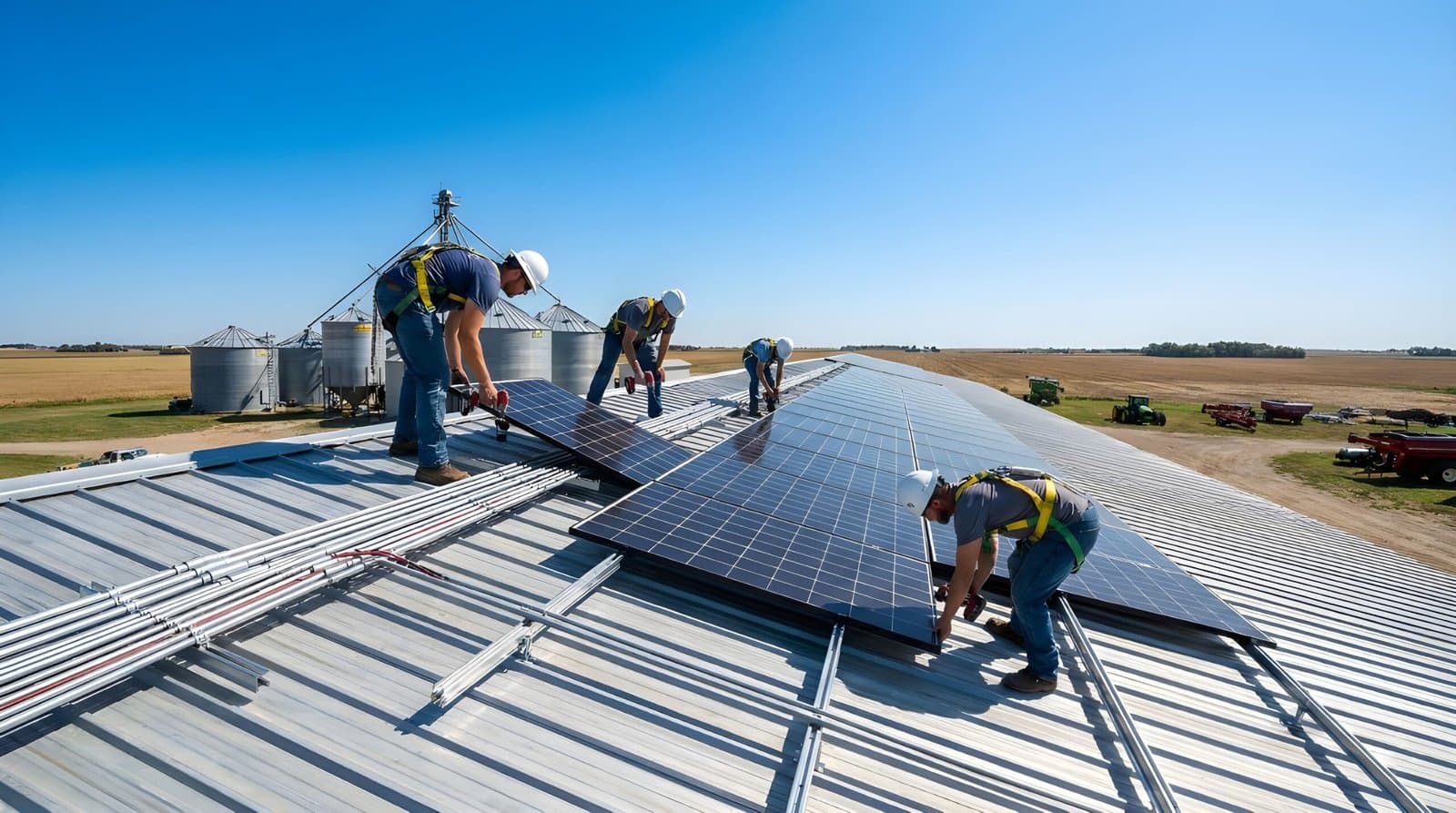
Solar Energy Revolutionizes Modern Agriculture
Solar panels can be installed on barns and agricultural buildings, typically costing $2.50-$3.50 per watt and reducing farm electricity expenses by 50-75%. A typical 100kW agricultural solar system costs $250,000-$350,000 before incentives, with farms achieving 6-10 year payback periods through energy savings.
Federal and state incentives significantly reduce installation costs. The 30% Federal Investment Tax Credit remains available for commercial agricultural projects that begin construction by July 4, 2026, or are placed in service by December 31, 2027. USDA REAP grants cover up to 50% of eligible project costs, though ground-mounted systems exceeding 50kW face new restrictions as of 2025.
Agricultural solar installations, known as “agrivoltaics,” address the high energy demands of farming operations. With the U.S. Department of Agriculture reporting farms use an average of 15 kWh of electricity per acre annually, solar technology offers measurable financial and operational benefits. This guide covers system costs, installation types, structural requirements, available incentives, and real-world performance data from agricultural solar projects.

Key Benefits Of Solar Installation For Farm Operations
To determine if solar makes sense for your agricultural operation, consider these key advantages that make farm solar installations financially and operationally compelling:
Reduced Energy Costs
Agriculture often involves high energy consumption for irrigation, heating, cooling, and equipment operation. Solar technology can cut electricity bills significantly, with many farms experiencing reductions of 50% or more in energy expenses.
Energy Independence
Generating independent power reduces reliance on the grid. This approach provides protection against rising utility rates and power outages. Battery storage options enable 24/7 power availability for critical farm operations.
Environmental Benefits
Each kilowatt of solar capacity can potentially offset 1.5 tons of CO2 annually, decreasing carbon footprints substantially. Solar installations align with sustainable farming practices and appeal to environmentally conscious consumers. Innovative agrivoltaic practices contribute to soil and water conservation efforts.
Available Space
Many agricultural buildings feature large, unobstructed roof areas ideal for solar installations. Ground-mount options can utilize fallow land or integrate with grazing areas. Dual-use solar installations maximize land productivity effectively.
Incentives and Tax Benefits
The Federal Investment Tax Credit (ITC) provides a 30% tax credit for agricultural solar systems that begin construction by July 4, 2026, or are placed in service by December 31, 2027. USDA REAP (Rural Energy for America Program) grants can cover up to 50% of eligible project costs through Inflation Reduction Act funding, though ground-mounted systems over 50 kW face new restrictions. State and local incentives vary but provide additional savings opportunities.
Diversified Income
Net metering programs create potential to sell excess energy back to the grid. Some farms generate additional revenue by leasing land for solar installations.
Improved Farm Operations
Solar panels can provide shade for livestock or crops, potentially increasing yields in hot climates. Integration with smart farming technologies enhances energy management capabilities.
Evaluating Farm Structures For Solar Panel Compatibility
Agricultural buildings vary significantly in their solar potential. A thorough assessment considers multiple critical factors:
1. Structural Integrity
The building’s structural integrity serves as the paramount consideration. Roofs must maintain good condition and support the additional weight of solar panels, which typically adds about 2-4 pounds per square foot. Older structures may necessitate repairs or reinforcements before installation.
A comprehensive structural assessment should evaluate:
- Age and condition of the roof
- Load-bearing capacity of the structure, including trusses and purlins
- Expected lifespan of the roof in relation to the 25-30 year lifespan of solar panels
2. Orientation and Shading
Building orientation and potential shading issues play crucial roles in system efficiency. In the Northern Hemisphere, south-facing roofs perform ideally, though east and west-facing roofs can also be suitable. A detailed shading analysis should account for:
- Seasonal changes in sun angle
- Potential obstructions like nearby trees or structures
- Vegetation variations that might affect shading patterns throughout the year
3. Available Roof Space
Usable area for solar panel installation requires careful calculation. This assessment should consider:
- Total available roof space
- Setbacks required for fire safety and maintenance access
- Roof features like vents, chimneys, or skylights that may limit panel placement
4. Electrical Infrastructure
The existing electrical setup needs evaluation to ensure accommodation of the new solar system. This includes:
- Assessing current electrical panel capacity
- Evaluating the condition and capacity of existing wiring
- Determining proximity to the main electrical panel, which affects installation complexity and cost

Solar Permit Solutions
Need Solar Permit Plans?
Professional, permit-ready solar plan sets delivered fast. Residential and commercial projects across all 50 states.
Solar System Options For Barns And Farm Facilities
Solar solutions can be tailored to meet the unique needs of each agricultural property. Consider these detailed options:
1. Roof-Mounted Systems
Traditional fixed panels attach directly to roof structures, making them a popular choice for many farms. These systems work ideally for pitched roofs with good southern exposure. For flat or low-slope roofs, ballasted systems that don’t require roof penetrations provide an excellent option, minimizing potential leak risks.
2. Ground-Mounted Arrays
When roof space is limited or unsuitable, ground-mounted systems offer flexible alternatives. These can be oriented and tilted for optimal sun exposure and allow easy access for maintenance and cleaning. Solar trackers, which follow the sun’s movement throughout the day, can increase energy production by up to 25% compared to fixed systems.
3. Integrated Systems
For farms concerned about aesthetics or historical preservation, integrated systems like solar shingles blend seamlessly with traditional roofing materials. Thin-film solar, which can be applied directly to metal roofing, offers a lightweight and flexible option for roofs with weight restrictions.
4. Dual-Use Installations
Agrivoltaic systems combine solar panels with crop production or grazing areas underneath, representing an innovative approach to land use. These systems can increase overall land productivity by up to 70%. Examples include raised panels over vegetable crops or panels integrated with berry production.
5. Carport and Equipment Shed Systems
Solar panels can be incorporated into carport and equipment shed designs, providing both energy generation and covered storage for farm vehicles and machinery. This dual-purpose approach maximizes the utility of farm structures.
Addressing Common Agricultural Solar Installation Obstacles
Installing solar on agricultural buildings presents unique challenges that require strategic solutions:
Dust and Debris
Dust and debris accumulation can significantly impact panel efficiency. Regular cleaning schedules tailored to specific farm conditions are essential. In high-dust areas, automated cleaning systems or special dust-repellent coatings may be warranted.
Animal Interference
Buildings housing livestock require protective measures to prevent animal damage. This might include reinforced lower panels, protective fencing, or raised systems designed to allow animals to pass underneath safely.
Remote Locations
Many farms operate in areas with weak or unreliable grid connections. Off-grid solutions and battery storage systems enhance energy reliability for critical farm operations. For some operations, implementing a microgrid provides the most effective solution for consistent power availability.
Seasonal Usage
Agricultural energy needs often vary significantly with seasons. Solar systems for farms should be designed with this variability in mind, potentially incorporating energy storage solutions or flexible grid integration to manage seasonal fluctuations in energy production and consumption.
Weather Extremes
Agricultural solar installations must withstand local weather conditions. This might include reinforced mounting systems for high-wind areas, steeper panel tilts for regions with heavy snowfall, and comprehensive lightning protection for all installations.
Real-World Results: Agricultural Solar Performance Analysis
Recent solar farm projects illustrate the potential of agricultural solar installations:
Case Study 1: The Davis Family Dairy Farm
Davis Family Dairy Farm, operating since 1950, faced high energy costs for milk processing and storage. A 150kW roof-mounted solar system on the main barn delivered impressive results:
- 60% reduction in annual electricity costs
- ROI achieved in 7 years
- Carbon footprint reduced by 130 tons CO2 annually
- Excess energy sold back to the grid, providing additional income
The Davis family not only saved on energy costs but also enhanced their brand image as a sustainable, forward-thinking operation.
Case Study 2: Green Valley Orchards
This 500-acre apple orchard in Washington state struggled with high irrigation and cold storage energy demands. A 300kW ground-mounted solar array with single-axis trackers produced remarkable outcomes:
- 75% reduction in grid electricity consumption
- Integration with smart irrigation system for optimized water and energy use
- Increased land use efficiency through agrivoltaic approach, with panels providing partial shade to select apple varieties
- Enhanced marketability of produce as “solar-grown”
Case Study 3: Hillside Poultry Farm
This large-scale poultry operation with 6 barn buildings maintained consistent high energy demand for climate control and lighting. A 500kW total capacity distributed across barn roofs, combined with energy storage system, achieved outstanding results:
- Near energy independence achieved, with 95% of annual electricity needs met by solar
- Significant improvement in power quality and reliability
- Battery storage provides critical backup during grid outages
- Improved bird welfare through more consistent climate control
These case studies demonstrate the versatility and effectiveness of solar solutions in various agricultural settings, showcasing the ability to tailor systems to specific farm needs.

Building A Sustainable Energy Future For Your Farm
Professional solar installation services offer more than just equipment installation. These partnerships support farm energy evolution through deep understanding of both solar technology and agricultural needs. From dairy farms to orchards, poultry operations to crop fields, diverse agricultural businesses successfully harness solar power.
As stewards of the land, farmers have always led in resource management. Solar energy represents the next frontier in this tradition, enabling cultivation of not just crops, but clean, renewable energy as well. The journey to solar adoption may seem complex, but experienced solar partners provide guidance through technical assessments, system design, incentive applications, and installation processes.
Take the first step towards a solar-powered future for your farm. Solar Permit Solutions offers free consultations to design systems that meet energy needs and propel operations into a new era of sustainability and prosperity. Contact Solar Permit Solutions today to discover how agricultural solar installations can transform your operation’s energy profile.
Conclusion
Agricultural solar installations represent a transformative investment that delivers measurable returns across multiple dimensions of farm operations. Evidence from real-world implementations demonstrates consistent success, with farms achieving significant electricity cost reductions while building energy independence and protecting against volatile utility rates.
Modern solar technology has evolved to address the unique challenges of agricultural environments, from dust-resistant coatings to weather-resilient mounting systems and seasonal energy management solutions. The strategic decision to implement solar extends beyond equipment installation, representing commitment to sustainable resource management, operational resilience, and forward-thinking farm leadership.
With current federal incentives set to expire soon, the window for maximum financial benefits is closing. The combination of proven technology, substantial incentives, and demonstrated returns creates a compelling case for immediate action. Professional solar partners provide the expertise necessary to navigate technical assessments, system design, and installation processes, ensuring agricultural solar installations create lasting value across decades of farm productivity. Contact us to begin your solar journey.
FAQs
Can I use solar power for irrigation systems and other high-demand farm equipment?
Solar power effectively handles high-demand agricultural equipment including irrigation systems, grain dryers, refrigeration units, and climate control systems. Properly sized systems efficiently power large motors and pumps. For irrigation, systems can pump water during peak sunlight hours into storage tanks or directly to fields. Battery storage enables equipment operation anytime. Many farms successfully power entire operations including processing facilities and cold storage with solar.
Need Solar Permit Plans?
Professional, permit-ready solar plan sets delivered fast. Residential and commercial projects across all 50 states.
Frequently Asked Questions
Agricultural solar installations typically cost $2.50-$3.50 per watt before incentives. A 100kW system runs $250,000-$350,000 initially. The 30% Federal Tax Credit (projects must begin construction by July 4, 2026) immediately reduces this by $75,000-$105,000. USDA REAP grants cover up to 50% of eligible costs, further reducing net investment. Most farms achieve 6-10 year payback periods.
Older barns can support solar panels with proper structural assessment. Solar panels add 2-4 pounds per square foot. Many older barns have substantial timber framing capable of handling this load, though some require reinforcement of trusses or purlins. Professional structural engineers should evaluate load capacity and roof condition. Ground-mounted systems provide alternatives if roof installation is impractical.
Modern agricultural solar systems withstand severe weather conditions common in farming regions. Most systems are rated for winds up to 140 mph and can withstand one-inch diameter hail. Snow typically slides off angled panels naturally, though steeper tilts suit heavy snowfall regions. Lightning protection systems integrate with farm electrical infrastructure. Farms with battery storage maintain critical operations during grid outages.
Solar panels continue generating electricity during winter and cloudy conditions at reduced capacity. Modern panels produce 10-25% of rated capacity on overcast days and generate power throughout winter despite shorter days. Snow accumulation temporarily stops production, but panels shed snow quickly on angled installations. Well-designed systems account for seasonal variations, sizing to meet annual energy needs. Battery storage captures excess summer production for winter use.
Solar installations typically require insurance policy updates to cover the added equipment value. Most agricultural insurers readily accommodate solar additions with minimal premium increases. Property tax treatment varies by jurisdiction; many states exempt renewable energy improvements from property tax assessments. Some locations offer additional tax benefits for agricultural renewable energy installations. Consult local tax authorities and insurance providers for specific guidance.
Agricultural solar systems require minimal maintenance compared to other farm equipment. Primary maintenance involves periodic cleaning 2-4 times annually to remove dust, pollen, and debris. Automated monitoring systems alert operators to performance issues. Inverters may need replacement after 10-15 years, while panels maintain 80-85% capacity after 25 years. Ground-mounted systems offer easier maintenance access than roof installations.

SPS Editorial Team
Solar Permit Solutions
Solar Permit Solutions provides professional solar permit design services for residential, commercial, and off-grid installations across all 50 states. Our team ensures permit-ready plan sets delivered fast.
Related Articles
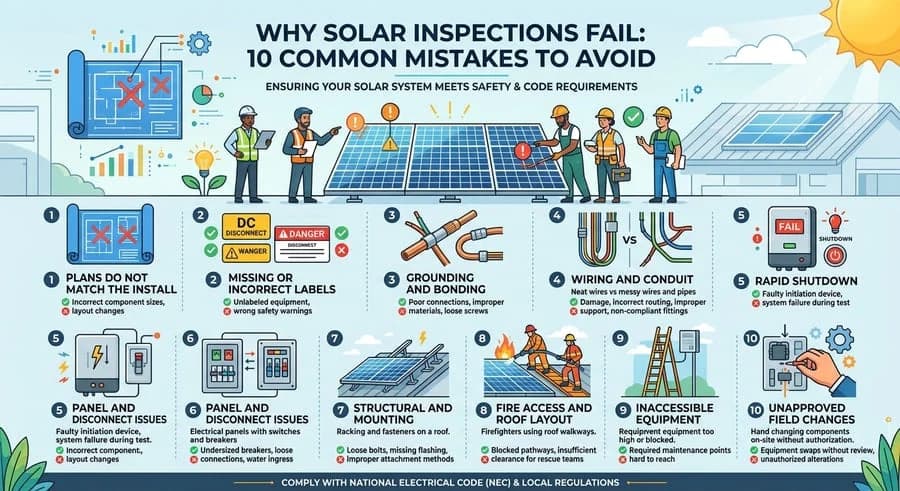
Why Solar Inspections Fail: 10 Common Mistakes to Avoid
Discover the 9 critical reasons solar inspections fail and how to avoid costly m...
Solar Grounding And Bonding: How To Pass Inspection Every Time
Learn how to pass solar grounding and bonding inspections every time. Avoid comm...
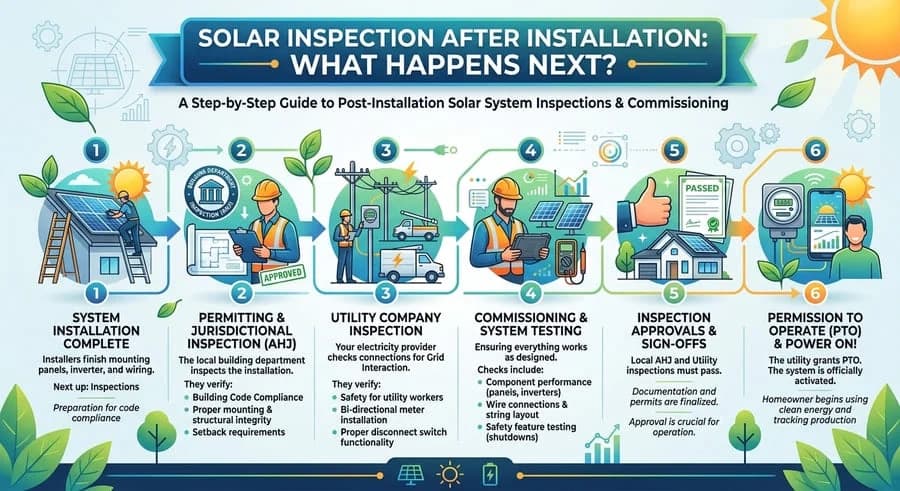
Solar Inspection After Installation: What Happens Next?
Learn how to pass your solar inspection by following essential tips for obtainin...