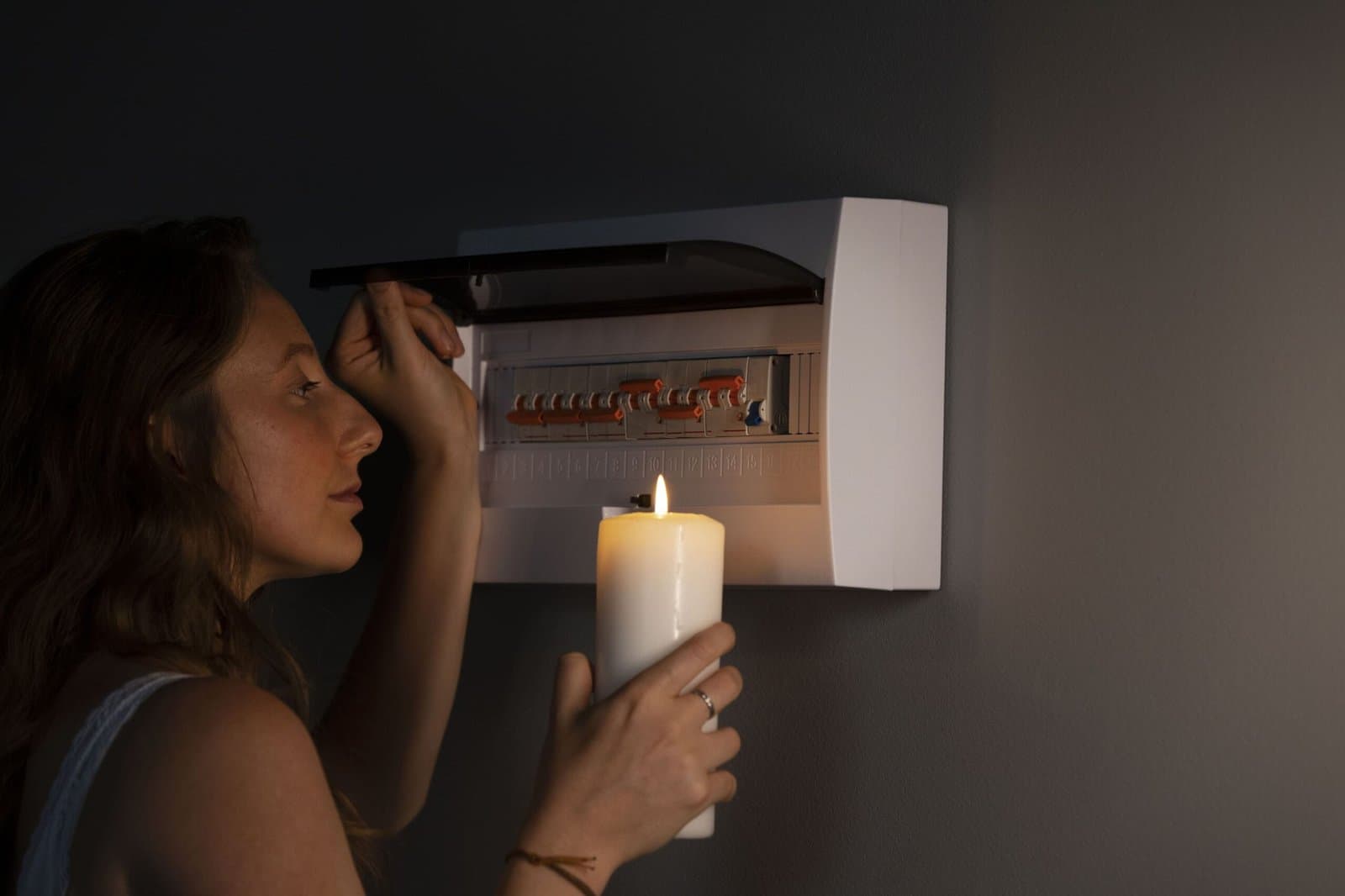
Can solar panels work during a power outage? Yes, solar panels continue generating electricity during outages as long as sunlight is available, but most systems won’t power your home without proper backup configuration.
Key points about solar panels during power outages:
- Grid-tied systems automatically shut down during outages due to UL 1741 and IEEE 1547 safety regulations that prevent backfeeding electricity into repair lines
- Battery backup is required for most homeowners to use solar power during blackouts, panels alone won’t keep your home running
- Four main solutions exist: adding solar batteries, integrating a generator, upgrading to a hybrid inverter, or prioritizing critical loads with dual-output inverters
- Off-grid systems without storage also fail during outages because inconsistent sunlight produces insufficient power for continuous household demand
- Hybrid inverters (like SOLXPOW) offer the simplest retrofit solution, automatically managing solar, battery, and grid power while preventing dangerous backfeeding
Bottom line: Standard solar panels don’t automatically provide backup power during outages. You need either battery storage, a generator, or a hybrid inverter system to keep electricity flowing when the grid fails.
Power outages can happen unexpectedly due to hurricanes, grid failures, or maintenance.
In such situations, a common question is: Do solar panels work during a power outage? Of course, they can continue to produce electricity as long as there is sunlight, theoretically.
However, the reality is more complicated. While solar panels can generate power during an outage, whether that energy reaches your home depends entirely on your residential solar system’s design.
This guide explains why solar panels may stop working during outages and provides actionable solutions to keep your home powered.

Will Solar Panels Keep Your Home Running During a Blackout
When the grid goes down, solar panels still capture sunlight and convert it into electricity that could supply your household. Your system stops delivering power in only two scenarios:
1. Standard Grid-Connected Solar Systems
Grid-tied installations using conventional inverters need an active utility connection to operate. During normal operation, your panels produce electricity for immediate household use, with surplus power flowing back to the utility company.
The moment an outage hits, your grid-tied inverter loses the grid signal it requires to function. This triggers an automatic system shutdown that continues until utility power returns.
This mandatory shutdown follows safety standards including UL 1741 and IEEE 1547. These regulations protect line workers from electrocution by ensuring your solar system doesn’t send electricity into power lines during repair work.
2. Stand-Alone Solar Systems Without Battery Storage
Systems lacking battery backup won’t supply power to your home during blackouts, even with panels actively generating electricity.
Battery-free off-grid solar configurations face an additional obstacle: during overcast conditions or reduced sunlight hours, panel output drops significantly. The limited electricity produced rarely meets continuous household demand, particularly if your system was originally sized just to reduce monthly electric bills rather than provide complete energy coverage.

4 Proven Methods to Use Solar Power During Grid Failures
Want your solar panels to keep your home running when the grid fails? Implement one of these four strategies:
Install Battery Backup Storage
Integrating a solar battery into your current setup delivers reliable energy autonomy. Batteries store surplus electricity and release it when needed, bridging the gap between solar production and household consumption. Size your battery bank according to your energy usage patterns to ensure continuous power supply during outages, regardless of solar output fluctuations.
For stand-alone systems with inverters featuring battery charging capabilities, adding battery backup requires minimal modification.
Standard grid-tied inverters, however, disconnect during outages per safety requirements, meaning your panels won’t supply power when you need it most. Adding batteries to grid-connected systems requires either AC-coupled or DC-coupled configurations that incorporate both inverter technology and battery storage.
AC-coupled systems demand compatible inverters meeting specific model, firmware version, and battery capacity requirements. These technical constraints typically increase both complexity and installation costs.
DC-coupled alternatives involve installing a charge controller with high-voltage transfer capability between your solar array and existing grid-tied inverter, devices like Morningstar’s TR series models. This setup lets you manually activate a stand-alone backup mode, channeling solar energy directly to your home during blackouts.
Add Generator Support to Your Solar Installation
Combining generator backup with solar panels creates an affordable redundancy solution for outages. Generators deliver power after sunset and during cloudy periods when solar production decreases.
Stand-alone system integration is typically simpler. If your inverter accepts generator connections, plug the generator into the inverter’s AC input terminal. When activated, the inverter recognizes the generator as an alternative AC source, functioning like grid power. This setup recharges batteries and prevents excessive discharge.
Streamline the process by selecting an inverter with built-in generator input ports, such as the POW-HVM6.2K-PRO. This eliminates emergency rewiring and manual changeovers during outages, enabling faster and safer generator connection.
Generator power handles household electrical loads effectively. This capability proves invaluable for overnight operation and during extended periods of minimal solar generation.
Grid-connected systems require different integration approaches depending on inverter type. Most conventional grid-tied inverters lack direct generator input capability. Making this work typically requires an automatic transfer switch (ATS) that isolates your home from utility lines while enabling generator power during failures. When the grid drops, the ATS disconnects utility power and automatically routes generator electricity to your system, maintaining safe operation.
Critical consideration: never connect your grid-tied inverter and generator to identical output circuits. Instead, establish a dedicated critical load sub-panel for generator power, isolating essential backup circuits.
Focus Power on Essential Devices During Outages
Certain inverters provide dual AC outputs: primary output for normal operation and backup output for emergency situations. Configure battery voltage thresholds for the backup output to manage power allocation during outages.
Consider maintaining power only for critical devices, lighting, refrigeration, internet connectivity, and medical equipment, while excluding high-consumption items like space heaters or EV charging stations during blackouts.
This strategy maximizes your existing battery capacity without requiring expensive oversized storage systems. You’ll extend backup duration for vital equipment instead of depleting batteries rapidly when the outage begins.
Switch to a Battery-Compatible Inverter (Grid-Connected Systems)
Operating a grid-tied inverter without battery capability? Upgrade to a hybrid grid-tie inverter such as SOLXPOW. These advanced inverters coordinate solar panels, battery storage, and utility power while returning excess generation to the grid.
Unlike conventional grid-tied equipment, hybrid inverters automatically block backfeed during outages, routing solar electricity to household loads. This delivers simpler, safer, and more efficient performance compared to AC-coupled or DC-coupled retrofits.
Conclusion
Powering your home with solar panels during grid outages works seamlessly, when your system includes backup functionality. Grid-connected installations face regulatory compliance requirements as the primary hurdle. Always work with certified solar design professionals who understand your local electrical codes before modifying your solar energy system. Whether you’re planning a DIY solar panel installation or working with professional installers, proper grounding and bonding practices are essential for safety and compliance. For more insights on solar power systems and backup solutions, explore our comprehensive solar blog.
Solar Permit Solutions
Need Solar Permit Plans?
Professional, permit-ready solar plan sets delivered fast. Residential and commercial projects across all 50 states.
FAQs
What’s the difference between a standard grid-tied inverter and a hybrid inverter?
Standard grid-tied inverters require an active utility connection to function and automatically shut down during power outages, even if your panels are generating electricity. Hybrid inverters, on the other hand, can manage solar panels, batteries, and grid power simultaneously. During an outage, hybrid inverters automatically prevent backfeeding to the grid while redirecting your solar energy to power your home. This makes them a simpler and more efficient solution for backup power compared to retrofitting standard inverters with AC or DC coupling systems. Learn more about solar energy technologies and backup power solutions.
Need help designing a solar system with reliable backup power? Contact Solar Permit Solutions for professional design services and permit packages that ensure code compliance and optimal performance. Visit Solar Permit Solutions to learn more about our comprehensive solar permitting and design services.
Need Solar Permit Plans?
Professional, permit-ready solar plan sets delivered fast. Residential and commercial projects across all 50 states.
Frequently Asked Questions
Most grid-tied solar systems automatically shut down during outages due to safety regulations like UL 1741 and IEEE 1547. This prevents your system from sending electricity back into utility lines, which could electrocute workers repairing the grid. Your inverter needs an active grid connection to operate, so when that connection drops, your system stops producing power even though your panels are still capable of generating electricity. Understanding rapid shutdown requirements is crucial for modern solar installations.
Yes, but it requires additional equipment beyond just the batteries. You'll need either an AC-coupled or DC-coupled solution that includes compatible inverters and battery storage. AC coupling requires specific inverter models with particular firmware versions, which can be expensive. DC coupling involves adding a charge controller with a high-voltage transfer switch between your panels and existing inverter, allowing you to manually switch to backup mode during outages. Proper wire management and conduit practices are essential when retrofitting battery systems. Consult a licensed installer to determine the best option for your setup.
Battery backup duration depends on three factors: your battery capacity, household energy consumption, and whether your panels are producing electricity during the outage. If you prioritize critical loads only—like refrigerators, lights, and internet routers—instead of running your entire home, you'll significantly extend your backup time. Design your system based on your essential energy needs rather than total household consumption to maximize outage protection without oversizing your battery investment. Off-grid solar systems for beginners require careful load calculations to ensure adequate backup duration.
Yes, generators can integrate with solar systems to provide backup power. For off-grid systems with compatible inverters, you can connect the generator directly to the inverter's AC input port. For grid-tied systems, you'll typically need an automatic transfer switch (ATS) that isolates your home from the grid and switches to generator power during outages. Never connect your grid-tied inverter and generator to the same output circuits—use a separate critical load sub-panel for generator power to ensure safe operation. Having the essential tools ready makes emergency generator connections faster and safer.
Standard grid-tied inverters require an active utility connection to function and automatically shut down during power outages, even if your panels are generating electricity. Hybrid inverters, on the other hand, can manage solar panels, batteries, and grid power simultaneously. During an outage, hybrid inverters automatically prevent backfeeding to the grid while redirecting your solar energy to power your home. This makes them a simpler and more efficient solution for backup power compared to retrofitting standard inverters with AC or DC coupling systems.
While batteries provide the most reliable backup solution, they're not the only option. You can also integrate a generator with your solar system for nighttime and cloudy-day backup, upgrade to a hybrid inverter that supports battery storage, or use a DC-coupled system with a charge controller and transfer switch. However, without some form of energy storage or backup configuration, standard grid-tied systems won't supply power during outages regardless of sunlight availability, due to mandatory safety shutdown requirements. Professional commercial solar design services can help determine the optimal backup solution for your specific needs.

SPS Editorial Team
Solar Permit Solutions
Solar Permit Solutions provides professional solar permit design services for residential, commercial, and off-grid installations across all 50 states. Our team ensures permit-ready plan sets delivered fast.
Related Articles
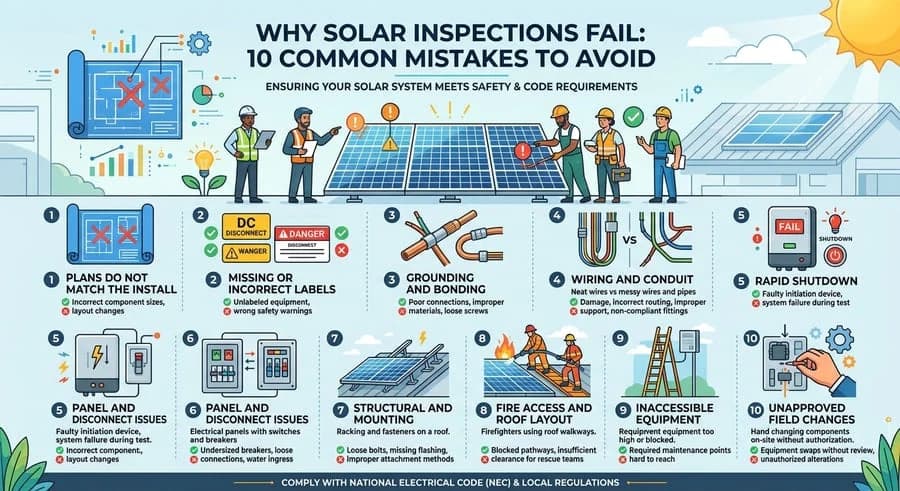
Why Solar Inspections Fail: 10 Common Mistakes to Avoid
Discover the 9 critical reasons solar inspections fail and how to avoid costly m...
Solar Grounding And Bonding: How To Pass Inspection Every Time
Learn how to pass solar grounding and bonding inspections every time. Avoid comm...
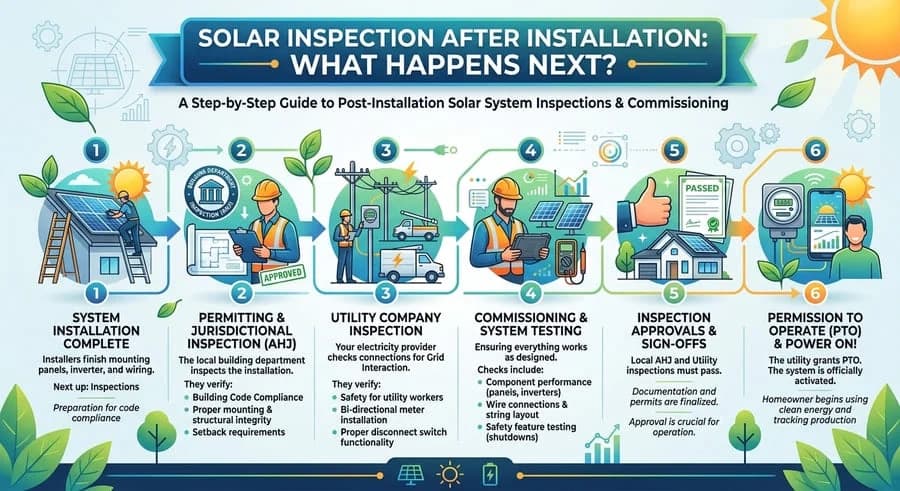
Solar Inspection After Installation: What Happens Next?
Learn how to pass your solar inspection by following essential tips for obtainin...