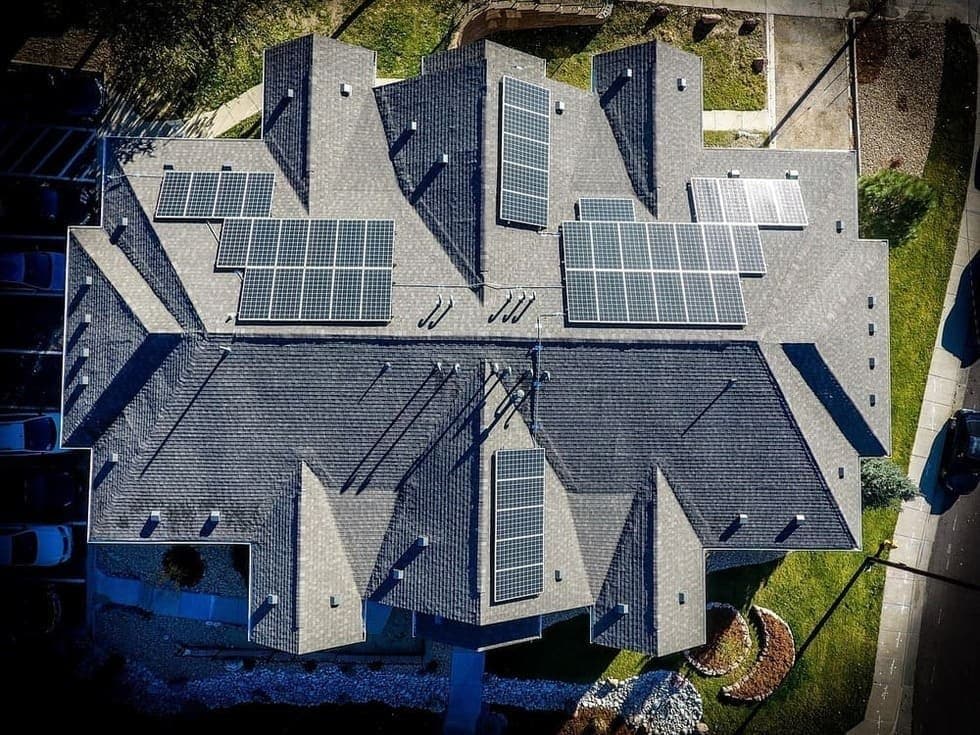
Can you mix different wattage solar panels? Yes, you can combine solar panels with different wattages in the same system, but it’s generally not recommended due to efficiency losses. When panels with varying power ratings connect together, the system defaults to the lowest voltage or amperage value, limiting higher-capacity panels from reaching their full potential and reducing overall energy output.
Key points when mixing different wattage solar panels:
- Series connections increase voltage but reduce amperage to match the lowest-rated panel’s current
- Parallel connections increase amperage but drop voltage to the lowest panel’s level
- Efficiency loss occurs because mismatched panels force the entire system to operate at the weakest panel’s specifications
- Best solutions include using microinverters (allowing each panel to work independently), power optimizers (enabling mixed panels on the same string), or separate inverter strings for different panel types
When mixing panels makes sense: expanding existing solar arrays, maximizing limited roof space with different-sized panels, or integrating newer technology with older installations. However, panels must have compatible voltage and amperage ratings for safe operation.
What you need to know: Never connect solar panels directly to batteries without a charge controller, as this causes permanent damage. Always verify that different panel brands share similar specifications (voltage, amperage, wattage) before combining them. Amorphous and crystalline solar panels cannot be mixed due to fundamental construction differences.
This guide explains proper wiring methods, connection techniques, and equipment solutions that allow different wattage solar panels to work together safely while minimizing power loss.

Essential Guidelines When Combining Different Wattage Solar Panels
Can You Connect Solar Panels with Different Wattages?
Consider this scenario: you’ve purchased a 200-watt panel and want to integrate it with an existing 100-watt unit in your array. Technically, combining panels with different power ratings is feasible. However, certified solar professionals typically recommend against this practice since mismatched wattages compromise system efficiency and total power generation.
How Wattage Differences Impact System Performance
Panels with varying wattages produce different voltage and amperage outputs. Your system defaults to the lowest voltage or amperage value, effectively limiting higher-capacity panels from reaching their full potential. This restriction decreases your array’s overall performance and energy production.
Whether you’re installing panels on a sailboat or outfitting a residential rooftop system, fundamental electrical principles remain constant. While panels with different ratings can function together, success depends on understanding proper integration techniques.
Wattage Variations Influence Your Connection Method
Solar panels connect through either series or parallel configurations. While standard installations don’t require extensive technical knowledge, working with mismatched wattages makes your connection method critically important.
Electrical design principles dictate that identical voltages connect in parallel configurations, while identical currents require series connections.
Series vs Parallel Connections: What You Need to Know
Connecting Mixed-Wattage Panels in Series
How Series Connections Work
Series wiring connects each panel’s positive terminal to the next panel’s negative terminal, creating a continuous electrical pathway.
Benefits of Series Configuration
Most residential solar installations use series connections. This configuration increases voltage output while maintaining consistent amperage. Series wiring enables smaller gauge wire usage and allows longer distances between panels and inverters without significant power loss.
Series Connection Drawbacks
The primary limitation of series wiring involves shading vulnerability. When one panel experiences shade or malfunctions, the entire system’s performance degrades proportionally.
Mixed Wattage Panels in Series Configuration
Connecting different-wattage panels in series increases total voltage output. However, the system’s amperage reduces to match the lowest-rated panel’s current output.
Connecting Mixed-Wattage Panels in Parallel
How Parallel Connections Work
Parallel wiring joins all positive terminals together and all negative terminals together. Verify proper wire identification before making connections to prevent system damage.
Benefits of Parallel Configuration
Parallel connections increase amperage (current) output while maintaining consistent voltage. This configuration particularly benefits off-grid solar users requiring higher battery charging capacity.
Parallel Connection Drawbacks
Higher current demands require heavier gauge wiring in parallel setups. Additionally, parallel configurations require more wire to complete all necessary connections.
If you’re uncertain about proper wire sizing for solar installations, consulting a solar professional ensures safe, code-compliant installation.
Mixed Wattage Panels in Parallel Configuration
Connecting different-wattage panels in parallel increases total current output, but system voltage reduces to match the lowest-rated panel’s voltage.
Hybrid Series-Parallel Configurations
Combining series and parallel circuits maximizes system benefits. This approach connects panels in series first, then joins multiple series strings in parallel.
Install microinverters on each panel to optimize individual performance. This solution eliminates power loss when individual panels experience shading.
Optimal Wiring Methods for Mismatched Panels
Connecting panels without matching voltage or amperage ratings reduces output efficiency. Your system automatically defaults to the lowest specification value when panels don’t match.
Proper wiring technique becomes essential for mismatched arrays. Whether using series or parallel configurations, adding lower-rated panels decreases your array’s total energy production.
Mismatched Arrays in Series
Series connections add panel voltages together without affecting amperage. However, mismatched series arrays default to the lowest panel’s amperage rating.
Mismatched Arrays in Parallel
Parallel connections add panel amperage while leaving voltage unchanged. Mismatched parallel arrays reduce overall system power output.
Working with Different Wattage Panels
Connecting different-wattage panels in parallel (when voltages match) reduces efficiency. Installing blocking diodes in both series and parallel configurations prevents reverse current flow.
Blocking diodes permit one-directional current flow. Alternatively, microinverter installation on each panel optimizes individual performance.
Solar Permit Solutions
Need Solar Permit Plans?
Professional, permit-ready solar plan sets delivered fast. Residential and commercial projects across all 50 states.
Connecting Multiple Panels to a Single Battery
Wiring two solar panels to one battery through a single charge controller follows a straightforward process.
Critical First Step:
Never connect solar panels directly to batteries. Direct connections damage both lead-acid and lithium batteries. Batteries require a management device monitoring charge state and adjusting charging parameters appropriately, similar to automotive battery chargers.
This essential device is the charge controller, which regulates battery charging processes.
Charge Controller Functions:
- Prevents overcharging when batteries reach full capacity
- Adjusts charging voltage and current based on battery condition
Installation Process:
- Step 1: Connect battery to charge controller
- Step 2: Wire solar panels together
- Step 3: Connect panel array to charge controller
- Step 4: Connect electrical loads
Can Different Solar Panel Brands Work Together?
Yes, mixing solar panel brands works when panels share identical specifications and wattages. Despite common misconceptions about brand mixing, field testing confirms compatible panels operate effectively together. However, several factors require consideration before proceeding.
Amorphous and crystalline solar panels differ fundamentally in construction and cannot be combined. Panel voltage, amperage, and wattage specifications determine compatibility.

Five Proven Methods for Combining Solar Panels
Combining panels offers practical advantages. Mixing panel sizes helps maximize capacity on limited roof space. You can also expand existing solar arrays with additional panels. However, improper mixing causes performance issues and potential system damage. These five methods ensure safe, effective panel combinations:
1: Install Individual Microinverters
Microinverters enable independent operation for each panel, providing complete flexibility in mixing panel types and specifications. This solution offers ultimate versatility for diverse panel arrays.
Microinverters eliminate compatibility restrictions between different panels.
2: Implement Power Optimizers
Power optimizers allow each panel in a string to operate at its optimal voltage and current. These devices work best when panels have identical cell counts (all 60-cell or all 72-cell configurations). Review manufacturer datasheets carefully before mixing 60-cell and 72-cell panels in the same string.
Power optimizers enable mixed panel types on individual inverter strings.
3: Separate Panel Types on Different Strings
Many solar inverters feature two independent input strings. This configuration allows different panel types on separate strings. Alternatively, use separate inverters for each panel type.
4: Combine Different-Sized Panels with Identical Cells
Some manufacturers produce multiple panel sizes using identical cell technology. They might offer both 60-cell and 72-cell versions of the same panel model. Panels with different cell counts but identical cell types work together effectively.
5: Use Sufficiently Similar Panels
No two solar panels perform identically, even within the same model line. While matching panels in a string as closely as possible is ideal, minor specification differences create minimal performance variations. Sometimes these differences are negligible enough to avoid problems. This reality allows mixing panels from different manufacturers in certain circumstances.
Conclusion
Successfully combining solar panels with different wattages requires careful planning and proper electrical configuration. While technically possible, mixing panels with varying power ratings introduces efficiency challenges that impact your system’s overall performance. The key to successful integration lies in understanding how series and parallel connections affect performance, and choosing the appropriate wiring method for your specific panel combination.
Whether you opt for microinverters, power optimizers, or separate string configurations, prioritize matching panel specifications as closely as possible. Remember that your system will always default to the lowest voltage or amperage value, limiting higher-capacity panels from reaching their full potential. When expanding existing arrays or maximizing limited roof space, consult with Solar Permit Solutions to ensure your mixed-wattage configuration meets electrical codes and safety standards while delivering optimal energy production for your investment.
Need Solar Permit Plans?
Professional, permit-ready solar plan sets delivered fast. Residential and commercial projects across all 50 states.
Frequently Asked Questions
When you connect panels with different wattages, your system's performance drops to match the specifications of the lower-rated panel. In a series connection, the combined voltage increases but amperage reduces to the 100W panel's current output. In parallel configuration, amperage increases but voltage drops to the lower panel's level. This mismatch prevents the 200W panel from operating at full capacity, reducing your array's total energy production. Using microinverters or power optimizers allows each panel to work independently, solving this limitation.
Yes, you can expand your existing solar array with different-wattage panels, but you'll need to use specific equipment or configurations. The most effective approach involves installing microinverters on each panel, allowing independent operation regardless of wattage differences. Alternatively, if your inverter supports multiple input strings, connect new panels to a separate string. Power optimizers also enable mixed-wattage panels to work together on the same string. Avoid simply adding mismatched panels to existing series or parallel connections without these solutions, as this significantly reduces system efficiency.
Neither series nor parallel wiring offers a clear advantage for mismatched panels; both configurations limit system performance to the lowest-rated panel's specifications. Series connections reduce amperage to the weakest panel's current output, while parallel configurations drop voltage to the lowest panel's level. The best solution for mismatched panels involves using microinverters or power optimizers rather than relying on standard series or parallel wiring alone. If you must choose between the two without optimization equipment, select the configuration that best matches your voltage or amperage requirements based on your inverter and battery specifications.
No, solar panels from different manufacturers can work together effectively when they share similar specifications. The critical factors are matching voltage, amperage, and wattage ratings, not brand names. However, avoid mixing fundamentally different panel technologies like amorphous and crystalline panels, as their construction differences make them incompatible. When combining brands, ensure panels have the same cell count (both 60-cell or both 72-cell) and verify specifications match closely. Using microinverters or power optimizers eliminates most compatibility concerns between different brands, allowing greater flexibility in panel selection.
A charge controller protects your battery from damage caused by unregulated solar panel output. Without this device, solar panels deliver inconsistent voltage and current directly to your battery, causing overcharging, overheating, and permanent battery damage, similar to connecting a car battery directly to a wall outlet. The charge controller monitors your battery's charge state and adjusts incoming power accordingly, preventing overcharging when the battery reaches full capacity and optimizing charging voltage and current throughout the charging cycle. This essential device extends battery lifespan and ensures safe, efficient energy storage for both lead-acid and lithium battery systems.
The most frequent errors include connecting panels without matching voltage specifications, failing to use proper equipment like microinverters or power optimizers, ignoring cell count differences between panels, and attempting to mix incompatible panel technologies like amorphous and crystalline types. Many DIY installers also overlook proper racking systems that accommodate different panel sizes. Another critical mistake involves inadequate wire sizing for the combined system load, which creates fire hazards and reduces efficiency. To avoid common design mistakes that lead to permit denials, many homeowners consult with professionals before mixing panels.

SPS Editorial Team
Solar Permit Solutions
Solar Permit Solutions provides professional solar permit design services for residential, commercial, and off-grid installations across all 50 states. Our team ensures permit-ready plan sets delivered fast.
Related Articles
Why Solar Inspections Fail: 10 Common Mistakes to Avoid
Discover the 9 critical reasons solar inspections fail and how to avoid costly m...
Solar Grounding And Bonding: How To Pass Inspection Every Time
Learn how to pass solar grounding and bonding inspections every time. Avoid comm...
Solar Inspection After Installation: What Happens Next?
Learn how to pass your solar inspection by following essential tips for obtainin...