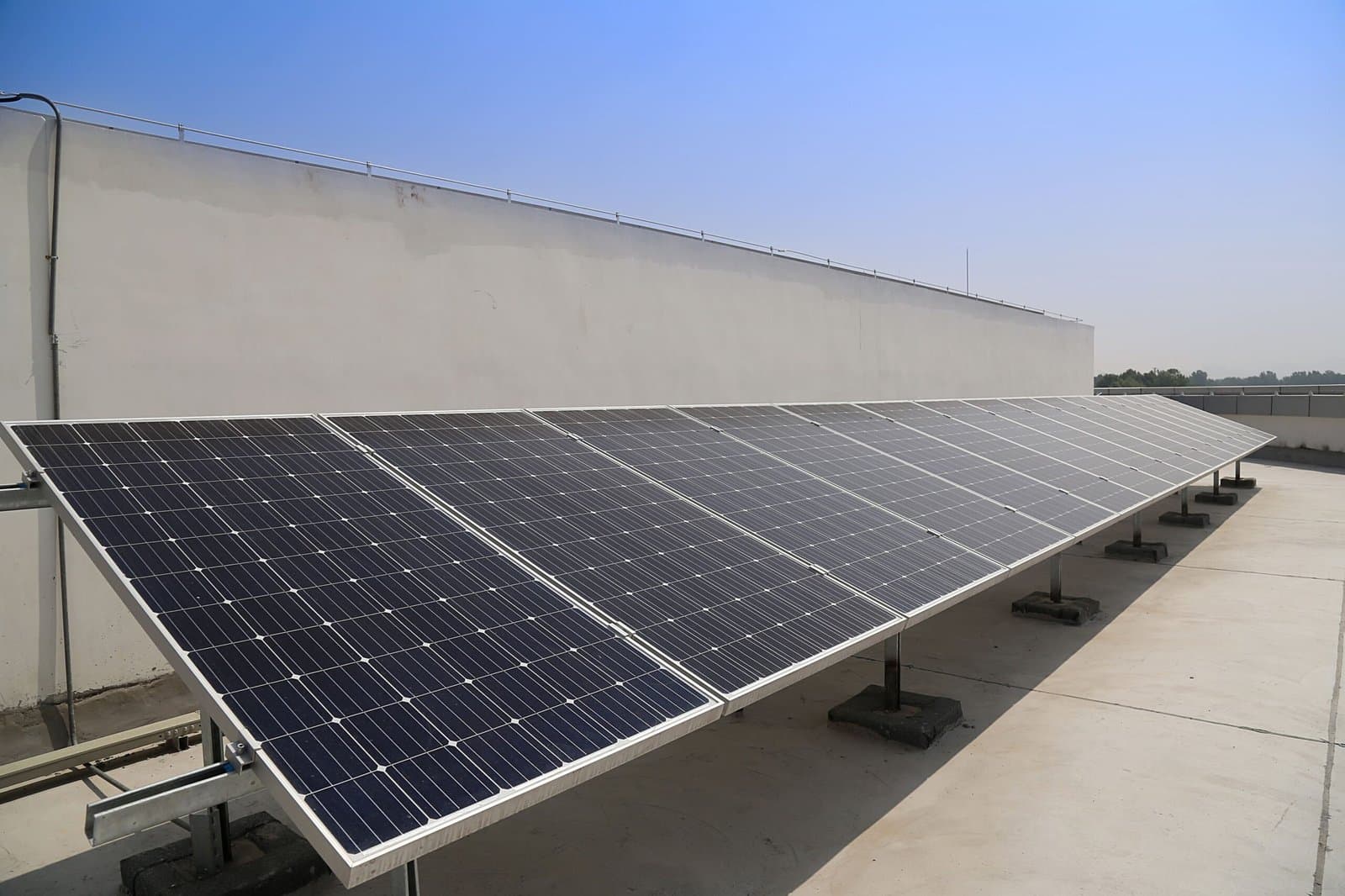
Condos and apartment buildings can install solar panels through two main payment options: direct ownership (purchasing the system outright) or third-party ownership (leasing from a solar developer). Multi-family properties have four proven installation approaches: powering shared common areas like elevators and lighting, connecting systems to individual unit meters, installing solar thermal for building-wide hot water, or participating in community solar programs with virtual net metering. The simplest and most popular option involves offsetting electricity usage in common spaces, which benefits all residents equally and can be cash flow positive from day one when system costs are lower than energy savings.
Installation costs typically range from $15,000 to $100,000+ depending on system size and building needs. The Inflation Reduction Act of 2022 allows non-profit associations to access federal tax credits through direct pay options, making solar more accessible for condo associations. Most projects take 2-6 months to complete, though complex installations may require up to 9 months including planning, permitting, and stakeholder approval.
Two Ways To Pay For Solar Panel Installation
Condos and multi-family properties have two primary options for financing their solar energy systems:
1. Direct Ownership Model
Direct ownership allows the property owner to purchase the entire system outright and retain all electricity generated. This financing method works best when capital is available upfront, financing options are accessible, or when retaining financial incentives is a priority. These incentives include the federal tax credit and Solar Renewable Energy Credits (SRECs).
Following the Inflation Reduction Act of 2022, associations operating under non-profit tax-exempt status can now access the federal tax credit through a direct pay provision.
2. Third-Party Ownership Model (State-Dependent)
Third-party ownership involves a separate organization, such as a solar developer or community investment group, owning and managing the solar installation on the property. The building then purchases the monthly electricity production from this third-party entity.
This ownership structure appeals to many condos and multi-family properties because it simplifies operations and eliminates the need to handle federal tax credits or other incentive programs. The third-party owner also assumes responsibility for all system maintenance. Availability of this option varies by state location.

Four Proven Approaches For Multi-Family Solar Projects
Installing solar on multi-family buildings presents unique challenges compared to single-family homes. While single-family installations connect directly to one electric meter, multi-family properties involve multiple meters, shared rooftop space, and numerous stakeholders in the decision process.
Solar installations can be configured to generate a portion of the building’s total electricity needs, cover consumption in shared areas, or supply power for electric vehicle charging infrastructure.
Project success often correlates with simplicity and straightforward implementation. Various project models exist, and selecting the most appropriate one depends on building type, system goals, and available budget.
Available implementation strategies include:
Approach #1: Powering Shared Building Spaces
The most straightforward approach for condo or multi-family solar installation focuses on offsetting electricity consumption in shared spaces. This includes elevators, lighting systems, and HVAC equipment. This strategy works effectively for buildings with master metering or those with separate metering for common areas.
When solar offsets common area electricity usage, every building resident benefits equally. System costs can be incorporated into regular assessments or condo fees, or the condo association can arrange financing.
Alternative arrangements include power purchase agreements that eliminate upfront costs. When system payments remain lower than common area electric bill savings, solar becomes immediately cash flow positive for the property.
Approach #2: Private Unit Solar Connections
Solar systems can connect to the electric meter of a single residential unit or multiple apartments in separately metered multi-family buildings. Individual unit owners maintain system ownership and receive direct benefits from solar generation.
This approach allows only interested parties to participate and fund the installation, minimizing impact on non-participating residents. The limitation is that only specific units benefit from solar panels installed on communal roof space.
This strategy may still require approval from the condo board, co-housing association, or other governing authority, particularly when multiple units share roof access. Understanding approval procedures and precedents for solar installations becomes critical. Educating decision-making authorities about solar benefits helps facilitate approval.
Approach #3: Thermal Systems For Building-Wide Hot Water
Buildings with centralized water heating systems serving all units can consider solar thermal installations to reduce water heating costs for all residents.
Solar thermal systems offer cost-effective water heating solutions and work well when rooftop space limitations prevent large solar photovoltaic (PV) installations. Solar thermal technology provides an alternative pathway to solar energy adoption.
Approach #4: Shared Solar With Virtual Metering
This approach allows individual units to receive credits on their electricity bills for their allocated portion of solar production. A 50 kilowatt (kW) rooftop system, for example, could distribute production among all units or participating units. Each participating unit receives proportional credit for solar energy generated on their utility statement.
This model requires community solar or virtual net metering legislation in the jurisdiction. Availability of community solar programs varies by state.

Essential Factors Before Starting Your Solar Project
Understanding Your Building’s Decision-Making Structure
Condominium associations and multi-family buildings involve various essential decision-makers, including property owners, real estate developers, property managers, and governing boards.
Gathering appropriate stakeholders is essential for solar project advancement. Designating a project lead to conduct research and present findings to other stakeholders typically produces the best results.
Matching The Right Solution To Your Property’s Needs
Electricity usage patterns and billing structures vary significantly across multi-family properties. Some buildings bill individual tenants or condo owners directly, while others incorporate electricity costs into condo fees or monthly rent. Additionally, some properties maintain reserve funds or fees allocated for building improvements and upgrades.
Consider these factors when evaluating solar options. No single approach works universally best. Decision-makers must carefully assess which model aligns best with their specific building circumstances.
Solar Permit Solutions
Need Solar Permit Plans?
Professional, permit-ready solar plan sets delivered fast. Residential and commercial projects across all 50 states.
Conclusion
Transitioning to solar energy in multi-family buildings and condominiums represents a significant opportunity to reduce operating costs, increase property value, and contribute to environmental sustainability. While the process involves more complexity than single-family installations, the variety of available ownership models and implementation approaches ensures viable solutions for virtually any building type.
Success depends on thorough planning, stakeholder engagement, and selecting the approach that best matches the property’s unique characteristics. Whether offsetting common area expenses, enabling individual unit participation, or implementing building-wide hot water solutions, solar energy can deliver immediate financial benefits and long-term value.
Property managers, condo boards, and building owners who invest time in understanding their options and educating decision-makers position their properties for successful solar adoption. The combination of federal incentives, improved technology, and diverse financing options makes now an ideal time to explore solar energy for multi-family residential properties.
FAQs
Need Solar Permit Plans?
Professional, permit-ready solar plan sets delivered fast. Residential and commercial projects across all 50 states.
Frequently Asked Questions
Solar installation costs vary widely based on system size, roof condition, and project complexity. Common area systems typically range from $15,000 to $100,000+ depending on the building's electricity needs. Direct ownership requires upfront capital but provides access to federal tax credits and other incentives. Third-party ownership options eliminate upfront costs, with buildings paying only for electricity produced. The best approach depends on available capital, tax status, and long-term financial goals.
Agreement requirements depend on the chosen project model and building governance structure. Common area installations typically require approval from the condo board or building owner, as they benefit all residents equally. Individual unit systems may only need approval from the specific unit owner and the board, though shared roof space often requires broader consensus. Review the building's bylaws and governing documents to understand specific approval requirements before proceeding.
Yes, renters can benefit from solar installations in several ways. When solar offsets common area electricity costs, building owners often pass savings to tenants through lower rent or reduced utility charges. In states with community solar programs, renters can subscribe to a portion of the building's solar production and receive credits directly on their utility bills. Third-party ownership models also allow buildings to share solar benefits with tenants without requiring individual ownership.
The treatment of solar systems during unit sales depends on the ownership structure. For common area systems, the installation remains building property and continues benefiting all residents regardless of ownership changes. Individual unit systems typically transfer with the property during sale, similar to other installed fixtures. The increased property value from solar often makes units more attractive to buyers. Proper documentation and disclosure during the sales process ensure smooth transitions.
Installation timelines vary based on project scope and complexity. Simple common area systems may take 2-4 months from approval to activation, including permitting, installation, and utility interconnection. Larger projects or those requiring significant roof work may extend to 6-9 months. The planning and approval phase often takes longer than physical installation, particularly in buildings requiring extensive stakeholder coordination. Working with experienced solar installers familiar with multi-family projects helps streamline the process and avoid common delays.
SPS Editorial Team
Solar Permit Solutions
Solar Permit Solutions provides professional solar permit design services for residential, commercial, and off-grid installations across all 50 states. Our team ensures permit-ready plan sets delivered fast.
Related Articles
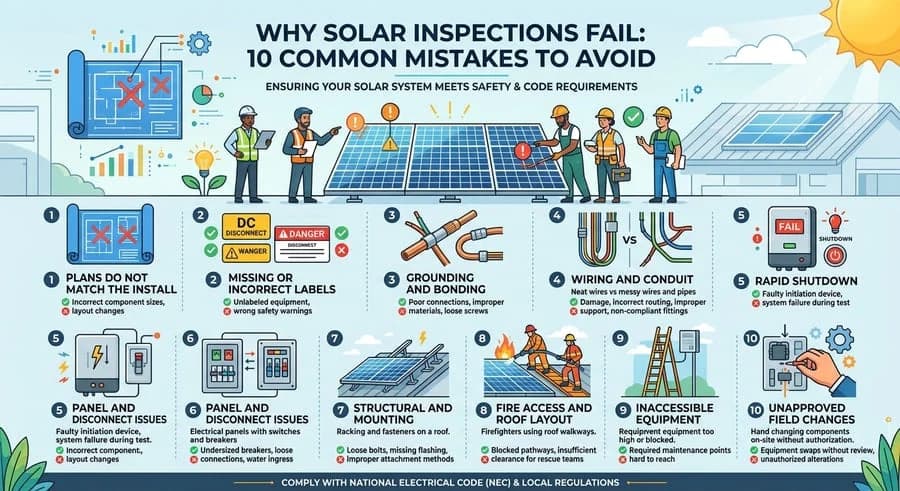
Why Solar Inspections Fail: 10 Common Mistakes to Avoid
Discover the 9 critical reasons solar inspections fail and how to avoid costly m...
Solar Grounding And Bonding: How To Pass Inspection Every Time
Learn how to pass solar grounding and bonding inspections every time. Avoid comm...
Solar Inspection After Installation: What Happens Next?
Learn how to pass your solar inspection by following essential tips for obtainin...