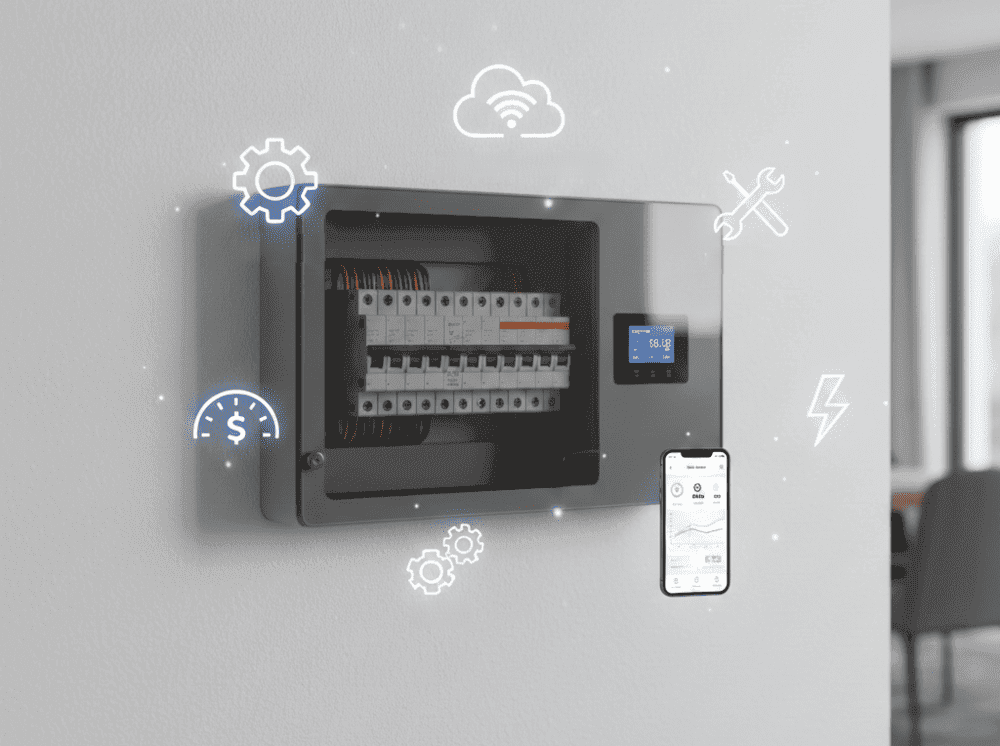
What is a smart electrical panel? A smart electrical panel is an advanced electrical distribution system that monitors, controls, and optimizes home energy consumption through real-time data tracking, remote circuit management via mobile apps, and intelligent load automation, unlike traditional panels that simply distribute power without monitoring capabilities.
Key differences from regular panels: Smart panels provide live energy tracking for individual circuits, remote on/off control through smartphones, automated load management during outages, integration with solar and battery systems, and advanced safety features like arc fault detection, capabilities completely absent in conventional electrical panels.
Installation requirements: Professional installation by licensed electricians is mandatory due to high-voltage connections. Typical installation takes 4-8 hours with power interruption, costs range from $2,000 (retrofit) to $7,250+ (integrated systems), and requires permits complying with National Electrical Code standards.
Primary benefits: Smart panels reduce energy costs through consumption tracking, enable solar and battery optimization, provide backup power management prioritizing essential circuits, offer remote control convenience, and include self-diagnostic safety features preventing electrical fires.
Best candidates for smart panels: Homes with solar installations, battery storage, electric vehicle charging, or planning major electrical additions gain maximum value. Properties experiencing frequent outages or seeking advanced energy management also benefit significantly from smart panel technology.
Advanced electrical panels with smart capabilities are transforming residential energy oversight and backup power administration. These cutting-edge systems deliver unmatched control and visibility into household electrical consumption, enabling more strategic power utilization and financial benefits. Homeowners gain powerful tools for managing their energy infrastructure through these modern solutions.
Defining Smart Electrical Panel Technology
Smart electrical panels represent the next generation of standard electrical distribution systems, embedding technology that tracks, manages, and enhances household power consumption. Traditional panels have seen minimal evolution over many years, while smart alternatives deliver live data feeds, remote management functions, and superior efficiency metrics.
Core Capabilities of Smart Electrical Panels
Modern smart panels bring multiple benefits compared to conventional systems:
- Live energy tracking and monitoring
- Remote circuit management through mobile applications
- Programmable energy consumption timetables
- Advanced safety protections, including arc fault identification
- Compatibility with solar arrays and battery backup configurations
- Intelligent load distribution automation
Distinguishing Smart Panels From Conventional Systems
Traditional panels function solely as power distributors across home circuits, whereas smart panels introduce computational intelligence and oversight capabilities. Homeowners gain precise visibility into individual circuit energy draw and can remotely activate or deactivate circuits through mobile devices. This management sophistication represents a significant advancement beyond conventional electrical infrastructure, establishing smart panels as transformative technology in residential energy administration.
Solar Permit Solutions
Affordable Solar Permit Plans
Don't let permit costs slow your project. Professional plan sets at competitive prices — all 50 states, fast turnaround.
Smart Electrical Panel Functionality
Modern smart electrical panels deliver extensive capabilities and advantages for property owners, especially those who have installed or are planning solar arrays or emergency power configurations.
How Smart Panels Reduce Energy Costs
Through comprehensive data on power consumption, smart panels enable property owners to pinpoint energy-intensive equipment and modify their operational schedules. These adjustments can produce substantial energy reductions and decreased electrical expenses. Understanding when power-hungry devices operate facilitates strategic scheduling during lower-rate periods. Homeowners typically access this information via mobile applications, enabling consumption tracking from any location. According to renewable energy research, optimized energy management systems can reduce household electricity consumption by up to 20%.
Smart Home Device Integration and Remote Control
Numerous smart electrical panels connect with additional intelligent home equipment, including climate control systems, illumination networks, and security infrastructure. Property owners can configure lighting and appliances for automatic shutdown upon departure.
Circuit activation and deactivation capability exists through mobile devices. Users can deactivate overlooked appliances from remote locations or verify essential systems maintain operation during absences or electrical disruptions.
Managing Backup Power During Outages
Smart panels demonstrate exceptional load administration capabilities. These systems automatically regulate electrical loads according to established priority hierarchies and designate critical circuits during service interruptions to maintain vital system functionality while preserving backup power reserves. This proves valuable in areas experiencing regular outages or requiring uninterrupted power, such as locations with medical devices. During interruptions, users might prioritize refrigeration and climate control above discretionary lighting and entertainment equipment.
How Smart Panels Work With Solar and Battery Systems
Smart panels function harmoniously with solar arrays and energy storage configurations. These systems maximize solar energy utilization and refine battery charge-discharge sequences according to generation and consumption data. Property owners receive analytical insights comparing energy production against usage levels. The International Energy Agency reports that integrated smart panel systems improve solar self-consumption rates by 30-40% compared to standard installations.
Safety Features and Diagnostic Capabilities
Smart panels frequently incorporate superior safety mechanisms such as arc fault identification, which mitigates electrical fire risks. Self-diagnostic features enable simplified maintenance and prompt detection of developing concerns. Through early problem notification before escalation, smart panels enhance residential safety standards. Understanding what happens when installations lack proper permits helps emphasize the importance of professional installation and code compliance.
Installation Options: Retrofit vs Integrated Smart Panels
Existing electrical infrastructure accommodates retrofit smart panels installed adjacent to conventional panels. These configurations can manage up to 12 circuits with modular expansion capabilities for additional circuit coverage when required. Retrofitting presents an economical upgrade path for property owners seeking system improvements without comprehensive rewiring projects.
Integrated smart panels suit new construction or total panel replacement projects. These comprehensive units merge all intelligent features with conventional panel operations in unified, streamlined housing. Integrated configurations excel in new building projects or substantial renovation undertakings.
Smart Panel Installation Requirements
Installation methodology differs based on smart panel type and current electrical configuration. Retrofit panels frequently install without significant modifications to existing infrastructure. Integrated configurations may demand more substantial labor but deliver refined, consolidated solutions. Engage certified electricians to identify optimal approaches for specific residential electrical requirements.
Smart Electrical Panel Costs and Pricing
Smart electrical panels provide numerous benefits yet command elevated initial expenses compared to traditional panels. Retrofit smart panel configurations typically require approximately $2,000 for installation. Integrated smart panels, which supplant complete electrical panels, generally cost higher amounts.
Beyond increased upfront expenditure, smart panels generate extended financial benefits through enhanced energy administration and renewable energy system integration. These systems refine energy consumption patterns, lower utility costs, and amplify solar and battery system performance. Extended timeframes can validate initial capital outlay through accumulated savings. Homeowners can also benefit from the federal residential clean energy credit, which provides tax incentives for qualifying energy efficiency improvements.
Calculating Your Smart Panel ROI
Smart panel return on investment manifests through reduced energy expenses, elevated efficiency, and possible incentives or rebates for renewable energy system integration. Research local incentive programs, as these can reduce initial installation expenditures.

How to Choose a Smart Electrical Panel
Multiple smart panel manufacturers operate in the marketplace. Prior to selection, investigate various brands and evaluate their capabilities, dependability, and customer assistance. Review consumer feedback on platforms like EnergySage, and consider consulting professionals with hands-on experience with these technologies.
Selecting the appropriate smart panel demands thoughtful evaluation of specific requirements, current infrastructure, and future objectives. This purchasing guide establishes a framework for reaching an educated decision.
Home Assessment Checklist
Prior to choosing a smart panel, assess your residence’s present and future electrical requirements:
- Current panel capacity: 100A, 150A, or 200A service
- Panel age and condition: Panels exceeding 25 years old may require replacement regardless
- Available panel space: Number of circuits and expansion capacity
- Planned electrical additions: EV charging, solar, batteries, heat pumps
- Smart home integration requirements: Existing automation systems and preferences
Key Features to Prioritize Based on Needs
Different households gain advantages from distinct smart panel capabilities:
- Energy monitoring: Essential for cost optimization and efficiency enhancements
- Load management: Critical for residences adding high-power appliances
- Battery integration: Important for backup power and solar optimization
- Remote control: Valuable for convenience and emergency administration
- Automation capabilities: Useful for advanced smart home integration
Compatibility Considerations
Verify your selected smart panel integrates appropriately with existing and planned systems:
- Solar inverter compatibility: Confirm integration with your solar system brand
- Battery system support: Validate compatibility with your battery storage configuration
- EV charger integration: Examine load management capabilities with your charging equipment
- Smart home platforms: Verify compatibility with your preferred automation infrastructure
Installer Selection and Vetting Process
Select qualified installers with specific smart panel expertise:
- Licensing and insurance: Confirm proper electrical contractor credentials
- Smart panel experience: Validate experience with your selected panel brand
- Manufacturer certification: Seek factory-trained installers when available
- References and reviews: Examine previous customer experiences
- Warranty support: Verify installer can deliver ongoing warranty service
Warranty and Support Considerations
Smart panels represent long-term investments requiring dependable support:
- Equipment warranty: Typically 10-25 years for panel hardware components
- Software support: Continuous app updates and feature enhancements
- Technical support: Access to manufacturer assistance for troubleshooting
- Local service: Availability of qualified technicians for repairs
According to REN21’s renewable energy report, proper warranty coverage and manufacturer support significantly impact long-term system performance and owner satisfaction.

Installation Process and Requirements
Installing a smart electrical panel is a complex project that requires professional expertise and careful planning. Understanding the process helps set appropriate expectations for timeline, disruption, and requirements.
Pre-Installation Assessment and Load Calculations
A qualified electrician must conduct a thorough electrical load analysis to establish proper panel capacity and arrangement. This evaluation encompasses:
- Present electrical consumption patterns
- Anticipated future electrical loads (EV charging, heat pumps, etc.)
- Existing electrical infrastructure status
- Utility service capacity and upgrade specifications
The load calculation verifies the new smart panel can safely accommodate both present and projected future electrical requirements.
Permit Requirements and Code Compliance
Electrical panel replacement necessitates permits in most jurisdictions. The installation must adhere to:
- National Electrical Code (NEC) specifications
- Local electrical codes and modifications
- Utility interconnection standards
- Building code requirements for electrical infrastructure
Professional electricians manage permit submissions and verify all work satisfies code specifications for safe operation. Understanding permit timelines helps property owners plan accordingly. For California-specific requirements, consult our guide on solar panel permitting in California.
Professional Installation vs DIY Considerations
Smart electrical panel installation is not appropriate for DIY projects. The work involves high-voltage electrical connections that present lethal hazards if managed improperly. Licensed electricians possess the training, equipment, and insurance required to execute this work safely.
Professional installation also guarantees:
- Proper grounding and bonding procedures
- Accurate circuit identification and labeling
- Integration with existing residential systems
- Warranty coverage and code compliance assurance
Timeline and Disruption Expectations
Standard smart panel installation requires 4-8 hours of labor, during which electrical power to the residence will be interrupted. The timeline encompasses:
- Utility coordination: 1-2 weeks for power disconnection scheduling
- Installation day: 4-8 hours of electrical labor
- System commissioning: 1-2 hours for testing and configuration
- Inspection: 1-3 days for municipal inspection scheduling
Post-Installation Setup and Configuration
Following physical installation, smart panels require software configuration, including:
- Wi-Fi network connection and account establishment
- Circuit identification and labeling within the application
- Load management rule configuration
- Integration with solar, battery, or additional energy systems
- User training on application operation and capabilities
Conclusion
The foundation for successful smart panel adoption involves aligning the appropriate system with your specific requirements and circumstances. Residences with solar installations, battery storage, or electric vehicles gain maximum advantage from advanced smart panel capabilities, while others may discover value in fundamental monitoring and control functions.
If you’re evaluating a smart electrical panel upgrade:
- Assess your current electrical infrastructure and identify future electrification objectives
- Research local incentives and rebates that can decrease installation expenses
- Obtain quotes from multiple qualified installers experienced with smart panel technology
- Compare different smart panel alternatives based on your specific requirements and budget
- Plan the installation timing to coordinate with other home improvement projects
Given the complexity and safety considerations involved in electrical panel upgrades, professional consultation proves essential. Work with licensed electricians who possess specific experience with smart panel installations and can deliver comprehensive assessments of your residence’s electrical requirements.
At Solar Permit Solutions, we provide expert guidance on electrical system upgrades, helping homeowners navigate the technical requirements and permitting processes involved in smart panel installations. Our experience with solar integration and electrical infrastructure ensures your smart panel upgrade meets all code requirements while optimizing performance with renewable energy systems. Whether you need assistance in Los Angeles or other regions, we’re here to help.
The investment in smart electrical panel technology positions your residence for the electrified future while providing immediate benefits in energy administration, safety, and convenience. As utility rates continue rising and electrical demands increase, the value proposition of intelligent energy management will only strengthen. For information about proper disposal and recycling of old electrical components, consult EPA guidelines on solar panel end-of-life management.
FAQs
Affordable Solar Permit Plans
Don't let permit costs slow your project. Professional plan sets at competitive prices — all 50 states, fast turnaround.
Frequently Asked Questions
A smart electrical panel is an advanced version of traditional electrical distribution systems that incorporates technology to monitor, control, and optimize residential power consumption. Unlike conventional panels that simply distribute electricity throughout your home, smart panels provide real-time energy data, remote circuit management through mobile applications, and intelligent load distribution capabilities. These panels enable homeowners to track individual circuit usage, automate energy schedules, and integrate seamlessly with solar arrays, battery storage systems, and other smart home devices.
The primary difference lies in control and visibility. Regular panels function solely as passive power distributors, routing electricity to various circuits without any monitoring or management features. Smart panels add computational intelligence, allowing homeowners to see exactly how much energy each circuit consumes, remotely activate or deactivate circuits via smartphone, and automate load management based on predefined priorities. Smart panels also offer enhanced safety features like arc fault detection, self-diagnostic capabilities, and integration with renewable energy systems, capabilities entirely absent from conventional electrical panels.
Smart panels work by incorporating sensors and connectivity technology into the electrical distribution system. Each circuit is monitored individually, tracking real-time power consumption and transmitting this data to a cloud-based platform accessible through mobile applications. The panel's intelligent software analyzes energy patterns, manages load distribution during peak demand or power outages, and executes automated rules set by homeowners. When integrated with solar or battery systems, smart panels optimize energy flow by prioritizing solar consumption, managing battery charge cycles, and automatically shifting loads to maximize efficiency and cost savings.
Yes, smart panels absolutely require professional installation by licensed electricians. This is not a DIY project under any circumstances. The work involves high-voltage electrical connections that present lethal hazards if handled improperly. Licensed electricians possess the necessary training, specialized tools, and insurance to perform this work safely. Professional installation also ensures proper grounding and bonding, correct circuit identification, compliance with the National Electrical Code and local requirements, proper permit acquisition, and warranty coverage. At Solar Permit Solutions, we work with certified electricians experienced in smart panel installations to ensure your upgrade meets all safety and code requirements.
Yes, smart panels are designed to integrate seamlessly with existing solar installations and battery storage systems. Most modern smart panels offer universal compatibility with major solar inverter brands, including Tesla Powerwall, Enphase, SolarEdge, and others. The smart panel optimizes solar energy utilization by automatically prioritizing solar-generated electricity, managing battery charging and discharging cycles based on consumption patterns, and providing detailed insights into energy production versus consumption. This integration maximizes the financial benefits of your solar investment while ensuring efficient energy management during grid outages or peak demand periods. For more information on solar permit timelines by state, consult our comprehensive guide.

SPS Editorial Team
Solar Permit Solutions
Solar Permit Solutions provides professional solar permit design services for residential, commercial, and off-grid installations across all 50 states. Our team ensures permit-ready plan sets delivered fast.
Related Articles
Why Solar Inspections Fail: 10 Common Mistakes to Avoid
Discover the 9 critical reasons solar inspections fail and how to avoid costly m...
Solar Grounding And Bonding: How To Pass Inspection Every Time
Learn how to pass solar grounding and bonding inspections every time. Avoid comm...
Solar Inspection After Installation: What Happens Next?
Learn how to pass your solar inspection by following essential tips for obtainin...