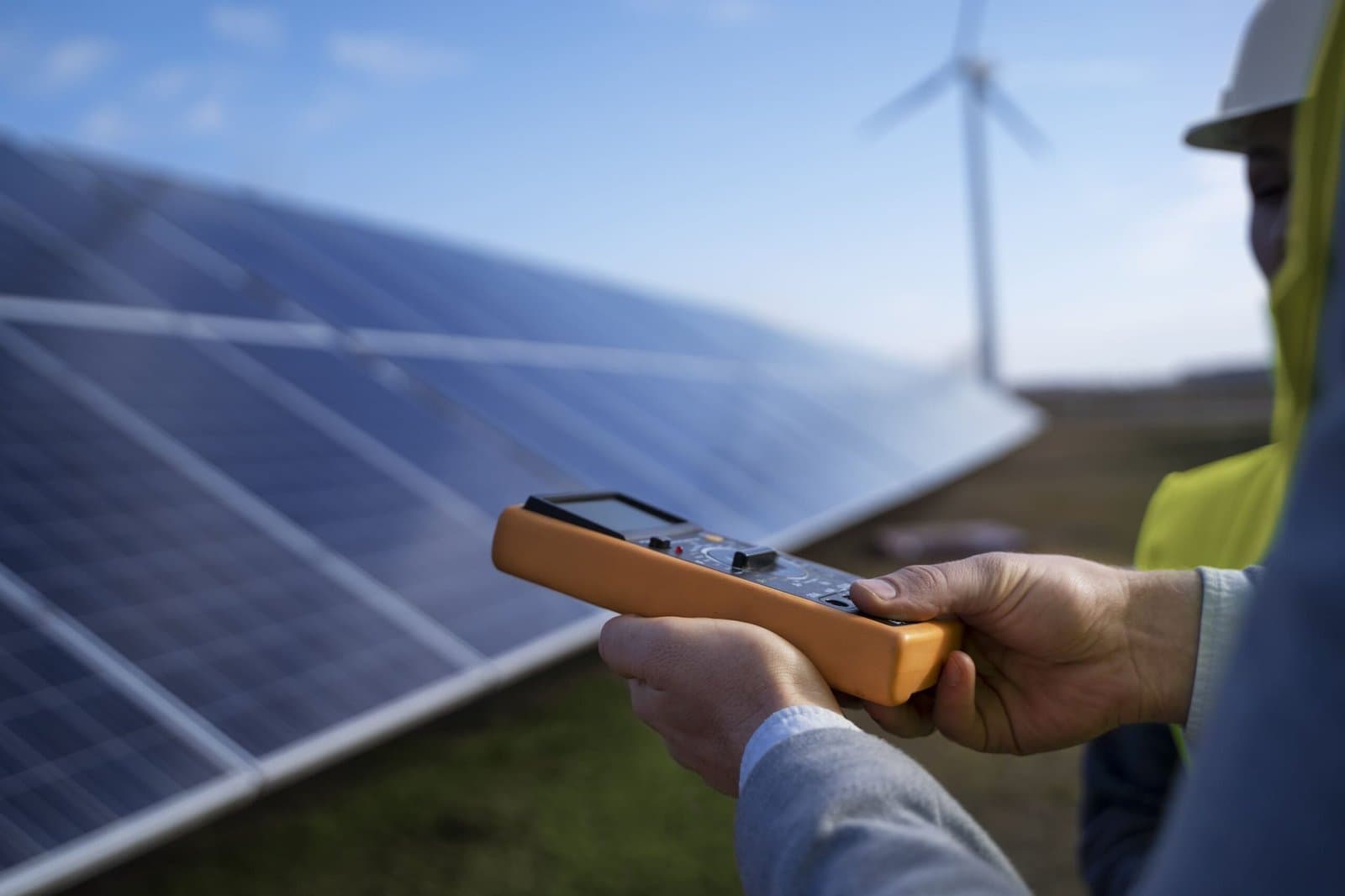
Solar metering equipment measures sunlight intensity using three primary instruments: pyranometers (180-degree field of view for global radiation), pyrheliometers (5-degree field of view for direct beam radiation), and albedometers (dual pyranometers measuring both incoming and reflected radiation). Each instrument captures different portions of the solar spectrum (0.4 to 3 micrometers for shortwave radiation, 3 to 1000 micrometers for longwave infrared) depending on measurement objectives.
Pyranometers are the most versatile option for measuring Global Horizontal Irradiance (GHI) and Diffuse Horizontal Irradiance (DHI) on horizontal or tilted surfaces. Pyrheliometers provide the highest accuracy for Direct Normal Irradiance (DNI) measurements but require solar tracking systems and cost significantly more. Albedometers are essential in high-albedo environments like snow-covered regions where reflected radiation monitoring is critical for climate research and energy balance studies.
Equipment selection depends on five key factors: measurement purpose (what type of radiation needs monitoring), required accuracy level (precision requirements for the application), budget constraints (pyrheliometers cost more than pyranometers), environmental conditions (snow, ice, dust, or coastal locations), and operational complexity (maintenance schedules and calibration requirements). This guide covers solar spectrum characteristics, measurement techniques for different irradiance types, instrument specifications, and practical applications across weather forecasting, solar energy systems, agriculture, and climate research.
Solar Spectrum Categories And Wavelength Ranges
Before selecting measurement instruments, understanding the solar spectrum is essential. The sun emits radiation that falls into three primary categories:
Visible Light: Wavelengths ranging from 0.4 to 0.7 micrometers Ultraviolet Light: Wavelengths spanning 0.1 to 0.4 micrometers Infrared Radiation: Wavelengths extending from 0.7 micrometers to 1000 micrometers
For practical sunlight intensity and atmospheric radiation measurements, focus typically centers on two specific categories:
Solar Radiation: Wavelengths between 0.4 and 3 micrometers Far Infrared: Wavelengths from 3 to 1000 micrometers
The electromagnetic spectrum includes numerous wavelength types, with solar emissions concentrated in the 0.4 to 3 micrometer range. Measuring specific wavelengths at particular angles, whether direct, scattered, or diffused, requires dedicated solar radiation sensors designed for those exact parameters.
Electromagnetic Radiation From The Sun
Solar irradiance represents electromagnetic radiation reaching Earth from the sun. When clouds do not obstruct the path and direct solar radiation passes through the atmosphere, this creates the experience of sunshine with radiant heat and bright illumination. This direct solar beam is termed “direct solar radiation.” However, solar irradiance can also arrive through reflection or atmospheric scattering. Multiple types of solar irradiance exist, each requiring specific measurement instruments.
1. Beam Radiation Measurement With Pyrheliometers (DNI)
Direct Normal Irradiance, also referred to as beam radiation, requires a pyrheliometer for measurement. This instrument points directly toward the sun to capture the direct beam radiation. Proper positioning necessitates mounting on a solar tracker, a device that follows the sun’s path throughout the day. Most pyrheliometers feature a 5-degree field of view angle, ensuring only the direct beam enters the sensor for precise measurements.
2. Scattered Radiation Capture Using Pyranometers (DHI)
Diffuse Horizontal Irradiance consists of solar radiation scattered or diffused by the atmosphere. Pyranometers provide accurate DHI measurements. Unlike pyrheliometers that capture only direct solar radiation, DHI measurements encompass all horizontal irradiance excluding the direct solar beam. To isolate diffused or scattered sunlight, a tracking ball or disc can be positioned above the pyranometer to block the 5-degree cone surrounding the sun. This shading device removes the direct beam, allowing measurement of diffuse light only. While pyranometers have a hemispherical 180-degree field of view, the blocking ball effectively reduces this to 175 degrees.
3. Total Horizontal Radiation Monitoring With Pyranometers (GHI)
Global Horizontal Irradiance represents the total solar irradiance measured on a horizontal surface at ground level. This value combines direct horizontal irradiance and diffuse horizontal irradiance. Measurement requires a pyranometer without any shading device. The decision between using a pyrheliometer with a shaded pyranometer versus a single pyranometer depends on measurement accuracy requirements and budget considerations. Both approaches work effectively, though the pyrheliometer plus shaded pyranometer combination delivers superior accuracy compared to a standalone pyranometer. However, pyrheliometers carry higher costs and require more complex operation. For GHI measurements, combining DHI and DNI using a sun-tracking pyrheliometer and sun-blocking pyranometer produces more accurate results than a single pyranometer but involves greater expense.
4. Angled Surface Radiation Assessment (POA)
Plane of Array (POA) measures total radiation received on an angled surface. Tilting pyranometers enables POA measurement, which is particularly valuable for photovoltaic power (PV) installations mounted at specific angles. PV mounting systems may use fixed positions or sun-tracking mechanisms. When the measurement device is tilted, POA can be separated into Diffuse Tilted Irradiance (DTI) and Beam Tilted Irradiance (BTI). These measurements mirror DHI and DNI but differ due to the tilted sensor orientation.
5. Ground Reflection Monitoring Using Albedometers
Reflected solar radiation measurement requires an albedometer. This instrument essentially combines two pyranometers: one facing upward and one facing downward, both featuring 180-degree fields of view. Albedometers enable simultaneous measurement of global solar radiation (GHI) and reflected radiation. The ratio between reflected radiation and global radiation is called albedo. In high-albedo environments, albedometers become particularly important. Snow and ice-covered areas create significant ground reflection, resulting in elevated albedo values. For climatologists, monitoring albedo changes is crucial because positive feedback loops can develop in certain environments.
Industry Uses For Solar Measurement Equipment
Solar radiation sensors serve numerous practical purposes across various industries and research fields:
Weather Forecasting And Climate Research: Collecting data on solar radiation and reflected solar radiation is fundamental for accurate weather predictions and long-term climate analysis. Albedo measurements provide valuable insights into climate change patterns across different environmental conditions.
Solar Energy Systems: Understanding Plane of Array (POA) and Direct Normal Irradiance (DNI) data is critical for analyzing and optimizing solar panel performance and positioning in photovoltaic power installations.
Agricultural Operations: Knowledge of sunlight availability, including direct and diffuse horizontal irradiance, supports effective agricultural planning and can significantly enhance crop yields.
Environmental Research: Net radiometers enable energy budget assessments, allowing researchers to determine whether solar energy is being absorbed by the ground, dissipated, or reflected back into space.
Solar Permit Solutions
Need Solar Permit Plans?
Professional, permit-ready solar plan sets delivered fast. Residential and commercial projects across all 50 states.
Equipment Selection Criteria For Solar Monitoring
Choosing appropriate measurement equipment requires careful consideration of several key factors:
Measurement Purpose: Clearly define the measurement objectives. For reflected and global radiation, an albedometer is suitable. For direct beam radiation only, a pyrheliometer is necessary.
Required Accuracy: Determine the precision level needed for the specific application. Pyrheliometers deliver more accurate direct beam radiation measurements than pyranometers but come with higher costs and operational complexity.
Financial Constraints: Balance accuracy requirements with available budget. Generally, instruments providing greater accuracy command higher prices.
Environmental Factors: Consider the installation environment. Locations with snow or ice experience higher albedo, making these measurements more critical.
Operational Complexity: Evaluate the operational demands of each instrument before purchasing. More advanced instruments require greater expertise and understanding.
Maintenance Requirements: Different instruments have varying maintenance schedules, from daily to weekly attention. Assess the capacity to maintain and calibrate devices according to required standards.
Infrared And Wavelength Detection Systems
Full-Spectrum Analysis With Pyrgeometers And Net Radiometers
Pyrgeometers measure longwave infrared radiation, while pyranometers handle shortwave radiation. Longwave irradiance represents the infrared radiation portion not emitted by the sun. Accurate longwave irradiance measurements are essential for understanding long-term climate changes involving Earth’s atmosphere and oceans.
Combining pyrgeometers with pyranometers creates comprehensive measurement systems. Using upward and downward-facing pyranometers and pyrgeometers constructs what is known as a net radiometer. A net radiometer enables four distinct measurements. From these four data points, a net energy budget can be calculated. This assessment provides deeper understanding of how solar and infrared energy is stored, reflected, or emitted back into space.
Conclusion
Selecting appropriate solar metering equipment requires careful evaluation of project requirements, environmental conditions, and budget constraints. Pyranometers offer versatile solutions for measuring global and diffuse horizontal irradiance across 180-degree fields of view. Pyrheliometers provide precise direct beam measurements through narrow 5-degree angles, though they demand solar tracking systems and higher operational expertise. Albedometers serve specialized applications where reflected radiation monitoring proves essential, particularly in high-albedo environments featuring snow or ice coverage.
Measurement accuracy directly impacts data quality across weather forecasting, solar energy optimization, agricultural planning, and climate research applications. Higher precision instruments command premium prices but deliver superior performance for critical applications. Environmental factors, maintenance capabilities, and operational complexity must align with available resources and technical expertise. Understanding spectral ranges, directional properties, and specific irradiance types ensures proper equipment selection for any solar radiation monitoring project.
FAQs
Need Solar Permit Plans?
Professional, permit-ready solar plan sets delivered fast. Residential and commercial projects across all 50 states.
Frequently Asked Questions
A pyranometer measures solar radiation from a hemispherical 180-degree field of view, capturing both direct and diffuse sunlight on a surface. A pyrheliometer measures only direct beam radiation from the sun through a narrow 5-degree field of view and requires mounting on a solar tracker to follow the sun's movement throughout the day. Pyranometers are simpler to operate and less expensive, while pyrheliometers provide more accurate direct radiation measurements but cost more and require complex tracking systems.
Calibration frequency depends on the instrument type and application requirements. High-precision instruments used in research or critical solar energy monitoring typically require calibration every one to two years at accredited laboratories. Standard instruments in less demanding applications may extend calibration intervals to two or three years. Environmental conditions, instrument specifications, and accuracy requirements all influence optimal calibration schedules. Regular maintenance and cleaning also affect measurement accuracy between calibration periods.
Yes, pyranometers can be tilted to measure Plane of Array (POA) irradiance on angled surfaces. This capability is particularly valuable for photovoltaic installations where solar panels are mounted at specific tilt angles. When tilted, the measurements can be broken down into Diffuse Tilted Irradiance (DTI) and Beam Tilted Irradiance (BTI), which correspond to DHI and DNI but account for the angled measurement plane. Fixed or sun-tracking mounting systems accommodate various tilt configurations for optimal data collection.
Snow and ice create high-albedo conditions where significant amounts of solar radiation reflect off the ground surface. Albedometers measure both incoming global radiation and reflected radiation simultaneously using upward and downward-facing pyranometers. This dual measurement capability calculates the albedo ratio, which is critical for understanding energy balance in polar regions and snow-covered areas. Climate researchers use albedo data to study positive feedback loops where melting snow reduces surface reflectivity, leading to increased absorption and further melting.
Solar radiation sensors typically measure wavelengths between 0.4 and 3 micrometers, covering visible light and near-infrared portions of the solar spectrum. Pyranometers and pyrheliometers focus on this shortwave radiation range. Pyrgeometers measure longwave infrared radiation from 3 to 1000 micrometers, which represents thermal radiation emitted by Earth's surface and atmosphere rather than direct solar emissions. Spectrally flat instruments provide accurate measurements across the entire solar spectrum without favoring specific wavelengths.
Environmental factors significantly impact measurement accuracy and instrument maintenance requirements. Dew, frost, dust, and precipitation accumulate on sensor domes, reducing measurement quality. Advanced instruments incorporate heating and ventilation systems to minimize these effects. Temperature variations affect sensor calibration, requiring temperature compensation for accurate readings. High-wind environments may necessitate sturdy mounting systems, while corrosive coastal atmospheres demand weather-resistant materials. Locations with frequent cloud cover, aerosols, or pollution require spectrally flat instruments for consistent accuracy under varying sky conditions.

SPS Editorial Team
Solar Permit Solutions
Solar Permit Solutions provides professional solar permit design services for residential, commercial, and off-grid installations across all 50 states. Our team ensures permit-ready plan sets delivered fast.
Related Articles
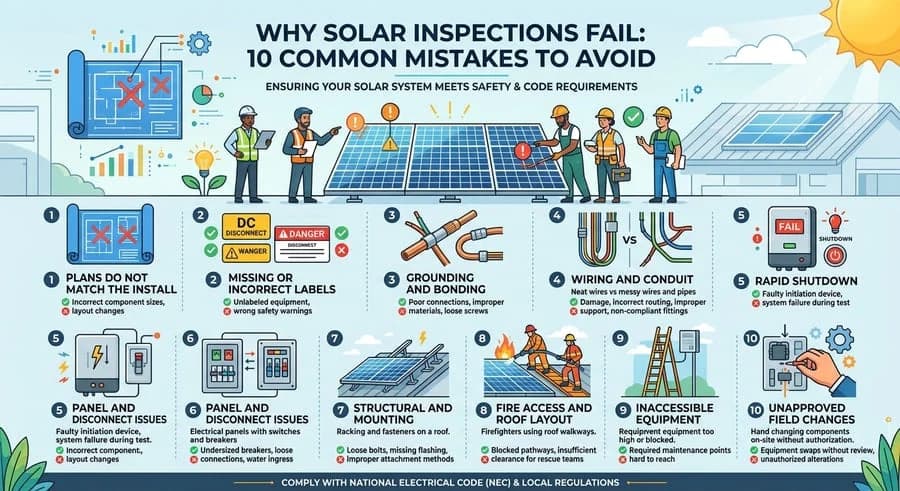
Why Solar Inspections Fail: 10 Common Mistakes to Avoid
Discover the 9 critical reasons solar inspections fail and how to avoid costly m...
Solar Grounding And Bonding: How To Pass Inspection Every Time
Learn how to pass solar grounding and bonding inspections every time. Avoid comm...
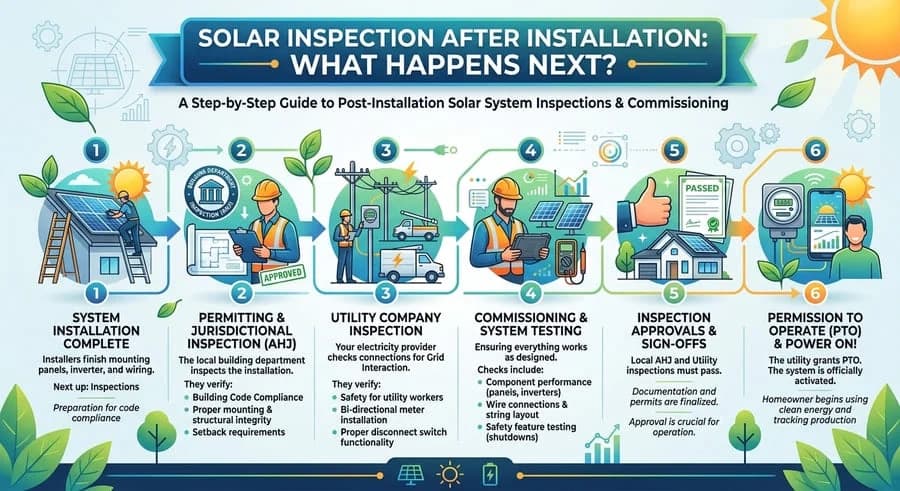
Solar Inspection After Installation: What Happens Next?
Learn how to pass your solar inspection by following essential tips for obtainin...