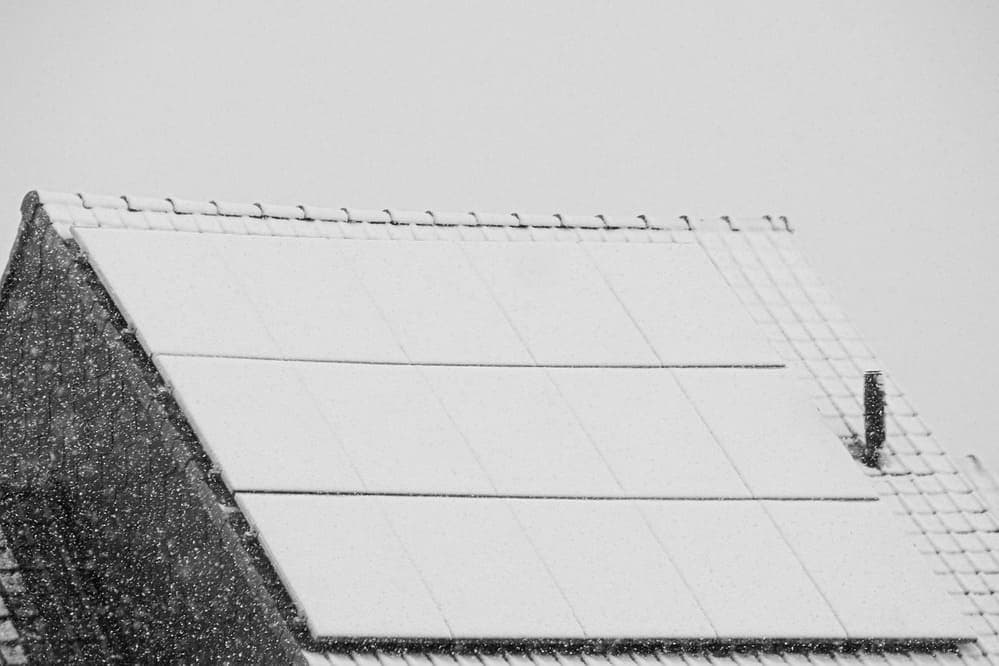
Snow removal from solar panels requires specialized tools and safety precautions to maintain winter energy production. Here’s what you need to know:
Quick Answer: Best Snow Removal Methods
- Use a solar panel snow rake with rubber or foam heads (non-abrasive)
- Work from ground level using extendable poles (15-20 feet recommended)
- Install snow guard systems in areas with frequent heavy snowfall
- Allow natural melting for light accumulations under 2 inches
- Never use metal scrapers, hot water, or sharp tools
When Snow Removal is Necessary
Snow accumulation exceeding 2-3 inches significantly reduces solar energy production. According to the National Renewable Energy Laboratory (NREL), even partial panel shading can decrease output by 20-25 percent. Heavy snow coverage can drop production to nearly zero, making timely removal essential in snowy climates.
Safety Requirements
- Wear non-slip boots with deep treads for traction
- Use safety harnesses if roof access is required
- Work during calm, clear weather conditions only
- Position yourself beside panels to avoid falling snow chunks
- Avoid temperatures below 15°F when panels become brittle
Snow Guard Benefits
Snow guards prevent excessive accumulation by distributing weight evenly and allowing controlled release in smaller amounts. These protective systems reduce structural stress on mounting hardware and minimize ice formation that can cause microcracks in panel glass.
Winter Solar Performance Expectations
Solar panels continue operating in winter but typically produce 40-60 percent less energy than summer due to shorter daylight hours and lower sun angles. Cold temperatures actually improve panel efficiency compared to hot weather. Keeping panels clear of snow maximizes winter energy generation.
Whether you need guidance on safe snow removal techniques or ongoing system care, understanding proper winter maintenance helps you maximize your solar investment regardless of weather conditions.

pair of hands with do’s and don’ts sign
Solar Panel Snow Removal: Essential Dos and Don’ts
Safety and system protection should guide your snow removal approach.
Do:
- Select Soft, Non-Metallic Equipment: Choose tools featuring rubber or foam heads to prevent surface scratches or system damage.
- Address Heavy Accumulation Promptly: Clear panels following major storms when conditions permit safe access.
- Track Weather Patterns: Schedule removal activities during favorable conditions to minimize hazards.
- Operate From Ground Level: Utilize extendable pole tools to access your array without climbing, making safety your priority.
Don’t:
- Access Rooftops Without Protective Equipment: Roof work presents serious danger without appropriate safety gear and protocols.
- Apply Hot Water or Chemical Solutions: These substances can harm panels and create residues that decrease performance.
- Employ Sharp Implements or Metal Edges: These items can damage panels, electrical components, or mounting equipment.
- Step on Panels or Electrical Components: Walking on your system can create cracks or compromise performance.
Effective Snow Removal Methods for Solar Panels
Consider these proven approaches for clearing your solar array.
Specialized Snow Removal Tools
The safest method involves using tools designed specifically for solar applications. These lightweight implements feature non-abrasive materials that protect panel surfaces from scratches and damage.
Many models include long, extendable poles enabling ground-level access without requiring ladders. Clearing panels from the ground eliminates slipping or falling risks, particularly on icy rooftops.
Exercise caution throughout the removal process. Snow can release suddenly in large chunks, creating potential hazards. Position yourself beside the array whenever possible, avoiding placement directly beneath panels during clearing operations.
Installing Snow Guard Systems
For residents in snow-prone areas, protective guard systems offer significant advantages. These devices prevent heavy snow accumulation by allowing controlled release in smaller, safer amounts. This protection benefits both your panels and their support structures.
Snow guards represent smart investments for homeowners facing regular winter precipitation. They reduce stress from snow and ice on your system, maintaining performance while minimizing constant removal needs. By controlling buildup and preventing ice formation, these guards extend panel lifespan and ensure consistent winter efficiency.
Effective snow management products designed specifically for solar installations include models that fit various roof types. These systems reduce accumulation while preventing large snowfalls from sliding off rapidly and potentially damaging your array. Durable, easy-to-install options keep snow from building up excessively, allowing safe release in manageable amounts.
Natural Melting Process
Sometimes clearing panels proves unnecessary as snow handles itself naturally. Since most installations mount at angles, snow frequently slides off independently during melting.
When sunlight hits your panels, they produce modest heat that accelerates melting, especially with light, powdery snow that adheres minimally.
However, weather conditions matter significantly. Consistently freezing temperatures or wet, heavy snow extend melting times. Ice formation can also occur, making snow release more difficult and potentially frustrating.
If your panels receive abundant sunlight and your location experiences only light or occasional snow, natural melting usually provides the easiest solution. However, frequent heavy snowfall or extended freezing periods may require intervention to maintain system efficiency. Adding protective guards or clearing substantial accumulation when necessary ensures panels remain productive throughout winter.

Safety Guidelines for Solar Panel Snow Removal
Safety must always take precedence when clearing snow from your solar array. Snow and ice create slippery conditions on rooftops, increasing accident risks during removal operations. Follow these essential safety recommendations to protect yourself while maintaining system efficiency:
1. Wear Appropriate Footwear
Snowy and icy surfaces present treacherous conditions, especially on rooftops. Wear boots providing excellent traction to prevent slips and falls. Select footwear with rubber soles and deep treads engineered for winter environments.
2. Secure Yourself if Climbing
If roof access becomes necessary for snow removal, safety harnesses are essential. Attach the harness to stable anchor points to minimize injury risk. However, ground-level work remains the safest option whenever feasible.
3. Operate From Ground Level
Tools with long, extendable poles enable panel clearing while maintaining safe ground positioning. Lightweight, non-abrasive implements prove ideal for this approach.
4. Choose Favorable Weather
Avoid working during high winds, active snowfall, or icy conditions. Select calm, clear days for removal activities to minimize accident risks.
5. Watch for Sliding Snow
During removal, snow can release in large, heavy sections. Always position yourself beside panels to avoid being struck. Additionally, ensure nobody stands below your work area.
6. Protect Your System
Never employ sharp implements, metal scrapers, or hot water for snow removal. These can crack or scratch panels, reducing efficiency. Use only soft, non-metallic tools designed specifically for solar applications.
Solar Permit Solutions
Need Solar Permit Plans?
Professional, permit-ready solar plan sets delivered fast. Residential and commercial projects across all 50 states.
Why Snow Removal Matters in Certain Climates
Winter storms can substantially affect solar system performance and longevity. Addressing snow accumulation helps achieve optimal energy generation. Here’s the reasoning.
Snow Obstructs Sunlight, Decreasing Energy Production
When snow blankets your panels, it blocks sunlight from reaching photovoltaic cells, stopping electricity generation. Research from the Union of Concerned Scientists indicates that even partial shading can reduce output by 20 to 25 percent. With heavy accumulation, production can approach zero.
Accumulated Snow Stresses Support Structures
Snow often melts unevenly, creating weight imbalances across your array. Over time, this strains the mounting system, raising damage risks. For regions with frequent storms, installing protective guards helps prevent excessive buildup and reduces structural wear.
Ice Affects System Longevity
When snow melts and refreezes, ice can form on panel surfaces or within frames. Ice buildup may cause microcracks in glass or damage mounting components. Prompt and safe snow removal prevents ice formation, preserving your system’s longevity and efficiency. Proper end-of-life management also ensures panels are recycled responsibly when they reach the end of their service life.
Optimizing Winter Energy Production
Snow removal remains essential for maximizing system output during snowy winters. Using safe practices like non-abrasive tools or allowing natural melting, combined with preventative measures like protective guards, protects your panels and reduces maintenance demands. According to Vote Solar, proper maintenance ensures your renewable energy system delivers consistent performance. Make winter care a regular part of your system maintenance to keep it running smoothly and efficiently.
Conclusion
Winter weather doesn’t have to compromise your solar energy production. By understanding proper snow removal techniques and implementing preventative measures, you can maintain optimal system performance throughout the coldest months. Whether you choose to use specialized removal tools, install protective guard systems, or allow natural melting in milder climates, the key is prioritizing both safety and system protection.
Regular winter maintenance protects your investment in multiple ways. It prevents structural damage from excessive snow weight, avoids ice-related wear on components, and ensures consistent energy generation when you need it most. Remember that while solar panels are built to withstand harsh weather, proactive care extends their lifespan and maximizes your return on investment.
As you navigate winter solar maintenance, always put safety first. Working from ground level with appropriate tools eliminates most risks associated with snow removal. For homeowners in areas with frequent heavy snowfall, investing in protective guard systems can significantly reduce maintenance demands while safeguarding your array from weather-related stress. Professional solar design services can help optimize your system for winter conditions.
With the right approach to winter care, your solar system will continue delivering clean, renewable energy year-round. The International Energy Agency projects continued growth in solar adoption, making proper maintenance increasingly important. According to REN21’s Global Status Report, renewable energy installations continue expanding worldwide. Make snow removal and winter maintenance part of your seasonal routine, and your panels will reward you with reliable performance for decades to come.
FAQs
How do solar panels perform in winter compared to summer months?
Winter solar production typically decreases by 40 to 60 percent compared to summer output, though this varies by location. The reduction stems from shorter daylight hours, lower sun angles, and potential snow coverage rather than cold temperatures. Interestingly, solar panels actually operate more efficiently in cold weather because excessive heat reduces panel efficiency. A clear, cold winter day can produce surprisingly strong output. The key to maximizing winter performance is keeping panels clear of snow and debris. Resources from the IEEE Power and Energy Society provide additional technical guidance on renewable energy systems. In regions with significant winter sun exposure, solar systems still generate substantial energy during cold months, making year-round production viable.
Need Solar Permit Plans?
Professional, permit-ready solar plan sets delivered fast. Residential and commercial projects across all 50 states.
Frequently Asked Questions
Generally, accumulations exceeding 2 to 3 inches warrant removal, especially if temperatures remain consistently below freezing. Light dustings under an inch typically melt quickly and slide off naturally due to panel angle and solar heat. However, wet, heavy snow should be addressed sooner than powdery snow, as it adheres more stubbornly and creates greater weight stress on mounting structures. Monitor your system's energy production through your monitoring app. If output drops significantly during sunny winter days, snow coverage is likely the culprit and removal becomes necessary.
Yes, ice can potentially damage solar panels through several mechanisms. When snow melts and refreezes repeatedly, ice can form within panel frames or along edges, creating expansion pressure that may cause microcracks in glass surfaces. Ice buildup can also stress mounting hardware and electrical connections. Additionally, thick ice layers are heavier than snow, placing extra strain on support structures. To minimize ice damage, remove heavy snow promptly before melting and refreezing cycles occur. Protective guard systems also help by preventing massive snow accumulation that leads to problematic ice formation.
Avoid snow removal when temperatures drop below 15°F, as panels become more brittle in extreme cold and susceptible to cracking from pressure or impact. Additionally, working in such conditions presents serious safety risks, including frostbite and reduced dexterity that increases accident likelihood. The best time for snow removal is during slightly warmer periods, ideally when temperatures rise above 25°F and conditions are calm. If temperatures remain extremely cold for extended periods, focus on removing only the heaviest accumulations and allow natural melting to handle the rest once conditions moderate.
Winter solar production typically decreases by 40 to 60 percent compared to summer output, though this varies by location. The reduction stems from shorter daylight hours, lower sun angles, and potential snow coverage rather than cold temperatures. Interestingly, solar panels actually operate more efficiently in cold weather because excessive heat reduces panel efficiency. A clear, cold winter day can produce surprisingly strong output. The key to maximizing winter performance is keeping panels clear of snow and debris. In regions with significant winter sun exposure, solar systems still generate substantial energy during cold months, making year-round production viable.
Hiring professionals makes sense in several situations. If your roof is particularly steep, high, or difficult to access safely, professional services eliminate personal risk. Homeowners uncomfortable with heights or lacking proper safety equipment should also consider professional help. Additionally, if you have a large solar array or experience frequent heavy snowfall requiring regular clearing, professional maintenance contracts can provide peace of mind and consistent care. However, for most residential installations with accessible roof angles and occasional light to moderate snow, homeowners can safely handle removal themselves using proper ground-level tools and following safety guidelines. Evaluate your specific situation, physical capabilities, and comfort level when making this decision.
SPS Editorial Team
Solar Permit Solutions
Solar Permit Solutions provides professional solar permit design services for residential, commercial, and off-grid installations across all 50 states. Our team ensures permit-ready plan sets delivered fast.
Related Articles
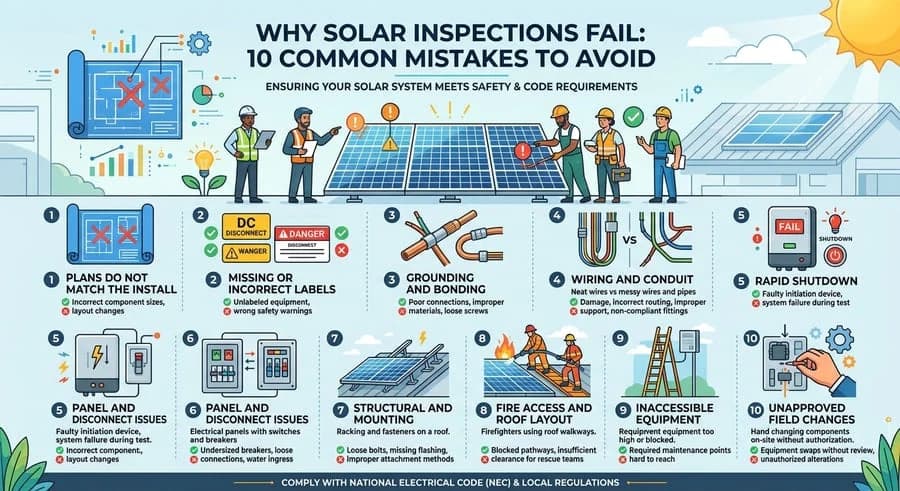
Why Solar Inspections Fail: 10 Common Mistakes to Avoid
Discover the 9 critical reasons solar inspections fail and how to avoid costly m...
Solar Grounding And Bonding: How To Pass Inspection Every Time
Learn how to pass solar grounding and bonding inspections every time. Avoid comm...
Solar Inspection After Installation: What Happens Next?
Learn how to pass your solar inspection by following essential tips for obtainin...