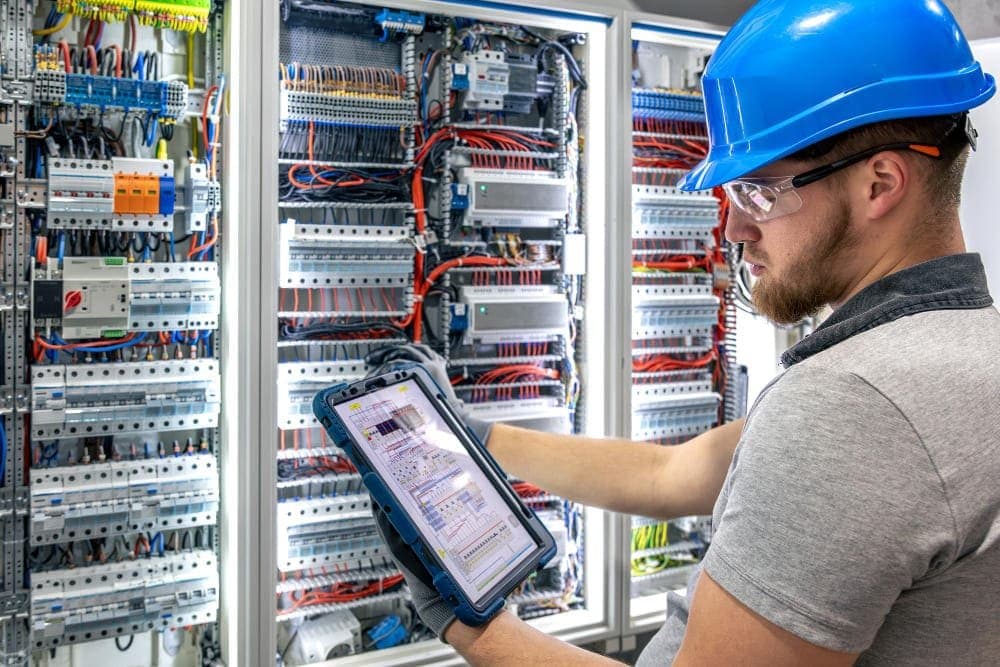
Commercial smart solar inverters are advanced power conversion devices that transform DC electricity from solar panels into AC electricity while providing bidirectional power flow, grid stabilization, remote monitoring, and energy storage integration. Unlike traditional inverters that only convert power, smart inverters actively manage reactive power (kVAR), regulate voltage and frequency, comply with IEEE 1547 interconnection standards, and feature Maximum Power Point Tracking (MPPT) with up to 6 channels for optimal energy capture. These systems achieve efficiency ratings exceeding 98.5%, support grid resilience through LVRT/HVRT capabilities, and enable remote diagnostics via Modbus TCP/IP, RS485, and Ethernet protocols. Smart commercial solar inverters reduce operational costs through peak shaving, demand response integration, and predictive maintenance while ensuring safety through anti-islanding protection that prevents electricity backfeeding during grid outages.
Solar installation professionals gain the capacity to deliver clients superior energy solutions marked by enhanced efficiency and dependability. The growing centrality of smart solar inverters in commercial photovoltaic installations presents opportunities to deliver sustained energy cost reductions, elevated system oversight, and market differentiation.
Defining Smart Solar Inverter Technology
Smart solar inverters represent sophisticated equipment engineered to transform DC (direct current) power produced by photovoltaic arrays into AC (alternating current), the standard electricity format for commercial electrical infrastructure. Their functionality extends substantially beyond basic energy transformation, distinguishing them from conventional inverter systems.

Conventional Commercial Solar Inverters Versus Smart Inverter Systems
Traditional inverters handle solar energy conversion to operational electricity, while smart inverters deliver comprehensive additional capabilities.
Conventional Commercial Solar Inverters
Standard solar inverters perform DC (direct current) to AC (alternating current) electricity transformation, converting photovoltaic panel output into power compatible with commercial equipment and electrical networks. This conversion mechanism switches DC input from solar installations into AC waveforms aligned with utility grid voltage and frequency parameters or a facility’s internal electrical specifications.
Unidirectional power transmission: Conventional commercial inverters operate within unidirectional energy pathways, channeling electricity singularly from photovoltaic arrays toward building electrical loads or utility networks. These systems lack grid interaction capabilities and cannot dynamically respond to demand variations or voltage shifts.
Absence of grid assistance: Traditional commercial inverters provide no voltage stabilization, frequency management, or ancillary grid-support functions. They discharge surplus energy into electrical networks without accounting for grid operating conditions. This limitation creates inefficiencies, including energy degradation from over-voltage scenarios or solar production and consumption misalignment.
Limited monitoring functionality: Conventional commercial solar inverters typically exclude monitoring or communication features. Without data transmission to installers or system administrators, identifying problems such as panel performance decline, shading impacts, or inverter malfunctions requires physical inspection or supplementary third-party monitoring systems.
Prioritizing Safety: Exceeding Basic Conversion Functions
Among the most essential capabilities of smart solar inverter technology is anti-islanding safeguarding. This transcends mere technical specification; it constitutes a mandatory safety protocol. During utility grid disconnection events, smart inverters identify the outage and isolate the photovoltaic installation. This protection eliminates electricity backfeeding into de-energized networks, which poses severe electrocution hazards for utility maintenance personnel. Compliance with interconnection regulations, including IEEE 1547, relies fundamentally on this protective function.
Smart Solar Inverter Systems
Smart commercial solar inverters represent substantial enhancements over conventional inverter architecture, incorporating sophisticated technology to deliver instantaneous energy oversight, two-way grid connectivity, and comprehensive system surveillance.
Two-way power transmission: Contrasting with traditional inverters, smart inverters facilitate bidirectional energy movement, enabling them to distribute power to electrical networks and draw power when required (such as with energy storage configurations). This functionality positions smart solar inverters as vital components in grid load equilibrium and demand fluctuation response.
Grid-assistance capabilities: Smart commercial solar inverters deliver sophisticated grid support services, encompassing:
- Voltage stabilization: Smart inverters modify reactive power quantities delivered to electrical networks to preserve consistent voltage parameters.
- Frequency stabilization: These systems adjust their power generation or consumption, responding to grid frequency changes, contributing to network stability during operational variations.
- Anti-islanding safeguarding: When grid outages occur, smart solar inverters identify power loss and automatically isolate, securing safety and eliminating feedback into electrical networks.
Instantaneous energy oversight: Smart inverters maximize solar energy generation by modifying output according to environmental factors (including shading or temperature conditions) and grid demands. This real-time management enhances energy efficiency and reduces energy degradation.
Communication and solar surveillance:
- Integrated sensors and communication standards (such as Modbus, SunSpec, or proprietary platforms) enable remote system observation, diagnostics, and operation.
- Smart PV inverters exchange data with additional system components, including battery storage equipment, smart meters, and energy management systems, to refine energy allocation throughout the installation.
- Instantaneous data acquisition enables installers and administrators to monitor power generation, smart solar inverter functionality, and system performance, facilitating predictive maintenance and swift problem resolution.
Grid signal responsiveness: Within smart grid infrastructures, utilities transmit signals to dynamically modify power delivery or consumption. Smart solar panel inverters react to these communications, decreasing output during surplus production periods or elevating it when networks demand additional energy. This oversight capacity facilitates expanded renewable energy integration without sacrificing stability.
Effortless energy storage integration: Smart solar inverters operate cooperatively with battery storage installations, enabling surplus solar energy storage during reduced demand intervals and discharge when necessary for on-site consumption or grid assistance. This capability proves particularly valuable in commercial deployments pursuing peak demand reduction or energy autonomy.
Solar Permit Solutions
Commercial Solar Design Services
Professional permit plan sets for commercial installations. PE-stamped, code-compliant, fast delivery.
Advantages of Smart Commercial Solar Inverters
Smart solar inverters constitute critical components for commercial solar developments to accomplish elevated efficiency, dependability, and expandability. From financial analysis perspectives, smart solar inverters substantially enhance commercial solar system economic returns.
Smart Inverters Maximize Solar Energy Generation
Smart commercial solar inverters incorporate sophisticated power management algorithms to maximize energy production. These inverters perpetually assess grid operating conditions. including voltage and frequency, and modify their output to align with grid specifications and environmental circumstances.
- Voltage Parameters: Smart solar inverters characteristically provide broad operational voltage spans, such as 250V to 1,000V or beyond, ensuring compatibility with diverse system arrangements.
- Maximum Power Point Tracking (MPPT): Smart PV inverters feature multiple-point MPPTs, frequently offering up to 6 MPPT channels, to maximize energy capture from solar installations, particularly under partial shading conditions or arrays with inconsistent panel output.
- Superior Efficiency Specifications: Leading smart commercial solar inverters deliver efficiency levels exceeding 98.5%, minimizing energy degradation during DC-to-AC transformation. Select models achieve European efficiency classifications surpassing 99%, maximizing power generation under variable load scenarios.
Smart solar inverters guarantee minimal energy loss and enhance overall system performance by controlling reactive power (kVAR) and sustaining optimal power factor. They dynamically regulate power generation based on real-time grid and environmental intelligence, ensuring seamless and efficient energy utilization for large-scale installations.
Smart Commercial Solar Inverters Strengthen Utility Grid Resilience
Grid resilience stands as a critical requirement for expansive commercial solar installations, especially in areas with rigorous grid regulations. Smart commercial solar inverters are engineered to interface flawlessly with power networks and provide enhanced grid-assistance features.
- Voltage and Frequency Management: Smart PV inverters support sophisticated grid operations, including voltage and frequency ride-through capabilities, maintaining system connectivity during temporary grid disruptions or voltage variations. Certain models tolerate grid voltage deviations reaching 110% of standard voltage.
- Reactive Power Adjustment: Numerous smart inverters control both active and reactive power, enabling them to address power factor variances and stabilize electrical networks. Select inverters provide reactive power adjustment capabilities spanning +/-0.8 to 1.0, delivering supplementary support for localized grid resilience.
The Unsung Grid Stabilization Element: Reactive Power
Conventional inverters restrict themselves to delivering active power (kW). Smart solar inverters, conversely, dynamically control reactive power (kVAR) within the system. This enables them to address power factor deviations and manage localized grid voltage. This capability proves essential for large-scale commercial arrays to satisfy utility interconnection requirements and avoid unnecessary VAR penalties, transforming the inverter into a localized grid resource.
- Grid Regulation Adherence: Commercial smart solar inverters are constructed to conform with international and regional grid standards, including IEEE 1547, UL 1741 SA, and EN 50438, guaranteeing systems integrate safely into utility infrastructures. Sophisticated models incorporate dynamic grid assistance (LVRT and HVRT), delivering uninterrupted operation during low- or high-voltage scenarios.
- Emergency Power Assistance: Select smart solar inverter models deliver emergency power supply (EPS) functionality. They transition to backup operation during grid failure, ensuring the solar installation continues powering critical loads when coupled with energy storage systems.
Smart Inverters Facilitate Monitoring and Distance Management
Distance monitoring represents a substantial advantage of smart solar inverters. Solar installation professionals and system administrators can supervise performance, diagnose problems, and maintain optimal system efficiency from any location.
- Instantaneous Data Surveillance: Smart solar panel inverters deliver continuous surveillance and real-time intelligence via integrated communication standards like Modbus TCP/IP, RS485, and Ethernet. They monitor essential performance indicators, including energy generation, inverter temperature, power factor, and fault diagnostics.
- Cloud-Based Surveillance Platforms: Numerous commercial smart solar inverters integrate with cloud-based surveillance platforms (such as SolarEdge and SMA Sunny Portal), permitting installers to remotely access system intelligence, configure alerts, and obtain automated reports. Select platforms provide mobile applications for real-time monitoring.
- String-Level Surveillance: Certain inverters deliver string-level surveillance down to individual solar strings or panels, facilitating more accurate diagnostics of performance complications, including shading, soiling, or equipment failure.
- Distance Firmware Upgrades: Smart solar inverters frequently obtain over-the-air (OTA) firmware upgrades, guaranteeing the system operates with current software improvements or bug resolutions and reducing on-site maintenance requirements.
Sophisticated Power Flow Control with Smart Solar PV Inverters
Smart solar inverters fulfill a vital function in energy administration within commercial solar installations, substantially elevating overall performance and operational efficiency. Through active electricity flow management generated by photovoltaic panels, these inverters guarantee energy utilization effectiveness, satisfying both on-site consumption requirements and grid specifications.
Dynamic Output Modification and Voltage Management
Smart solar inverters possess sophisticated algorithms and communication technologies to dynamically modify power generation based on instantaneous conditions. Here’s their energy flow optimization approach:
Dynamic Power Generation Modification: Smart solar inverters perpetually monitor multiple parameters, encompassing solar irradiance, temperature, and energy consumption. This intelligence enables them to dynamically modify the DC-to-AC transformation process, maximizing energy generation and minimizing waste. During elevated sunlight periods, the smart solar inverter can escalate output, while under overcast conditions, it can decrease output to correspond with consumption, guaranteeing energy generation aligns with utilization patterns.
Voltage Management: Smart solar inverters proactively control voltage variations in the installation. They deliver reactive power assistance to stabilize voltage parameters, preventing circumstances that could result in equipment deterioration or inefficiencies. Through maintaining voltage within designated thresholds, smart inverters enhance commercial solar system performance, guaranteeing energy delivery effectively and dependably to the grid or on-site loads.
Smart Solar Inverters Eliminate Overproduction and Underutilization
One fundamental advantage of smart solar inverters is their capacity to eliminate energy overproduction or underutilization, which can manifest due to abrupt changes in solar generation or energy consumption.
Preventing Energy Curtailment: Surplus energy produced during peak sunlight periods may be curtailed without smart inverters, resulting in squandered potential. Smart PV inverters control energy generation to correspond with immediate consumption, utilizing real-time intelligence to guarantee the commercial solar system maximizes energy generation without surpassing grid thresholds or creating overvoltage circumstances.
Effective Energy Storage Administration: In installations equipped with energy storage, smart solar inverters can regulate how much energy is directed to storage and how much is supplied to the grid or direct consumption. This capability permits businesses to store surplus energy for subsequent use, optimizing their comprehensive energy expenses and diminishing dependence on grid electricity during peak periods. Through guaranteeing energy savings and avoiding waste, smart inverters contribute to a more efficient energy lifecycle within commercial installations.
Integration with Smart Energy Infrastructure
Smart solar inverters are fundamental to smart energy infrastructures, facilitating efficient energy allocation across multiple channels.
Efficient Energy Allocation: These smart commercial inverters control electricity flow between the solar array and the grid and between on-site energy storage solutions and direct consumption. During elevated production periods, surplus energy can be directed to battery storage for subsequent use, while during reduced production periods, the stored energy can fulfill on-site consumption.
Utility Grid Interaction: Smart solar inverters support demand response programs, permitting commercial solar installations to respond adaptively to grid communications. They can modify power generation based on real-time energy pricing or grid requirements, guaranteeing the commercial system contributes to grid stability while maximizing financial advantages for the owner.
Data-Driven Determinations: With integrated monitoring capabilities, smart solar inverters collect and analyze energy generation and consumption pattern intelligence. This information can further refine energy utilization, enabling businesses to make informed determinations about energy administration and integrate supplementary technologies, including electric vehicle (EV) charging stations or sophisticated energy management systems.
Smart Solar Inverters are Fundamental for Future Commercial PV Expansion
As the future of commercial solar continues to progress, the integration of smart solar inverters surfaces as a critical element propelling this transformation. These sophisticated devices are not merely upgrades but fundamental components that empower commercial solar installations in Houston to accomplish elevated efficiency, expanded control, and enhanced comprehensive performance. Whether you’re planning residential solar design or large-scale commercial projects, understanding smart inverter technology remains essential.
Conclusion
Smart solar inverters have fundamentally transformed commercial photovoltaic operations, evolving from basic energy conversion devices into sophisticated power management systems. These advanced technologies deliver bidirectional energy flow, dynamic grid stabilization, real-time performance monitoring, and seamless energy storage integration; capabilities that position them as indispensable components for modern commercial solar installations.
The transition to smart inverter technology represents more than operational enhancement. It signifies a strategic investment in system longevity, grid compliance, and financial optimization. Through sophisticated voltage regulation, reactive power management, and instantaneous output adjustment, these systems maximize energy generation while maintaining electrical network stability. Their capacity to prevent energy curtailment, enable predictive maintenance, and support demand response initiatives translates directly into reduced operational expenses and enhanced return on investment.
Solar installation professionals who integrate smart inverter technology gain competitive differentiation by offering clients superior system performance, comprehensive remote monitoring capabilities, and future-ready infrastructure. As commercial solar continues expanding and grid interconnection requirements become increasingly stringent, smart solar inverters will remain fundamental to achieving optimal energy efficiency, regulatory compliance, and sustainable business operations. Additionally, proper end-of-life solar panel management and recycling considerations underscore the importance of choosing quality inverter systems. The investment in smart inverter technology today establishes the foundation for tomorrow’s commercial solar success.
FAQs
Commercial Solar Design Services
Professional permit plan sets for commercial installations. PE-stamped, code-compliant, fast delivery.
Frequently Asked Questions
Smart solar inverters transcend basic DC-to-AC energy conversion by incorporating bidirectional power flow, advanced grid support capabilities, and comprehensive monitoring systems. Unlike traditional inverters that simply channel electricity in one direction, smart inverters actively manage reactive power, regulate voltage and frequency, respond to utility grid signals, and communicate with energy storage systems. They feature integrated sensors and communication protocols that enable remote diagnostics, predictive maintenance, and real-time performance optimization, capabilities entirely absent from conventional inverter technology.
Smart solar inverters function as active grid-stabilizing assets through multiple mechanisms. They dynamically adjust reactive power (kVAR) to maintain optimal voltage levels, respond to frequency variations to support grid balance, and provide voltage and frequency ride-through capabilities during temporary disturbances. These inverters can tolerate grid voltage deviations up to 110% of nominal voltage while maintaining connectivity. Additionally, they comply with stringent interconnection standards such as IEEE 1547, UL 1741 SA, and EN 50438, incorporating low-voltage and high-voltage ride-through (LVRT/HVRT) functions that ensure uninterrupted operation during challenging grid conditions. For those interested in DIY solar power systems, understanding these grid stability features becomes particularly important.
Smart solar inverters excel at maximizing energy capture under suboptimal conditions through advanced Maximum Power Point Tracking (MPPT) technology. Many commercial models feature up to 6 independent MPPT channels that individually optimize performance for different solar array sections. When partial shading affects specific panels or strings, the MPPT algorithms continuously adjust to extract maximum available power from each section independently. This string-level optimization, combined with real-time environmental monitoring that accounts for temperature and irradiance variations, ensures the system maintains peak efficiency even when facing uneven panel performance or shading challenges.
Smart solar inverters incorporate built-in communication protocols, including Modbus TCP/IP, RS485, and Ethernet, that enable comprehensive remote access. Through cloud-based platforms like SolarEdge or SMA Sunny Portal, installers and system operators can monitor real-time performance metrics, including energy generation, inverter temperature, power factor, and diagnostic data from any location. Many systems provide string-level or panel-level monitoring for precise fault identification, while mobile applications enable on-the-go tracking. The inverters receive over-the-air (OTA) firmware updates automatically, ensuring systems operate with current software enhancements without requiring site visits. This remote capability enables predictive maintenance, rapid troubleshooting, and immediate alert notifications when performance anomalies arise. For additional learning resources, explore these essential DIY solar energy books.
Smart solar inverters serve as the intelligent interface between solar generation, energy storage, and consumption demands. They determine optimal energy allocation by directing surplus generation to battery storage during low-demand periods and releasing stored energy during peak-rate hours or when solar production decreases. This dynamic energy management enables peak shaving strategies that reduce demand charges, the most significant cost component for many commercial operations. The inverters respond to real-time electricity pricing signals and grid demand, automatically adjusting whether to store energy, consume it on-site, or export it to the grid based on maximum financial benefit. Combined with emergency power supply (EPS) capabilities in select models, smart inverters provide both economic optimization and backup power resilience for critical loads during grid outages. For those in California seeking solar permit services in Los Angeles, understanding these cost optimization features becomes crucial for maximizing project returns.

SPS Editorial Team
Solar Permit Solutions
Solar Permit Solutions provides professional solar permit design services for residential, commercial, and off-grid installations across all 50 states. Our team ensures permit-ready plan sets delivered fast.
Related Articles
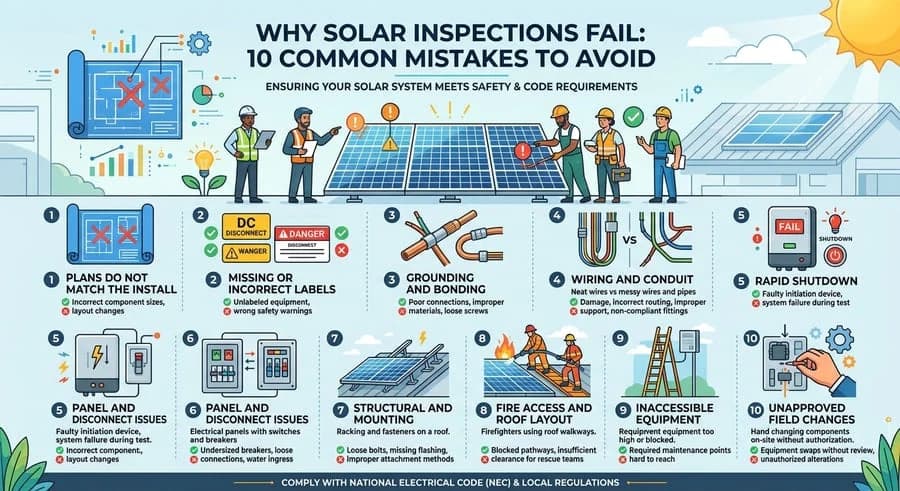
Why Solar Inspections Fail: 10 Common Mistakes to Avoid
Discover the 9 critical reasons solar inspections fail and how to avoid costly m...
Solar Grounding And Bonding: How To Pass Inspection Every Time
Learn how to pass solar grounding and bonding inspections every time. Avoid comm...
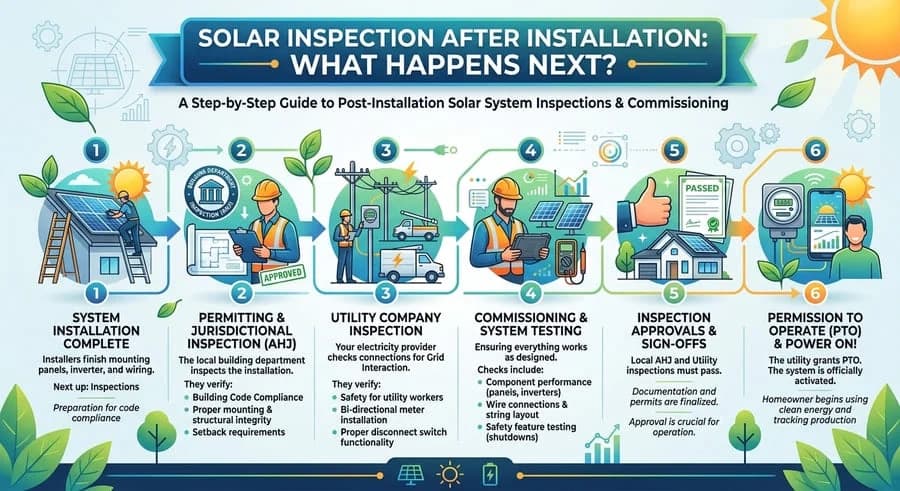
Solar Inspection After Installation: What Happens Next?
Learn how to pass your solar inspection by following essential tips for obtainin...