
Electrical load calculations are mandatory mathematical assessments that determine whether a home’s electrical system can safely support solar panel installation without overloading the main service panel. These calculations are required by Authorities Having Jurisdiction (AHJs) in all U.S. jurisdictions before solar permit approval.
Key facts about electrical load calculations for solar permits:
- Required by NEC Article 220 standards for all residential and commercial solar installations
- Verify that existing service panels can handle additional solar generation capacity
- Prevent main panel overloads, fire hazards, and utility interconnection denials
- Take 2 to 4 business days to complete with professional permit design services
- Must include PE stamped electrical diagrams for AHJ approval
Essential components measured in load calculations:
- Total household electrical demands (appliances, HVAC, lighting)
- Solar system inverter output capacity
- Service panel rating and circuit breaker sizing
- NEC required safety margins and the 120 percent busbar rule
Solar Permit Solutions delivers NEC compliant load calculation reports, PE stamped electrical diagrams for all 50 states, and AHJ coordination services that prevent permit rejections. This guide explains how electrical load calculations work, why they matter for permit approval, and how contractors can streamline the process.
Understanding Electrical Load Calculations
Electrical load calculations represent a mathematical evaluation of a residential electrical system’s capacity. They determine whether an existing service panel can support both the added solar generation and proper interconnection requirements.
Essential components include:
- Total existing household electrical demands (appliances, HVAC systems, lighting fixtures)
- Solar array contribution (inverter output capacity)
- Service panel rating and circuit breaker sizing
- Safety margins mandated by the National Electrical Code
The Importance Of Accurate Load Calculations
Without precise load calculations, several issues arise:
- Authorities Having Jurisdiction may reject design submissions
- Main service panel overloads can develop, creating fire risks
- Utility companies may deny interconnection requests
- Contractors face potential liability for unsafe system installations
Proper calculations ensure regulatory compliance, electrical safety, and accelerated approval processes.
Steps To Complete Load Calculations
The calculation process typically involves:
- Collecting household load information from utility statements and electrical plans
- Implementing NEC 220 standards for load estimation
- Computing inverter output and circuit breaker contribution
- Evaluating whether main panel upgrades are necessary
- Submitting stamped electrical drawings within the permit package
Solar Permit Solutions
Skip the Permit Headaches
We design plan sets that pass inspection the first time. Code-compliant, PE-stamped, accepted by AHJs nationwide.
Key AHJ Requirements For Load Documentation
Although requirements differ by jurisdiction, most Authorities Having Jurisdiction mandate:
- Line diagrams illustrating solar system interconnection
- NEC Article 220 compliant calculations
- Single line diagrams displaying breaker ratings
- Professional Engineer stamped drawings for approval
- Utility interconnection documentation
How Solar Permit Solutions Supports Your Load Calculation Needs
Solar Permit Solutions provides:
- NEC compliant load calculation reports
- PE stamped electrical diagrams covering all 50 states
- Service panel upgrade recommendations when required
- Commercial solar design expertise to prevent application rejections
- Rapid turnaround times (2 to 4 business days)
Conclusion
Electrical load calculations form a vital element of solar permit applications. They guarantee safety standards, regulatory compliance, and AHJ approval while eliminating expensive project delays.
With Solar Permit Solutions’ nationwide coverage, contractors receive accurate, NEC compliant load calculations alongside PE stamping and AHJ coordination for a streamlined solar permitting experience.
FAQs
Skip the Permit Headaches
We design plan sets that pass inspection the first time. Code-compliant, PE-stamped, accepted by AHJs nationwide.
Frequently Asked Questions
When calculations reveal an overloaded panel, a main service panel upgrade becomes necessary before solar installation can proceed. This typically involves upgrading from a 100 amp to a 200 amp panel or installing a load management system. The upgrade must be completed and inspected before the AHJ will approve the solar permit application.
No, electrical load calculations are mandatory for solar permit approval in virtually all jurisdictions. Authorities Having Jurisdiction require these calculations to verify electrical safety and code compliance. Attempting to bypass this requirement will result in permit rejection and potential legal liability for contractors.
Professional electrical load calculations typically take 2 to 4 business days when handled by experienced permit design services. This timeframe includes data gathering, NEC Article 220 compliance calculations, and preparation of stamped electrical diagrams. Rush services may be available for time sensitive projects.
Yes, commercial solar installations involve more complex load calculations due to three phase power systems, larger electrical demands, and diverse equipment loads. Commercial projects often require detailed demand factor analysis and consideration of coincident loads, while residential calculations follow more standardized NEC procedures for single family dwellings.
The 120 percent rule, outlined in NEC 705.12(D), states that the combined rating of the main breaker plus the solar breaker cannot exceed 120 percent of the panel's busbar rating. For example, a 200 amp panel can accommodate up to 240 amps total between the main breaker and solar breaker. This rule helps prevent busbar overheating and ensures safe solar interconnection.

SPS Editorial Team
Solar Permit Solutions
Solar Permit Solutions provides professional solar permit design services for residential, commercial, and off-grid installations across all 50 states. Our team ensures permit-ready plan sets delivered fast.
Related Articles
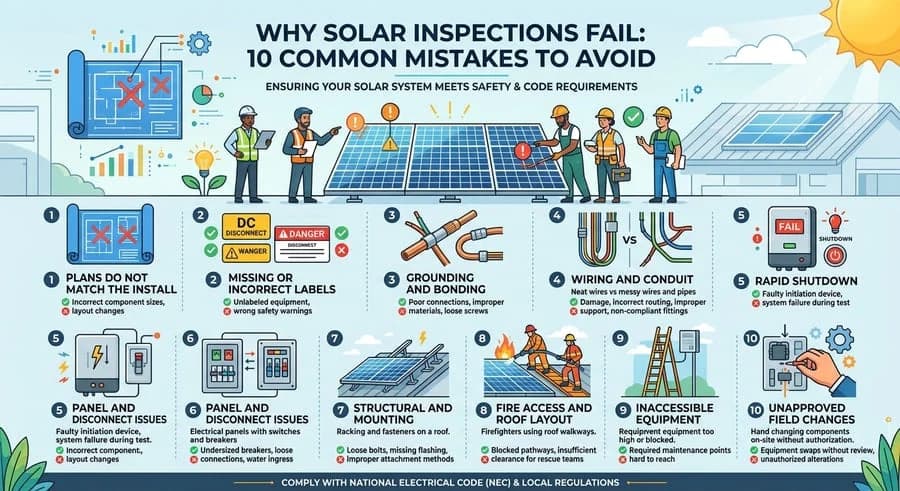
Why Solar Inspections Fail: 10 Common Mistakes to Avoid
Discover the 9 critical reasons solar inspections fail and how to avoid costly m...

Solar Grounding And Bonding: How To Pass Inspection Every Time
Learn how to pass solar grounding and bonding inspections every time. Avoid comm...
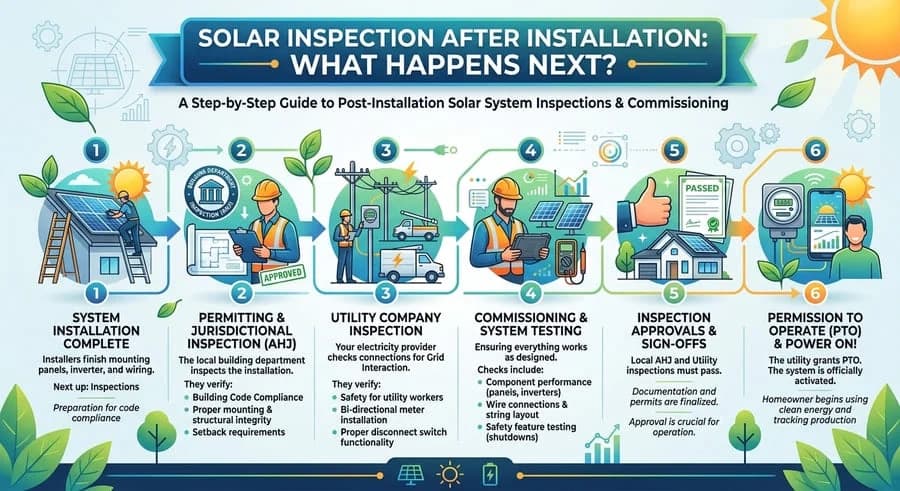
Solar Inspection After Installation: What Happens Next?
Learn how to pass your solar inspection by following essential tips for obtainin...