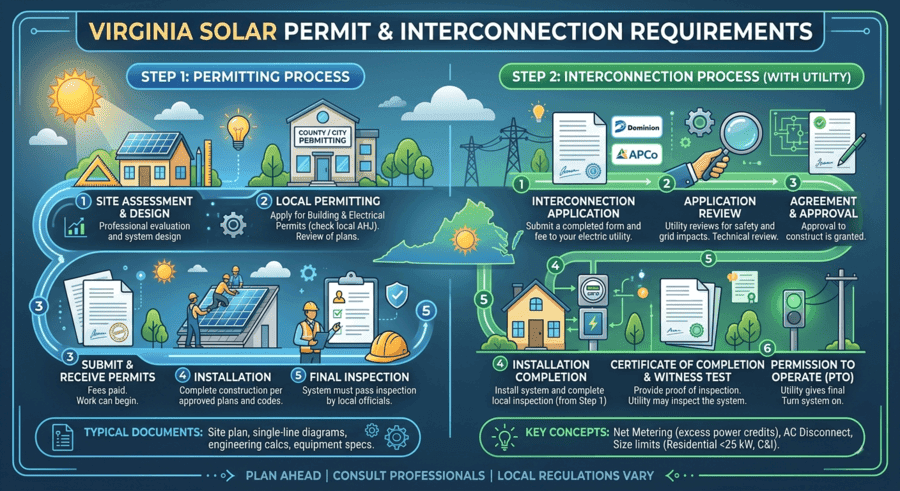
Virginia solar permits require approval from the local building department (the Authority Having Jurisdiction, or AHJ), plus a separate interconnection application to the serving utility before a system can export power to the grid.
Most projects also need a PE-stamped structural or electrical package, since Virginia sets no single statewide PE threshold and leaves that call to the local AHJ. The building permit and the utility interconnection are separate processes run by separate reviewers, and satisfying one does not satisfy the other.
This guide breaks down each layer for residential and commercial solar projects in Virginia: the 2021 Uniform Statewide Building Code, DPOR contractor licensing, plan set requirements, Dominion Energy and Appalachian Power interconnection steps, the April 2026 State Corporation Commission net metering ruling, the new Smart Solar Permitting Platform, and the most common reasons Virginia solar permits get delayed.
Virginia Solar Permitting at a Glance
| Approval Layer | Who Reviews It | What It Covers | Typical Timeline |
|---|---|---|---|
| Building and electrical permit | Local AHJ (city or county building department) | Structural and electrical code compliance under the USBC and NEC | Varies by locality, commonly 1 to 4 weeks |
| Utility interconnection | Dominion Energy, Appalachian Power, a cooperative, or a municipal utility | Grid compatibility, net metering enrollment, permission to operate | Under 30 days for most residential systems |
Do You Need a Solar Permit in Virginia?
Yes. Most permanently installed rooftop and ground-mounted solar systems in Virginia need a building permit, an electrical permit, or both from the local AHJ. Virginia enforces one statewide building code, but that code is administered locally, so the application process, required drawings, and review timeline all depend on which city or county the project sits in.
A typical grid-tied residential project moves through some combination of the following approvals:
- Local building permit review
- Local electrical permit review
- Structural review (roof framing, racking, wind and snow loads)
- Electrical inspection
- Utility interconnection approval and net metering enrollment
- Permission to Operate from the utility
- HOA, historic district, or zoning review, where applicable
Virginia Solar Permitting Has Two Separate Approval Layers
The building permit and the utility interconnection are two distinct reviews run by two different organizations. A common and costly mistake is assuming that clearing one layer clears the other.
Utility interconnection approval does not replace the local electrical permit, and passing the local electrical inspection does not authorize a system to operate in parallel with the grid. Each layer has its own application, its own reviewer, and its own timeline, and a project can be fully permitted at the local level while still waiting on utility permission to operate.
Solar Permit Solutions
Skip the Permit Headaches
We design plan sets that pass inspection the first time. Code-compliant, PE-stamped, accepted by AHJs nationwide.
Virginia Solar Building and Electrical Permit Requirements
Local building departments enforce the 2021 Virginia Uniform Statewide Building Code (USBC), which took effect January 18, 2024, and became mandatory for every permit issued on or after January 18, 2025. The 2021 USBC incorporates the 2021 International Codes for structural and fire requirements and the 2020 National Electrical Code (NEC) for all electrical work, including solar PV systems under NEC Article 690.
For most conventional rooftop projects, the permit package needs to demonstrate compliance with both the structural and electrical provisions of the USBC. A typical submission includes a project cover sheet and code summary, a site plan, a roof plan or ground-mount layout, an electrical single-line diagram, conductor sizing and overcurrent protection calculations, a rapid shutdown plan, equipment datasheets, and structural attachment and racking details.
Who Issues the Permit, and What to Confirm First
The local building department or AHJ handles the building and electrical permit review. Some Virginia localities use automated or streamlined portals for qualifying residential systems, while others require a standard manual submission. Before assembling the final plan set, confirm the correct locality, the applicable permit portal, whether building and electrical reviews are combined or separate, whether the AHJ requires a PE stamp, and whether zoning, HOA, or historic district review applies.
Virginia Contractor Licensing: DPOR, AES, and Electrical Scope
Virginia licenses solar contractors at the business level through the DPOR Board for Contractors, not through an individual installer credential. A firm needs the appropriate Class A, B, or C license, which sets the maximum contract and project value it can accept, plus the classification or specialty that authorizes its scope of work.
Solar installers in Virginia typically need the Alternative Energy System (AES) specialty, which covers installing, repairing, or improving alternative energy generation systems from the customer’s meter. AES does not authorize electrical work on its own. A firm performing the electrical portion of a job also needs the Electrical (ELE) classification or must subcontract that scope to a licensed electrical contractor with appropriately licensed electricians on staff.
Virginia Solar Permit Plan Set Requirements
A complete plan set gives the AHJ everything it needs to evaluate both the structural and electrical scope of the project in one review cycle. Our guide to solar permit design and plan sets covers the general components every AHJ expects; the sections below cover what matters specifically for Virginia projects.
Site and Structural Information
The site plan should show the property address and boundaries, existing structures, the proposed array location, and setback and access pathway dimensions. For rooftop systems, structural documentation typically includes rafter or truss size and spacing, attachment locations and hardware, racking manufacturer and model, and calculations addressing wind, snow, and, where applicable, seismic loads under ASCE 7.
Virginia’s coastal localities deserve particular attention, since wind exposure and design pressures near the Chesapeake Bay and Hampton Roads can differ meaningfully from inland jurisdictions. A structural package developed for an inland Virginia address should not be reused for a coastal project without re-verifying the site-specific wind criteria.
Electrical Information
The electrical plan should identify the modules, inverters, disconnects, main service equipment, conductors, overcurrent protection, and the point of interconnection. Virginia AHJs commonly cite the same issues seen nationally: incomplete rapid shutdown documentation, missing or incorrectly formatted safety labels, and disconnect requirements that do not match the PV disconnect switch shown on the single-line diagram. Getting these details right the first time is one of the most reliable ways to avoid a revision cycle.
PE Stamp Requirements
Virginia has no single statewide PE stamp threshold. Whether structural or electrical calculations need a Virginia-licensed PE’s seal depends on the specific AHJ, the system size, and site conditions such as coastal wind exposure. An out-of-state PE stamp is not valid for a Virginia project; the engineer must hold a current Virginia license. Our state-by-state PE stamp guide covers how these thresholds typically work and what to confirm with the AHJ before finalizing a design.
Battery Storage (ESS) Documentation
Projects that pair solar with battery storage need documentation beyond a PV-only plan set: battery model and capacity, clearances from combustible materials and egress pathways, disconnecting means, equipment listings, and emergency shutdown information consistent with NEC Article 706 and NFPA 855. Our NEC 690 and 706 compliance checklist walks through the documentation an ESS-equipped system typically needs.
Virginia Solar Interconnection Requirements
Interconnection is the process by which the serving utility reviews a proposed solar system and authorizes it to connect to the electric grid. It is entirely separate from the local building permit. Our interconnection agreement checklist covers the general documentation utilities request nationwide; the specifics below apply to Virginia’s investor-owned utilities.
Most residential and small commercial systems interconnect as net-metered customer generators under the Virginia State Corporation Commission’s net metering regulations, summarized on Virginia Energy’s solar program page. Larger or non-net-metered projects instead fall under the small generator interconnection rules, which apply tiered technical review depending on system size, similar in structure to the load-side versus supply-side distinction that shows up in local electrical permitting. Every interconnected inverter must also meet IEEE 1547 requirements for grid synchronization and anti-islanding protection, regardless of which Virginia utility serves the property.
Dominion Energy Solar Interconnection
Dominion Energy serves most of Virginia’s population, including Richmond, Hampton Roads, and Northern Virginia. Dominion reviews net metering applications online and evaluates the proposed system for compatibility with its distribution grid. Interconnection approval from Dominion does not substitute for the local building or electrical permit; the customer remains responsible for meeting the applicable USBC and zoning requirements regardless of utility approval status.
Before submitting, confirm that the system size, inverter model, and point of interconnection listed on the utility application match the permit plan set exactly. Mismatches between the two submissions are a common and avoidable source of delay.
Appalachian Power Solar Interconnection
Appalachian Power (APCo) serves portions of western and southwestern Virginia. Its net metering process uses a two-part Net Metering Interconnection Notification (NMIN) form: sections 1 through 4 are submitted for pre-approval before construction begins, and the completed form is resubmitted after installation for final field approval and meter exchange. Appalachian Power states that most residential interconnections take under 30 days, while commercial systems or generators over 10 kW can take up to 60 days.
Electric Cooperatives and Municipal Utilities
Not every Virginia property is served by Dominion or Appalachian Power. Electric cooperatives and municipal utilities can maintain their own net metering applications, technical requirements, and review timelines. The first step on any Virginia interconnection project should be confirming the actual serving utility for the service address, since it is not always the utility that serves the surrounding city or county in general.
Virginia Net Metering: The April 2026 SCC Ruling
Virginia’s net metering framework changed meaningfully in 2026, and installers quoting Virginia projects should know the current rules. The 2020 Virginia Clean Economy Act required the State Corporation Commission (SCC) to review the net metering tariffs for both major investor-owned utilities. Appalachian Power’s review concluded first and preserved its existing net metering structure. Dominion’s proceeding followed, and on April 30, 2026, the SCC issued its final order.
The Dominion ruling kept the core 1:1 retail-rate value of net metering intact, along with customer ownership of renewable energy certificates (RECs) generated by their systems. The order made a few smaller adjustments for new customers going forward, including a modest monthly administrative fee and a revised approach to compensating year-end excess generation, while maintaining energy-based netting over the existing 12-month period. For installers, the practical takeaway is that the fundamentals of Virginia net metering, full retail-rate credit and customer-owned RECs, remain in place for both major utility territories heading into the rest of 2026.
Virginia Solar Permit vs. Utility Interconnection: What’s the Difference?
| Solar Permit | Utility Interconnection |
|---|---|
| Reviewed by the local AHJ | Reviewed by the serving utility |
| Confirms construction and code compliance under the USBC and NEC | Confirms the system can safely connect to and operate with the grid |
| Ends with a passed inspection and closed permit | Ends with Permission to Operate and net metering enrollment |
| Required before construction begins under local rules | Required before the system legally exports power |
| Does not authorize grid operation | Does not substitute for local code compliance |
A Virginia project can be fully permitted at the local level and still be waiting on utility permission to operate, or vice versa, in jurisdictions that require proof of a submitted interconnection application before issuing a local permit. Track both approvals in parallel rather than assuming one implies the other.
Virginia Solar Permit Process: Step-by-Step
- Identify the property’s AHJ. Confirm which city or county building department has jurisdiction and which permit portal it uses.
- Identify the serving utility. Confirm whether the property is served by Dominion Energy, Appalachian Power, a cooperative, or a municipal utility before preparing the interconnection application.
- Collect project information. Gather a recent utility bill, existing electrical service details, roof or site measurements, and equipment specifications.
- Prepare the plan set. Build the site plan, structural documentation, electrical single-line diagram, calculations, and equipment datasheets described above.
- Submit the local permit application. File through the applicable AHJ process with a complete, code-referenced plan set.
- Submit the utility interconnection application. File the net metering or interconnection application with matching system information.
- Respond to corrections promptly. Address AHJ or utility review comments and resubmit without delay.
- Complete installation and pass inspection. The AHJ verifies the as-built system matches the approved plans.
- Receive Permission to Operate. Complete the utility’s final interconnection and metering steps before energizing the system as a grid-tied generator.
How Much Does a Virginia Solar Permit Cost?
There is no single statewide solar permit fee in Virginia. Local building departments set their own fee schedules, which can be based on flat rates, project valuation, or system capacity, and vary by locality and project type. PE stamp fees, when required, are a separate line item on top of the local permit fee. Confirm the current fee schedule with the specific AHJ and utility before quoting a project. For a broader look at total installed cost, including equipment and labor, see our complete guide to installing solar panels in Virginia.
How Long Does Virginia Solar Permitting Take?
There is no single statewide turnaround time, since Virginia’s more than 130 localities each run their own review process. The overall project timeline generally includes plan preparation, local permit review, any correction cycles, installation, final inspection, and utility interconnection processing, which typically runs under 30 days for residential Dominion or Appalachian Power projects once a complete application is submitted. Our state-by-state permit timeline guide benchmarks how Virginia’s typical review windows compare with other states.
The most reliable way to avoid unnecessary delay is to ensure the permit plan set and the utility interconnection application are complete and mutually consistent before either one is submitted.
Common Reasons Virginia Solar Permits and Interconnection Applications Are Delayed
- Submitting to the wrong AHJ or portal. Confirming jurisdiction before starting design work avoids a restart.
- Incomplete plan sets. Missing structural, electrical, or equipment documentation generates review comments.
- Reused wind or structural data. A design built for an inland site should not be reused for a coastal Virginia address without re-verifying the applicable wind criteria.
- Equipment mismatches. Module count, inverter model, or point of interconnection that differs between the permit plans and the utility application is a frequent and avoidable trigger for correction.
- Wrong or missing PE stamp. Since Virginia sets no statewide threshold, confirm the specific AHJ’s requirement before submitting.
- Incomplete ESS documentation. Battery systems require their own disconnect, clearance, and labeling documentation; a PV-only template will not cover it.
- Treating one approval as the other. A local electrical inspection is not utility permission to operate, and utility approval is not a substitute for the local permit. Operating a system before receiving proper authorization can lead to fines, forced disconnection, or void warranties; see our guide on what happens if you install solar without a permit for the practical consequences.
Virginia’s Smart Solar Permitting Platform
Virginia enacted a new automated permitting framework during its 2026 legislative session. Codified at Code of Virginia Section 45.2-1735, the Smart Solar Permitting Platform directs the Department of Energy to build and launch an internet-based system that automates plan review and instantly issues permits for qualifying residential solar systems that comply with the USBC.
The statute sets a launch deadline of July 1, 2027, for the state platform, with localities required to accept either the state platform or an approved alternative automated platform on a schedule set by the enacting legislation. The law is explicit that it does not limit a locality’s authority to issue its own permits, and it does not change the SCC’s interconnection or net metering requirements in any way. In other words, automated permitting will streamline the local building permit layer specifically; it will not replace utility interconnection review, and it will not apply everywhere until localities implement it.
Virginia is not the only state moving toward automated review. Some jurisdictions elsewhere have adopted platforms well ahead of their state-level rollout, and our Massachusetts solar permitting guide covers a similar staged rollout in another state. Until a given Virginia locality confirms it is live on the platform, plan on the standard local review process.
Do HOAs Restrict Solar Panels in Virginia?
Generally, no. Under Code of Virginia Section 55.1-1820.1 for property owners’ associations and the parallel provision for condominiums, a community association cannot prohibit an owner from installing a solar energy collection device on their own property unless the recorded declaration itself establishes that prohibition. An association can still impose reasonable restrictions on the size, place, and manner of installation, but a restriction is not considered reasonable if it increases installation cost by more than 5 percent or reduces expected energy production by more than 10 percent compared to the homeowner’s original proposal. Associations retain full authority over common areas and elements.
Virginia Solar Permit Checklist
Property and AHJ
- Correct locality and permit portal confirmed
- Zoning, HOA, and historic district requirements reviewed
Structural
- Roof type, rafter or truss data, and racking attachment method confirmed
- Wind, snow, and seismic criteria verified for the specific site
- PE stamp obtained where the AHJ requires one
Electrical
- Single-line diagram, conductor sizing, and overcurrent protection documented
- Rapid shutdown method and equipment identified
- Required labels and disconnects shown at every location
Battery Storage
- Battery model, capacity, clearances, and disconnects documented
- NEC Article 706 and NFPA 855 requirements addressed, if applicable
Utility Interconnection
- Serving utility confirmed for the exact service address
- System size, inverter model, and point of interconnection match the permit plans
Getting Virginia Solar Permits Right the First Time
Virginia solar permitting is not one process but two: a local building and electrical permit and a separate utility interconnection approval. The contractors who move through Virginia’s more than 130 localities without unnecessary delay share the same habit: they confirm the AHJ and the serving utility before finalizing a design, and they keep the permit plans and the utility application consistent with each other from submission through Permission to Operate.
Solar Permit Solutions delivers PE-stamped, AHJ-ready plan sets for residential and commercial solar projects across all 50 states, including every jurisdiction covered in this guide. Create a free account to get started, or contact our team to discuss your next Virginia project.
Frequently Asked Questions
Skip the Permit Headaches
We design plan sets that pass inspection the first time. Code-compliant, PE-stamped, accepted by AHJs nationwide.
Frequently Asked Questions
Most permanently installed solar systems require a building permit, an electrical permit, or both from the local Authority Having Jurisdiction. The exact process depends on the specific city or county.
No. The local AHJ handles the building and electrical permit, while the serving utility, typically Dominion Energy, Appalachian Power, a cooperative, or a municipal utility, separately reviews and approves the system's connection to the grid.
There is no single statewide threshold. Whether a project needs a Virginia-licensed PE's stamp depends on the specific AHJ, system size, and site conditions such as coastal wind exposure. Confirm directly with the local building department.
The State Corporation Commission issued its final order on Dominion Energy's net metering tariff on April 30, 2026, preserving the 1:1 retail-rate credit and customer ownership of RECs. Appalachian Power's net metering structure was similarly preserved in its own 2025 proceeding.
Generally, no. Community associations cannot prohibit solar installations on individually owned property unless the recorded declaration itself establishes that prohibition, and any size or placement restrictions must be reasonable under Virginia law.
It is an automated permitting system established by the Virginia General Assembly in 2026, codified at Code of Virginia Section 45.2-1735, that will instantly review and issue permits for qualifying residential solar systems. The Department of Energy must launch the platform by July 1, 2027, and it does not change utility interconnection requirements.

SPS Editorial Team
Solar Permit Solutions
Solar Permit Solutions provides professional solar permit design services for residential, commercial, and off-grid installations across all 50 states. Our team ensures permit-ready plan sets delivered fast.
Related Articles
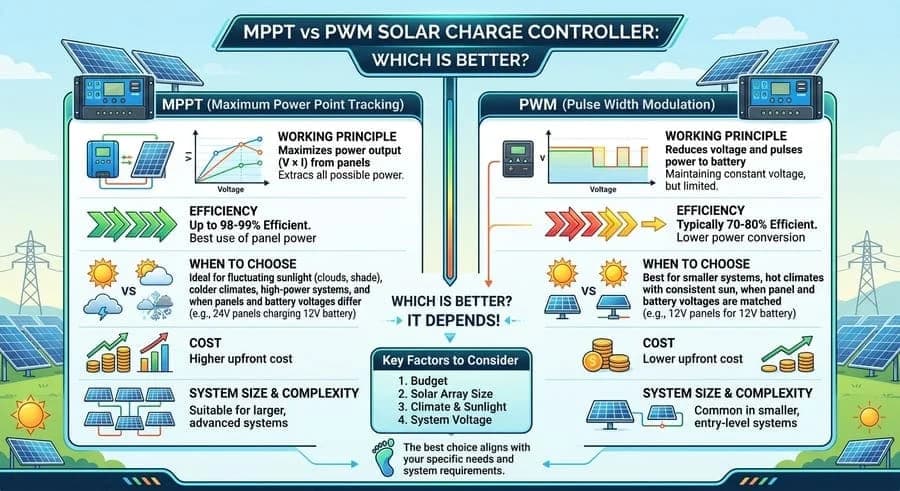
MPPT vs PWM Solar Charge Controller: Which Is Better?
Compare MPPT vs PWM solar charge controllers. Discover efficiency rates, cost di...
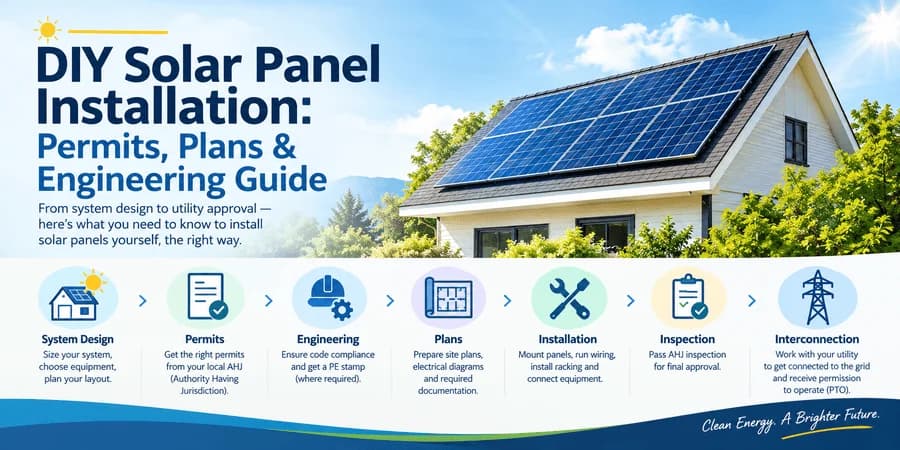
DIY Solar Panel Installation: Permits, Plans & Engineering Guide
Yes, you can install solar panels yourself in most U.S. jurisdictions. DIY solar...
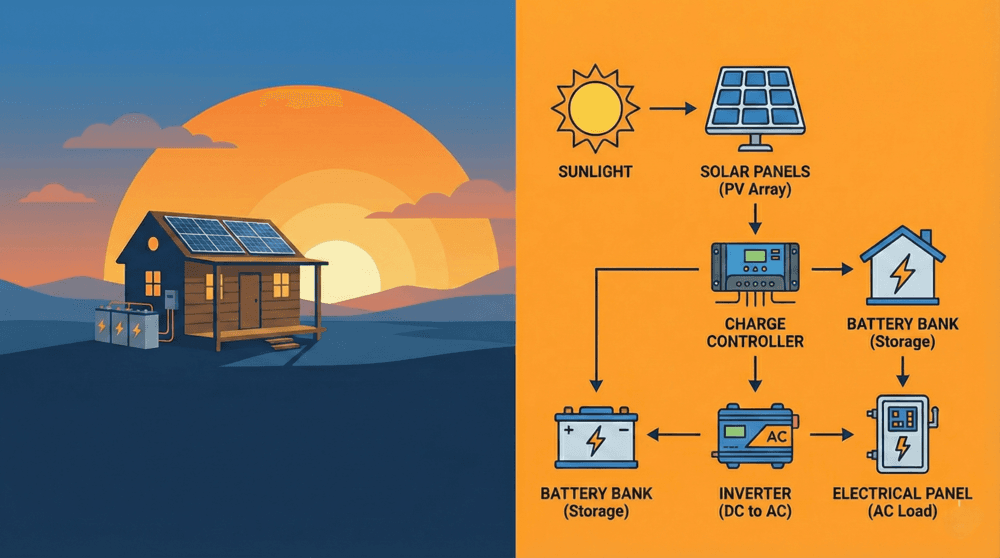
Off-Grid Solar System Requirements: Sizing, Permits & NEC Code Guide
Off-grid solar permit requirements by state: building codes, NEC compliance, bat...