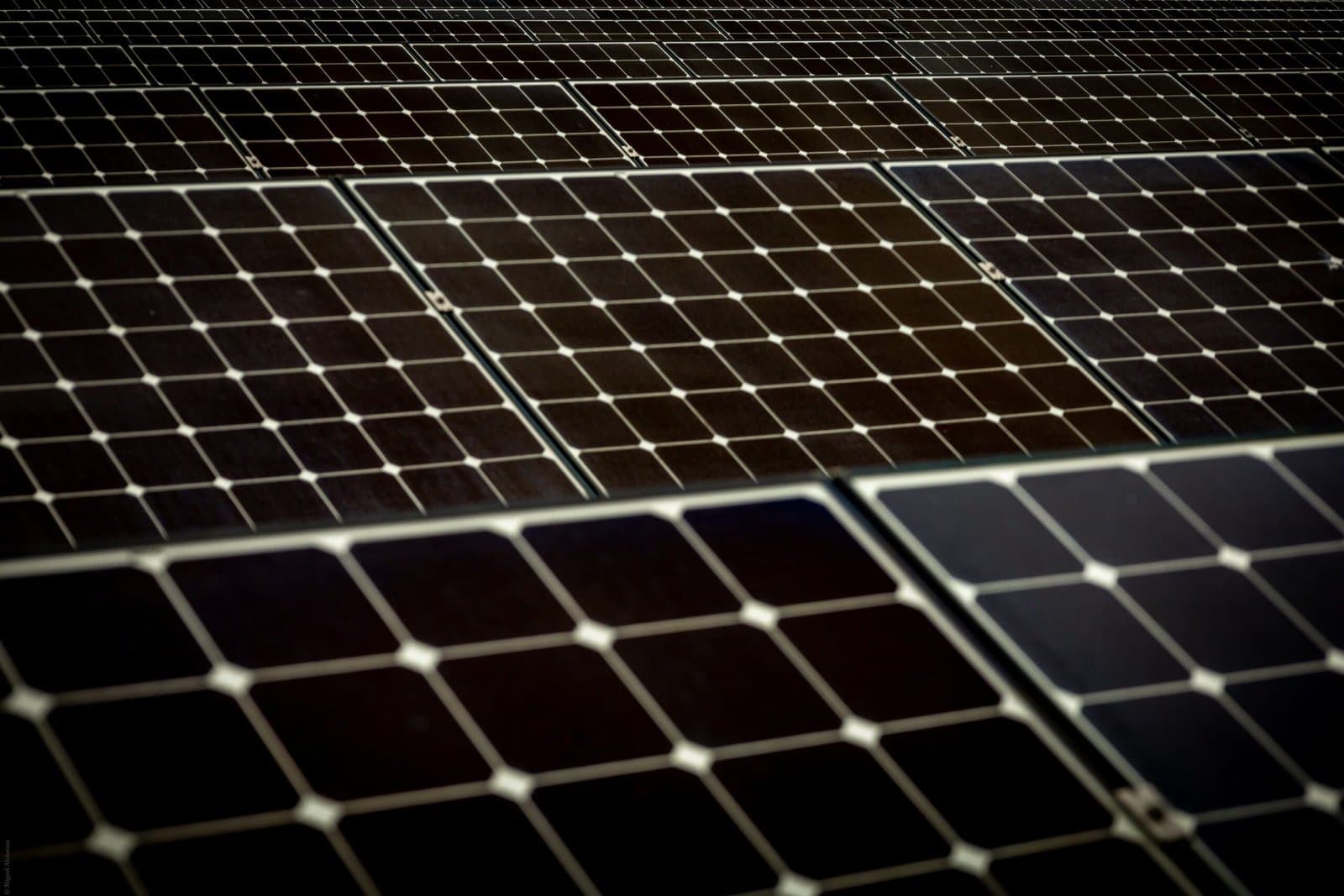
Discover how grid-tied solar systems work, turning sunlight into electricity for homes and businesses. Learn about solar panels, inverters, and more.
Grid-tied solar systems convert sunlight into usable electricity through four main components: solar panels, inverters, a distribution panel, and an electric meter. Solar panels absorb photons from sunlight, creating direct current (DC) electricity. Inverters then convert this DC power into alternating current (AC) electricity that homes and businesses use. The distribution panel routes this solar electricity to power the building’s needs, while the electric meter tracks energy flowing to and from the utility grid.
When solar panels produce more electricity than needed, the excess power flows back to the utility grid through a process called net metering. Property owners receive credits for this surplus energy, which can be used when solar production is insufficient, such as at night or during cloudy weather. This connection to the utility grid eliminates the need for expensive battery storage while ensuring continuous power access.
The system operates seamlessly with existing electrical infrastructure, allowing properties to reduce electricity costs while maintaining reliable power 24/7. Understanding how these components work together helps property owners make informed decisions about solar energy adoption.
Grid-Tied Solar Systems Explained: Direct Connection to the Utility Network
A grid-tied solar system connects seamlessly to the utility grid, allowing solar owners to send excess electricity to the grid when production exceeds demand, effectively utilizing the grid as a backup battery. When solar panels fall short of meeting electricity needs (at nighttime or during rainy days), power can be drawn from the utility grid to supplement the shortfall. This process follows net metering guidelines established by state and utility regulations.

The Science Behind Solar Panel Energy Conversion
Solar panels absorb sunlight and convert it into electricity. Their ability to do this stems from their composition. Each solar panel consists of several layers.
The top layer comprises glass. This glass allows sufficient sunlight to pass through while remaining strong enough to protect the layers below. Beneath that sits an antireflective coating and contact grid.
Then comes the electricity-producing portion.
Next lie two layers of semiconductor silicon. Arranged in several solar cells, the silicon absorbs sunlight, or more specifically, photons. Photons, which are particles of light, push electrons from their atoms, causing them to move around through a positive and negative charge. This movement of electrons creates a flow of direct current or DC electricity.
The layers of silicon are sandwiched between two layers of encapsulant to hold everything together. On the bottom sits a backing layer to protect the inner portions from the elements, and an aluminum frame wraps around the edges.
The panel’s performance, or how much electricity it can generate, depends on several different factors, like how much sunshine the panel receives, the temperature, the installation method, the panel’s cleanliness, and more. The make and model of panels will also impact production, so selecting high-quality solar panels for any project is important.
Essential Equipment That Powers Your Solar Installation
While solar panels are the most visible component of a solar system, they alone cannot turn sunlight into electricity.
Three other main components are key to understanding how solar panels produce energy.
Converting DC to AC: Inverter Technology
There are two types of electricity: DC or direct current, and AC, or alternating current. The vast majority of the power used is AC.
An inverter’s job is to convert the DC electricity produced by the solar panels into the AC electricity homes and businesses can use. Modern inverters must comply with IEEE 1547 standards for safe grid connection.
There are a few different types of inverters. String inverters are about the size of a shoebox and are installed relatively close to solar panels but not on the panels themselves. Microinverters are much smaller devices and are installed underneath each solar panel.
Depending on the size of a solar system, only one string inverter may be needed, or several may be required. With microinverters, one is needed for each solar panel.
Managing Electricity Flow: The Distribution Hub
Once the DC electricity is converted to AC electricity, it’s ready to be used or stored.
The conduit carries electricity from the inverter to a distribution panel. The distribution panel allocates the solar-generated electricity to power any current electricity needs for the building. If solar panels produce more electricity than currently being used, the distribution panel sends the energy to the utility grid.
Tracking Energy Exchange: Metering Systems
The electric meter tracks electricity flows to and from the grid, creating a bidirectional flow measured in kilowatt-hours.
When the distribution panel diverts the extra electricity generated by solar panels to the grid, the utility company needs to compensate the owner for that electricity. Likewise, when electricity is used from the grid, charges apply.
But if solar panels are installed, why is it necessary to draw electricity off the grid?
In short, the utility grid acts like free energy storage, keeping solar-generated electricity safe until it’s needed.
Solar Permit Solutions
Need Solar Permit Plans?
Professional, permit-ready solar plan sets delivered fast. Residential and commercial projects across all 50 states.
Net Metering: Exchanging Excess Solar Production With Your Utility
If a grid-tied solar system is in place, any extra power generated will be transferred to the utility grid.
In exchange, utilities compensate for that electricity. This exchange takes place through a mechanism called net metering, which varies by state regulations.
In states with net metering, a one-for-one credit is received for that electricity. So if 50 kWh of electricity is transferred to the grid, 50 kWh of electricity can be used from the grid with no additional cost as needed.
While the majority of states offer net metering, it’s not offered nationwide. Some states will only compensate solar producers at the production rate of electricity, not the retail rate. That means the electricity drawn from the grid will cost more than the value of electricity uploaded to the grid.
Some states have unique compensation methods. For example, certain jurisdictions determine the value of solar energy based on several factors that can fluctuate with time of day and location instead of compensating solar producers at the retail or production rate.
Note that net metering availability and compensation rates vary by location and are evolving. State and utility policies are subject to change, so property owners should verify current net metering programs in their area before making installation decisions.
Maintaining Power During Nighttime and Cloudy Conditions
A solar energy system only produces electricity when the sun is shining. But electricity is needed all the time. So how do solar panels work at night and on cloudy days?
When looking to offset all or a large portion of energy usage with solar, professional installers can design a system that produces enough energy to do just that. However, the system must produce enough energy when the sun is out to make up for the energy used when the sun is not shining.
That extra electricity gets sent to the grid and can be drawn on anytime it’s needed. That’s why grid-tied solar systems will always have access to electricity, regardless of the weather or time of day. As long as the utility grid is working, power access remains available.
Off-grid systems must rely on energy storage. While solar batteries are becoming more and more accessible, a large enough battery system to provide backup power for an entire house or business would be cost-prohibitive for many. That’s why grid-tied solar remains the most popular way to go solar, as dependable energy storage is provided for free.
Batteries are also an option for grid-tied solar systems. Property owners considering DIY installation should carefully evaluate whether batteries are worth the additional investment for homes or businesses.
Conclusion
Solar power enables the transformation of raw energy from the sun into cost-free and emissions-free electricity.
With just four main components, something as ordinary as sunlight can be used to create the electricity that charges cell phones, keeps the lights on, and powers appliances. From residential installations to utility-scale projects, the technology remains fundamentally the same.
And with a grid-tied system, solar technology can power buildings with emissions-free solar energy on overcast days and through the night. Whether pursuing a DIY approach or working with professionals, understanding these fundamentals helps ensure successful project approval and long-term performance.
FAQs
What’s the difference between a grid-tied system and an off-grid system?
A grid-tied system remains connected to the utility grid and uses it as backup power and storage through net metering. An off-grid system operates independently without any utility connection and requires battery storage to provide power when solar panels aren’t producing. Grid-tied systems are more cost-effective and reliable for most applications, while off-grid systems are ideal for remote locations without grid access.
Need Solar Permit Plans?
Professional, permit-ready solar plan sets delivered fast. Residential and commercial projects across all 50 states.
Frequently Asked Questions
Grid-tied solar systems automatically shut down during utility grid outages for safety reasons. This prevents electricity from flowing back into the grid and potentially harming utility workers repairing the lines. To maintain power during outages, a battery backup system or a special inverter with islanding capability would be required.
While grid-tied solar systems can significantly reduce electricity bills, completely eliminating them depends on several factors. System size, energy consumption patterns, local utility rates, and net metering policies all play a role. Most solar owners still receive a minimal monthly bill covering connection fees and any electricity used beyond what their panels produce. Financing options can help offset initial investment costs.
Solar panels typically come with 25-year performance warranties and can last 30 years or more. Inverters generally have shorter lifespans, ranging from 10 to 15 years for string inverters and 15 to 25 years for microinverters. The distribution panel and electric meter are durable components that often last the lifetime of the system with minimal maintenance. Learn more about solar system design considerations for longevity.
Yes, utility approval is required before connecting a grid-tied solar system to the electrical grid. This process, called interconnection, ensures the system meets safety and technical standards. The utility will review system specifications, inspect the installation, and often replace the existing meter with a bidirectional meter that can track energy flowing both directions. Installing without proper permits can result in serious consequences.
A grid-tied system remains connected to the utility grid and uses it as backup power and storage through net metering. An off-grid system operates independently without any utility connection and requires battery storage to provide power when solar panels aren't producing. Grid-tied systems are more cost-effective and reliable for most applications, while off-grid systems are ideal for remote locations without grid access.
Solar panels produce maximum electricity during sunny conditions but continue generating power on cloudy days at reduced capacity. Rain actually helps by cleaning panels and improving efficiency once skies clear. Temperature also matters as panels perform more efficiently in cooler conditions. With a grid-tied system, any shortfall in production during poor weather is automatically supplemented by drawing power from the utility grid. Understanding grid integration helps optimize system performance.
Grid-tied solar systems require minimal maintenance. Panels should be kept relatively clean, though rain often handles this naturally. Periodic visual inspections to check for damage, shading from growing vegetation, or loose connections are recommended. Monitoring system performance through inverter displays or apps helps identify potential issues early. Most systems operate reliably for decades with little intervention. For more resources, visit Solar Permit Solutions or contact us for professional assistance. Explore our blog for additional guidance.
SPS Editorial Team
Solar Permit Solutions
Solar Permit Solutions provides professional solar permit design services for residential, commercial, and off-grid installations across all 50 states. Our team ensures permit-ready plan sets delivered fast.
Related Articles
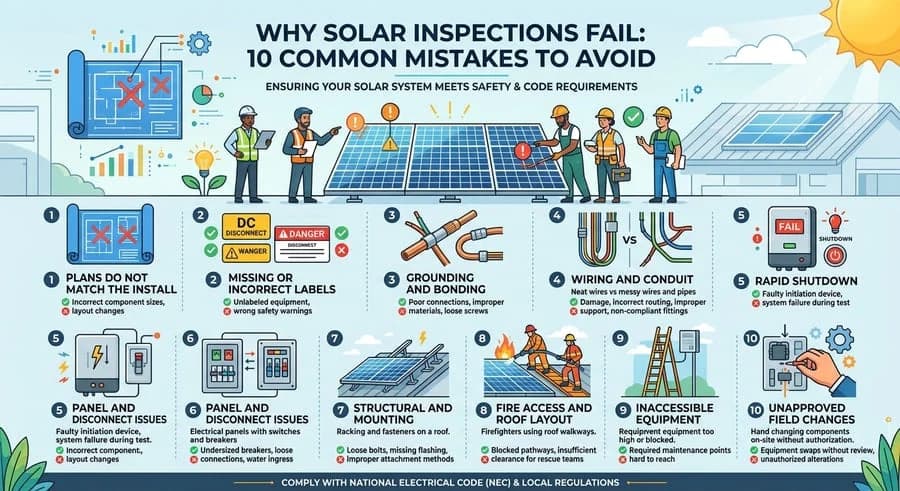
Why Solar Inspections Fail: 10 Common Mistakes to Avoid
Discover the 9 critical reasons solar inspections fail and how to avoid costly m...
Solar Grounding And Bonding: How To Pass Inspection Every Time
Learn how to pass solar grounding and bonding inspections every time. Avoid comm...
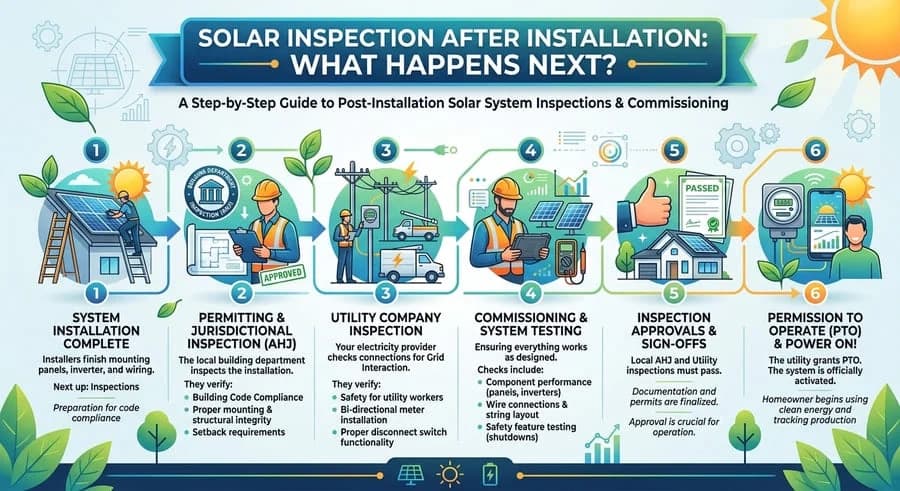
Solar Inspection After Installation: What Happens Next?
Learn how to pass your solar inspection by following essential tips for obtainin...