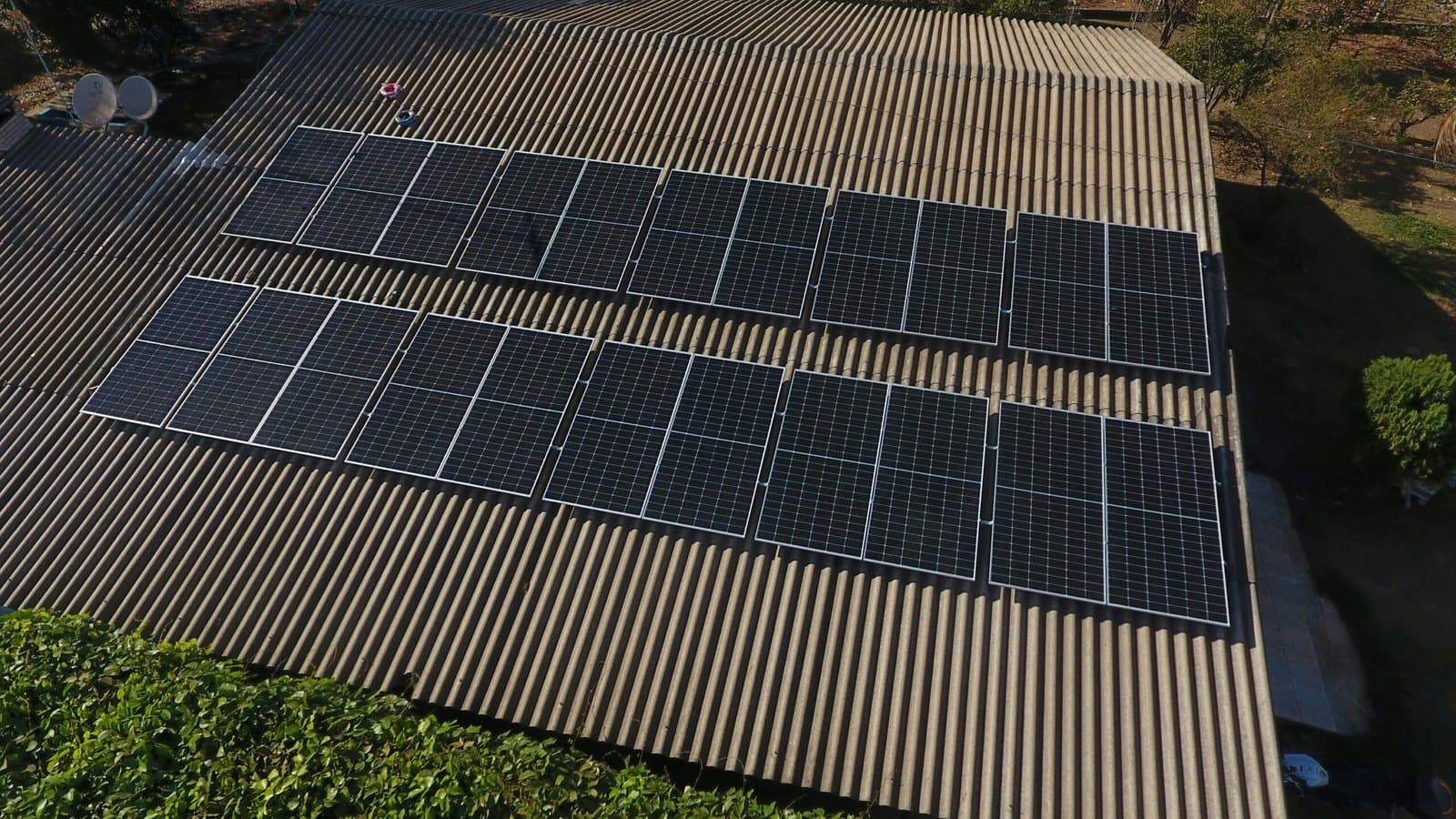
Sustainable and efficient energy solutions continue to gain traction among property owners nationwide. Hybrid solar systems represent an optimal solution for those seeking reliable renewable energy.
These power systems combine solar generation with battery storage and grid connectivity, offering both the security of backup power and the convenience of utility access for residential and commercial applications.
For property owners aiming to reduce utility dependence or maintain power during outages while staying connected to the grid, hybrid solar configurations deliver the flexibility to use solar energy around the clock.
Defining Hybrid Solar Configurations: Essential Components and System Requirements
A hybrid solar system integrates grid-connected electricity with battery storage, offering both the reliability of backup power and cost-saving benefits.
These systems use photovoltaic modules (solar panels) and a balance of system components to generate electricity, store it in battery banks, or convert it to AC power for immediate use or grid transmission.
By pairing solar generation with storage capacity, hybrid configurations provide continuous power during outages while maximizing electricity bill savings through Time-of-Use rate optimization.
Hybrid solar power systems require the following essential components:
- Photovoltaic modules (solar panels)
- Charge controller (MPPT or PWM)
- Solar inverter
- Solar battery storage
- Storage inverter (may be integrated with certain battery systems)
- Battery management system (BMS)
- Bidirectional or smart meter (for utility grid connection)
Operating Principles: Understanding Hybrid Solar Technology
A hybrid solar energy system combines the benefits of grid-connected and standalone photovoltaic systems by integrating utility grid connectivity with battery storage capacity.
Both grid-tied and off-grid residential PV systems utilize solar panels or alternative PV modules to capture photons from sunlight and convert them into DC electricity through the photovoltaic effect.
In residential applications, PV modules such as solar panels typically consist of monocrystalline or polycrystalline photovoltaic cells protected by transparent tempered glass and housed in aluminum or stainless steel frames.
Photons strike the photovoltaic surface of the panel, which comprises multiple solar cells. Each cell contains two semiconductor layers (p-type and n-type) that form a p-n junction to generate an electric field. The p-n junction transforms photons into direct current (DC) electricity.
At this stage in the electricity generation process, what occurs next varies depending on whether a system operates as grid-tied, off-grid, or hybrid.
Traditional Grid-Tied Configurations
In traditional grid-tied configurations, DC electricity transmits through cables directly to a string or central solar inverter.
The inverter converts DC to AC electricity for immediate consumption within the property or transmission to the utility grid.
Grid-connected systems automatically switch between solar and utility electricity based on PV array generation output and system configuration parameters.
A critical limitation of grid-tied systems is their automatic shutdown during utility outages. This safety feature prevents electricity from back-feeding into the grid, which could injure utility workers restoring power or damage grid infrastructure. Without battery backup, these systems cannot provide power during blackouts.
Standalone Off-Grid Installations
Off-grid solar power systems operate independently from utility infrastructure and depend on solar batteries to address solar power’s inherent intermittency.
Most clean, renewable energy sources (such as wind, hydro, and solar) produce intermittent power.
Specific environmental or physical conditions beyond human control are required for intermittent energy sources to generate electricity.
For solar power, sunlight availability is essential. Electricity production decreases on cloudy days, and solar panels generate no power at night.
Off-grid solar systems address the intermittency challenge by storing electricity in solar batteries when PV modules generate insufficient power or when consumption exceeds supply.
In off-grid configurations, solar panels transmit electricity to a charge controller.
Based on battery charge level, current consumption, and configured parameters, the charge controller either directs DC electricity from the PV panel array to the battery or to the solar inverter for conversion to AC electricity and immediate use.
Integrated Hybrid Configurations
Hybrid solar power systems integrate the benefits of grid-tied and off-grid configurations through the use of a hybrid inverter, delivering maximum flexibility and energy security.
The hybrid inverter is the central component that manages all power flows in the system. This single unit performs multiple functions:
- Converts DC electricity from solar panels to AC for immediate household use
- Directs excess solar energy to charge the battery storage system
- Draws power from batteries and converts it to AC when solar production is insufficient
- Synchronizes with the utility grid for seamless transitions between power sources
- Automatically disconnects from the grid during outages to protect utility workers
Unlike standard grid-tied systems that shut down during power outages, hybrid systems switch to battery power instantaneously. The hybrid inverter detects the outage and seamlessly transitions to off-grid mode, ensuring uninterrupted electricity supply.
This intelligent power management allows property owners to maximize solar self-consumption, store energy for later use, and maintain critical loads during grid failures—all while retaining the option to draw from or export to the utility grid when beneficial.
Key Benefits of Hybrid Solar Installations
Hybrid solar systems offer a compelling combination of efficiency, resilience, and cost-effectiveness, making them an increasingly popular choice for property owners.
Hybrid PV systems provide numerous significant advantages over traditional grid-tied and off-grid configurations.
Particularly in areas where utility reliability remains inconsistent.
Energy Independence: One of the most notable benefits of hybrid systems is enhanced energy independence. By generating and storing solar electricity, property owners reduce reliance on the grid, decreasing vulnerability to outages and increasing self-sufficiency.
Energy Security: Scheduled and unplanned outages occur regularly in many service areas due to aging infrastructure and extreme weather events. Hybrid PV systems provide continuous power during outages by automatically switching to battery storage, combining the convenience of utility power with the security of backup energy.
Longevity: High-quality photovoltaic modules will provide decades of reliable service. For solar batteries, chemistry is the most significant determiner of cycle life. Lithium iron phosphate batteries can provide 3,000 cycles (full charge/discharge cycles) before diminishing to 80% storage capacity.
Exceptional Depth of Discharge: Modern battery systems offer superior depth of discharge capabilities for optimal energy utilization.
Cost Savings: Hybrid PV systems generate significant savings on electricity bills. Property owners can use stored solar energy during peak hours when electricity rates are higher and only draw grid power during off-peak periods.
Maximize Electricity Generation Efficiency: In locations without grid export programs and without solar battery storage, any electricity generated in excess of consumption will go to waste. Hybrid PV systems prevent this loss, at least until battery banks reach full capacity. Systems can always scale up by adding additional battery modules.
Reduced Carbon Footprint: Renewable energy systems like hybrid solar significantly reduce household carbon footprints, contributing to the global effort against climate change.
Scalability: Modular systems allow property owners to start with basic configurations and add capacity as electricity needs grow or as budget permits.
Net Metering and Grid Export: Many utility companies offer net metering programs that allow hybrid system owners to sell excess electricity back to the grid. This billing mechanism credits property owners for surplus energy generation, shortening solar payback periods and potentially generating revenue. Net metering programs vary by location and are known by different names in various regions. Property owners should verify program availability and terms in their service area, as not all utilities offer this benefit.
Wide Operating Temperature Range: Lithium iron phosphate batteries operate and charge effectively in extreme cold and heat conditions.
Quiet Operation: Solar power systems generate electricity silently, producing minimal noise during operation (approximately 35dB from inverter components).
Minimal Maintenance Required: Unlike fossil fuel generators, off-grid and hybrid solar systems have few moving parts and require only periodic inspection and cleaning to maintain optimal performance.
Solar Permit Solutions
Off-Grid Solar System Design
Expert design services for off-grid and battery backup systems. Complete permit packages delivered fast.
Potential Drawbacks and Limitations
Hybrid solar systems offer numerous benefits, but understanding the drawbacks is important for informed decision-making.
Evaluating both the disadvantages and benefits of any renewable energy system enables property owners to make appropriate choices.
Here are the primary drawbacks of hybrid PV systems:
Higher Upfront Investment: One of the main drawbacks of hybrid systems is higher initial costs compared to traditional configurations. The additional expense primarily results from battery storage inclusion and more complex balance of system requirements.
Space Requirements: Hybrid PV systems with multiple solar batteries require adequate installation space. Battery systems should be installed in sheltered areas protected from direct weather exposure.
More Complex Installation and Setup: Installing a hybrid system is more complex than standard off-grid or grid-tied configurations. Licensed electricians must handle all wiring to property circuitry and utility grid connections for grid-tied and hybrid solutions. Working with high-voltage electricity poses serious safety risks, and grid connectivity requires inspection and permits.

Determining If Hybrid Solar Is Right For Your Property
Hybrid solar systems are not the optimal choice for every situation.
However, hybrid solar offers significant advantages over traditional grid-tied and off-grid residential PV configurations in many scenarios.
Understanding when hybrid PV systems make sense (and when they don’t) helps property owners make informed decisions.
Limited or Absent Net Metering Programs
Hybrid solar systems are particularly advantageous in locations where net metering programs are unavailable or provide minimal financial benefits. Without net metering, excess electricity cannot be sold to the utility grid. Hybrid systems provide the convenience of utility grid power while preventing wasted electricity production in excess of consumption.
Areas Experiencing Regular Grid Interruptions
For properties in areas prone to blackouts, hybrid solar systems offer reliable backup power through energy storage research and battery integration. The system instantaneously switches to battery power during outages, ensuring uninterrupted electricity supply. Hybrid systems are ideal for regions with unstable infrastructure or severe weather conditions that frequently cause power interruptions.
Pursuing Self-Sufficiency While Maintaining Grid Access
For property owners aiming to reduce reliance on aging utility infrastructure, hybrid solar power systems offer a viable option while maintaining grid connectivity. By combining solar electricity generation with storage and grid connection, hybrid systems provide energy independence and flexibility. Property owners can use solar-generated electricity around the clock or take advantage of off-peak utility rates to supplement production affordably.
Conclusion
Hybrid solar systems represent the future of residential and commercial energy solutions, offering property owners the best of both worlds: the reliability of grid connectivity combined with the independence of battery storage.
As utility infrastructure continues to age and power interruptions become more frequent, hybrid configurations provide the energy security that traditional grid-tied systems cannot deliver. The ability to store excess solar energy for use during peak rate hours or power outages makes hybrid systems a financially sound investment that pays dividends for decades.
While the initial investment may be higher than standard grid-tied installations, the long-term benefits of reduced electricity costs, energy independence, and protection against utility rate increases make hybrid solar an increasingly attractive option for property owners nationwide.
Whether dealing with frequent blackouts, limited net metering options, or simply pursuing greater energy self-sufficiency, hybrid solar systems provide a flexible, scalable solution that adapts to changing energy needs and budget constraints.
For property owners ready to take control of their energy future while maintaining the convenience of grid access, Solar Permit Solutions offers professional design services for hybrid solar installations. Learn more about solar energy systems on our blog.
FAQs
What’s the Difference Between a Traditional Solar System and a Hybrid Solar System?
Traditional grid-connected solar systems use solar inverters to convert DC electricity from photovoltaic modules to AC electricity for property use or grid transmission. Hybrid solar systems add solar battery storage to this setup, enabling backup power during outages and higher return on investment through energy storage and load shifting.
Off-Grid Solar System Design
Expert design services for off-grid and battery backup systems. Complete permit packages delivered fast.
Frequently Asked Questions
Traditional grid-connected solar systems use solar inverters to convert DC electricity from photovoltaic modules to AC electricity for property use or grid transmission. Hybrid solar systems add solar battery storage to this setup, enabling backup power during outages and higher return on investment through energy storage and load shifting.
Off-grid and hybrid solar systems each offer distinct benefits. Off-grid systems operate independently from the power grid, making them ideal for locations without utility electricity access. Hybrid systems combine renewable energy generation with solar panels, battery storage, and grid connectivity, providing energy security and the ability to avoid on-peak electricity rates. Unlike grid-tied solar panel systems, hybrid and off-grid configurations supply electricity during blackouts.
Hybrid photovoltaic systems offer the convenience of grid-tied solar with the reliability of battery backup. They combine renewable energy generation with battery storage, providing continuous power and cost optimization through load shifting. The initial investment can be lower than fully off-grid systems since battery capacity can be sized specifically for backup needs during outages or peak rate periods.
Yes, hybrid solar systems maintain power during outages by automatically switching to battery storage. The system seamlessly transitions between grid power, solar generation, and battery storage based on availability and demand, ensuring uninterrupted electricity supply for critical loads.
The appropriate hybrid solar system size depends on several factors including average daily electricity consumption, roof space availability, local climate conditions, and budget constraints. Property owners should calculate their average monthly kilowatt-hour usage, account for peak demand periods, and determine desired battery backup duration. A licensed solar installer can perform a detailed energy audit and recommend optimal system sizing based on specific energy needs and goals.

SPS Editorial Team
Solar Permit Solutions
Solar Permit Solutions provides professional solar permit design services for residential, commercial, and off-grid installations across all 50 states. Our team ensures permit-ready plan sets delivered fast.
Related Articles
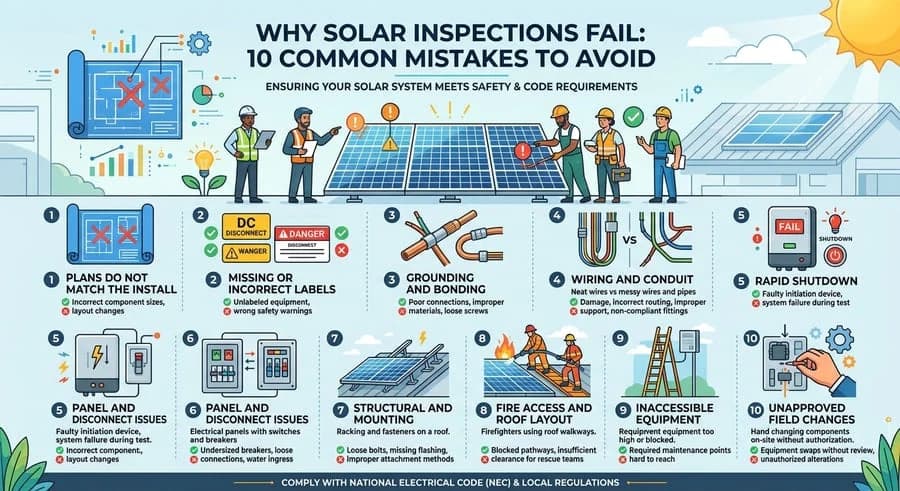
Why Solar Inspections Fail: 10 Common Mistakes to Avoid
Discover the 9 critical reasons solar inspections fail and how to avoid costly m...
Solar Grounding And Bonding: How To Pass Inspection Every Time
Learn how to pass solar grounding and bonding inspections every time. Avoid comm...
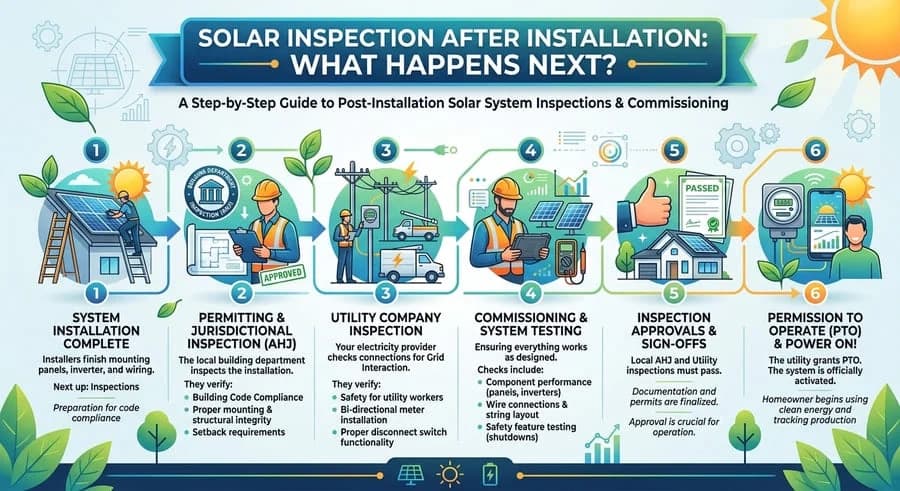
Solar Inspection After Installation: What Happens Next?
Learn how to pass your solar inspection by following essential tips for obtainin...