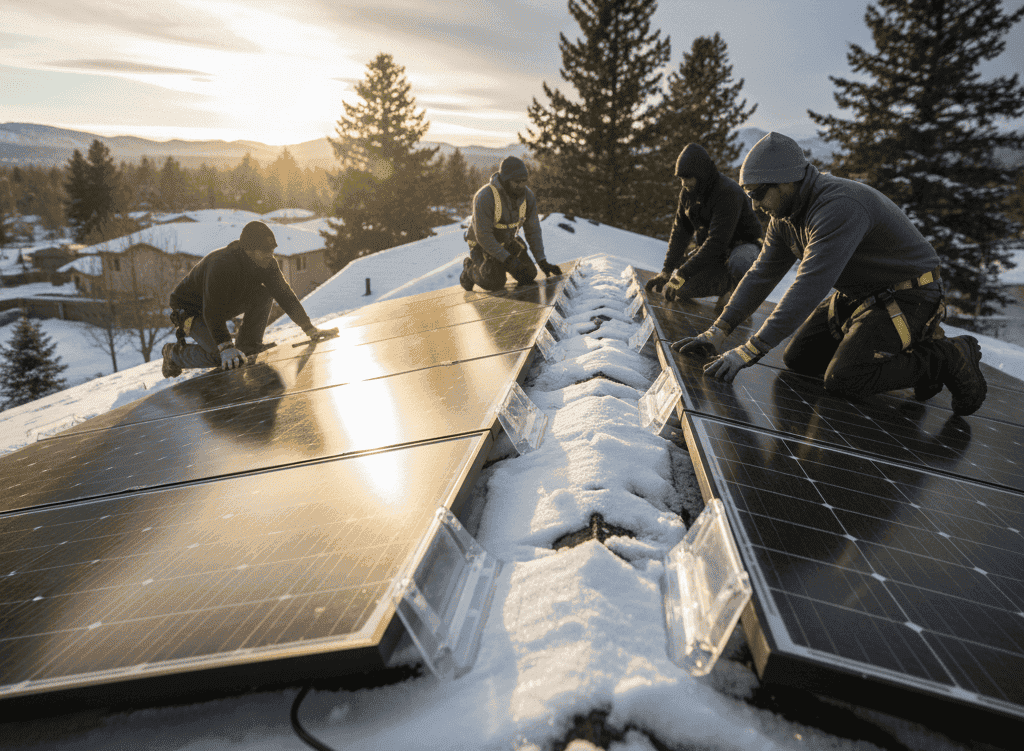
Snow Guards for Solar Panels: Essential Protection Guide
Snow guards for solar panels are protective devices that prevent dangerous snow avalanches from solar installations while maintaining energy production during winter months. These retention systems cost $1.50-$3.00 per linear foot for materials plus $8-12 per linear foot for professional installation, with simultaneous installation during initial solar setup reducing total costs by 40-60%.
Solar panels require snow guards in regions receiving 20+ inches of annual snowfall because the smooth glass surface eliminates natural friction that textured roofing provides. Without guards, compacted snow masses weighing 1,300+ pounds can slide off suddenly in dangerous sheets that damage property, vehicles, gutters, and landscaping and injure people or pets. The two primary snow guard types, clamp-on guards and snow fence systems, offer different protection levels based on regional climate conditions, roof pitch, and panel configuration.
Key Facts:
- Standard solar panels support up to 800 pounds, but typical 144 sq ft arrays can accumulate over 1,300 pounds of snow
- Twelve inches of snow weighs approximately 9.39 pounds per square foot
- Snow guards reduce annual solar efficiency by only 1-4% while preventing complete panel blockage
- Heavy snowfall regions (60+ inches annually) require robust snow fence installations or dual-system configurations
- Light snowfall areas (under 20 inches) function adequately with basic clamp-on systems
Installation Timing: Installing snow guards during initial solar panel setup saves homeowners $400-700 compared to post-installation additions because contractors are already accessing the roof. This integrated approach adds only $500-800 to total solar project costs versus $950-1,500 for separate installations.
Building Code Requirements: While no universal national mandate exists, states including Colorado, Utah, Vermont, New York, Montana, and Minnesota enforce snow guard requirements through building codes when roof pitch exceeds 4:12 and annual snowfall exceeds 20-40 inches.

Snow Accumulation Hazards on Solar Arrays
Standard roofing materials feature textured surfaces that create friction, holding snow securely and releasing it gradually. This natural shedding process occurs safely without incident. However, solar panel installation changes this dynamic dramatically. The large glass panels eliminate friction and create slippery surfaces where snow accumulates and compacts. Melting snow creates a lubricating layer between your panels and the compacted snow mass, triggering dangerous avalanche conditions.
Understanding Snow Weight on Solar Panels
Twelve inches of accumulated snow weighs approximately 9.39 pounds per square foot. Standard solar panels support up to 800 pounds, but typical residential arrays spanning 144 square feet can collect over 1,300 pounds of compacted snow. This massive weight sliding off in single sheets creates serious hazards.
Heavy compacted snow sheets sliding from your roof can:
- Block doorways and entryways
- Fill window wells with packed snow
- Dent vehicles or shatter windshields
- Snap rain gutters and bend downspouts
- Damage hot tubs, outdoor furniture, decking, and fencing
- Injure family members, guests, and pets near your home
- Destroy landscaping and crush plants and trees
Installation Timing: Install Snow Guards During Initial Solar Setup
Living in regions with substantial snowfall, northern states or mountain areas, demands snow guard installation alongside your solar panels.
Why install simultaneously? This approach delivers significant cost savings and eliminates future complications. Snow guards integrate easily during initial installation when contractors are already working on your roof, and panels remain clean. The guards become a simple additional step rather than a separate project. Post-installation snow guard additions remain possible but increase costs substantially.
Your installation contractor evaluates your roof’s angle, surface area, and tier configuration to optimize your solar setup. Flatter roofs may benefit from steeper panel angles that encourage natural snow shedding. Selecting installers familiar with your local winter conditions ensures optimal results. When working with out-of-area installers, consider partnering with local contractors who understand regional weather patterns.
Installing snow guards during initial panel setup prevents expensive repairs to gutters, fencing, landscaping, and vehicles while protecting family members and pets from falling snow sheets. Working with professional permit services ensures your installation meets all safety and building requirements.

Snow Guard System Options
Multiple design approaches exist for safely managing snow release from solar panels. Discuss complementary snow guard options with your provider when selecting new solar panels for optimal protection.
Two primary snow guard categories exist: clamp-on guards and snow fences.
Clamp-On Guard Systems
Clamp-on guards attach at panel edges or between individual panels. These systems either release small snow amounts gradually or retain snow on panels for natural melting. Guards that hold snow for melting reduce energy production during winter months; factor this into your decision.
Standard Clamp-On Models
Basic clamp-on models install on solar panel frames using screw-on clamps that secure guards and prevent movement. Many manufacturers produce these from recycled materials in various configurations. These guards accommodate both portrait and landscape panel orientations while maintaining low profiles that allow continued energy collection. Maximum snow capacity reaches 50 pounds per square foot, suitable for moderate snowfall regions.
Advanced Snow Pad Systems
Premium snow pad systems allow snow and ice buildup to slump and slide gradually from panel surfaces in a controlled fashion. These guards prevent solar panel shading and utilize specialized clamps installed in horizontal joints between closely spaced panels. This design excels for tiered roofs and larger solar installations, particularly commercial solar installations requiring comprehensive protection.
Color-Matched Clamp Systems
Professional-grade clamp systems use round-point screws for penetration-free attachment that grips panels securely without damaging finishes. These guards integrate seamlessly with existing roof colors and finishes, maintaining an attractive appearance with fade-resistant coatings lasting 30+ years.
Snow-Breaking Guard Technology
Innovative forward-facing guards break snow and ice into smaller pieces before allowing shedding from solar panels. This design reduces roof stress, prevents failures and leaks, and offers dual installation options: mechanical clamps or snow-safe adhesive. Individual guards hold up to 3,456 pounds with clamp attachment or 1,379 pounds using adhesive installation.
Snow Fence Solutions
Snow fence systems attach directly to your roof structure separately from solar panels, minimizing panel impact. These install easily after panel placement or on roofs awaiting solar installation.
Eave-Mounted Snow Fence Systems
Popular roof-mounted snow fences install at roof eaves and bolt down to collect snow as it slides from solar panels. These systems require dedicated snow collection areas, necessitating a minimum 18-24 inch clearance between your lowest solar panel and roof eave. This approach protects panels while managing snow accumulation effectively.

How to Choose the Right Snow Guard System for Your Climate
Selecting appropriate snow guards requires understanding your local climate conditions and snowfall patterns. Different regions demand specific snow guard configurations based on accumulation rates, temperature fluctuations, and roof characteristics. Understanding structural engineering requirements helps ensure your system meets all safety standards.
Evaluating Your Regional Snow Load Requirements
Calculate your area’s average annual snowfall and maximum single-storm accumulation. Light snowfall regions (under 20 inches annually) function well with basic clamp-on systems. Moderate snowfall areas (20-60 inches) benefit from reinforced clamp systems or combination approaches. Heavy snowfall zones (60+ inches) require robust snow fence installations or dual-system configurations combining clamps and fences.
Regional building codes specify minimum IBC roof snow load requirements that your installation must meet. These standards account for local climate conditions and ensure structural safety throughout winter months.
Matching Guard Style to Roof Pitch and Panel Angle
Roof pitch significantly impacts snow guard effectiveness. Steep roofs (above 6:12 pitch) experience faster snow movement, requiring stronger retention systems positioned closer to panel edges. Moderate pitch roofs (4:12 to 6:12) balance retention and release, working well with standard spacing configurations. Low-slope installations (under 4:12 pitch) accumulate more snow, demanding higher-capacity guards with retention-focused designs.
Panel angle relative to roof surface also determines guard selection. Flush-mounted panels need fewer guards than elevated or tilted arrays. Adjustable-tilt systems may require reinforced guards accommodating varied angles throughout seasons. Proper system design follows photovoltaic system installation standards to ensure compliance and safety.
Material Durability Considerations
Snow guard materials must withstand freeze-thaw cycles, UV exposure, and mechanical stress. Aluminum guards offer lightweight corrosion resistance suitable for most climates. Stainless steel provides maximum strength for extreme conditions. Polycarbonate options deliver cost-effective performance in moderate climates. Recycled composite materials balance environmental responsibility with adequate durability.
Evaluate manufacturer warranties covering material degradation, color fading, and mechanical failure. Premium systems offer 25-30-year warranties, while budget options provide 10-15-year coverage. These considerations align with comprehensive residential solar design services that account for long-term performance.
Solar Permit Solutions
Affordable Solar Permit Plans
Don't let permit costs slow your project. Professional plan sets at competitive prices — all 50 states, fast turnaround.
Maintenance and Inspection Guidelines for Solar Panel Snow Guards
Proper snow guard maintenance ensures continued protection and extends system lifespan. Regular inspections identify potential issues before they compromise safety or panel performance.
Seasonal Inspection Schedule
Conduct thorough snow guard inspections twice annually, before winter begins and after the final spring thaw. Pre-winter inspections verify secure mounting, check for loose fasteners, and confirm proper spacing. Post-winter reviews assess damage from snow loads, ice buildup, and temperature extremes.
Monthly visual checks during winter months identify developing problems like guard displacement, panel frame stress, or unusual snow accumulation patterns. Document any changes with photographs for tracking degradation over time.
Common Maintenance Tasks
Fastener Tightening: Check all clamp screws, bolts, and mounting hardware quarterly. Temperature fluctuations cause expansion and contraction that loosens connections. Hand-tighten accessible fasteners, avoiding over-tightening that damages panel frames.
Debris Removal: Clear leaves, branches, and other debris from guards before snowfall begins. Accumulated debris reduces guard effectiveness and creates ice dam formation points. Use soft brushes, avoiding scratches to panel surfaces.
Corrosion Prevention: Inspect metal components for rust, corrosion, or coating damage. Apply appropriate protective treatments to exposed areas following manufacturer specifications. Replace severely corroded guards immediately to prevent structural failure.
Adhesive Bond Verification: For adhesive-mounted guards, check bond integrity by gentle pressure testing (never pull forcefully). Deteriorating adhesive appears yellowed, brittle, or separated from surfaces. Replace compromised adhesive-mounted guards before winter.
Warning Signs Requiring Professional Service
Contact qualified installers immediately when observing:
- Cracked or broken guard components
- Visible panel frame deformation near mounting points
- Guards hanging loose or completely detached
- Unusual snowslide patterns indicating guard failure
- Water infiltration or leaks near guard mounting locations
- Significant rust or corrosion affecting structural integrity
Professional evaluation ensures compliance with NEC Article 690 requirements and maintains system safety.
Snow Removal Safety Protocol
Never manually remove snow from panels with guards installed. Shovels, rakes, and scrapers damage both panels and guards while creating injury risks from falls or snow slides. Allow natural melting unless emergency access requires snow removal, then hire professionals with proper equipment and safety training.
If guards retain excessive snow blocking significant panel area, evaluate whether retention-style guards suit your climate. Consider switching to gradual-release designs that balance protection with energy production.
Documentation and Record Keeping
Maintain detailed records of:
- Initial installation dates and configurations
- Inspection findings with dated photographs
- Maintenance activities and repairs performed
- Weather events causing damage or unusual wear
- Warranty information and manufacturer contacts
This documentation supports warranty claims, helps installers diagnose problems, and provides valuable information for future system modifications. Proper documentation also assists with solar permit processing time requirements if modifications become necessary.
Snow Guard Investment Analysis
Snow guard installation costs vary significantly based on style selection, roof dimensions, and panel quantity. Average snow guard pricing ranges from $1.50 to $3.00 per linear foot, with installation labor adding considerable expense. Professional installations typically cost $8-12 per linear foot when added post-installation.
Installing snow guards during initial solar panel setup increases upfront investment but delivers substantial savings by avoiding secondary roof access costs and preventing damage from snow slides. Request snow guard inclusion before finalizing solar panel contracts.
Calculate total project costs, including:
- Guard materials based on linear footage required
- Installation labor (significantly lower during initial panel setup)
- Additional mounting hardware for specific roof types
- Warranty coverage and extended protection plans
- Potential insurance premium reductions for added safety features
Understanding state-specific permit timelines helps you plan your complete installation budget, including snow guard integration. Many jurisdictions require snow guards as part of permit approval in heavy snowfall regions.
Conclusion
Protecting your solar investment from winter weather challenges requires proactive planning and proper snow guard installation. Snow accumulation on solar panels creates dual threats: reduced energy production during critical winter months and dangerous avalanche conditions that endanger people, pets, and property. Understanding these risks empowers homeowners to make informed decisions about snow retention systems before problems develop.
The most cost-effective approach involves installing snow guards simultaneously with your solar panel system. This strategy eliminates expensive secondary roof access, ensures optimal guard placement, and provides immediate protection from your first winter season. Whether you select clamp-on systems, snow fence configurations, or combination approaches depends on your regional climate, roof characteristics, and specific snow load requirements.
Regular maintenance and seasonal inspections extend snow guard lifespan while ensuring continued protection. Simple tasks like fastener tightening, debris removal, and visual assessments prevent minor issues from escalating into costly repairs or safety hazards. Document your maintenance activities to support warranty claims and track system performance over time.
For homeowners in moderate- to heavy-snowfall regions, snow guards represent essential safety equipment rather than optional accessories. The investment, typically $1.50-$3.00 per linear foot for materials plus installation, prevents thousands in potential damage to gutters, vehicles, landscaping, and structures. More importantly, these systems protect family members and visitors from injury caused by falling snow masses weighing hundreds or thousands of pounds.
Existing solar panel owners experiencing snow slide issues should prioritize snow guard retrofitting before the next winter season. While post-installation additions cost more than integrated approaches, the expense remains minimal compared to repairing avalanche damage or addressing personal injury claims. Contact our solar experts to evaluate your system and recommend appropriate snow retention solutions tailored to your local climate conditions.
Ultimately, snow guards ensure your solar panels deliver reliable renewable energy year-round while maintaining safe conditions around your home. This comprehensive protection maximizes your solar investment returns, preserves property values, and provides peace of mind throughout harsh winter weather. Working with experienced professionals familiar with comprehensive solar design services ensures your system meets all safety standards while optimizing performance. Take action now to safeguard your solar system, your future self will appreciate the foresight when winter storms arrive.
FAQs
Affordable Solar Permit Plans
Don't let permit costs slow your project. Professional plan sets at competitive prices — all 50 states, fast turnaround.
Frequently Asked Questions
Solar panels require snow guards in regions experiencing moderate to heavy snowfall accumulation. Areas receiving 20+ inches of annual snowfall should install snow retention systems to prevent dangerous avalanches. The smooth glass surface of solar panels eliminates natural friction that textured roofing materials provide, allowing compacted snow masses to slide off suddenly in sheets weighing hundreds of pounds. These avalanches damage property, destroy landscaping, and injure people or pets near your home. Light snowfall regions (under 20 inches annually) may function adequately without guards, though installation still provides added protection. Evaluate your local climate patterns, roof pitch, and panel positioning when determining snow guard necessity. Consult experienced installers familiar with regional weather conditions for personalized recommendations based on your specific installation.
Snow guard costs range from $1.50 to $3.00 per linear foot for materials alone, with professional installation adding $8-12 per linear foot when performed as a separate project. Total expenses depend on your roof size, panel quantity, guard style selection, and installation timing. A typical residential solar array requiring 100 linear feet of snow guards costs $150-300 for materials plus $800-1,200 for professional installation, totaling $950-1,500. Installing guards simultaneously with your solar panels significantly reduces labor costs since contractors are already accessing your roof. This integrated approach typically adds only $500-800 to your total solar project cost compared to $950-1,500 for post-installation additions. Additional factors affecting price include roof accessibility, mounting surface type, and whether you select basic clamp systems or premium snow fence configurations.
DIY snow guard installation is possible for homeowners with roofing experience, proper safety equipment, and technical skills, though professional installation is strongly recommended. Incorrect guard placement, improper fastener tightening, or inadequate spacing compromises protection effectiveness and potentially damages solar panels. Roof work requires fall protection equipment, ladder safety knowledge, and familiarity with electrical system precautions around solar installations. Most manufacturers void warranties when guards are improperly installed by unlicensed individuals. Additionally, working around energized solar panels presents electrocution risks without proper training and safety protocols. Insurance coverage may exclude damage from DIY installation failures. Professional installers understand optimal guard spacing for your specific climate, ensure proper weight distribution across panel frames, and guarantee work quality. They also carry liability insurance protecting you from installation accidents or property damage.
Snow guards minimally impact solar panel efficiency when properly installed, though effects vary by guard style and design. Low-profile clamp-on guards mounted along panel edges create negligible shading, typically reducing annual energy production by less than 1-2%. Forward-facing guards and snow pad systems positioned between panels may create slightly more shading during morning and evening hours when sun angles are low, potentially reducing efficiency by 2-4% during winter months. However, this minor reduction is offset by preventing complete panel blockage from snow accumulation. Panels buried under compacted snow produce zero energy until melting occurs—often taking days or weeks in cold climates. Snow retention systems that allow gradual snow release maintain partial energy production while preventing dangerous avalanches. The efficiency trade-off favors safety and consistent winter performance over maximizing every kilowatt-hour.
Uncontrolled snow slides from solar panels create multiple serious hazards and expensive damage scenarios. Heavy snow sheets sliding suddenly can block doorways, trapping occupants inside or preventing emergency exit. Snow masses falling into window wells damage frames, crack glass, and create flooding risks when melting. Vehicles parked near homes suffer dented hoods, crushed roofs, and shattered windshields from falling snow weighing hundreds of pounds. Rain gutters and downspouts bend, snap, or tear away from fascia boards, requiring costly repairs and creating water damage risks. Outdoor structures like hot tubs, furniture, decking, and fencing sustain crushing damage from snow impact forces. Landscaping suffers destroyed shrubs, broken tree branches, and crushed perennials under snow piles. Most seriously, people and pets walking near your home face severe injury from unexpected snow avalanches dropping from roof height. Impact injuries include concussions, broken bones, and crush injuries requiring emergency medical treatment. Property damage typically costs $2,000-5,000 per incident, while personal injury claims can reach tens of thousands in medical expenses and liability.
Snow guard maintenance involves biannual inspections, routine cleaning, and prompt repairs to ensure continued protection. Conduct thorough examinations before winter begins and after spring thaw, checking fastener tightness, guard positioning, and component condition. Tighten loose clamp screws and mounting bolts quarterly, as temperature fluctuations cause expansion and contraction that loosens connections—avoid over-tightening that damages panel frames. Remove leaves, branches, and debris accumulation from guards before snowfall begins using soft brushes that won't scratch panel surfaces. Inspect metal components for rust, corrosion, or protective coating damage, applying appropriate treatments to exposed areas following manufacturer specifications. For adhesive-mounted guards, verify bond integrity through gentle pressure testing, replacing units showing yellowed, brittle, or separating adhesive before winter. Watch for warning signs requiring professional service: cracked components, visible panel frame deformation, detached guards, unusual snow slide patterns, water infiltration near mounting points, or significant structural corrosion.
Building code requirements for solar panel snow guards vary significantly by jurisdiction, with no universal national mandate in the United States. However, many municipalities in heavy snowfall regions have adopted local ordinances requiring snow retention systems on solar installations. States including Colorado, Utah, Vermont, and portions of New York, Montana, and Minnesota enforce snow guard requirements through building codes or solar permitting processes. Requirements typically trigger when roof pitch exceeds specific angles (commonly 4:12 or steeper) and annual snowfall exceeds defined thresholds (often 20-40 inches). Some jurisdictions require guards only when solar panels are positioned above walkways, doorways, or high-traffic areas. The International Building Code (IBC) and International Residential Code (IRC) don't mandate snow guards specifically but include general provisions requiring protection against falling snow and ice hazards. Local building departments interpret these provisions differently, creating variable enforcement. Always verify requirements with your municipal building department during solar permit applications.

SPS Editorial Team
Solar Permit Solutions
Solar Permit Solutions provides professional solar permit design services for residential, commercial, and off-grid installations across all 50 states. Our team ensures permit-ready plan sets delivered fast.
Related Articles
Why Solar Inspections Fail: 10 Common Mistakes to Avoid
Discover the 9 critical reasons solar inspections fail and how to avoid costly m...
Solar Grounding And Bonding: How To Pass Inspection Every Time
Learn how to pass solar grounding and bonding inspections every time. Avoid comm...
Solar Inspection After Installation: What Happens Next?
Learn how to pass your solar inspection by following essential tips for obtainin...