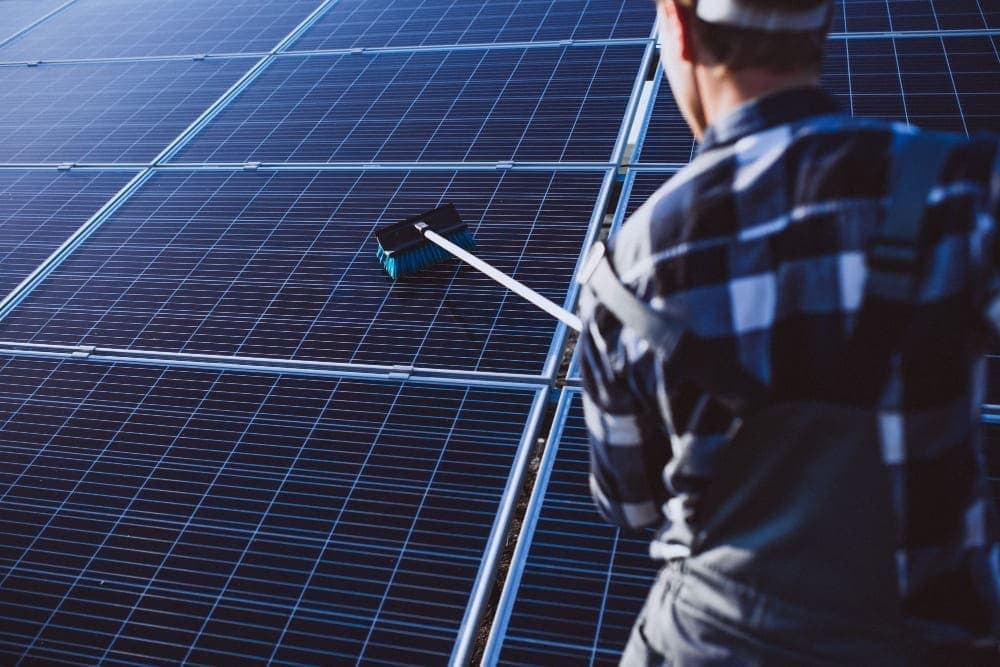
Do Solar Panels Require Maintenance? Here’s What You Need to Know
Solar panels require minimal maintenance throughout their 25+ year lifespan, making them one of the most hands-off home energy systems available. Most photovoltaic systems need only basic monitoring and occasional cleaning, typically 1-2 times per year, to maintain optimal performance and energy production.
Quick Answer: Solar panel maintenance involves
- Monitoring system output regularly through apps or inverter displays
- Cleaning panels 1-2 times annually (or letting rain do the work)
- Scheduling professional inspections if production drops unexpectedly
- Relying on manufacturer warranties for repairs and replacements
Annual maintenance costs: $150-$300 on average, primarily for optional professional cleaning services. Many homeowners spend nothing on maintenance for years, as rainfall naturally cleans panels and systems operate problem-free.
Common maintenance frequency:
- Cleaning: Once or twice yearly (more in dusty/low-rainfall areas)
- Inspections: Annual professional checkups are recommended but not always necessary
- Repairs: Rarely needed due to no moving parts and durable construction
Making the switch to solar energy delivers substantial financial benefits, yet with initial investments reaching five figures, maximizing your panels’ longevity becomes essential. Photovoltaic systems demonstrate exceptional resilience and demand minimal to zero upkeep throughout their operational span. Track your system’s energy output and ensure your solar modules stay free from obstruction. These two actions form the foundation of optimal performance maintenance.
Areas experiencing adequate precipitation without excessive smog, particulate matter, or airborne contaminants rarely require regular attention. Still, scheduled inspections prove valuable for early problem detection. Should malfunctions occur, your manufacturer and installer warranties typically handle replacement and service expenses. Here’s your comprehensive guide to maintaining solar panel systems.
Essential Points
- Photovoltaic modules demand minimal ongoing care.
- Manufacturing guarantees protect against defects impacting system performance.
- Professional cleaning services offer efficient solutions when panels require attention.
- Solar monitoring technology alerts you to performance declines immediately.

Maintenance Frequency for Solar Panel Systems
Most property owners find their photovoltaic arrays operate nearly maintenance-free across decades of service. Uncommon problems typically surface immediately post-manufacturing and get identified before or during installation. The primary upkeep requirement involves thorough cleaning once or twice annually, though sufficient rainfall often handles this naturally.
Panel failures remain extremely rare. Occasionally, defective units arrive nonfunctional from the factory, but that represents the extent of typical issues. Properly installed panels rarely develop problems once operational. With adequate rainfall clearing away bird waste, dust particles, and pollen accumulation, maintenance requirements stay minimal.
Power inverters require more frequent attention than panels themselves. Notice an unexpected production decrease? Inverter issues, stemming from thermal stress, voltage spikes, or installation errors, often explain the problem. These situations typically resolve quickly with professional solar services.
Microinverter systems present multiple potential failure points since each panel connects to its own inverter unit located on the rooftop. String inverter configurations offer simpler maintenance, with a single ground-level access point eliminating rooftop service requirements. Understanding solar system electrical fundamentals helps property owners recognize when professional intervention becomes necessary.
Identifying When Your Solar System Needs Service
System output declining beyond expected levels signals maintenance needs. Damaged, soiled, or malfunctioning photovoltaic systems underperform noticeably. Track your electric utility statements, leverage system monitoring software, or deploy dedicated solar monitoring equipment to pinpoint accelerated performance degradation sources.
Generally, maintaining debris-free panels ensures efficient operation, while production monitoring enables early issue detection. The National Renewable Energy Laboratory provides extensive research on optimal system performance benchmarks.
Solar production fluctuates naturally with seasonal patterns. Spring months typically show peak output, while summer months may see reduced production despite longer daylight hours due to elevated temperatures. Simultaneously, energy consumption often increases with air conditioning demand during warmer periods.
Rising consumption paired with decreased production during hot months. This combination typically explains apparent system performance concerns rather than actual equipment failure.
Weather Impact on Solar Panel Durability
Photovoltaic modules undergo rigorous testing to withstand hail impacts, high winds, and severe weather conditions, though they’re not completely invulnerable. While weather-related damage occurs infrequently, securing panels backed by comprehensive warranties provides crucial protection for repairs or replacements. The International Energy Agency tracks global standards for renewable energy system durability and performance.
Solar Permit Solutions
Affordable Solar Permit Plans
Don't let permit costs slow your project. Professional plan sets at competitive prices — all 50 states, fast turnaround.
Solar Panel Maintenance Investment
Annual maintenance expenses remain surprisingly modest given the infrequent service requirements. Photovoltaic systems operate largely autonomously, though specific situations warrant professional intervention.
Standard System Maintenance
While active maintenance rarely becomes necessary, some property owners invest in operations and maintenance (O&M) contracts for enhanced protection. O&M agreements function as comprehensive coverage, including cleaning services, electrical inspections, and pest prevention measures. Annual costs typically range from several hundred dollars.
Equipment Replacement and Repair Services
System repairs or component replacements occur rarely thanks to stationary installation and the absence of mechanical parts. Component failures usually fall under manufacturer coverage, encompassing panels, inverters, tracking mechanisms, or monitoring devices, with your installation company or certified technician handling the work. Understanding solar racking systems helps identify potential structural maintenance needs.
Remember: Most warranties cover parts exclusively, not labor costs. Review warranty documentation thoroughly to understand your financial responsibilities.
Post-Installation Roof Replacement
Installation professionals verify your roof structure can support photovoltaic arrays throughout their 20-30 year lifespan. When structural concerns arise, reputable installers recommend roof repairs or replacement before proceeding with installation. However, unforeseen circumstances occasionally necessitate later action. Commercial solar design considerations often include extensive structural assessments.
Should roof replacement become necessary after solar installation, budget approximately $200 per panel for removal, secure storage, and reinstallation services.
Vegetation Management for Optimal Sun Exposure
Tree pruning and removal costs fluctuate based on size and height specifications, spanning from under $100 to exceeding $1,000. Taller trees in dense neighborhoods command higher service fees. The American Solar Energy Society offers resources on optimizing site conditions for maximum energy production.
Handling Installer Business Closure
Your original installation company should remain your primary service contact, yet some businesses won’t operate throughout your system’s complete lifespan. When your installation company ceases operations, locate alternative qualified service providers. Solar permit expediting services from reliable companies ensure continuity in system documentation and compliance.
Contact equipment manufacturers first. They frequently recommend authorized local service companies. Since installer warranties typically disappear with business closure, verify that new service providers won’t invalidate your manufacturer’s warranty through their work. For systems in major metropolitan areas, solar permit services in Los Angeles or Houston connect property owners with certified maintenance providers.
As the solar sector adjusts to evolving policy frameworks and regulatory requirements, expanding numbers of companies provide operations and maintenance (O&M) services for systems whose original installers have closed. The demand for specialized service teams addressing these orphaned installations continues growing, with dedicated technicians and service departments emerging to fill this market need. SolSmart certification programs help municipalities streamline solar installation and maintenance standards.
Warranty Protection Safeguards Your Investment
Solar manufacturers provide multiple warranty types, ensuring coverage for unlikely problems. Quality warranties eliminate maintenance costs associated with manufacturing defects throughout system operation. The U.S. Department of Energy provides guidance on warranty considerations alongside federal incentive programs.
Output guarantees promise specific production levels across warranty duration (typically 25 years). Manufacturers might guarantee peak output maintains 85% or higher performance for 25 years.
Product warranties protect against component defects. Current industry standards provide minimum 25-year protection. While product warranties occasionally extend to inverters and mounting systems, this isn’t universal. Individual component warranties remain standard practice, though industry trends may shift. The IEEE Power & Energy Society publishes technical standards influencing warranty practices across the renewable energy sector.
Minimal Effort, Maximum Performance
Most property owners find solar system maintenance involves production monitoring and natural rainfall cleaning. These installations deliver decades of reliable service with minimal intervention requirements. When problems emerge, robust manufacturer warranties typically provide coverage. For DIY enthusiasts interested in learning solar energy basics, understanding maintenance principles proves essential.
Combine basic monitoring with occasional professional cleaning services (when needed) and ensure certified technicians handle all repairs. This approach protects your investment while delivering dependable, cost-effective energy for years ahead. Off-grid solar system design may require additional maintenance considerations compared to grid-connected installations. Those interested in building your own solar power system should understand these maintenance requirements from the ground up.
Conclusion
Solar panel maintenance doesn’t require the time, effort, or financial investment many homeowners initially anticipate. Throughout their 25+ year operational lifespan, photovoltaic systems function with remarkable independence, needing only occasional attention to maintain peak performance. The combination of durable construction, absence of moving components, and natural cleaning from rainfall creates a virtually hands-off ownership experience for most installations.
Your primary responsibilities center on monitoring system output and ensuring panels remain unobstructed. These tasks take minimal time and often become automated through monitoring software. When professional intervention becomes necessary, comprehensive manufacturer warranties typically cover the costs, protecting your substantial upfront investment. Whether addressing inverter issues, scheduling professional cleaning, or managing unexpected repairs, the resources and support systems exist to keep your solar array generating clean, cost-effective energy. Energy efficiency improvements complement solar installations by reducing overall consumption.
The minimal maintenance requirements of solar technology represent one of its most compelling advantages. By understanding what to monitor, when to seek professional assistance, and how warranty coverage protects your investment, you can confidently maximize both the performance and longevity of your solar energy system. The path to decades of reliable, low-maintenance renewable energy starts with informed ownership and basic preventive care. For comprehensive guidance, explore Solar Permit Solutions’ blog on system optimization and maintenance best practices.
FAQs
Affordable Solar Permit Plans
Don't let permit costs slow your project. Professional plan sets at competitive prices — all 50 states, fast turnaround.
Frequently Asked Questions
Most solar panels require cleaning only 1-2 times annually, and many homeowners find that natural rainfall provides sufficient cleaning throughout the year. However, your specific cleaning schedule depends on local environmental conditions. Properties in areas with high dust, pollen, bird activity, or minimal rainfall may benefit from quarterly cleaning. Monitor your system's production output. If you notice declining performance without obvious causes, debris accumulation on panel surfaces likely requires attention. Professional cleaning services cost between $13 and $25 per panel on average, while many homeowners successfully maintain panels using a garden hose and soft-bristle brush for DIY cleaning.
The most reliable indicator of maintenance needs is unexplained production decline. Monitor your system output through your inverter display, monitoring app, or monthly electricity bills. A sudden drop in energy generation, beyond normal seasonal variations, suggests potential issues. Additional warning signs include visible damage to panels (cracks, discoloration), loose mounting hardware, unusual sounds from inverters, error messages on monitoring systems, or heavy debris accumulation on panel surfaces. Weather events like hailstorms, high winds, or heavy snow also warrant post-event visual inspections to identify potential damage requiring professional assessment.
Solar panels continue generating electricity during winter months and cloudy conditions, though at reduced capacity compared to optimal sunny days. Panels actually operate more efficiently in cooler temperatures, so winter production can be surprisingly strong on clear, cold days. Snow accumulation does temporarily block sunlight and halt production, but panels typically shed snow naturally due to their smooth, tilted surfaces and the heat they generate. Light snow often melts quickly, while heavy accumulation may require gentle removal using a soft roof rake (never hot water, which can crack cold panels). Rain and clouds reduce but don't eliminate production. Panels still capture diffuse sunlight and maintain functionality across diverse weather conditions.
Installer closure doesn't leave you without support options. Your manufacturer warranties remain valid regardless of installer status. Contact equipment manufacturers directly for warranty claims and authorized service provider recommendations. Many solar companies now specialize in servicing orphaned systems from closed installers, offering operations and maintenance packages specifically for this situation. When selecting a new service provider, verify their certifications, ensure their work won't void existing manufacturer warranties, and confirm they're authorized to service your specific equipment brands. Keep all original installation documentation, warranty information, and system specifications to facilitate smooth transitions between service providers.
Solar panel warranties provide essential protection for your investment and are typically included with panel purchases. Most manufacturers offer two warranty types: product warranties (covering defects and physical failures for 25+ years) and performance warranties (guaranteeing minimum output levels, usually 80-85% of original capacity after 25 years). Inverter warranties typically span 10-25 years depending on the type and manufacturer. Installation workmanship warranties from your installer generally cover 5-10 years of labor and installation-related issues. While warranties usually cover parts rather than labor costs, they protect against expensive component replacements that would otherwise create a significant financial burden. Always review warranty terms carefully to understand coverage limitations, claim procedures, and maintenance requirements that might affect warranty validity.
SPS Editorial Team
Solar Permit Solutions
Solar Permit Solutions provides professional solar permit design services for residential, commercial, and off-grid installations across all 50 states. Our team ensures permit-ready plan sets delivered fast.
Related Articles
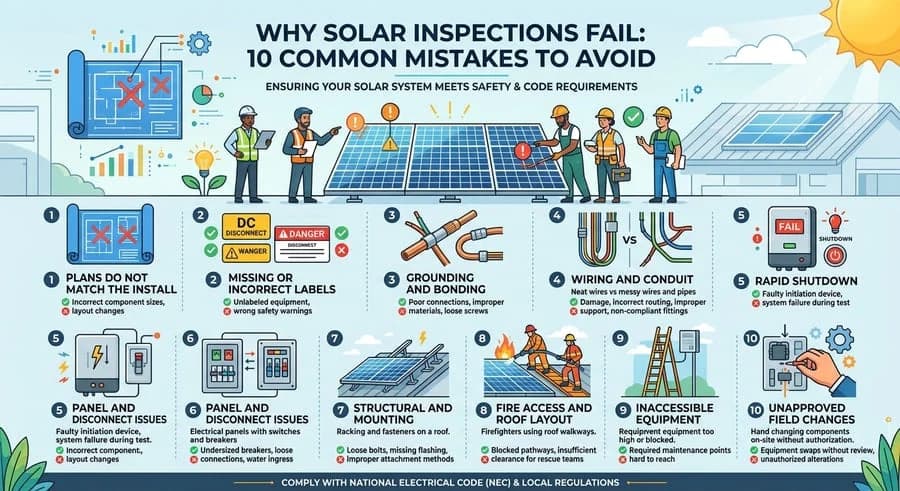
Why Solar Inspections Fail: 10 Common Mistakes to Avoid
Discover the 9 critical reasons solar inspections fail and how to avoid costly m...
Solar Grounding And Bonding: How To Pass Inspection Every Time
Learn how to pass solar grounding and bonding inspections every time. Avoid comm...
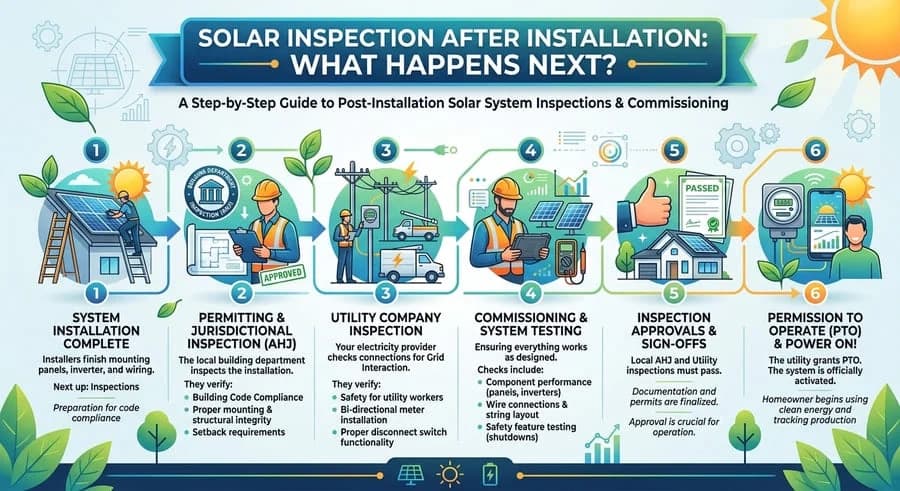
Solar Inspection After Installation: What Happens Next?
Learn how to pass your solar inspection by following essential tips for obtainin...