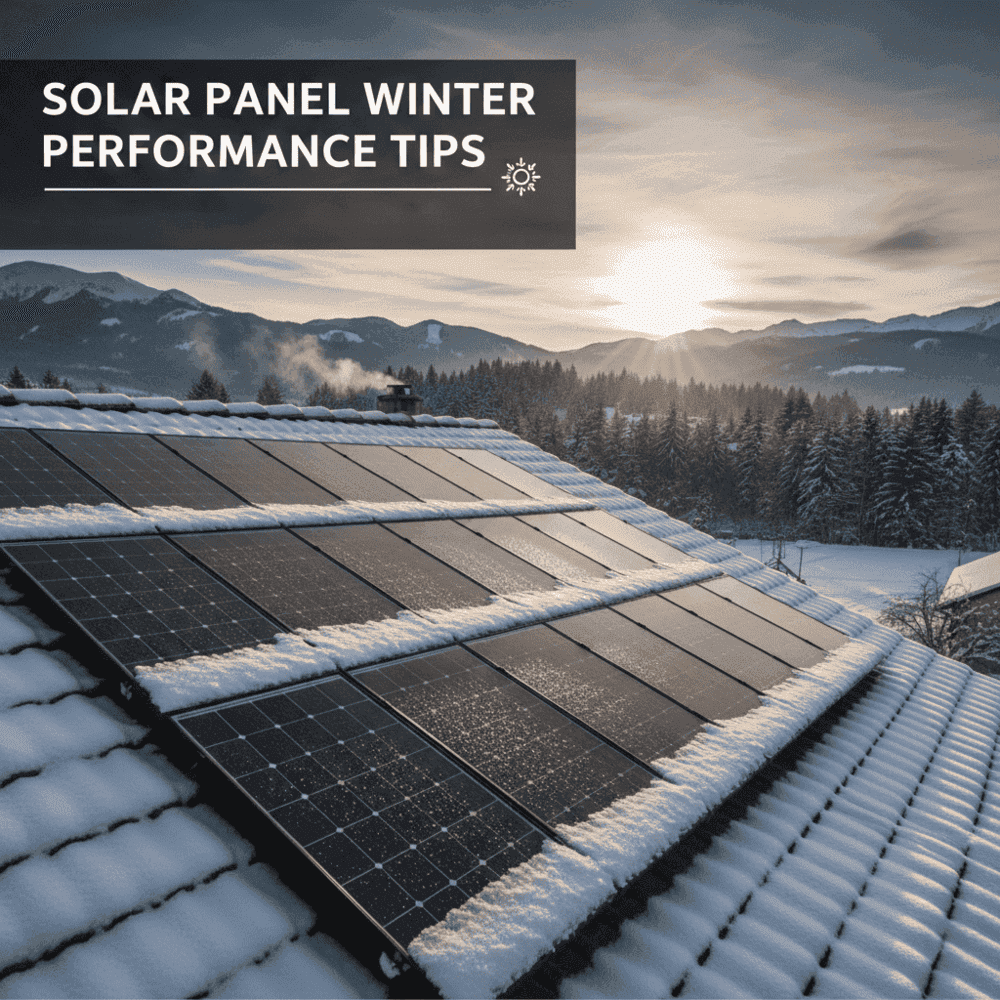
Solar panels perform efficiently during winter by adjusting tilt angles to 50-55 degrees, removing snow with soft brushes, optimizing battery storage with cold-weather lithium batteries rated to -20°C (-4°F), monitoring system efficiency daily, and investing in monocrystalline or bifacial panels. Cold temperatures actually improve solar cell conductivity, making winter an optimal operating environment. The primary challenges stem from shorter daylight hours and snow accumulation rather than freezing temperatures.
Solar power costs have dropped over 90 percent in the past decade, according to the Solar Energy Industries Association, yet winter months bring reduced sunlight intensity and fewer daylight hours that can decrease energy output by 25-50 percent compared to summer. Strategic maintenance and system optimization ensure consistent power generation even during the coldest months. This guide covers five proven methods to maximize solar panel performance throughout winter.
This guide covers five proven strategies to boost energy generation from solar panels throughout the winter season:
- Adjust Solar Panel Tilt Angle for Winter Sun Position
- Remove Snow and Debris From Solar Panels Safely
- Optimize Battery Storage for Cold Weather Performance
- Monitor Solar System Efficiency and Adjust Energy Usage
- Choose High-Efficiency Solar Panels for Winter Conditions

1. Adjust Solar Panel Tilt Angle for Winter Sun Position
Modifying the tilt angle and orientation of solar panels directly affects sunlight exposure. During winter, the sun travels a lower path across the sky, so increasing the panel tilt to a steeper angle captures more available sunlight. Positioning panels to face true south (in the northern hemisphere) also maximizes daily sun exposure. The U.S. Department of Energy confirms that proper orientation significantly impacts overall system efficiency.
Solar tracking systems that automatically adjust panel positioning throughout the day further enhance energy capture. Fixed-tilt installations remain common, but single-axis or dual-axis tracking systems deliver superior performance during winter months by following the sun’s trajectory from sunrise to sunset. When planning system upgrades, understanding solar permit timelines by state helps homeowners schedule installations efficiently.
2. Remove Snow and Debris From Solar Panels Safely
Winter weather introduces snow, ice, and debris that accumulate on solar panels and diminish efficiency while also staining mounting hardware. Cleaning panels regularly, especially following snowfall, ensures maximum sunlight absorption. Avoid metal rakes entirely, as they scratch and damage solar cells. Instead, use a soft-bristled brush or a gentle water stream to safely remove buildup without harming the panels.
Research from the National Renewable Energy Laboratory demonstrates that clean panels can produce up to 25 percent more energy than dirty ones. Proper maintenance also ensures compliance with local AHJ solar requirements and preserves manufacturer warranties.
3. Optimize Battery Storage for Cold Weather Performance
Shorter winter days and longer nights demand an optimized battery storage system to maintain a continuous power supply. Energy harvested during daylight hours stores in batteries for use during peak demand periods or when sunlight becomes limited. Look for lithium iron phosphate (LiFePO₄) batteries specifically designed for cold weather performance. Low-temperature series batteries can safely charge at temperatures as low as -20°C (-4°F) using a standard charger. These batteries feature built-in heating technology that brings cells to a safe charging temperature without requiring additional components like heated blankets, ensuring maximum energy efficiency.
Homeowners considering off-grid solar system design should prioritize cold-rated battery storage to maintain reliable power throughout winter. Understanding how your system connects to the grid through the solar interconnection process also helps optimize energy storage strategies.
Solar Permit Solutions
Need Solar Permit Plans?
Professional, permit-ready solar plan sets delivered fast. Residential and commercial projects across all 50 states.
4. Monitor Solar System Efficiency and Adjust Energy Usage
Track solar panel system efficiency on a regular basis. Inspect for issues, malfunctions, or shading from nearby objects, and address problems immediately to prevent prolonged drops in energy generation. The Lawrence Berkeley National Laboratory provides extensive research on performance monitoring best practices.
When solar energy output decreases during winter, adjust appliance usage patterns to compensate. Simple changes deliver significant improvements in solar energy utilization. Switch laundry schedules from nighttime to daylight hours when panels actively generate power. Additional measures include replacing traditional bulbs with energy-efficient LED lighting, which reduces overall consumption regardless of season. The EPA renewable energy resources page offers additional tips for maximizing household energy efficiency.
Proper system documentation, including a solar single line diagram, helps technicians quickly identify and resolve performance issues during maintenance visits.
5. Choose High-Efficiency Solar Panels for Winter Conditions
Select high-quality solar panels with superior efficiency ratings for better winter performance. Advanced technologies like monocrystalline or bifacial panels deliver higher energy yields, particularly under challenging weather conditions. According to EnergySage research, premium panels can produce 10-15 percent more energy than standard models in low-light conditions.
When upgrading your system, ensure all components meet IEEE photovoltaic standards and comply with rapid shutdown requirements for safety. Working with experienced residential solar permit design professionals ensures your installation meets all code requirements.
Winter presents obstacles for solar panel performance, but implementing these strategies maximizes solar energy system output. Optimizing tilt angle and orientation, maintaining clean panels, upgrading battery storage, monitoring energy consumption, and investing in quality technology all contribute to reliable and efficient solar power generation during colder months. For those in specific regions, resources like the California solar permitting guide or Texas solar permit requirements provide state-specific guidance. Adopting these practices not only increases energy production but also supports a more sustainable future.
Conclusion
Winter presents unique challenges for solar energy systems, but proactive measures ensure consistent power generation even during the coldest months. Adjusting panel tilt angles to capture the lower winter sun, maintaining clean panel surfaces free of snow and debris, optimizing battery storage for shorter daylight hours, monitoring system efficiency, and investing in high-quality equipment all contribute to maximizing solar output year-round.
Solar panels actually operate more efficiently in cold temperatures because photovoltaic cells experience less resistance when converting sunlight to electricity. NASA research on temperature coefficients confirms that solar cell performance improves as temperatures decrease below standard test conditions. The primary winter challenges stem from reduced daylight hours and potential snow accumulation rather than cold temperatures themselves. Implementing the strategies outlined in this guide transforms these seasonal obstacles into manageable factors that barely impact overall annual energy production.
Homeowners who take a strategic approach to winter solar maintenance often discover their systems perform better than expected during colder months. Combining proper panel orientation with reliable battery storage creates a resilient energy system capable of powering homes through winter storms and grid outages. Understanding how long it takes to get a solar permit helps homeowners plan system upgrades before winter arrives. Taking action now to optimize solar panel performance during winter ensures reliable, sustainable energy generation when it matters most.
Ready to optimize your solar installation for winter performance? Contact Solar Permit Solutions for expert permit design services that ensure your system meets all local requirements.
FAQs
Need Solar Permit Plans?
Professional, permit-ready solar plan sets delivered fast. Residential and commercial projects across all 50 states.
Frequently Asked Questions
Solar panels work effectively during winter and actually perform more efficiently in cold temperatures. Photovoltaic cells convert sunlight into electricity, not heat, so cold weather enhances their electrical conductivity. Solar panels begin losing efficiency when temperatures exceed 77°F (25°C), meaning winter conditions often create optimal operating environments. The main factors affecting winter output are shorter daylight hours and potential snow coverage rather than temperature itself.
Solar panels typically produce 25 to 50 percent less energy during winter months compared to summer. This reduction results primarily from fewer daylight hours and lower sun angles rather than cold temperatures. However, net metering programs allow homeowners to bank excess summer credits to offset higher winter grid usage. Annual energy production remains consistent when systems are properly sized, and many homeowners find their solar investment delivers reliable savings throughout all seasons.
Light snow accumulation typically melts or slides off solar panels naturally within a few days due to the panels' dark surface absorbing heat and their angled mounting position. Manual snow removal is generally unnecessary and can void warranties if panels become damaged during cleaning. For heavy snow accumulation, use a soft-bristled brush or foam snow rake specifically designed for solar panels. Never use metal tools, sharp objects, or pressure washers, as these can scratch solar cells and reduce efficiency permanently.
The optimal winter panel angle equals your latitude plus 10 to 15 degrees to compensate for the sun's lower path across the sky. For example, homeowners at 40 degrees latitude should adjust panels to approximately 50 to 55 degrees during winter months. Steeper angles not only capture more direct sunlight but also help snow slide off panels more quickly. Adjustable mounting systems or solar tracking systems maximize energy capture by following the sun's trajectory throughout shorter winter days.
Solar panels continue generating electricity on cloudy days, though at reduced capacity. Panels can produce 10 to 25 percent of their typical output under heavy cloud cover by capturing diffuse sunlight that penetrates through clouds. Modern high-efficiency panels, particularly monocrystalline models, perform better in low-light conditions than older technology. Even during overcast winter weather, solar systems contribute to household energy needs and reduce grid dependence.
Battery storage significantly improves solar system performance during winter by storing daytime energy for use during longer nighttime hours. Without batteries, excess daytime generation feeds back to the grid while evening energy needs require grid electricity. Cold-weather lithium iron phosphate (LiFePO4) batteries designed for low-temperature charging ensure reliable storage even when temperatures drop below freezing. Battery backup also provides essential power during winter storms that cause grid outages.
Solar panel installation proceeds year-round in most climates, and winter often offers advantages, including faster scheduling and available installer capacity. The physical rooftop installation requires safe conditions without active precipitation, but design, permitting, and equipment procurement happen regardless of weather. Installing during winter means systems are operational before peak summer production months begin, maximizing first-year energy generation and savings.

SPS Editorial Team
Solar Permit Solutions
Solar Permit Solutions provides professional solar permit design services for residential, commercial, and off-grid installations across all 50 states. Our team ensures permit-ready plan sets delivered fast.
Related Articles
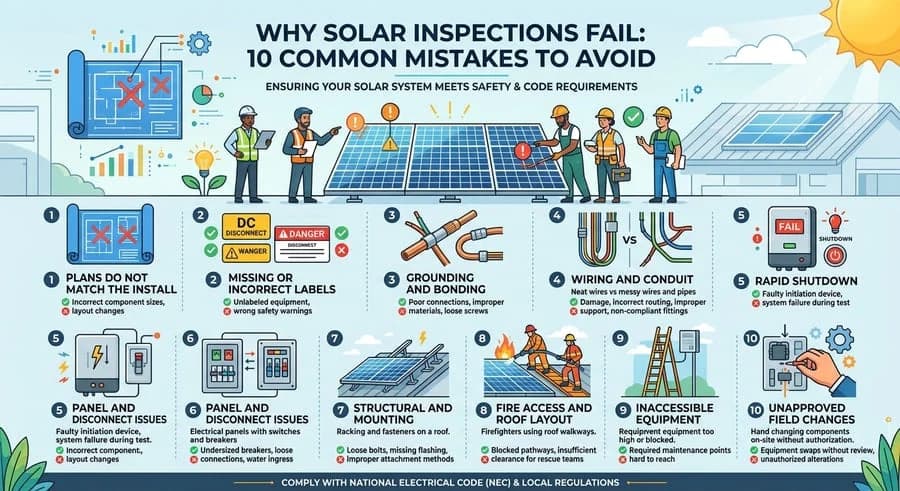
Why Solar Inspections Fail: 10 Common Mistakes to Avoid
Discover the 9 critical reasons solar inspections fail and how to avoid costly m...
Solar Grounding And Bonding: How To Pass Inspection Every Time
Learn how to pass solar grounding and bonding inspections every time. Avoid comm...
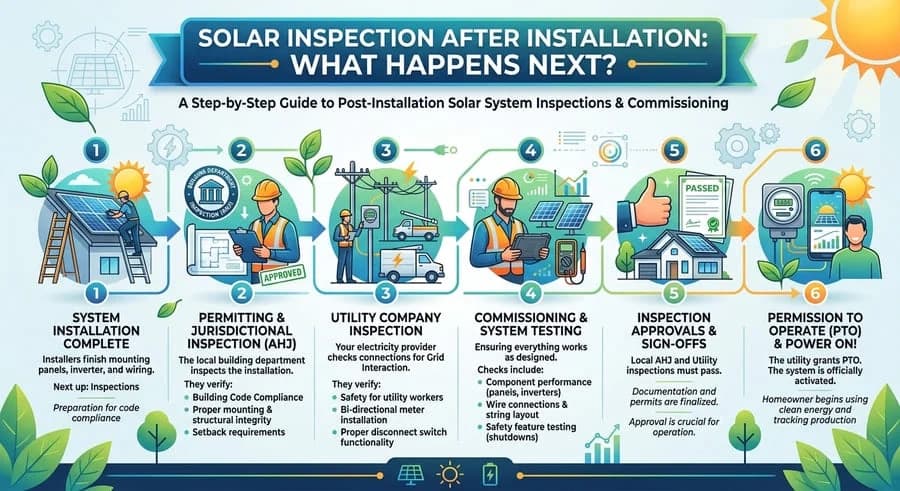
Solar Inspection After Installation: What Happens Next?
Learn how to pass your solar inspection by following essential tips for obtainin...