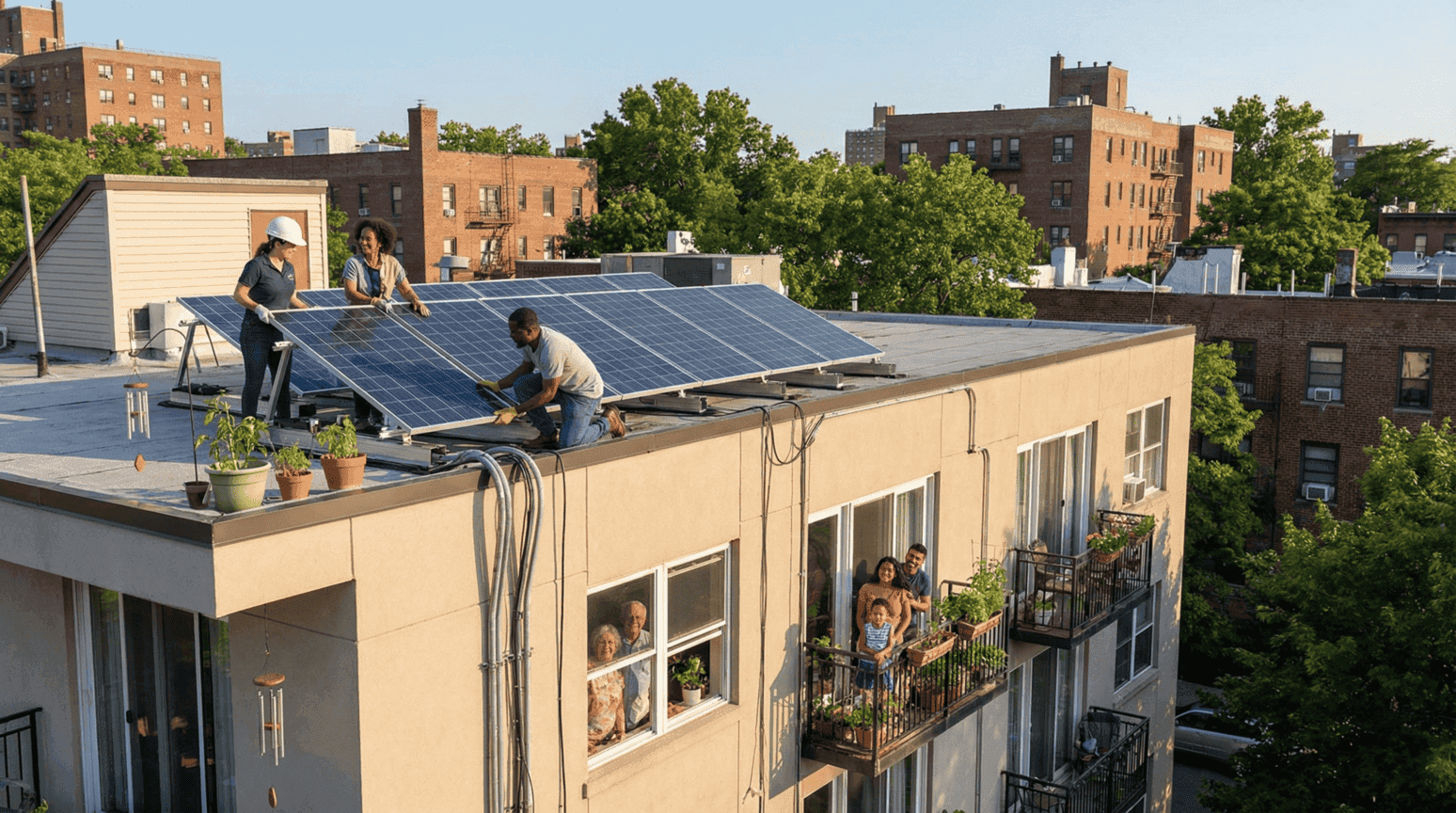
Can renters get solar panels for apartments? Yes, renters can access solar power through community solar programs without installing panels on their rental property. Community solar allows apartment dwellers to subscribe to off-site solar farms and receive monthly electricity bill credits, typically saving 5-15% on energy costs.
Best solar options for renters:
- Community solar subscriptions – Join shared solar farms that generate credits on your utility bill through virtual net metering
- Portable solar panels – Small DIY systems for charging devices (limited power generation)
- Landlord-installed systems – Request rooftop solar installation from your property owner (less common)
How community solar works for apartments: You subscribe to a portion of a large solar farm measured in megawatts. The electricity generated from your share creates credits applied to your utility bill. You’ll receive two bills monthly, one from your utility company and one from your community solar provider detailing your earned credits. For property owners considering installation, Solar Permit Solutions simplifies the permitting process.
Key benefits: No homeownership required, flexible contract terms, support local renewable energy, reduce carbon footprint, and lower monthly electricity expenses without upfront installation costs or rooftop access.
Eligibility: Any renter who pays their own electricity bill can join community solar programs. No landlord permission needed since panels aren’t installed on your rental property. Availability depends on state regulations and local utility policies, check the Database of State Incentives for Renewables & Efficiency to find programs in your area.

Essential points about apartment solar power
Renters should prioritize community solar subscriptions as their primary solar access method.
Community solar facilities are large-scale, centralized solar installations available through subscription models.
Explore local community solar opportunities through available marketplaces to identify projects that deliver electricity bill savings.
Going solar as a renter: explore community solar programs
Beyond requesting solar panel installation from your property owner, community solar (alternatively called roofless solar, solar gardens, or shared solar) provides an accessible pathway for non-homeowners to benefit from solar power. The EPA’s community shared solar guide outlines how these programs expand renewable energy access nationwide.
Community solar facilities are utility-scale solar power plants that distribute electricity across multiple properties. Unlike residential solar systems sized in kilowatts, these projects operate at the megawatt scale, supplying power to hundreds or thousands of residential and commercial properties. The absence of rooftop requirements makes community solar ideal for renters and residents of multi-unit housing. By purchasing shares or subscribing to these projects, you access solar benefits and lower electricity costs regardless of whether your apartment complex or rental home features rooftop panels.
Understanding community solar billing procedures
Community solar billing operates through a dual-bill system. After subscribing, expect two monthly statements: your standard utility bill and a separate community solar provider statement. Your utility bill maintains its typical format. The community solar statement details earned credits and corresponding charges based on your solar farm share’s generation output during the billing cycle and your subscription agreement terms. Before committing to any solar arrangement, review these critical questions to ask before signing a solar panel contract to fully understand this payment model.

Solar Permit Solutions
Need Solar Permit Plans?
Professional, permit-ready solar plan sets delivered fast. Residential and commercial projects across all 50 states.
Advantages of solar power for renters
For apartment and multi-unit residents where rooftop installations aren’t feasible, community solar delivers multiple benefits. Beyond reducing energy expenses and environmental impact, participants enjoy monetary savings, flexible agreement terms, and support local renewable energy infrastructure while minimizing their carbon emissions. The NREL’s community solar research demonstrates how fulfilling energy requirements through community solar connects you to renewable power sources without homeownership.
Reduce electricity expenses
Electric bill savings represent the primary community solar advantage. Understanding how much a home solar system costs in 2025 helps contextualize why community solar offers appealing economics for renters. Savings amounts fluctuate based on multiple variables:
- Your selected program’s pricing structure
- Current utility rates in your area
- Community solar purchase or subscription costs
- Electricity allocation from your solar farm share
Typical community solar participants save between 5 and 15 percent on electricity bills according to NREL’s shared solar analysis. However, certain programs may exceed current utility costs, requiring careful evaluation of projected monthly expenses and long-term financial benefits before joining a community solar facility.
Flexible community solar arrangements
Historical barriers to community solar adoption centered on rigid program structures. Early programs featured lengthy contracts with substantial cancellation penalties, creating commitment obstacles through complicated exit processes. Modern community solar providers continuously launch programs eliminating these restrictions. Contemporary offerings frequently provide shorter contract durations and streamlined cancellation or transfer procedures.
Promote regional clean energy growth
Community solar initiatives decrease emissions, reduce fossil fuel dependency, and generate local renewable energy employment and project development. States like Minnesota have pioneered community solar garden programs that serve as models nationwide. These programs directly connect participants to clean energy facilities in their region. As nearby projects reach capacity and commence operation, additional clean energy feeds into local power grids, expanding solar power access for more electricity consumers. The DOE’s equitable access initiative ensures these benefits reach underserved communities.
Alternative solar options for renters
Renters discovering community solar isn’t suitable can pursue other non-traditional solar approaches, though components like inverters involve significant costs. The most direct alternative involves requesting solar panel installation from your landlord or property management company. For multi-unit buildings, commercial solar design may be a viable option worth exploring. Understanding HOA regulations and their impact on solar approvals can help navigate potential barriers. While success isn’t guaranteed, potential long-term savings could benefit the property owner with cost reductions passed to building occupants.
Additional options include small-scale DIY portable solar panel installations. If you’re interested in this approach, our guide on how to build your own home solar power system provides essential information. Though less reliable and efficient than professional installations, these technologies and solar kits enable solar energy use for charging smaller devices. Keep in mind that even small installations may require understanding AHJ solar requirements in your area.
For renters considering more permanent solutions, learning whether solar permits are necessary in the US provides important regulatory context. Property owners should also understand what happens if you install a solar panel without a permit before proceeding with any installation.
Evaluate your apartment solar alternatives
Renters seeking solar benefits should begin by comparing community solar projects through available marketplaces. The DC Department of Energy’s Solar for All program demonstrates how urban areas are expanding access for apartment dwellers. After subscribing, filter options by project specifications, research individual developers and panel locations, and assess projected annual savings. For those interested in the federal incentives available, the homeowner’s guide to the federal tax credit for solar explains how the Residential Clean Energy Credit works, though these primarily benefit property owners rather than renters. Start exploring today to achieve electricity bill savings as a renter or apartment resident.
Conclusion
Going solar as a renter is no longer an impossible dream. Community solar programs have revolutionized access to renewable energy, making it feasible for apartment dwellers and tenants to participate in the clean energy transition without installing panels on property they don’t own. By subscribing to community solar projects, renters can reduce their monthly electricity bills, support local renewable energy development, and decrease their carbon footprint, all while maintaining the flexibility their rental lifestyle demands. Whether you’re committed to environmental sustainability or simply looking to lower your energy costs, community solar offers a practical, accessible solution. For landlords considering building-wide solutions, commercial solar system configurations or off-grid solar system design may provide additional options. Take the first step today by exploring community solar opportunities in your area, contact Solar Permit Solutions to learn how we can help property owners navigate the permitting process and discover how much you could save while contributing to a cleaner energy future.
FAQs
Do I need my landlord’s permission to join a community solar program?
No, you don’t need landlord approval to subscribe to community solar programs since no physical installation occurs on your rental property. Community solar subscriptions are entirely separate from your rental agreement, you’re simply choosing an alternative way to source a portion of your electricity. The solar panels are located off-site at a solar farm, and you receive billing credits through your utility company, making this a decision you can make independently as the utility account holder.
Need Solar Permit Plans?
Professional, permit-ready solar plan sets delivered fast. Residential and commercial projects across all 50 states.
Frequently Asked Questions
While some landlords may permit small portable solar panel installations on balconies or patios, you'll need written approval from your property owner first. These DIY systems typically generate limited power suitable only for charging small devices and won't significantly offset your electricity bills. Additionally, consider that you'll need to remove these panels when you move, making community solar a more practical long-term solution for most renters seeking substantial energy savings.
Most community solar subscribers save between 5 and 15 percent on their monthly electricity bills, though actual savings depend on your program's pricing structure, local utility rates, and the size of your subscription. Some programs may cost more than your current electricity bills, so carefully review projected savings before committing. Request detailed cost breakdowns from community solar providers and compare multiple programs to find the best financial fit for your situation.
Modern community solar programs typically offer flexible transfer and cancellation policies designed specifically for renters. Many providers allow you to transfer your subscription to your new address if it's within the same utility service area, cancel with minimal fees, or even transfer your subscription to another person. Always review the contract terms regarding relocation before subscribing, and choose programs with renter-friendly policies that accommodate your mobile lifestyle.
No, you don't need landlord approval to subscribe to community solar programs since no physical installation occurs on your rental property. Community solar subscriptions are entirely separate from your rental agreement—you're simply choosing an alternative way to source a portion of your electricity. The solar panels are located off-site at a solar farm, and you receive billing credits through your utility company, making this a decision you can make independently as the utility account holder.
Community solar availability varies significantly by state, as programs depend on state policies and utility regulations. Currently, states like Massachusetts, New York, Minnesota, Illinois, and Colorado have well-established community solar markets, while others are developing programs or lack supporting legislation. Check your state's community solar availability by searching for local programs through online marketplaces or contacting your utility provider directly to ask about shared solar opportunities in your service area.
SPS Editorial Team
Solar Permit Solutions
Solar Permit Solutions provides professional solar permit design services for residential, commercial, and off-grid installations across all 50 states. Our team ensures permit-ready plan sets delivered fast.
Related Articles
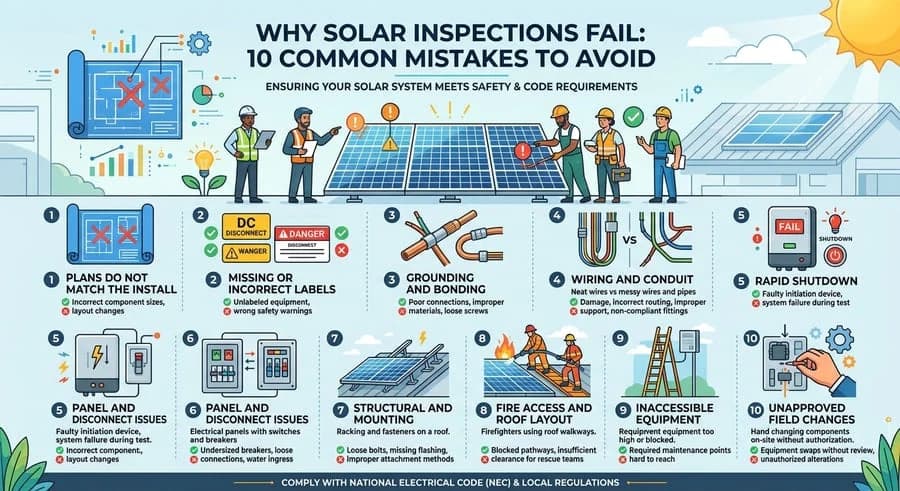
Why Solar Inspections Fail: 10 Common Mistakes to Avoid
Discover the 9 critical reasons solar inspections fail and how to avoid costly m...
Solar Grounding And Bonding: How To Pass Inspection Every Time
Learn how to pass solar grounding and bonding inspections every time. Avoid comm...
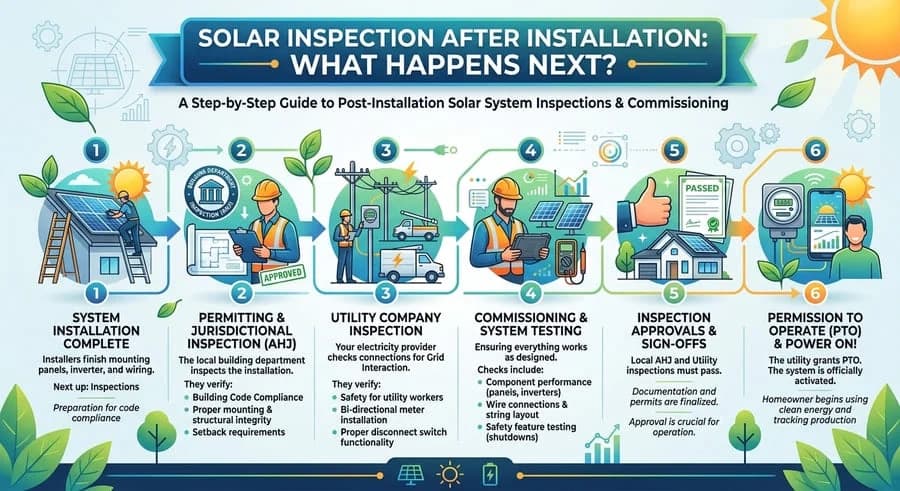
Solar Inspection After Installation: What Happens Next?
Learn how to pass your solar inspection by following essential tips for obtainin...