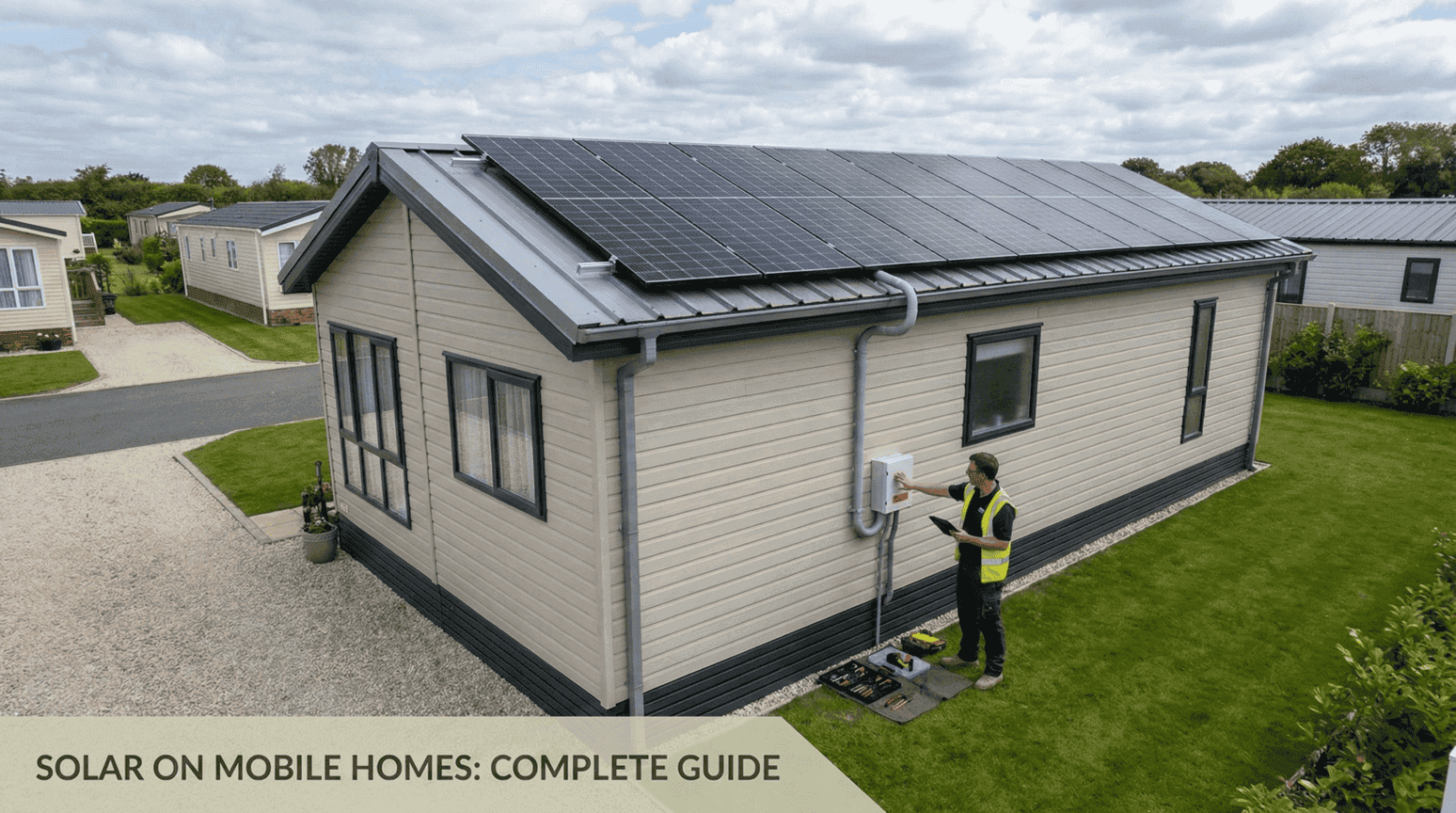
Yes, solar panels can be installed on mobile and manufactured homes. These prefabricated structures make excellent candidates for solar installations due to their typically flat or low-pitched roofs and ample surface area. Homeowners can choose from three main installation methods: rooftop mounting, ground-mounted systems, or portable panels. Most units built after 1990 have the necessary electrical systems to support solar, though older homes may require upgrades. According to DOE efficiency guidelines, manufactured homes can achieve significant energy savings with proper solar integration.
Mobile homeowners often face inconsistent and expensive grid electricity, especially when relocating frequently or living in remote areas. Solar power solves this by providing reliable, self-generated electricity that travels with the home. With typical roof space requirements easily met by most manufactured homes, going solar is both practical and cost-effective.

Solar Panel Mounting Options For Manufactured Homes
Several methods exist for installing solar panels on mobile homes. Understanding roof mounting methods helps homeowners choose the best configuration for their situation.
Roof-Based Solar Systems
Rooftop installation involves fastening mounting racks directly to the mobile home roof, then connecting solar panels. This approach maximizes space utilization and ensures optimal sunlight exposure. For manufactured homes with flat roofs, both ballasted and attached systems offer distinct advantages depending on structural considerations. Research on PV grid integration demonstrates how rooftop configurations work effectively with manufactured housing.
Ground-Mounted Systems
Ground-mounted panels work better when a roof receives insufficient sunlight due to shading or orientation issues. These systems get installed on racks or poles near the home and connect to the electrical system. According to university research, ground-mounted configurations provide flexibility for homes in shaded mobile home parks where rooftop options fall short.
Portable Panel Configurations
Portable solar panels cater to those who prefer flexibility or face space constraints. These systems work best for off-grid applications or temporary setups. For mobile homeowners who relocate frequently, portable panels eliminate the need for reinstallation at each new location.
Cost Comparison: Solar vs. Traditional Power
Solar-equipped mobile homes require upfront investment but deliver long-term savings. The zero energy home initiative demonstrates that manufactured housing can achieve net-zero energy consumption with proper solar integration.
Traditional grid-dependent mobile homes may seem cheaper initially, but utility bills accumulate significantly over time. Energy costs represent a major expense for manufactured home residents, making solar savings particularly impactful. Homeowners should also verify whether they need a new utility meter after installation, as requirements vary by location.

Essential Shopping Considerations
Start by calculating energy usage to determine the right system size. List all appliances with their power ratings in watts, multiply by daily hours of use, then sum the totals to get daily consumption in watt-hours. The NREL efficiency study provides additional sizing guidance specific to manufactured homes.
Key factors to evaluate:
- Roof condition: Ensure adequate sunlight exposure and structural integrity
- Panel quality: Understand common panel defect issues before purchasing
- Financing options: Review solar financing strategies to find the best fit
- Certification: Select panels meeting ZERH certification standards for quality assurance
Explore our solar knowledge base for additional guidance on system sizing and equipment selection.
For complex installations or permit-heavy jurisdictions, professional design services like residential solar design or commercial solar design streamline the process.
Solar Permit Solutions
Need Solar Permit Plans?
Professional, permit-ready solar plan sets delivered fast. Residential and commercial projects across all 50 states.
Maximizing Output For Mobile Homes
Mobile homes present unique optimization challenges. Apply these context-specific strategies:
- Shaded mobile home parks: Ground-mounted systems with adjustable tilt angles capture more sunlight than fixed rooftop panels blocked by neighboring structures
- Older manufactured homes: Pair panels with battery backup systems to compensate for less efficient electrical systems
- Frequent relocators: Use performance monitoring to track output and identify issues quickly after each move
- Grid-connected systems: Research net metering availability in your area to maximize bill credits
Meeting DOE program requirements can qualify installations for additional incentives. Ongoing PV research continues advancing solar technology for manufactured housing applications.
Conclusion
Solar panels on mobile homes deliver three core benefits: reduced energy costs, environmental impact reduction, and energy independence. Systems meeting efficiency standards provide reliable performance for 25 to 30 years.
For mobile homeowners in remote locations or those facing high utility rates, solar offers a practical path to predictable energy expenses. The investment typically pays for itself within 6 to 10 years, with decades of free electricity following.
Navigating permits, utility agreements, and structural assessments can be complex. Solar Permit Solutions specializes in permit and design services for manufactured homes, handling the paperwork so homeowners can focus on the benefits. Get in touch to discuss your project.
FAQs
Need Solar Permit Plans?
Professional, permit-ready solar plan sets delivered fast. Residential and commercial projects across all 50 states.
Frequently Asked Questions
A mobile home should have a sturdy roof with sufficient space for solar panel installation. If not, portable solar panels offer a flexible alternative that can be set up and moved as needed. The location should receive ample sunlight during the day.
Monocrystalline solar panels dominate the residential market due to their superior efficiency and durability, capturing over 95% of installations. Thin-film panels work well for mobile homes with weight restrictions or curved surfaces. For manufactured homes with limited roof space, monocrystalline panels generate more power per square foot.
The number of solar panels depends on energy usage, available roof space, and desired energy production. A typical mobile home uses 8,000 to 12,000 kWh annually, requiring a 5 to 8 kW system or approximately 12 to 20 panels. Calculate daily energy consumption by listing appliances and their wattage, then consult a solar installer to determine the appropriate system size.
Solar panel installation typically involves mounting the panels securely on the roof and connecting them to an inverter and electrical system. While some homeowners choose DIY installation, hiring a professional installer is recommended for safety and optimal performance.
Yes, solar panels can increase the resale value of a mobile home by providing potential buyers with reduced energy costs and a sustainable energy source. Homes with solar installations typically sell faster and command higher prices. The added value depends on system size, age, and local energy rates.
Solar panels can work on mobile homes that relocate, though portable or removable panel systems offer the most flexibility. Ground-mounted systems may need to be disassembled and reinstalled at new locations, while roof-mounted panels can typically remain in place during transport if properly secured.
Permit requirements vary by location and may include electrical permits, building permits, and utility interconnection agreements. Mobile home parks may also have specific rules regarding solar installations. Solar Permit Solutions specializes in navigating the permitting process and ensuring compliance with local regulations.
Solar panel systems for mobile homes typically cost between $10,000 and $25,000 before incentives, depending on system size and installation complexity. The federal solar tax credit can reduce costs by 30% for systems installed by the end of 2025. Ground-mounted systems generally cost more than rooftop installations due to additional racking and labor requirements.
Most mobile homes built after 1990 have roofs sturdy enough to support solar panels. However, older manufactured homes may require structural reinforcement. A professional installer should assess roof condition, load capacity, and truss spacing before installation. Portable or ground-mounted systems offer alternatives for roofs that cannot support panel weight.
Manufactured homes typically require 4 to 10 kW solar systems depending on energy consumption and climate. Single-wide mobile homes average 4 to 6 kW systems, while double-wide units may need 6 to 10 kW. Review past electricity bills to calculate average monthly usage and size the system to offset 80% to 100% of consumption.

SPS Editorial Team
Solar Permit Solutions
Solar Permit Solutions provides professional solar permit design services for residential, commercial, and off-grid installations across all 50 states. Our team ensures permit-ready plan sets delivered fast.
Related Articles
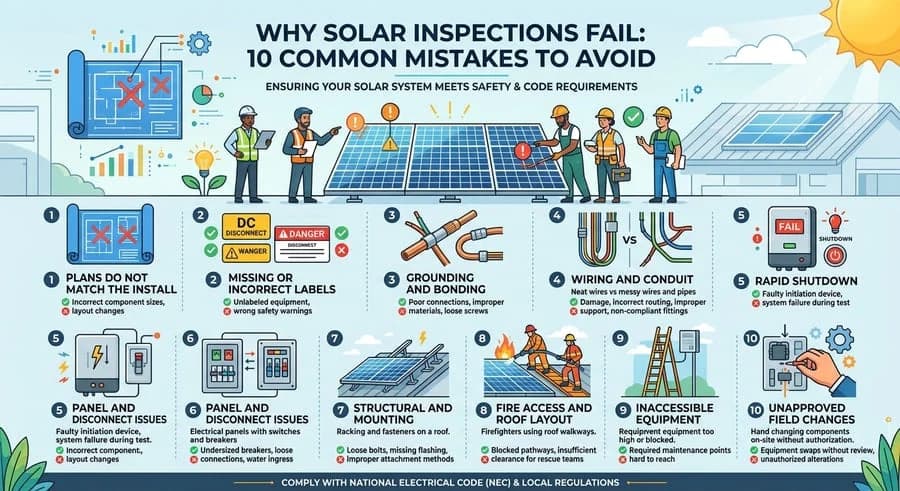
Why Solar Inspections Fail: 10 Common Mistakes to Avoid
Discover the 9 critical reasons solar inspections fail and how to avoid costly m...
Solar Grounding And Bonding: How To Pass Inspection Every Time
Learn how to pass solar grounding and bonding inspections every time. Avoid comm...
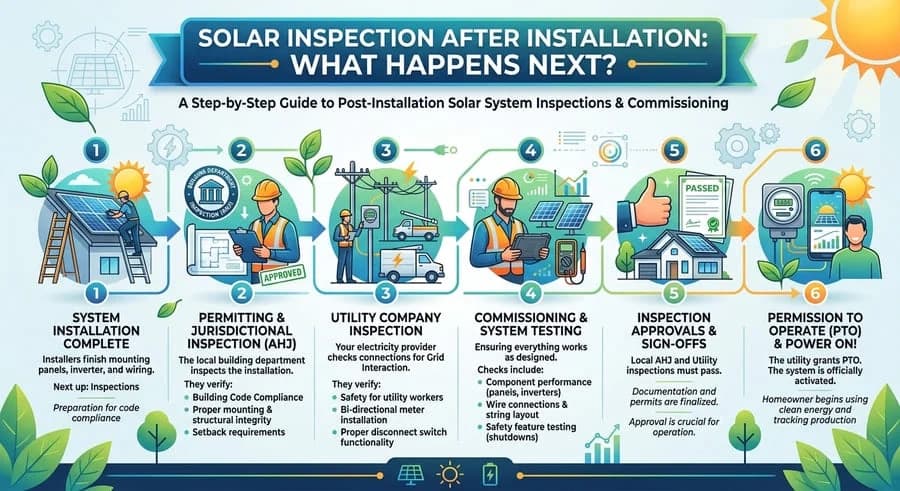
Solar Inspection After Installation: What Happens Next?
Learn how to pass your solar inspection by following essential tips for obtainin...