Solar permit design requires both speed and accuracy. Installers should expect 24-48 hour turnaround for standard residential solar projects while maintaining 100% NEC code compliance. Approximately 70% of solar permit rejections result from electrical design errors, including incorrect conductor sizing, breaker calculations, and NEC 705 interconnection violations. Installation companies that prioritize speed without accuracy face 2-10 day project delays per revision, failed inspections, and additional material costs. Professional solar engineering delivers both rapid turnaround and first-time approval by combining current NEC 2023 standards knowledge, AHJ-specific requirements expertise, and installer-ready documentation. The optimal solar permit design process eliminates the trade-off between fast delivery and code-compliant precision, ensuring projects move from design to installation within homeowner expectations of 2-4 week total timelines.
Speed Drives Results: More Than Installation Teams Realize
When contractors request “immediate turnaround,” it’s not merely convenient; it’s business-critical.
Property owners anticipate installation completion within 2-4 weeks. Sales momentum depends on rapid progress. Most building departments require 5-10 business days for review, making pre-submission delays costly. Installation companies that optimize their design timeline often experience a 20-25% boost in monthly project completion. Speed is essential. But speed by itself doesn’t guarantee success.
Precision Matters More (Just Ask Any Contractor Who’s Had a Failed Inspection)
Here’s an industry reality that stings: Approximately 70% of permit rejections stem from electrical calculation errors.
From our engineering perspective (and countless design reviews), the most frequent problems include:
- Undersized conductors or overcurrent protection
- NEC 705 & 310 code violations
- Incorrect array positioning on challenging roof structures
- Absent labeling or equipment specification conflicts
These seemingly minor errors create major setbacks:
Each inaccurate design document typically extends project timelines by 2-10 days. Compound that across multiple projects, and your schedule resembles a house of cards in a windstorm.
The True Expense of Prioritizing Speed Over Precision
We’ve all encountered that installer who declares, “Just send me something fast; I’ll handle the details on-site.”
Reality check: they never handle the details on-site.
Instead, they’re calling from the roof, questioning where the conduit routing went, as if we concealed it beneath the underlayment.
Speed without precision creates:
- Inspection failures
- Emergency material orders
- Confused field crews
- Unhappy homeowners (always problematic)
- A plan reviewer who’s now familiar with every project you submit
Solar Permit Solutions
Solar Contractor? We Design Your Plans.
Outsource your permit plan sets to our team. PE-stamped, code-compliant, fast turnaround so you can focus on installation.
The Optimal Balance: Rapid and Precise
The ideal engineering partner delivers:
✔ Quick Delivery (24-48 hours for typical projects): No delays, no quality sacrifices.
✔ Code-Compliant Precision: From the 2017 through 2023 NEC editions, completely accurate.
✔ Installation-Ready Documentation: Your field team should understand the plans before they finish their first cup of coffee.
✔ Jurisdiction & Utility Knowledge With over 1,200 building departments nationwide, you need expertise that recognizes the difference between California requirements and Texas regulations.
Why This Shouldn’t Be a Trade-Off
Speed creates productivity. Precision ensures quality. But choosing one over the other? That’s a compromise no installation company should accept.
The reality is straightforward:
An exceptional solar engineering provider delivers both, reliably, predictably, and without complications.
Because in this business, unexpected issues belong at celebrations, not during inspections.
Why Installation Companies Choose Solar Permit Solutions
At Solar Permit Solutions, we eliminate the choice between fast designs or accurate ones. We provide both.
- 24-48 hour completion for standard solar projects
- NEC-compliant electrical engineering that clears inspections on first submission
- Professional, field-ready permit packages
- AHJ & utility-approved documentation nationwide
- Dedicated engineering support so you’re never stranded on a job site questioning discrepancies
If you want a solar design partner who streamlines your projects, accelerates your timeline, and eliminates revision cycles, partner with Solar Permit Solutions and maintain project momentum on schedule for every project. Let’s create permit packages that pass immediately and keep your clients satisfied.
Conclusion
Solar installation success depends on two equally critical factors: speed that keeps projects moving and precision that ensures first-time approval. Installation companies shouldn’t have to sacrifice one for the other. The right engineering partnership delivers both without compromise.
Every day spent waiting for designs or correcting permit rejections directly impacts your bottom line, customer satisfaction, and competitive position. The installation companies that thrive in today’s solar energy market work with engineering teams that understand the urgency of rapid turnaround while maintaining the discipline of code-perfect documentation.
Solar Permit Solutions bridges this gap by combining industry-leading turnaround times with NEC-compliant accuracy across all 50 states. Our engineering team treats every project with the same standard: deliver installation-ready permit packages that pass inspection the first time, on schedule, every time.
Stop choosing between fast and accurate. Partner with Solar Permit Solutions and experience solar permit design that supports your growth without creating bottlenecks or revision headaches. Your installation crews, your customers, and your business development pipeline will thank you.
Ready to eliminate permit delays and streamline your installation process? Contact Solar Permit Solutions today and discover how professional solar engineering transforms your project timeline.
FAQs
What’s the difference between the NEC 2017, 2020, and 2023 code cycles for solar installations?
Each NEC code cycle introduces updates affecting solar system design. NEC 2017 established baseline rapid shutdown requirements and specific module-level power electronics standards. NEC 2020 expanded rapid shutdown zones and modified ground-fault protection requirements. NEC 2023 introduced significant changes, including updated conductor ampacity calculations, revised energy storage system requirements, and modified interconnection rules under Article 705. Your jurisdiction adopts specific code cycles at different times. Some areas still use 2017 while others have adopted 2023. Your solar engineering partner must know which code cycle your AHJ enforces and design accordingly. Solar Permit Solutions engineers stay current with all code cycles and automatically apply the correct standards for your jurisdiction. Additionally, understanding the federal solar tax credit and proper solar energy resources can help you maximize your project’s value.
Solar Contractor? We Design Your Plans.
Outsource your permit plan sets to our team. PE-stamped, code-compliant, fast turnaround so you can focus on installation.
Frequently Asked Questions
Standard residential solar permit designs should be completed within 24-48 hours for straightforward projects. Commercial installations or complex residential systems with battery storage, ground mounts, or challenging roof conditions may require 3-5 business days. Any engineering partner requiring longer than this for standard projects likely has capacity issues or inefficient workflows. At Solar Permit Solutions, we maintain strict turnaround standards: 24-48 hours for typical residential systems and clearly communicated timelines for more complex commercial projects, ensuring your installation schedule stays on track.
Approximately 70% of permit rejections stem from electrical design errors. The most frequent issues include incorrect conductor sizing that violates NEC 310 requirements, improper breaker calculations that don't account for temperature derating or conduit fill, NEC 705 interconnection violations, missing or incorrect equipment labels, and inadequate structural documentation for roof loading. Many rejections also result from jurisdiction-specific requirements that weren't addressed in the initial submission. Working with an experienced solar engineering firm that understands both national code requirements and local jurisdiction preferences dramatically reduces rejection rates.
This approach consistently creates more problems than it solves. Field corrections cost significantly more than accurate initial designs. You're paying installation crews premium hourly rates to troubleshoot engineering problems rather than installing systems. Additionally, inspectors who discover field modifications that don't match approved permits can stop work entirely, require new permit submissions, and flag your company for increased scrutiny on future projects. The time saved by rushing an inaccurate design is always lost (and multiplied) during installation delays, material reorders, and inspection failures. Proper solar permit design should be both fast and accurate from the start.
Ask specific questions about your jurisdiction's unique requirements. A qualified solar engineering partner should immediately recognize whether your AHJ requires wet stamps, specific label formats, particular calculation methods, or unique documentation standards. They should be familiar with your local utility's interconnection process, including application forms, technical screens, and typical review timelines. Request examples of recently approved permits in your service area and verify the engineering firm has successfully navigated your specific building department's review process. Solar Permit Solutions maintains an extensive database of AHJ requirements across all 50 states, ensuring your permits meet local standards the first time.
Each NEC code cycle introduces updates affecting solar system design. NEC 2017 established baseline rapid shutdown requirements and specific module-level power electronics standards. NEC 2020 expanded rapid shutdown zones and modified ground-fault protection requirements. NEC 2023 introduced significant changes, including updated conductor ampacity calculations, revised energy storage system requirements, and modified interconnection rules under Article 705. Your jurisdiction adopts specific code cycles at different times. Some areas still use 2017 while others have adopted 2023. Your solar engineering partner must know which code cycle your AHJ enforces and design accordingly. Solar Permit Solutions engineers stay current with all code cycles and automatically apply the correct standards for your jurisdiction. Additionally, understanding the federal solar tax credit and proper solar energy resources can help you maximize your project's value.

SPS Editorial Team
Solar Permit Solutions
Solar Permit Solutions provides professional solar permit design services for residential, commercial, and off-grid installations across all 50 states. Our team ensures permit-ready plan sets delivered fast.
Related Articles
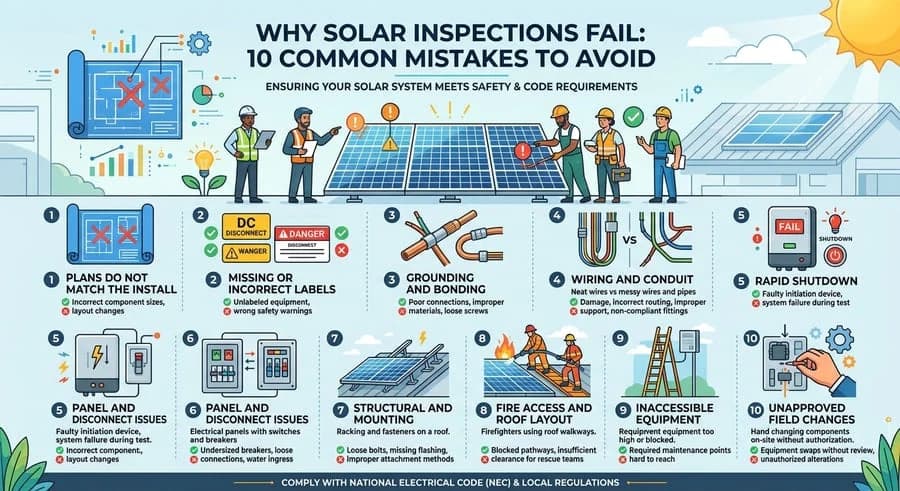
Why Solar Inspections Fail: 10 Common Mistakes to Avoid
Discover the 9 critical reasons solar inspections fail and how to avoid costly m...

Solar Grounding And Bonding: How To Pass Inspection Every Time
Learn how to pass solar grounding and bonding inspections every time. Avoid comm...
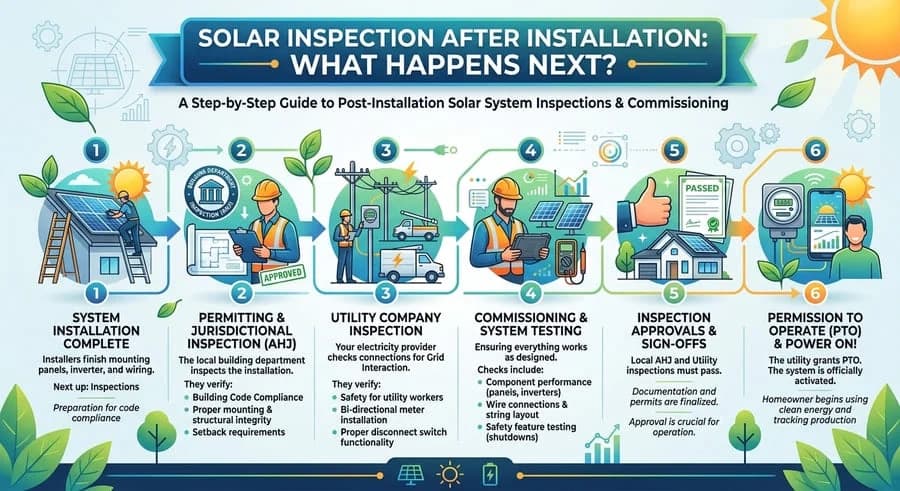
Solar Inspection After Installation: What Happens Next?
Learn how to pass your solar inspection by following essential tips for obtainin...