
Are solar panels worth it in Texas in 2025? Yes, Texas homeowners can save significantly on solar installations through a combination of federal tax credits, utility rebates, and property tax exemptions, even though Texas doesn’t offer state-level solar incentives.
Key financial incentives available to Texas solar customers include:
Federal Solar Tax Credit: 30% deduction on total system costs through 2025 (e.g., $6,000 back on a $20,000 installation)
Utility Rebates: $2,500-$3,000 from Austin Energy, Sunset Valley, San Marcos, and Oncor Electric for qualifying customers
Property Tax Exemption: No additional property taxes on the increased home value from solar installations
Net Metering Programs: Bill credits for excess electricity in participating utility service areas
The average Texas solar installation costs $20,000-$25,000, but after applying the 30% federal tax credit and available utility rebates, homeowners typically reduce this cost by $8,000-$10,500 or more. Combined with Texas’s abundant sunshine averaging 204-300 sunny days annually depending on location, solar systems generate substantial electricity production and long-term savings.
Important deadlines: The federal solar tax credit remains at 30% through December 31, 2032, then decreases to 26% in 2033 and 22% in 2034. Several utility rebate programs have limited funding and operate on a first-come, first-served basis, making timing crucial for maximizing incentives.
This comprehensive guide covers all available Texas solar incentives in 2025, eligibility requirements, how to calculate potential savings, and which utility companies offer the best rebate programs for homeowners considering solar energy adoption.

Texas Solar Financial Assistance Programs: Credits, Rebates, and Tax Benefits
The state of Texas has not implemented a solar rebate initiative or tax credit at the state level. However, federal government programs combined with utility company offerings can meaningfully decrease your solar system expenses. What follows represents the most accessible and commonly utilized financial incentives for Texas solar installations in 2025.
Residential Clean Energy Credit (Federal Program)
The Residential Clean Energy Credit, commonly known as the federal solar tax credit, enables homeowners to claim a 30% deduction on qualifying residential solar installations against their federal tax obligations. How does this benefit work in practice?
Here’s an illustration: suppose your complete solar installation carries a $20,000 price tag. You would receive $6,000 as a federal tax credit, directly reducing what you owe in federal income taxes during the year of installation. Essentially, this Residential Clean Energy Credit can create substantial reductions in your annual federal tax liability.
Tax situations vary significantly between individuals. Consultation with a qualified tax advisor is essential to confirm eligibility for any credits you plan to pursue.
Texas Property Tax Exemption for Solar
When Texas property owners install approved clean energy technologies like residential solar arrays on their homes or businesses, they receive an exemption from property tax increases tied to the added property value. This represents a dual advantage: solar installations generally enhance property values, but homeowners avoid additional property tax assessments on that appreciation.
Utility-Sponsored Solar Rebate Programs
Texas operates without a unified statewide rebate structure. Instead, individual utility providers have established their own rebate initiatives for solar adopters within their coverage zones. Small-scale solar photovoltaic (PV) installations help utilities decrease the electricity they must generate, distribute, and source from wholesale markets.
Customers of Austin Energy qualify for their Residential Solar Rebate program, which provides $2,500 upon system installation and completion of a required online training module.
Oncor Electric serves Dallas and extensive areas of northern and central Texas, offering rebates to customers who install solar systems paired with battery storage solutions.
The following utilities and Texas municipalities currently administer solar rebate or grant programs:
- Austin Energy
- City of Sunset Valley
- City of San Marcos
- Oncor Electric

Understanding Net Metering in Texas
Texas differs from many states by not mandating a statewide net metering requirement. Net metering is a billing structure that compensates solar system owners for excess electricity their arrays produce and deliver back to the electrical grid. Under this arrangement, your billing reflects “net” consumption: the calculation between electricity your solar installation produced versus what your household actually consumed.
Your electrical meter monitors surplus energy sent to the grid. Simultaneously, it measures electricity drawn from the grid when household demand exceeds solar production (during evening hours or cloudy weather). These measurements determine your net consumption.
Texas deregulated markets classify utility companies as Transmission Distribution Utilities (TDUs). TDUs handle physical electricity delivery through infrastructure like power lines and poles, while electricity generation and customer billing flow through competitive suppliers known as Retail Energy Providers (REPs).
Net metering availability (alternatively termed solar buyback) varies among Texas utility companies and retail electricity suppliers, not all providers participate. Homeowners in areas served by Transmission and Distribution utilities should research retail energy providers offering solar buyback arrangements, with some providing credit compensation at retail electricity rates.
Evaluating Solar Energy for Your Texas Property
Solar panel installations frequently provide significant cost savings for Texas homeowners and property owners throughout the United States. Renewable solar energy also strengthens energy independence from utility providers and, when integrated with battery storage systems, supplies backup electricity during power disruptions. Each property presents distinct considerations. Engaging a reputable solar installation company helps ensure you select the most appropriate system configuration for your specific property.
When evaluating whether solar makes sense for your home, understanding the solar permit requirements in Texas is crucial. Working with experienced professionals who handle commercial solar design or residential projects can streamline the permitting process and help you avoid common mistakes when applying for solar permits.
For those considering energy independence beyond grid-tied systems, off-grid solar system design offers complete autonomy from utility providers. Additionally, homeowners should be aware that HOA regulations can impact solar permit approvals, particularly in planned communities.
Solar Permit Solutions
Affordable Solar Permit Plans
Don't let permit costs slow your project. Professional plan sets at competitive prices — all 50 states, fast turnaround.
Conclusion
Making the transition to solar energy in Texas represents a strategic financial decision that combines immediate savings opportunities with long-term value creation. While the state doesn’t provide solar incentives at the statewide level, the combination of federal tax benefits, utility-sponsored rebates, and property tax exemptions creates a compelling financial framework for homeowners considering renewable energy adoption.
The 30% federal tax credit remains one of the most significant incentives available through 2025, potentially saving thousands of dollars on your solar investment. When paired with local utility rebates, such as the $2,500 offerings from Austin Energy and San Marcos, or the $3,000 rebate from Sunset Valley, the upfront costs of solar installation become considerably more manageable. Additionally, Texas’s property tax exemption ensures that the increased home value from your solar system doesn’t result in higher property tax bills, protecting your investment from additional ongoing costs.
For homeowners in deregulated energy markets, exploring retail energy providers that offer net metering or solar buyback programs can further enhance your return on investment by providing ongoing credits for excess energy production. As electricity rates continue to fluctuate and energy independence becomes increasingly valuable, solar installations offer both financial predictability and protection against future utility rate increases.
Before moving forward with a solar installation, research the specific incentives available in your service area, consult with tax professionals about your eligibility for federal credits, and obtain quotes from multiple reputable solar installers. Understanding mastering electrical fundamentals for your solar project can also help you make more informed decisions. Many homeowners debate between professional solar panel installation vs DIY, weighing the advantages and disadvantages of installing solar panels yourself.
With proper planning and understanding of available incentives, your solar investment can begin generating returns from day one while contributing to a cleaner energy future for Texas. For more information about solar solutions and permitting services, visit Solar Permit Solutions or explore our comprehensive blog resources. If you’re ready to take the next step, contact our team to discuss your specific project needs and learn more about our services.
FAQs
Affordable Solar Permit Plans
Don't let permit costs slow your project. Professional plan sets at competitive prices — all 50 states, fast turnaround.
Frequently Asked Questions
The federal solar tax credit, officially called the Residential Clean Energy Credit, allows you to deduct 30% of your total solar system costs—including equipment and installation—from your federal income taxes. For a $25,000 solar installation, this translates to $7,500 in tax savings. This credit remains at 30% through 2032, after which it will gradually decrease. You must have sufficient tax liability in the year of installation to claim the full credit, though unused portions can typically be rolled over to subsequent tax years.
Texas law exempts the added value of solar energy systems from property tax assessments. When you install solar panels, your home's market value typically increases, but you won't pay property taxes on that increase. For example, if your solar system adds $20,000 to your home's value, that $20,000 won't be included in your property tax calculations. This exemption applies to both residential and commercial properties and continues for as long as you own the solar system, providing ongoing tax savings throughout the system's lifespan.
Several Texas utilities and municipalities offer competitive solar rebates. Sunset Valley currently offers the highest at $3,000 for eligible customers. Austin Energy and San Marcos (SMTX) Utilities both provide $2,500 rebates for residential solar installations. Oncor Electric offers variable rebates based on battery storage capacity, with payments made directly to installers to reduce upfront costs. Rebate availability and amounts can change, so check with your specific utility provider for current program details and application requirements.
Texas does not have a mandatory statewide net metering program. Availability depends on your utility provider and, in deregulated areas, your chosen Retail Energy Provider (REP). Many utilities and REPs offer net metering or solar buyback programs, but terms vary significantly. Some providers offer credits at retail rates, while others compensate at wholesale rates, which are considerably lower. If you live in a deregulated area served by a Transmission Distribution Utility, you have the flexibility to shop for REPs offering the most favorable solar buyback terms.
Yes, Texas homeowners can typically stack multiple solar incentives. You can claim the federal solar tax credit while also receiving utility rebates and benefiting from the property tax exemption simultaneously. For instance, an Austin Energy customer could receive the $2,500 utility rebate, claim the 30% federal tax credit on the entire system cost, and benefit from the property tax exemption on the added home value. However, some utility rebates may affect the calculation of your federal tax credit—the IRS generally requires you to subtract state and utility rebates from your system cost before calculating the federal credit. Consult with a tax professional to ensure you're maximizing all available incentives correctly.

SPS Editorial Team
Solar Permit Solutions
Solar Permit Solutions provides professional solar permit design services for residential, commercial, and off-grid installations across all 50 states. Our team ensures permit-ready plan sets delivered fast.
Related Articles
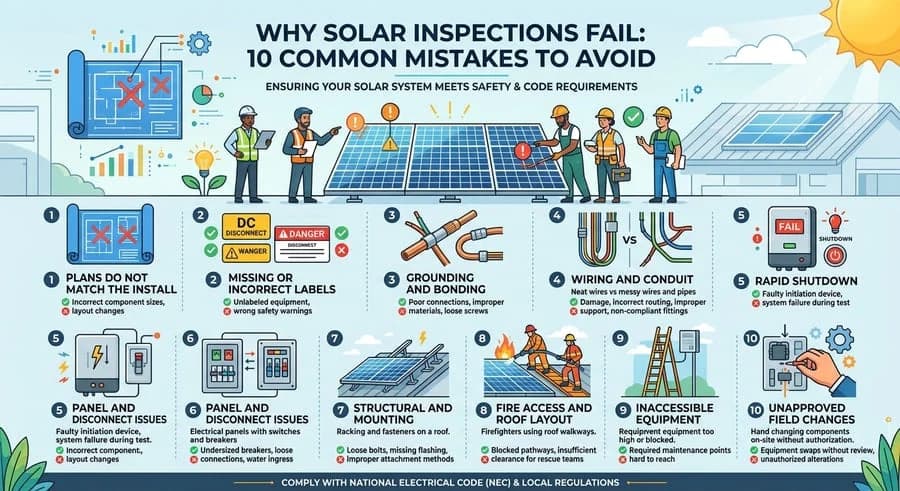
Why Solar Inspections Fail: 10 Common Mistakes to Avoid
Discover the 9 critical reasons solar inspections fail and how to avoid costly m...

Solar Grounding And Bonding: How To Pass Inspection Every Time
Learn how to pass solar grounding and bonding inspections every time. Avoid comm...
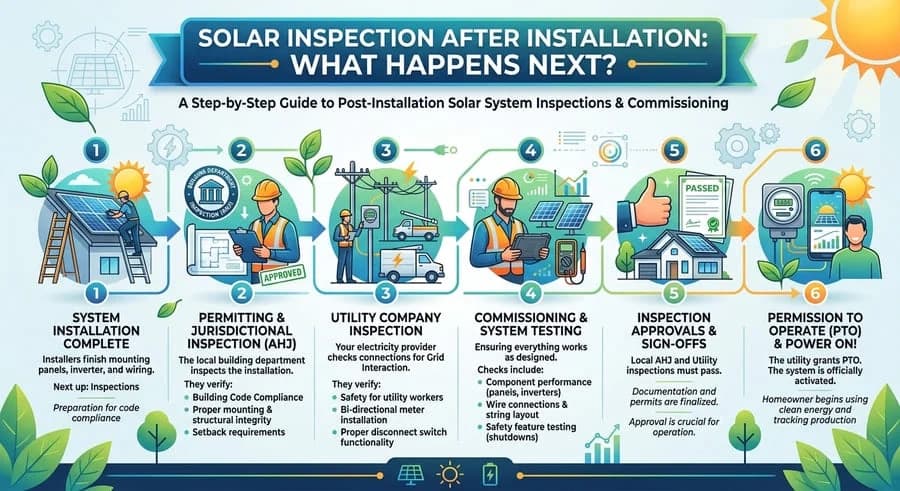
Solar Inspection After Installation: What Happens Next?
Learn how to pass your solar inspection by following essential tips for obtainin...