
What is NEC Article 690.1?
NEC Article 690.1 is the National Electrical Code section that governs solar photovoltaic (PV) system installations under 5 megawatts in the United States. This article defines the scope, boundaries, and requirements for solar array circuitry, inverter equipment, and control devices in residential and commercial installations.
Quick Answer: Article 690.1 covers all solar PV systems that generate electricity through photovoltaic panels, including grid-tied systems, standalone installations, AC modules, and solar-plus-storage configurations. Systems exceeding 5 MW fall under Article 691 instead.
Key Requirements Covered by NEC 690.1
NEC Article 690.1 specifically regulates:
- Solar array circuitry from panels to inverters
- Inverter equipment for DC-to-AC conversion
- Control devices and disconnect switches
- Grid-connected systems that interconnect with utility power
- Standalone systems operating independently
- Hybrid systems functioning in both capacities
- AC and DC output configurations for end-use applications
Critical 2017 NEC 690.1 Update: PV System Disconnect Location
The most significant change in the 2017 NEC revision was the addition of specific photovoltaic system disconnect location requirements. This update clarifies:
- Where the PV system legally terminates (the boundary point)
- Which equipment falls under Article 690 jurisdiction
- How to implement rapid shutdown protocols correctly
- Emergency de-energization procedures for different system types
Four Main PV System Configurations Under NEC 690.1
1. Grid-Tied Interactive Systems: Disconnect is placed between inverter and main service panel
2. AC Module Systems: Disconnect positioned between array strings and service panel (no central inverter)
3. AC-Coupled Solar-Storage: Disconnect routes to backup loads panel using dual inverters
4. DC-Coupled Solar-Storage: Disconnect placed immediately after solar array on DC bus side
Why NEC 690.1 Compliance Matters
Understanding Article 690.1 scope is essential for:
- Solar installers and electrical contractors
- System designers and engineers
- Building inspectors and AHJs (Authorities Having Jurisdiction)
- Homeowners planning solar installations
- Anyone involved in PV system permitting
This guide explains everything solar professionals need to know about NEC 690.1 requirements, disconnect placement rules, and how the 2017 code updates impact modern solar installations, including battery storage systems.
Defining NEC 690.1 and Its Coverage
According to the 2020 National Electrical Code, Article 690.1 governs solar photovoltaic installations, excluding those addressed in Article 691. The regulation encompasses array circuitry, inverter equipment, and control devices associated with these installations. Coverage extends to systems that interconnect with additional electrical generation sources, operate independently, or function in both capacities. These photovoltaic configurations may deliver either alternating current or direct current for end-use applications.
The article’s jurisdiction applies to installations generating under 5 megawatts. Facilities exceeding this capacity threshold fall under Article 691’s provisions. For comprehensive guidance on renewable energy standards, the National Renewable Energy Laboratory provides extensive research and technical resources.
Critical 2017 Code Revisions and Their Impact
The 2017 edition introduced updated diagrams within Article 690.1. While these modifications may appear minor at first glance, their practical ramifications are substantial. The pivotal addition involves specifying the photovoltaic system disconnect location, establishing an unambiguous boundary for where the solar installation terminates. This clarification proves invaluable when addressing rapid shutdown requirements and identifying which equipment must be controlled during emergency procedures.
Interactive Grid-Connected PV Configuration
Standard grid-tied photovoltaic installations channel direct current from solar panels through an interactive inverter that transforms the electricity to alternating current before utility grid connection. The photovoltaic system disconnect sits between the inverter and the primary service panel. This positioning allows for immediate de-energization of all solar-to-electricity conversion apparatus while maintaining downstream equipment functionality.
For residential solar design projects, proper disconnect placement is critical for both safety and code compliance. The Center for Climate and Energy Solutions provides context on how proper electrical code compliance supports broader renewable energy adoption goals.
Solar Permit Solutions
Skip the Permit Headaches
We design plan sets that pass inspection the first time. Code-compliant, PE-stamped, accepted by AHJs nationwide.
AC Module Architecture
Module-level alternating current systems represent a growing market segment where direct-to-alternating current transformation occurs at individual panels rather than through a centralized conversion device. Since all solar-to-electrical energy conversion equipment resides within the array assembly (eliminating separate inverter requirements), the photovoltaic system disconnect simply requires placement between array strings and the primary service panel.
Solar installations incorporating energy storage introduce additional complexity. The International Energy Agency’s 2024 renewables report shows that solar-plus-storage systems are becoming increasingly prevalent in both residential and commercial applications.
AC-Coupled Solar-Plus-Storage Design
Alternating current-coupled multimode configurations combine dual power generation sources on the alternating current bus side. This architecture typically emerges when energy storage gets retrofitted to existing photovoltaic installations or when utilizing prepackaged battery systems (such as the Tesla Powerwall) that exclusively provide alternating current output. These setups utilize dual inverters: an interactive inverter matching standard photovoltaic-only systems, plus a multimode inverter.
Observe that although the disconnect output continues to clearly establish the photovoltaic system’s termination point, meaning only the designated section falls within NEC 690’s jurisdiction, it no longer connects directly to the main service panel. Instead, the photovoltaic system disconnect routes to a backup loads panel. This arrangement effectively generates a synthetic electrical grid, maintaining the photovoltaic interactive inverter (and consequently the solar array) operational during utility outages.
Professional commercial solar design services must account for these complex configurations when planning large-scale installations. Additionally, homeowners interested in solar energy benefits can explore the federal tax credit for solar photovoltaics through the Department of Energy’s comprehensive homeowner’s guide.
DC-Coupled Solar-Storage Integration
Direct current-coupled multimode systems traditionally appear when photovoltaic and battery components receive simultaneous installation. Since power generation sources merge on the direct current bus side, additional energy conversion equipment becomes unnecessary. Consequently, mirroring the alternating current module configuration described earlier, the photovoltaic system disconnect must be positioned immediately downstream from the solar array.
For those planning off-grid solar installations, understanding DC-coupled architecture is essential. The American Solar Energy Society offers additional educational resources on independent solar installations and sustainable energy practices.
The Significance of These Updates
As initially mentioned, the diagrammatic revisions presented in Article 690.1 may seem modest, yet incorporating a definitive photovoltaic system disconnect location proves essential regarding NEC Article 690 applicability and broader code compliance considerations. Understanding solar three-line diagrams helps visualize these critical connection points and system boundaries.
The IEEE Power and Energy Society’s renewable energy technical activities provide ongoing research and standards development for solar electrical systems.

Action Steps for Solar Professionals:
- Review your current installation practices against 2017 NEC 690.1 disconnect requirements
- Verify disconnect placement matches system architecture (interactive, AC module, AC-coupled, or DC-coupled)
- Ensure rapid shutdown zones align with updated PV system boundary definitions
- Update installation documentation and permit applications to reflect proper disconnect labeling and location
- Train field crews on correct disconnect positioning for different system types
For organizations seeking comprehensive support, Solar Permit Solutions offers expert guidance on NEC compliance and permitting processes.
Conclusion
NEC Article 690.1 serves as the foundational framework for solar photovoltaic system installations, establishing clear boundaries and requirements for systems under 5 megawatts. The 2017 code revisions, particularly the addition of explicit photovoltaic system disconnect locations, represent more than mere diagrammatic updates, they provide critical clarity for determining code applicability, implementing rapid shutdown procedures, and ensuring safety compliance across diverse system architectures.
Whether you’re working with traditional grid-tied systems, AC modules, or complex solar-plus-storage configurations, understanding where your PV system legally terminates is essential. The disconnect location acts as the definitive boundary marker, separating equipment governed by Article 690 from downstream components, and directly impacts emergency response protocols and system design decisions.
As solar technology continues to evolve with increasing adoption of energy storage and microinverter solutions, maintaining current knowledge of NEC 690.1 requirements isn’t optional; it’s fundamental to professional competence. Solar installers, electrical contractors, and system designers must integrate these provisions into their standard practices to ensure compliant, safe, and efficient installations that meet both regulatory standards and customer expectations.
Resources like Green Building Advisor offer practical insights on integrating solar systems into sustainable construction projects, while Energy Star’s home energy solutions provide efficiency guidelines for renewable energy installations.
FAQs
Skip the Permit Headaches
We design plan sets that pass inspection the first time. Code-compliant, PE-stamped, accepted by AHJs nationwide.
Frequently Asked Questions
Article 690 applies to solar photovoltaic installations generating under 5 megawatts. Any facility exceeding this 5 MW capacity threshold falls under Article 691's provisions instead. This distinction is important for determining which specific code requirements and safety protocols apply to your installation.
In standard grid-tied photovoltaic installations, the PV system disconnect must be positioned between the interactive inverter and the primary service panel. This placement allows for immediate de-energization of all solar-to-electricity conversion equipment while keeping downstream electrical components functional, which is crucial for emergency response situations.
In AC-coupled systems, the disconnect is positioned after the interactive inverter and routes to a backup loads panel rather than directly to the main service panel. In DC-coupled systems, where power sources merge on the DC bus side, the disconnect must be placed immediately downstream from the solar array itself, similar to AC module configurations.
The disconnect location establishes the definitive boundary of the photovoltaic system, which determines exactly which equipment falls under NEC Article 690's jurisdiction. This boundary definition is critical for implementing rapid shutdown protocols, as it clarifies which components must be controlled and de-energized during emergency procedures, ensuring both compliance and safety.
AC module systems perform direct-to-alternating current conversion at each individual solar panel rather than using a centralized inverter. Since all conversion equipment resides within the array assembly itself, there's no separate inverter box. Therefore, the PV system disconnect simply needs to be placed between the array strings and the primary service panel, simplifying the overall system architecture.

SPS Editorial Team
Solar Permit Solutions
Solar Permit Solutions provides professional solar permit design services for residential, commercial, and off-grid installations across all 50 states. Our team ensures permit-ready plan sets delivered fast.
Related Articles
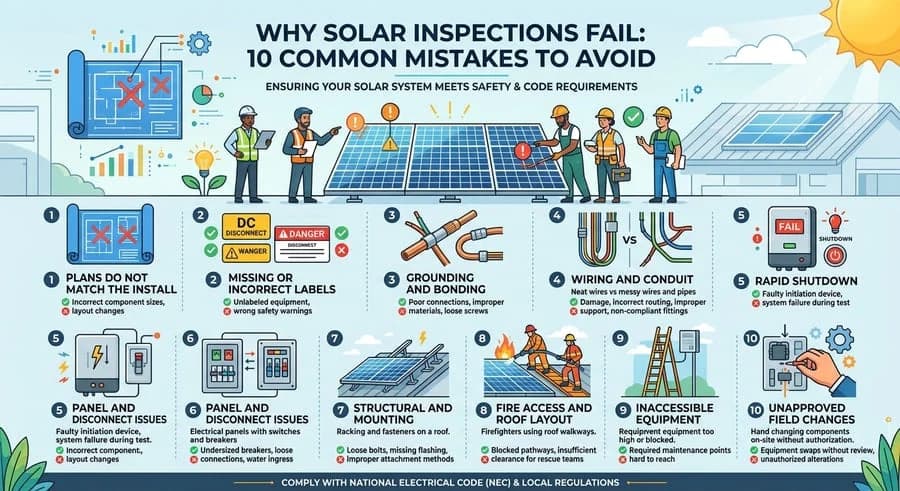
Why Solar Inspections Fail: 10 Common Mistakes to Avoid
Discover the 9 critical reasons solar inspections fail and how to avoid costly m...

Solar Grounding And Bonding: How To Pass Inspection Every Time
Learn how to pass solar grounding and bonding inspections every time. Avoid comm...
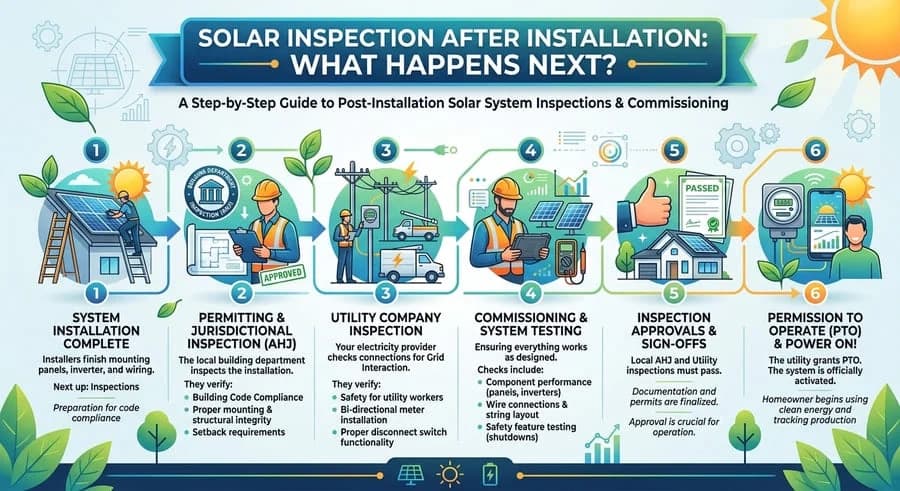
Solar Inspection After Installation: What Happens Next?
Learn how to pass your solar inspection by following essential tips for obtainin...