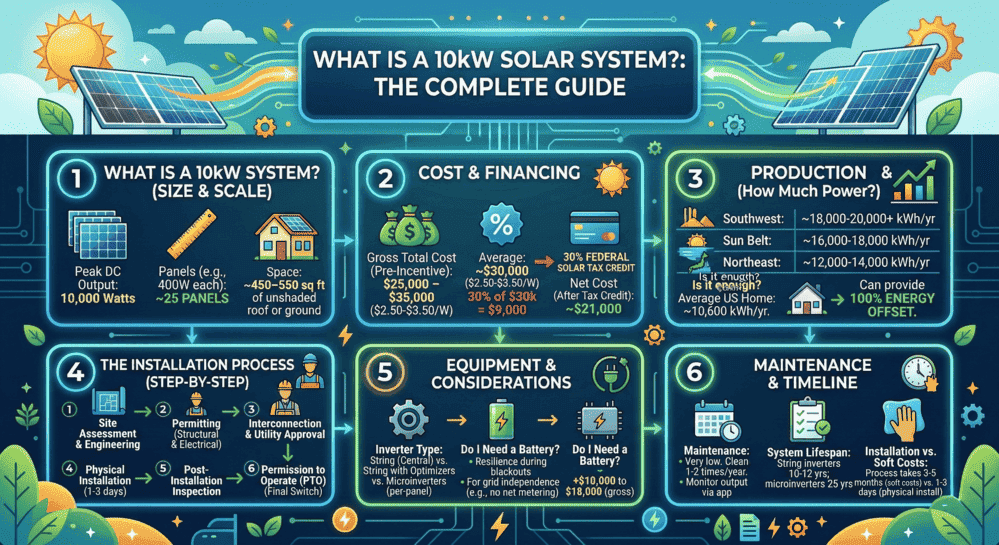
| Quick Answer: What Is a 10kW Solar System?A 10kW solar system produces roughly 11,000–15,000 kWh of electricity per year and costs $21,000–$30,000 before the 30% federal tax credit. It typically requires 25–27 solar panels and 440–475 square feet of south-facing roof space. Before a 10kW system can operate, installers must obtain a building permit and electrical permit from the local Authority Having Jurisdiction (AHJ) plus a utility interconnection approval. |
A 10 kilowatt (kW) solar system has become one of the most common residential installation sizes in the U.S. It sits at the sweet spot between covering a large home’s full electricity needs and remaining financially practical for most households. It also sits at an important threshold in the permitting world: many jurisdictions treat 10kW systems differently than smaller residential installs, triggering additional engineering and documentation requirements that smaller systems often avoid.
This guide covers everything a homeowner or solar contractor needs to know about a 10kW solar system: how much it costs, how much electricity it produces, whether it is the right size, how much it can save, and critically, what permits and interconnection steps are required to legally install and energize one.
10kW Solar System: At a Glance
| Metric | Value |
|---|---|
| Average installed cost (before incentives) | $25,000–$30,000 |
| After 30% federal tax credit (IRA) | $17,500–$21,000 |
| Annual electricity production | 11,000–15,000 kWh/year |
| Daily production (average) | 30–50 kWh/day |
| Number of panels (400W panels) | 25 panels |
| Roof space required | 440–475 sq ft (rooftop) | 645–810 sq ft (ground mount) |
| Payback period | 8–12 years (national average) |
| Permits required | Building permit + electrical permit + utility interconnection |
| PE-stamped plan set required? | State/AHJ-dependent; often yes for systems at or above 10kW |
How Much Does a 10kW Solar System Cost?
A 10kW solar system costs approximately $30,000 before incentives in 2026. EnergySage’s marketplace data puts the national average at around $2.58 per watt before incentives EnergySage, translating to roughly $25,800–$30,000 for a 10kW system depending on location, equipment, and installer.
The most important pricing change for 2026 is the loss of the federal residential tax credit. The 30% consumer solar tax credit expired at the end of 2025, meaning homeowners installing in 2026 and beyond pay the full sticker price with no federal offset. State incentives remain available in many markets and are now the primary cost-reduction lever for residential buyers.
For 2026 installs, treat any incentive as availability-dependent rather than guaranteed, and use pre-incentive pricing as your baseline when comparing quotes.
10kW Solar System Cost by State
State pricing reflects local labor rates, permitting complexity, and market competition:
| State | Estimated Cost (Before State Incentives) |
| Arizona | $20,200–$23,000 |
| California | $22,600–$26,000 |
| Colorado | $28,000–$31,000 |
| Florida | $21,700–$25,000 |
| Georgia | $23,000–$26,000 |
| Massachusetts | $29,000–$32,000 |
| Maryland | $27,000–$30,000 |
| New Jersey | $26,000–$29,000 |
| New York | $28,000–$31,000 |
| North Carolina | $24,000–$27,000 |
| Texas | $21,000–$24,000 |
| Washington | $25,000–$28,000 |
Source: EnergySage Marketplace 2025–2026 data. Figures reflect installed cost before state or utility incentives.
How Much Electricity Does a 10kW Solar System Produce?
A 10kW solar system produces approximately 11,000 to 15,000 kWh of electricity per year under typical U.S. conditions, or roughly 30 to 50 kWh per day. Production varies significantly based on geographic location, shading, panel orientation, and seasonal sun hours. NREL’s PVWatts Calculator estimates annual output for a 10kW system at around 14,517 kWh nationally.
10kW Solar System Annual Production by City
The table below uses peak sun hour data to estimate annual production for a 10kW south-facing system with standard tilt:
| City / State | Avg. Peak Sun Hours/Day | Estimated Annual Production |
|---|---|---|
| Phoenix, AZ | 5.7 hours | ~20,000 kWh |
| Dallas, TX | 5.2 hours | ~18,000 kWh |
| Los Angeles, CA | 5.0 hours | ~17,000 kWh |
| Atlanta, GA | 4.7 hours | ~16,500 kWh |
| Denver, CO | 4.9 hours | ~16,000 kWh |
| New York, NY | 4.1 hours | ~14,000 kWh |
| Chicago, IL | 3.9 hours | ~13,500 kWh |
| Miami, FL | 4.8 hours | ~16,500 kWh |
| Boston, MA | 3.8 hours | ~13,000 kWh |
| Seattle, WA | 3.2 hours | ~11,000 kWh |
Source: NREL PVWatts Calculator. Figures are estimates based on standard roof-mounted, south-facing systems at optimal tilt. Actual production will vary.
What Can Reduce a 10kW System’s Output?
- Shading from trees, chimneys, or neighboring structures is the single biggest performance killer.
- Non-optimal panel orientation (east or west-facing roofs produce 10–15% less than south-facing).
- Panel soiling (dust, pollen, bird droppings) can reduce output by 5–15% without regular cleaning.
- High ambient temperatures reduce efficiency; panels operate below nameplate capacity when surface temperatures exceed 25°C.
- Panel degradation: most panels lose 0.5–1% efficiency per year. After 25 years, a 10kW system typically produces about 80% of its original capacity.
Solar Permit Solutions
Skip the Permit Headaches
We design plan sets that pass inspection the first time. Code-compliant, PE-stamped, accepted by AHJs nationwide.
Can a 10kW Solar System Power a Home?
Yes, for most American households. The U.S. Energy Information Administration (EIA) reports average residential electricity consumption at approximately 10,715 kWh per year. A 10kW solar system produces enough electricity to cover that and more in most regions of the country.
That said, electricity use varies dramatically between households. Homes in Wyoming or Louisiana average close to 14,000–15,000 kWh per year, while homes in California or New York often average 6,000–8,000 kWh. A 10kW system may be oversized for some low-consumption households and undersized for others.
When Is 10kW the Right System Size?
The table below helps contractors and homeowners identify the appropriate system size:
| System Size | Annual Production | Best For | Avg. Panels Needed |
|---|---|---|---|
| 7kW | ~10,000 kWh | Average home in a sunny state; low-to-medium energy users | ~17–19 panels |
| 10kW | ~11,000–15,000 kWh | Larger homes; above-average consumption; EV charging; less-sunny climates | ~25–27 panels |
| 15kW | ~16,000–22,000 kWh | High-consumption homes; small businesses; homes with multiple EVs or electric HVAC | ~37–40 panels |
| 20kW | ~22,000–28,000 kWh | Large commercial light loads; agricultural; multi-family properties | ~50 panels |
A 10kW system is also large enough to support partial off-grid operation when paired with battery storage, making it a strong choice for homeowners in areas with frequent outages or unfavorable net metering policies.
How Many Solar Panels Are in a 10kW System?
The number of panels in a 10kW system depends entirely on the wattage rating of the panels selected. The calculation is straightforward: divide 10,000 watts by the panel wattage.
| Panel Wattage | Panels Needed | Notes |
|---|---|---|
| 300W | 34 panels | Older or economy-grade panels; more roof space required |
| 350W | 29 panels | Mid-tier; common in systems installed 2019–2022 |
| 400W | 25 panels | Current standard for most residential installations |
| 415W | 24–25 panels | High-efficiency tier; fewer panels, smaller footprint |
| 450W | 23 panels | Premium efficiency; ideal for roofs with limited space |
For most installations today, contractors spec 25 panels at 400 watts as the standard 10kW configuration. Higher-wattage panels are increasingly available and allow the same 10kW capacity in a slightly smaller footprint, which matters when roof space is tight.
How Much Roof Space Does a 10kW Solar System Require?
A standard residential 10kW solar system typically requires 440 to 475 square feet of usable, south-facing, unshaded roof space. That is roughly the size of a two-car garage.
Ground-mounted systems need more space due to row spacing requirements to prevent panel-on-panel shading: a 10kW ground mount typically occupies 645 to 810 square feet of land.
Key roof considerations for contractors during site assessment:
- Minimum 440 sq ft of contiguous, unobstructed south or southwest-facing surface.
- Roof pitch affects both production and structural racking requirements. Pitches between 15° and 40° are ideal.
- Check for HVAC equipment, skylights, vents, or chimneys that reduce usable roof area.
- California fire code and similar AHJ regulations require clear access pathways around panel arrays, which further reduces installable area.
- For roofs that cannot accommodate the full system, a hybrid roof-plus-ground-mount configuration may be required.
How Much Can a 10kW Solar System Save on Your Electric Bill?
A 10kW solar system costs approximately $30,000 before incentives in 2026. EnergySage’s marketplace data puts the national average at around $2.58 per watt before incentives EnergySage, translating to roughly $25,800–$30,000 for a 10kW system depending on location, equipment, and installer.
The most important pricing change for 2026 is the loss of the federal residential tax credit. The 30% consumer solar tax credit expired at the end of 2025, meaning homeowners installing in 2026 and beyond pay the full sticker price with no federal offset. Solar.com State incentives remain available in many markets and are now the primary cost-reduction lever for residential buyers.
For 2026 installs, treat any incentive as availability-dependent rather than guaranteed, and use pre-incentive pricing as your baseline when comparing quotes.
10kW Solar System Payback Period by State
| State | Estimated Cost (Before State Incentives) |
| Arizona | $20,200–$23,000 |
| California | $22,600–$26,000 |
| Colorado | $28,000–$31,000 |
| Florida | $21,700–$25,000 |
| Georgia | $23,000–$26,000 |
| Massachusetts | $29,000–$32,000 |
| Maryland | $27,000–$30,000 |
| New Jersey | $26,000–$29,000 |
| New York | $28,000–$31,000 |
| North Carolina | $24,000–$27,000 |
| Texas | $21,000–$24,000 |
| Washington | $25,000–$28,000 |
Source: EnergySage Marketplace 2025–2026 data. Figures reflect installed cost before state or utility incentives.
- Panel brand and efficiency: Premium panels carry a higher per-watt cost but may reduce the number of panels needed, partially offsetting the difference.
- Inverter type: String inverters are lowest cost. Microinverters and power optimizers add $1,000–$3,000 but improve performance on shaded or multi-plane roofs.
- Roof complexity: Steep pitches, multiple orientations, or tile roofing increase installation labor.
- Permit and plan set fees: Permit costs for a 10kW system typically run $50–$500 depending on jurisdiction. Many AHJs require a PE-stamped plan set at or above 10kW, adding $300–$800 to the project budget – a cost most published estimates exclude entirely.
- Battery storage: Adding a home battery adds $10,000–$15,000+ and triggers separate permitting requirements.
Installer Note: The Permit Cost Factor
Most homeowner-facing cost guides exclude permit fees from their estimates. For a 10kW residential system, all-in permit costs – including the building permit, electrical permit, and professional plan set preparation – typically add $500–$2,000 to a project budget depending on jurisdiction. Contractors who factor this into proposals upfront avoid scope-of-work disputes after the fact.
Solar Permit Solutions provides PE-stamped permit plan sets for 10kW systems in all 50 states with a 2–5 business day turnaround. → Learn more about our plan set services.
What Permits Does a 10kW Solar System Require?
Every grid-tied solar installation in the United States requires at least a building permit and an electrical permit from the local Authority Having Jurisdiction (AHJ). Off-grid systems skip the utility interconnection step but still require AHJ permits for the physical installation.
What makes the 10kW size particularly important from a permitting standpoint is that it sits at a regulatory threshold recognized by many jurisdictions. Systems below 10kW often qualify for simplified or streamlined permit pathways. Systems at or above 10kW are frequently subject to additional engineering review requirements, including professionally prepared plan sets and, in many states, a PE (Professional Engineer) stamp.
Understanding this threshold is essential for installers managing project timelines and budgets.
Building Permit and Electrical Permit Requirements
Nearly every AHJ in the country requires both a building permit (confirming structural integrity) and an electrical permit (confirming safe wiring per the National Electrical Code) for a 10kW solar installation.
Documents typically required for permit submission:
- Site plan showing panel layout, setbacks, access pathways, and equipment locations
- Electrical one-line diagram illustrating system wiring from panels through inverter to the utility meter
- Structural calculations demonstrating the roof can support panel weight and wind/snow loads
- Equipment specification sheets for all components (panels, inverter, racking, disconnects)
- Fire access pathway diagrams per local fire code and NEC 690.12 rapid shutdown requirements
- Completed permit application with licensed contractor information
Permit fees for a 10kW residential system range from $50 to $500+ depending on the jurisdiction. Some municipalities charge a flat fee; others calculate fees as a percentage of project value or by system capacity.
Does a 10kW System Require a PE-Stamped Plan Set?
This is one of the most commonly misunderstood aspects of 10kW solar permitting. The short answer: in many states and jurisdictions, yes.
A PE-stamped plan set means the structural and/or electrical design documents have been reviewed and signed off by a licensed Professional Engineer. The engineer takes professional liability for the accuracy of the calculations.
Here is how it plays out across major solar states:
| State | PE Stamp Requirement |
|---|---|
| Texas | Systems exceeding 10kW require PE-stamped plans regardless of residential or commercial classification. |
| California | Streamlined permit pathway available for systems ≤10kW on residential rooftops. Systems above 10kW require full engineering review. |
| Florida | Licensed electrical contractor required; structural PE stamp often required for roof penetration calculations. |
| New York | NYC and other major jurisdictions require PE-stamped structural drawings for all residential solar. |
| New Jersey | NABCEP certification required for installer; PE stamp required for structural calculations in most counties. |
| Massachusetts | MassSave programs and Eversource/National Grid require complete engineering-reviewed plan sets. |
| Most states | AHJ-by-AHJ variation. Many require PE stamps for systems over 10kW or for complex roof types regardless of system size. |
What Goes in a 10kW Solar Permit Plan Set?
A complete, permit-ready plan set for a 10kW solar installation typically includes:
- Cover sheet: Project address, AHJ, utility, applicable codes (NEC edition, IBC/IRC edition), and installer license information
- Site/roof plan: Panel array layout with dimensions, setbacks, clearances, fire access pathways, and equipment locations
- Electrical one-line diagram: Complete system wiring from PV source circuits through combiner, inverter, AC disconnect, and utility interconnection point
- Structural attachment detail: Racking attachment method, fastener type and spacing, roof member spans, and load calculations per ASCE 7
- Equipment schedules: Spec sheets and listing information for panels, inverter, racking, disconnects, and overcurrent protection
- Labels and placards schedule: Rapid shutdown initiation device label, disconnect labels, point-of-interconnection label per NEC 690.56
- Electrical calculations: String sizing, wire sizing, voltage and current calculations, and OCPD sizing
Missing any of these elements is the most common reason permit applications are rejected or flagged for correction, adding weeks to project timelines.
How Long Does Permitting Take for a 10kW System?
Permit timelines vary widely by jurisdiction. A well-prepared, complete application in a streamlined jurisdiction can be approved in 2–5 business days. Complex jurisdictions or those with high application backlogs can take 4–8 weeks. The most difficult permitting environments (dense urban AHJs, HOA-restricted communities, historically designated areas) can stretch to 8–12 weeks or longer.
Factors that cause delays:
- Incomplete or inconsistent plan sets (mismatched equipment between one-line diagram and spec sheets)
- Missing structural calculations or racking attachment details
- AHJ plan review backlogs, particularly at year-end when ITC claim deadlines drive application surges
- Requests for corrections (redlines) requiring revised plans and resubmission
- Utility interconnection review running on a separate, longer timeline than the AHJ permit
| Solar Permit Solutions’ Role prepares PE-stamped permit plan sets for 10kW residential and commercial solar systems in all 50 states. Our plan sets are engineered for first-pass approval: complete, code-compliant, and formatted to each AHJ’s preferences. Standard turnaround is 2–5 business days. We also handle AHJ coordination and utility interconnection support, so contractors can focus on installation rather than paperwork. → Get started with a plan set quote. |
10kW Solar System Interconnection: Grid-Tied vs. Off-Grid
Utility interconnection and the AHJ permit are two separate approval tracks that must both be completed before a grid-tied 10kW system can legally operate. Many contractors and homeowners underestimate the time and documentation required on the utility side.
Grid-Tied Interconnection Process
For a 10kW grid-tied system, the interconnection process typically follows these steps:
1. Submit an interconnection application to the utility: Includes the one-line diagram, equipment spec sheets, and a completed application form.
2. Utility technical review: The utility confirms the system’s anti-islanding protection, inverter specifications, and compliance with IEEE 1547 interconnection standards.
3. Execute an interconnection agreement: A formal contract between the system owner and the utility governing the terms of grid connection and net metering credits.
4. Pass utility inspection (if required): Some utilities conduct their own site inspection separate from the AHJ inspection.
5. Receive Permission to Operate (PTO): The utility’s formal sign-off allowing the system to energize and begin exporting power to the grid.
Most residential 10kW interconnection applications complete in 2–4 weeks under standard review. However, systems in areas with constrained distribution infrastructure may be flagged for a supplemental review or impact study, which can add 30–90 days to the process.
When Does a 10kW System Trigger a More Complex Interconnection Review?
Not all 10kW systems sail through standard interconnection review. The following situations can trigger additional utility scrutiny:
- The system’s proposed point of interconnection is on a feeder already near its hosting capacity limit.
- The utility has an aggregate cap on net metering program enrollment that is near its limit.
- The system includes a battery and the utility requires additional anti-islanding documentation for storage-coupled systems.
- State rules place NEM program size limits that overlap with 10kW residential installs (some programs cap residential NEM at sizes smaller than 10kW).
Contractors managing 10kW projects in these situations should submit interconnection applications as early as possible – ideally in parallel with or before permit submission – to avoid the interconnection review becoming the critical path.
Off-Grid 10kW Systems
Off-grid 10kW systems bypass the utility interconnection process entirely. There is no interconnection application, no PTO, and no net metering. However, an off-grid system still requires an AHJ building permit and electrical permit in virtually every jurisdiction. The misconception that off-grid systems need no permits is both common and wrong.
A 10kW off-grid system must also be paired with substantial battery storage – typically 15–20+ kWh of usable capacity – to handle overnight loads and multi-day cloudy periods. That battery bank adds significant cost and introduces its own permitting layer in many states.
10kW Solar System and Battery Storage
Battery storage is an increasingly common addition to 10kW solar installations, driven by grid reliability concerns, time-of-use electricity rates, and the desire for partial energy independence. A single Tesla Powerwall 3 (13.5 kWh usable) or Enphase IQ Battery 5P (5 kWh per unit, typically 2–3 units) is the most common pairing.
For a 10kW system producing an average of 40 kWh per day, batteries are typically sized to provide 1–1.5 days of critical load coverage (10–15 kWh usable) rather than to store all daily production.
How Battery Storage Changes Permitting
Adding a battery to a 10kW solar installation changes the permitting package in several important ways:
- A separate battery permit is typically required in addition to the solar permit.
- The electrical one-line diagram must show the battery, hybrid inverter or AC coupling, and load center connections.
- Fire code compliance for battery placement (ventilation, clearances, wall separation ratings) must be documented.
- Some AHJs require a standalone battery plan set with its own structural and electrical calculations.
- Utility interconnection applications for battery-coupled systems require additional anti-islanding and export control documentation.
In California, battery storage may qualify for the Self-Generation Incentive Program (SGIP) rebate, which partially offsets battery costs. Similar programs exist in New York (NY-Sun), Massachusetts (SMART), and other states.
10kW Solar System Incentives and Tax Credits
The federal residential solar tax credit is no longer available for new installations. The One Big Beautiful Bill, signed into law on July 4, 2025, ended the Section 25D Residential Clean Energy Credit for systems installed after December 31, 2025, with no phase-down period. Homeowners who installed and energized their system before that deadline can still claim the 30% credit on their 2025 tax return.
For installations in 2026 and beyond, the financial case for a 10kW solar system now rests on state incentives, utility programs, and long-term electricity savings rather than a federal credit.
Commercial ITC
The 30% commercial Investment Tax Credit (Section 48E) remains available for commercial solar installations that begin construction by July 4, 2026, or are placed in service by December 31, 2027. Contractors quoting light commercial 10kW systems should factor this deadline into project timelines.
State and Utility Incentives
| State | Available Incentives |
|---|---|
| New York | NY-Sun MW Block incentives; $5,000 state tax credit; NYSERDA programs |
| California | SGIP battery rebate; NEM 3.0 export credits; some utility rebates |
| Massachusetts | SMART solar tariff program; net metering; utility rebates |
| New Jersey | SREC-II program; net metering |
| Maryland | State tax credit up to $1,000; SRECs; net metering |
| Texas | No state income tax credit; select local utility rebates (CPS Energy, Oncor) |
| All States | Check DSIRE at dsireusa.org for current programs by state |
MACRS Depreciation for Commercial Installations
For commercial or light-commercial 10kW installations, MACRS allows businesses to depreciate solar system costs over a 5-year schedule. Even without the residential ITC, MACRS depreciation combined with energy cost savings delivers a strong ROI for qualifying commercial properties.
The Bottom Line on Incentives
Without the federal residential credit, payback periods for homeowner-owned systems extend by roughly 3–4 years compared to pre-2026 estimates. Electricity rates continue to rise nationally, which partially offsets the loss of the credit over the life of the system. State incentives remain intact and should be the first stop for any homeowner or contractor evaluating project economics in 2026.
Should You DIY a 10kW Solar System?
DIY solar kits for 10kW systems are available from suppliers like GoGreenSolar and ShopSolar, typically priced between $14,000 and $24,000 for the equipment package alone. On paper, the savings versus a fully installed system appear significant. In practice, the DIY path for a 10kW system introduces risks that frequently erode that cost advantage.
- Warranty voiding: Most premium panel and inverter manufacturers require a professional installation to honor equipment warranties. DIY installation can void coverage on a $20,000+ system.
- SREC and incentive disqualification: SREC programs in states like New Jersey and Maryland typically require grid-connected systems certified by a licensed electrician. A DIY system that cannot obtain SREC certification loses access to a revenue stream worth thousands of dollars annually.
- AHJ inspection failure: Most AHJs require the permit applicant to demonstrate that the electrical work was performed or supervised by a licensed electrical contractor. DIY applicants often struggle to find an electrician willing to sign off on work they did not perform.
- Plan set requirements: A 10kW DIY system still needs a professionally prepared plan set for the building permit. GoGreenSolar’s own permitting service notes an “additional charge for 10kW+ systems” due to complexity. The permit plan set cost often exceeds what a homeowner anticipates.
- Safety risk: 10kW solar systems operate at high DC voltages (often 300–600V DC) and must comply with NEC 690 rapid shutdown requirements. Incorrect wiring creates fire and electrocution hazards.
For most homeowners, the combination of warranty risk, incentive disqualification, AHJ friction, and safety exposure makes a professional installation the financially and practically superior choice for a system of this size.
Conclusion
A 10kW solar system is the right fit for larger homes with above-average electricity consumption, households in less-sunny climates that need more generating capacity, and properties where EV charging or electric HVAC is pushing monthly bills higher. It produces enough electricity to cover most American homes outright and offers a strong return on investment in virtually every state after the 30% federal tax credit.
For solar contractors, the 10kW threshold is also a permitting milestone. Many AHJs and state programs treat systems at or above 10kW with additional engineering scrutiny, making a professionally prepared, PE-stamped plan set the difference between a first-pass permit approval and weeks of back-and-forth with the building department. Getting the permitting package right from the start protects your project timeline and your margin.
Solar Permit Solutions provides PE-stamped permit plan sets for 10kW residential and commercial solar systems in all 50 states, with 2–5 business day turnaround. Get a plan set quote today.
Frequently Asked Questions
Skip the Permit Headaches
We design plan sets that pass inspection the first time. Code-compliant, PE-stamped, accepted by AHJs nationwide.
Frequently Asked Questions
Several factors move the final price above or below state averages:
The number of panels depends on their wattage. With 400-watt panels – the current residential standard – you need 25 panels. With 450-watt premium panels, 23 panels reach 10kW. With older 300-watt panels, 34 panels are required. Fewer, higher-wattage panels reduce roof space requirements and simplify racking.
Yes, for most homes. The average U.S. household consumes about 10,715 kWh per year, and a 10kW system in most U.S. locations produces 11,000–15,000 kWh annually. Homes with electric vehicles, electric heating, or pools may consume more than a 10kW system produces. A site-specific energy audit is the most reliable way to confirm the right system size.
The physical installation of a 10kW rooftop solar system typically takes 1–3 days once permits are approved. However, the total project timeline from signed contract to Permission to Operate is usually 6–12 weeks: 2–4 weeks for permit approval, 1–3 days for installation, and 1–4 weeks for utility interconnection and PTO. Complex jurisdictions or high-demand periods can extend this to 3–6 months.
Yes, every grid-tied 10kW solar installation requires permits. At minimum: a building permit and an electrical permit from the local AHJ, plus a utility interconnection agreement. Off-grid 10kW systems bypass the utility step but still require AHJ permits. Many jurisdictions require a professionally prepared plan set for a 10kW system, and some states (including Texas) require a PE-stamped plan set for systems at or above 10kW.
The national average payback period for a 10kW system is 8–12 years after the federal tax credit. In high-electricity-cost states like California or Massachusetts, payback can occur in 4–6 years. In low-cost electricity states like Washington or Louisiana, payback may take 10–14 years. SRECs, utility rebates, and battery incentives can shorten the payback period in eligible states.
A 10kW system can offset a meaningful portion of energy costs for small commercial properties such as offices, retail spaces, or light manufacturing under about 5,000 square feet. For most commercial properties, 10kW covers only a fraction of consumption. Commercial 10kW installations differ from residential in permitting (often classified as commercial by the AHJ regardless of physical size), incentives (MACRS depreciation applies), and interconnection requirements.
Most homeowners pair a 10kW system with 10–15 kWh of usable battery storage, sized to cover critical loads during a power outage rather than to store all daily production. Full off-grid use of a 10kW system requires 15–20+ kWh of storage to handle low-production periods. Adding batteries changes the permitting package and typically requires separate fire code review and utility anti-islanding documentation.

SPS Editorial Team
Solar Permit Solutions
Solar Permit Solutions provides professional solar permit design services for residential, commercial, and off-grid installations across all 50 states. Our team ensures permit-ready plan sets delivered fast.
Related Articles
Solar Permit Requirements In Florida: Complete Step-By-Step Guide
Solar Permit Solutions breaks down Florida’s permit requirements by county...
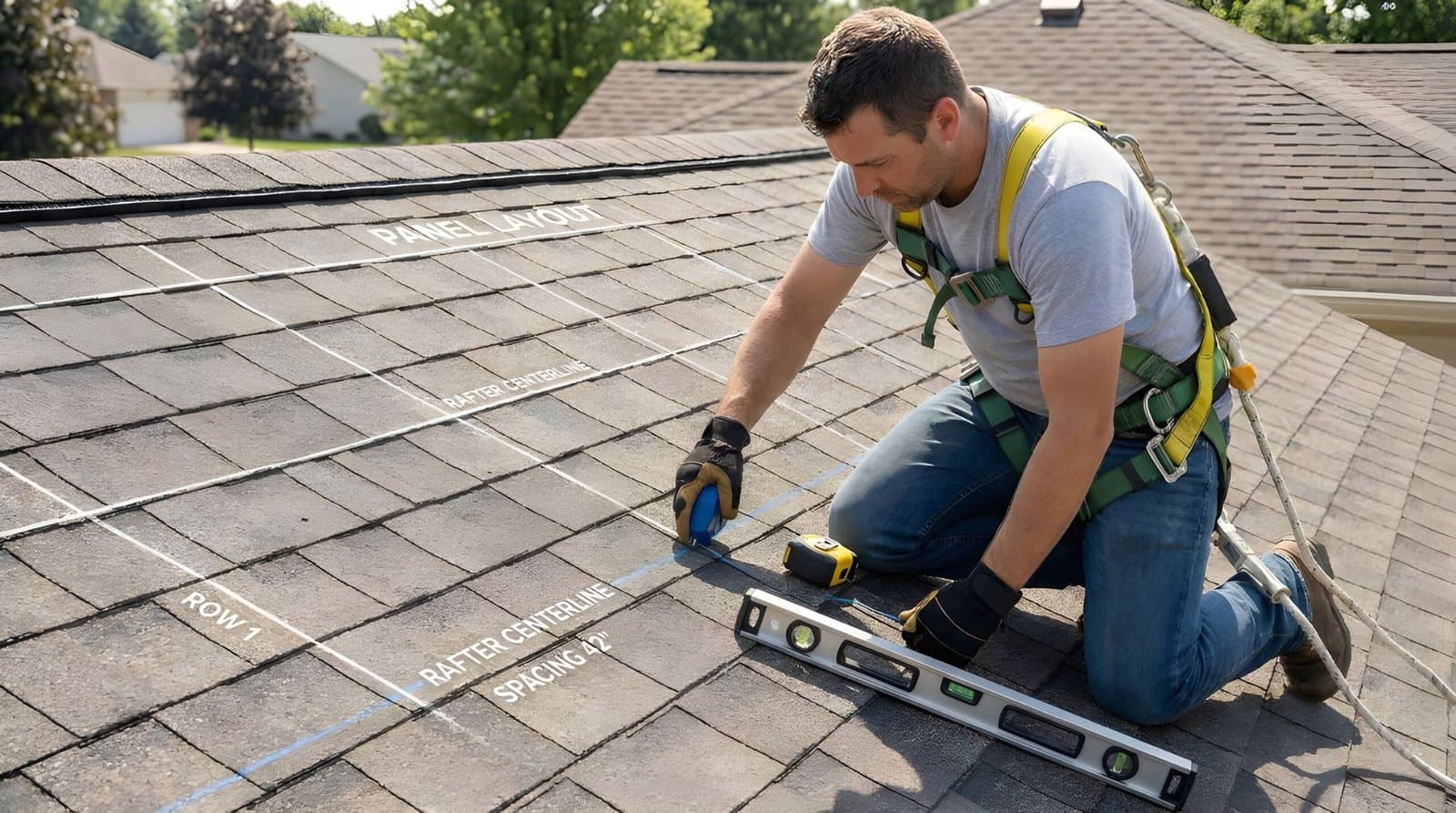
How to Mount Solar Panels on a Roof: Mounting Systems, Rails, and DIY Tips
Learn how to mount solar panels yourself with this complete guide. Covers compon...
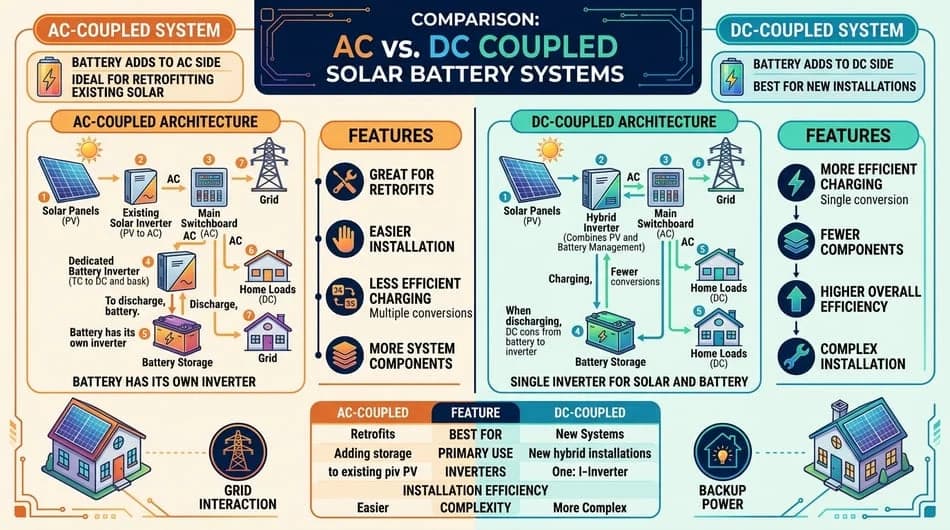
AC vs DC Coupled Solar Batteries: Which Should You Choose?
AC vs DC coupled solar batteries compared: efficiency, costs ($8K-$18K), and ins...