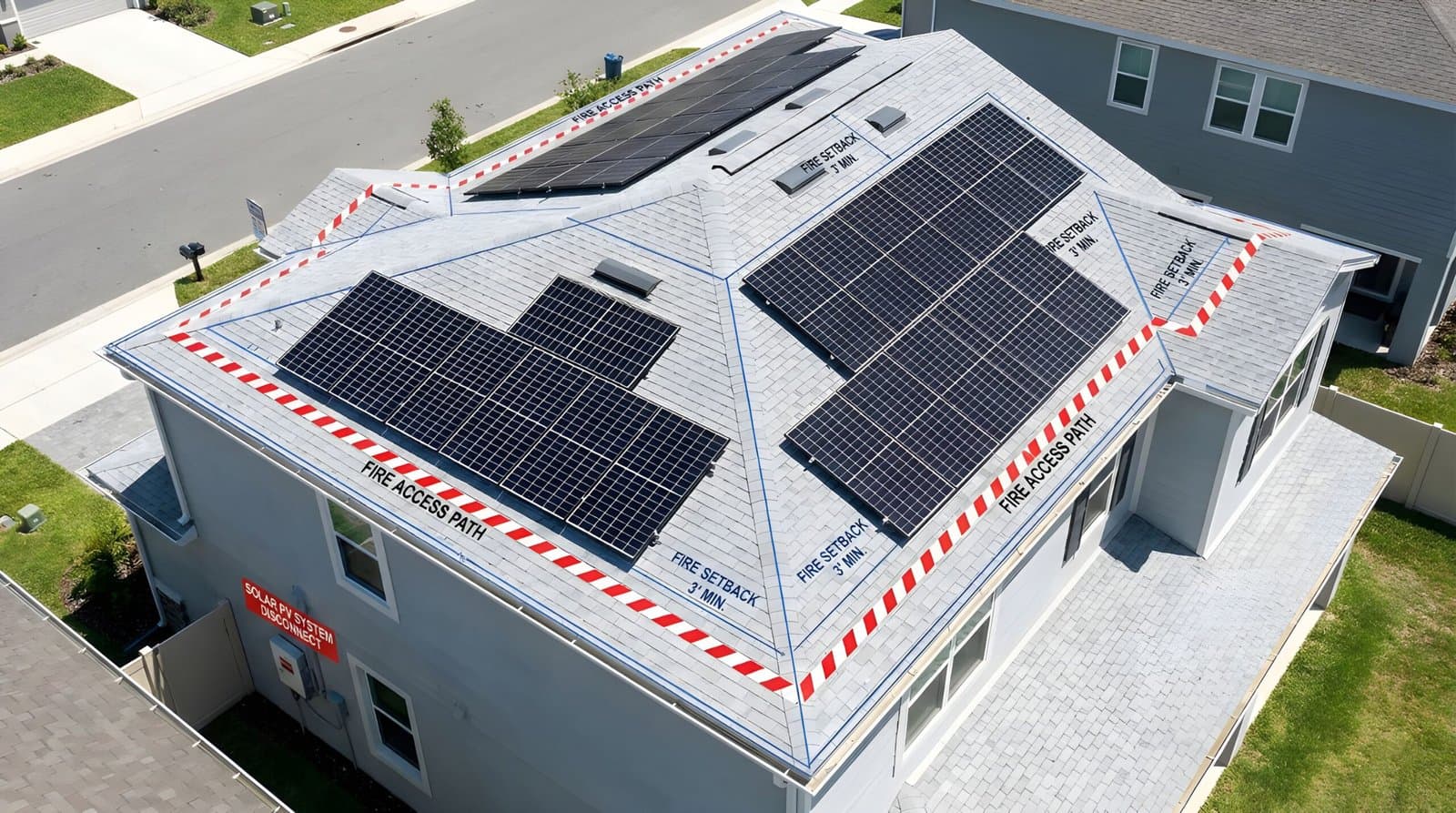
Yes, property owners can install solar panels in fire districts. Fire districts are specialized jurisdictions that enforce specific safety codes for solar installations to ensure emergency responder access during fires. These regulations require maintaining 18-inch to 36-inch setbacks from roof ridges depending on system size, creating 36-inch wide access pathways for firefighters, and incorporating National Electrical Code compliant rapid shutdown equipment that de-energizes panels within 30 seconds during emergencies.
What makes fire district solar installations different? Fire safety codes mandate specific clearances between solar panels and roof edges to create emergency access routes. Properties covering less than 33 percent of their roof with solar typically need 18-inch ridge setbacks, while larger installations require 36-inch setbacks.
Fire district approval is required before installation begins. Property owners must contact their local fire marshal or Authority Having Jurisdiction (AHJ) to verify specific requirements, as fire codes vary by jurisdiction and depend on which edition of the International Fire Code the district has adopted.
Methods For Installing Solar In Fire Districts
Several approaches exist for installing solar panels while maintaining fire district compliance. Whether the property is located in a densely populated area or a rural fire protection district, specific installation methods ensure both energy production and emergency access requirements are met.
Rooftop installations or ground-mounted systems can be designed to accommodate fire code specifications without compromising system performance.
Rooftop Installation With Fire Setbacks
The most common approach involves installing solar panels on rooftops while maintaining required fire setbacks. These setbacks create pathways along roof ridges, hips, and valleys that firefighters can use during emergency operations.
Modern fire codes typically require 18-inch setbacks from the ridge for systems covering less than 33 percent of the roof area, or 36-inch setbacks for larger arrays. Access pathways must be at least 36 inches wide to accommodate emergency personnel and equipment.
Mounting systems are positioned to ensure clear access zones remain unobstructed, providing optimal sun exposure while meeting safety standards. Proper system design maximizes available roof space while maintaining all required clearances.
Ground-Mounted Installation
In some cases, solar panels may be positioned on the ground near buildings. This approach can be beneficial when roof configurations make fire code compliance challenging or when adequate setback space is limited.
Ground-mounted solar arrays are installed on engineered racks or foundations and connected to the building’s electrical system while maintaining required clearances from structures. These installations must still comply with fire district regulations regarding equipment placement and emergency vehicle access.
Additionally, solar installations in fire districts may incorporate rapid shutdown systems and enhanced safety equipment to address emergency response needs. These features are particularly important for properties in high-risk fire zones or areas with specific emergency access requirements.

Solar Installations With Vs. Without Fire District Compliance
Choosing to install solar panels in compliance with fire district regulations is not just about meeting code requirements. It is about making a responsible choice for property safety and community protection.
Compliant installations provide peace of mind knowing the system meets all safety standards while still delivering energy savings. Proper fire code adherence ensures emergency responders can safely access rooftops when needed. Additionally, compliant systems face fewer permitting delays and potential legal issues.
On the other hand, non-compliant solar installations risk permit rejection, costly redesigns, and potential safety hazards during emergencies. When deciding whether to prioritize fire district compliance, the choice involves weighing immediate installation convenience against long-term safety and regulatory requirements.
Tips For Installing Solar Panels In Fire Districts
Several important considerations apply when planning solar installations within fire districts. Start by identifying the specific fire jurisdiction governing the property and obtaining current fire code requirements.
This can be done by contacting the local fire marshal’s office or AHJ to understand setback dimensions, pathway widths, and equipment specifications required for the area. Different jurisdictions may enforce different editions of the International Fire Code or National Electrical Code.
Next, evaluate roof geometry to determine how fire setbacks will affect available installation space. Review different system designs that can maximize energy production while maintaining required clearances.
Decide whether to work with installers experienced in fire district projects who can navigate these specific requirements. Consider whether the system will need rapid shutdown equipment, enhanced labeling, or other fire safety features mandated by local codes.
Research any specific equipment requirements or approved product lists maintained by the fire district. Verify that the installation company holds proper licensing and insurance for working in fire-protected areas.
It is essential to consult with experienced solar professionals and fire district officials to ensure the system design meets all applicable requirements.

Solar Permit Solutions
Skip the Permit Headaches
We design plan sets that pass inspection the first time. Code-compliant, PE-stamped, accepted by AHJs nationwide.
Enhancing Solar Safety In Fire Districts
Property owners who install solar systems in fire districts can implement these strategies to maximize both safety and efficiency:
- Design panel layouts that maintain required setbacks and emergency access pathways
- Invest in rapid shutdown systems that comply with current National Electrical Code requirements
- Install proper warning labels and placards that identify system locations and electrical specifications
- Ensure regular system inspections to verify continued code compliance
- Research available permitting guides and technical resources from fire safety organizations
Conclusion
Solar installations in fire districts offer significant benefits when properly designed and installed. These systems generate clean, renewable energy while maintaining critical safety standards and emergency access requirements that protect both property owners and first responders.
Successful projects require understanding jurisdiction-specific fire codes, implementing appropriate setback dimensions and access pathways, and incorporating required safety equipment like rapid shutdown systems. Solar power provides long-term cost savings and environmental benefits when projects follow established fire codes and work within jurisdictional requirements.
Property owners should work with experienced solar installers who understand fire district regulations and can navigate the permitting process efficiently. By prioritizing compliance from the start, solar projects in fire districts can achieve both safety objectives and energy production goals.
Ready To Navigate Fire District Solar Compliance?
Get expert guidance on fire setback requirements, access pathways, and rapid shutdown systems for your project. Solar Permit Solutions handles complete permit packages, AHJ coordination, and fire code compliance documentation across all 50 states.
Schedule Your Free Compliance Consultation
Our engineering team ensures your solar installation meets fire district requirements from day one, preventing costly delays and permit rejections.
FAQs
Access pathways must be at least 36 inches wide, extending from the lowest roof edge to the ridge. The exact dimensions depend on multiple factors including building height, roof pitch, and the specific code edition adopted by the Authority Having Jurisdiction.
However, ground-mounted installations must still comply with fire district regulations regarding equipment placement, clearances from structures, and emergency vehicle access routes. Properties should consult with experienced solar installers and local fire officials to determine if ground-mounted systems offer advantages for their specific situation.
Modern solar installations incorporate this technology through module-level power electronics such as microinverters or DC optimizers, or through specialized string inverter systems with rapid shutdown capabilities.
Some insurance companies may require additional coverage for the solar equipment itself, while others include it under existing property coverage. Working with licensed installers familiar with fire district requirements helps ensure installations meet all standards that insurance providers expect.
Fire officials have the authority to require removal or modification of systems that do not meet established safety codes. Property owners should always obtain necessary permits and approvals before beginning any solar installation.
Skip the Permit Headaches
We design plan sets that pass inspection the first time. Code-compliant, PE-stamped, accepted by AHJs nationwide.
Frequently Asked Questions
Property owners can confirm their location within a fire district by contacting the local building department, fire marshal's office, or county assessor. Fire district boundaries are typically defined by geographic zones and may not align with city or county borders, so verification is essential before starting any solar planning process.
Fire setback requirements vary by jurisdiction and depend on which edition of the International Fire Code or National Electrical Code the local Authority Having Jurisdiction has adopted. Roofs with solar panels covering 33 percent or less of the total roof area typically require an 18-inch setback from the ridge, while roofs with solar coverage exceeding 33 percent require a 36-inch setback on both sides of the ridge. Access pathways must be at least 36 inches wide, extending from the lowest roof edge to the ridge. The exact dimensions depend on multiple factors including building height, roof pitch, and the specific code edition adopted by the Authority Having Jurisdiction.
Ground-mounted solar systems can be an effective alternative when rooftop installations face challenges meeting fire setback requirements. These systems eliminate concerns about roof access pathways and structural loading while still providing clean energy generation. However, ground-mounted installations must still comply with fire district regulations regarding equipment placement, clearances from structures, and emergency vehicle access routes. Properties should consult with experienced solar installers and local fire officials to determine if ground-mounted systems offer advantages for their specific situation.
Rapid shutdown systems are safety devices that quickly de-energize solar panels during emergencies, reducing electrical hazards for firefighters and first responders. These systems are mandated by the National Electrical Code for most rooftop solar installations and are required in all jurisdictions that have adopted NEC 2017 or later editions, including fire districts. When activated, rapid shutdown equipment reduces the voltage in solar conductors to safe levels within 30 seconds, bringing any conductors more than one foot from the array to 30 volts or less. Modern solar installations incorporate this technology through module-level power electronics such as microinverters or DC optimizers, or through specialized string inverter systems with rapid shutdown capabilities.
Solar installations completed in compliance with fire district regulations generally do not negatively impact homeowner insurance and may even be viewed favorably by insurers. Property owners should notify their insurance providers about planned solar installations and provide documentation of permits, inspections, and final approvals. Some insurance companies may require additional coverage for the solar equipment itself, while others include it under existing property coverage. Working with licensed installers familiar with fire district requirements helps ensure installations meet all standards that insurance providers expect.
Installing solar panels without proper fire district approval can result in serious consequences including permit violations, mandatory system removal, costly fines, and potential liability issues during emergencies. Non-compliant installations may also void equipment warranties, create complications with utility interconnection, and affect property sale transactions. Fire officials have the authority to require removal or modification of systems that do not meet established safety codes. Property owners should always obtain necessary permits and approvals before beginning any solar installation.
SPS Editorial Team
Solar Permit Solutions
Solar Permit Solutions provides professional solar permit design services for residential, commercial, and off-grid installations across all 50 states. Our team ensures permit-ready plan sets delivered fast.
Related Articles
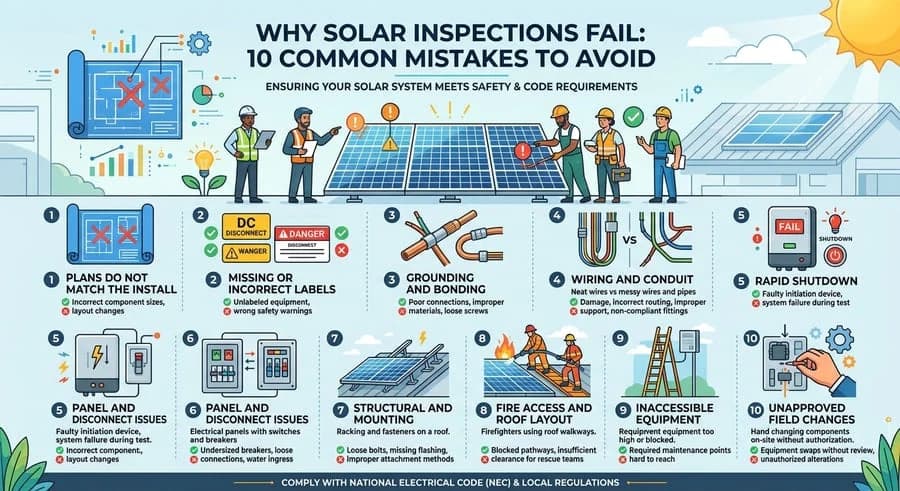
Why Solar Inspections Fail: 10 Common Mistakes to Avoid
Discover the 9 critical reasons solar inspections fail and how to avoid costly m...
Solar Grounding And Bonding: How To Pass Inspection Every Time
Learn how to pass solar grounding and bonding inspections every time. Avoid comm...
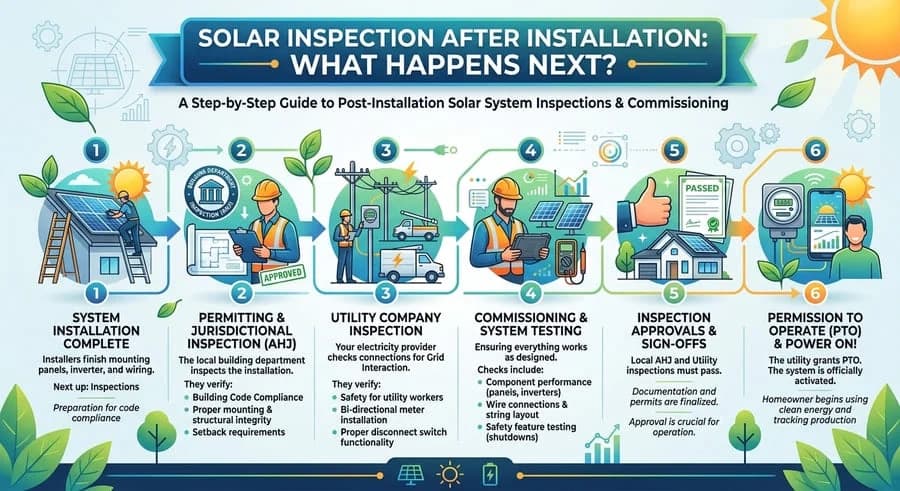
Solar Inspection After Installation: What Happens Next?
Learn how to pass your solar inspection by following essential tips for obtainin...