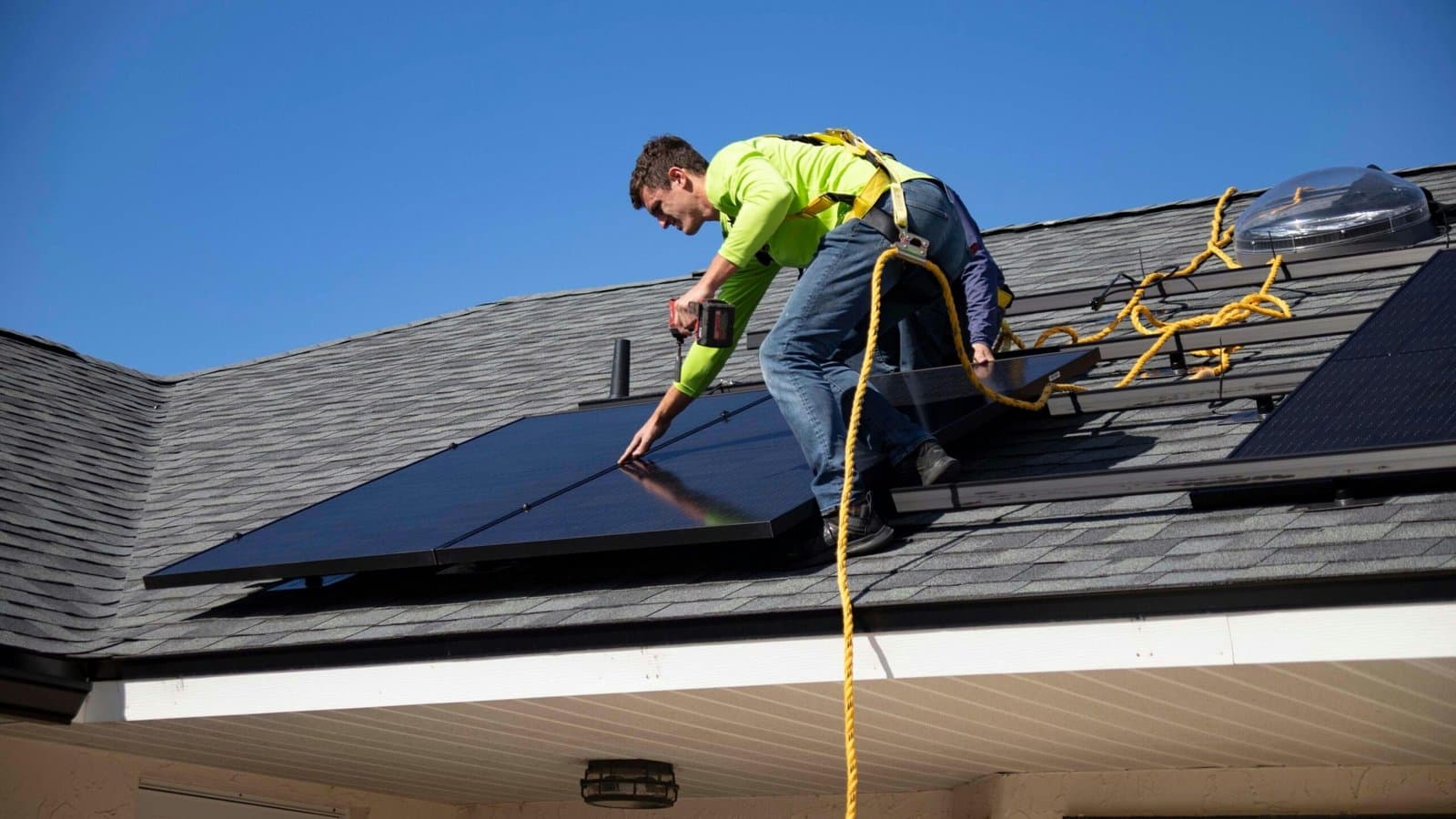
Removing solar panels safely requires following specific disconnection procedures to prevent electrical hazards and equipment damage. Solar panels can be disconnected by shutting off AC and DC disconnect switches, covering panels with opaque material, verifying zero voltage with a tester, unplugging MC4 connectors, and removing mounting hardware. Whether for residential solar design modifications or system relocation, proper procedures ensure safety.
Key safety requirements for solar panel removal:
- Turn off both AC disconnect (inverter to main panel) and DC disconnect (PV array to combiner box) switches first
- Cover panels with opaque cloth to stop power generation before handling
- Use a voltage tester to confirm near-zero voltage at the charge controller
- Disconnect MC4 connectors using proper tools and cover with electrical tape
- Remove mounting bolts, screws, and clamping nuts only after electrical disconnection is complete
- Consult professional services for complex removals
What happens to disconnected solar panels: When no load connects to solar panels, they generate high voltage that conducts through cells and converts to heat energy. The cell surface area dissipates this heat safely, and the solar meter remains inactive until a load reconnects. Disconnected panels run hotter than connected panels due to energy conversion into thermal energy rather than electrical output.
Essential Safety Steps For Powering Down Solar Panels
Several critical safety precautions should be followed when disconnecting solar panels.
Turn Off DC and AC Disconnect Switches
The first step in disconnecting solar panels involves switching off circuit breakers. Most installations require turning off the AC disconnect switch between the inverter and main electrical panel, followed by the DC disconnect switch between the PV array and combiner box. Following proper safety guidelines prevents electrical accidents during this process.
Cover the Solar Panel
Disconnecting solar panels should occur during non-generating hours. Covering them with an opaque cloth before removal ensures no solar generation takes place, making the disconnection process safer.
Measure the Voltage of Each String of Modules Before Disconnecting
To prevent electrocution and fire hazards, use a solar battery tester to measure voltage at the solar panel or array. This confirms voltage levels are close to zero before disconnection. Since MC4 connectors for solar panels are weatherproof, voltage measurement should occur at the solar charge controller.
Disconnect the MC4 Connector of Each Solar Panel
Unplug the MC4 connector at the end of each solar panel using a disconnection/connection tool designed for MC4 connectors. A socket wrench serves as an alternative tool.
Cover the Plug of the Solar Panel with Electrical Tape
Whether relocating solar panels or leaving them unplugged temporarily, cover MC4 connectors with electrical tape to eliminate electrocution risks. Understanding DIY liability risks helps homeowners make informed decisions about self-installation work.
Dismount the Solar Panel by Removing Bolts, Screws, and Clamping Nuts
For non-portable solar systems requiring relocation, remove the bolts, screws, and clamping nuts from the mounting hardware. This allows for panel transportation to a new location or replacement of faulty units. Proper structural engineering requirements should be met when reinstalling panels.
Best Practices For Protecting Inactive Solar Panels
Covering solar panels when not in use provides several advantages. Following established rooftop solar protocols extends system lifespan and maintains efficiency.
Reduced Heat
When a panel reaches 125 degrees Fahrenheit, performance decreases by up to 20%. Covering the solar array with a tarp or blanket significantly lowers panel temperature. This protection maintains optimal production output for extended periods. Explore our solar blog for more maintenance tips.
Reduced Rain and Snow Impact
Rain and snow add substantial weight to solar arrays, increasing wear and tear on roof structures over time. In rainy or snowy climates, covering the system protects it from elemental damage. Assessing whether your roof supports additional loads is crucial.
Reduced Algae Growth
Algae formation on solar panels is a recognized concern. Algae creates shadows on panel surfaces, reducing power output by up to 30% and decreasing overall efficiency. Covering arrays with tarps or blankets prevents sunlight and moisture from reaching panels, keeping algae at bay and ensuring optimal performance year-round.

Understanding Solar Panel Behavior Without Load Connection
No electricity generation occurs without a load. Electricity requires both voltage and current. When a load is unplugged, voltage (potential) exists but current does not.
This raises the question: what happens to the energy?
The panel converts this energy into heat energy, which then dissipates.
Placing two identical panels side by side demonstrates this effect. When the first panel connects to a load and the second remains disconnected, the disconnected panel becomes hotter than the connected one.
Similarly, examining a loaded panel’s temperature and then disconnecting the load shows the panel temperature increases until reaching thermal equilibrium. Understanding these energy dynamics helps optimize system design from Solar Permit Solutions.
For example, when a light bulb serves as a load, a portion of light energy transforms into an electric field that flows through the load.
Due to ongoing energy conservation processes, the heat energy produced by the panel decreases proportionally to the electrical energy generated.
Solar Permit Solutions
Need Solar Permit Plans?
Professional, permit-ready solar plan sets delivered fast. Residential and commercial projects across all 50 states.
The Journey Of Solar-Generated Electricity Through Your System
Solar panels function by allowing photons from sunlight to interact with electrons freed from atoms inside photovoltaic cells (PV cells), generating electrical flow. Each panel comprises multiple solar cells linked together (typically 60 or 72). Each cell contains positive and negative layers that combine to form an electrical field where energy is created. This principle applies to both residential and commercial installations.
Phosphorus in the top silicon layer creates the negative charge, while boron in the bottom layer provides the positive charge. These two fields interact to convert sunlight into energy that flows from panels to the inverter.
Step 1: Sunlight Activates Panels and Cells Produce Electrical Current
Sunlight strikes the solar panel layers, and photons interact with electrons to create electrical current. Monitoring panel health ensures optimal energy production.
Step 2: The Electrical Energy Is Converted
Electrical current flows from panels to the solar inverter, which converts panel energy (DC) into usable home energy (AC).
Step 3: The Electricity Powers the Home
Generated AC energy flows from the inverter into the breaker box, which circulates energy throughout the home.
Step 4: Unused Energy Is Stored or Potentially Returned for an Energy Bill Credit
Any unused AC flows back to the utility meter and becomes available for consumption. In certain states, homeowners can return unused AC to the electric grid as energy credits on future power bills. This process is called net metering in electricity generation. Alternatively, off-grid solar systems store excess energy in batteries.
Grid Connection Options For Home Solar Systems
Some homeowners choose solar power for the opportunity to disconnect from the grid. The typical home solar system is designed to connect to the grid, pulling power when needed and pushing back electricity when producing more than required. This process is known as Net Metering (NEM). These grid-tied solar systems reduce monthly electric bills, benefit the environment, and protect against future utility rate increases.
Why Maintaining Utility Connection Benefits Homeowners
Several advantages exist when maintaining utility company connections. When generated energy exceeds home requirements, excess electricity can be stored with the utility company for nighttime or future use. This process is called net metering. Building a home solar system with grid connection offers flexibility.
Net metering can also store power when electricity holds more value to the utility. In this scenario, peak-time electricity receives higher compensation rates, allowing electricity usage when rates are lower and costs are minimal.

Panel Deterioration During Inactive Periods
Solar panels deteriorate over time from typical wear and tear caused by UV radiation and adverse weather conditions. Understanding these degradation processes helps maintain system performance.
Light-Induced Degradation
Panel exposure to light causes various mechanical and chemical deterioration processes, including:
Light-Induced Degradation (LID): This degradation results from crystalline silicon cells interacting with the external environment. LID can persist for several days or a week. Research on PV health impacts provides additional insights.
Direct Light-Induced Degradation (DLID): Direct sunlight during initial setup can affect photovoltaic cell circuitry, potentially causing distortion or buckling from heat. DLID effects can last several hours.
UV Light-Induced Degradation (UVID): Sunlight exposure causes crystalline silicon oxide on the panel surface to form a boron dioxide layer, ultimately reducing efficiency.
An adjustment period occurs during which photoconductivity decreases, reducing panel efficiency by 1-3% for the first 1,000 hours before stabilizing. Professional load analysis services help assess environmental impacts.
Conclusion
Proper solar panel disconnection requires careful attention to safety protocols and sequential procedures. Following the correct shutdown sequence, covering panels before handling, verifying zero voltage, and properly securing disconnected components prevents electrical hazards and system damage.
Whether temporarily removing panels for roof repairs, relocating an installation, or performing maintenance work, these procedures protect both the equipment investment and personal safety. Professional installation services remain the safest option for homeowners unfamiliar with electrical systems, ensuring compliance with local codes and manufacturer warranty requirements.
Solar technology continues to provide reliable renewable energy when properly maintained and handled according to established standards. Contact us for expert assistance. Solar technology continues to provide reliable renewable energy when properly maintained and handled according to established safety standards.
FAQ
Need Solar Permit Plans?
Professional, permit-ready solar plan sets delivered fast. Residential and commercial projects across all 50 states.
Frequently Asked Questions
Technically yes, but professional assistance is recommended. The process requires shutting off AC and DC disconnects, covering panels to prevent sunlight exposure, measuring voltage for safety, unplugging MC4 connectors, and unbolting panels to avoid shock, fire, or damage. Review DIY installation guidelines before attempting removal.
Absolutely. Safe disconnection involves powering down both AC and DC circuits, covering panels to stop generation, checking that voltage is near zero, and unplugging MC4 connectors.
Always isolate the solar panel first by shutting off the array disconnect, covering and verifying zero voltage before removing panel connections. Handling the panel side first ensures the system is not generating power when moving to battery connections for added safety.
Always disconnect the negative terminal first, then the positive terminal. This reduces short circuit risk if tools touch grounded parts while the positive terminal remains live.
Removing the positive terminal first allows tools or metal parts touching grounded conductors to create short circuits, causing sparks, damage, or serious injury. Disconnecting the negative terminal first avoids this risk.
SPS Editorial Team
Solar Permit Solutions
Solar Permit Solutions provides professional solar permit design services for residential, commercial, and off-grid installations across all 50 states. Our team ensures permit-ready plan sets delivered fast.
Related Articles
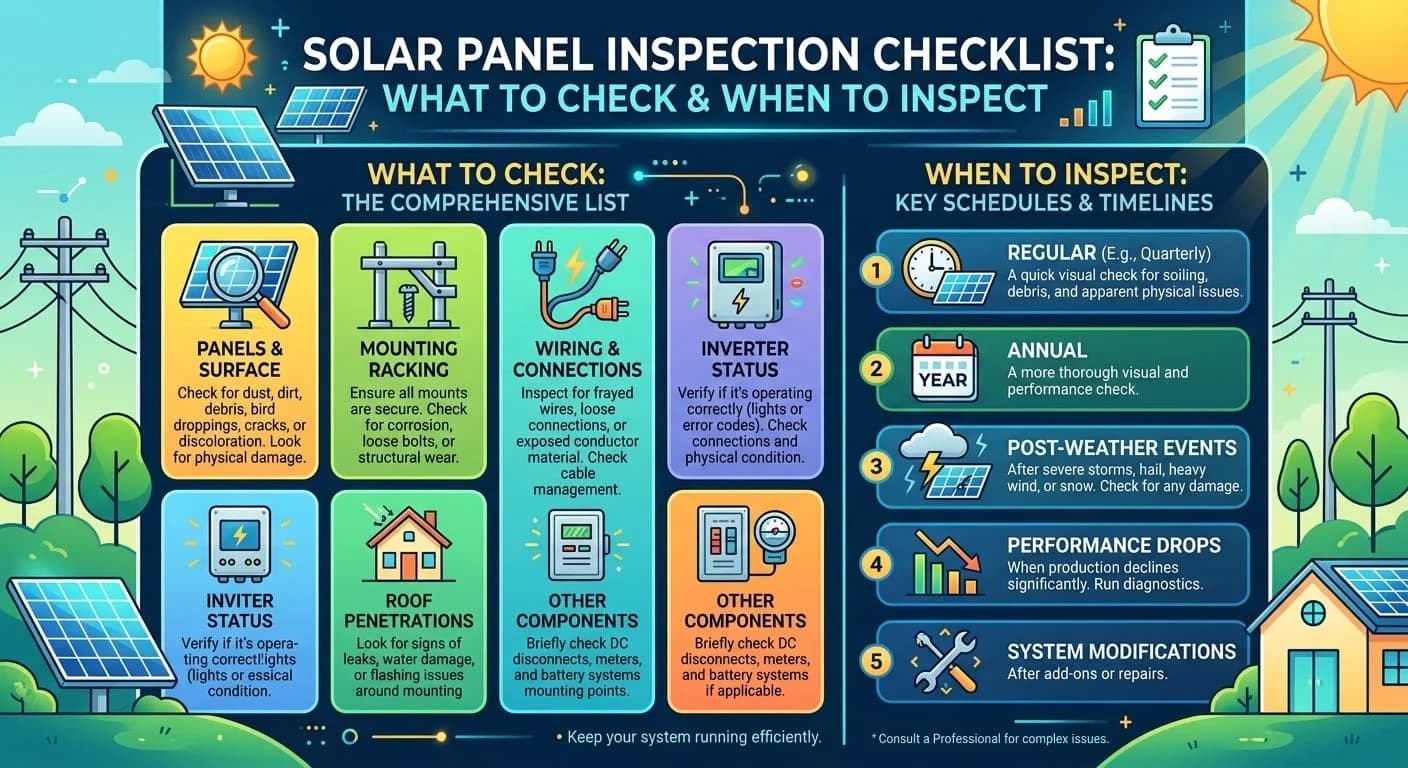
Solar Panel Inspection Checklist: What To Check & When To Inspect
Solar panel inspection guide: Learn what to check, when to inspect (annually + e...
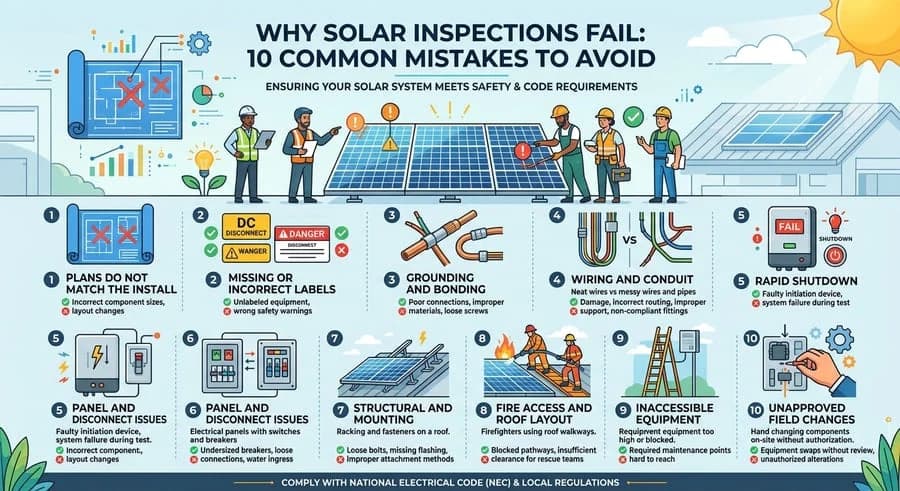
Why Solar Inspections Fail: 10 Common Mistakes to Avoid
Discover the 9 critical reasons solar inspections fail and how to avoid costly m...
Solar Grounding And Bonding: How To Pass Inspection Every Time
Learn how to pass solar grounding and bonding inspections every time. Avoid comm...