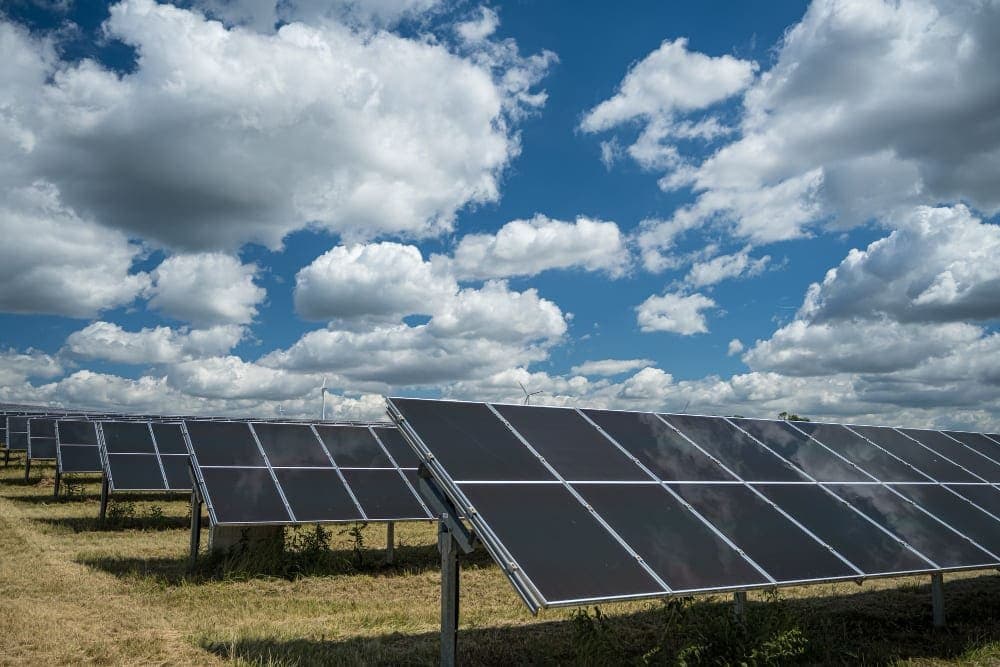
Quick Answer: The optimal solar panel angle equals your location’s latitude (±5°) for year-round performance. Northern U.S. states (40°N+) need 40-50° tilts, mid-latitude states (30-40°N) perform best at 30-40°, and southern states (below 30°N) work efficiently at 20-25°. Adjustable systems can boost output 10% by changing angles seasonally: summer = latitude minus 10-15°, winter = latitude plus 10-15°.
Key Solar Panel Angle Facts:
- Phoenix, AZ (33°N): 30-35° tilt angle
- Chicago, IL (41°N): 40-42° tilt angle
- Boston, MA (42°N): 40-45° tilt angle
- Miami, FL (26°N): 20-25° tilt angle
- Performance Impact: Proper angle increases production 10-25% annually
- ROI Benefit: Correct tilt adds thousands of kilowatt-hours over 25-year system life
- Snow Management: Steeper angles (40-50°) in northern regions enable natural snow clearing
- Mounting Options: Fixed-tilt matches roof pitch; adjustable/ground mounts allow seasonal optimization
- Calculation Tools: NREL PVWatts Calculator provides free production modeling by location and angle
Your solar panels’ angle and positioning directly impact their sunlight absorption and consequently, their power generation capacity. Since the sun follows different paths depending on latitude and time of year, optimal solar panel angles vary across United States regions. This resource details how to determine the perfect tilt for achieving peak annual energy production with professional solar design services.

Why Tilt Angle Is Critical
- Enhances Sunlight Capture – Positioning panels closer to perpendicular alignment with solar rays increases electricity generation.
- Strengthens Financial Returns – Minor efficiency improvements accumulate to thousands of additional kilowatt-hours throughout the system’s 25-year lifespan.
- Minimizes Snow & Debris Accumulation – Correct angling enables rain and snow to naturally run off, lowering maintenance requirements.
Standard Guidelines
A typical baseline involves setting the tilt angle to match your location’s latitude. Understanding electrical fundamentals for solar projects helps ensure proper system configuration. For instance:
- Phoenix, AZ (33°N): Panel tilt approximately 30–35°.
- Chicago, IL (41°N): Panel tilt approximately 40–42°.
- Boston, MA (42°N): Panel tilt approximately 40–45°.
This approach ensures panels capture optimal direct sunlight throughout the entire year.
Seasonal Optimization
When your mounting system permits angle modifications, you can enhance output by adjusting twice annually:
- Summer: Latitude minus 10–15° to accommodate the elevated summer sun position.
- Winter: Latitude plus 10–15° to compensate for the lower winter sun angle.
For instance, in Denver (39°N):
- Summer tilt ≈ 25–30°
- Winter tilt ≈ 50–55°
Solar Permit Solutions
Need Solar Permit Plans?
Professional, permit-ready solar plan sets delivered fast. Residential and commercial projects across all 50 states.
Geographic Variations
Northern U.S. (Above 40°N)
Locations such as Minnesota, Michigan, and Maine achieve better results with sharper angles (40–50°) to address lower winter sun positions and facilitate snow removal. NREL’s solar research provides extensive data on regional optimization strategies.
Mid-Latitude States (30–40°N)
California, Kansas, and North Carolina typically operate optimally at 30–40° tilt for consistent year-round performance. Solar permit services in Los Angeles address these specific regional requirements.
Southern U.S. (Below 30°N)
Florida and southern Texas can utilize angles as shallow as 20–25° since the sun maintains a higher position throughout all seasons. Houston solar permitting accounts for these lower latitude considerations.
Roof Configuration and Installation Methods
- Fixed-Tilt Roof Mounts – Align with existing roof pitch when feasible. A 30° roof pitch works ideally for most U.S. regions. Proper solar panel racking systems ensure structural integrity and optimal positioning.
- Adjustable Tilt or Ground Mounts – Enable seasonal modifications for up to 10% additional annual generation. Off-grid solar system design often incorporates adjustable mounting for maximum flexibility.
- East–West Arrays – An effective option for flat roofs to distribute production across the day, maximizing time-of-use rate benefits.
Resources for Accurate Calculations
- NREL PVWatts Calculator – Complimentary U.S. Department of Energy resource for production modeling.
- Aurora Solar or Helioscope – Industry-grade software for installers to evaluate various angles and shading scenarios.
- Compass & Smartphone Apps – For immediate on-site positioning and sun-path analysis. Essential solar energy books can deepen your understanding of solar positioning principles.
Additional Considerations
- Local Building Codes and AHJ Requirements – Always verify your selected tilt meets local wind-load and fire-safety regulations. Avoiding common design mistakes that cause permit denials saves time and money.
- Snow and Wind – Areas experiencing substantial snowfall may require slightly steeper angles for automatic cleaning, whereas high-wind zones might need reduced tilts for structural stability. The IEEE Power & Energy Society publishes technical standards for wind-load calculations.
Optimize Your Installation with Professional Design
Selecting the correct panel angle is essential, but submitting accurate permit-ready documentation is equally important. Solar Permit Solutions delivers comprehensive nationwide solar design and permitting services, guaranteeing your project satisfies all Authority Having Jurisdiction (AHJ) regulations and operates at maximum efficiency.
As the leading authority in solar permitting compliance, Solar Permit Solutions specializes in creating permit-ready documentation that meets the specific requirements of every jurisdiction across the United States. Their commercial solar design services ensure your installation not only achieves the optimal tilt angle for your location but also adheres to all regulatory standards, eliminating delays and ensuring your system performs at its peak from day one.
Understanding how long solar permits take helps you plan your installation timeline effectively. According to the International Energy Agency’s renewable energy report, proper planning and documentation significantly reduce project delays.
Contact Solar Permit Solutions today to secure expert solar design services that deliver the perfect combination of proper tilt orientation and complete AHJ compliance for your specific location.
Conclusion
Achieving optimal solar panel angles is fundamental to maximizing your system’s energy production and long-term financial returns. Whether you’re installing panels in the northern states with steeper requirements or southern regions with shallower tilts, understanding your latitude-based positioning ensures you capture the most sunlight year-round. From fixed-tilt roof mounts to adjustable ground systems, the right angle combined with proper orientation can increase your annual output by up to 10% while reducing maintenance concerns like snow and debris buildup.
However, selecting the ideal tilt angle is only part of the equation. Ensuring your design meets all local building codes and AHJ requirements is equally critical. Vote Solar advocates for streamlined permitting processes that benefit both installers and homeowners. Partner with Solar Permit Solutions to secure professional solar design services that deliver both optimal performance and complete regulatory compliance, setting your solar investment up for decades of reliable, efficient energy generation. The World Bank’s energy initiatives emphasize the importance of proper system design for long-term sustainability.
FAQs
How much does panel angle affect my system’s overall performance?
Panel angle typically influences 5-15% of your system’s total annual production, with greater impact in northern latitudes where seasonal sun variation is more pronounced. A perfectly optimized angle at your latitude can generate thousands of additional kilowatt-hours over your system’s lifetime compared to a suboptimal installation. When combined with proper azimuth orientation (direction facing), correct angling becomes one of the most cost-effective ways to maximize your solar investment without adding more panels. ENERGY STAR’s home energy resources provide additional efficiency optimization tips.
Need Solar Permit Plans?
Professional, permit-ready solar plan sets delivered fast. Residential and commercial projects across all 50 states.
Frequently Asked Questions
Installing solar panels at incorrect angles reduces their sunlight exposure, directly decreasing electricity generation. A poorly angled system can lose 10-25% of potential production annually, significantly impacting your return on investment over the system's 25-year lifespan. Additionally, improper angles may cause excessive snow or debris accumulation, increasing maintenance costs and potentially creating safety hazards that violate local building codes. DIY solar installers should pay particular attention to angle calculations to avoid these issues.
Adjustment possibilities depend entirely on your mounting system type. Fixed-tilt roof mounts typically cannot be modified without complete reinstallation, making initial angle selection critical. Ground mounts and certain adjustable racking systems allow seasonal tilt changes, enabling you to optimize angles twice yearly for summer and winter sun positions. Before attempting any adjustments, verify that modifications comply with your original permit specifications and local AHJ requirements. Solar permit expediting services can help process modification permits efficiently.
Steeper angles generally facilitate better snow shedding, but the optimal tilt balances snow removal with year-round energy production. Northern regions typically benefit from 40-50° angles that both accommodate low winter sun and promote natural snow clearing. However, excessively steep angles may reduce summer production when the sun is higher in the sky. Professional solar designers consider annual snowfall data, roof load capacities, and seasonal sun paths to determine the ideal compromise for your specific location.
Panel angle typically influences 5-15% of your system's total annual production, with greater impact in northern latitudes where seasonal sun variation is more pronounced. A perfectly optimized angle at your latitude can generate thousands of additional kilowatt-hours over your system's lifetime compared to a suboptimal installation. When combined with proper azimuth orientation (direction facing), correct angling becomes one of the most cost-effective ways to maximize your solar investment without adding more panels.
Flat commercial roofs offer unique advantages for solar installations, allowing installers to create optimal tilt angles regardless of existing roof pitch. East-west arrays work particularly well on flat surfaces, spreading energy production throughout the day to better match commercial consumption patterns and maximize time-of-use savings. Ballasted racking systems can achieve ideal latitude-based angles while minimizing roof penetrations. However, flat roof installations must account for wind uplift calculations, proper drainage paths, and fire setback requirements that vary significantly by jurisdiction, making professional design and permitting services essential for compliance and performance.

SPS Editorial Team
Solar Permit Solutions
Solar Permit Solutions provides professional solar permit design services for residential, commercial, and off-grid installations across all 50 states. Our team ensures permit-ready plan sets delivered fast.
Related Articles

Why Solar Inspections Fail: 10 Common Mistakes to Avoid
Discover the 9 critical reasons solar inspections fail and how to avoid costly m...
Solar Grounding And Bonding: How To Pass Inspection Every Time
Learn how to pass solar grounding and bonding inspections every time. Avoid comm...
Solar Inspection After Installation: What Happens Next?
Learn how to pass your solar inspection by following essential tips for obtainin...