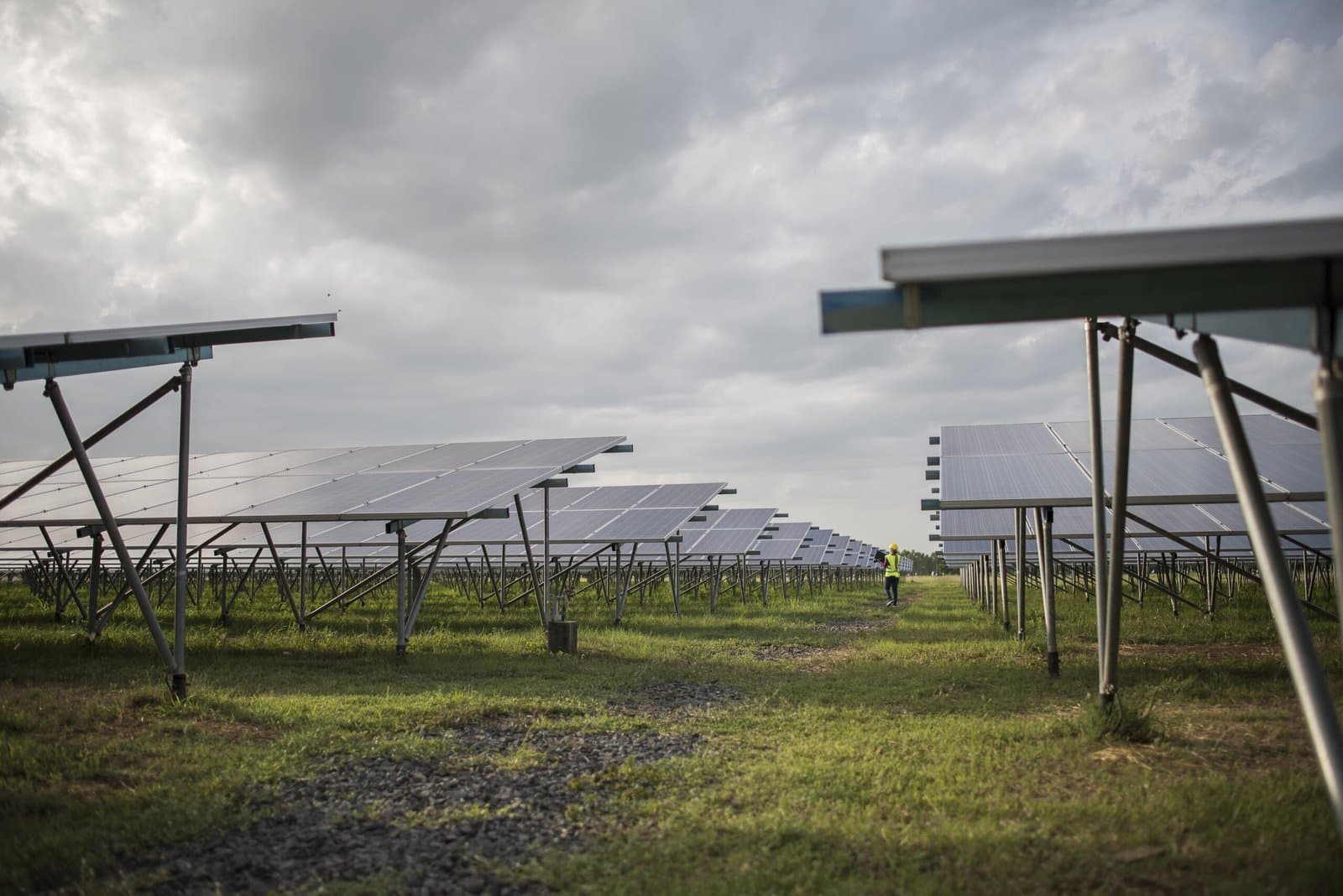
Effective grounding in photovoltaic systems creates a low-impedance reference to ground at the AC side of inverters, preventing temporary overvoltages that can damage equipment and neighboring circuits during ground fault events. When a line-to-ground fault occurs, substation equipment isolates the faulted section, removing the system ground reference. Without proper grounding, PV inverters continuing to power loads during the brief anti-islanding detection period (typically under one second) can produce damaging overvoltages exceeding 1.39 per unit on unfaulted lines.
Utility companies require effective grounding for commercial, industrial, and utility-scale PV distributed energy resources at the point of common coupling to protect distribution infrastructure. This requirement stems from accountability concerns, as utilities may be held liable for damages caused by temporary overvoltage events regardless of their origin. Effective grounding acts as essential insurance, limiting overvoltages to safe levels while controlling fault currents.
The engineering challenge lies in navigating requirements from over 3,000 utility companies, each with distinct grounding policies. Some utilities adopt IEEE C62.92.6-2017 standards for current-regulated sources (inverters), while others apply conventional generator-based calculations or proprietary ratios. PV inverters function as current-limited power sources with relay protections, differing fundamentally from spinning generators that produce high short-circuit currents through mechanical inertia. This distinction requires specialized grounding approaches using equipment like zig-zag transformers, grounded-wye delta transformers, or grounding reactors, depending on system design and utility specifications.
Starting effective grounding research during initial project development prevents costly equipment revisions, commissioning delays, and potential costs reaching tens of thousands of dollars. Early planning ensures compatibility between utility requirements and equipment selection, supporting both regulatory compliance and cost-effective system design.
Why Grounding Matters in Solar Installations
Utility requirements for effective grounding serve a vital role in mitigating potential temporary overvoltages that may arise from PV inverters. When a line-to-ground fault occurs in a three-phase grid distribution system, substation equipment detects it and opens the related circuit. This action isolates a portion of the grid from the faulted section and appears as loss of a line at PV DER.
How Solar Arrays Respond to Electrical Faults
To comply with standards established by the Institute of Electrical and Electronics Engineers (IEEE), specifically IEEE 1547, PV inverters connected to the grid will deenergize the distribution feeders immediately during certain abnormal grid operation scenarios. These scenarios include grid line-to-ground faults and loss of a line. This function operates as anti-islanding and typically responds within a second of the event. As a protective feature, anti-islanding response delivers high effectiveness. However, for large-scale three-phase PV DER, anti-islanding response times may not provide adequate speed.
Protecting Against Temporary Overvoltage Events
When substation equipment isolates a faulted line in the grid, it simultaneously isolates the system ground reference for that grid section. During the brief moment required for the PV DER to detect its islanded condition and disconnect, it continues to power loads. Without appropriate effective grounding, it may also produce a potentially damaging temporary overvoltage (TOV) on the unfaulted lines.
Liability Concerns for Power Providers
During TOV events, all neighboring circuits and equipment face risk. A utility company may be held accountable for damages, regardless of what triggered the TOV. Therefore, utility companies may require effective grounding that is compatible with their own grounding infrastructure as an integral part of PV system design. These effective grounding requirements serve as a type of insurance.

Meeting Local Utility Grounding Standards
Each utility company, as the authority having jurisdiction (AHJ), defines what is required and approved by its adopted effective grounding policies and technical parameters. With more than 3,000 utility companies participating in an evolving PV DER industry, numerous possible effective grounding scheme requirements exist. These requirements differ in many ways. However, the discussion centers primarily on how each utility company defines effective grounding requirements in relation to its system design, and how that definition has evolved in recent years to maintain pace with increasing amounts of PV injection.
Traditional Generator-Based Calculations
The IEEE, a leader in technical standards adopted by utility companies, has historically defined grounding requirements with ratio calculations as indicators. These calculations use variables easily applicable to spinning generators. Generators are constant AC voltage sources with moving parts. Due to mechanical inertia, generators are a source of high short circuit fault currents. Unlike generators, PV inverters are current limited power sources protected by built-in relay functions that can disconnect within a few cycles of detecting abnormal grid operation.
Some variables in conventional IEEE effective grounding calculations are not defined for PV inverters. This gap forces equipment manufacturers, engineers, and utilities to identify these variables in the absence of defined standards. Moreover, during grid ground fault scenarios, PV inverter behavior differs significantly from that of conventional generators.
Updated Standards for Inverter-Based Systems
In 2017, IEEE approved a sixth part to IEEE C62.92 Guide for Application of Neutral Grounding in Electrical Utility Systems: Part VI: Systems Supplied by Current-Regulated Sources. Current-regulated sources are inverters per IEEE definition, and this standard takes into consideration the differences between conventional generators and PV inverters.
Varying Approaches Among Power Companies
Some utilities will have adopted the newer IEEE 62.92.6 Guide to define effective grounding. This approach represents a highly contextualized model, albeit complex. Other utilities still use conventional generator-based ratios which may not be the most appropriate. Larger utilities may even have proprietary ratio calculations based on their specific load profiles and IEEE requirements, and may spell them out clearly for developers in their jurisdiction.
Planning Grounding Solutions From Day One
Assimilating effective grounding engineering into project development serves every developer’s best interest. Underestimating or misunderstanding AHJ requirements for effective grounding may be just as costly as ignoring them altogether. Project stakeholders must consider utility policies, capacity thresholds, appropriate hardware selection, and protection schemes.
Starting Research Early in Development
Utility requirements will determine the appropriate effective grounding configuration. Since no widely accepted industry standards exist, research must begin at the onset of project development to provide enough time for engineering. Some utilities can offer more guidance than others. Gathering data promptly provides more time for coordination and equipment specification.
Choosing the Right Hardware Components
Effective grounding can be accomplished through various hardware options defined by utility requirements, equipment lead times, and equipment preferences. If research was timely, effective grounding may even support equipment selection for the most cost-effective solutions. For example, PV systems designed with string inverters may use a zig-zag transformer or a grounded-wye delta transformer, while central inverters with integrated transformers may require a grounding reactor.
Avoiding Expensive Design Revisions
Ensuring initially specified equipment is close to final approved equipment avoids costly iterations. Change requirements in transformers may add up to tens of thousands of dollars, not to mention potential delays in commissioning schedules and unnecessary complications. If AHJ requirements are not clear, having an experienced team of engineers to navigate the process becomes especially valuable.
Optimizing commercial or utility-scale PV power systems requires careful attention to effective grounding requirements. Understanding utility standards, selecting appropriate equipment, and integrating these considerations early in project planning ensures cost-effective and compliant system design.
Solar Permit Solutions
Affordable Solar Permit Plans
Don't let permit costs slow your project. Professional plan sets at competitive prices — all 50 states, fast turnaround.
Conclusion
Effective grounding stands as a critical component in utility-scale solar photovoltaic system design. The complexity of utility requirements across thousands of jurisdictions demands early planning and thorough research. Project developers who prioritize grounding considerations from the initial planning phase position themselves for smoother interconnection processes and avoid costly equipment revisions.
The evolution from generator-based standards to current-regulated source specifications reflects the growing sophistication of PV integration requirements. Understanding whether local utilities follow IEEE 62.92.6 guidelines or maintain proprietary calculation methods directly impacts equipment selection and system configuration. This knowledge enables informed decisions about transformers, reactors, and protection schemes.
Success in meeting effective grounding requirements hinges on three key factors: early engagement with utility standards, strategic equipment selection aligned with those standards, and collaboration with experienced engineering teams. These elements combine to deliver systems that protect grid infrastructure, minimize temporary overvoltage risks, and satisfy utility company accountability concerns. The investment in proper grounding engineering pays dividends through reduced delays, lower revision costs, and reliable long-term system operation.
FAQs
Affordable Solar Permit Plans
Don't let permit costs slow your project. Professional plan sets at competitive prices — all 50 states, fast turnaround.
Frequently Asked Questions
Effective grounding establishes a low-impedance reference to ground at the AC side of the inverter or inverter group. This configuration aligns with distribution network requirements and existing utility grounding schemes. It serves as a critical safety mechanism during ground fault events by preventing damaging temporary overvoltages on unfaulted lines.
Utility companies require effective grounding to protect neighboring circuits and equipment from temporary overvoltage events during ground faults. When a line-to-ground fault occurs, substation equipment isolates the faulted section, temporarily removing the system ground reference. Without proper grounding, PV systems continuing to power loads during anti-islanding detection can create dangerous overvoltages. Utilities may be held accountable for any resulting damages, making effective grounding a form of insurance.
PV inverters function as current-limited power sources with built-in relay protections that disconnect within cycles of detecting abnormal grid operation. Generators, conversely, are constant AC voltage sources with mechanical inertia that produce high short circuit fault currents. Traditional IEEE effective grounding calculations use variables applicable to spinning generators but not clearly defined for inverters. This distinction led to the development of IEEE C62.92.6, which specifically addresses current-regulated sources like inverters.
Effective grounding planning should begin at the onset of project development. Since no widely accepted industry standards exist and more than 3,000 utility companies maintain varying requirements, early research provides adequate time for engineering and coordination. Prompt data gathering supports better equipment specification and helps avoid costly iterations during the approval process. Starting early also allows time to consult with experienced engineers if permitting requirements prove unclear.
Equipment options vary based on utility requirements, system design, and inverter type. String inverter systems typically use zig-zag transformers or grounded-wye delta transformers. Central inverters with integrated transformers often require grounding reactors. The specific choice depends on utility specifications, equipment lead times, and cost considerations. Timely research into utility requirements enables selection of the most cost-effective solution that meets all technical parameters and approval criteria.

SPS Editorial Team
Solar Permit Solutions
Solar Permit Solutions provides professional solar permit design services for residential, commercial, and off-grid installations across all 50 states. Our team ensures permit-ready plan sets delivered fast.
Related Articles
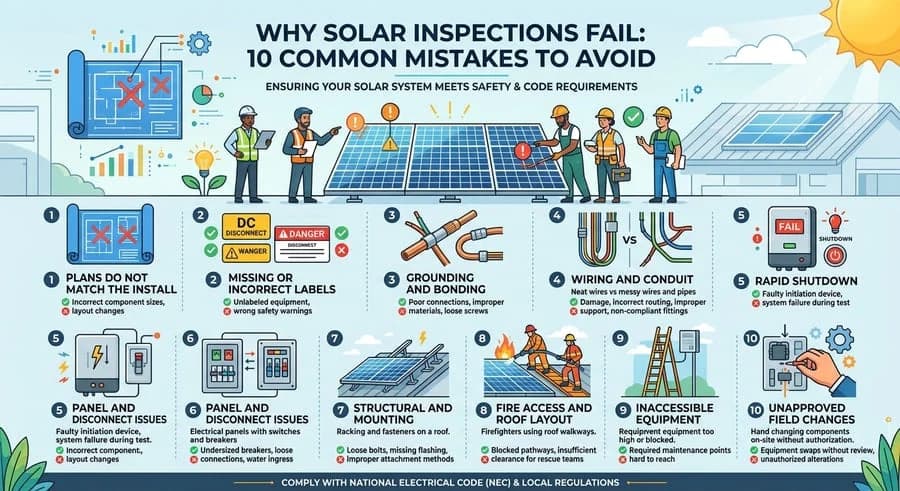
Why Solar Inspections Fail: 10 Common Mistakes to Avoid
Discover the 9 critical reasons solar inspections fail and how to avoid costly m...
Solar Grounding And Bonding: How To Pass Inspection Every Time
Learn how to pass solar grounding and bonding inspections every time. Avoid comm...
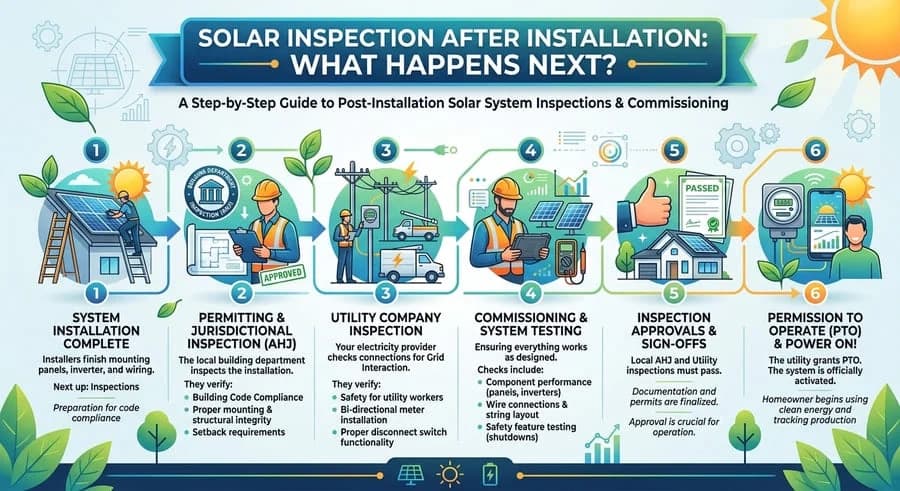
Solar Inspection After Installation: What Happens Next?
Learn how to pass your solar inspection by following essential tips for obtainin...