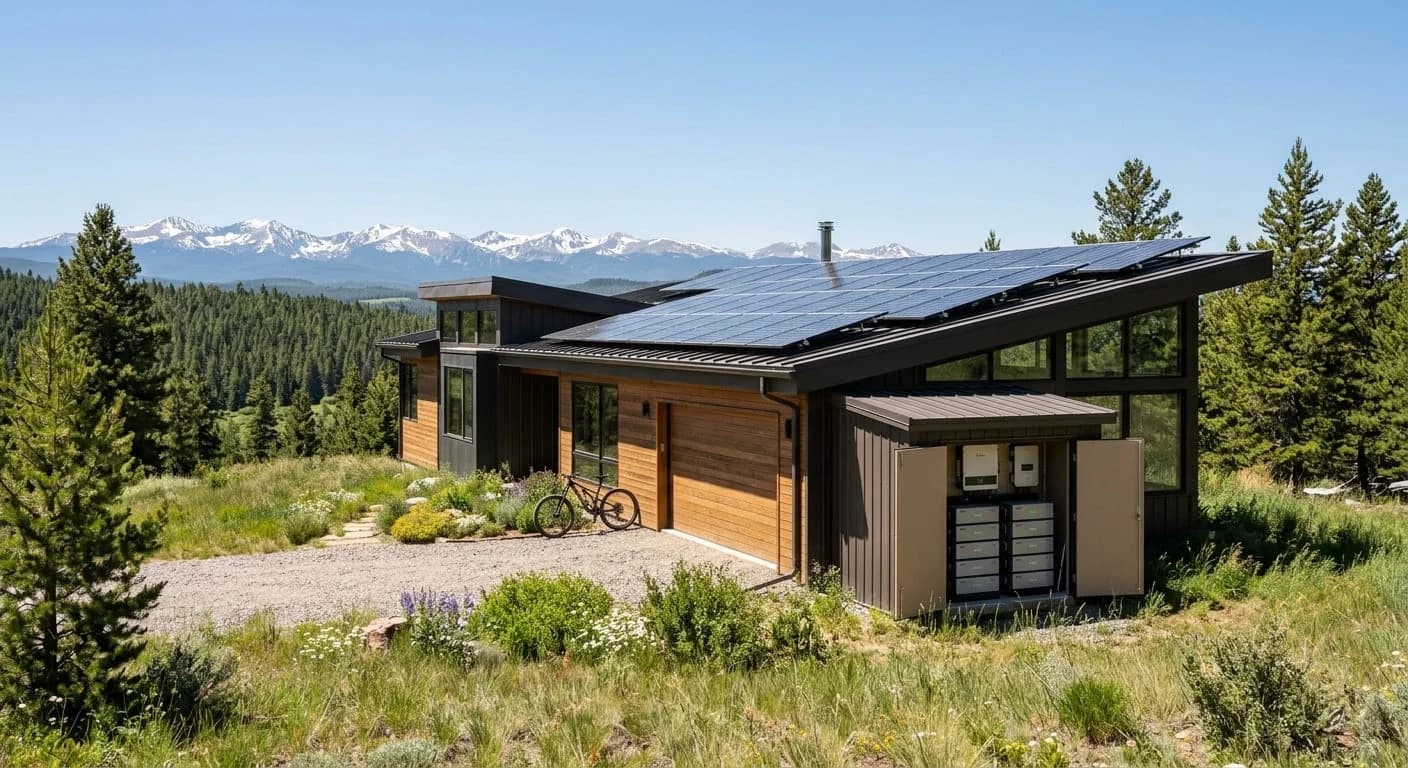
Solar battery placement directly determines system safety, code compliance, and long-term performance. Incorrect positioning risks fire hazards, voided warranties, and regulatory violations. Garages rank as the safest indoor location, offering fire-resistant construction, concrete floors, and natural separation from living spaces. Outdoor installations require IP67-rated weatherproofing and minimum 3-foot clearance from windows, doors, and vents per NFPA 855 standards. Never install batteries in bedrooms, closets, hallways, or escape routes due to fire and gas accumulation risks.
Location serves as the primary safety measure homeowners control in battery installations. Proper positioning prevents thermal runaway events, manages flammable gas dispersal, and maintains optimal operating temperatures between 32°F and 113°F. National Electrical Code (NEC) and NFPA 855 regulations mandate specific placement requirements to protect against fire hazards, electrical faults, and toxic gas release. Professional installation remains essential for code compliance, warranty validation, and safe high-voltage DC electrical work.
Understanding Battery Fire Hazards And Thermal Risks
Understanding safe location selection requires knowledge of primary risks. Battery fires develop as chain reactions with multiple distinct dangers rather than isolated events. Recognizing these progression stages demonstrates why proper placement and airflow remain essential.
The primary concern involves thermal runaway, an uncontrolled overheating process where battery cells generate more heat than they release. Heat spreads to adjacent cells, potentially causing fires or explosions. During thermal runaway, batteries release flammable gases. These gases accumulate in confined spaces lacking airflow, creating explosive atmospheres. Another danger involves stranded energy, where damaged batteries retain charges after fires. This stored energy can reignite fires hours or days later.
Optimal Indoor Installation Zones For Solar Battery Systems
Safe indoor placement follows clear rules distinguishing allowed from prohibited installations. The objective keeps systems away from living areas while providing stable environments.
Garage Installations: The Premier Indoor Choice
Garages rank as the most recommended indoor locations for solar battery systems. Standard garage designs create nearly ideal safety enclosures for battery installations. Most garages satisfy fire and electrical code requirements without modifications.
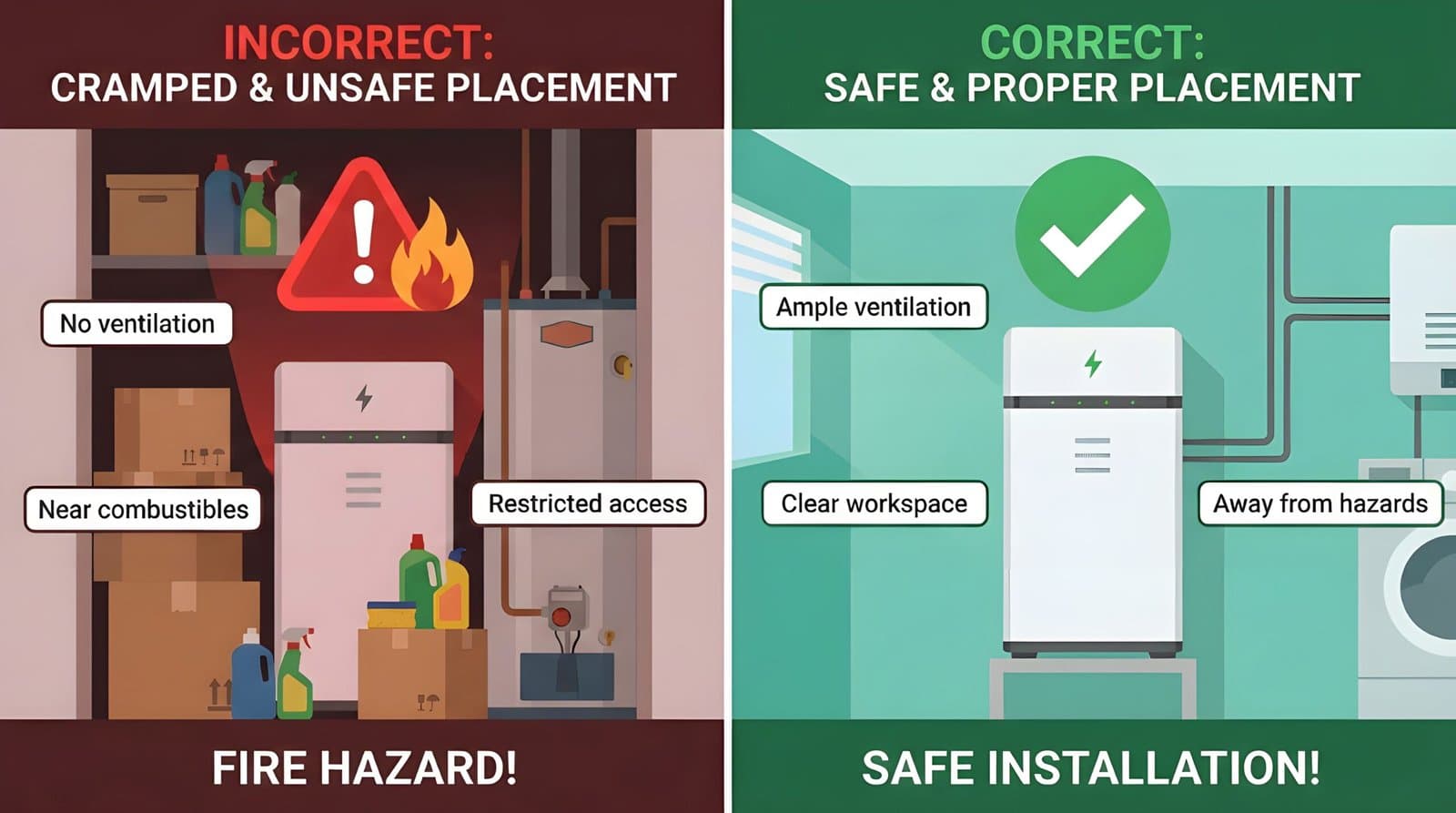
Typical garages feature concrete floors and construction materials offering fire resistance. This aligns with safety standards requiring non-combustible surfaces. Garages function as non-living spaces, separating battery systems from bedrooms and common areas. Garages typically provide less sealing than main houses, which can aid natural airflow for battery cooling. However, professional assessment remains essential to verify adequate ventilation for specific battery models and garage conditions. Installing protective bollards adds extra safety when batteries sit in vehicle pathways.
Alternative Indoor Installation Areas
Alternative areas including utility rooms and basements can work under specific conditions. These locations require complete dryness, adequate airflow, and freedom from extreme temperatures or moisture.
Safety in alternative spots depends on conditions. Damp basements pose risks because moisture damages electrical components. Utility rooms become unsafe when batteries position near furnaces or water heaters, as appliance heat contributes to battery overheating. Professional on-site assessments become necessary. Trained installers identify specific environmental issues homeowners might overlook.
Prohibited Battery Installation Zones For Maximum Safety
Clear lists define indoor locations where batteries must never install. These restrictions respond directly to specific risks involving gases, fires, and obstructions.
Living Spaces: Never install batteries in bedrooms, kitchens, living rooms, or studies. This restriction prevents fire and smoke from spreading into spaces where people live and sleep.
Small Spaces: Avoid closets, wall cavities, and ceiling spaces. These areas lack airflow, allowing flammable gases to build to dangerous concentrations.
Escape Routes: Hallways, stairways, and other escape routes must remain clear. Batteries in these locations could obstruct escape paths during emergencies.

Solar Permit Solutions
Off-Grid Solar System Design
Expert design services for off-grid and battery backup systems. Complete permit packages delivered fast.
Critical Guidelines For Exterior Battery System Placement
Outdoor installations offer solutions when indoor space limits exist, but require stricter guidelines. Systems need weather protection while homes need protection from systems.
Weatherproofing Requirements And Mounting Surface Selection
Outdoor equipment must demonstrate durability. Product IP Ratings indicate how well units seal against dust and water. IP67 ratings suit outdoor batteries well.
Wall materials where batteries mount matter significantly. Non-combustible walls like brick or concrete prove best. Combustible walls like wood siding may require extra fire-resistant boards between batteries and houses.
Decoding IP Ratings For Battery Protection
Maintaining Proper Distance From Building Openings
Specific clearances create safety zones around homes. These zones ensure worst-case scenarios direct dangerous gases into open air instead of living spaces.
Batteries must not install too close to windows, doors, or air vents. Common standards require at least 3 feet spacing from these openings. This distance prevents smoke or flammable gases from problems being drawn into houses. Windows and doors provide direct paths into home air systems. Placing batteries directly under bedroom windows creates serious hazards. Clearance rules establish physical separation, allowing dangerous gases to disperse and become harmless.
Protecting Systems From Environmental Temperature Stress
Battery location represents both safety and financial decisions. Batteries constitute large investments, with health and lifespan directly affected by environment. Extreme temperatures permanently damage batteries and shorten useful life.
High temperatures, often exceeding 113°F (45°C), accelerate chemical reactions inside batteries, causing faster wear. Cold temperatures, especially below 32°F (0°C), reduce battery power delivery capacity. Optimal outdoor locations provide shade and protection. North-facing walls or wide roof overhangs often prove ideal. Constant sun exposure effectively shortens battery lifespan. Proper placement protects investment value through simple actions.
Why Certified Installers Are Essential For Battery Systems
Homeowners may consider self-installation approaches. Professional help remains clearly necessary due to serious installation risks. Professional approaches handle both technical dangers and process complexities.
Fire safety drives this requirement. Solar battery installations use high-voltage DC electricity. This power type presents dangers, creating strong electrical arcs that pose significant fire risks and shock hazards. Beyond electrical dangers, work must comply with numerous national and local codes including the NEC requirements and NFPA 855. Certified professionals understand these regulations. Self-installation can void manufacturer product warranties.
Some homeowners worry about extended installation timelines or contractor selection difficulties. Complete solutions address these concerns. Advanced battery systems include built-in safety features such as fire prevention components and explosion-proof valves, along with high IP67 ratings for dust resistance and water submersion capability.
Reputable battery manufacturers typically maintain networks of pre-vetted, certified installers. These professionals receive specialized training for safe, code-compliant work completed efficiently. Properly managed installations often finish within days rather than weeks. This combination of quality equipment and qualified installation services ensures confidence throughout the process.

Comprehensive Safety Verification Checklist
Selecting proper battery spots requires teamwork between homeowners and installers. This checklist summarizes key considerations. Use it to facilitate informed discussions and verify installations follow best practices. This tool builds confidence in system safety.
Cool & Dry Place: Does the location have protection from direct sunlight, rain, and flooding?
Good Airflow: Does adequate space surround the unit for free air movement?
Safe Spaces: Does the spot distance from living rooms, windows, doors, and escape routes?
Non-Burning Surface: Does the unit mount on fire-resistant walls or concrete pads?
Easy Access For Service: Can the unit be reached easily for maintenance without obstructions?
Installed By Certified Professional: Does the installer have proper licensing, insurance, and certification for this work type?
Conclusion
Strategic battery placement forms the cornerstone of safe solar energy storage systems. Location decisions directly impact fire risk, system longevity, and overall home safety. Proper positioning protects families while maximizing battery performance and investment value.
The guidelines outlined here address critical safety factors from thermal management to code compliance. Garages offer ideal indoor environments, while outdoor installations require weatherproofing and proper clearances from building openings. Temperature control, ventilation, and professional installation remain non-negotiable elements of safe battery systems.
Homeowners share responsibility with certified installers to ensure compliant, safe installations. This partnership approach combines professional expertise with informed decision-making. The result delivers reliable backup power without compromising household safety. Contact certified professionals to evaluate specific property conditions and develop installation plans that meet all safety standards while serving energy storage needs.