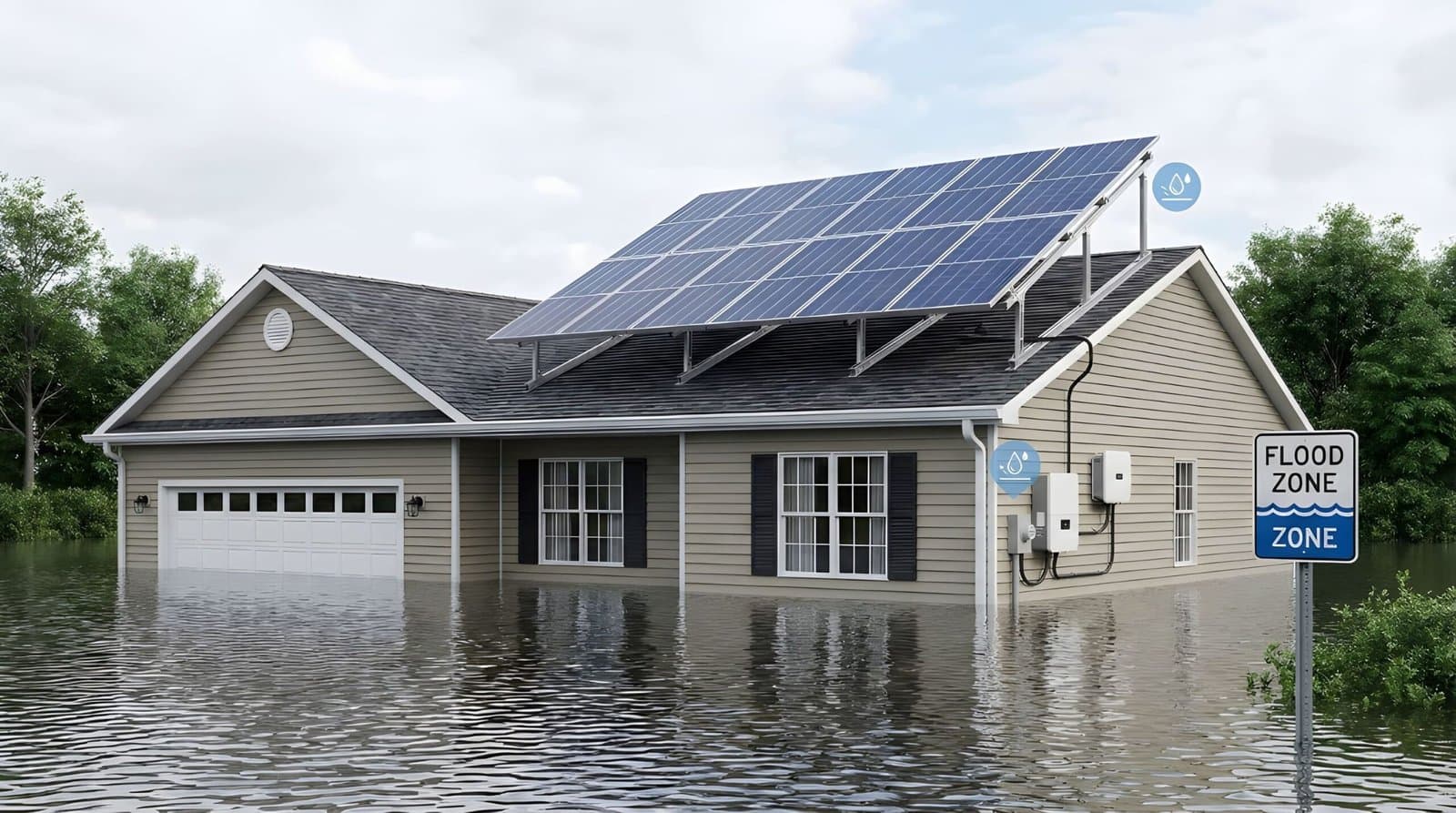
Living in a flood zone doesn’t mean giving up on solar energy benefits. With proper planning that accounts for FEMA regulations and local floodplain management, property owners in high-risk areas can safely install resilient solar systems.
Solar panels can be installed in FEMA-designated flood zones, including high-risk Zone A and Zone V areas, with proper compliance measures. Properties in flood zones must meet Base Flood Elevation (BFE) requirements, obtain specialized permits, and follow National Flood Insurance Program (NFIP) standards for photovoltaic installations.
Rooftop solar systems provide natural elevation advantages in flood zones, while ground-mounted arrays require elevated mounting structures typically 3-8 feet above grade level. All electrical components including inverters and breaker boxes must be positioned above the 100-year flood level to meet local building codes and ensure system safety during flooding events.
Rooftop Solar Installations In Designated Flood Zones
Properties located in FEMA-designated flood zones benefit significantly from rooftop solar installations, which elevate photovoltaic equipment above typical flood levels. Flood zone classifications ranging from high-risk Zone A and Zone V to moderate-risk Zone X determine specific installation requirements and building code compliance measures.
Rooftop solar systems in flood zones continue generating power during flooding events, provided electrical infrastructure remains above water levels.
Solar energy systems installed in flood zones require strategic component placement. Critical equipment like inverters and breaker boxes must meet local elevation requirements based on Base Flood Elevation (BFE) standards.
Properties in Special Flood Hazard Areas (SFHA) often require inverters and electrical connections mounted above the 100-year flood level. When grid power fails during flood events, rooftop panels paired with battery storage and islanding-capable inverters maintain electricity production.
Extreme flooding events in high-risk flood zones, particularly coastal Zone V areas subject to wave action, can potentially damage rooftop solar installations if water reaches roof level. However, quality solar panels feature aluminum frames, tempered glass, and vacuum-sealed construction that resist water intrusion.
Post-flood electrical system inspections remain essential, as waterlogged wiring and inverter systems create safety hazards even when panels remain intact. Licensed electricians must evaluate all electrical components in flood zones following any water exposure to ensure system safety and code compliance.

Ground-Mounted Solar Systems In High-Risk Flood Zones
Ground-mounted solar arrays in designated flood zones require additional engineering requirements and compliance measures compared to standard installations. Properties in Zone A, Zone AE, or coastal Zone V face stricter regulations regarding ground-level solar equipment.
Installing photovoltaic systems in these high-risk flood zones demands elevated mounting structures that position panels above Base Flood Elevation requirements established by local building departments and FEMA flood maps.
Solar installation professionals designing systems for flood zones incorporate specialized designs including:
- Flood-resistant anchoring systems
- Reinforced racking structures
- Elevated equipment platforms
Many installations in Special Flood Hazard Areas utilize pole-mounted or elevated ground-mount configurations that raise panels 3-8 feet above grade level.
Inverters, combiner boxes, and monitoring equipment require weatherproof enclosures rated for flood zone applications, with mounting heights exceeding local BFE standards.
Building permits for ground-mounted solar in flood zones typically require engineered drawings demonstrating compliance with floodplain management regulations. Installation companies serving flood-prone areas design systems incorporating stormwater management plans, proper drainage, and retention strategies that prevent erosion and maintain system stability during flood events.
Properties in coastal high-hazard areas (Zone V) face additional wind load requirements and foundation specifications to withstand both flooding and hurricane-force conditions.

Solar Panel Durability And Insurance Considerations In Flood Zones
Solar panels installed in flood zones maintain the same 25+ year design specifications as systems in low-risk areas, with waterproof construction that withstands severe weather conditions. Tempered glass, sealed junction boxes, and corrosion-resistant materials ensure panels resist water damage during flood events.
Both rooftop and properly elevated ground-mounted systems demonstrate durability through extreme weather conditions common in designated flood zones.
Property owners in flood zones should verify solar installations comply with National Flood Insurance Program (NFIP) requirements and local floodplain ordinances. Flood insurance policies may require documentation proving solar equipment meets elevation standards and building code specifications.
NFIP building property coverage typically includes solar energy equipment, provided the installation meets NFIP elevation and code standards. Property owners must verify specific coverage limits and provide compliance documentation to their insurer.
Solar systems in flood zones continue generating electricity during overcast conditions and storms that precede flooding events. While sunny weather maximizes production efficiency, panels capture infrared, ultraviolet, and visible light through cloud cover.
This consistent energy production proves particularly valuable in flood-prone regions where grid outages frequently occur during severe weather. Properties combining solar with battery storage in flood zones achieve energy resilience that maintains power during both flooding events and extended grid failures common in high-risk areas.
Solar Permit Solutions
Need Solar Permit Plans?
Professional, permit-ready solar plan sets delivered fast. Residential and commercial projects across all 50 states.
Conclusion
Installing solar panels in designated flood zones requires careful planning, proper engineering, and compliance with FEMA regulations and local building codes. Property owners in high-risk flood areas can successfully implement photovoltaic systems through strategic component placement, elevated mounting solutions, and adherence to Base Flood Elevation standards.
Rooftop installations offer natural protection above typical flood levels, while ground-mounted systems in flood zones demand specialized anchoring and elevation strategies.
Working with experienced solar installation professionals familiar with flood zone requirements ensures systems meet National Flood Insurance Program standards and local floodplain ordinances. The combination of durable, waterproof solar equipment and proper installation techniques allows properties in flood-prone regions to access renewable energy while maintaining safety and code compliance.
Solar systems paired with battery storage provide critical energy resilience for flood zone properties, delivering reliable power during severe weather events and grid outages that commonly impact high-risk areas.
Ready to assess your flood zone solar project? Contact our team of specialists for a compliance review and custom design consultation.
FAQs
Rooftop systems typically face fewer restrictions than ground-mounted installations. Working with installers experienced in flood zone projects ensures proper permitting, elevation standards, and NFIP compliance for solar systems in designated flood areas.
Rooftop installations naturally exceed flood elevation requirements, though electrical components like inverters must meet local height standards. Building departments provide specific BFE requirements based on FEMA flood maps for individual properties.
Solar installations meeting proper elevation standards and building code specifications may qualify for coverage under flood insurance policies. Property owners should verify coverage details with insurance providers and maintain documentation proving solar system compliance with flood zone regulations.
Coastal high-hazard areas (Zone V) require additional engineering for wind load calculations and foundation designs. Licensed solar installers familiar with flood zone requirements handle permitting processes, coordinate with local building departments, and ensure installations meet all regulatory standards for high-risk flood areas.
Systems paired with battery storage and islanding-capable inverters produce power even when grid electricity fails during flood events. However, any electrical components exposed to floodwaters require professional inspection before system reactivation.
Post-flood electrical evaluations by licensed electricians ensure safe operation and identify potential water damage to wiring, inverters, or connection points in flood-affected systems.
Need Solar Permit Plans?
Professional, permit-ready solar plan sets delivered fast. Residential and commercial projects across all 50 states.
Frequently Asked Questions
Yes, properties in all FEMA flood zones—including high-risk Zone A and Zone V—can install solar panels. Installation requires compliance with local building codes, Base Flood Elevation requirements, and floodplain management regulations. Rooftop systems typically face fewer restrictions than ground-mounted installations. Working with installers experienced in flood zone projects ensures proper permitting, elevation standards, and NFIP compliance for solar systems in designated flood areas.
Solar equipment elevation requirements depend on specific flood zone classifications and local Base Flood Elevation (BFE) standards. Ground-mounted systems in Special Flood Hazard Areas typically require panels and inverters mounted above the 100-year flood level, often 3-8 feet above grade. Rooftop installations naturally exceed flood elevation requirements, though electrical components like inverters must meet local height standards. Building departments provide specific BFE requirements based on FEMA flood maps for individual properties.
Flood insurance coverage for solar panels varies based on policy terms and installation compliance with NFIP requirements. Standard homeowners insurance typically excludes flood damage, making separate flood insurance essential for properties in designated flood zones. Solar installations meeting proper elevation standards and building code specifications may qualify for coverage under flood insurance policies. Property owners should verify coverage details with insurance providers and maintain documentation proving solar system compliance with flood zone regulations.
Solar installations in designated flood zones require building permits demonstrating compliance with floodplain management regulations. Ground-mounted systems typically need engineered drawings showing proper elevation, anchoring specifications, and BFE compliance. Coastal high-hazard areas (Zone V) require additional engineering for wind load calculations and foundation designs. Licensed solar installers familiar with flood zone requirements handle permitting processes, coordinate with local building departments, and ensure installations meet all regulatory standards for high-risk flood areas.
Solar panels continue generating electricity during flooding events provided the panels and essential electrical components remain above water levels. Rooftop installations typically maintain operation during floods that don't reach roof height. Systems paired with battery storage and islanding-capable inverters produce power even when grid electricity fails during flood events. However, any electrical components exposed to floodwaters require professional inspection before system reactivation. Post-flood electrical evaluations by licensed electricians ensure safe operation and identify potential water damage to wiring, inverters, or connection points in flood-affected systems.

SPS Editorial Team
Solar Permit Solutions
Solar Permit Solutions provides professional solar permit design services for residential, commercial, and off-grid installations across all 50 states. Our team ensures permit-ready plan sets delivered fast.
Related Articles
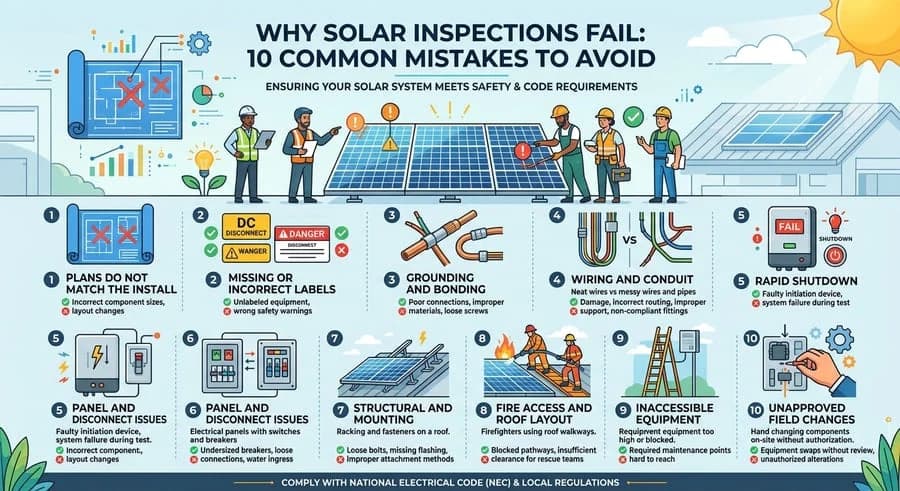
Why Solar Inspections Fail: 10 Common Mistakes to Avoid
Discover the 9 critical reasons solar inspections fail and how to avoid costly m...
Solar Grounding And Bonding: How To Pass Inspection Every Time
Learn how to pass solar grounding and bonding inspections every time. Avoid comm...
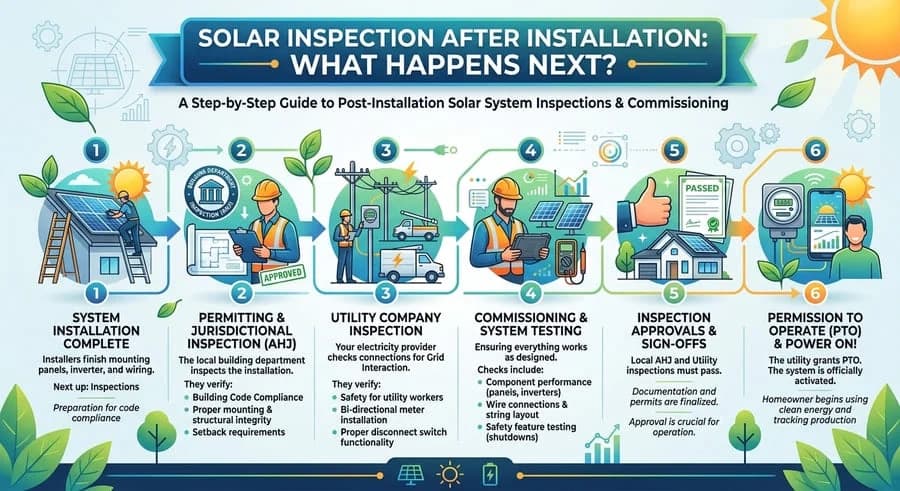
Solar Inspection After Installation: What Happens Next?
Learn how to pass your solar inspection by following essential tips for obtainin...