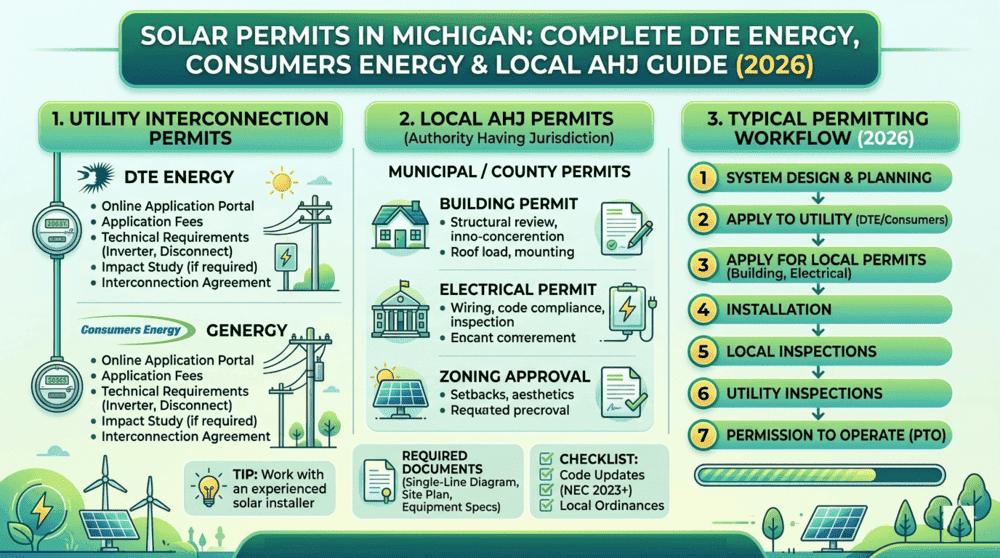
Michigan is adding solar faster than most people expect. With residential electricity rates from DTE Energy and Consumers Energy reaching 17 to 20 cents per kilowatt-hour in 2026, homeowners across Detroit, Grand Rapids, and Lansing are moving toward rooftop solar to lock in predictable energy costs. Yet the most common reason Michigan solar projects get delayed has nothing to do with the panels, the inverter, or the weather. It is an incomplete permit package.
Getting solar installed in Michigan means navigating two parallel approval tracks at the same time: a local permit track with your city or township building department and a utility interconnection track with either DTE Energy or Consumers Energy. Miss a document or skip a step on either track, and your system will sit idle until the paperwork catches up.
This guide walks through every stage of the Michigan solar permit process, including detailed breakdowns of DTE PowerClerk, Consumers Energy interconnection procedures, what your local AHJ requires, what triggers an inspection, and how Permission to Operate (PTO) works. Whether you are a homeowner researching the process or a solar installer working in Michigan, this guide covers what you need to know.
In Michigan, most residential solar projects require building and electrical permits from the local Authority Having Jurisdiction (AHJ), utility interconnection approval from DTE Energy or Consumers Energy, inspections, and Permission to Operate (PTO) before the system can be energized.
Do You Need a Solar Permit in Michigan?
When a Permit Is Required
Nearly every grid-connected solar installation in Michigan requires at least one permit, and usually two. Michigan’s State Construction Code Act (Public Act 230 of 1972) requires building permits for structural modifications to a home, and electrical permits are required for all grid-tied wiring work performed by or supervised by a licensed electrical contractor. This applies to:
- Roof-mounted solar panel systems
- Ground-mounted solar arrays on a dedicated structure
- Battery storage systems connected to the solar or utility grid
- Solar on detached structures such as garages, carports, or barns
Projects That May Have Additional Reviews
Some Michigan solar projects face additional review layers on top of the standard permit process:
- Historic districts: Installations visible from a public street in a designated historic district may require approval from a local historic preservation commission before the building department will issue a permit.
- HOA communities: Michigan’s HOA solar rights law (Public Act 68 of 2024), effective April 1, 2025, prohibits HOAs from blocking solar installations. However, associations can still set reasonable aesthetic guidelines, so confirming requirements in advance avoids delays.
- Large residential systems: Systems above 20 kW may face additional utility review under Study Track procedures rather than the standard Fast Track.
- Commercial solar installations: Commercial projects involve more complex structural and electrical review and typically require PE-stamped drawings.
Risks of Installing Solar Without Permits
Installing solar without required permits in Michigan creates several serious problems:
- Failed inspections: Unpermitted systems will not pass final inspection, which means the utility will not issue PTO.
- Utility rejection: DTE Energy and Consumers Energy will not authorize a system to operate in parallel with the grid without proof of a passed local inspection.
- Insurance issues: Unpermitted systems may void homeowner’s insurance coverage for fire or structural damage related to the installation.
- Property sale complications: Unpermitted solar must be disclosed in a sale and can require retroactive permits or removal.
Michigan Solar Permit Requirements Explained
Building Permit Requirements
The building permit covers structural elements of the installation. The 2015 Michigan Residential Code (MRC) currently governs residential construction statewide; Michigan attempted to adopt the 2021 IRC in 2025, but a court order delayed that transition as of mid-2026. Local AHJ amendments apply within this framework. Most AHJs require:
- A site plan showing the property, structure footprint, and array location
- A roof plan with module layout, row spacing, and obstructions labeled
- Structural calculations confirming the existing roof can support the added dead load and wind uplift forces
- Manufacturer specifications for mounting hardware and racking
- Attachment method details showing how the racking anchors to the roof framing
Electrical Permit Requirements
Michigan adopted the 2023 NEC (effective March 12, 2024) as its current statewide electrical code through LARA’s Part 8 rules. Before beginning design, verify which NEC edition your specific AHJ enforces, as some jurisdictions may not have updated inspection practices immediately. Electrical permits require:
- A complete single-line diagram (SLD) showing the PV array, inverter, AC disconnect, main service panel, and utility meter
- All components labeled with make, model, and electrical ratings
- Rapid shutdown compliance documentation per NEC Article 690.12
- Back-fed breaker sizing and labeling
- Conductor sizing, conduit schedule, and grounding details
- A label schedule listing all required NEC code labels
Structural Engineering Requirements
Most Michigan AHJs require structural calculations for roof-mounted systems, particularly for older homes or roofs with complex geometry. Structural documentation typically includes load calculations for dead load, live load, and wind uplift using local wind speed data, attachment spacing, and hardware specifications; and confirmation that the existing roof structure meets code. Many jurisdictions require these calculations to be signed and stamped by a licensed Professional Engineer (PE), Solar Permit Solutions engineering services include PE-stamped packages for Michigan residential and commercial projects.
Fire Setback and Access Requirements
Michigan’s building departments enforce fire safety rules derived from the International Fire Code (IFC). For residential rooftop systems, these typically require the following:
- A 3-foot-wide access pathway from the eave to the ridge on one side of the roof
- Setbacks from ridges, hips, valleys, and edges as specified in the locally adopted IFC version
- Clear labeling of rapid shutdown initiation devices at the utility meter and service panel
Because setback requirements vary by jurisdiction, always confirm the specific dimensions with the AHJ before finalizing your site plan.
Required Solar Plan Set Documents
| Document | Required by AHJ | Required by Utility |
|---|---|---|
| Site Plan | Yes | Yes |
| Roof Layout / Array Plan | Yes | Sometimes |
| Single-Line Diagram (SLD) | Yes | Yes |
| Structural Calculations | Usually | Sometimes |
| PE Stamp (Structural) | Usually | Sometimes |
| Equipment Spec Sheets / Datasheets | Yes | Yes |
| Label Schedule | Yes | No |
| Rapid Shutdown Documentation | Yes | Yes |
| Inverter Compliance (UL 1741 / IEEE 1547) | Yes | Yes |
Michigan Solar Permit Application Process: Step by Step
Step 1: Site Assessment and System Design
The installer or permit designer visits the property, evaluates the roof structure, measures the available mounting surface, assesses shading, and determines system size. System size under Public Act 235 of 2023 may be up to 110% of the customer’s previous 12 months of electricity consumption, with a maximum of 550 kW for residential and small commercial projects.
Step 2: Prepare Solar Permit Plans
A complete solar permit plan set is assembled, including the site plan, roof layout, single-line diagram, structural calculations, equipment spec sheets, and label schedule.
Step 3: Submit Permit Application to Local AHJ
The permit application is submitted to the city or township building department. Most Michigan AHJs accept online submissions through their permitting portals, though some still require in-person or mail submissions. Fees vary by jurisdiction and are typically based on project value or a flat fee schedule.
Step 4: Receive Permit Approval
The AHJ reviews the submitted documents for code compliance. If corrections are required, the applicant receives a revision request listing the deficiencies. Once all deficiencies are resolved, the building and electrical permits are issued.
Step 5: Install the Solar System
Installation proceeds after permits are in hand. All electrical work must be performed or supervised by a licensed electrical contractor in accordance with PA 230.
Step 6: Complete Inspections
After installation, the licensed electrical contractor must schedule a final electrical inspection with the AHJ. Some jurisdictions also require a separate building inspection. The inspector verifies that the installation matches the permitted plans and complies with applicable codes.
Step 7: Submit Utility Interconnection Documents
Once the local inspection is passed and the inspection sticker is issued, the installer uploads the required construction documents to the utility’s portal (DTE PowerClerk or Consumers Energy). The inspection sticker must show the approved date, the site address, and the signature of the local inspector.
Step 8: Receive Permission to Operate (PTO)
The utility reviews the uploaded documents, verifies the bidirectional meter is installed, and issues PTO. The system may not export power or operate in parallel with the grid until PTO is issued.
Solar Permit Solutions
Skip the Permit Headaches
We design plan sets that pass inspection the first time. Code-compliant, PE-stamped, accepted by AHJs nationwide.
DTE Energy Solar Interconnection Process
Who Needs DTE Interconnection Approval?
Any customer in DTE Energy’s service territory installing a solar system that will connect to the grid must complete the DTE interconnection process. This includes all grid-tied residential and commercial systems, regardless of system size or whether the customer intends to export excess power.
DTE PowerClerk Application Process
DTE uses PowerClerk to manage all interconnection applications. The MPSC approved DTE’s current interconnection procedures in a December 2025 order. Both customers and installers can use the platform, but the process typically starts on the customer’s DTE account:
- The customer logs into their DTE account and navigates to the My Projects tab.
- The customer authorizes their installing company to act on their behalf.
- The installer completes the interconnection application in PowerClerk, uploading engineering drawings and equipment documentation.
- A non-refundable application fee is paid through PowerClerk.
- DTE reviews the application and notifies the applicant of the review track assignment.
- After DTE approval and execution of the Interconnection Agreement, installation proceeds.
- After the local inspection is complete, the installer uploads construction documents to PowerClerk, including the inspection sticker, close-up photos of each inverter showing nameplate capacity, and photos of all installed equipment, including the meter and AC disconnect.
- DTE reviews the construction documents and, if approved, schedules any required utility work and issues PTO.
DTE Review Tracks Explained
| Track | Typical System Type | Key Characteristics |
|---|---|---|
| Fast Track | Most residential systems (Category 1-2) | Streamlined review; approval typically within weeks |
| Non-Export Track | Systems sized to avoid grid export | No export to grid; simplified technical review |
| Study Track | Larger or complex systems (Categories 3-5) | Detailed engineering study; timeline varies by project complexity |
For Category 1 and 2 projects that clear all requirements in a timely manner, DTE’s interconnection process from application to PTO typically takes 5 to 6 weeks.
Required DTE Solar Documents
- Completed PowerClerk application
- Engineering drawings (single-line diagram, site plan)
- Inverter and equipment spec sheets confirming UL 1741 and IEEE 1547 compliance (see our solar inverter types guide for a comparison of inverter certifications)
- Executed Interconnection Agreement (Parallel Operating Agreement)
- Post-installation: passed inspection sticker with site address and inspector signature
- Post-installation: close-up photos of each inverter nameplate
- Post-installation: photos showing all installed equipment with meter and AC disconnect visible
Common Reasons DTE Rejects Applications
- Incomplete or incorrect single-line diagram
- Equipment not listed as UL 1741 or IEEE 1547 compliant
- Application information does not match engineering drawings
- Missing application fee
- Construction documents do not include a properly signed inspection sticker
- Inverter nameplate photos are unclear or missing
Consumers Energy Solar Interconnection Process
How Consumers Energy Handles Residential Solar
Consumers Energy updated its interconnection procedures in accordance with Michigan’s 2023 Interconnection and Distributed Generation Standards (MIXDG rules) issued by the Michigan Public Service Commission (MPSC). The MPSC issued final approval of Consumers Energy’s updated procedures on March 13, 2025. The program categorizes generators into five levels based on DER capacity rating.
Most residential rooftop solar systems qualify as Level 1 or Level 2 projects. Customers or installers submit a separate application for each project site. Applications and filing fees can be submitted to Consumers Energy’s generator interconnection team.
Required Application Documents
- Completed Interconnection Application or Combined Interconnection and Distributed Generation Application
- Single-line diagram signed by a Michigan-licensed electrical contractor, with the contractor’s license number on the diagram
- Generator manufacturer-supplied data package
- Filing fee (total fees capped at $50 for legacy program applications combined with fast track review fees, per the MPSC March 2025 order)
Interconnection Review Process
Within 20 business days of providing notice of an approved application, Consumers Energy performs an initial review using standard screens to determine whether the project requires distribution upgrades or further study. If the project passes the initial review screens, no interconnection facilities, distribution upgrades, or additional study are required, and the process moves to final approval and meter installation.
Typical Consumers Energy PTO Timeline
Consumers Energy Level 1 and Level 2 projects that pass initial review typically move through the interconnection process faster than systems requiring study review. The timeline varies based on queue volume, but homeowners and installers should account for 4 to 8 weeks from complete application submission to PTO for straightforward residential projects.

What Is PTO (Permission to Operate) in Michigan?
Why PTO Matters
PTO is the utility’s written authorization to operate a solar system in parallel with the electrical grid. Without PTO, the system cannot legally export power and, in most cases, should not be energized at all. Operating a grid-tied solar system in Michigan before receiving PTO from DTE or Consumers Energy violates the interconnection agreement and may result in disconnection from the grid.
What Happens Before PTO Is Issued
Several conditions defined in Michigan’s generator interconnection rules must be met before either DTE or Consumers Energy will issue PTO:
- The customer has an active interconnection application on file with the utility.
- The Interconnection Agreement (or Parallel Operating Agreement) has been signed by both parties.
- The system has been installed per the approved plans.
- A final inspection has been passed with the local AHJ.
- All required post-installation documents have been uploaded to the utility’s portal, including the signed inspection sticker and required photos.
- The utility has confirmed that a bidirectional meter is in place.
How Long Does PTO Take in Michigan?
| Stage | Typical Duration |
|---|---|
| System design and engineering | 3 to 7 days |
| Permit application preparation | 1 to 3 days |
| AHJ permit review | 5 to 15 business days |
| Installation | 1 to 3 days (residential) |
| AHJ final inspection | 1 to 5 business days to schedule |
| Utility document review and PTO (DTE Cat 1-2) | 5 to 6 weeks from complete application |
| Utility document review and PTO (Consumers Energy Level 1-2) | 4 to 8 weeks from complete application |
Can You Turn On Solar Before PTO?
No. A grid-tied solar system in Michigan must not be energized in parallel with the utility grid before PTO is issued. Doing so violates the interconnection agreement and could result in the utility refusing to issue PTO, requiring system modifications, or disconnecting the meter. The local permit and inspection process must be completed, and the utility must issue its written authorization before the system operates.
Local AHJ Requirements Across Michigan
What Is an AHJ?
AHJ stands for Authority Having Jurisdiction. In Michigan, the AHJ for residential solar permits is typically the building department of the city, township, or county where the property is located. Michigan’s Bureau of Construction Codes (BCC) under LARA provides statewide code enforcement where local municipalities have not established their own inspection programs, but in most populated areas the local municipality handles permit review and inspections directly.
Why Permit Requirements Vary by City
Michigan’s residential building code situation is worth noting: the 2015 Michigan Residential Code (MRC) remains the operative residential code as of mid-2026. Michigan filed Part 5 Residential Code rules adopting the 2021 IRC on May 1, 2025, with an effective date of August 29, 2025, but a court order issued July 7, 2025, delayed that adoption. The 2015 MRC remains in effect until further notice. Local jurisdictions may still adopt amendments within that framework. This means permit requirements, fee schedules, submittal formats, and review timelines can differ significantly between cities. Detroit, Grand Rapids, Ann Arbor, and Lansing each operate their own building departments with their own specific checklists and online portals. Small townships may use paper-based systems and have longer review timelines.
Common Michigan AHJs
| Michigan Area | Reviewing Authority | Utility Service Territory |
|---|---|---|
| Detroit | City of Detroit Building Department | DTE Energy |
| Grand Rapids | City of Grand Rapids Building Safety Dept. | Consumers Energy |
| Ann Arbor | City of Ann Arbor Building Department | DTE Energy (most areas) |
| Lansing | City of Lansing Building Safety Office | Lansing BWL / Consumers Energy |
| Traverse City | City of Traverse City Building Dept. | Consumers Energy (most areas) |
| Flint | City of Flint Building Department | Consumers Energy |
| Kalamazoo | City of Kalamazoo Building Department | Consumers Energy |
| Sterling Heights | Sterling Heights Building Dept. | DTE Energy |
Questions to Ask Your Local Building Department
Before submitting a permit application in Michigan, confirm the following with the AHJ:
- Which NEC edition has your jurisdiction adopted?
- Do you require PE-stamped structural calculations for all residential rooftop solar?
- What is your current permit review timeline?
- Do you accept online permit submissions?
- What is the permit fee schedule for residential solar?
- Are there local fire setback requirements that differ from the standard IFC?
Michigan Solar Inspection Checklist
Building Inspection
- Mounting hardware and racking match-permitted plans
- Roof penetrations are properly flashed and sealed
- Structural attachments are at approved spacing intervals
- Panel layout matches the approved roof plan
- Fire setbacks are maintained on all roof edges
- The access pathway is unobstructed
Electrical Inspection
- All conductors are sized per the approved single-line diagram
- Conduit routing, fill, and support comply with the adopted NEC
- A rapid shutdown system is installed and labeled per NEC 690.12
- A back-fed breaker is properly labeled and sized
- AC and DC disconnects are accessible and labeled
- Grounding and bonding comply with NEC Article 690
- All required NEC labels are installed and legible
Items Needed for Utility Document Upload
- Signed inspection sticker showing approval date, site address, and inspector signature
- Close-up photos of each inverter nameplate showing model and capacity
- Photos of the full installation showing the meter, AC disconnect, and all installed equipment
Michigan Community Solar Programs Explained
What Is Community Solar?
Community solar allows customers to subscribe to or own a share of a larger off-site solar installation and receive credits on their electric bill for the energy generated. It is designed for customers who cannot install rooftop solar due to roof condition, shading, rental status, or HOA restrictions.
Is Community Solar Available in Michigan?
Michigan does not yet have a formal statewide community solar law as of mid-2026. According to the MPSC’s 2025 renewable energy report, solar generation in Michigan continues to grow rapidly despite supply chain and permitting challenges. Legislation to create a true community solar program has been introduced in recent legislative sessions with bipartisan support, but major utilities, including DTE Energy, have opposed standalone community solar bills, citing concerns about grid management and program design.
DTE operates a subscription program called MIGreenPower that allows customers to pay to have a portion of their energy usage matched with renewable energy, including solar. Consumers Energy offers a comparable voluntary green energy program. Both utilities characterize these programs as functionally similar to community solar, though independent advocates and legislators have pushed for a statutory community solar framework that provides direct bill credits tied to specific projects.
Community Solar vs Rooftop Solar
| Factor | Rooftop Solar | Community Solar (Voluntary Programs) |
|---|---|---|
| System ownership | The customer owns the system | Subscription to utility program |
| Location | On your property | Off-site, utility-managed |
| Bill credits | Outflow rate per kWh generated | Monthly subscription fee, green attributes matched |
| Installation required | Yes | No |
| Permit required | Yes | No |
| Available to renters | Generally no | Yes |
| Transferable if you move | Generally stays with home | May transfer with enrollment change |
Future of Community Solar in Michigan
Michigan’s 2023 Clean Energy Future package (Public Act 235) mandates 100% clean energy by 2040 and set in motion the policy changes being implemented through 2025 and 2026. While PA 235 expanded rooftop distributed generation significantly, it did not create a standalone community solar law. With energy costs rising and strong bipartisan support in the legislature, community solar legislation is expected to be reintroduced. Installers and homeowners in Michigan should monitor the Michigan MPSC Distributed Generation page for updates.
Common Reasons Michigan Solar Permits Get Delayed
Missing Structural Documentation
Most Michigan AHJs require PE-stamped structural calculations for rooftop systems. Submitting without them is one of the most common reasons permit applications are rejected outright, forcing a resubmission and resetting the review clock.
Incorrect NEC Edition Referenced
Michigan adopted the 2023 NEC effective March 12, 2024. Submitting drawings that reference the 2017 NEC, or any earlier edition, to a jurisdiction enforcing the current code causes automatic revision requests at many AHJs. Always confirm the adopted code edition with the specific building department before finalizing the plan set.
Incomplete One-Line Diagrams
Missing component labels, unspecified conductor sizes, absent rapid shutdown identification, or back-fed breaker omissions on the single-line diagram are the most frequently cited plan check deficiencies in Michigan.
Utility Interconnection Errors
Submitting application documents to DTE or Consumers Energy that do not match the permitted drawings, using equipment not listed as UL 1741 compliant, or uploading post-installation photos that do not clearly show nameplate data or the AC disconnect will delay PTO. Review the MPSC’s interconnection rules to understand what each utility is required to check before issuing PTO.
Failed Inspections
Installation work that deviates from the permitted plans, missing or incorrect NEC labels, improperly sized conductors, or inaccessible disconnects will result in a failed inspection and require re-inspection before utility document upload can begin.
How to Speed Up Your Michigan Solar Permit Approval
Work With Experienced Permit Designers
Permit packages prepared by designers familiar with Michigan AHJ requirements and utility interconnection standards pass review faster. A plan set that addresses structural, electrical, and fire code requirements in a single submission avoids the back-and-forth of revision cycles.
Submit Utility-Ready Plan Sets
Design the plan set to satisfy both the AHJ and the utility in a single package. DTE and Consumers Energy both require specific inverter certifications, one-line diagram elements, and equipment specifications. Including these in the initial AHJ submission means the same package can go to the utility without modification.
Verify AHJ Requirements Before Submission
Call the local building department before submitting. Ask which NEC edition they enforce, whether they require PE stamps, whether they have a specific checklist, and what their current review timeline is. A five-minute call can prevent a weeks-long revision cycle.
Coordinate Permits and Interconnection Simultaneously
Submit the utility interconnection pre-application at the same time as the AHJ permit application. DTE and Consumers Energy require the interconnection application before installation begins, and early submission means the utility review is running in parallel rather than sequentially with the local permit review.
Why Homeowners and Installers Outsource Michigan Solar Permit Plans
Faster Permit Approvals
Professional permit designers know what Michigan AHJs require and produce plan sets that pass review on the first submission. Avoiding even one revision cycle saves two to three weeks of the permit timeline. Solar Permit Solutions also serves installers working across state lines, including solar permit plans in California and solar permit plans in Florida.
PE-Stamped Structural Calculations
Most Michigan building departments require PE-stamped structural documentation for rooftop solar. Working with a permit design company that offers solar engineering services with licensed professional engineers on staff means structural calculations are included in the package rather than sourced separately.
Utility-Compliant Designs
DTE PowerClerk and Consumers Energy both have specific requirements for inverter certifications, diagram formats, and document packages. A permit plan set built for both tracks simultaneously eliminates the need to prepare separate documentation for the AHJ and the utility.
AHJ Revision Support
When an AHJ issues a correction notice, a Solar Permit Solutions permit coordinator handles the response. This is particularly valuable for installers managing multiple active Michigan projects across different jurisdictions with different requirements.
Frequently Asked Questions
What is Michigan’s Distributed Generation (DG) program?
Michigan’s Distributed Generation program is the state’s billing structure for grid-tied solar customers. Under Public Act 235 of 2023, residential and small commercial systems can be sized up to 550 kW and up to 110% of the customer’s previous 12 months of electricity consumption. The program provides bill credits for excess solar at the outflow compensation rate. DTE Energy and Consumers Energy each have their own DG tariff approved by the MPSC; the MPSC Distributed Generation and Interconnection workgroup page has links to each utility’s approved tariff. New solar customers in Michigan enroll in the DG program rather than traditional net metering when they interconnect.
Skip the Permit Headaches
We design plan sets that pass inspection the first time. Code-compliant, PE-stamped, accepted by AHJs nationwide.
Frequently Asked Questions
Yes, for most Michigan homeowners. Modern solar panels, including bifacial panel options, perform efficiently in cool temperatures, and Michigan's electricity rates have increased significantly. DTE Energy customers paid approximately 19.7 cents per kilowatt-hour in 2023, with rates continuing to rise in 2026. Michigan's Distributed Generation program provides bill credits for excess solar generation, a property tax exemption prevents solar from increasing your home's assessed value, and the state offers sales tax exemption on solar equipment. These combined factors make rooftop solar financially viable across much of the state.
Yes. Most grid-connected solar systems in Michigan require a building permit, an electrical permit, and utility interconnection approval before the system can operate. The building permit covers the structural elements of the installation; the electrical permit covers the wiring work. Both are issued by the local AHJ, and both must be completed before the utility will issue permission to operate.
AHJ permit review in Michigan typically takes 5 to 15 business days for residential systems, though this varies by jurisdiction. When combined with system design, installation, inspection scheduling, and utility interconnection review, the full process from initial application to PTO typically takes 8 to 14 weeks for a standard residential project. Working with a permit design company that produces complete, first-pass-ready packages helps compress this timeline.
If you are in DTE Energy's service territory, you or your installer submits an application through DTE's PowerClerk platform. The customer must first authorize the installer in their DTE account before the installer can apply. If you are in Consumers Energy's territory, you submit a Distributed Generation Interconnection Application directly to Consumers Energy, available on the Consumers Energy website. Both utilities require engineering drawings, equipment specifications, and a filing fee.
Michigan's Distributed Generation program replaced traditional net metering in 2021. Under the current program, excess solar energy exported to the grid is credited at the outflow compensation rate, which reflects avoided power supply costs rather than the full retail rate. For DTE Energy, credit rates range from approximately $0.0775 to $0.14 per kWh. For Consumers Energy, credit rates range from approximately $0.09 to $0.16 per kWh. Excess credits carry over to future bills indefinitely. Systems between 20 kW and 550 kW are credited at the avoided cost rate.
Michigan does not yet have a formal statewide community solar law as of mid-2026. Both DTE Energy and Consumers Energy offer voluntary green energy subscription programs (MIGreenPower and a comparable Consumers program) that allow customers to support renewable energy without installing rooftop solar. Dedicated community solar legislation has bipartisan support in the Michigan legislature but has not yet passed. Customers who cannot install rooftop solar can explore these voluntary utility programs as an alternative.
Michigan's Distributed Generation program is the state's billing structure for grid-tied solar customers. Under Public Act 235 of 2023, residential and small commercial systems can be sized up to 550 kW and up to 110% of the customer's previous 12 months of electricity consumption. The program provides bill credits for excess solar at the outflow compensation rate. DTE Energy and Consumers Energy each have their own DG tariff approved by the MPSC; the MPSC Distributed Generation and Interconnection workgroup page has links to each utility's approved tariff. New solar customers in Michigan enroll in the DG program rather than traditional net metering when they interconnect.

SPS Editorial Team
Solar Permit Solutions
Solar Permit Solutions provides professional solar permit design services for residential, commercial, and off-grid installations across all 50 states. Our team ensures permit-ready plan sets delivered fast.
Related Articles
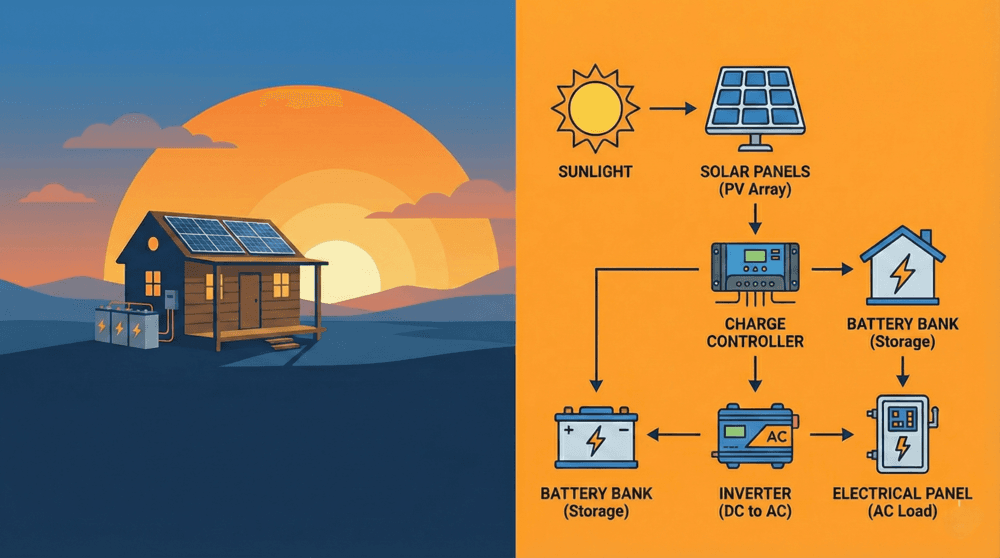
Off-Grid Solar System Requirements: Sizing, Permits & NEC Code Guide
Off-grid solar permit requirements by state: building codes, NEC compliance, bat...
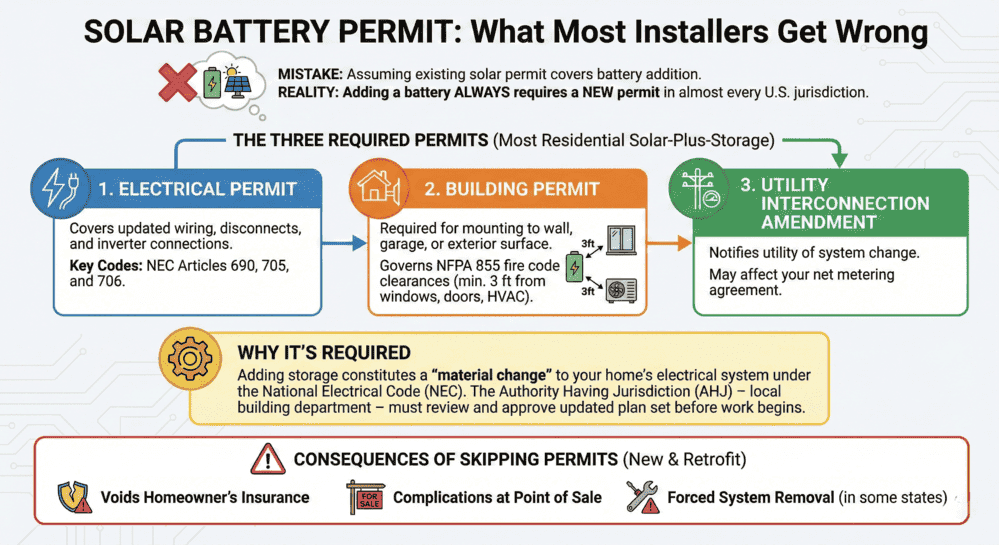
Solar Battery Permit: What Most Installers Get Wrong
Quick Answer: Adding battery storage to a solar system almost always requires ne...
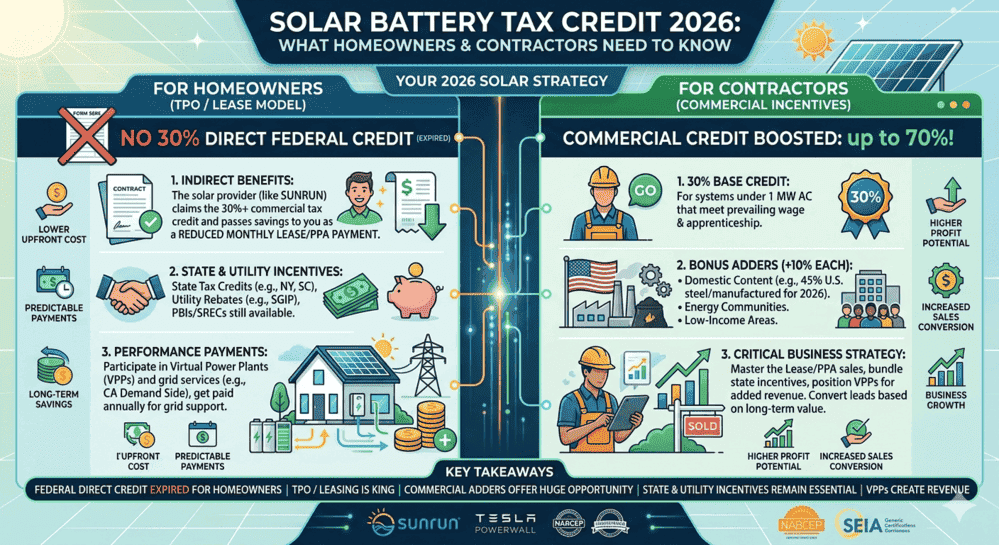
Solar Battery Tax Credit 2026: What Homeowners and Contractors Need to Know
There is no federal solar battery tax credit available to homeowners in 2026. Th...