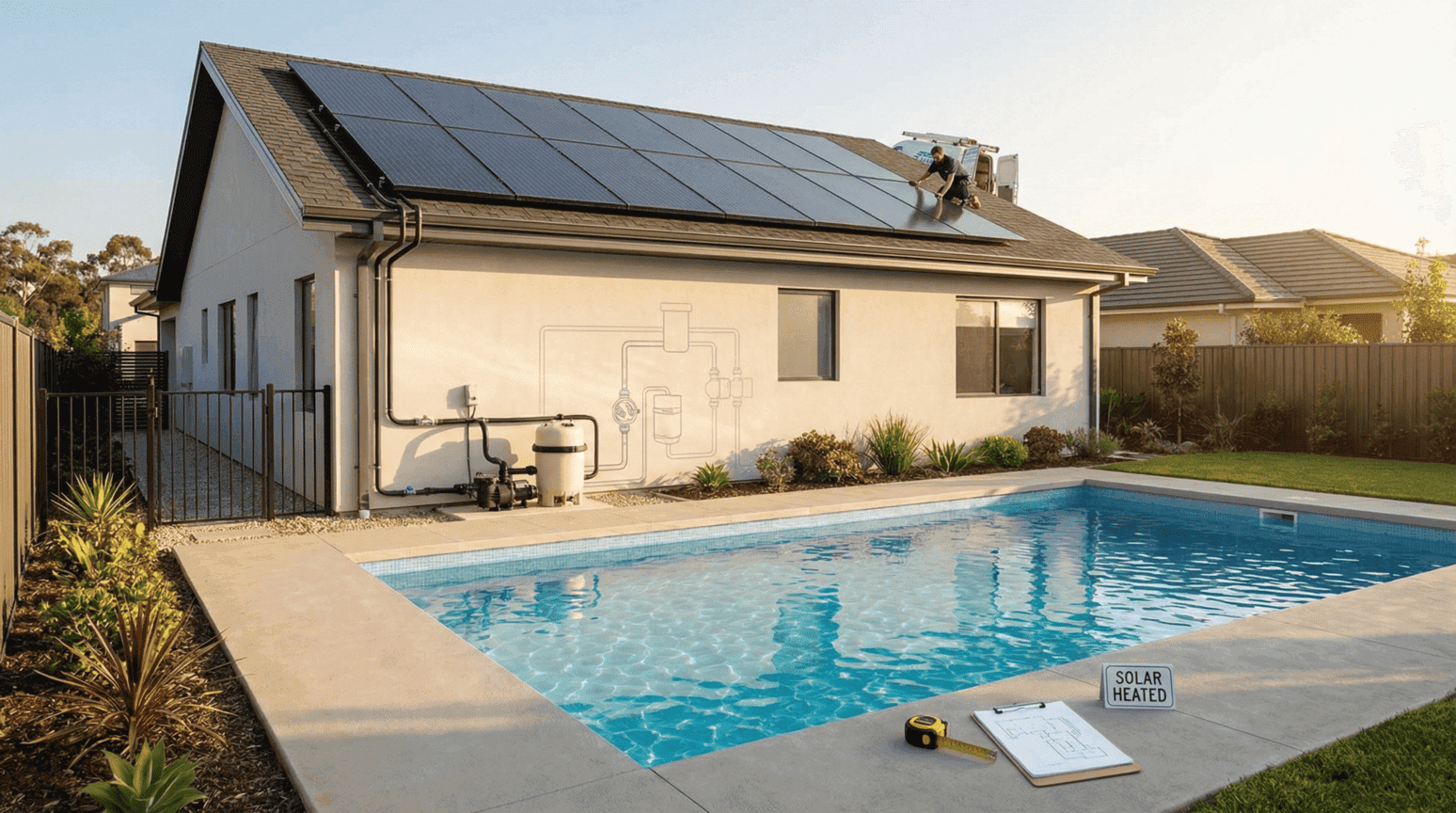
Solar pool heaters cost between $1,500 and $8,000 to install and use free solar energy to warm swimming pools, eliminating ongoing gas or electric heating expenses while extending your swimming season. These systems work by pumping pool water through solar thermal collectors that capture sunlight and heat the water before returning it to the pool.
Solar pool heaters come in two types:
Glazed collectors – (more efficient, year-round use, higher cost)
Unglazed collectors – (lower cost, suitable for warm climates only).
The Department of Energy recommends sizing your solar collector between 50-100% of your pool’s surface area depending on climate and usage frequency. For example, a 300-square-foot pool typically needs 150-300 square feet of collector area. These systems require minimal maintenance, just keeping collectors clean, and typically pay for themselves within 2-7 years through energy savings. Solar pool heaters can work alongside existing pool pumps and may be paired with backup gas or electric heaters for cloudy days or extreme cold, making them a practical and cost-effective solution for most pool owners.
This article covers essential information about solar-powered pool heating systems and whether they represent a smart investment for your property.

Operating Principles of Solar Pool Heating Systems
Pool water circulates from your swimming pool through a filtration system, then moves to a solar thermal collector that warms the water using solar energy before cycling it back to the pool. The setup includes a check valve, flow control valve, and temperature sensor to maintain optimal pool temperatures.
Modern systems automatically monitor water temperature and route it through the solar collector for heating before returning it to your pool. Once the water achieves your preferred temperature, the flow control valve redirects the circulation away from the solar collector straight back to your swimming pool.
For colder regions and locations with year-round pool usage, solar collectors are typically sized larger, enabling continuous pool heating even during substantial temperature decreases.
These solar heating systems can work alongside gas or electric heaters when necessary, similar to how solar and natural gas systems complement each other for water heating applications.
Understanding Solar Thermal Collectors
Solar thermal collectors capture thermal energy through sun exposure. Cold water enters the collectors at the bottom section. Solar heat warms the water, causing it to rise toward the top, where it can then heat your pool water.

Comparing Glazed and Unglazed Solar Thermal Collectors
Solar thermal collectors come in two main varieties, glazed and unglazed.
Glazed Solar Collectors
Flat-plate solar collectors, also called glazed collectors, feature glass encasement and utilize complex designs constructed from metals (such as copper tubing and aluminum plates) beneath iron-tempered glass covers.
These units heat water with greater efficiency and occupy less space, delivering superior heat output. Glazed solar collectors function effectively throughout all seasons, though they carry higher price tags than unglazed alternatives.
Unglazed Solar Collectors
These units typically consist of black plastic or heavy-duty rubber materials with ultraviolet (UV) treatment for enhanced durability.
While unglazed solar collectors offer lower upfront costs, they deliver reduced effectiveness and work best in warmer regions where pool temperatures stay above freezing.
Solar Permit Solutions
Affordable Solar Permit Plans
Don't let permit costs slow your project. Professional plan sets at competitive prices — all 50 states, fast turnaround.
Determining the Appropriate Solar Collector Size
The Department of Energy (DOE) suggests sizing your solar collector between 50% and 100% of your pool’s surface area, depending on your annual pool usage months and desired water temperature.
For instance, a 15-by-20-foot pool has 300 square feet of surface area. The recommended solar collector size would range from 150 to 300 square feet.
Property owners wanting year-round pool operation should select a solar collector matching or exceeding the pool’s full dimensions, similar considerations apply when designing off-grid solar systems where proper sizing is critical.
As an example, a 15-by-30-foot outdoor pool in Florida generally needs a collector equal to 100% of the pool’s square footage for twelve-month usage. This amounts to 450 square feet of collector area.

Installation and Operating Costs for Solar Pool Heaters
Complete professional solar installation of a solar pool heating system typically costs between $1,500 and $8,000. However, these systems recover their costs through utility savings.
Running your pool pump on solar power represents another option that would substantially decrease your pool heating expenses.
Benefits of Switching to Solar Pool Heating
Solar-powered pool heaters deliver numerous advantages compared to conventional gas or electric heating systems. These systems demand minimal maintenance. The primary upkeep involves keeping solar collectors clean for maximum sunlight absorption, much simpler than maintaining complex battery systems.
The most significant advantage is that solar pool heaters operate without additional fuel sources. There’s no need to pay for gas or electricity to warm your pool. Simply harness the free solar energy reaching your rooftop!
Optimizing Your Solar Pool Heater Performance
Implementing straightforward strategies, like using a pool cover for heat retention, further minimizes the operating expenses of your solar-powered heating system. Solar pool covers absorb additional thermal energy from sunlight and transfer it to your pool’s surface.
Because solar pool heater installation involves both electrical components and proper grounding, hiring a professional contractor is advisable for system installation, particularly when mounting equipment on your roof. Proper bonding and grounding practices ensure safe operation and code compliance.
Additionally, understanding local AHJ requirements and securing proper permits for your solar installation protects your investment and ensures legal compliance. For professional assistance, contact Solar Permit Solutions to handle all permitting and design requirements.
Conclusion
Solar pool heaters represent a smart, cost-effective investment for homeowners looking to extend their swimming season and reduce energy costs. With installation costs between $1,500 and $8,000, these systems pay for themselves through significant utility savings while requiring minimal maintenance. Whether you choose glazed collectors for year-round use or unglazed options for warmer climates, solar pool heating solutions harness free renewable energy to keep your pool comfortable. By selecting the properly sized collector for your pool and climate, and combining it with heat-retention strategies like pool covers, you’ll maximize efficiency and enjoy warm pool water without the ongoing expense of gas or electric heating systems.
FAQs
Affordable Solar Permit Plans
Don't let permit costs slow your project. Professional plan sets at competitive prices — all 50 states, fast turnaround.
Frequently Asked Questions
Solar pool heaters are extremely durable systems. Unglazed collectors typically last 10-15 years, while glazed flat-plate collectors can function effectively for 15-20 years or more with proper maintenance. Since these systems have few moving parts and operate passively using solar energy, they experience minimal wear and tear compared to conventional gas or electric heaters.
Yes, solar pool heaters can still function on cloudy days, though at reduced efficiency. They capture diffuse solar radiation even when direct sunlight isn't available. However, heating performance will be slower, and water may not reach your desired temperature as quickly. For consistent heating in frequently cloudy climates, consider oversizing your collector or pairing your solar heater with a backup gas or electric system.
This depends on your climate and collector type. In areas where temperatures drop below freezing, unglazed collectors must be drained to prevent damage from ice formation. Glazed collectors are more freeze-resistant but may still require winterization in extremely cold climates. Many systems include automatic drain-down features or freeze protection valves. If you close your pool seasonally, draining the system prevents costly freeze damage.
Yes, solar pool heaters integrate with existing pool circulation systems and pumps. The solar collector connects to your current filtration and plumbing setup. However, you may need to verify that your pump has sufficient power to push water through the additional piping and solar collectors. Some installations may require a slightly larger pump or booster pump to maintain proper flow rates through the system.
Savings vary based on your current heating method, climate, and pool usage, but most homeowners save 50-85% on pool heating costs. If you currently use a gas heater costing $300-$500 monthly during swimming season, switching to solar energy systems could reduce this to minimal pump operating costs. With typical installation costs of $1,500-$8,000, most systems pay for themselves within 2-7 years through energy savings, after which you essentially heat your pool for free.

SPS Editorial Team
Solar Permit Solutions
Solar Permit Solutions provides professional solar permit design services for residential, commercial, and off-grid installations across all 50 states. Our team ensures permit-ready plan sets delivered fast.
Related Articles
Solar Panel Inspection Checklist: What To Check & When To Inspect
Solar panel inspection guide: Learn what to check, when to inspect (annually + e...

Why Solar Inspections Fail: 10 Common Mistakes to Avoid
Discover the 9 critical reasons solar inspections fail and how to avoid costly m...
Solar Grounding And Bonding: How To Pass Inspection Every Time
Learn how to pass solar grounding and bonding inspections every time. Avoid comm...