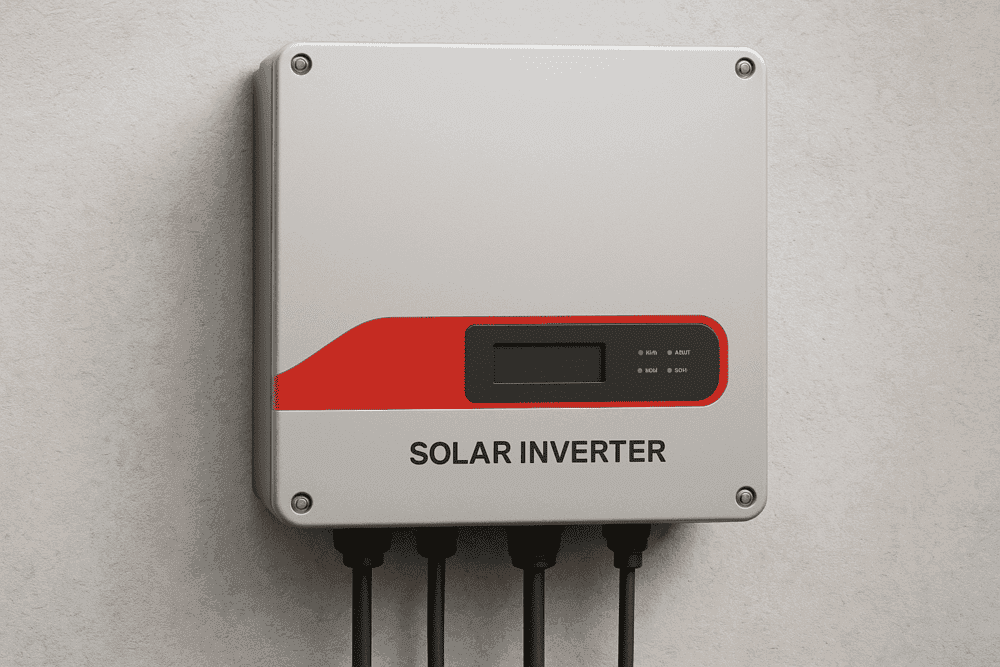
Solar inverter warranties typically last 5-25 years depending on inverter type. String inverters usually come with 5-12 year warranties (extendable to 25 years for brands like SolarEdge), while microinverters like Enphase offer 25-year coverage matching solar panel lifespans. Most warranties cover replacement parts and shipping but exclude labor costs, which homeowners must pay separately unless they purchase extended coverage options.
Key warranty coverage details by manufacturer:
- SolarEdge: 12-year standard warranty on string inverters, 25 years on power optimizers, free shipping in U.S./Alaska/Hawaii, labor not included
- Enphase: 25-year microinverter warranty, includes return shipping, excludes labor costs
- SMA: 5-10 year standard coverage depending on model, covers parts and shipping
- Fronius: 10-year standard warranty with extension options available
What voids solar inverter warranties: DIY repairs or unauthorized modifications, improper installation not meeting manufacturer specifications, and certain extreme weather damage (floods, lightning, pests). Basic troubleshooting like checking internet connections or updating firmware won’t void coverage.
Warranty claim process: Locate warranty documents → Contact installer or manufacturer → Provide proof of purchase, model number, installation date, and error codes → Wait for RMA (Return Merchandise Authorization) approval → Schedule repair with certified technician. Processing time ranges from days to weeks depending on the manufacturer.
Your solar inverter converts DC power from panels into usable AC electricity for your home. When inverters fail, entire systems can shut down, eliminating energy savings and increasing utility bills. Understanding warranty coverage, claim procedures, and maintenance requirements protects your investment and minimizes unexpected repair costs ranging from $200 to $3,000 depending on system type.
How Long Does a Solar Inverter Warranty Last?
Solar inverter warranty duration varies by inverter type. Standard warranties span 5 to 25 years, with most string inverter warranties providing 5 to 12 years of coverage, while microinverter warranties frequently extend 20 to 25 years. Because microinverters are mounted individually on each panel, they generally offer longer operational life and more comprehensive protection.
Certain manufacturers provide extended warranties at additional expense, though coverage details differ. While standard inverter warranties typically address defects and malfunctions, extended warranties may prolong parts coverage without necessarily including labor or service expenses. Some manufacturers supply refurbished replacement units rather than new equipment. Examining your warranty documentation can help prevent surprise solar inverter replacement costs should you experience inverter failure.
What’s Covered Under a Solar Inverter Warranty?
Solar inverter warranty terms differ among manufacturers, making it essential to understand your specific coverage. Some warranties deliver comprehensive protection, while others assign certain expenses to the homeowner.
Parts vs. labor: Numerous inverter warranties cover solely the replacement component, requiring you to fund labor and service charges independently. Certain extended warranties may incorporate labor coverage, lowering your total repair expenses.
Shipping and replacement costs: When your solar inverter replacement falls under warranty, verify whether shipping expenses are included. Some warranties supply complimentary replacements, while others mandate you cover shipping or provide refurbished units rather than new ones.
Comparing String Inverter Warranty vs. Microinverter Warranty
Regarding solar inverter warranties, coverage duration and conditions differ between string inverters and microinverters. Your inverter type influences warranty length, covered items, and the probability of requiring a solar inverter replacement.
String Inverter Warranty
Most string inverters include 5- to 12-year warranties, with some manufacturers providing extended warranty alternatives for enhanced protection. Since string inverter failure impacts multiple solar panels simultaneously, it can create substantial system downtime.
Certain warranties address replacement expenses, though labor and shipping charges may not receive coverage. Reviewing your inverter warranty specifications helps you avoid unforeseen costs if your inverter malfunctions.
Microinverter Warranty
Microinverters typically feature 20- to 25-year microinverter warranty coverage. Since microinverters are installed on individual panels, single inverter failure won’t disable your complete system.
Many microinverter warranties encompass both parts and labor, simplifying repairs when problems emerge. Nevertheless, confirming coverage specifics remains important, as certain manufacturers may mandate particular installation or maintenance procedures to preserve warranty validity.
Which inverter type has higher failure rates?
String inverters typically experience higher failure rates compared to microinverters, increasing the likelihood of needing solar inverter replacement sooner with string inverter systems. Although microinverters demonstrate greater longevity, failures remain possible, and replacing them on individual panels can accumulate costs over time. Comprehending your inverter warranty coverage prepares you for potential repairs and replacement expenses.
Solar Permit Solutions
Affordable Solar Permit Plans
Don't let permit costs slow your project. Professional plan sets at competitive prices — all 50 states, fast turnaround.
Solar Inverter Warranties by Manufacturer
Each manufacturer presents distinct solar inverter warranty terms, encompassing various combinations of parts, labor, and shipping coverage. Some warranties provide complete solar inverter replacement, while others may require owners to handle installation or shipping fees. Grasping what’s included in your inverter warranty enables you to prepare for potential inverter failure and repair costs.
Below is a comprehensive breakdown of solar inverter warranties by leading manufacturers:
Enphase Microinverter Warranty Overview
Selecting Enphase microinverters provides you with Enphase warranty protection spanning 25 years, corresponding to most solar panel lifespans. This ensures long-term protection for your complete solar system.
The Enphase warranty addresses defective microinverters and incorporates return shipping, though labor expenses typically aren’t covered. Should a microinverter malfunction, you’ll need to fund an installer to remove and replace it once your system’s labor warranty lapses or your original solar installation company has shut down.
A key benefit of Enphase systems is real-time monitoring via the Enlighten app. You’ll receive alerts when problems occur, enabling early issue detection and minimizing lost energy production. Installation by an Enphase-certified installer may qualify you for enhanced support or accelerated service.
SolarEdge Inverter Warranty & Optimizer Coverage
With a SolarEdge inverter system, the SolarEdge warranty safeguards your investment by covering faulty inverter and component replacement. You receive 12 years of standard residential inverter coverage, with the ability to extend a SolarEdge warranty up to 25 years. Power optimizers feature 25-year warranties, providing long-term coverage matching your solar panels.
The SolarEdge warranty encompasses complimentary shipping for replacement units throughout the continental U.S., Alaska, and Hawaii. However, you’ll generally handle labor expenses, including hiring a technician to uninstall and reinstall the inverter. These costs aren’t included in standard warranty coverage.
For more complete protection, you can upgrade to Power Care Premium, which incorporates labor, expedited service, and on-site support. This minimizes downtime and limits unexpected costs when servicing becomes necessary.
Fronius Inverter Warranty Details
Fronius delivers a 10-year inverter warranty with coverage extension options. Their warranty addresses replacement parts, and occasionally labor costs may be incorporated, though shipping charges could remain the homeowner’s responsibility.
Fronius attempts to streamline the process by providing extended warranty alternatives that can include more comprehensive coverage. Some installers incorporate extended protection into the original installation, making it worthwhile to examine your documentation thoroughly. Should your installer no longer operate, you may need to contact Fronius directly or engage a service provider who can coordinate warranty claims and dispatch a licensed professional to execute the repair.
SMA Inverter Warranty and Coverage Options
SMA delivers 5- to 10-year string inverter warranty coverage depending on the model, with options to purchase extended warranties for additional protection. Standard coverage encompasses replacement parts and shipping expenses, though labor for diagnosis and installation may not receive coverage. Some extended warranties provide additional advantages, including expedited replacements or onsite service alternatives.
What Can Void a Solar Inverter Warranty?
Your solar inverter warranty shields you from unexpected inverter failure, though specific actions or circumstances can invalidate your coverage. Understanding what to avoid helps you preserve your inverter warranty and prevent expensive repairs.
DIY Inverter Repairs – Attempting self-repairs can instantly void your solar inverter warranty. Most manufacturers, including SolarEdge, mandate that only certified installers or service professionals execute repairs or replacements.
For instance, the SolarEdge warranty explicitly specifies that unauthorized modifications or servicing invalidate coverage. Nevertheless, attempting basic troubleshooting remains advisable, such as verifying your internet connection or updating inverter firmware.
Extreme Weather Damage – Though inverters are designed to endure outdoor environments, damage from floods, extreme heat, lightning, or pests may lack coverage. Some warranties explicitly exclude environmental factors, making it essential to review your inverter warranty terms. However, your homeowner’s insurance policy may cover certain solar repairs.
Poor Installation – If your inverter received incorrect installation or fails to meet manufacturer specifications, the string inverter warranty or microinverter warranty may not apply. Faulty wiring, improper placement, or neglecting local electrical codes can all trigger inverter failure and rejected warranty claims.
To maintain your solar inverter warranty validity, employ qualified professionals for installation and repairs. Working with certified technicians who understand manufacturer requirements helps ensure your system remains dependable and your warranty stays intact.
How to File a Solar Inverter Warranty Claim
When inverters fail, numerous homeowners experience surprise at how complex the warranty process feels. For some, it’s as straightforward as contacting their installer and awaiting a technician. For others, particularly those whose original installer ceased operations, the process involves locating documents, communicating directly with manufacturers, and waiting on replacement parts that can require weeks to arrive.
Understanding the proper steps can help streamline the warranty claim process and get your system operational again more quickly.
Step 1: Locate Your Warranty Documents
Whether you possess a SolarEdge inverter warranty or coverage from another manufacturer, the initial step remains identical: locate your paperwork. Some homeowners have found their solar inverter warranties registered online, enabling them to access the manufacturer’s portal to download details. Regardless of how you locate it, knowing the precise inverter warranty period helps you comprehend remaining coverage.
Step 2: Contact Your Installer or Manufacturer
If your installer continues operating, they can typically guide you through the inverter warranty claim. However, numerous homeowners have encountered disconnected phone numbers. In these instances, the manufacturer becomes the next contact.
Certain inverter manufacturers, including SolarEdge and Enphase, provide useful support lines, while others demand highly specific details before opening cases. Having your system information readily available can help expedite this process. For homeowners navigating solar permitting requirements, understanding warranty procedures becomes even more critical.
Step 3: Provide Proof of Purchase and System Details
Most manufacturers demand the inverter model number, installation date, proof of purchase, and any error codes from your system’s monitoring portal. This information is typically required for obtaining an RMA (Return Merchandise Authorization).
Step 4: Wait for Inverter Warranty Approval & Schedule a Repair
Following claim approval, manufacturers usually issue an RMA before shipping replacement units or authorizing repairs. Some inverter warranties cover labor and shipping, while others assign those costs to homeowners. If you need professional repairs or a new inverter installed, working with licensed solar technicians can help complete the work and restore your system’s power production.
Is an Extended Solar Inverter Warranty Worth It?
Selecting an extended solar inverter warranty depends on your system’s configuration and expected operational duration. Standard inverter warranties typically span 5 to 12 years and cover manufacturing defects or early inverter failure. If your solar system is vital for reducing electric bills, extended warranties can help avoid high solar inverter replacement costs and deliver peace of mind.
Should you invest in a longer SolarEdge warranty?
With a string inverter system, extending your SolarEdge warranty may prove a strategic investment. Most standard string inverter warranties span 5 to 12 years, and inverter failure during this timeframe can trigger complete system shutdown, causing lost solar production and unexpected expenses.
An extended SolarEdge inverter warranty can help protect against costly replacements and provide reassurance. Conversely, Enphase microinverter warranties typically span 20 to 25 years, matching solar panel lifespans, making additional coverage generally unnecessary for those systems.
Cost vs. Benefit: Should You Invest in Longer Coverage?
For instance, a 25-year SolarEdge inverter warranty is accessible for homeowners seeking long-term protection against inverter malfunctions and repair expenses. With a SolarEdge system, upgrading your SolarEdge warranty could help prevent substantial costs from string inverter failure.
In contrast, the Enphase warranty already incorporates 25 years of microinverter coverage, making extended warranties typically unnecessary. Always verify what’s included in your solar inverter warranty. Some plans cover solely parts, while others include labor, shipping, and expedited service. According to renewable energy research, proper warranty coverage significantly impacts long-term system performance.
Protect Your Solar Investment With Reliable Inverter Repairs
A robust solar inverter warranty helps shield you from unexpected inverter failure, though regular maintenance and professional repairs keep your system performing optimally. Understanding your coverage options and working with qualified professionals ensures proper repairs and system longevity.
Whether you have a string inverter warranty or a microinverter warranty, understanding your coverage and having proper support ensures your solar investment continues delivering reliable energy for years ahead. As global solar adoption accelerates, proper warranty management becomes increasingly important for homeowners.
Conclusion
Understanding your solar inverter warranty is essential for protecting your solar energy investment and avoiding unexpected repair expenses. Whether you have a SolarEdge inverter warranty with 12 years of standard coverage, an Enphase microinverter warranty spanning 25 years, or coverage from another manufacturer, knowing your warranty terms helps you prepare for potential issues and maximize your system’s performance.
The key to successful warranty management lies in maintaining proper documentation, working with certified professionals for installations and repairs, and avoiding actions that could void your coverage. While string inverter warranties typically provide 5 to 12 years of protection and microinverter warranties often extend 20 to 25 years, the specific terms including parts, labor, and shipping coverage vary significantly among manufacturers.
If you experience inverter failure, acting quickly to file a warranty claim can minimize system downtime and reduce out-of-pocket costs. Remember to locate your warranty documents, contact the appropriate parties, provide necessary system details, and work with qualified technicians to complete repairs properly. For homeowners whose original installers have closed, contacting manufacturers directly or engaging professional solar services can help navigate the RMA process and coordinate replacements.
Regular monitoring through apps like Enphase Enlighten or SolarEdge monitoring platforms enables early issue detection, helping you address problems before they escalate. By understanding what’s covered under your solar inverter warranty, maintaining valid coverage, and responding promptly to system alerts, you ensure your solar investment continues delivering reliable, cost-effective energy for decades to come. Consider exploring solar permit services in Los Angeles if you’re planning new installations or system upgrades.
FAQs
What’s the difference between a standard warranty and an extended warranty for solar inverters?
A standard solar inverter warranty typically covers 5 to 12 years for string inverters and 20 to 25 years for microinverters, protecting against manufacturing defects and early failures. Standard warranties usually include replacement parts and sometimes shipping but rarely cover labor costs. An extended warranty prolongs coverage beyond the standard period, for example, extending a SolarEdge warranty from 12 to 25 years, and may include additional benefits like labor coverage for technician services, expedited shipping and priority processing, onsite support and diagnostics, and coverage for refurbished or new replacement units. Extended warranties cost extra but can provide significant value for string inverter systems that have higher failure rates and shorter standard coverage periods compared to microinverters. Many clean energy advocacy organizations recommend evaluating extended warranty options for optimal system protection.
Does homeowner’s insurance cover solar inverter repairs if the warranty doesn’t?
Homeowner’s insurance may cover solar inverter replacement costs in specific situations, though coverage varies by policy. Most policies cover solar equipment damage from covered perils like fire, lightning strikes, wind or hail damage, falling trees or debris, and vandalism or theft. However, homeowner’s insurance typically excludes normal wear and tear, manufacturing defects (which should be covered by manufacturer warranties), gradual deterioration, and pest damage. If your solar inverter warranty has expired and your inverter fails due to a covered event, file a claim with your insurance provider. Some policies require a separate rider or endorsement for solar equipment, so review your policy carefully or contact your agent to understand your coverage. Keep detailed records of your solar installation, maintenance, and any damage for insurance claims. For battery backup systems, understanding LiFePO4 battery configurations can help with insurance documentation. Additionally, some manufacturers provide specialized electrical equipment that may have different insurance considerations.
Affordable Solar Permit Plans
Don't let permit costs slow your project. Professional plan sets at competitive prices — all 50 states, fast turnaround.
Frequently Asked Questions
Most solar inverter warranties cover replacement parts, though labor represents a separate matter. Manufacturers like SolarEdge and SMA typically ship replacement units under warranty but assign labor costs, such as uninstalling and reinstalling inverters, to homeowners. Some extended inverter warranty periods incorporate labor coverage, though you'll need to examine your documentation carefully.
An RMA (Return Merchandise Authorization) is the procedure manufacturers employ to manage warranty claims. If your inverter fails, manufacturers may require a solar RMA before shipping replacements. This involves supplying system details, including model number, installation date, and proof of purchase, enabling them to verify coverage. Once approved, they'll dispatch replacement units or parts, though you may still handle labor costs.
The RMA process can span anywhere from several days to multiple weeks, depending on the manufacturer and how rapidly you supply system details. Some homeowners reported receiving approval and shipping confirmation within a week, while others waited beyond a month for replacement units.
If your installer has closed, you can contact the manufacturer directly, such as SolarEdge customer service, to manage the claim. Most manufacturers require an RMA before shipping replacement inverters, meaning submitting proof of purchase, system details, and error codes. Working with qualified solar repair services can help navigate the warranty paperwork and coordinate the necessary repairs with licensed technicians.
Shipping policies differ widely. For example, the SolarEdge warranty includes complimentary shipping throughout the continental U.S., Alaska, and Hawaii. Other manufacturers may require you to fund inbound or outbound freight when processing inverter warranty claims. It's a detail worth verifying before assuming complete coverage.
Yes, many solar inverter warranties are transferable, though the process typically requires submitting updated ownership information and proof of original installation. Some manufacturers also impose fees. Enphase, for instance, charges a $199 change-of-ownership fee to transfer the inverter warranty and monitoring account. Without completing the transfer, the inverter warranty period may not transfer to the new homeowner.
If your solar inverter warranty has expired, you'll be responsible for all replacement and repair costs, including parts, labor, and shipping. String inverter replacement can cost between $1,500 and $3,000 depending on system size and brand, while individual microinverter replacements typically range from $200 to $400 per unit. To minimize expenses, consider purchasing an extended warranty before your standard coverage expires, especially for string inverter systems that typically have shorter warranty periods.
Yes, basic troubleshooting typically won't void your solar inverter warranty. You can safely check your internet connection, verify monitoring app functionality, review error codes in your system's portal, restart the inverter using manufacturer-approved methods, and update firmware through official channels. However, opening the inverter enclosure, attempting physical repairs, modifying wiring or connections, or replacing components yourself will immediately void most warranties.
To determine if your inverter failure qualifies for warranty coverage, first verify your warranty period by checking your installation documents or the manufacturer's online portal. Most manufacturers cover manufacturing defects, premature component failures, and performance issues below stated specifications. However, warranties typically exclude damage from improper installation not meeting manufacturer guidelines, unauthorized modifications or DIY repairs, extreme weather events like floods or lightning strikes, pest damage or environmental contamination, and normal wear and tear beyond the warranty period.
A standard solar inverter warranty typically covers 5 to 12 years for string inverters and 20 to 25 years for microinverters, protecting against manufacturing defects and early failures. Standard warranties usually include replacement parts and sometimes shipping, but rarely cover labor costs. An extended warranty prolongs coverage beyond the standard period and may include additional benefits like labor coverage for technician services, expedited shipping and priority processing, onsite support and diagnostics, and coverage for refurbished or new replacement units.
Yes, most solar inverter warranties are transferable to new homeowners, but the process requires specific steps. You'll need to notify the manufacturer of the ownership change, submit updated homeowner information and contact details, provide proof of original installation and warranty registration, and potentially pay a transfer fee. For example, Enphase charges $199 to transfer the microinverter warranty and monitoring account to new owners.
Homeowner's insurance may cover solar inverter replacement costs in specific situations, though coverage varies by policy. Most policies cover solar equipment damage from covered perils like fire, lightning strikes, wind or hail damage, falling trees or debris, and vandalism or theft. However, homeowner's insurance typically excludes normal wear and tear, manufacturing defects, gradual deterioration, and pest damage. If your solar inverter warranty has expired and your inverter fails due to a covered event, file a claim with your insurance provider.

SPS Editorial Team
Solar Permit Solutions
Solar Permit Solutions provides professional solar permit design services for residential, commercial, and off-grid installations across all 50 states. Our team ensures permit-ready plan sets delivered fast.
Related Articles
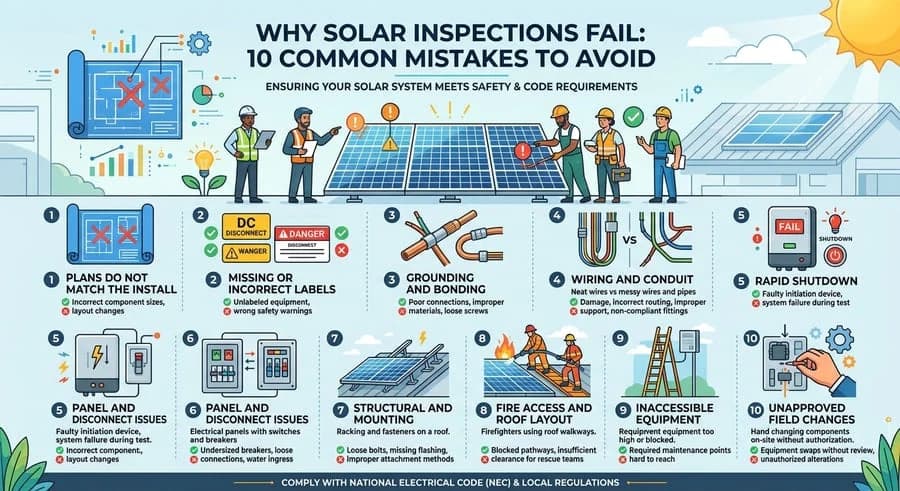
Why Solar Inspections Fail: 10 Common Mistakes to Avoid
Discover the 9 critical reasons solar inspections fail and how to avoid costly m...
Solar Grounding And Bonding: How To Pass Inspection Every Time
Learn how to pass solar grounding and bonding inspections every time. Avoid comm...
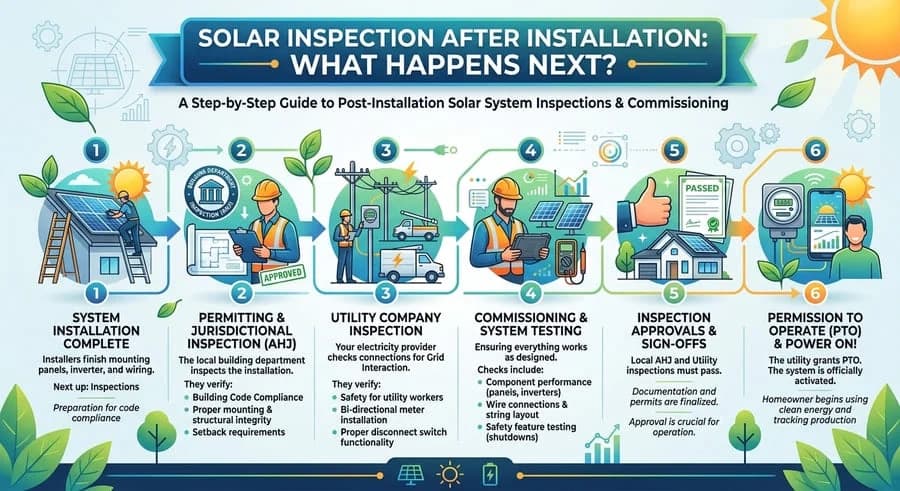
Solar Inspection After Installation: What Happens Next?
Learn how to pass your solar inspection by following essential tips for obtainin...