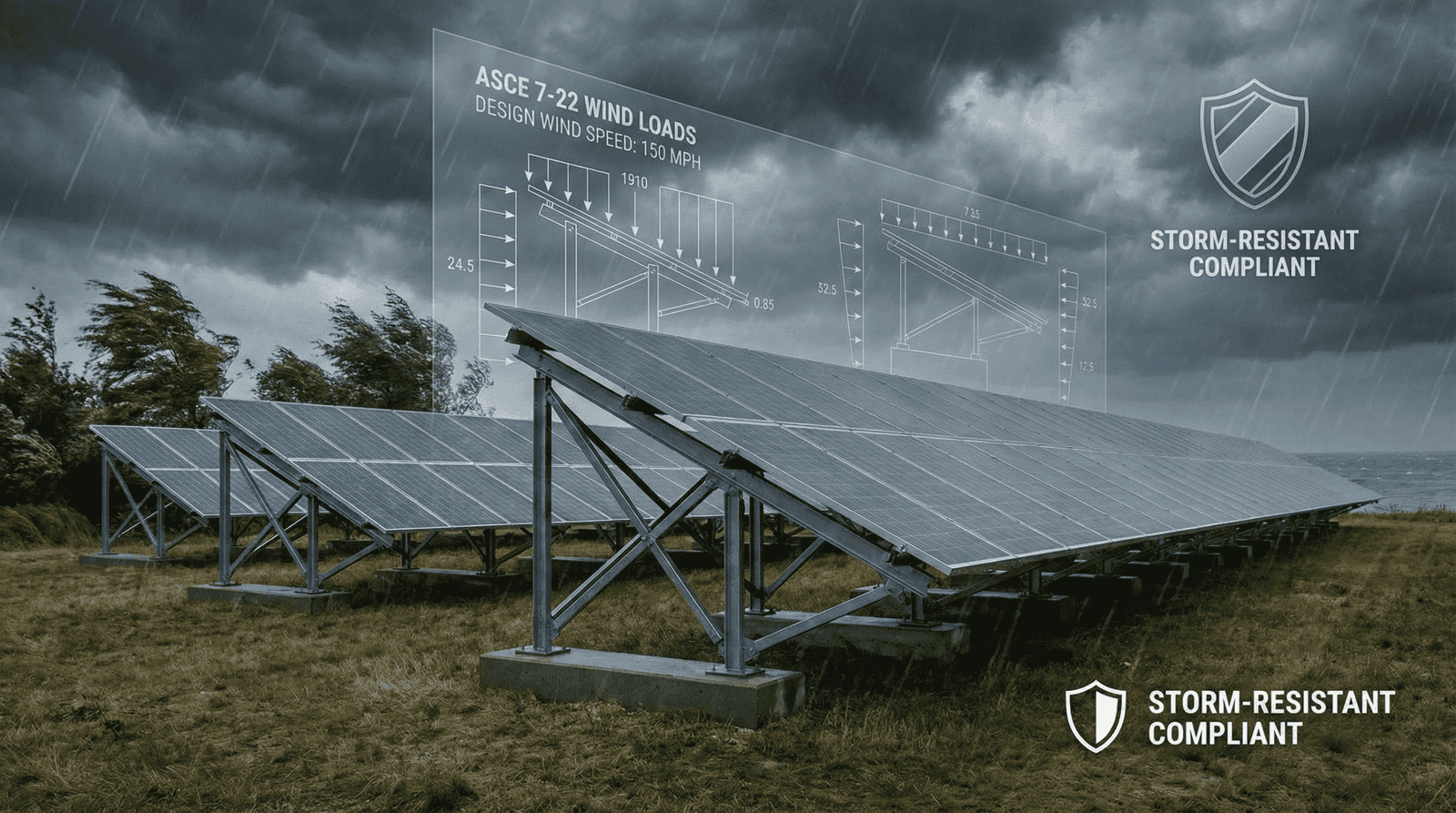
Wind load calculations for solar panels determine the structural requirements needed to secure photovoltaic (PV) systems against wind-induced forces on rooftops and ground-mounted installations. ASCE 7-22, released in December 2021, is the current industry standard and supersedes ASCE 7-16 with enhanced standardized methods that eliminate previous inconsistencies in building code interpretations. The 2024 International Building Code (IBC) has adopted ASCE 7-22 as its referenced standard.
The ASCE 7-22 wind pressure formula is used to calculate design loads for solar installations. It consists of four key components: Wind Pressure = Velocity Pressure × External Pressure Coefficients × γE × γA. This formula accounts for roof characteristics, panel positioning, and effective wind area to ensure solar installations withstand extreme weather conditions including hurricanes and tornadoes.
Structural engineers apply ASCE 7-22 Sections 29.4.3, 29.4.4, and the newly introduced Section 29.4.5 specifically for solar arrays. Section 29.4.3 addresses low-sloped roofs measuring 7 degrees or lower, providing specific pressure coefficients for nearly flat roof surfaces where wind behavior differs significantly from steeper installations. Section 29.4.4 covers panels mounted parallel or near-parallel to roof surfaces on any slope. Section 29.4.5 introduces comprehensive provisions for fixed-tilt ground-mount systems, marking a significant expansion beyond the rooftop-only provisions of ASCE 7-16. The main wind-force resisting system (MWFRS) serves as the foundation for designing mounting structures that comply with these standards.
Wind load calculations have become critical knowledge for solar contractors and engineers, particularly across high-wind regions in the southeastern United States and tornado-prone areas. ASCE 7-22 offers multiple calculation methods for various installation types, replacing the previously fragmented approach that produced varying design loads for identical installations. The updated standard includes Chapter 32 for tornado provisions on Risk Category III and IV structures. Proper wind load analysis prevents system failures during hurricanes, tornadoes, and severe storms, protecting both structural integrity and long-term investment.
Industry Standards: Structural Design Guidelines For Rooftop PV Systems
Current recommendations call for basing the structural design of roof-mounted PV systems on ASCE Standard 7-22 using the following approach:
The main wind-force resisting system (MWFRS) serves as the recommended starting point for designing PV mounting structures, positioning the PV module above and parallel to the roof surface.
Structural engineers should reference ASCE 7-22 figures 29.4-7 and figures 30.3-2 through 30.3-7 when determining proper design wind pressure and the correct external pressure coefficient. These figures provide the calculation methods needed to apply the appropriate coefficients based on roof configuration, panel positioning, and building characteristics.
The Solar America Board for Codes and Standards advocates for wind tunnel testing on common PV installations to verify calculation methods and results. Installation types requiring testing include standoff mounting parallel to the roof, standoff mounting at an incline relative to the roof, ballasted installations on flat roofs, and fixed-tilt ground-mount configurations. Wind tunnel testing procedures follow ASCE 49 standards.
ASCE 7-22 introduces Chapter 32, which addresses tornado loads for buildings and structures classified as Risk Categories III and IV. This provision applies to critical facilities and essential services where ground-mounted PV systems may require tornado load analysis. The chapter clarifies that for solar facilities, the effective plan area calculation uses individual system components rather than the entire facility area.
The board recommends modifying codes and standards to specifically address PV array mounting on rooftops and ground-mount installations, eliminating potential market development barriers in high wind and tornado-prone regions. Professional solar design services ensure compliance with these evolving standards.

Breaking Down The ASCE 7-22 Wind Pressure Formula
ASCE 7-22 establishes the following formula for wind pressure solar design:
Wind Pressure = Velocity Pressure × External Pressure Coefficients × γE × γA
Engineers can utilize the free ASCE 7 Hazard Tool, available since December 2021, to determine site-specific wind speeds and other environmental hazard data. This web-based application provides precise hazard data for wind, seismic, flood, snow, rain, ice, and tsunami risks at any location in the United States, replacing the need for printed maps in most cases.
Key Coefficient Variables Explained
The external pressure coefficients derive from roof components and cladding, calculated using figures 30.3-2 through 30.3-7 or 30.5-1.
γE represents a coefficient with values of either 1 or 1.5, determined by panel exposure to the roof edge. Panels exposed to the roof edge require a value of 1.5, while unexposed panels use a value of 1 in the equation.
γA functions as another coefficient called the equalization factor. Figure 29.4-8 of ASCE displays the value range for γA, spanning from 0.4 to 0.8 based on the effective wind area (calculated as Height × Height/3). When the wind area measures between 1-10 square feet, γA equals 0.8. For effective wind areas exceeding 100 square feet, γA equals 0.4. The γA values between these points appear in the ASCE graph. Combining these four equation components enables accurate load calculations for solar arrays.
Conclusion
ASCE 7-22 establishes the definitive framework for wind load calculations in solar PV installations, resolving years of inconsistent code interpretations across the industry. Released in December 2021 and adopted by the 2024 IBC, the updated standard supersedes ASCE 7-16 with enhanced provisions covering both rooftop and ground-mount configurations. The standardized wind pressure formula incorporating velocity pressure, external pressure coefficients, and the γE and γA factors provides engineers with reliable calculation methods for diverse installation scenarios.
These guidelines prove increasingly valuable as hurricane-force winds and tornadoes become more prevalent across the United States. Section 29.4.5 introduces ground-mount system provisions, while Chapter 32 addresses tornado loads for critical facilities. The free ASCE 7 Hazard Tool provides precise site-specific environmental data, streamlining the design process and ensuring accuracy in wind load calculations.
Contractors and engineers must familiarize themselves with ASCE 7-22 provisions, including the specific requirements for low-sloped roofs in Sections 29.4.3 and 29.4.4, ground-mount systems in Section 29.4.5, and tornado loads in Chapter 32. Understanding coefficient applications for edge exposure and effective wind area calculations ensures compliance with current standards while maintaining installation safety.
As climate patterns shift and extreme weather events become more frequent, relying on outdated standards represents a significant financial and safety risk. Ensuring your solar project is designed to ASCE 7-22 standards is no longer just a best practice—it’s a fundamental requirement for system resilience and long-term investment protection. Proper structural design prevents catastrophic failures during extreme weather events, safeguarding both infrastructure and public safety. Contact professional engineers to ensure your solar project meets all current wind load requirements.
Solar Permit Solutions
Need Solar Permit Plans?
Professional, permit-ready solar plan sets delivered fast. Residential and commercial projects across all 50 states.
FAQs
Need Solar Permit Plans?
Professional, permit-ready solar plan sets delivered fast. Residential and commercial projects across all 50 states.
Frequently Asked Questions
The main wind-force resisting system (MWFRS) represents the structural framework that supports the entire PV mounting structure against wind forces. This system serves as the foundation for calculating wind loads on solar panels mounted parallel to roof surfaces or on ground-mount installations. Engineers use MWFRS as the primary reference point when designing mounting structures that comply with ASCE 7-22 standards.
Prior to ASCE 7-16, building codes lacked specific provisions for rooftop solar equipment, resulting in inconsistent interpretations and varying design loads across projects. ASCE 7-16 introduced standardized methods for calculating wind loads on rooftop solar panels, providing engineers with clear guidelines for the first time. ASCE 7-22 builds upon this foundation by adding provisions for ground-mount systems in Section 29.4.5 and tornado loads in Chapter 32, creating a more comprehensive framework. This expanded standardization ensures consistent safety measures across all solar installation types and eliminates confusion in permitting processes across different jurisdictions.
The γE coefficient value depends entirely on panel exposure to roof edges. Solar panels positioned near or at roof edges experience higher wind uplift forces, requiring the 1.5 coefficient value in calculations. Panels located away from roof edges, where wind forces are less concentrated, use the standard coefficient value of 1. This distinction accounts for the increased vulnerability of edge-mounted installations.
Effective wind area directly influences the γA coefficient value, which ranges from 0.4 to 0.8 based on calculated area measurements. Smaller effective wind areas (1-10 square feet) correspond to a γA value of 0.8, while larger areas exceeding 100 square feet require a γA value of 0.4. The effective wind area calculation follows the formula Height × Height/3, with intermediate values determined through ASCE Figure 29.4-8.
Wind tunnel testing becomes necessary for verifying calculation methods and results in common rooftop PV installation scenarios. The Solar America Board for Codes and Standards recommends testing for three primary installation types: standoff mounting parallel to the roof, standoff mounting at an incline relative to the roof, and ballasted installations on flat roofs. Testing proves particularly valuable in high wind regions where accurate load calculations are critical for installation safety.
ASCE 7-22 Section 29.4.3 specifically covers wind load calculations for low-sloped roofs measuring 7 degrees or lower. This section provides updated guidance for solar panels installed on nearly flat roof surfaces, where wind behavior differs significantly from steeper installations. Engineers must reference this section along with corresponding figures to determine appropriate design pressures for low-slope applications. These provisions apply to buildings of all heights and include specific pressure coefficients based on wind tunnel testing.
Section 29.4.5 represents a significant expansion in ASCE 7-22, establishing design procedures specifically for fixed-tilt ground-mount PV systems. Previous ASCE 7-16 provisions addressed only rooftop installations, leaving engineers without standardized guidance for ground-mount configurations. The new section provides calculation procedures based on extensive wind tunnel testing of ground-mount arrays. These provisions help designers properly account for wind forces on support structures, foundations, and panel assemblies in ground-mount applications.
Chapter 32 tornado load provisions apply exclusively to buildings and structures classified as Risk Categories III and IV, which include essential facilities and critical infrastructure. Ground-mounted PV systems serving hospitals, emergency operations centers, or other essential services may fall under these categories and require tornado load analysis. The chapter specifies that effective plan area calculations for solar facilities use individual system components rather than the entire facility footprint, preventing overly conservative design requirements. Risk Category I and II solar installations do not require tornado load calculations under current provisions.
The ASCE 7 Hazard Tool is a free web-based application launched in December 2021 that provides site-specific environmental hazard data required by ASCE 7-22. Engineers input project coordinates to obtain precise wind speeds, seismic parameters, snow loads, rain intensities, ice thicknesses, flood elevations, and tsunami inundation depths. This digital approach replaces printed hazard maps for most parameters, offering more accurate and detailed data. The tool streamlines the design process by eliminating manual map interpolation and provides updated hazard information as research methodologies improve.

SPS Editorial Team
Solar Permit Solutions
Solar Permit Solutions provides professional solar permit design services for residential, commercial, and off-grid installations across all 50 states. Our team ensures permit-ready plan sets delivered fast.
Related Articles
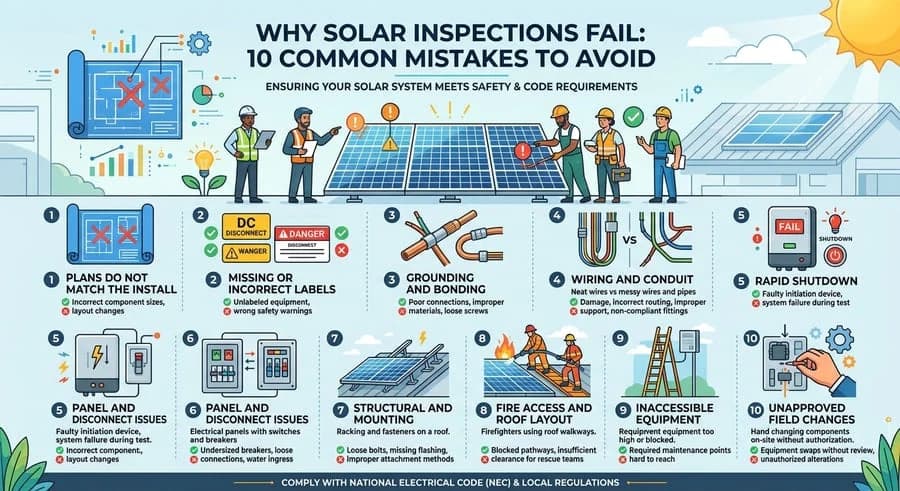
Why Solar Inspections Fail: 10 Common Mistakes to Avoid
Discover the 9 critical reasons solar inspections fail and how to avoid costly m...
Solar Grounding And Bonding: How To Pass Inspection Every Time
Learn how to pass solar grounding and bonding inspections every time. Avoid comm...
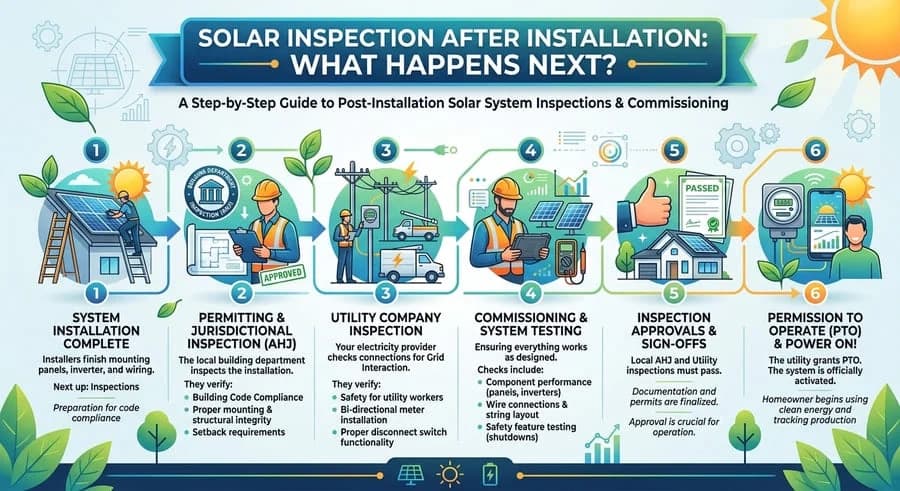
Solar Inspection After Installation: What Happens Next?
Learn how to pass your solar inspection by following essential tips for obtainin...