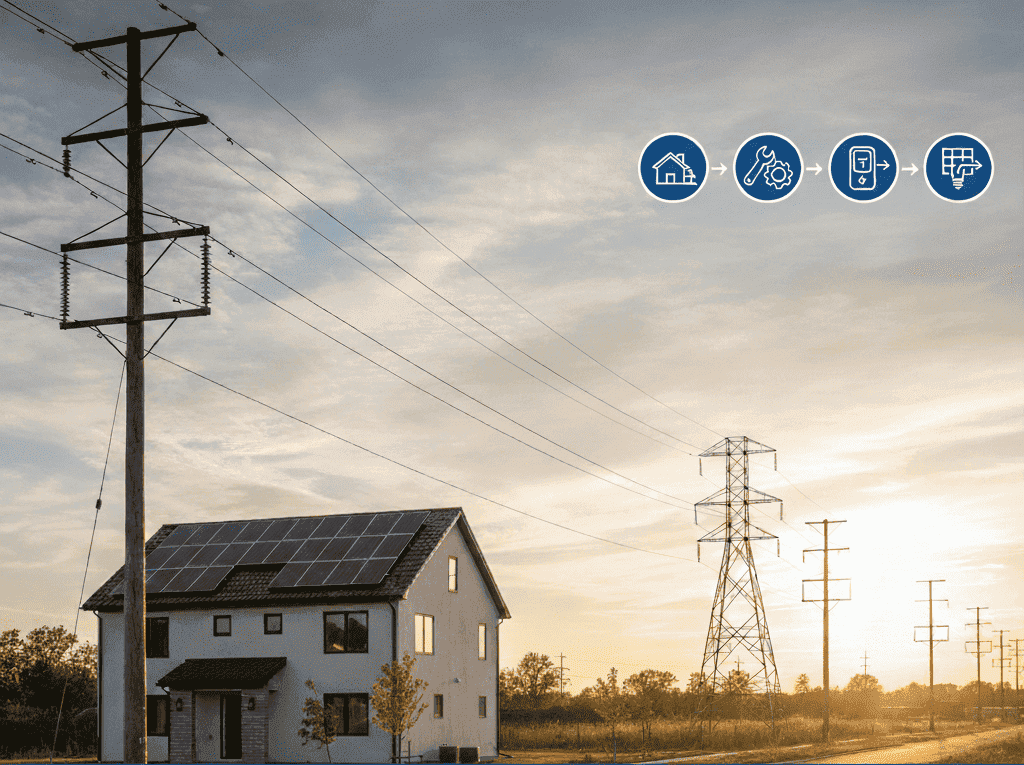
National Grid solar interconnection requirements differ between Massachusetts and New York, with each state following distinct regulatory frameworks. In Massachusetts, the process is governed by MDPU 1579 (effective April 15, 2025), while New York uses the Standardized Interconnection Requirements (SIR) for systems up to 5 MW. Both states offer simplified, expedited, and standard interconnection pathways based on system size, with residential systems typically qualifying for faster approval tracks. Key requirements include IEEE 1547 compliance, UL 1741 certified inverters, and proper anti-islanding protection. Processing times range from 20 business days for simplified applications to several months for complex commercial projects requiring utility system upgrades.
Understanding these interconnection requirements is essential for installers, developers, and property owners looking to connect solar PV systems to the National Grid distribution network. This guide breaks down the current regulations, application processes, fees, and timelines for both Massachusetts and New York service territories. For a comprehensive overview of the solar permitting process, understanding how interconnection fits into your project timeline is critical.

What Is Solar Interconnection?
Solar interconnection is the process of connecting a customer-owned solar photovoltaic system to the utility’s electrical distribution network. This connection allows the system to export excess electricity to the grid and enables net metering credits. The interconnection process involves technical reviews, safety verification, and formal utility approval before a system can operate in parallel with the grid.
National Grid requires all grid-tied solar installations to complete the interconnection process, regardless of system size. This ensures that distributed generation sources meet safety standards, protect utility workers, and maintain grid stability. The specific requirements and review processes vary based on system capacity, installation location, and the state regulatory framework. Learn more about how long solar permits take to plan your project timeline effectively.
National Grid Service Territory Overview
National Grid operates as an investor-owned utility serving customers across Massachusetts and Upstate New York. Understanding which service territory applies to your project is the first step in navigating interconnection requirements, as each state maintains separate regulatory oversight and application procedures.
Massachusetts Service Area
In Massachusetts, National Grid operates as Massachusetts Electric Company and Nantucket Electric Company. The utility serves approximately 1.3 million electric customers across central and eastern Massachusetts. Massachusetts interconnection requirements are governed by the Department of Public Utilities under tariff MDPU 1579, which became effective April 15, 2025. Review the average solar permit timeline by state to understand Massachusetts processing speeds.
Solar Permit Solutions
Skip the Permit Headaches
We design plan sets that pass inspection the first time. Code-compliant, PE-stamped, accepted by AHJs nationwide.
New York Service Area
National Grid’s New York territory covers upstate New York, including the Capital Region, Syracuse, and Buffalo metropolitan areas. The company operates as Niagara Mohawk Power Corporation and serves approximately 1.7 million electric customers. New York interconnection follows the statewide Standardized Interconnection Requirements (SIR), administered by the NY Department of Public Service and updated in August 2025.
Massachusetts Interconnection Requirements (MDPU 1579)
Massachusetts uses a tiered interconnection framework with three distinct pathways: Simplified, Expedited, and Standard. The applicable pathway depends on system size, inverter type, circuit configuration, and aggregate generation on the feeder. The current tariff, MDPU 1579, supersedes the previous MDPU 1573 and reflects updated technical standards and processing requirements. Access the official National Grid MA tariff documentation for complete rate schedules.
Simplified Process (Residential Systems)
The Simplified Process provides the fastest interconnection pathway for small residential and commercial systems. To qualify, systems must meet these criteria:
• Single-phase inverter-based systems rated 15 kW or less
• Three-phase inverter-based systems rated 25 kW or less
• Located on radial distribution circuits
• Aggregate generation less than 15% of feeder annual peak load
• Equipment must be UL 1741 listed and IEEE 1547 compliant
Timeline: The utility must acknowledge applications within 3 business days and complete review within 20 business days. Following installation, the utility has 10 business days to conduct witness testing. Authorization to Interconnect must be issued within 5 business days of satisfactory testing. Our residential solar permit packages include all documentation needed for simplified interconnection.
Expedited Process
The Expedited Process applies to listed facilities that pass technical screening criteria but exceed Simplified Process thresholds. This pathway uses a series of screens to evaluate potential grid impacts:
• Screen 1-4: Basic eligibility and equipment verification
• Screen 5-8: Capacity and voltage impact analysis
• Screen 9-10: Protection coordination and power quality review
• Supplemental Review: Up to 30 hours engineering analysis if screens fail
If a system fails one or more screens, the applicant may request Supplemental Review or proceed directly to the Standard Process. Supplemental Review costs are based on actual engineering time required. Understanding solar engineering requirements for permits helps ensure your application passes these screens.
Standard Process
The Standard Process is required for systems that do not qualify for Simplified or Expedited treatment, including large commercial and utility-scale projects. This pathway involves detailed engineering studies:
1. Pre-Application Report (mandatory for systems 250 kW or larger)
2. Impact Study to determine grid modifications required
3. Detailed Study if substantial system modifications needed (+/-15% cost estimate)
4. Interconnection Service Agreement execution
5. System modifications construction and witness testing
Projects requiring Affected System Operator (ASO) studies through ISO-New England face additional timelines. Systems 5 MW or larger, and some systems above 1 MW, may trigger transmission-level review.
Massachusetts Application Fees
New York Interconnection Requirements (SIR)
New York’s Standardized Interconnection Requirements (SIR) provide a unified framework for connecting distributed generation systems up to 5 MW to investor-owned utility distribution networks. The SIR was established in 1999 and has undergone multiple updates, with the most recent revision effective August 1, 2025. The Joint Utilities of New York interconnection portal provides detailed guidance for applicants.
Application Categories
The SIR classifies applications based on system size and circuit conditions:
• Tier 1 (≤ 25 kW): Simplified review for small residential and commercial systems
• Tier 2 (> 25 kW to 50 kW): Expedited review with additional technical screening
• Tier 3 (> 50 kW to 5 MW): Requires Coordinated Electric System Interconnection Review (CESIR)
• > 5 MW: Requires utility-specific large generator interconnection procedures
All applications must be submitted through the utility’s Interconnection Online Application Portal (IOAP). Paper applications are no longer accepted except during system outages. Our solar permit design services include preparation of all required IOAP documentation.
CESIR Study Requirements
The Coordinated Electric System Interconnection Review (CESIR) is a detailed engineering study required for systems exceeding 50 kW. This study evaluates the project’s impact on the local distribution system and identifies any necessary upgrades. CESIR studies analyze thermal capacity, voltage regulation, protection coordination, and power quality impacts. Study costs are project-specific and paid by the applicant. NYSERDA contractor resources provide additional guidance for navigating CESIR requirements.
New York Application Process
1. Submit application via IOAP with required documentation, single-line diagram, and application fee
2. Utility completeness review within 10 business days (15 for CESIR projects)
3. Technical review/CESIR study timeline varies by project complexity
4. Payment for system upgrades if required (25% deposit, balance before construction)
5. Execute Interconnection Contract standardized form provided by utility
6. Install system and submit three-line diagram within 30 business days of 100% payment
7. Verification testing utility may witness or accept certification
8. Permission to Operate (PTO) issued within 10 business days of successful testing
Technical Requirements for Both States
Both Massachusetts and New York require solar installations to meet specific technical standards that ensure safe, reliable operation when connected to the utility grid. These requirements apply regardless of system size, though verification methods may vary. Understanding local AHJ requirements helps ensure your system meets all applicable standards.
Equipment Standards
• IEEE 1547: Standard for Interconnecting Distributed Resources with Electric Power Systems
• UL 1741: Inverters, Converters, Controllers and Interconnection System Equipment
• NEC Article 690: Solar Photovoltaic Systems
• NEC Article 705: Interconnected Electric Power Production Sources
• Rapid Shutdown: NEC 690.12 compliance required for systems installed after 2017
The National Electrical Code (NFPA 70) governs all electrical installations and is updated every three years.
Protection Requirements
All grid-tied inverters must include protective functions that prevent unsafe operation:
• Anti-islanding protection: Prevents energizing utility lines during outages
• Voltage and frequency trip settings: Must disconnect within specified timeframes
• Ground fault detection: Required for systems over 5 kW
• Manual disconnect switch: Utility-accessible, lockable, visible-break disconnect
Required Documentation
A complete interconnection application requires detailed technical documentation. Missing or incomplete documents are the most common cause of application delays. Learn strategies to reduce permit costs and speed up approvals by preparing complete documentation from the start.
Standard Application Documents
• Completed application form with customer and system information
• Single-line electrical diagram showing all system components
• Site plan indicating equipment locations and utility service point
• Equipment specification sheets for modules, inverters, and disconnects
• Proof of UL 1741 listing and IEEE 1547 certification for inverters
• Utility account information and proof of property ownership/authorization
Additional Documents for Larger Systems
• Three-line diagram (required for CESIR projects in NY)
• Protection coordination study
• Short circuit and load flow analysis
• Stamped engineering drawings (PE required for systems over 25 kW in many jurisdictions)
• Insurance certificate meeting utility requirements
Processing Timelines Comparison

Common Interconnection Challenges
Understanding common pitfalls helps avoid costly delays in the interconnection process. These issues frequently cause applications to stall or require resubmission. Knowing what happens without proper permits underscores the importance of proper documentation.
Application Deficiencies
• Mismatched equipment specifications between application and diagrams
• Missing UL certifications or IEEE compliance documentation
• Incorrect utility account information
• Single-line diagrams that lack required detail
Technical Issues
• Transformer capacity limitations requiring utility upgrades
• Voltage rise concerns on long rural feeders
• Protection coordination conflicts with existing equipment
• Aggregate generation exceeding feeder hosting capacity
Process Delays
• Queue position loss due to missed response deadlines (15 business days typical)
• Material modifications triggering application restart
• Group study delays affecting multiple projects in same area
• ISO-NE Affected System studies for larger installations
How Solar Permit Solutions Streamlines Interconnection
Navigating National Grid’s interconnection requirements requires detailed knowledge of state-specific regulations, utility processes, and technical standards. Solar Permit Solutions provides comprehensive support throughout the interconnection process, from initial application preparation to final Permission to Operate.
Our Interconnection Services
• Application Preparation: Complete interconnection applications with all required documentation
• Engineering Plan Sets: PE-stamped drawings meeting utility specifications
• Single-Line Diagrams: Detailed electrical diagrams formatted to utility requirements
• Technical Support: Response to utility information requests and RFIs
• Process Management: Timeline tracking and deadline management
• Code Compliance: NEC 2023, IEEE 1547, and state-specific requirements
We also support off-grid solar system designs for projects that don’t require utility interconnection, providing complete permit packages for standalone installations.
Conclusion
Successfully navigating National Grid’s interconnection requirements requires careful attention to documentation, timelines, and technical specifications. Whether you’re installing a residential rooftop system or developing a commercial solar project, proper preparation ensures faster approval and avoids costly delays.
Our team provides expert support for interconnection applications across all 50 states, including comprehensive services for National Grid territories in Massachusetts and New York. We prepare complete application packages, engineer permit-ready plan sets, and manage the interconnection process from application to Permission to Operate.
Ready to streamline your next interconnection application? Contact our team today to discuss your project requirements. For official utility information, visit National Grid Upstate New York.
FAQs
Skip the Permit Headaches
We design plan sets that pass inspection the first time. Code-compliant, PE-stamped, accepted by AHJs nationwide.
Frequently Asked Questions
For residential systems under 25 kW, the simplified interconnection process typically takes 4-8 weeks from application to Permission to Operate. Larger commercial systems requiring CESIR studies or utility upgrades may take 3-6 months or longer depending on grid conditions and construction requirements.
Interconnection is the technical process of connecting your solar system to the utility grid, including safety verification and equipment approval. Net metering is the billing arrangement that credits you for excess electricity exported to the grid. Both are required for grid-tied solar, but they involve separate applications and approvals.
Interconnection approval from National Grid is separate from building and electrical permits required by your local municipality. You need both: local permits authorize installation and verify code compliance, while interconnection approval authorizes connection to the utility grid.
Applications are rarely denied outright. Instead, utilities identify deficiencies requiring correction or request additional information. Common issues include incomplete documentation, equipment that doesn't meet standards, or grid capacity constraints requiring system modifications. Applicants typically have 15 business days to respond to utility requests before losing queue position.
Yes, you can install equipment after receiving local permits, but you cannot energize the system or connect it to the grid until you receive Permission to Operate (PTO) from National Grid. Operating before PTO approval violates your interconnection agreement and may void warranties or insurance coverage.
A Coordinated Electric System Interconnection Review (CESIR) is required in New York for systems larger than 50 kW. This engineering study evaluates how your system will affect the local distribution grid and identifies any necessary upgrades. CESIR costs vary by project complexity and are paid by the applicant. Massachusetts uses impact studies and detailed studies for similar purposes.
No. While both states require IEEE 1547 and UL 1741 compliance, the regulatory frameworks differ. Massachusetts follows MDPU tariffs with Simplified, Expedited, and Standard pathways. New York uses the statewide Standardized Interconnection Requirements (SIR) with different tier classifications and processing timelines.

SPS Editorial Team
Solar Permit Solutions
Solar Permit Solutions provides professional solar permit design services for residential, commercial, and off-grid installations across all 50 states. Our team ensures permit-ready plan sets delivered fast.
Related Articles
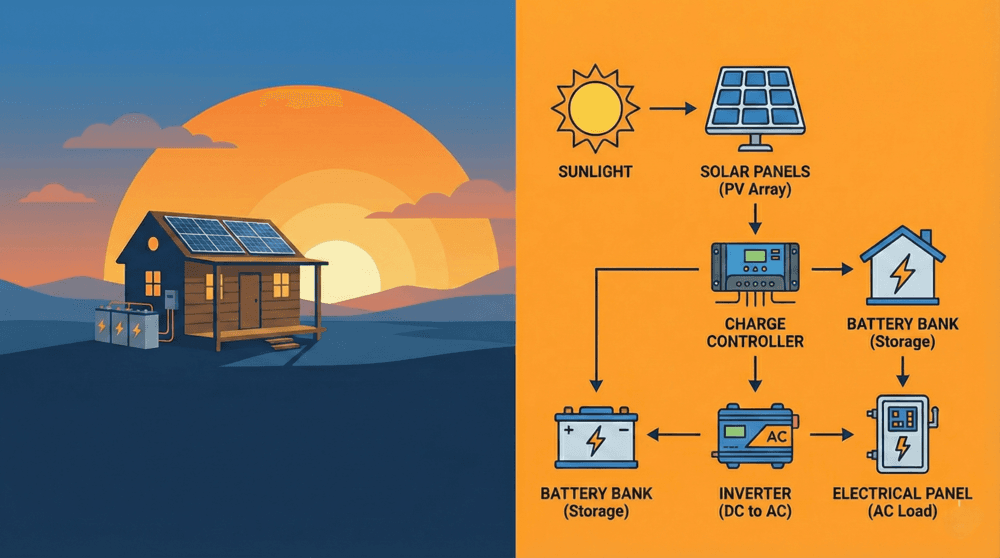
Off-Grid Solar System Requirements: Sizing, Permits & NEC Code Guide
Off-grid solar permit requirements by state: building codes, NEC compliance, bat...
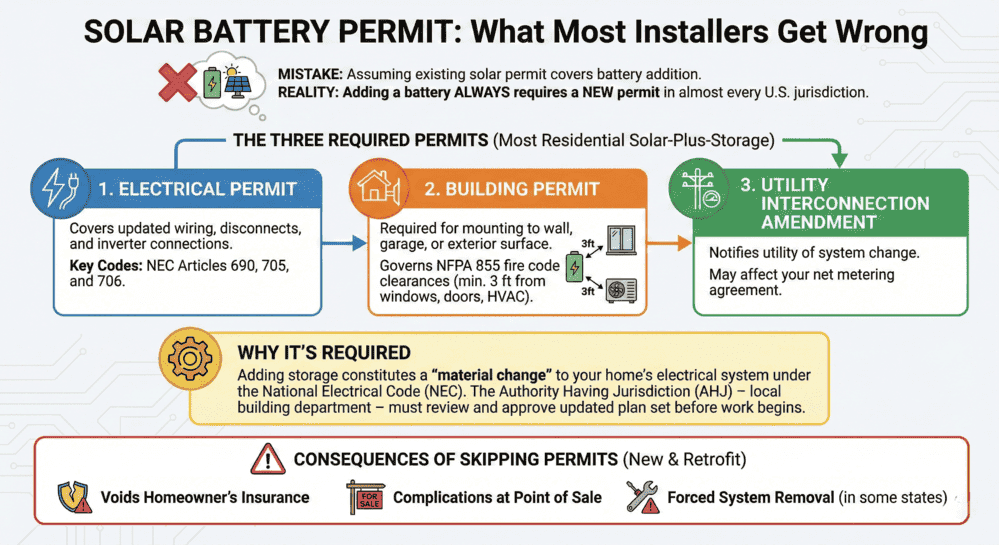
Solar Battery Permit: What Most Installers Get Wrong
Quick Answer: Adding battery storage to a solar system almost always requires ne...
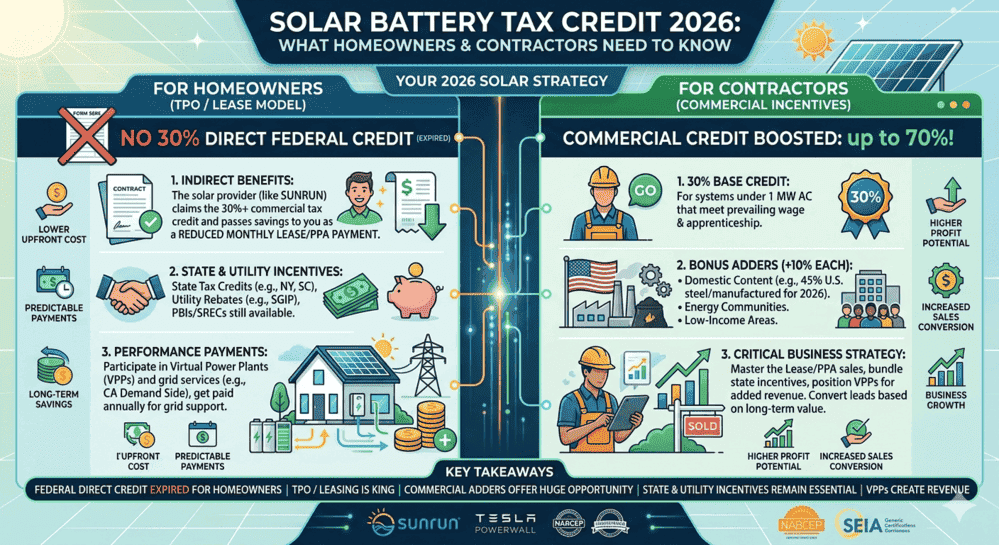
Solar Battery Tax Credit 2026: What Homeowners and Contractors Need to Know
There is no federal solar battery tax credit available to homeowners in 2026. Th...