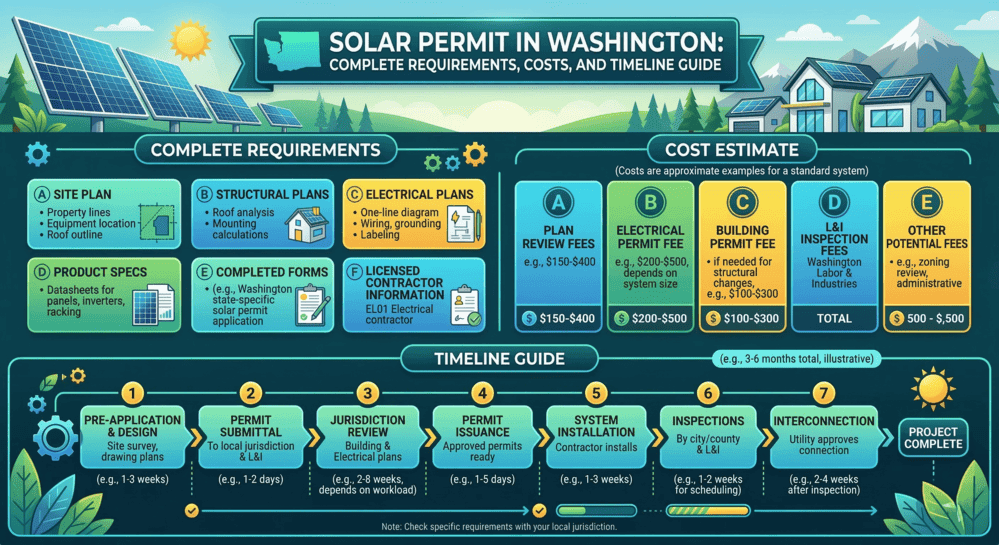
Yes, you need a permit to install solar panels in Washington State. Every residential solar PV system requires an electrical permit from the Washington State Department of Labor & Industries (L&I) or a local jurisdiction that administers its own electrical code. Many cities also require a building permit, though several jurisdictions have adopted expedited or exemption-based processes for standard rooftop systems. Permit costs typically range from $75 to $500 depending on your city, system size, and whether structural engineering is needed.
Washington is one of the most solar-friendly states in the country when it comes to permitting. The state legislature has pushed for streamlined solar permit processes, many cities participate in shared online portals like MyBuildingPermit.com, and a statewide 100% sales tax exemption covers all solar equipment and installation labor for systems under 100 kW. But the permitting process still varies significantly from city to city, and understanding the specific requirements for your jurisdiction is the key to avoiding costly delays.
This guide breaks down everything homeowners, contractors, and solar installers need to know about getting a solar permit in Washington, including permit types, costs by city, required documents, inspection steps, utility interconnection timelines, battery storage rules, and HOA regulations. For a broader overview of how solar panel permit requirements work across the country, see our national guide.
Do You Need a Permit to Install Solar Panels in Washington State?
The short answer is yes. Washington State law requires an electrical permit and inspection for all new solar photovoltaic (PV) installations, system expansions, and any repairs or maintenance involving electrical wiring. There are no exceptions for system size or residential status.
Electrical Permits: Required for All Solar Systems
Every solar PV installation in Washington requires an electrical permit. This ensures the system complies with the National Electrical Code (NEC), specifically Article 690 for solar PV systems and Article 706 for energy storage systems. The Washington State Department of Labor & Industries (L&I) administers electrical permits for most of the state, but some cities handle their own electrical permitting. Seattle, Tacoma, and a handful of other municipalities issue electrical permits through their local building departments rather than L&I.
If you hire a licensed electrical contractor, they are required to purchase the electrical permit themselves. Property owners who want to perform their own electrical work can apply for a property owner exemption through L&I, but this comes with specific restrictions. The property owner must personally do the work, and the property cannot be intended for immediate sale or lease.
Building Permits: Required in Some Cities, Not All
Building permit requirements vary by jurisdiction. Several Washington cities have adopted expedited or exemption-based processes for standard residential rooftop solar systems. In Issaquah, for example, most standard rooftop systems do not require a building permit at all, only the state electrical permit. Issaquah received a Gold designation from the national SolSmart program for making solar permitting faster and more affordable. Snoqualmie requires a building permit for all solar installations but has implemented an expedited review process funded by the Washington State Department of Commerce. Bellevue requires both electrical and building permits, and the process can take up to two months.
A building permit is generally required when the solar system involves ground-mounting (which may trigger environmental and setback reviews), structural modifications to the roof, new construction projects, or installations on manufactured or mobile homes that require stamped engineering plans.
When Structural Engineering Is Needed
Most standard residential rooftop installations on homes built after 1960 with conventional framing do not require additional structural engineering. However, a PE-stamped structural analysis is typically required in these situations: the home was built before 1960, the structure uses post-frame or unconventional construction, the roof has existing damage or is in poor condition, the system adds more than 5 pounds per square foot of dead load, or the installation is on a flat commercial roof. Engineering costs in Washington typically range from $500 to $2,500 depending on the complexity of the project and the jurisdiction’s requirements.
How Much Does a Solar Permit Cost in Washington?
Solar permit costs in Washington depend on the type of permits required, your city or county, and whether your system needs structural engineering review. Here is a breakdown of typical costs by category.
Electrical Permit Fees
The minimum L&I electrical permit fee for a new solar PV feeder is $75. This covers a basic residential system with a single inspection. Additional electrical work, such as panel upgrades or battery storage circuits, increases the total permit cost. In Seattle, the electrical permit fee for systems under 7.7 kW is approximately $239 (calculated as three-quarters of the base fee plus a $65.65 administrative fee). Cities that administer their own electrical codes may have different fee structures.
Building Permit Fees
Building permit fees vary widely. Some cities like Issaquah do not charge a building permit fee for qualifying rooftop solar systems. Others charge flat fees or calculate fees based on the declared value of the installation. Typical building permit fees for residential solar in Washington range from $100 to $350 when required.
Permit Cost Comparison by City
| City | Electrical Permit | Building Permit | Engineering (If Needed) | Typical Processing Time |
| Seattle | ~$239 (SDCI) | Conditional | $500-$2,500 | 2-4 weeks |
| Bellevue | Varies by system | Often required | $500-$2,500 | Up to 2 months |
| Kirkland | L&I or local | May be required | $500-$2,500 | 2-4 weeks |
| Issaquah | L&I ($75+) | Exempt (most systems) | Rarely needed | 1-2 weeks |
| Snoqualmie | L&I ($75+) | Required (expedited) | $500-$2,500 | 1-2 weeks |
| Edmonds | L&I ($75+) | Conditional | $500-$2,500 | 2-3 weeks |
| Spokane County | L&I ($75+) | OTC available | Pre-1960 homes | Same day (OTC) |
| Mercer Island | L&I ($75+) | May be required | $500-$2,500 | 2-3 weeks |
Note: Fees shown are approximate and subject to change. Contact your local permitting office or L&I for current fee schedules.
Washington Solar Permit Requirements: What Documents Do You Need?
Submitting a complete application package is one of the most important steps in avoiding permit delays. Incomplete or inaccurate plan sets are the leading cause of permit rejections and inspection failures across Washington jurisdictions. Here is what most cities require.
Required Documents Checklist
- Completed permit application (building and/or electrical, depending on jurisdiction)
- Site plan showing the property, roof area, and solar panel layout
- Roof plan or rooftop layout showing panel placement, dimensions, and setbacks from the ridge, eaves, and roof edges
- Single-line electrical diagram showing the PV array, inverter(s), disconnects, panelboard connections, and utility meter
- Equipment specification sheets for solar modules, inverter(s), racking system, and battery (if applicable)
- UL listing certifications for all major equipment components
- Load calculations demonstrating the system does not exceed the panelboard bus and main OCPD ratings
- Structural analysis or PE-stamped engineering letter (when required by the jurisdiction or building conditions)
- Manufacturer installation instructions for the racking and mounting system
- Fire code compliance documentation showing roof access pathways, setbacks, and panel clearances per the International Fire Code (IFC)
Plan Set Requirements
The plan set is the core document package that building departments and electrical inspectors review. For Washington solar permits, plan sets should include a roof layout with panel placement and dimensions, a single-line electrical diagram, equipment specifications, attachment details for the racking system, and code compliance notes referencing NEC Article 690 and the applicable sections of the International Fire Code. Many jurisdictions, including Bellevue, provide their own standard electrical diagram template that applicants must use.
Single-Line Diagram Requirements
The single-line diagram is one of the most scrutinized documents in the permit review. It must clearly show the PV array configuration, string sizing, inverter type and rating, overcurrent protection devices (OCPDs), disconnect locations, conductor sizing, grounding and bonding details, and the point of interconnection with the utility. For systems connecting on the load side of the service disconnect, the diagram must demonstrate compliance with NEC 705.12, including the 120% bus bar rule or an approved alternative method like supply-side connections.
Solar Permit Solutions
Skip the Permit Headaches
We design plan sets that pass inspection the first time. Code-compliant, PE-stamped, accepted by AHJs nationwide.
How Long Does It Take to Get a Solar Permit in Washington?
Permit processing timelines vary significantly across Washington cities. Some jurisdictions offer same-day, over-the-counter permits for qualifying systems, while others require multi-week plan review cycles. For a deeper look at permitting timelines nationwide, see our guide on how long solar permits take to get approved.
City-by-City Processing Times
The fastest permitting in Washington is available through jurisdictions that have adopted the expedited residential solar permit process developed by the Northwest Solar Communities coalition and funded by the Washington State Department of Commerce. Snoqualmie, Issaquah, and Spokane County all offer streamlined or OTC processes for standard rooftop systems. Bellevue is among the slowest, with permit processing times reaching up to two months for solar installations. Seattle typically processes solar permits in two to four weeks depending on the complexity and completeness of the application.
Expedited Permitting Programs
Washington has been a national leader in expedited solar permitting. A statewide code amendment incorporated into the International Residential Code (IRC) Section M2302 establishes minimum standards for solar PV permitting across all jurisdictions. Cities that qualify for expedited processing typically require a simple checklist-based application for systems that meet standard criteria: roof-mounted, residential, lightweight panels on conventional framing, and within the load and fire code parameters. These applications can be approved same-day or within a few business days.
Common Reasons for Permit Delays
- Incomplete plan sets: Missing single-line diagrams, spec sheets, or structural documentation
- Incorrect load calculations: System exceeds the panelboard’s bus/OCPD rating without an upgrade plan
- Fire code violations: Panels placed too close to the roof ridge, eaves, or valleys without required access pathways
- Missing UL certifications: Equipment that is not UL-listed or uses expired certifications
- Non-compliant wiring diagrams: Conductor sizing errors, missing grounding details, or incorrect disconnect placement
- Jurisdiction-specific form errors: Not using the required city template (e.g., Bellevue’s standard electrical diagram template)
- HOA or zoning conflicts: Failure to obtain HOA pre-approval or address zoning setback requirements for ground-mount systems
Solar Permit Inspections in Washington: What to Expect
After your permit is approved and the system is installed, one or more inspections are required before the system can be energized and connected to the utility grid. The number and type of inspections depends on your jurisdiction and system complexity.
Types of Solar Inspections
- Pre-construction inspection: Required in Bellevue, Seattle, and Kirkland. Verifies that the equipment on site matches the approved plan set before installation begins. The inspector confirms that all listed equipment, including modules, inverters, and racking, matches the specifications submitted with the permit application.
- Rough-in inspection: Required for new construction projects where wiring is installed before walls, ceilings, or other coverings are closed up. This inspection confirms that conduit runs, junction boxes, and wire routing comply with NEC requirements before concealment.
- Reconnect inspection: Required when utility power is shut off during the installation, or when the main service panel or a smart electrical panel is being installed or upgraded. This inspection verifies that the reconnection is safe and code-compliant.
- Final inspection: The most common inspection for residential solar projects. The inspector verifies that the entire installation matches the approved plan set, all connections are secure, labeling is correct, grounding and bonding are complete, and fire code access pathways are maintained. Passing the final inspection is required before the utility will grant Permission to Operate (PTO).
How to Prepare for Your Inspection
Have a copy of the approved plan set on site and accessible. Ensure all equipment labels are visible and match the plan set specifications. Verify that all required disconnects are installed and properly labeled. Confirm that roof access pathways meet fire code clearances. Make sure the electrical panel directory is updated to reflect the solar circuit. Your installer or project manager typically schedules inspections through the local building department or through MyBuildingPermit.com. Accurate as-built drawings should be prepared if any deviations from the original plan set occurred during installation.
What Happens If You Fail an Inspection?
If the inspector identifies code violations or discrepancies between the installation and the approved plan set, they will issue a correction notice. The installer must address all noted deficiencies and schedule a re-inspection. Common reasons for inspection failure include mismatched equipment (different module or inverter brand than what was approved), incomplete grounding, missing or incorrect labeling, and fire code setback violations. Re-inspection fees may apply depending on the jurisdiction.
Battery Storage Permits and Fire Code Requirements in Washington
Battery energy storage systems (BESS) installed alongside solar PV systems require their own permitting considerations. Since mid-2024, several Washington cities have adopted stricter fire code requirements for residential battery installations, particularly in Seattle, Redmond, and Kirkland.
Indoor Battery Requirements
Indoor battery installations must maintain specified clearances from windows, doors, and ignition sources. Heat detectors are required in the room or area where the battery is installed. All indoor battery equipment must carry UL listings appropriate for indoor use (such as UL 9540 for energy storage systems). Plan sets must clearly show the battery location relative to living spaces and egress pathways.
Outdoor Battery Requirements
Outdoor battery installations require proper setbacks from property lines, building openings, and combustible materials. Fire-resistant spacing must be maintained per the manufacturer’s installation instructions and local fire code amendments. Outdoor enclosures must be rated for the climate and meet all UL listing requirements.
NEC Article 706 Compliance
All battery storage installations in Washington must comply with NEC Article 706, which covers energy storage systems. This includes requirements for disconnecting means, overcurrent protection, system labeling, and the integration of the storage system with the solar PV array and utility interconnection. Permit applications for solar-plus-storage systems should include a single-line diagram that shows both the PV and battery systems, including all disconnects, transfer switches, and the operational modes of the system (grid-tied, backup, off-grid). Understanding rapid shutdown, AFCI, and GFCI safety requirements is essential for properly documenting battery-integrated systems.
Utility Interconnection Requirements by Washington Utility
After the solar system passes its final inspection, the next step is receiving Permission to Operate (PTO) from your utility. This requires completing the utility’s interconnection agreement and providing documentation of the approved permit and passed inspection. Here is a comparison of the major Washington utilities and their interconnection requirements.
| Utility | ATC Timeline | PTO Timeline | Disconnect Type | Max Size | Special Notes |
| Puget Sound Energy (PSE) | 2-3 weeks | 1.5-2 weeks | Knife-style (>25 kW AC) | No stated cap | Largest WA utility; online portal available |
| Seattle City Light (SCL) | 2-3 weeks | 1.5-2 weeks | Knife-style (all systems) | No stated cap | Requires knife disconnect for all generating sources |
| Snohomish PUD | 2-4 weeks | Included | Standard | 78 kW AC (single phase) | Systems >78 kW require 3-phase service upgrade |
| Tacoma Power | 2-3 weeks | Included | Standard | 25 kW (simplified) | Straightforward net metering agreement for smaller systems |
| Avista Utilities | 2-4 weeks | After L&I approval | Standard | No stated cap | Requires L&I permit number and inspection proof before PTO |
| Clark Public Utilities | 2-4 weeks | After inspection | Standard | 100 kW | Online portal; may require on-site utility inspection before meter swap |
For all utilities, timely interconnection depends on clear coordination between your installer, the local Authority Having Jurisdiction (AHJ), and the utility. Accurate plan sets, proper disconnect type and labeling, and verification of the passed final inspection are the three requirements that must be in place before any utility will grant PTO. Visit PSE’s Customer Connected Solar page or Seattle City Light’s solar resources for utility-specific application forms.
Washington Solar Permit Rules by City
Because permitting requirements differ across jurisdictions, here is a quick reference for some of the most common cities where Solar Permit Solutions serves clients.
Seattle
Seattle issues its own electrical permits through the Seattle Department of Construction and Inspections (SDCI). A building permit is not required for standard rooftop systems on single-family homes if the mounting system is engineered for solar use, panels are no more than 18 inches above the roof surface, and the total dead load does not exceed 5 pounds per square foot. Ground-mounted systems and commercial installations require building permits. Fire code access pathways must comply with SDCI Tip #420 for solar energy systems and the International Fire Code as adopted by Seattle.
Bellevue
Bellevue requires both an electrical permit and, in many cases, a building permit. The city provides a specific checklist for residential rooftop PV systems and a standard electrical diagram template that applicants must use. Contractors making their first residential PV permit application in Bellevue must meet with an electrical plan reviewer to go over plans before the permit is issued. Processing times can reach up to two months, so planning ahead is essential. Systems that meet basic requirements listed on the Bellevue PV Systems Checklist may qualify for a streamlined review without full electrical plan review.
Issaquah
Issaquah has streamlined its solar permitting process significantly. For most standard residential rooftop systems, a building permit is not required. Homeowners and contractors only need to obtain the state electrical permit through L&I. The city provides a Solar Checklist that determines whether a building permit is needed. Commercial solar installations on Issaquah properties require both building and electrical permits.
Snoqualmie
Snoqualmie requires both a building permit from the city and an electrical permit from L&I for all solar PV installations. However, the city has adopted an expedited permitting process for small-scale, roof-mounted residential installations through a Washington State Department of Commerce grant. Qualifying systems receive faster review. Applications can be submitted online or at Snoqualmie City Hall, and inspections can be scheduled through the city’s Building Division or MyBuildingPermit.com.
Spokane County
Spokane County offers an over-the-counter (OTC) building permit process for residential rooftop solar systems that meet standard checklist criteria. All project plans and supporting documentation must be provided at the time of application. Homes built before 1960 or post-frame structures always require structural engineering. The county uses the same IRC M2302 code framework adopted statewide, making the process predictable for contractors familiar with the standard checklist. For ground-mount solar system installations in Spokane County, additional environmental and setback reviews may apply.
Can Your HOA Block Solar Panels in Washington?
No. Washington State law explicitly protects homeowners’ rights to install solar energy systems. Under RCW 64.38.055, HOA governing documents cannot prohibit the installation of solar panels as long as the system meets applicable health and safety standards, is certified by recognized testing laboratories, and complies with the NEC and utility interconnection rules.
What HOAs Can and Cannot Regulate
While HOAs cannot ban solar panels, they can impose reasonable rules about placement and aesthetics. For example, an HOA may require that ground-mounted panels be shielded from view, but only if the shielding does not degrade the system’s performance by more than 10%. HOAs can also require that homeowners indemnify the association for any damage caused by the installation or maintenance of the solar system. They cannot, however, prohibit rooftop panels or impose requirements that make the system economically unviable.
How to Submit Solar Plans to Your HOA
Most HOAs approve solar installations quickly when provided with the right documentation. Prepare a package that includes your approved permit, a site plan or roof layout showing panel placement, equipment specification sheets, UL listing certifications, and a copy of RCW 64.38.055 for reference. Many solar installers prepare this HOA submission package as part of their standard service. If your HOA has specific architectural review requirements, submit the package early in the process to avoid delays after the permit is approved.
Washington Solar Incentives That Depend on Proper Permitting
Several valuable solar incentives in Washington are directly tied to completing the permitting and inspection process correctly. While the federal residential tax credit expired at the end of 2025, Washington’s state-level incentives remain strong and continue to make solar a sound investment.
100% Sales Tax Exemption
Washington State provides a full sales and use tax exemption on all equipment and installation labor for solar energy systems generating less than 100 kW. With combined state and local sales tax rates often exceeding 9% in the Puget Sound region, this exemption saves homeowners $1,800 to $3,150 or more on a typical $20,000 to $35,000 residential system. This exemption is in effect through December 31, 2029. To qualify, the system must be properly permitted and installed in compliance with all applicable codes.
Federal Investment Tax Credit (ITC) – Expired for Homeowner-Owned Systems
The 30% federal residential solar Investment Tax Credit (Section 25D) expired on December 31, 2025, following the passage of the One Big Beautiful Bill Act signed into law on July 4, 2025. Homeowners who purchased and installed solar systems by that deadline were able to claim 30% of the total system cost as a federal tax credit. As of 2026, homeowner-owned residential solar systems are no longer eligible for the federal ITC. For more details on the ITC timeline, visit the IRS Residential Clean Energy Credit page.
However, third-party-owned systems through solar leases and Power Purchase Agreements (PPAs) may still qualify for commercial tax credits (Section 48E) if the system owner meets eligibility requirements. Some providers pass these savings through to homeowners as lower monthly rates. Homeowners should consult a tax professional for guidance on any remaining credits from systems installed in 2025 or earlier. Regardless of federal incentive changes, the Washington State sales tax exemption (through 2029) and net metering remain available and continue to make solar financially attractive.
Net Metering in Washington
Washington State law requires utilities to offer net metering for customer-owned solar systems. Under net metering, any excess electricity your system generates is credited to your utility bill at the full retail rate. Credits carry forward month to month but expire on March 31 of each year per state law (RCW 80.60.030). This annual reset date aligns with Washington’s solar production cycle, allowing homeowners to bank summer credits and use them through winter. It is important to note that some utilities, including Puget Sound Energy, have reached or are approaching their net metering capacity caps. Once a utility reaches 4% of its 1996 peak demand in cumulative net-metered generation capacity, it may establish alternative rate schedules. To enroll in net metering, your system must have a completed interconnection agreement and PTO from your utility, which requires passing the final electrical inspection and providing the utility with the approved permit documentation.
Can You DIY a Solar Permit in Washington?
Washington law allows property owners to perform their own electrical work under a property owner exemption from L&I. However, there are important limitations and risks to consider before taking the DIY route.
What Homeowners Can Do Themselves
Property owners can apply for an electrical permit through L&I’s property owner application process. They can also pull building permits in most jurisdictions. The property owner exemption requires that the owner personally performs the electrical work, occupies the property (not a rental), and does not intend to sell or lease the property within the applicable timeframe. The property owner is still responsible for meeting all NEC code requirements and passing all inspections.
What Requires a Licensed Professional
In practice, most residential solar installations involve electrical work that requires significant expertise in NEC Article 690, proper circuit sizing per NEC 690.8, grounding and bonding, and inverter integration. Errors in these areas are the most common reasons for inspection failures. Equipment warranties from major manufacturers often require professional installation to remain valid. Additionally, many utility interconnection agreements require that the system be installed by a licensed contractor.
Risks of DIY Permitting
DIY solar permitting carries several risks: voided equipment warranties, failed inspections that require paid re-inspections and corrections, extended project timelines, potential safety hazards from improper wiring or grounding, and difficulty getting utility PTO without a licensed installer’s documentation. For most homeowners, working with a professional installer or a dedicated solar permit service is the more reliable and cost-effective path.
How Solar Permit Solutions Simplifies Washington Solar Permitting
Solar Permit Solutions provides PE-stamped solar permit plan sets, single-line diagrams, structural engineering letters, and complete permit-ready documentation packages for residential, commercial, and ground-mount solar installations across all of Washington State. Our team handles the technical permit requirements so installers and homeowners can focus on getting systems installed and operational.
Whether you need a permit plan set for a standard rooftop system in Seattle, a structural analysis for an older home in Bellevue, or a complete interconnection package for a system in Eastern Washington, Solar Permit Solutions delivers accurate, code-compliant documentation designed to pass inspection on the first attempt. We understand the NEC 690.31 wiring standards and the grounding equipment specifications that Washington AHJs require, and we work with every major utility in the state.
Contact Solar Permit Solutions today for a free quote on solar permit plan sets for your Washington project.
Conclusion: Getting Your Solar Permit in Washington Does Not Have to Be Complicated
Washington State has made real progress in simplifying solar permitting, but the process still demands attention to detail. The difference between a permit approved in a week and one delayed for months usually comes down to three things: submitting a complete and accurate plan set, knowing whether your city requires a building permit or only an electrical permit, and coordinating with your utility early on interconnection requirements.
With the federal residential tax credit now expired, Washington’s state-level incentives carry even more weight. The 100% sales tax exemption through 2029 and net metering at retail rates remain strong financial drivers, and both depend on having a properly permitted, inspected, and interconnected system. Whether you are a homeowner navigating the process for the first time or a contractor managing multiple projects across jurisdictions, investing the upfront effort in accurate documentation pays off in faster approvals, clean inspections, and a system that is producing power sooner.
Frequently Asked Questions
Skip the Permit Headaches
We design plan sets that pass inspection the first time. Code-compliant, PE-stamped, accepted by AHJs nationwide.
Frequently Asked Questions
Yes. Every solar PV installation in Washington requires at minimum an electrical permit from L&I or your local jurisdiction. Building permits are also required in many cities, though some like Issaquah exempt standard rooftop systems.
The minimum L&I electrical permit fee for a solar PV feeder is $75. Total permit costs, including building permits and any required engineering, typically range from $75 to $500 for standard residential systems. Engineering, when required, adds $500 to $2,500.
Processing times range from same-day (over-the-counter in cities like Spokane County) to up to two months (Bellevue). Most jurisdictions process standard residential solar permits within one to four weeks.
Property owners can apply for a property owner electrical permit exemption through L&I and perform their own electrical work. However, the work must meet all NEC code requirements and pass inspection. Equipment warranties and utility interconnection agreements often require licensed professional installation.
No. Under RCW 64.38.055, HOAs in Washington cannot prohibit solar panel installations. They may set reasonable rules about placement and aesthetics, but these rules cannot make the installation economically unviable or reduce system performance by more than 10%.
At minimum, a final electrical inspection is required. Some cities also require pre-construction inspections (Bellevue, Seattle, Kirkland) and rough-in inspections for new construction. A reconnect inspection is required when the main panel is upgraded or utility power is temporarily disconnected.
No. The 30% federal residential solar tax credit (Section 25D) expired on December 31, 2025, following the One Big Beautiful Bill Act. Homeowner-owned systems installed in 2026 or later are not eligible. However, third-party-owned systems through leases or PPAs may still qualify for commercial credits. Consult a tax professional for your specific situation.
No. Washington provides a 100% sales and use tax exemption on all solar equipment and installation labor for systems under 100 kW. This exemption is in effect through December 31, 2029, and typically saves homeowners 9% or more on the total system cost.
Net metering is a billing arrangement where your utility credits you at the full retail electricity rate for any excess power your solar system sends to the grid. Washington State law requires all utilities to offer net metering. Credits carry forward monthly but expire on March 31 each year per state law. Some utilities like PSE are approaching their net metering capacity caps, which could lead to alternative rate structures in the future.

SPS Editorial Team
Solar Permit Solutions
Solar Permit Solutions provides professional solar permit design services for residential, commercial, and off-grid installations across all 50 states. Our team ensures permit-ready plan sets delivered fast.
Related Articles
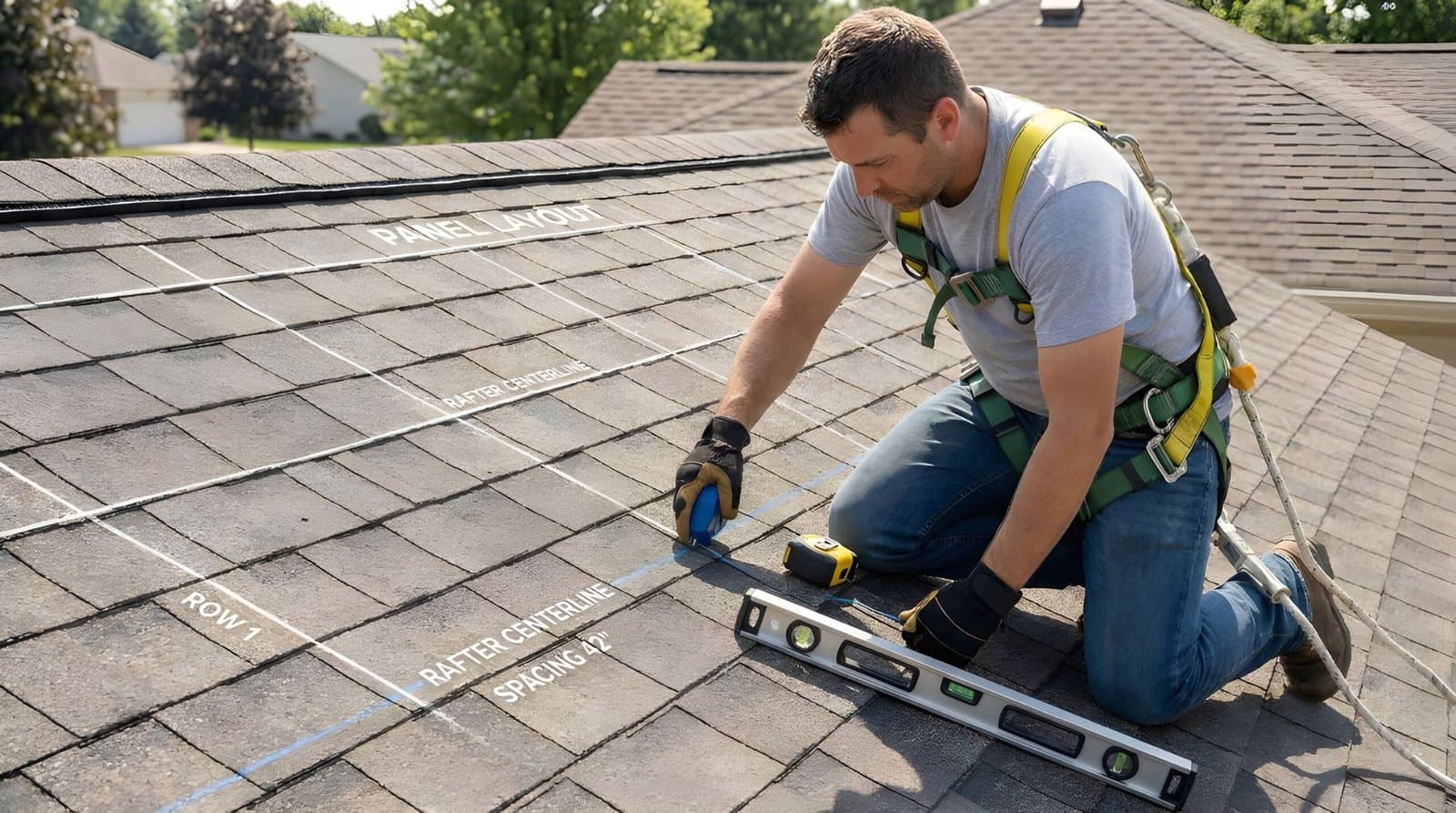
How to Mount Solar Panels on a Roof: Mounting Systems, Rails, and DIY Tips
Learn how to mount solar panels yourself with this complete guide. Covers compon...
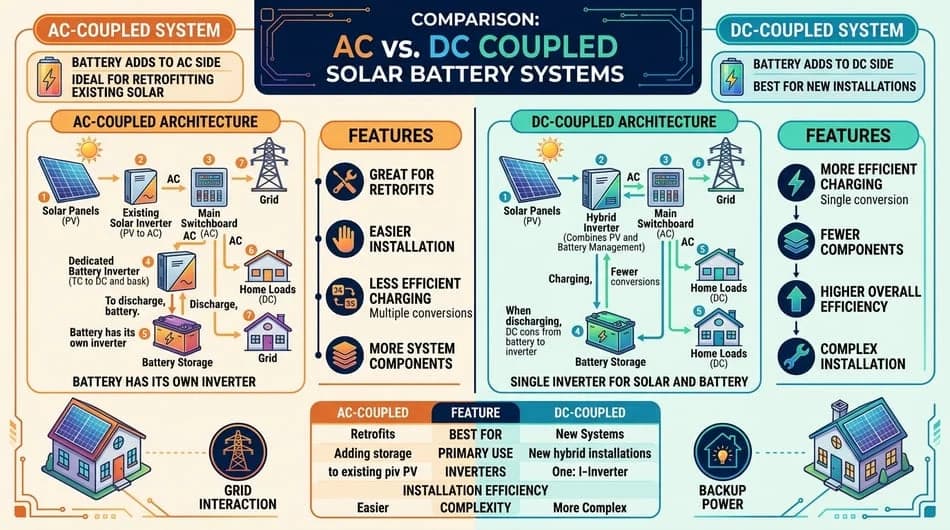
AC vs DC Coupled Solar Batteries: Which Should You Choose?
AC vs DC coupled solar batteries compared: efficiency, costs ($8K-$18K), and ins...
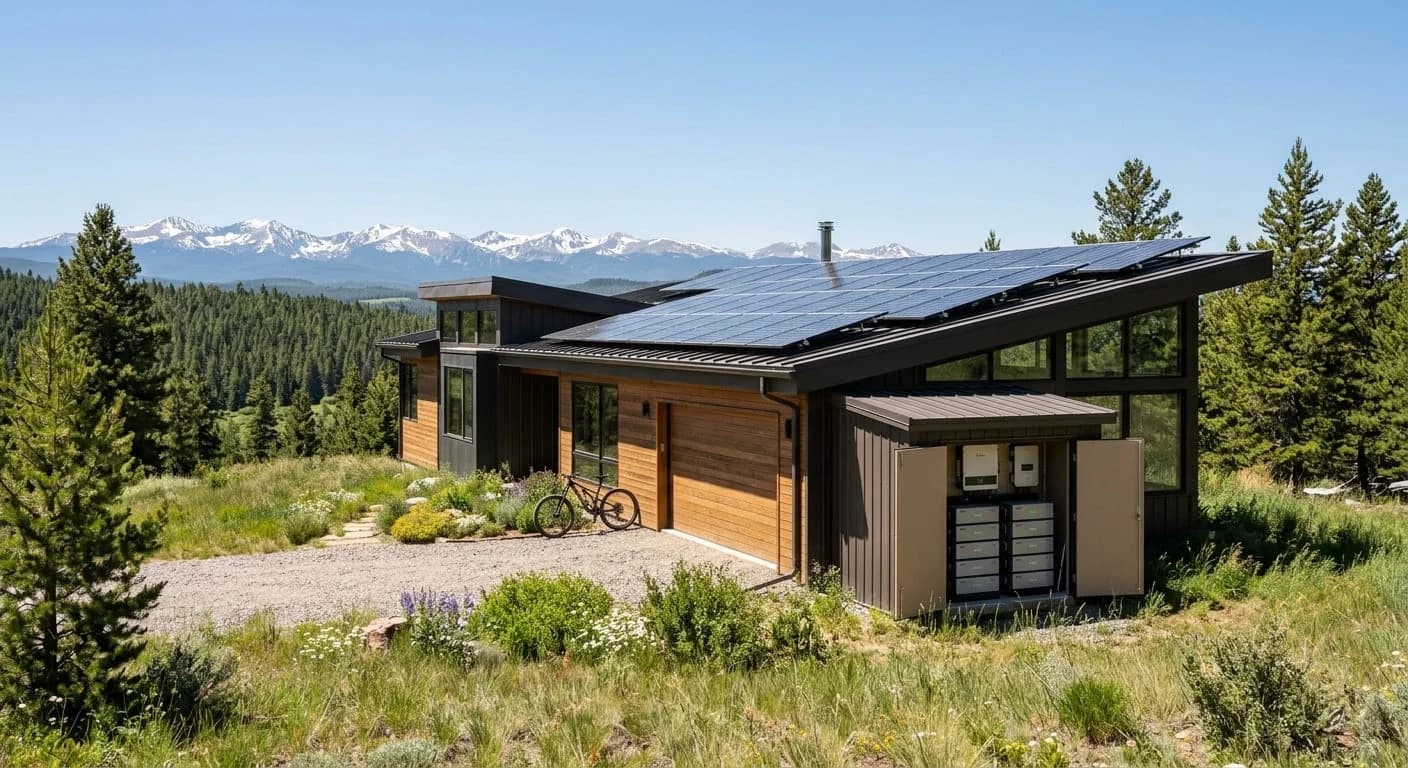
How Many Solar Panels Do I Need to Run Off the Grid?
Most off-grid homes need about 8 to 16 solar panels rated at 400 watts, dependin...