
Interconnection studies are technical analyses utilities conduct to evaluate how a solar panel system will impact grid reliability and determine required infrastructure upgrades. These studies are not required for all solar projects. Small residential systems under 10-25 kW typically qualify for expedited processes through simplified interconnection application review, while commercial and utility-scale projects exceeding 2 MW almost always trigger comprehensive study requirements. Study requirements depend on system capacity, grid conditions at the connection point, and potential impacts on existing infrastructure.
The three main study types include feasibility studies ($10,000 typical cost), system impact studies ($25,000 typical cost), and facilities studies ($50,000-$100,000+ typical cost). Complete study processes for larger projects cost $250,000-$500,000 and take 18-36 months on average, with some projects experiencing delays up to five years. Most solar installations operate as grid-tied systems rather than off-grid configurations. Without completing required interconnection studies and receiving approval, solar systems cannot legally operate or qualify for net metering benefits that reduce electricity costs.
When Interconnection Studies Are Required
Utilities determine interconnection study requirements based on specific project characteristics and grid conditions. The decision typically follows a tiered screening process that evaluates system capacity, grid availability, and potential impacts on existing infrastructure.
Small residential solar panel system installations under 10-25 kW rarely trigger detailed interconnection studies. These systems qualify for expedited or simplified interconnection processes because their impact on grid operations remains minimal. Most utilities allow these smaller projects to proceed through a fast-track application that skips comprehensive technical analysis.
Commercial and utility-scale solar projects typically require interconnection studies when they exceed utility-specific capacity thresholds. Common triggers include systems over 2 MW, connections to constrained grid areas, or projects that may cause voltage regulation issues. Utilities with net metering programs establish clear capacity limits that determine when detailed studies become mandatory. Projects below these thresholds may still require studies if initial screening reveals potential grid impacts or if the proposed connection point lacks sufficient capacity to handle the additional generation.
Types of Interconnection Studies
Utilities conduct different levels of interconnection studies depending on project complexity and potential grid impacts. The study process typically follows a sequential approach, with each level providing more detailed technical analysis.
Feasibility Studies
Feasibility studies represent the first level of technical analysis for projects requiring detailed review. Utility companies require solar energy systems to meet specific electrical safety standards before connecting to their grid. These preliminary studies identify potential grid constraints, estimate interconnection costs, and determine whether the proposed project can physically connect at the requested location. They also verify that solar panel systems comply with their net metering guidelines.
Feasibility studies typically require detailed information about the property, electricity generation capacity, and system specifications (including equipment, system size, production estimates, system design, and installation location). While utility account holders may submit study requests, most installation companies handle this process on behalf of their customers. If utilities identify any issues or significant grid impacts during feasibility review, they may require additional studies before approving grid interconnection.
Once the feasibility study indicates viable connection options, the project can proceed with the remaining installation steps and more detailed technical studies if required.
System Impact Studies
After completing feasibility analysis and determining that grid connection is possible, larger projects move to system impact studies. These comprehensive technical evaluations examine how the proposed solar installation will affect grid operations, power quality, and system reliability.
After completing feasibility analysis and determining that grid connection is possible, larger projects move to system impact studies. These comprehensive technical evaluations examine how the proposed solar installation will affect grid operations, power quality, and system reliability.
System impact studies analyze voltage fluctuations, power flow patterns, protection system coordination, and potential equipment overloads. Utilities typically send technical staff to examine the proposed connection point and surrounding infrastructure as part of this evaluation. During this assessment, utility representatives inspect the electrical panel connection capacity and overall grid infrastructure at the proposed location. They also evaluate whether additional equipment upgrades or protective devices are necessary to maintain grid stability when the solar panel system begins electricity generation.
System impact studies determine what modifications, if any, are required to safely accommodate the new generation source. Results may identify needed transformer upgrades, voltage regulation equipment, or protection system enhancements.
Facilities Studies
Following system impact study completion, projects requiring grid infrastructure modifications proceed to facilities studies. These detailed engineering analyses specify exactly what equipment upgrades utilities must install and provide cost estimates for necessary improvements. Property owners receive official documentation outlining required interconnection fees and infrastructure costs based on facilities study findings.

Interconnection Study Costs and Who Pays
Interconnection study costs vary significantly by utility company, project size, and study complexity. For residential solar panel systems that bypass detailed studies through expedited processes, costs typically range from zero to a few hundred dollars for basic application review and net metering program enrollment.
Projects requiring interconnection studies face substantial upfront costs based on 2024-2025 industry data. Feasibility studies typically cost $10,000 in deposits, though actual costs may vary. System impact studies require approximately $25,000 in deposits for commercial installations that need comprehensive technical evaluation. Facilities studies cost $50,000 to $100,000 or more depending on project complexity and required infrastructure analysis. While residential costs remain minimal, the financial picture changes dramatically for larger commercial and utility-scale projects.
Complete interconnection study processes for commercial and utility-scale projects typically cost $250,000 to $500,000 from start to finish. The solar project developer typically bears all interconnection study costs upfront. Utilities conduct these studies at the developer’s expense, charging cost-recovery fees that reflect engineering time, software analysis, and field investigation requirements. Some utilities refund study costs if the project proceeds to completion, while others treat study fees as non-refundable development expenses.
Beyond study costs, projects may face substantial grid upgrade expenses identified during the study process. Commercial solar projects may require grid upgrades to handle their electricity generation capacity. Depending on the necessary improvements, these additional costs can vary substantially. Fortunately, many states have regulations limiting unexpected costs for solar customers, requiring utilities to absorb certain infrastructure fees beyond established thresholds.
Beyond study costs, projects may face substantial grid upgrade expenses identified during the study process. Commercial solar projects may require grid upgrades to handle their electricity generation capacity. Depending on the necessary improvements, these additional costs can vary substantially. Fortunately, many states have regulations limiting unexpected costs for solar customers, requiring utilities to absorb certain infrastructure fees beyond established thresholds.
Utility-scale solar installations almost always require comprehensive interconnection studies and transmission system analysis. The solar project developer, rather than the transmission operator, typically bears the cost of transmission upgrades identified through these studies, which can reach tens of millions of dollars. These projects often require structural engineering calculations and extensive technical review to ensure grid compatibility. The comprehensive interconnection process and associated study requirements represent key barriers to utility-scale solar development in many parts of the country, as study timelines can extend 12-36 months or longer before receiving approval.
Solar Permit Solutions
Skip the Permit Headaches
We design plan sets that pass inspection the first time. Code-compliant, PE-stamped, accepted by AHJs nationwide.
Study Timelines and Process Duration
Similar to study costs, timeline duration for completing interconnection studies depends largely on the utility, project size, and study complexity. Current industry data from 2024-2025 reveals significant timeline increases compared to historical averages.
Small residential installations that qualify for expedited interconnection bypass detailed studies entirely. The streamlined application review takes two to three weeks on average for residential solar panel installations. After installing the solar panel system and passing local inspection, receiving permission to operate typically requires another one to two weeks.
Large commercial projects requiring interconnection studies face significantly longer development timelines. Feasibility studies typically take 30-90 days to complete, while system impact studies require 90-180 days for comprehensive analysis. Facilities studies add another 60-120 days to the process. Combined, the complete study sequence for commercial projects can extend 18-24 months before construction approval. Applications and grid infrastructure often require thorough review to confirm compliance with appropriate electrical safety standards.
Utility-scale projects experience even longer study timelines, with median time from interconnection request to operation now averaging approximately five years based on recent data. Study processes alone frequently require 18-36 months or longer for complete interconnection analysis. Study queues at constrained grid locations add substantial delays, as utilities process interconnection requests sequentially. As of late 2024, over 2,600 GW of capacity and more than 11,800 projects await interconnection approval across U.S. transmission operators, creating unprecedented backlogs that extend timelines beyond historical norms.
Conclusion
Successfully connecting a solar panel system to the utility grid requires understanding when interconnection studies are necessary and how they impact project development. Small residential installations typically avoid detailed study requirements through expedited processes, while commercial and utility-scale projects face comprehensive technical analysis that determines grid compatibility and required infrastructure upgrades. Study requirements, costs, and timelines vary significantly based on project size, with residential systems connecting in weeks and utility-scale projects requiring years of study before construction begins.
Understanding interconnection study requirements helps project developers set realistic expectations for development timelines and budget accordingly for study costs and potential grid upgrades. Working with experienced solar installers who understand utility interconnection processes and study requirements streamlines project development, as these professionals navigate technical analysis, coordinate with utilities, and ensure all study findings are properly addressed.
Ready to start your solar project? Contact Solar Permit Solutions today for expert guidance on interconnection study requirements and grid connection processes. Our team evaluates whether your project requires studies, manages all utility coordination, and ensures your system design meets technical requirements for fast approval.
FAQs
Skip the Permit Headaches
We design plan sets that pass inspection the first time. Code-compliant, PE-stamped, accepted by AHJs nationwide.
Frequently Asked Questions
No, not all solar projects require detailed interconnection studies. Small residential systems typically under 10-25 kW qualify for expedited or simplified interconnection processes that bypass comprehensive technical analysis. These smaller installations connect through streamlined applications because their minimal grid impact does not warrant extensive study. Larger commercial and utility-scale projects almost always require interconnection studies to evaluate grid impacts and determine necessary infrastructure upgrades.
Interconnection study requirements are triggered by several factors including system capacity exceeding utility thresholds (often 2 MW or higher), connection to constrained grid areas with limited capacity, potential voltage regulation concerns, or proposed connections that may impact existing grid infrastructure. Utilities conduct initial screening reviews to determine whether projects require detailed studies. Even projects below standard thresholds may require studies if screening identifies potential grid reliability or power quality concerns.
Interconnection study costs vary widely based on project complexity and utility rates. Based on 2024-2025 industry data, feasibility studies typically cost $10,000 in deposits, system impact studies require approximately $25,000 in deposits, and facilities studies range from $50,000 to $100,000 or more for complex projects. Complete study processes for commercial and utility-scale projects typically total $250,000 to $500,000. The solar project developer pays all study costs upfront as deposits that may be partially refundable depending on utility policies. Beyond study costs, developers also bear responsibility for grid upgrade expenses identified through the study process, which can reach tens of millions of dollars for utility-scale projects requiring significant transmission infrastructure improvements.
Study completion timelines depend on project size and study complexity, with significant increases reported in 2024-2025. Feasibility studies take 30-90 days, system impact studies require 90-180 days, and facilities studies need 60-120 days. Combined, commercial projects requiring all three study levels face 18-24 months of study time before construction approval. Utility-scale projects frequently experience much longer timelines, with median time from interconnection request to operation now averaging approximately five years based on current industry data. Study queues at popular connection points add substantial delays, as utilities process requests sequentially. As of late 2024, over 11,800 projects totaling more than 2,600 GW await interconnection approval across U.S. transmission operators, creating unprecedented backlogs that extend timelines well beyond historical averages.
Yes, interconnection study results can identify technical or economic barriers that prevent project development. Studies may reveal that necessary grid upgrades exceed project economic viability, or that grid constraints at the proposed connection point cannot accommodate additional generation without extensive infrastructure investment. Some projects withdraw from study queues after receiving cost estimates that make development financially unfeasible. However, study results also identify alternative connection points or system design modifications that may enable successful interconnection at lower costs.

SPS Editorial Team
Solar Permit Solutions
Solar Permit Solutions provides professional solar permit design services for residential, commercial, and off-grid installations across all 50 states. Our team ensures permit-ready plan sets delivered fast.
Related Articles
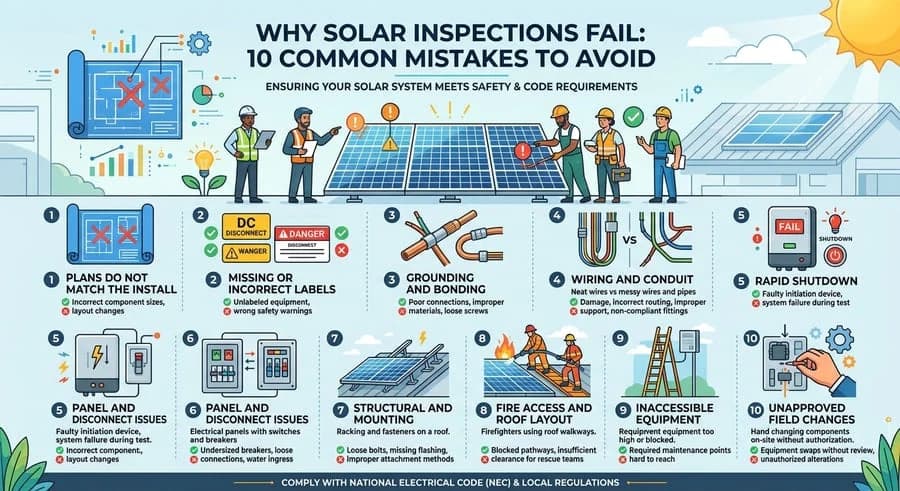
Why Solar Inspections Fail: 10 Common Mistakes to Avoid
Discover the 9 critical reasons solar inspections fail and how to avoid costly m...
Solar Grounding And Bonding: How To Pass Inspection Every Time
Learn how to pass solar grounding and bonding inspections every time. Avoid comm...
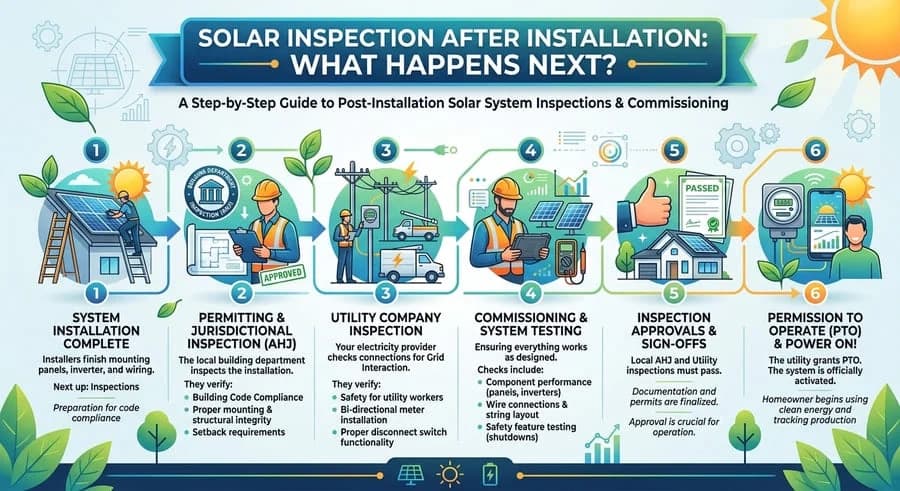
Solar Inspection After Installation: What Happens Next?
Learn how to pass your solar inspection by following essential tips for obtainin...