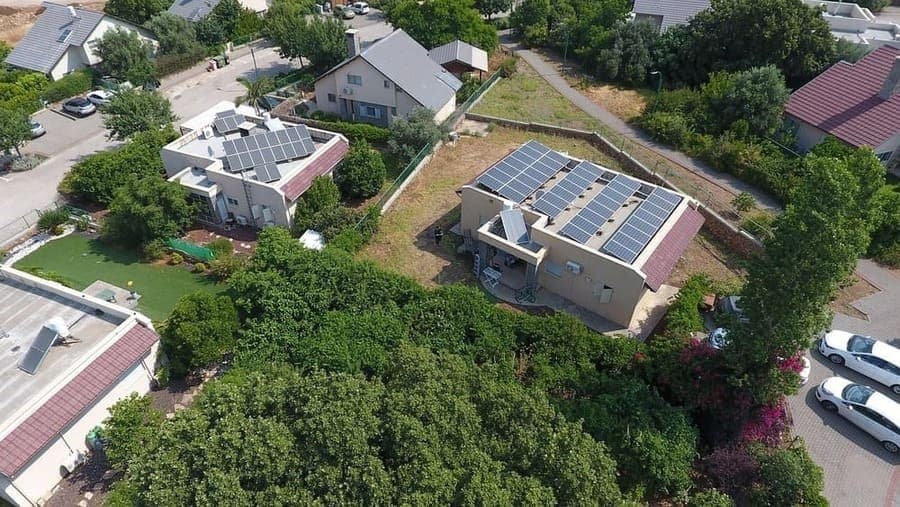
Can HOAs prohibit solar panels? Most HOAs cannot completely ban solar panel installations due to state solar access laws in states like California, Florida, Arizona, and Colorado. However, HOAs can impose reasonable restrictions on placement, appearance, and design that don’t reduce system efficiency by more than 10% or significantly increase costs.
Key facts about HOA solar panel rules:
- State protections exist: Over 30 states have solar access laws limiting HOA authority to restrict solar installations
- Reasonable restrictions allowed: HOAs can require black frames, flush-mounted panels, concealed wiring, and specific placement locations
- Approval required: Most HOAs require homeowners to submit detailed proposals before installation
- Appeal rights: Homeowners can challenge denials that violate state solar access laws through formal appeals or legal action
Common HOA solar requirements:
- Panels must match roof color or use low-profile black frames
- Systems cannot extend beyond roofline
- Installation requires licensed contractor and proper permits
- Placement may be restricted to less visible roof sections (if doesn’t impact efficiency)
Important statistics: Solar panels increase property values by approximately 7% and can provide 125% ROI within 5-7 years, benefiting both homeowners and HOA communities.
Living in a homeowner’s association (HOA) community means following specific rules and regulations that govern your property’s appearance. While HOA boards typically enforce strict guidelines on landscaping, noise restrictions, and rental policies, state legislation may safeguard your ability to install solar panels on your home. Prior to investing in a solar energy system, it’s essential to thoroughly understand your HOA’s regulations and their legal authority to limit your renewable energy installation.

Navigating HOA Regulations for Solar Panel Systems
Residing in an HOA-governed community doesn’t necessarily prevent you from installing solar panels on your roof. However, you’ll likely need to develop strategic approaches to work within HOA solar restrictions.
Breakdown of HOA Solar Panel Restrictions and Requirements
HOA organizations primarily exist to preserve community standards across their designated areas. When purchasing a home in an HOA neighborhood, you’re agreeing to comply with their established rules and requirements, which may encompass lawn maintenance, designated quiet hours, or specific architectural guidelines, among other provisions.
To preserve neighborhood aesthetics, HOA boards frequently implement specific restrictions on solar installations, including visual requirements and location specifications. They may require panels to complement your roof’s color or position them in less conspicuous locations, such as your home’s rear section. Some associations prohibit ground-mounted systems while permitting rooftop installations. Others mandate homeowners to present a detailed proposal for board approval before proceeding with solar panel installation.
Understanding HOA Covenants, Conditions, and Restrictions (CC&Rs)
When purchasing a home in an HOA community, homeowners agree to abide by the association’s covenants, conditions, and restrictions, commonly known as CC&Rs. These legally binding documents outline what homeowners can and cannot do with their property, covering everything from exterior paint colors and landscaping requirements to noise policies and architectural modifications, including solar panel installations.
CC&Rs are recorded with the county and remain attached to the property regardless of ownership changes. Before beginning any solar installation project, homeowners should obtain a current copy of their HOA’s CC&Rs and review all provisions related to exterior modifications, architectural review requirements, and any specific language addressing solar energy systems or renewable energy equipment.
Failure to comply with CC&Rs can result in consequences ranging from written warnings and monetary fines to property liens in severe cases. Understanding these governing documents thoroughly before submitting a solar installation proposal helps homeowners anticipate potential objections and prepare a compliant application from the outset.

California Solar Rights Act and Solar Shade Control Act
California provides some of the strongest solar access protections in the nation through two landmark pieces of legislation. The California Solar Rights Act, established in 1978, prevents HOAs and local governments from imposing restrictions that increase installation costs by more than $1,000 or reduce system efficiency by more than 10%. This law effectively prohibits HOAs from outright banning solar panel installations while still allowing reasonable aesthetic guidelines.
In addition, the California Solar Shade Control Act protects solar system owners from shading caused by trees or vegetation planted after the solar energy system was installed. Under this law, if a neighbor plants a tree that eventually grows tall enough to shade an existing solar panel system, the solar system owner can require the tree to be trimmed or removed. This protection applies regardless of whether the property is located within an HOA community.
Together, these two laws create a comprehensive framework that protects California homeowners’ solar investment from both HOA restrictions and environmental obstructions. Homeowners in other states can reference California’s legislation as a model when advocating for similar protections in their communities or when negotiating with their HOA board.
States Without Solar Access Law Protections
While over 30 states have enacted solar access legislation that limits HOA authority over solar installations, several states still lack specific protections for homeowners. As of 2025, the following states do not have dedicated solar access laws addressing HOA restrictions:
|
State |
Solar Access Status |
|
Alabama |
No solar access law |
|
Arkansas |
No solar access law |
|
Mississippi |
No solar access law |
|
Oklahoma |
No solar access law |
|
Pennsylvania |
No solar access law |
|
South Carolina |
No solar access law |
|
South Dakota |
No solar access law |
|
Wyoming |
No solar access law |
Homeowners in these states may find that their HOA has broader legal authority to restrict or deny solar panel installations based on aesthetic preferences, community guidelines, or restrictive covenants. Without state-level protections, the HOA’s governing documents (CC&Rs) carry significant weight in determining whether solar installations are permitted.
However, the absence of a state solar access law does not necessarily mean solar installation is impossible. Many HOAs in these states still approve solar projects when homeowners present well-documented proposals that address aesthetic concerns and demonstrate community benefits. Additionally, local municipalities may have their own ordinances that provide some level of solar access protection. Homeowners should review both their HOA’s covenants, conditions, and restrictions (CC&Rs) and local zoning regulations before assuming installation is prohibited.

Solar Permit Solutions
Need Solar Permit Plans?
Professional, permit-ready solar plan sets delivered fast. Residential and commercial projects across all 50 states.
Finding Middle Ground Between HOA Limitations and Homeowner Rights
Determining the difference between reasonable restrictions and prohibitive solar regulations from your HOA can prove difficult. While reasonable limitations establish guidelines for solar installation, prohibitive restrictions create obstacles, making compliance so challenging or costly that solar becomes unfeasible or impossible for typical homeowners.
In states with solar access legislation, HOA restrictions should only encompass reasonable guidelines. Put simply, your HOA cannot deny installation solely based on aesthetic preferences. They may recommend positioning an array on your home’s rear section, but they cannot restrict placement to hidden areas if doing so diminishes your system’s performance.
Unfortunately, homeowners in states lacking solar protection laws don’t always enjoy the same rights as residents elsewhere. In these situations, an HOA may possess greater authority to reject solar installations.
Collaborating Successfully with Your HOA
When installing solar panels under HOA restrictions, maintaining balance is crucial. Keep in mind that the board consists of your neighbors, so approaching the situation with the proper mindset helps prevent community conflicts.
Preparation Steps for HOA Approval
Before starting your solar installation journey, research your HOA’s solar panel requirements to establish your baseline. Review the board’s specific solar restrictions alongside your state’s solar access legislation. Next, create a comprehensive proposal outlining your project and addressing potential concerns, including placement, panel specifications, and your installer’s credentials. Consider adding a digital visualization of the completed installation. Being proactive and detailed can help eliminate any concerns your HOA might have.
Understanding solar permit requirements is crucial for streamlining your HOA approval process. Many associations require proof of proper permitting before granting final approval.
Presenting the Advantages of Solar Panel Installations
HOAs exist to maintain community values, and your proposal represents an opportunity to show how a solar energy system can help your neighborhood reduce expenses and promote environmental responsibility. Emphasize the potential property value increase associated with solar installation, and outline your projected household energy cost savings. Demonstrate how your system can advance the community’s sustainability objectives for a greener future.
If your utility company provides net metering, explain how this program can help deliver clean energy to your entire community. According to the International Energy Agency, renewable energy capacity is expanding rapidly, making solar increasingly viable for residential applications.
When presenting your solar proposal to the HOA board, emphasize the documented property value benefits that solar installations bring to the entire community. According to a Zillow research study, homes with solar panels sell for an average of 4% more than comparable homes without solar energy systems. Additional research from the Lawrence Berkeley National Laboratory suggests that solar panels can increase property values by approximately $15,000 on average, with some markets seeing increases of up to 7%.
These property value increases benefit not just the homeowner installing the system but also contribute to rising property values throughout the HOA community. Since HOAs exist primarily to protect and enhance community property values, solar installations directly align with this core objective.
Collaborating with Solar Installers Knowledgeable in HOA Requirements
An experienced solar professional can help you work through solar panel restrictions and requirements within an HOA while expediting the approval process. These specialists understand how to develop permit-ready, HOA-compliant proposals and design systems that meet reasonable limitations imposed by similar boards. When evaluating solar design services, inquire about their HOA board experience, their approval success rate with local boards, and their strategy for handling restrictive covenants.
Professional solar installers in areas like Los Angeles and Houston have extensive experience navigating local HOA requirements and can provide valuable guidance throughout the approval process.
Typical Obstacles and Legal Factors
Installing a solar panel system in an HOA neighborhood isn’t always straightforward, even with solar access law protection. Consider these factors as you work through the approval process.
Solar Easement Legislation and Its Significance
Solar easements provide additional legal protection for your renewable energy investment. These voluntary contracts between you and your neighbor guarantee unobstructed sunlight access for maximum panel efficiency. For example, if your adjacent neighbor has tall trees that might cast shade over your solar system, you or your attorney can create an agreement stipulating that the neighbor will trim the trees upon reaching a specific height to prevent decreased energy production.
Your neighbor may require compensation to agree to these terms. Consider offering to cover these tree trimming costs when they become necessary to incentivize your neighbor to grant the easement. Since solar easements are voluntary, these agreements highlight the importance of maintaining positive relationships with your neighborhood or HOA members. Your neighbors may be more willing to negotiate if you consistently maintain your property and contribute to the neighborhood’s appearance.
Illustrations of Reasonable HOA Solar Panel Restrictions
While your HOA may not prohibit solar panels outright, they can still implement restrictions on your system’s appearance. For example, they might require photovoltaic panels to match your roof’s color or comply with specific size requirements. If your home’s rear section receives adequate sunlight, your HOA may also restrict placement.
Here are several examples of reasonable regulations HOAs frequently impose on solar panel installations:
Solar panels must feature black frames and low-profile design. Panels should sit flush with the roof and cannot extend past the roofline. Wiring and conduits should remain hidden whenever feasible. Understanding proper racking systems and equipment requirements helps ensure your installation meets HOA aesthetic standards. Solar panels must be installed by a licensed contractor. All solar panel systems require HOA approval before installation.
Remember that HOAs in states without solar access legislation may have broader regulatory authority to prevent solar installations based on aesthetic considerations. Resources like SolSmart provide guidance on navigating local solar permitting and approval processes.
Challenging an HOA Decision
Your HOA can deny your solar project for various reasons, which may or may not be legally justified. For instance, they might reject a proposal for an unusually large or prominent system. In other instances, your proposal may be missing required documentation. Follow these steps to navigate the appeal process:
Request a written explanation: To comply with your HOA’s solar restrictions, you must first understand why your proposal was rejected. Request a detailed explanation, including the specific rules or guidelines cited.
Review state laws: In states with solar access legislation, HOAs cannot legally prohibit solar installations based solely on visibility. Prepare to appeal using legal grounds whenever applicable.
Gather documentation: Obtain a site plan, shading analysis, and complete breakdown of your proposed solar system, along with your installation expert’s licensing and certification credentials. Use NREL’s PVWatts Calculator to estimate your system’s energy production at various placement locations. This tool can provide data showing how an HOA’s proposed placement restrictions would reduce energy output, strengthening your case during the appeal process. Solar permit expediting services can help ensure all documentation meets requirements.
Submit an appeal: Draft a formal appeal referencing your state’s solar access legislation and explaining how the HOA restrictions will affect efficiency or raise costs. Submit this document, along with all supporting materials, within the designated appeal timeframe.
Consider mediation or legal support: If your proposal faces denial again and you believe the HOA is unfairly restricting your solar access, consider consulting with an attorney to explore mediation or potential legal action.
The Advantages of Installing Solar Panels in HOA Communities
An HOA can present obstacles to solar installation, but you can enjoy significant benefits once you successfully navigate their restrictions.
Solar Panels as a Long-Range Investment
Solar can also boost your property value significantly. According to research from Zillow, homes with solar panels sell for an average of 4% more than homes without solar energy systems, while studies from the Lawrence Berkeley National Laboratory have documented property value increases of up to 7% in some markets. This benefits both the homeowner and neighboring properties within the HOA community.
Research from the National Renewable Energy Laboratory confirms the long-term economic benefits of residential solar installations. Whether you’re considering commercial solar design or residential applications, the investment typically pays substantial dividends.
Promoting Sustainability in Community-Focused Living
Most homeowners’ associations strive to protect long-term property values and uphold community standards. Accordingly, it’s logical that your HOA should embrace solar panels as a form of environmental responsibility. As you produce clean solar energy, you also decrease your dependence on damaging fossil fuels and lower your carbon footprint, further advancing your community’s sustainability goals.
The World Bank’s energy initiatives highlight how distributed solar generation contributes to global sustainability objectives. Programs certified by Energy Star demonstrate best practices for energy-efficient home improvements, including solar installations.
Alternatives When Your HOA Blocks Rooftop Solar Installation
When an HOA denies rooftop solar panel installation or imposes restrictions that make a traditional system impractical, homeowners still have viable pathways to benefit from solar energy. Several alternatives allow residents to reduce electricity costs and support clean energy without modifying their roof or violating HOA guidelines.
Community Solar Programs
Community solar offers one of the most accessible alternatives for homeowners facing strict HOA restrictions. With community solar, a large-scale solar array (often called a solar farm) is developed at an off-site location and connected to the local utility grid. Homeowners subscribe to a portion of the solar farm and receive credits on their monthly electricity bills without installing any equipment on their property.
Community solar subscribers typically save between 5% and 20% annually on their electricity costs. Since no panels are installed on the home, there are no aesthetic changes for the HOA to review or approve. This option works particularly well for homeowners in states without solar access laws or those whose HOA covenants prohibit exterior modifications entirely.
To explore available community solar projects, homeowners can check with their local utility provider or visit resources like the Solar Energy Industries Association (SEIA) marketplace to find programs accepting new subscribers in their area.
Solar Shingles and Building-Integrated Photovoltaics (BIPV)
Solar shingles, also known as building-integrated photovoltaics (BIPV), represent an increasingly popular alternative for homeowners in aesthetically restrictive HOA communities. Unlike traditional solar panels that mount on top of existing roofing material, solar shingles replace conventional roof shingles and integrate directly into the roof surface.
Because solar shingles blend seamlessly with the roofline and closely resemble standard roofing materials, they often satisfy even the strictest HOA aesthetic requirements. Products from manufacturers like Tesla (Solar Roof) and GAF Energy (Timberline Solar) are designed to look nearly identical to traditional asphalt shingles while generating clean electricity.
While solar shingles typically cost more per watt than conventional panels and may produce slightly less energy, their visual appeal makes them a compelling option when HOA guidelines prioritize neighborhood aesthetics. Homeowners considering this option should discuss solar shingle compatibility with their installer and present product specifications to their HOA board as part of the approval process.
Additional Solar Alternatives for HOA Communities
- Solar canopies or solar powered carports: These structures provide both energy generation and functional shade over driveways or patios while potentially meeting HOA architectural guidelines.
- Solar patio covers: Integrated solar panels on patio or pergola structures can generate electricity while enhancing outdoor living spaces.
- Solar water heating systems: Solar thermal collectors heat water without the visual profile of photovoltaic panels and may face fewer HOA objections.
- Portable solar systems: Small, removable solar setups can supplement energy needs without permanent exterior modifications.
Is Installing Solar Panels with an HOA Right for You?
HOAs often face criticism for limiting homeowner freedom, but these organizations’ primary objective is protecting community value. If you can demonstrate how solar panels benefit your neighborhood, they may be more inclined to approve your proposal. While this may not present a challenge in states with solar access legislation, homeowners in areas lacking such protections may need to advocate more vigorously to reach an agreement with the board.
For those interested in exploring DIY options, educational resources and guides on building your own solar system alongside understanding electrical fundamentals can provide valuable knowledge. However, professional installation often yields better results when working with HOA requirements. Off-grid solar systems represent another option for homeowners seeking energy independence.
Experienced solar installation professionals have completed thousands of solar system installations and worked with numerous homeowners to satisfy HOA committee regulations. Request a free solar estimate today, and let qualified experts handle the process!
Conclusion
Installing solar panels in an HOA community requires careful planning, clear communication, and a thorough understanding of both your rights and your association’s regulations. While HOA restrictions can initially seem like obstacles to your solar energy goals, most challenges can be overcome through proper preparation and collaboration. Remember that solar access laws in many states protect your right to install solar panels, limiting your HOA’s ability to impose unreasonable restrictions.
By presenting a well-documented proposal that addresses aesthetic concerns and demonstrates the financial and environmental benefits to your community, you increase your chances of gaining approval. Resources from organizations like IEEE Power and Energy Society and Green Building Advisor provide additional technical guidance for solar installations.
Whether your HOA welcomes solar installations or requires extensive negotiation, partnering with experienced solar professionals who understand local regulations can streamline the entire process. For more insights and updates on solar installation best practices, explore our comprehensive blog resources. The long-term benefits of solar energy, including substantial utility savings, increased property values, and reduced environmental impact, make navigating HOA requirements a worthwhile investment in your home’s future and your community’s sustainability. As solar technology advances and end-of-life recycling programs improve according to EPA guidelines, solar energy becomes an increasingly responsible choice for homeowners nationwide.
FAQs
Need Solar Permit Plans?
Professional, permit-ready solar plan sets delivered fast. Residential and commercial projects across all 50 states.
Frequently Asked Questions
It depends on your state's solar access laws. Many states have legislation that prevents HOAs from completely banning solar panel installations. For example, states like California, Florida, Arizona, and Colorado have laws that protect homeowners' rights to install solar energy systems. However, even in these states, HOAs can impose reasonable restrictions on placement, appearance, and installation methods as long as these restrictions don't significantly reduce system efficiency or increase costs by more than 10%. In states without solar access laws, HOAs may have broader authority to restrict or deny solar installations. Always review your state's specific solar access legislation and your HOA's governing documents before proceeding with installation.
A comprehensive solar panel proposal for your HOA should include several key documents. First, provide detailed system specifications, including panel dimensions, type, color, and mounting hardware. Include a site plan showing exact panel placement on your roof and any ground-mounted components. A shading analysis demonstrating optimal energy production helps justify your chosen location. Add visual renderings or photos showing how the completed installation will viewed from the street. Include your solar installer's licensing credentials, insurance certificates, and contractor information. Finally, attach copies of any required building permits and documentation showing compliance with local building codes. The more thorough your proposal, the easier it becomes for your HOA board to make an informed approval decision.
The HOA approval timeline varies significantly depending on your association's procedures and meeting schedules. Most HOAs review architectural requests during monthly board meetings, so expect a minimum of 30-45 days from submission to decision. Some associations have architectural review committees that meet more frequently, potentially shortening the timeline to 2-3 weeks. However, if your HOA requests additional information or modifications to your proposal, or if your initial application is denied and requires an appeal, the process can extend to 60-90 days or longer. To expedite approval, submit a complete, well-documented proposal during your first attempt and maintain open communication with your HOA board. Some solar installers experienced with HOA regulations can help accelerate the process by ensuring your initial submission meets all requirements.
If your HOA denies your solar installation proposal, start by requesting a detailed written explanation citing the specific rules or regulations that led to the denial. Review your state's solar access laws to determine if the denial violates your legal rights; many states prohibit HOAs from unreasonably restricting solar installations. Gather additional documentation such as updated site plans, shading analyses, or alternative design options that address the HOA's concerns while maintaining system efficiency. Submit a formal appeal within the timeframe specified in your HOA's governing documents, referencing state solar access laws and explaining how the restrictions impact your system's performance or costs. If your appeal is unsuccessful and you believe the HOA is acting unlawfully, consider mediation through a neutral third party. As a final option, consult with an attorney specializing in HOA disputes or solar access rights to explore legal remedies.
Yes, several alternatives exist if your HOA's aesthetic restrictions make traditional rooftop solar challenging. Solar shingles, or building-integrated photovoltaics (BIPV), blend seamlessly with your roof and may be more acceptable to HOAs concerned about appearance. Ground-mounted solar arrays installed in your backyard offer flexibility in placement and angle optimization, though some HOAs restrict these as well. Community solar programs allow you to subscribe to a portion of a larger off-site solar farm and receive credits on your electricity bill without installing anything on your property, which is ideal for HOAs with prohibitive restrictions. Major projects like California's largest solar farms demonstrate the viability of community-scale solar generation. Solar canopies over patios, carports, or driveways provide both energy generation and functional shade while potentially meeting HOA guidelines. Discuss these alternatives with your solar installer and HOA board to find a solution that satisfies both your energy goals and community standards.

SPS Editorial Team
Solar Permit Solutions
Solar Permit Solutions provides professional solar permit design services for residential, commercial, and off-grid installations across all 50 states. Our team ensures permit-ready plan sets delivered fast.
Related Articles
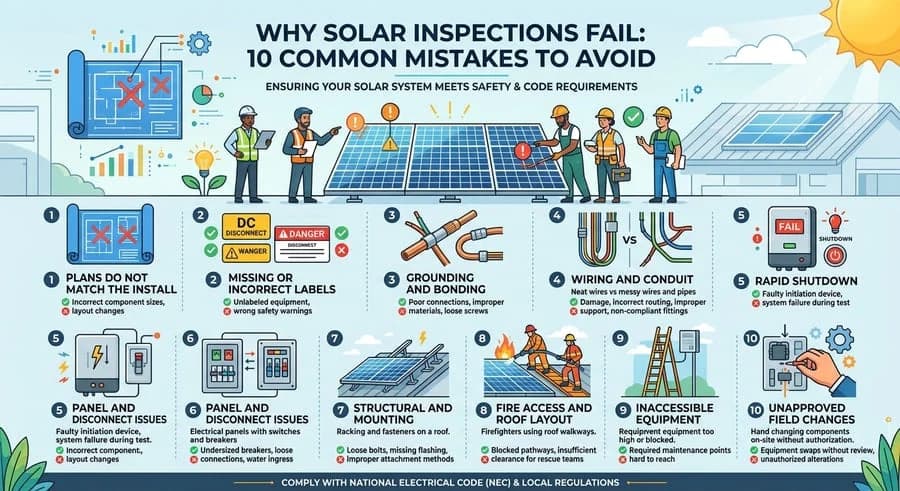
Why Solar Inspections Fail: 10 Common Mistakes to Avoid
Discover the 9 critical reasons solar inspections fail and how to avoid costly m...
Solar Grounding And Bonding: How To Pass Inspection Every Time
Learn how to pass solar grounding and bonding inspections every time. Avoid comm...
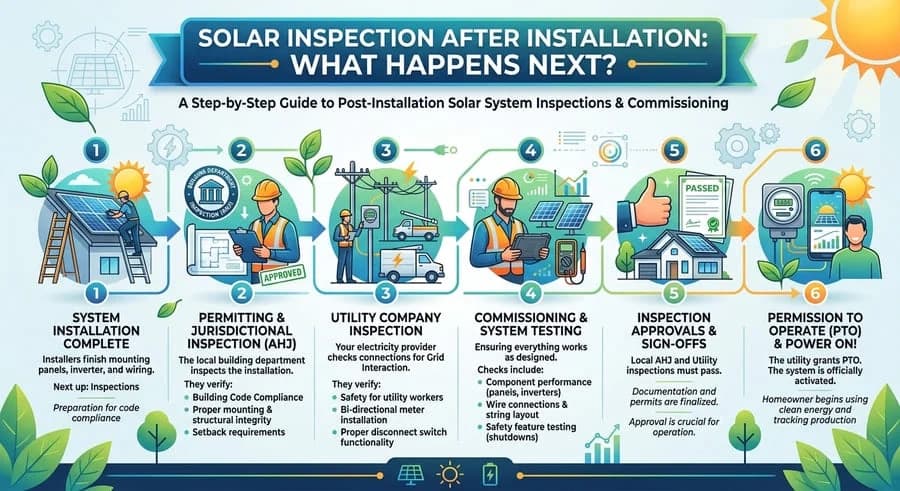
Solar Inspection After Installation: What Happens Next?
Learn how to pass your solar inspection by following essential tips for obtainin...