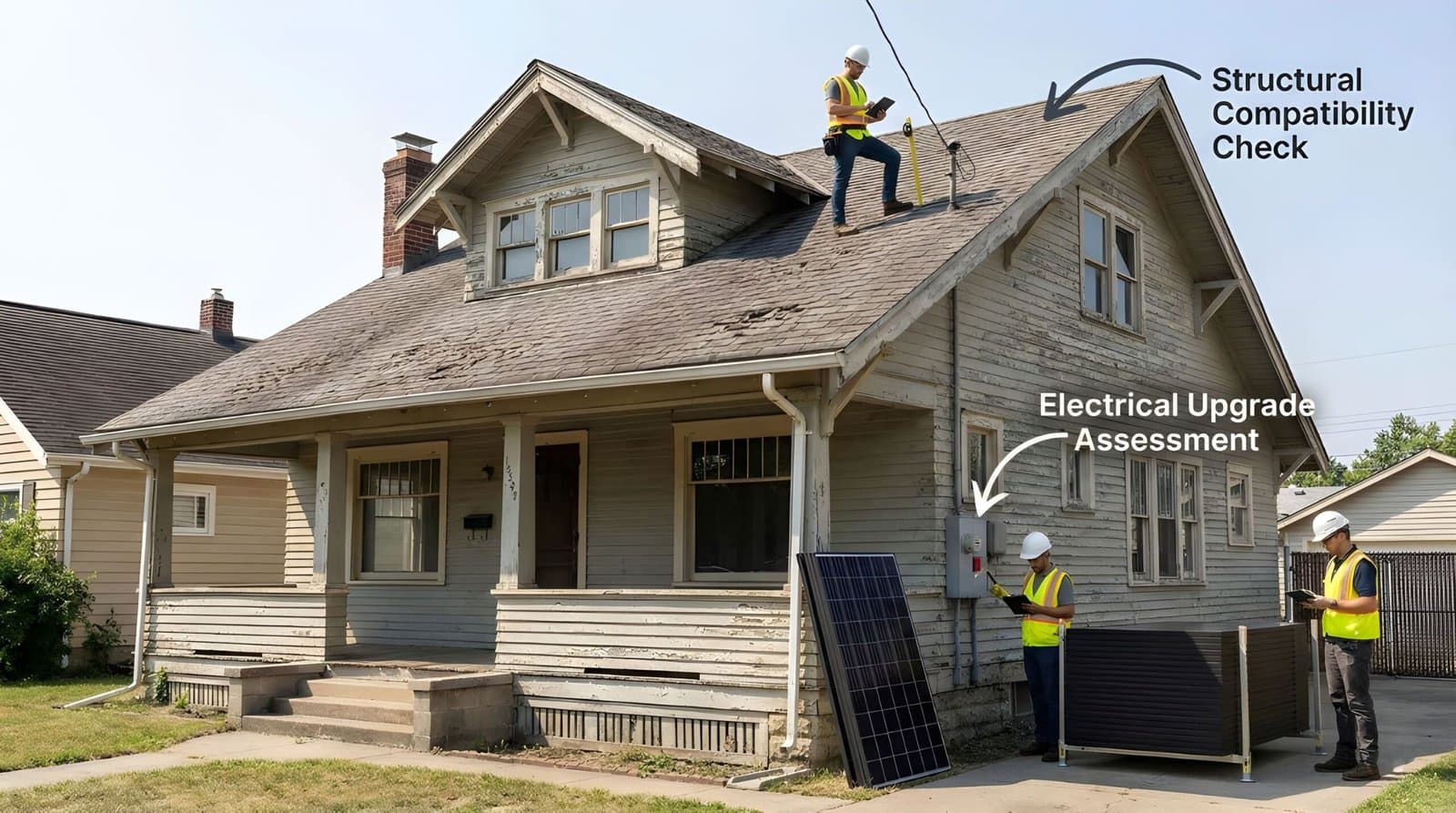
Yes, but Pre-1978 homes require specialized safety assessments for lead paint, asbestos, knob-and-tube wiring, and outdated electrical systems before installation. Professional installers must follow EPA lead-safe work practices and conduct asbestos abatement when necessary.
The installation timeline becomes critical because the 30% federal solar tax credit expires December 31, 2025, dropping to 0% for residential systems on January 1, 2026. Pre-1978 homeowners can save approximately $7,500 on a typical $25,000 installation, but the complete process including lead paint testing, asbestos inspection, electrical system upgrades, permitting, and installation typically requires 2-4 months. This means homeowners must begin consultations immediately to qualify for the expiring tax credit.
Pre-1978 homes face higher installation costs than modern construction due to required safety compliance and infrastructure upgrades. However, these properties also consume significantly more energy due to outdated insulation and inefficient systems, making solar panels particularly valuable for offsetting higher utility bills. Required electrical upgrades from knob-and-tube or aluminum wiring to modern 200-amp circuit breaker panels must comply with National Electrical Code Articles 690, 705, and 706 governing solar installations.
Why Pre-1978 Properties Benefit From Solar Panel Systems
Solar panel systems paired with battery storage enable Pre-1978 properties to reduce grid dependence while maximizing self-generated electricity. This energy independence proves especially valuable for homes with aging electrical infrastructure, translating to decreased utility expenses and reliable power continuity regardless of grid disruptions.
Panel systems harness renewable energy, reducing fossil fuel consumption for household power needs. Pre-1978 homes typically consume more energy due to outdated insulation standards and inefficient HVAC systems. Solar installations help offset these inefficiencies while minimizing carbon footprints and supporting broader environmental sustainability efforts.
Critical Timing for 2025: The federal ITC expires December 31, 2025, making this the last opportunity for Pre-1978 homeowners to claim this substantial incentive. The One Big Beautiful Bill, signed into law July 4, 2025, eliminated the residential solar tax credit nearly a decade earlier than originally planned. Systems must be fully installed and operational by December 31, 2025 to qualify for the 30% credit.
This tax credit directly reduces federal income tax liability dollar-for-dollar. For a typical $25,000 Pre-1978 installation (which often runs higher due to necessary electrical upgrades and lead/asbestos remediation), homeowners can claim $7,500 back on their taxes. After December 31, 2025, this credit drops to 0% for residential systems, meaning homeowners will pay the full installation cost without federal tax relief.
Other programs like Solar Renewable Energy Credits (SRECs) and net metering provide ongoing financial returns by compensating homeowners for excess energy production. Net metering allows Pre-1978 homeowners to send surplus solar electricity back to the grid in exchange for utility bill credits, effectively using the grid as a virtual battery. When solar panels generate more electricity than the home consumes, the excess power flows to the utility grid and the electric meter runs backward, crediting the account. These credits offset electricity drawn from the grid during nighttime or cloudy periods, maximizing long-term savings. State and local incentives may also be available depending on location. These additional programs help further reduce overall electricity costs for energy-intensive Pre-1978 properties, though the federal tax credit represents the single largest savings opportunity that expires at year-end.

Common Obstacles When Installing Panels On Pre-1978 Properties
Homes constructed before 1978 were built without solar integration in mind, making roof structure and configuration potentially incompatible with panel systems. Properties with limited sunlight exposure or restricted roof access may generate less energy compared to modern homes with unobstructed rooftop areas.
Pre-1978 homes present several era-specific safety hazards that must be addressed before solar installation. Lead-based paint, banned in residential use in 1978, remains present in many older homes and requires specialized handling during any exterior work. Drilling, cutting, or disturbing painted surfaces during solar installation can release hazardous lead dust requiring proper containment and certified remediation. Asbestos-containing materials appear frequently in Pre-1978 construction, particularly in roofing shingles, siding, insulation, and pipe wrapping. Disturbing these materials during solar panel installation poses serious health risks and requires professional asbestos abatement before proceeding with any roof work.
Electrical systems in Pre-1978 homes frequently contain outdated and potentially dangerous wiring. Knob-and-tube wiring, common in homes built before 1950, lacks grounding protection and cannot safely handle modern electrical loads including solar systems. Aluminum wiring, popular during the 1960s and 1970s due to copper shortages, presents fire hazards when connected to modern copper wiring without proper transition fittings. Many Pre-1978 homes still operate with fuse boxes instead of modern circuit breaker panels, requiring complete replacement with contemporary 200-amp service panels to support solar energy input. All electrical upgrades must comply with current National Electrical Code (NEC) standards, particularly NEC Article 690 governing solar photovoltaic systems and NEC Article 705 covering interconnected electric power production sources.
Structural soundness represents another significant consideration, as Pre-1978 roofing may require reinforcement or complete replacement to accommodate solar installations. Historic properties or homes with heritage designations may necessitate specialized permits or architectural modifications before implementing exterior alterations. Properties listed on the National Register of Historic Places or located within local historic districts typically require approval from historic preservation commissions or architectural review boards. This review process can add 4-8 weeks to project timelines and may require design modifications such as concealed mounting systems, color-matched components, or strategic panel placement to minimize visual impact from public viewpoints. Despite these challenges, transitioning to solar energy helps property owners modernize aging infrastructure, achieve long-term utility savings, and enhance property valuations.
Evaluating Roof Compatibility For Pre-1978 Houses
Roof condition, architectural design, and construction materials directly impact solar panel compatibility in Pre-1978 properties. Individual solar panels typically weigh approximately 40 pounds. Average residential properties require roughly 15 panels for complete energy self-sufficiency, totaling 600 pounds of sustained load throughout the system’s operational lifespan.
Pre-1978 roofing often features materials incompatible with solar installation. Asbestos-containing shingles, common in homes built between 1920 and 1980, cannot be drilled or disturbed without professional abatement. Roofing constructed with fragile materials such as slate, wood shingles, or clay tiles cannot adequately support panel weight and risk damage during installation procedures. Many Pre-1978 roofs have exceeded their 20-30 year design lifespan and require replacement before solar installation.
Roof pitch influences sunlight distribution across panel surfaces, affecting overall energy generation capacity. Pre-1978 architectural styles often feature steeper roof angles or complex hip roof designs that complicate panel placement. Properties with insufficient sun exposure, aging roofs, or asbestos-containing materials can utilize ground-mounted alternatives as viable solar solutions. Ground-mounted systems typically cost 10-20% more than rooftop installations due to additional racking and foundation requirements, but eliminate concerns about roof age, structural capacity, and hazardous roofing materials. These systems require adequate yard space (typically 300-400 square feet for a standard residential system) and may need additional permitting for ground disturbance and setback requirements.
Contemporary high-efficiency panel technology enables maximum energy production within limited rooftop spaces. Pre-1978 properties experiencing partial shade from mature trees or architectural features can implement microinverters and power optimizers to enhance energy output. Battery storage systems capture surplus generated electricity, strengthening independence from conventional power grids while compensating for the higher energy consumption typical of Pre-1978 construction.
Solar panel systems maintain performance for up to 30 years with minimal upkeep, though longevity depends on roof stability, lead paint remediation quality, heritage preservation requirements, and normal wear patterns. Historic Pre-1978 properties may mandate design adaptations or alternative mounting configurations to satisfy local regulatory standards and preservation guidelines.

Solar Permit Solutions
Need Solar Permit Plans?
Professional, permit-ready solar plan sets delivered fast. Residential and commercial projects across all 50 states.
Step-By-Step Installation Process For Pre-1978 Properties
Critical Timeline Note: With the 30% federal tax credit expiring December 31, 2025, Pre-1978 homeowners should begin the assessment and installation process immediately. Complete project timelines typically span 2-4 months or longer when factoring in safety testing, remediation, electrical upgrades, permits, and installation scheduling. Utility interconnection approval can add an additional 2-8 weeks to the timeline depending on the utility provider and application backlog. Installer capacity is increasingly constrained as the deadline approaches, making early consultation essential.
Before initiating installation projects, comprehensive property assessments determine solar system compatibility and identify era-specific hazards. Evaluations for Pre-1978 homes must encompass:
Lead Paint Testing and Remediation: Properties built before 1978 require professional lead paint testing before any exterior work begins. Certified lead-safe contractors must perform all work involving painted surfaces to prevent hazardous dust exposure.
Asbestos Inspection: Certified asbestos inspectors must evaluate roofing materials, siding, and insulation before installation. Properties containing asbestos require professional abatement before solar work proceeds.
Electrical System Evaluation: Thorough inspections identifying knob-and-tube wiring, aluminum wiring, or fuse box systems determine necessary upgrades. Pre-1978 electrical systems typically require complete modernization including new 200-amp service panels, copper wiring throughout, and proper grounding to safely accommodate solar integration. All electrical work must comply with current NEC standards including Article 690 (Solar PV Systems), Article 705 (Interconnected Electric Power Production Sources), and Article 706 (Energy Storage Systems) if batteries are included. Upgrading from outdated electrical systems to code-compliant infrastructure also improves overall home safety and increases property value beyond the solar installation benefits.
Structural Roof Inspection: Assessments verify adequate support capacity for panel weight, evaluate remaining roof lifespan, and identify any structural deterioration common in Pre-1978 construction.
Sunlight Exposure Analysis: Evaluations identify shade patterns that could reduce panel efficiency, particularly important for Pre-1978 properties with mature landscaping.
Utility Interconnection Application: Submitting interconnection applications to the local utility company early in the process prevents delays. Utility review and approval can take 2-8 weeks depending on provider workload, and this step must be completed before the system can be activated and qualify for the tax credit.
Properties with incompatible electrical systems, hazardous materials, or compromised roofing require appropriate remediation and upgrades before proceeding with solar installation.
After confirming property suitability and completing necessary safety upgrades, designing customized systems with professional assistance maximizes energy efficiency while complementing architectural aesthetics. Steep roofs common in Pre-1978 architecture may utilize specialized racking systems securing panels properly or compact high-efficiency panels optimizing confined spaces. Ground-mounted configurations provide excellent alternatives when traditional rooftop installation proves unsuitable due to asbestos roofing or structural limitations.
Installers may employ low-profile equipment matching Pre-1978 architectural styling or position panels in less conspicuous locations to preserve historic character. Regardless of mounting approach, incorporating battery storage into system plans ensures consistent renewable power availability while compensating for the higher energy demands typical of Pre-1978 construction. Note that battery storage systems require adequate electrical panel capacity, typically necessitating the 200-amp service panel upgrade already required for solar integration in Pre-1978 homes. Battery systems must also comply with NEC Article 706 governing energy storage systems.
Professional solar installers maintain current knowledge of lead-safe work practices, asbestos regulations, local building codes, historical preservation requirements, and permit procedures throughout the process. Expert installers ensure accurate, compliant system implementation from initial planning through final activation. Properties within homeowner association (HOA) jurisdictions may require reviewing specific solar installation guidelines before proceeding.
Once documentation, safety remediation, inspections, and necessary upgrades are completed, solar panel installation can commence.
Installation costs for Pre-1978 homes vary significantly based on geographic location and required preparatory work. Standard residential solar installations average approximately $20,000 to $25,000 before incentives, though Pre-1978 properties typically incur additional expenses for safety compliance and system upgrades.
With 30% Federal Tax Credit (Expires December 31, 2025):
- $25,000 system cost
- $7,500 federal tax credit
- $17,500 net cost after credit
Without Federal Tax Credit (After December 31, 2025):
- $25,000 system cost
- $0 federal tax credit
- $25,000 full cost
The December 31, 2025 deadline means Pre-1978 homeowners must act immediately to capture this $7,500 savings opportunity. Systems must be completely installed and operational by this date. State and local incentive programs may reduce costs further depending on location, but these vary significantly by jurisdiction.
Additional cost considerations for Pre-1978 properties include:
- Lead paint remediation and containment
- Asbestos abatement services
- Complete electrical system replacement (knob-and-tube or aluminum wiring removal)
- Electrical panel upgrade from fuse box to 200-amp circuit breaker system
- Roof repairs or complete replacement
- Custom mounting solutions for historic preservation compliance
- Permit application fees
- Specialized insurance during hazardous material removal
Expected Lifespan And Maintenance Requirements For Pre-1978 Installations
Solar panel systems maintain functionality for up to 30 years with minimal maintenance requirements. Maximizing system longevity on Pre-1978 properties involves cleaning panels at minimum twice annually. Regular cleaning removes accumulated dust and debris, eliminates nesting materials, and verifies proper wiring connections remain secure despite potential house settling common in aging structures.
Solar monitoring systems track energy production levels and identify efficiency declines. These systems enable early issue detection, facilitating prompt repairs and preventive maintenance. For Pre-1978 homes with upgraded electrical systems, monitoring also helps verify the new infrastructure continues performing optimally under solar integration.
Pre-1978 properties should schedule periodic electrical system inspections every 3-5 years to ensure upgraded wiring, circuit breakers, and grounding systems maintain safe operation. Properties that underwent lead paint remediation should monitor painted surfaces around solar mounting points for any deterioration requiring recoating with lead-safe paint.
Warranty coverage protects against unexpected repair costs or performance degradation. Comprehensive warranties should cover panel and inverter performance, with some including racking equipment protection. For Pre-1978 installations, verifying warranty coverage extends to custom mounting solutions and electrical system upgrades provides additional protection. Consulting with installation professionals clarifies specific warranty terms and coverage limitations for older properties.

Protecting Your Pre-1978 Roof During Solar Installation
Pre-1978 properties commonly require repairs, structural reinforcement, or complete roof replacement before installation proceeds. Thorough roof inspections assess age, remaining lifespan, structural capacity, and the presence of hazardous materials like asbestos-containing shingles. Properties with asbestos roofing materials require professional abatement before any solar installation work begins, as disturbing these materials poses serious health risks.
Once hazardous materials are properly removed and property suitability is confirmed through lead-safe work practices, solar panel damage risk becomes minimal. Professional installation further reduces risks through careful weight distribution planning across aging roof structures, comprehensive waterproofing preventing moisture infiltration into potentially compromised decking, and appropriate mounting system selection compatible with Pre-1978 roofing materials.
Pre-1978 roofs naturally experience leaks, structural stress, and deterioration from decades of exposure and aging construction materials. Wood roof decking may show rot or degradation requiring replacement. Flashing around chimneys and vents common in Pre-1978 construction may need updating to accommodate solar installations. Expert installers develop detailed implementation plans ensuring properties benefit from solar energy while preserving or improving roof structural integrity through necessary repairs completed during the installation process.
Making The Right Decision For Your Pre-1978 Property
Solar panel installations for Pre-1978 homes reduce monthly utility expenses and decrease fossil fuel dependence, supporting environmental sustainability goals while modernizing aging infrastructure. The investment becomes significantly more affordable with the 30% federal tax credit, but this opportunity expires December 31, 2025. Pre-1978 homeowners interested in solar must begin the process immediately, as the complete installation timeline including lead paint testing, asbestos inspection, electrical upgrades, permits, and final installation typically requires 2-4 months or longer. With installer capacity constrained as homeowners nationwide rush to meet the deadline, starting consultation processes now maximizes chances of qualifying for the $7,500 average tax credit.
For a typical $25,000 Pre-1978 installation, the tax credit reduces net cost to $17,500. After December 31, 2025, homeowners pay the full $25,000 without federal tax relief. State and local solar incentives may provide additional savings, with programs like California’s SGIP for battery storage, New York’s NY-Sun initiative offering credits up to $5,000, and Massachusetts SRECs generating thousands in additional revenue. The investment in solar installation often coincides with essential home improvements that increase property value and safety, including electrical system modernization, roof replacement, and hazardous material removal.
Before implementing comprehensive solar panel installations on Pre-1978 properties, evaluate: timeline to meet the December 31, 2025 tax credit deadline, lead paint and asbestos presence, electrical system type (knob-and-tube, aluminum wiring, fuse box), roof structural integrity and remaining lifespan, local regulations and historical preservation restrictions, available solar incentive programs, total project budget including safety compliance and infrastructure upgrades, and installer availability approaching the year-end deadline. The December 31, 2025 federal tax credit expiration represents the final opportunity for Pre-1978 homeowners to access this substantial financial incentive.
Conclusion
Installing solar panels on Pre-1978 homes presents unique challenges requiring specialized assessment and remediation, but the benefits of energy independence, utility savings, and environmental sustainability make the investment worthwhile. The critical December 31, 2025 deadline for the IRS Form 5695 creates urgency for homeowners to act immediately, as the complete process from initial assessment through final installation typically requires 2-4 months or longer.
Pre-1978 properties demand thorough evaluation for era-specific hazards including lead paint, asbestos-containing materials, knob-and-tube wiring, aluminum wiring, and outdated electrical panels. While these safety concerns add complexity and cost to solar installations, addressing them simultaneously modernizes aging infrastructure and increases property value beyond the solar system benefits. The $7,500 average federal tax credit savings on a typical $25,000 installation represents substantial financial relief that disappears entirely after December 31, 2025.
For Pre-1978 homeowners committed to renewable energy and long-term utility savings, beginning the consultation process now maximizes the opportunity to capture the expiring federal tax credit while modernizing aging home infrastructure for decades of sustainable energy production.
FAQs
Need Solar Permit Plans?
Professional, permit-ready solar plan sets delivered fast. Residential and commercial projects across all 50 states.
Frequently Asked Questions
Yes, solar panels can be installed on Pre-1978 homes with lead paint, but the installation requires certified lead-safe contractors who follow EPA regulations. Professional lead paint testing identifies affected areas before any drilling or disturbing of painted surfaces. Certified contractors use containment systems to prevent lead dust dispersion and perform proper cleanup procedures. Lead-safe work practices are non-negotiable for Pre-1978 properties and must be factored into project planning and budgets.
Asbestos-containing roofing materials cannot be drilled or disturbed during solar panel installation without professional abatement. Certified asbestos inspectors first evaluate the roofing materials to confirm asbestos presence, then professional abatement companies must remove or encapsulate the hazardous materials before solar work proceeds. While this adds significant cost ($5,000-$15,000+ depending on scope), it creates an opportunity to replace aging roofing with modern materials that easily support solar panels. Alternatively, ground-mounted solar systems completely avoid rooftop asbestos concerns.
No. The system must be fully installed and operational by December 31, 2025 to qualify for the 30% federal tax credit. There is no phase-down period or grace period after this deadline, and the credit drops immediately from 30% to 0% for residential systems on January 1, 2026. Starting the consultation process in December 2025 likely means missing the deadline entirely, as the complete process including lead paint testing, asbestos inspection, electrical upgrades, permits, utility interconnection approval, and final installation typically requires 2-4 months minimum.
Most Pre-1978 homes require substantial electrical panel upgrades to safely accommodate solar systems, though complete replacement depends on existing conditions. Homes with knob-and-tube wiring (common before 1950) or aluminum wiring (1960s-1970s) typically need full rewiring with modern copper wiring and proper grounding. Properties still operating with fuse boxes must upgrade to 200-amp circuit breaker panels to handle solar system integration. While these upgrades increase installation costs by $5,000-$15,000+, they also improve overall home safety, increase property value, and ensure compliance with current NEC Articles 690, 705, and 706.
Yes, solar panels remain financially worthwhile for Pre-1978 homes despite higher upfront costs from safety remediation and electrical upgrades. The 30% federal tax credit (expiring December 31, 2025) provides $7,500 in savings on a typical $25,000 installation, reducing net cost to $17,500. Pre-1978 homes consume significantly more energy than modern construction due to outdated insulation and inefficient systems, meaning solar panels offset higher utility bills and deliver faster payback periods. Long-term utility savings over 25-30 years typically total $25,000-$60,000+ depending on location and energy consumption.
Yes, historic Pre-1978 homes can install solar panels, but the process requires additional approvals and may involve design modifications. Properties listed on the National Register of Historic Places or located within local historic districts need approval from historic preservation commissions or architectural review boards. This review process adds 4-8 weeks to project timelines and may require design accommodations such as concealed mounting systems, color-matched components, or strategic panel placement minimizing visibility from public viewpoints. Ground-mounted systems positioned away from the main structure often receive easier approval than rooftop installations.

SPS Editorial Team
Solar Permit Solutions
Solar Permit Solutions provides professional solar permit design services for residential, commercial, and off-grid installations across all 50 states. Our team ensures permit-ready plan sets delivered fast.
Related Articles
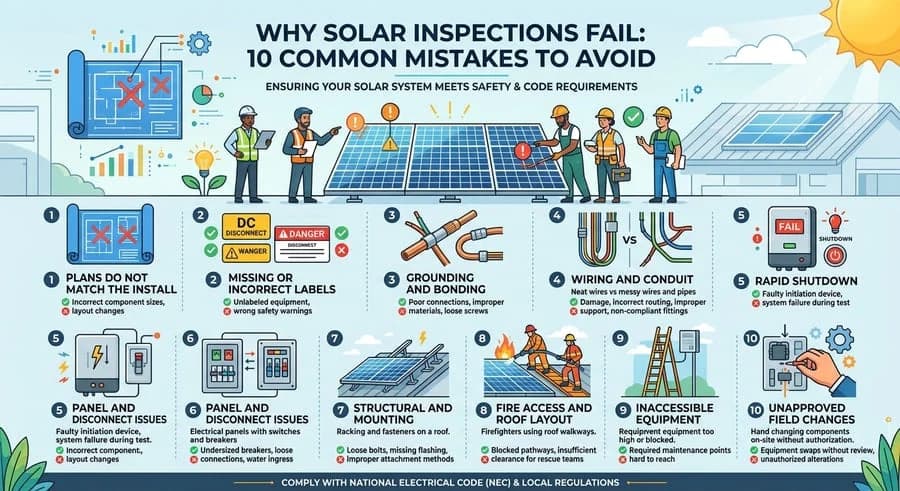
Why Solar Inspections Fail: 10 Common Mistakes to Avoid
Discover the 9 critical reasons solar inspections fail and how to avoid costly m...
Solar Grounding And Bonding: How To Pass Inspection Every Time
Learn how to pass solar grounding and bonding inspections every time. Avoid comm...
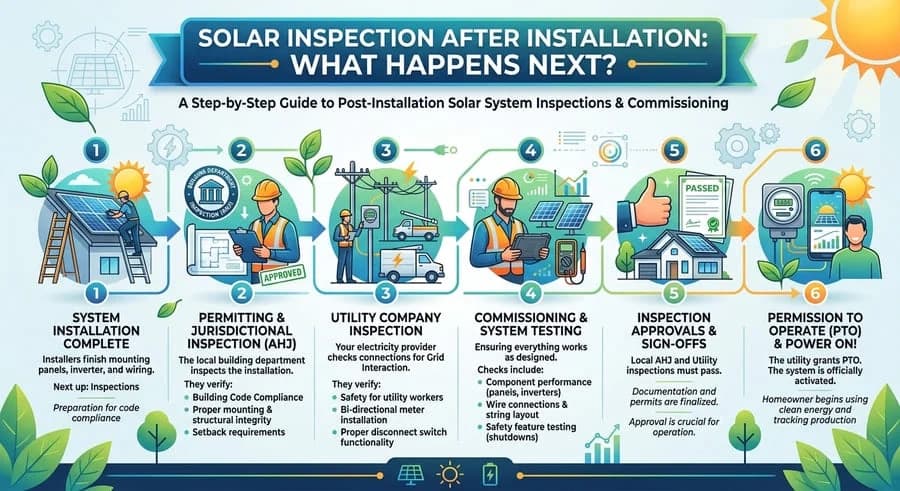
Solar Inspection After Installation: What Happens Next?
Learn how to pass your solar inspection by following essential tips for obtainin...