
Time-of-use (TOU) rates and solar interconnection requirements are two critical utility regulations reshaping solar installations in 2025. TOU rates charge different electricity prices based on time of day, higher during peak evening hours and lower during off-peak periods, making battery storage systems more economically valuable for solar customers. Solar interconnection, the process of connecting systems to the utility grid, now faces stricter requirements including mandatory smart inverters, detailed engineering reviews, and extended approval timelines averaging 2-6 months in high-demand states like California, Texas, and New York.
Key impacts for solar contractors:
- TOU pricing requires strategic system sizing to offset high-rate periods rather than just total consumption
- Battery storage becomes essential for capturing daytime solar energy and using it during expensive peak hours
- Interconnection delays from growing application queues can postpone project completion by weeks or months
- Smart inverter mandates and export limitations add equipment costs and design complexity
- Utility compliance requirements demand specialized permitting and engineering support
Solar contractors who understand these evolving regulations can design more cost-effective systems, avoid project delays, and deliver stronger financial returns to customers. Working with experienced permitting partners helps navigate AHJ requirements, utility coordination, and interconnection applications, typically reducing approval times to 24-48 hours while ensuring full compliance.

Defining Time-of-Use (TOU) Solar Regulations
Time-of-Use pricing establishes electricity costs based on consumption patterns across different times of day. Energy providers implement premium pricing during “peak demand periods,” typically during evening hours, while offering reduced pricing during “off-peak windows.” According to PG&E’s time-of-use rate structure, these pricing differences can significantly impact solar system economics.
TOU’s Impact on Solar Contractors
System Engineering: Contractors must strategically calculate system capacity to counteract expensive rate periods rather than simply matching total energy usage. Understanding electrical fundamentals is crucial for proper system sizing.
Energy Storage Integration: TOU pricing enhances the economic case for battery systems, enabling clients to capture energy during daytime hours and discharge it when electricity costs peak. Battery storage helps homeowners maximize savings under these rate structures.
Client Communication: Articulating TOU dynamics helps property owners grasp why combining solar with storage delivers superior economic returns compared to standalone solar installations. Discussing home solar system costs within the context of TOU rates provides clearer value propositions.

Essential Solar Interconnection Developments in 2025
Interconnection represents the procedure for linking solar installations to utility networks. As solar deployment accelerates according to IEA renewable energy reports, energy providers are implementing more rigorous standards and extending processing periods.
Developments Contractors Must Monitor
Enhanced Application Scrutiny – Energy providers now demand comprehensive engineering evaluations before granting connection approval. The Department of Energy’s Solar Energy Technologies Office tracks these evolving requirements.
Advanced Inverter Requirements – Sophisticated inverters that maintain grid stability through voltage and frequency regulation have become compulsory across numerous jurisdictions. Proper grounding and bonding practices are essential for inverter installations.
Expanding Interconnection Backlogs – Markets including California, Texas, and New York face mounting application queues that delay project authorization. NREL’s interconnection standards research documents these challenges.
Grid Export Restrictions – Certain utilities now impose limits on excess electricity homeowners can transfer back to the distribution system. Understanding supply-side versus load-side interconnection helps contractors navigate these constraints.
These modifications substantially influence project schedules and financial performance, making regulatory awareness essential for contractors. The EPA’s solar interconnection policies provide additional guidance on compliance requirements. Many municipalities, such as Moreno Valley’s solar program, offer resources to help contractors understand local interconnection procedures.
Conclusion
Time-of-use solar regulations and changing interconnection standards are transforming contractor approaches to project design and implementation. By comprehending these developments and collaborating with qualified partners like Solar Permit Solutions, contractors can maintain industry leadership, optimize customer savings, and sustain project momentum.
Solar Permit Solutions
Solar Contractor? We Design Your Plans.
Outsource your permit plan sets to our team. PE-stamped, code-compliant, fast turnaround so you can focus on installation.
FAQs
How Contractors Can Maintain Competitive Advantage
- Partner with permitting and engineering professionals to guarantee conformity with Authority Having Jurisdiction (AHJ) and utility specifications.
- Inform customers proactively about TOU rate structures and interconnection processing durations. Resources like PECO’s solar TOU guidance help explain these concepts.
- Engineer adaptable systems by incorporating advanced inverters, storage capabilities, and demand-shifting approaches while preventing DC connector risks.
- Utility-compliant permit documentation
- Residential and commercial solar design expertise
- Off-grid solar system design capabilities
- AHJ and utility liaison services
- Rapid completion, typically within 24-48 hours
Through collaboration with Solar Permit Solutions, contractors minimize project interruptions, maintain regulatory compliance, and allocate more time toward business expansion. Contact our team to learn how we can support your projects.
Solar Contractor? We Design Your Plans.
Outsource your permit plan sets to our team. PE-stamped, code-compliant, fast turnaround so you can focus on installation.
Frequently Asked Questions
Time-of-use (TOU) indicates that electricity pricing fluctuates during different daylight and evening periods according to grid demand. For solar system owners, this determines savings levels based on consumption timing or energy storage practices.
Interconnection standards govern the methods and timing for connecting solar systems to utility infrastructure. Application backlogs, intensified evaluation processes, and technology mandates can postpone installations and escalate project expenses.
TOU pricing and interconnection policies fundamentally influence engineering decisions, installation schedules, and client financial benefits. Maintaining current knowledge ensures efficient project execution and strengthens customer confidence.
Partner with permitting and engineering professionals to guarantee conformity with Authority Having Jurisdiction (AHJ) and utility specifications. Inform customers proactively about TOU rate structures and interconnection processing durations. Engineer adaptable systems by incorporating advanced inverters, storage capabilities, and demand-shifting approaches while preventing DC connector risks.
Solar Permit Solutions assists contractors across the nation in streamlining solar permitting and interconnection obstacles. Our comprehensive services feature utility-compliant permit documentation, residential and commercial solar design expertise, off-grid solar system design capabilities, AHJ and utility liaison services, and rapid completion typically within 24-48 hours. Through collaboration with Solar Permit Solutions, contractors minimize project interruptions, maintain regulatory compliance, and allocate more time toward business expansion.

SPS Editorial Team
Solar Permit Solutions
Solar Permit Solutions provides professional solar permit design services for residential, commercial, and off-grid installations across all 50 states. Our team ensures permit-ready plan sets delivered fast.
Related Articles
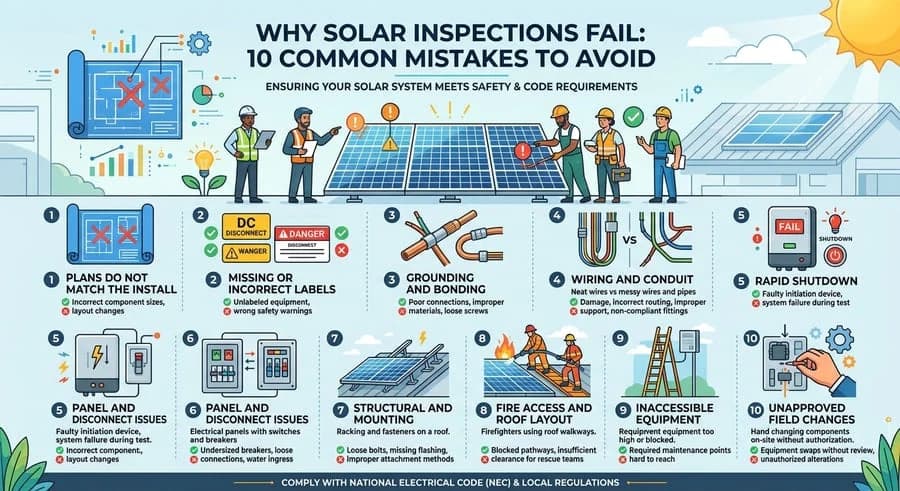
Why Solar Inspections Fail: 10 Common Mistakes to Avoid
Discover the 9 critical reasons solar inspections fail and how to avoid costly m...

Solar Grounding And Bonding: How To Pass Inspection Every Time
Learn how to pass solar grounding and bonding inspections every time. Avoid comm...
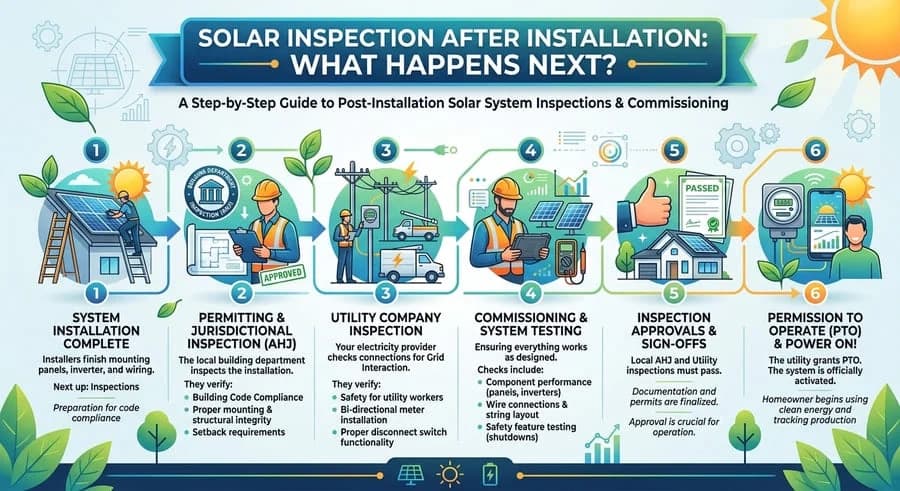
Solar Inspection After Installation: What Happens Next?
Learn how to pass your solar inspection by following essential tips for obtainin...