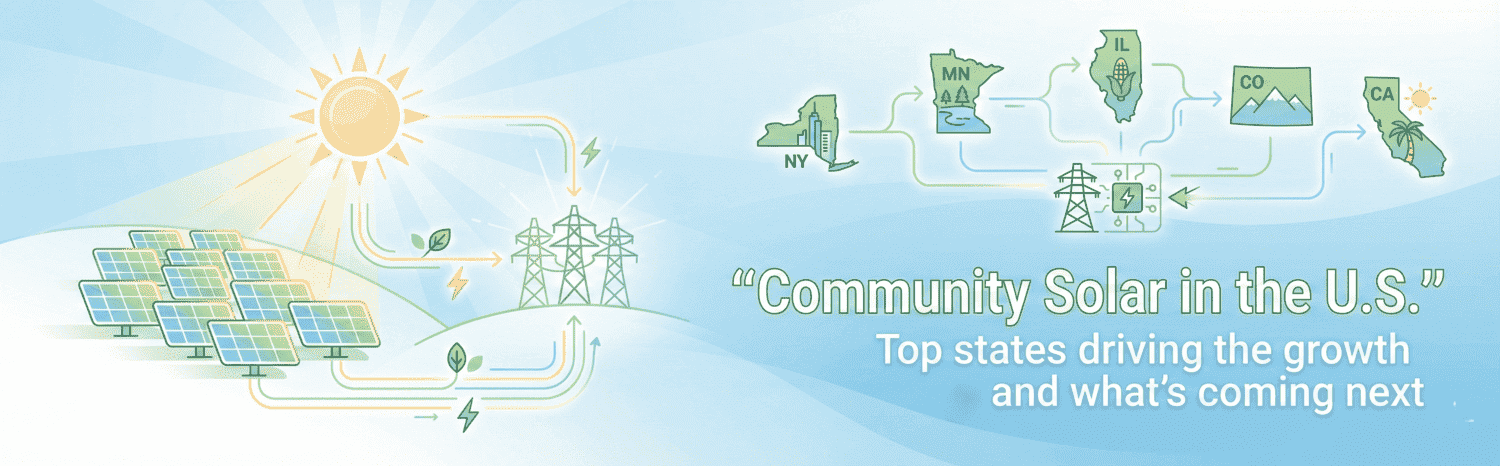
Community solar stands out as one of the simplest and most effective methods to access clean energy across the United States. This model enables households that cannot install or prefer not to mount solar panels to tap into renewable energy sources. As demand grows for affordable and adaptable solar solutions, state policies and stronger partnerships with utility companies continue expanding community solar access to a wider audience.
Rooftop solar remains a viable path for property owners, yet it often stays beyond reach for renters, residents in multi-unit housing, and those with shaded rooftops. Community solar closes this gap effectively. What started as a specialized alternative has evolved into a full-scale industry, with projections pointing toward multiple gigawatts of added capacity over the next five years. For households exploring options, Solar Permit Solutions provides expert guidance on navigating the permitting process for various solar configurations.

What Is Community Solar, and How Does It Work?
Community solar operates by connecting shared solar farms that deliver electricity directly to the grid. Participants purchase or lease a portion of the system’s output instead of installing personal solar panels. Credits applied to monthly electric bills reflect the energy contribution from each subscriber. Understanding how solar panels connect to the grid helps subscribers appreciate the technical process behind their bill credits.
How the Process Works:
- A solar developer or utility owns and manages the solar farm.
- Households and businesses subscribe to a share of the system’s production.
- Generated electricity flows into the local power grid.
- Subscribers receive bill credits based on the energy their share produces.
Eliminating rooftop installation removes common barriers. Renters, apartment residents, and homeowners with unsuitable roofs can participate without modifying their property. The National Renewable Energy Laboratory continues publishing research that supports community solar expansion as a viable pathway to broader renewable adoption.
How Community Solar Saves Money Without Rooftop Panels
Community solar delivers accessibility and flexibility, making it a practical solution for equitable energy distribution. Unlike traditional solar systems, participants do not need to own property or invest in expensive equipment to benefit. Resources like EnergySage help consumers compare options and understand potential savings.
Key Benefits to Consider:
- No Roof Required: Ideal for renters and residents in multifamily buildings, including those considering flat roof solar mounting alternatives.
- Predictable Savings: Most programs lock in discounts ranging from 5% to 15% on electricity costs.
- Grid Stability: Battery storage integration helps maintain a consistent power supply.
- Policy Support: Helps states meet renewable energy targets while expanding access across income levels.
Community solar now plays a central role in state climate strategies, especially initiatives focused on lowering energy costs for underserved populations. The IEA Renewables 2024 report highlights how shared solar models contribute to global clean energy goals.
Fastest-Growing Community Solar States to Watch
Community solar growth varies significantly by region. Some states advance rapidly due to supportive legislation, efficient grid connections, and effective consumer education. The average solar permit timeline by state also influences how quickly projects reach completion. Below is a snapshot of leading markets:
For New York residents, the NYSEG solar savings guide provides detailed information on utility-specific programs. Florida homeowners can explore opportunities through our FPL solar installation guide, while California residents benefit from reviewing the SDG&E solar guide. The NC DEQ residential and community solar tips offer additional state-level guidance for consumers in emerging markets.
Solar Permit Solutions
Need Solar Permit Plans?
Professional, permit-ready solar plan sets delivered fast. Residential and commercial projects across all 50 states.
What Limits Community Solar Growth in Some States?
Community solar encounters significant hurdles across much of the country despite its potential. Certain states lack clear policies enabling project development. Others struggle with utility resistance or insufficient public outreach. Organizations like SolSmart work with municipalities to streamline solar permitting and reduce barriers.
Common Barriers Include:
- Missing virtual net metering legislation
- Complex or costly interconnection processes
- No standardized billing or credit distribution systems
- Limited consumer awareness campaigns
In regions where utilities hold substantial influence, third-party developers often face obstacles securing grid access or fair compensation. These challenges make financing difficult and keep many potential subscribers unaware of available options. Understanding solar permit services helps stakeholders navigate regulatory requirements more effectively. Proper documentation, including a solar single line diagram, remains essential for project approval.
Community Solar Market Trends and Growth Projections
Community solar enters a transformative phase powered by stronger incentives, advancing technology, and rising consumer demand. The Residential Clean Energy Credit through the Inflation Reduction Act accelerated sector momentum through substantial tax credits targeting underserved communities. The REN21 Global Status Report tracks worldwide renewable energy deployment and highlights community solar as a key growth segment.
Emerging Trends to Watch:
- Virtual Power Plants (VPPs): Battery systems paired with solar farms store and dispatch energy during peak demand periods. Large-scale projects mirror principles found in utility-scale solar power installations.
- Advanced Billing Platforms: Improved software streamlines enrollment, monitors consumption, and delivers accurate credits.
- Multi-State Projects: Developers now build systems spanning multiple utilities and states using shared transmission networks.
- Rural Expansion: Increased federal and local funding extends access to agricultural regions and remote communities. Alternative installations like solar carports provide additional options for properties with limited roof space.
Industry forecasts indicate U.S. community solar capacity will triple within the next few years. Falling solar costs, flexible participation structures, and sustained policy support drive this continued acceleration. Compliance with rapid shutdown requirements and proper supply-side connections ensures installations meet current safety standards. The EPA guidelines on end-of-life solar panel management address sustainability concerns as the industry scales.
Conclusion
Community solar continues reshaping how households and businesses access renewable energy across the United States. This model removes traditional barriers that once limited solar adoption to property owners with suitable rooftops. Renters, apartment residents, and homeowners with shaded properties now have a direct path to lower electricity costs and cleaner power.
States like New York, Minnesota, Illinois, Colorado, and California lead the charge with established programs and supportive policies. However, regulatory gaps, utility resistance, and limited public awareness still prevent community solar from reaching its full potential in other regions. Addressing these challenges requires continued policy development and consumer education efforts. Learning how long solar permits take helps set realistic expectations for project timelines.
The outlook for community solar remains strong. Federal incentives through the Inflation Reduction Act, advancing battery storage technology, and smarter billing platforms position the industry for significant expansion. Projections indicate U.S. community solar capacity will triple within the next few years as more states adopt enabling legislation and consumers seek affordable clean energy alternatives.
For households exploring renewable energy options without rooftop installation, community solar delivers a practical and cost-effective solution worth considering. Working with NABCEP-certified professionals ensures quality installation and compliance. Contact Solar Permit Solutions for expert assistance with solar permitting and design services.
FAQs
Need Solar Permit Plans?
Professional, permit-ready solar plan sets delivered fast. Residential and commercial projects across all 50 states.
Frequently Asked Questions
Community solar allows renters to subscribe to a share of a local solar farm without installing panels on their property. Subscribers receive credits on their monthly electricity bills based on the energy their share produces. Renters only need to live within the same utility service area as the solar project and maintain an active electric account. No property modifications, landlord approval, or equipment purchases are required to participate.
Community solar offers distinct advantages for those who cannot install rooftop panels. Most programs guarantee savings between 5% and 15% on electricity bills with no upfront costs or maintenance responsibilities. Rooftop solar typically delivers higher long-term savings for qualifying homeowners but requires significant initial investment and suitable roof conditions. Community solar works best for renters, residents in multi-unit buildings, and homeowners with shaded or older roofs.
Over 20 states currently offer community solar programs, though availability and program structures vary widely. New York, Minnesota, Illinois, Colorado, and California operate some of the most established markets. Other states with active or emerging programs include Massachusetts, New Jersey, Maryland, Oregon, and Maine. Check with your local utility provider or state energy office to confirm availability in your area and learn about enrollment options.
Most community solar subscribers save between 5% and 15% on their monthly electricity bills. Actual savings depend on program terms, energy usage levels, and local utility rates. Some programs offer fixed discount rates that protect subscribers from future utility price increases. Unlike rooftop solar, community solar requires no equipment purchase or installation costs, making savings immediate once enrollment activates.
Cancellation policies vary by provider and program. Some community solar subscriptions operate on a month-to-month basis with flexible exit terms. Others require commitments ranging from one to five years and may include early termination fees. Review contract terms carefully before enrolling and ask providers about cancellation procedures, transfer options if you relocate, and any associated penalties.
Subscribers who relocate within the same utility service territory can typically transfer their community solar subscription to their new address. Moving outside the service area usually requires canceling the subscription, which may involve fees depending on contract terms. Some providers allow subscribers to transfer their share to another person. Contact your community solar provider before moving to understand available options and avoid unexpected charges.
Several factors limit community solar availability in certain states. Missing virtual net metering laws prevent subscribers from receiving bill credits for shared solar production. Complex interconnection processes and high fees discourage project development. Utility opposition and lack of standardized billing systems create additional obstacles. Limited consumer awareness also slows demand. States without enabling legislation may see community solar programs emerge as renewable energy policies continue evolving nationwide.
SPS Editorial Team
Solar Permit Solutions
Solar Permit Solutions provides professional solar permit design services for residential, commercial, and off-grid installations across all 50 states. Our team ensures permit-ready plan sets delivered fast.
Related Articles
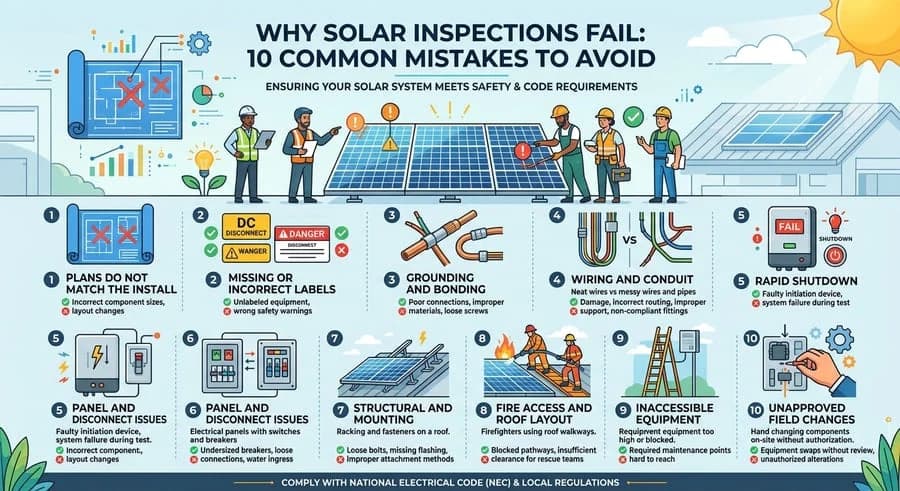
Why Solar Inspections Fail: 10 Common Mistakes to Avoid
Discover the 9 critical reasons solar inspections fail and how to avoid costly m...
Solar Grounding And Bonding: How To Pass Inspection Every Time
Learn how to pass solar grounding and bonding inspections every time. Avoid comm...
Solar Inspection After Installation: What Happens Next?
Learn how to pass your solar inspection by following essential tips for obtainin...