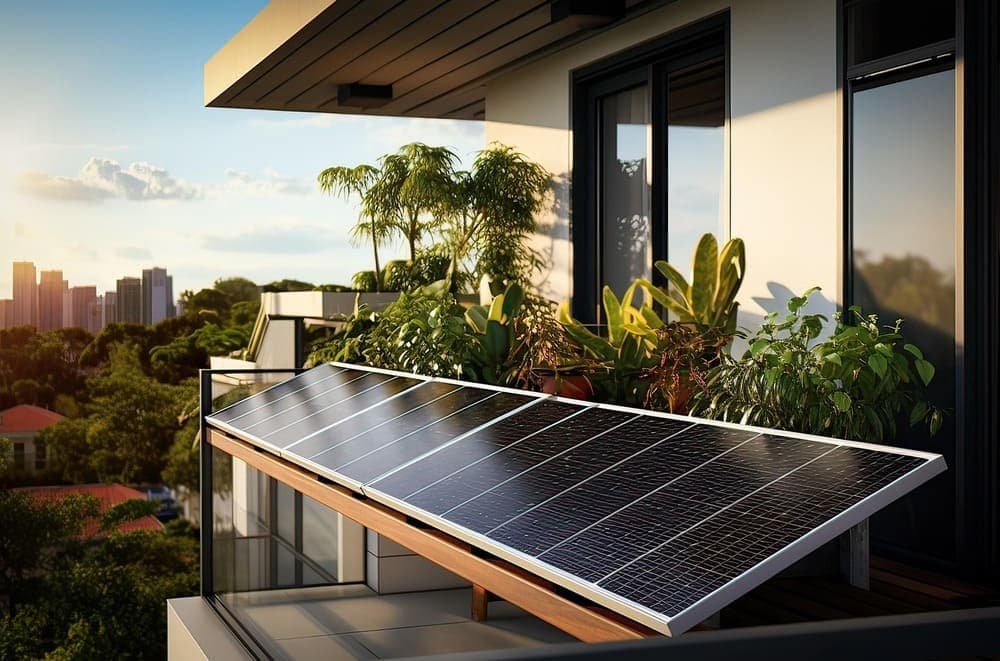
Balcony solar panels are compact photovoltaic systems (200 W-800 W capacity) that apartment dwellers can install on balconies, railings, or exterior walls without permanent structural modifications, generating 300-1,200 kWh annually to reduce electricity bills by 10-30%. These plug-and-play systems cost $800-$2,500 depending on configuration, require no building permits in most jurisdictions, and deliver investment payback periods of 5-10 years under average conditions.
Unlike rooftop solar arrays requiring professional installation and building permits, balcony solar systems attach using temporary clamps or freestanding mounts, connect directly to standard electrical outlets, and remain portable when relocating to new rental properties. A typical 400W balcony installation saves $150-$250 annually on electricity costs while preventing 400-600 pounds of CO₂ emissions, equivalent to planting 5-7 trees each year.
Balcony solar works best for renters and condominium owners with south-, east-, or west-facing balconies experiencing minimal shading from adjacent buildings. These systems cannot power entire apartments but effectively offset baseline consumption, including LED lighting, device charging stations, and small appliances. Installation requires no electrical expertise; mount panels to railings, connect microinverter wiring, and plug into existing outlets to begin generating clean energy immediately.
This comprehensive guide covers everything needed to install balcony solar panels: system sizing calculations, mounting hardware selection, electrical connection procedures, cost-benefit analysis, regulatory compliance requirements, maintenance schedules, and troubleshooting common issues. Whether you’re reducing monthly utility expenses, advancing sustainability goals, or exploring renewable energy technology, balcony solar provides accessible entry into distributed power generation without landlord permission or permanent building alterations.
What Is Balcony Solar?
Photovoltaic (PV) systems installed on balconies, windows, or building walls. Rather than relying on large, flat rooftops, these systems utilize underused vertical spaces. Typically compact, they are designed for easy installation in tight urban environments. This makes balcony solar viable for high-rise apartments, multi-story commercial properties, and other buildings where traditional rooftop systems are not an option. For those new to solar technology, our beginner’s guide to solar energy explains the fundamental principles behind photovoltaic power generation.

Key Differences from Rooftop Systems
Balcony solar installations operate differently than conventional rooftop arrays in several critical ways:
- Size and Scale: Power output usually falls between 200W and 800W for complete systems
- Installation Method: Utilize temporary mounting hardware, including clamps, bracket assemblies, or standalone frame structures
- Electrical Connection: Connect directly to existing standard wall outlets in most configurations
- Portability: Enable easy relocation or complete removal without causing structural alterations
- Permits: Typically bypass building permit requirements across most local jurisdictions
Why Is Balcony Solar Gaining Popularity?
Ideal for Urban Spaces
Modern cities are growing taller rather than wider, leaving little available rooftop space. This offers a way to harness renewable energy without requiring extensive structural changes, making it a good fit for high-density areas.
Simple and Cost-Effective
Compared to conventional solar systems, balcony solar installations are generally smaller, faster to install, and more affordable. Many are “plug-and-play” systems that require minimal specialized labor or tools.
Supporting Sustainability Goals
Urban areas are actively seeking ways to meet sustainability targets. It empowers residents to generate their own electricity, reduce reliance on the grid, and lower energy costs. Rising electricity prices make this an increasingly attractive option for city dwellers, contributing to global renewable energy growth.
Solar Permit Solutions
Need Solar Permit Plans?
Professional, permit-ready solar plan sets delivered fast. Residential and commercial projects across all 50 states.
How Does Balcony Solar Work?
Solar panels convert sunlight into electricity. An inverter then transforms direct current (DC) into alternating current (AC) for household or business use. The main advantage of balcony systems lies in their modularity; they can be scaled and angled to optimize sunlight exposure and meet specific energy needs. Understanding electrical fundamentals for solar projects helps ensure proper system configuration and safety compliance.
Realistic Power Output Expectations
Standard balcony solar configurations deliver peak power production ranging from 200W to 800W, which converts to roughly 300-1,200 kWh per year based on geographic location, panel positioning, and shade exposure. This energy output can effectively run:
- Complete LED lighting systems throughout your apartment
- Dedicated charging areas for laptops and mobile devices
- Compact electrical devices such as fans or radio equipment
- 10-30% of typical apartment power needs
Benefits and Advantages of Balcony Solar Panels
Financial Benefits
Electricity Bill Reduction: Expect balcony solar setups to cut monthly power costs by 10-30%. A 400W configuration in regions with strong sun exposure delivers annual savings of $200-400, varying with utility rates.
No Upfront Infrastructure Costs: Balcony installations eliminate the need for structural evaluations and electrical system upgrades required by rooftop arrays, working directly with current building infrastructure.
Immediate Savings: Begin lowering utility bills the moment you connect your system to power, bypassing lengthy utility interconnection approval processes.
Environmental Impact
A 400W balcony solar installation prevents approximately 400-600 pounds of CO2 emissions each year, matching the environmental benefit of planting 5-7 trees. Across the system’s 25-year operational life, these emissions reductions compound into substantial environmental gains that support national renewable energy initiatives.
Renter-Friendly Advantages
- No Permanent Modifications: Installation hardware attaches to existing railings or operates via freestanding mount configurations
- Landlord Permission: Typically unnecessary since the setup avoids structural alterations
- Portability: Relocate your system when moving to different rental properties
- Lease Compliance: Conforms to standard rental agreement terms without violations
Limitations and Realistic Expectations
Power Output Limitations
Understand that balcony solar arrays cannot supply complete apartment energy needs. A standard 400W configuration produces 1-2 kWh daily, whereas typical apartments consume 20-30 kWh per day. These installations work best for reducing baseline electricity usage rather than covering total demand.
Shading and Seasonal Challenges
Urban Shading: Adjacent buildings substantially diminish energy production. Morning or afternoon shade conditions can slash daily output by 30-50%.
Seasonal Variations: Winter generation may decline to 20-30% of summer production levels in northern regions. Snow buildup and abbreviated daylight hours intensify these reductions.
Weather Dependency: Overcast conditions decrease output by 60-80%, making battery backup systems beneficial for maintaining steady power availability.
Aesthetic and Space Considerations
Balcony solar panels create visible additions that impact your outdoor area’s appearance and functional space. Factor in:
- Diminished balcony area available for furniture or container gardens
- Visual effect on building exterior appearance
- Possible homeowner association or property management objections
- Access requirements for cleaning and routine maintenance
Technical Requirements and System Components
Essential Components
Solar Panels: The primary power-generating element, typically consisting of 1-4 panels based on available space and financial constraints.
Microinverter or Power Optimizer: Transforms DC electricity to AC current while maximizing individual panel efficiency. Microinverters perform better for balcony setups due to superior shade management. Reviewing solar equipment specification sheets helps identify compatible components for your installation.
Mounting System: Railing attachment clamps, wall-mounted brackets, or standalone frame structures engineered for your particular balcony design.
Electrical Components: MC4 connection hardware, DC and AC wiring, and potentially a plug-in adapter for grid connectivity.
Optional Components
Battery Storage: Lithium battery banks (100-500 Ah capacity) retain surplus energy for nighttime consumption. Increases system investment by $500-2000 but enhances energy autonomy. For detailed guidance on solar battery storage configurations and residential backup power capabilities during grid outages, explore comprehensive storage resources.
Monitoring Systems: Wi-Fi-connected devices measure energy generation and usage patterns, enabling performance optimization adjustments.
Charge Controllers: Necessary for battery-equipped systems to avoid overcharging damage and prolong battery service life. Depending on your utility provider, you may need to understand whether different metering is required for grid-connected systems.
Safety and Electrical Specifications
Contemporary balcony solar configurations incorporate integrated safety mechanisms:
- Rapid Shutdown: Systems instantly disconnect upon unplugging
- Ground Fault Protection: Eliminates electrical hazards in moisture-exposed conditions
- Arc Fault Detection: Recognizes and terminates hazardous electrical arcing
- Overcurrent Protection: Circuit breaker systems prevent electrical overload damage
Planning Your Balcony Solar Setup
Balcony Assessment Checklist
Size and Space: Calculate available area precisely. A conventional 200W panel occupies roughly 10-12 square feet of mounting surface.
Orientation Analysis: South-facing balconies capture maximum sunlight in Northern Hemisphere locations. East and west exposures remain functional with 15-25% production decreases.
Shading Study: Monitor your balcony’s sun exposure throughout daily cycles across different seasons. Deploy smartphone applications like Sun Surveyor to forecast shading patterns.
Structural Assessment: Confirm that railing systems and attachment surfaces can handle panel weight (generally 30-40 pounds per panel) combined with wind force loads. Professional solar wind load and snow load analysis ensures structural safety compliance.
Sun Exposure Calculations
Deploy online calculation tools like PVGIS (Photovoltaic Geographical Information System) to project your location’s solar generation capacity:
- Peak Sun Hours: Daily average solar radiation intensity for your region
- Seasonal Variations: Month-by-month production projections
- Tilt Optimization: Recommended panel angle matching your latitude
- Azimuth Impact: How directional orientation influences yearly generation
Electrical Capacity Planning
Evaluate your building’s power infrastructure:
- Circuit Capacity: Verify existing electrical circuits accommodate additional power input
- Outlet Location: Map cable pathways to closest appropriate electrical receptacle
- Grounding Requirements: Confirm adequate electrical grounding exists
- Utility Notification: Determine if your power provider mandates notification for plug-in configurations
Step-by-Step Installation Guide
Tools and Materials Needed
Basic Tools:
- Power drill with suitable bit selection
- Socket wrench collection
- Wire cutting and crimping instruments
- Multimeter for electrical verification
- Leveling tool for accurate panel positioning
- Personal protective equipment (work gloves, safety eyewear)
Installation Materials:
- Stainless steel fastening hardware and washers
- Weather-resistant sealant compound
- Cable organization clips
- Grounding components if mandated
Installation Process
Step 1: Mount Preparation
Clean and examine attachment surfaces. Identify mounting locations using manufacturer-supplied templates, maintaining correct spacing and parallel alignment.
Step 2: Install Mounting Hardware
Secure railing clamps or wall bracket assemblies following manufacturer guidelines. Apply thread-locking compound to fasteners, preventing vibration-induced loosening. Understanding solar panel racking systems helps ensure proper mounting techniques.
Step 3: Panel Installation
Carefully position panels onto mount structures (request assistance for panels exceeding 40 pounds). Fasten using supplied hardware and confirm panels maintain level orientation and proper alignment.
Step 4: Electrical Connections
Link DC wiring between panel units and microinverter connection points. Verify all connections achieve tight seals with weatherproof protection. Guide the AC cable to the selected outlet location.
Step 5: System Testing
Apply a multimeter to confirm correct voltage generation. Connect the system to an electrical outlet and track initial performance through available monitoring applications. Those interested in hands-on installation can reference our DIY solar power system guide for additional technical insights or explore essential DIY solar energy books for comprehensive learning resources.
Mounting Options Detailed
Railing Mounts: The most prevalent choice for apartment balconies. Clamp mechanisms attach to standard railing systems without drilling penetrations. Weight tolerance typically ranges from 100 to 200 pounds per clamp unit.
Wall Mounts: Appropriate for solid wall surfaces with proper anchoring hardware. May necessitate landlord approval due to drilling requirements. Delivers a more secure mounting platform compared to railing attachments.
Freestanding Mounts: Weighted foundation or ballasted configurations require zero building attachment. Perfect for rental situations but requires additional space and wind stabilization measures.

Cost Analysis and Return on Investment
Initial Investment Breakdown
Basic 400W System: $800-1,200
- Solar panels (2x200W): $400-600
- Microinverter: $200-300
- Mounting hardware: $100-200
- Cables and accessories: $100-100
Premium 800W System: $1,500-2,500
- High-efficiency panels (4x200W): $800-1,200
- Dual microinverters: $400-600
- Professional mounting system: $200-400
- Monitoring and safety equipment: $100-300
Realistic Payback Calculations
Based on current 2025 electricity rates and system costs:
Optimistic Scenario (Sunny climate, high electricity rates):
- Annual savings: $300-400
- Payback period: 3-5 years
- 25-year ROI: 400-600%
Realistic Scenario (Average conditions):
- Annual savings: $150-250
- Payback period: 6-10 years
- 25-year ROI: 200-300%
Conservative Scenario (limited sun, low electricity rates):
- Annual savings: $80-150
- Payback period: 10-15 years
- 25-year ROI: 100-200%
Ongoing Maintenance Costs
Annual maintenance costs are minimal:
- Cleaning supplies: $20-40
- Occasional hardware replacement: $10-30
- Microinverter replacement (10-15 years): $200-300
Financing Options and Incentives
Federal Tax Credits: The 30% federal solar tax credit applies to balcony systems that are permanently connected to your home’s electrical system, though Congress has proposed eliminating this credit by the end of 2025. For detailed information about eligibility requirements and how to claim this credit, see our comprehensive federal solar tax credit guide.
State and Local Incentives: Many states offer additional rebates. California, New York, and Massachusetts have particularly generous programs. Homeowners can explore state-level residential solar incentives to maximize savings.
Financing Options: Some solar companies offer financing for balcony systems, though cash purchase typically provides the best return on investment.
Legal and Regulatory Considerations
Landlord Permissions and Lease Considerations for Rented Apartment
While balcony solar systems typically don’t require landlord permission due to their temporary nature, it’s wise to communicate your plans:
- Review Lease Terms: Check for clauses about alterations or electrical modifications
- Document Installation: Take photos showing no permanent damage
- Provide Information: Share system specifications and safety certifications
- Offer Removal: Confirm you’ll remove the system when moving
HOA Rules and Building Codes
Homeowners Association Guidelines: Many HOAs have specific rules about solar installations. Understanding how HOA regulations impact solar permit approvals prevents installation delays. Some key considerations:
- Aesthetic requirements (color, visibility)
- Size limitations
- Installation approval processes
- Common area usage restrictions
Building Code Compliance: Most jurisdictions don’t regulate small plug-in solar systems, but verify local permitting requirements for:
- Electrical permits
- Structural load requirements
- Fire safety clearances
- Wind resistance standards
Utility Company Notifications
Interconnection Requirements: Systems under 1 kW typically don’t require utility notification, but policies vary by provider. For example, those installing solar with San Diego Gas & Electric can follow our SDG&E solar installation guide for utility-specific procedures.
Net Metering Eligibility: Small balcony systems may qualify for net metering, allowing you to sell excess power back to the grid.
Insurance Implications: Contact your renter’s or homeowner’s insurance to ensure coverage for your solar equipment.

Why Should Solar Businesses Pay Attention?
Opens new opportunities for the solar industry:
- Access to untapped markets such as apartments, office buildings, and commercial high-rises
- Faster installations that increase project turnover and revenue potential
- Appeal to renters and tenants who cannot modify rooftops but still want renewable energy access
- Integration into green building projects to help developers meet sustainability certifications
Challenges to Consider
Despite its advantages, balcony solar faces certain limitations:
- Shading and orientation can significantly affect output
- Local regulations may restrict installations, especially in historic districts
- Aesthetic concerns require addressing design preferences with property owners
- Common solar permit denial reasons include improper documentation and code violations
Maintenance and Troubleshooting
Regular Maintenance Schedule
Monthly Tasks:
- Conduct visual inspections identifying damage or loose connection points
- Review performance monitoring data
- Remove debris accumulation from panel surfaces
Quarterly Tasks:
- Perform comprehensive panel surface cleaning
- Tighten mounting hardware fasteners
- Examine cable condition and routing pathways
Annual Tasks:
- Schedule professional electrical inspection (recommended)
- Assess microinverter performance metrics
- Inspect and replace weather sealing components
Cleaning Best Practices
Safe Cleaning Procedure:
- Disconnect system power before initiating cleaning
- Apply soft-bristle brush with mild soap mixture
- Rinse thoroughly using clean water
- Dry with soft microfiber cloth, preventing water spot formation
- Avoid cleaning during peak temperature periods, preventing thermal shock damage
Performance Impact: Clean panels generate 5-10% additional energy compared to soiled surfaces. In dust-prone environments, monthly cleaning intervals may prove necessary. For comprehensive maintenance techniques and professional cleaning service options, reference detailed solar panel cleaning guides.
Common Issues and Solutions
Reduced Power Output:
- Inspect for shading from newly installed obstructions
- Clean panel surfaces thoroughly
- Confirm all electrical connections maintain secure contact
- Monitor microinverter diagnostic error codes
System Not Producing Power:
- Test circuit breaker and outlet functionality
- Verify microinverter LED indicator status
- Examine for damaged cable sections or connection points
- Confirm panels aren’t experiencing complete shade coverage
When to Call Professionals:
- Microinverter component replacement
- Electrical diagnostics beyond fundamental checks
- Structural mounting integrity concerns
- Insurance claim processing for weather-related damage
Consider working with NABCEP-certified solar professionals for complex troubleshooting or system upgrades.
Recommended Complete Kits by Budget
Budget Kit ($800-1,000):
- 2x Canadian Solar 200W panels
- Enphase IQ7+ microinverter
- Basic railing mount system
- Standard monitoring capability
Mid-Range Kit ($1,200-1,800):
- 2x LG NeON R 365W panels
- APSystems QS1 microinverters
- Professional mounting system
- Advanced monitoring and optimization
Premium Kit ($2,000-2,500):
- 2x high-efficiency 400W panels
- SolarEdge HD-Wave inverter with optimizers
- Heavy-duty mounting system
- Comprehensive monitoring and safety features
Common Mistakes and Lessons Learned
Mistake 1: Underestimating Shading Impact
Numerous users overlook seasonal shading pattern variations.
Solution: Execute a comprehensive year-round shading analysis prior to installation commitment.
Mistake 2: Inadequate Mounting Security
Multiple installations experienced failure during severe weather events due to insufficient mounting strength.
Solution: Deploy professional-grade mounting configurations rated for local wind load specifications.
Mistake 3: Ignoring Electrical Codes
Several users encountered complications from noncompliant installation practices.
Solution: Verify municipal electrical code requirements and deploy certified component systems. Understanding solar regulations and permit requirements prevents costly installation errors.
Alternatives and Future Considerations
Community Solar Programs
For apartment dwellers where balcony solar proves impractical, community solar provides viable alternatives:
- How It Works: Purchase subscription shares in larger centralized solar farm operations
- Benefits: Eliminates installation requirements, typically delivers 5-15% utility bill reductions
- Availability: Expanding rapidly across markets, currently accessible in 20+ states
- Costs: Generally requires zero upfront investment; savings materialize as utility bill credits
Portable Solar Generators
For maximum flexibility, portable solar generator systems deliver:
- Capacity Range: 500 Wh to 3000 Wh battery storage capacity
- Solar Input: 100W to 400W folding panel configurations
- Use Cases: Emergency power backup, outdoor recreation, temporary power applications
- Cost Range: $600-2,500 for complete integrated systems
Window-Mounted Options
Emerging window solar technologies include:
- Solar Window Films: Transparent photovoltaic films generating electricity
- Suction Cup Panels: Compact panels attaching directly to glass surfaces
- Window Sill Systems: Space-efficient panels engineered for window ledge installation
- Limitations: Minimal power generation (10-50 W typical output)

Making the Decision: Is Balcony Solar Worth It?
Decision Framework
Apply this evaluation framework to determine if balcony solar aligns with your circumstances:
Favorable Conditions:
- South, east, or west-facing balcony orientation
- Minimal shading obstruction from adjacent buildings or vegetation
- High municipal electricity rates (>$0.15/kWh)
- Extended housing stability (3+ years residency)
- Adequate space accommodating 2+ panel installations
Challenging Conditions:
- North-facing orientation or substantial shade coverage
- Minimal electricity rates (<$0.10/kWh)
- Frequent relocation or temporary housing arrangements
- Restrictive HOA or building management policies
- Constrained budget for initial equipment investment
Financial Analysis Tool
Calculate your potential investment return using this streamlined formula:
Annual Savings = (System Watts × Peak Sun Hours × 365 × 0.8) × Electricity Rate
Example for a 400W system in average conditions:
(400W × 4.5 hours × 365 × 0.8) × $0.15/kWh = $197 annual savings
Payback Period = System Cost ÷ Annual Savings
$1,200 ÷ $197 = 6.1 years
Beyond Financial Considerations
Evaluate these non-monetary factors:
- Environmental Impact: Direct personal contribution advancing renewable energy adoption
- Energy Independence: Decreased dependence on utility provider infrastructure
- Educational Value: Practical understanding of solar technology and consumption patterns
- Emergency Preparedness: Backup power capability during grid outages (with battery storage integration)
- Technology Interest: Personal satisfaction from implementing renewable energy solutions
The Future of Balcony Solar
As urban density increases, the need for innovative renewable energy solutions will continue to grow. Balcony systems offer a cost-effective, flexible option for generating clean power in spaces where rooftop systems are impractical. According to global renewable energy trends, distributed solar installations are accelerating worldwide. For solar companies, this represents a chance to expand into a new and growing market by providing solutions tailored to urban living.
Balcony solar panels create substantial opportunities for apartment residents to engage in the renewable energy transformation. These systems won’t supply complete household electricity needs, but they deliver meaningful reductions in utility expenses, carbon emissions, and traditional grid dependence.
Success hinges on maintaining realistic expectations combined with thorough planning. A properly configured 400-800W balcony installation delivers 10-30% utility bill reductions with investment recovery periods spanning 5-10 years under optimal conditions. As technological advances continue and equipment prices decline further, these configurations will gain increasing market appeal.
For renters and condominium owners prepared to adopt solar technology, balcony installations provide an ideal starting point, requiring zero permanent structural modifications, offering portable investment value, and generating immediate financial benefits. Through comprehensive research, proper installation execution, and consistent maintenance practices, your balcony transforms into a productive clean energy generation asset. Professional residential solar design services can optimize system layouts for maximum efficiency.
The apartment solar movement is entering its early growth phase. Installing balcony solar panels positions you beyond simple cost savings and emissions reductions; you’re establishing yourself as an early adopter in distributed urban energy generation’s evolution. Understanding solar permit timelines helps plan installation schedules effectively.
Conclusion
Balcony solar panels deliver practical renewable energy solutions for urban residents facing rooftop access limitations. These compact systems transform underutilized balcony space into productive power generation assets, offering 10-30% utility cost reductions without requiring permanent structural modifications or extensive electrical system upgrades.
While balcony installations cannot replace grid electricity entirely, they effectively offset baseline consumption, reduce carbon footprints, and provide energy independence for apartment dwellers and renters. Investment recovery typically spans 5-10 years under favorable conditions, with systems maintaining productive operation across 25-year lifespans. As the industry continues expanding, proper end-of-life solar panel management becomes increasingly important for environmental responsibility.
Success requires thorough planning; assess your balcony’s sun exposure, evaluate local shading patterns, verify structural capacity, and confirm regulatory compliance before purchasing equipment. Select appropriately sized systems matching your energy goals and space constraints, prioritizing quality mounting hardware and certified electrical components.
Execute professional-grade installations following manufacturer specifications, maintain regular cleaning schedules, and monitor performance metrics to maximize energy production. Whether you’re reducing monthly expenses, advancing sustainability objectives, or exploring renewable technology, balcony solar provides an accessible entry point into distributed energy generation.
Urban energy landscapes are evolving rapidly. Install balcony solar panels to capture immediate financial benefits while contributing to cleaner metropolitan power grids and establishing yourself among early adopters pioneering apartment-scale renewable energy solutions. For comprehensive support with your solar project, visit Solar Permit Solutions to explore professional design and permitting services.
FAQs
Need Solar Permit Plans?
Professional, permit-ready solar plan sets delivered fast. Residential and commercial projects across all 50 states.
Frequently Asked Questions
Yes, you can install solar panels on apartment balconies using temporary mounting systems that attach to railings or freestanding frames. These installations typically don't require permanent structural modifications, making them suitable for rental properties. However, verify your lease agreement terms and consult building management regarding specific restrictions. Most balcony solar systems operate as plug-and-play configurations connecting directly to standard electrical outlets, eliminating complex electrical work. South, east, and west-facing balconies generate optimal power output, though north-facing installations remain viable with reduced production expectations.
Balcony solar panel systems range from $800-$1,200 for basic 400W configurations to $1,500-$2,500 for premium 800W installations. Basic packages include solar panels ($400-600), microinverters ($200-300), mounting hardware ($100-200), and electrical components ($100). Premium systems feature high-efficiency panels, advanced monitoring capabilities, and heavy-duty mounting assemblies. Annual maintenance costs remain minimal at $30-70 for cleaning supplies and occasional hardware replacement. Microinverter replacement after 10-15 years adds $200-300. The 30% federal solar tax credit applies to permanently connected systems, though Congress has proposed eliminating this incentive by the end of 2025.
Balcony solar panels continue generating electricity during winter months, though production decreases substantially compared to summer output. Winter generation typically drops to 20-30% of summer levels in northern climates due to shorter daylight hours, lower sun angles, and increased cloud coverage. Snow accumulation on panel surfaces completely halts production until removed. To maximize winter performance, install panels at steeper angles allowing snow to slide off naturally, maintain regular cleaning schedules removing debris and ice buildup, and position systems avoiding building shadows that extend further during winter months. Annual energy calculations should account for seasonal variations when projecting realistic savings.
Balcony solar panel installations typically bypass building permit requirements across most jurisdictions due to their temporary nature and low power output (under 1kW). However, review your specific situation carefully: rental agreements may contain clauses restricting electrical modifications requiring landlord notification, homeowners associations often maintain aesthetic guidelines governing visible installations, historic districts may prohibit exterior alterations, and some utility providers mandate notification for grid-connected systems. Document your installation with photographs demonstrating no permanent damage, maintain system specifications and safety certifications for building management review, and verify local electrical code compliance. While landlord permission often isn't legally required, communicating installation plans prevents future disputes.
Balcony solar panels generate 200-800W peak power capacity, translating to approximately 300-1,200 kWh annually depending on geographic location, panel orientation, and shading conditions. A typical 400W system produces 1-2 kWh daily under average conditions, sufficient to power complete LED lighting systems, laptop and mobile device charging stations, small appliances, and 10-30% of average apartment electricity consumption. Daily production fluctuates significantly based on weather patterns; sunny days achieve near-peak output while cloudy conditions reduce generation by 60-80%. Urban shading from surrounding buildings decreases output by 30-50% during affected hours. Calculate realistic expectations using this formula: (System Watts × Peak Sun Hours × 365 × 0.8) × Electricity Rate = Annual Savings.

SPS Editorial Team
Solar Permit Solutions
Solar Permit Solutions provides professional solar permit design services for residential, commercial, and off-grid installations across all 50 states. Our team ensures permit-ready plan sets delivered fast.
Related Articles
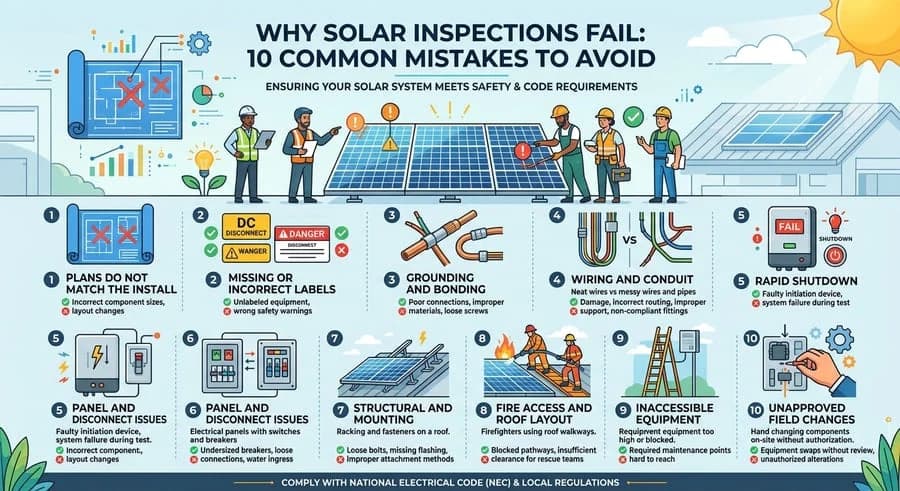
Why Solar Inspections Fail: 10 Common Mistakes to Avoid
Discover the 9 critical reasons solar inspections fail and how to avoid costly m...
Solar Grounding And Bonding: How To Pass Inspection Every Time
Learn how to pass solar grounding and bonding inspections every time. Avoid comm...
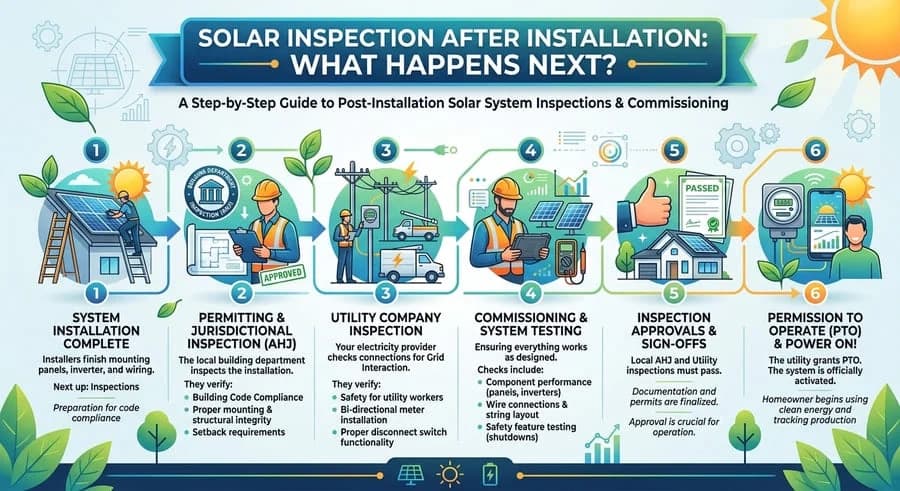
Solar Inspection After Installation: What Happens Next?
Learn how to pass your solar inspection by following essential tips for obtainin...