California’s Title 24, Part 6 (Building Energy Efficiency Standards) mandates solar photovoltaic systems and battery storage for most new construction as of January 1, 2026. Here’s what property owners and solar installers need to know:
Key Requirements by Building Type:
- Low-rise residential (1-3 stories): Solar PV required; battery storage optional but incentivized with 25% PV reduction
- High-rise residential (4+ stories): Both solar PV and battery storage mandatory; calculated using commercial formulas
- Commercial buildings (offices, warehouses, retail, schools): Solar PV plus battery storage required with sizing based on conditioned floor area or roof space
Three Solar Sizing Methods:
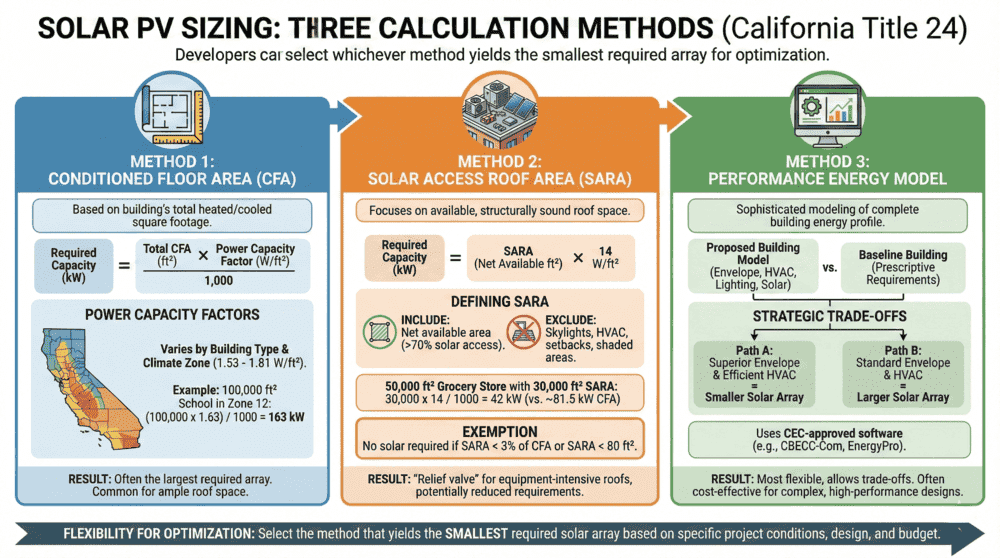
- Conditioned Floor Area (CFA): Multiply building square footage × climate zone factor ÷ 1,000 (typically largest requirement)
- Solar Access Roof Area (SARA): Available roof space × 14 W/ft² (exemption if <80 sq ft or <3% of CFA)
- Performance Energy Model: Computer simulation comparing proposed building to code baseline (allows trade-offs)
Battery Storage Formula for Commercial: Energy capacity requires 1.87 kWh per kW of required solar PV (for schools; varies by building type per Table 140.10-B). Four-hour duration batteries recommended for maximum demand charge savings.
Critical Compliance Dates:
- 2025 code effective: January 1, 2026
- Permits submitted before January 1, 2026: May use 2022 code
- Code remains in effect through 2031 (extended 6-year cycle per AB 130)
- Penalties: $500-$2,000 per day per violation after 30-day grace period
Exemptions: Additions to existing buildings, alterations not affecting energy systems, unconditioned buildings, and projects where SARA calculation results in <15% of CFA method requirement.
Cost Considerations: Residential solar averages $3.14/watt ($22,600 for 7.2 kW system before incentives). Commercial systems vary by size and complexity. Federal 30% Investment Tax Credit available through 2032. Multiple financing options include cash purchase, solar loans, PACE financing, PPAs, leases, and Energy-as-a-Service models.
This guide explains California’s 16 climate zones, the difference between prescriptive and performance compliance pathways, battery sizing calculations, permitting processes, enforcement penalties, and financing strategies for both residential and commercial projects navigating Title 24’s 2026 requirements.
Understanding Title 24 Basics
Title 24 refers to the California Building Standards Code, with Part 6 specifically covering Building Energy Efficiency Standards. Created following the Warren-Alquist Act of 1974, California became the first state to implement minimum energy efficiency standards. The code operates on a three-year update cycle, with each revision systematically increasing efficiency requirements to support the state’s ambitious climate objectives.
Unlike model codes adopted by other states, Title 24 is specifically tailored to California’s 16 distinct climate zones. Zone 1 covers the far northern coast with cool, foggy conditions, while Zone 16 addresses high mountain areas with extreme temperature variations. The most common commercial development zones include Zone 3 (San Francisco Bay Area coast), Zone 6 (Los Angeles Basin), Zone 9 (inland valleys), Zone 12 (Sacramento Valley), and Zone 15 (desert regions including Palm Springs). Each climate zone has distinct requirements for building envelope performance, HVAC system efficiency, and solar PV sizing factors.
The standards apply to all new construction, building additions, and alterations that affect energy-consuming systems including HVAC, lighting, building envelope, and water heating. The California Building Code Part 2 works in conjunction with Title 24 Part 6 to establish comprehensive building standards. Title 24 Part 6 coordinates with CALGreen (Title 24, Part 11), which addresses broader green building standards, and aligns with California Air Resources Board goals for statewide decarbonization. Additionally, AB 802 requires buildings over 50,000 square feet to benchmark and disclose energy use through ENERGY STAR Portfolio Manager, creating overlapping compliance obligations that comprehensive monitoring systems can address simultaneously.
Three categories of projects are exempt from Title 24’s solar and battery requirements regardless of building type: additions to existing buildings that don’t increase conditioned space, alterations to existing buildings that only affect interior finishes or non-energy systems, and unconditioned buildings such as open-air structures or unheated storage facilities.
Residential Solar Requirements Under Title 24
Low-Rise Residential Buildings
For single-family homes, duplexes, triplexes, and residential buildings up to three stories, solar photovoltaic systems have been mandatory since January 1, 2020. The calculation method uses a straightforward kilowatts-per-square-foot ratio based on the building’s conditioned floor area—the heated and cooled interior space. Climate zone adjustments ensure adequate solar output year-round, with coastal regions requiring slightly smaller systems due to milder temperatures and desert areas requiring larger arrays to offset extreme cooling loads.
A typical 2,000-square-foot single-family home in Climate Zone 12 (Sacramento Valley) would require approximately 2.6 kW of solar PV capacity. The same home in coastal Zone 3 would need roughly 3.0 kW, while a home in Zone 13 (Fresno area) would require 3.3 kW. These calculations account for roof orientation, with south-facing arrays generating optimal production and east-west orientations requiring larger system sizes to meet the same energy offset requirements.
Battery storage is NOT required for low-rise residential construction. However, all newly constructed single-family homes must be “battery-ready,” meaning they must include electrical infrastructure, appropriate conduit routing, panel capacity, and physical space, to support future battery installation. This requirement ensures that homeowners can add battery storage cost-effectively when they choose to do so, without requiring expensive electrical service upgrades.
Homeowners who voluntarily install battery storage systems alongside their solar panels can benefit from a significant code incentive: the required solar PV capacity can be reduced by up to 25%. To qualify for this reduction, the battery system must meet JA12 performance standards and provide at least 7.5 kWh of usable energy capacity. All battery systems, whether installed initially or added later, must maintain at least 80% round-trip efficiency, meaning 80% of stored energy remains available for use after accounting for conversion losses.
The solar requirement includes specific exemptions for low-rise residential projects. If the calculated required PV system size is less than 1.8 kW, the building is exempt from solar installation. This typically affects homes smaller than 600-700 square feet depending on climate zone. Additionally, if the building’s Solar Access Roof Area (SARA) is less than 80 contiguous square feet due to permanent shading from trees or neighboring structures, solar panels are not required.
Community solar presents an alternative compliance pathway for developments where individual roof installations prove impractical. Townhome communities with complex rooflines, properties with extensive shading from mature trees, or neighborhoods with homeowner association restrictions can petition for shared solar arrays that serve multiple residences. The total system capacity must still meet the combined requirements of all participating homes, and utility interconnection agreements must clearly allocate generation credits to individual units.
High-Rise Residential Buildings
California’s Title 24 draws a critical distinction at the four-story threshold. Residential buildings with four or more habitable floors transition from the residential code section to commercial-level requirements, classified under high-rise R-1 (hotels, boarding houses) or R-2 (apartments, condominiums) occupancy groups. This classification shift triggers both solar PV and battery storage mandates, with sizing calculations following the more complex commercial methodologies.
Mixed-use podium projects, increasingly common in urban California developments, present unique compliance challenges. A typical design might feature two levels of retail and parking with six residential floors above. The commercial retail space follows Group M (mercantile) requirements, while the residential component falls under high-rise R-2 rules. Developers must calculate solar and battery requirements separately for each occupancy group, then sum the totals to determine overall system sizing. This often results in larger arrays than initially anticipated, requiring early-stage planning to ensure adequate roof space and electrical infrastructure.
The transition from battery-ready to mandatory battery storage represents the most significant cost impact for high-rise residential developers. A 100-unit apartment building with 80,000 square feet of conditioned space in Climate Zone 6 might require 130 kW of solar PV capacity. Under the commercial battery sizing requirements, this triggers a battery storage requirement that represents a substantial capital investment that must be factored into pro forma calculations from the earliest planning stages.
Commercial and Industrial Solar Requirements
Buildings Covered Under Commercial Title 24
The commercial Title 24 requirements apply based on occupancy classification rather than business type, a distinction that sometimes surprises property owners. Group B encompasses office buildings, banks, professional services, and administrative spaces. Group F covers factories, warehouses, industrial facilities, and logistics centers. Group M includes retail stores, grocery markets, and shopping centers. Group A-3 applies to assembly spaces such as theaters, churches, and museums. Groups H-2 and H-3 cover moderate and low-hazard storage facilities. Finally, high-rise multifamily buildings with four or more habitable floors must comply with commercial-level standards.
Notably, stand-alone parking garages and unconditioned warehouses or agricultural buildings remain exempt. However, the exemption applies narrowly-a parking structure attached to an office building cannot shelter the office space from compliance. Building departments typically require separate electrical meters and detailed single-line diagrams when mixed occupancy types exist within a single property to ensure proper compliance verification.
Warehouses and logistics facilities represent a particular focus for California enforcement agencies. These buildings offer ideal conditions for solar compliance: massive, flat roofs with minimal equipment, high daytime energy consumption from HVAC and material handling, and substantial evening peaks from refrigeration and forklift charging. Plan checkers routinely scrutinize warehouse projects to ensure developers aren’t understating requirements through creative classification or overstating roof shading limitations.

Solar PV Sizing: Three Calculation Methods
California’s performance-based approach offers developers three distinct pathways for determining required solar capacity, with explicit permission to select whichever method yields the smallest array. This flexibility enables optimization based on specific site conditions, architectural design, and budget constraints.
Method 1: Conditioned Floor Area (CFA) establishes requirements based on a building’s total square footage of heated and cooled space. The formula multiplies total CFA by a power capacity factor specific to building type and climate zone, then divides by 1,000 to convert watts to kilowatts. For schools and educational facilities across most California climate zones, the factor is 1.63 W/ft². A 100,000-square-foot school in Zone 12 would therefore require 163 kW of solar PV capacity.
The power capacity factors adjust for climate variations, ranging from 1.53 W/ft² in mild coastal zones to 1.81 W/ft² in extreme desert regions. This climate-specific calibration ensures solar arrays generate sufficient power year-round despite regional differences in solar resource availability, seasonal temperature impacts on panel efficiency, and heating versus cooling load dominance. CFA calculations typically result in the largest required arrays, making this method most common for buildings with ample roof space and straightforward layouts.
Method 2: Solar Access Roof Area (SARA) focuses on available roof space rather than building size. Developers calculate the total unoccupied roof area capable of structurally supporting solar panels, excluding skylights, HVAC equipment platforms, required maintenance setbacks, and areas with less than 70% solar access due to shading. This net available area multiplies by 14 W/ft² to determine required PV capacity.
SARA provides an important relief valve for buildings with equipment-intensive roofs. A 50,000-square-foot grocery store might have only 30,000 square feet of usable roof area after accounting for refrigeration units, exhaust fans, and rooftop equipment. Under CFA, the building might require 81.5 kW of solar capacity. Under SARA, the requirement drops to 42 kW—a reduction of nearly 50% that can save $75,000 or more in installation costs.
Complete exemption from solar requirements occurs when SARA falls below 3% of total CFA or drops below 80 square feet. This provision acknowledges that some buildings simply cannot accommodate meaningful solar arrays due to structural limitations, historical preservation requirements, or dense rooftop equipment.
Method 3: Performance Energy Model allows the most sophisticated compliance strategy. Using CEC-approved software such as CBECC-Com or EnergyPro, engineers model the proposed building’s complete energy consumption profile, accounting for envelope performance, HVAC efficiency, lighting design, plug loads, and solar generation. If the modeled building performs equal to or better than a baseline building meeting prescriptive requirements, compliance is demonstrated.
Performance modeling enables strategic trade-offs: a tighter building envelope with superior insulation and high-performance windows might offset some solar capacity requirements, or ultra-efficient variable refrigerant flow HVAC systems could reduce the energy baseline enough to shrink the required array. Design-build teams that already invest in energy modeling for LEED certification or other sustainability programs often find performance-based Title 24 compliance the most cost-effective pathway, despite the additional engineering investment required.
Battery Storage Requirements for Commercial Buildings
California’s 2022 Title 24 code introduced prescriptive battery storage requirements that fundamentally changed commercial solar economics. The battery sizing calculations are more complex than often cited, varying by building type and involving specific formulas outlined in Table 140.10-B of the Energy Code.
For most commercial buildings, battery storage requirements are calculated using two separate values:
Energy Capacity (measured in kilowatt-hours) is calculated using Equation 140.10-B, which factors in the required PV system size, a building-type-specific energy capacity factor from Table 140.10-B, and the battery system’s round-trip efficiency. For schools and educational facilities, the energy capacity factor (B) is 1.87, meaning the calculation requires 1.87 kWh for each kW of required PV capacity, adjusted by the square root of the battery’s AC-to-AC efficiency.
Power Capacity (measured in kilowatts) uses Equation 140.10-C, which multiplies the required PV capacity by a power capacity factor (C) from Table 140.10-B. For schools, this factor is 0.46, meaning 0.46 kW of battery power capacity is required per kW of solar PV.
Some industry sources reference a simplified “2.5× multiplier” (2.5 kWh of battery per kW of solar), which may represent a conservative interpretation or apply to specific building types. Solar installers should consult Table 140.10-B for the exact factors applicable to their specific building occupancy type and verify calculations with Title 24 compliance software.
The code intentionally avoids specifying battery duration—whether the storage system delivers its rated power for two hours, four hours, or longer. Most commercial property owners select four-hour duration batteries to maximize demand charge savings. Time-of-use electricity rates in California create substantial cost differences between midday off-peak periods when solar generates maximum output and evening on-peak periods when solar production falls but building energy demand remains high. Four-hour batteries can fully charge during midday surplus solar production, then discharge during the expensive 4-8 PM peak window, often saving $30,000-$60,000 annually on larger systems.
Four specific exemptions eliminate battery requirements despite solar PV installation. First, systems requiring less than 10 kWh total battery capacity are exempt—typically only small retail kiosks, server closets, or minor building additions. Second, projects using SARA or Performance methods that result in PV sizing below 15% of what the CFA method would require qualify for battery relief, acknowledging that heavily shaded or structurally limited sites cannot support meaningful storage integration. Third, low-rise multifamily buildings (under four stories) are not required to install batteries, though installation is incentivized through a 25% PV sizing reduction if batteries are voluntarily added. Finally, buildings with emergency-only generator backup systems and minimal battery storage for life safety egress lighting may qualify for alternate compliance under California Building Code Chapter 27.
All commercial battery systems must meet JA12 technical standards: minimum 80% round-trip efficiency, retention of at least 70% of original capacity at year 10, and UL 9540A certification for fire safety. Containerized battery systems that arrive as pre-engineered units typically satisfy these requirements, while custom installations require detailed documentation and third-party testing to verify compliance.
Commercial Compliance Pathways
Property developers can choose between two fundamentally different approaches to demonstrating Title 24 compliance, each with distinct advantages and limitations.
The Prescriptive Method provides a straightforward checklist approach. Developers follow exact code requirements for solar sizing, battery capacity, envelope insulation, window U-factors, HVAC efficiency, and lighting power density. No energy modeling is required, and building department plan checkers can quickly verify compliance by confirming each specification matches or exceeds the prescriptive tables. This path offers predictability, faster permit approval, and reduced engineering costs.
However, prescriptive compliance sacrifices design flexibility. Innovative architectural features, integrated daylighting strategies, or high-efficiency mechanical systems cannot offset solar requirements. Developers may install larger, more expensive solar and battery systems than necessary because they cannot demonstrate that superior performance in other building systems justifies smaller renewable energy installations. For standardized buildings with conventional designs, think typical office parks or distribution warehouses, prescriptive compliance often proves most efficient.
The Performance Method uses whole-building energy modeling to demonstrate that actual energy consumption meets or beats a hypothetical baseline building designed to prescriptive standards. This computer simulation accounts for complex interactions between systems: how superior window performance reduces cooling loads, allowing smaller HVAC equipment that consumes less fan energy, which in turn reduces required solar capacity. Thermal mass in concrete floors might shift cooling loads to nighttime hours when utility rates drop, enabling smaller battery installations.
Performance compliance requires specialized engineering expertise and CEC-approved software, adding $15,000-$40,000 to design costs for complex commercial projects. Building department review takes longer as plan checkers verify modeling assumptions and input parameters. Yet the design freedom and potential cost optimization frequently justify these investments. A well-executed performance model might reduce required solar capacity by 20-30% compared to prescriptive requirements, generating $150,000 in construction savings on a 150 kW system, far exceeding the engineering premium.

Solar Permit Solutions
Homeowner Going Solar?
Get the permit-ready plan set your city requires — delivered fast so your solar project stays on schedule.
2025/2026 Code Updates: What’s New
The 2025 Building Energy Efficiency Standards, adopted in September 2024 and effective January 1, 2026, advance multiple fronts in California’s decarbonization strategy. These changes affect both new construction and, increasingly, existing buildings undergoing equipment replacement. Due to AB 130, this code cycle will remain in effect through at least 2031, a six-year period rather than the typical three-year cycle.
Expanded Heat Pump Requirements represent the most visible shift toward building electrification. The new code requires existing retail buildings, schools, offices, and libraries to replace end-of-life rooftop HVAC units with high-efficiency systems including heat pumps when capacity exceeds certain thresholds. This provision recognizes that California’s electricity grid is rapidly decarbonizing through renewable energy additions, making electric heating increasingly cleaner than natural gas combustion. Property owners planning major HVAC replacements in 2026 and beyond must evaluate heat pump alternatives even for existing buildings constructed under earlier code cycles.
Battery Storage Integration receives enhanced emphasis in the 2025 code, with tighter linkage between solar PV and battery systems. New provisions specifically address demand flexibility, the ability to shift energy consumption away from grid stress periods. Buildings must demonstrate that battery systems can automatically respond to utility price signals or grid conditions, participating in demand response programs that pay building owners for load reduction during peak events. This grid-interactive capability transforms batteries from simple backup power sources into revenue-generating assets.
Electric-Ready Requirements mandate that commercial kitchens and certain building types include electrical infrastructure sufficient for future conversion from gas to electric cooking and water heating. Even if natural gas equipment is installed initially, electrical panels must have spare capacity, appropriately sized conduits must run to kitchen areas, and service entrance equipment must accommodate future electrification. These requirements prevent the costly panel upgrades and electrical service modifications that typically accompany gas-to-electric conversions, reducing barriers to eventual full electrification.
The California Department of Housing and Community Development plays a key role in implementing residential building standards within the Title 24 framework, ensuring coordination between state-level requirements and local enforcement.
Indoor Air Quality Standards received unprecedented attention following COVID-19, with the 2025 code establishing strengthened ventilation requirements that emphasize occupant health. Enhanced outdoor air delivery rates, improved filtration standards, and demand control ventilation systems that adjust based on actual occupancy all contribute to healthier indoor environments. Energy Data Display Systems must now track energy consumption at 15-minute intervals with 36-month data retention, providing the granular information needed for continuous performance verification.
ASHRAE Guideline 36 Integration standardizes HVAC control sequences across commercial buildings. The code now references specific ASHRAE sequences for variable air volume systems, economizer operation, supply air temperature reset, and direct digital control logic. This alignment creates consistency between Title 24 requirements and broader industry standards, simplifying compliance for buildings also pursuing ASHRAE energy audits or LEED certification.
Fault Detection and Diagnostics (FDD) capabilities receive expanded emphasis, with requirements for automated systems that identify equipment problems before they significantly impact energy consumption or occupant comfort. FDD systems continuously monitor equipment performance, comparing actual operation against expected parameters and alerting facility managers when deviation occurs. A rooftop HVAC unit with a failing economizer damper actuator might waste $5,000 annually in excess cooling energy; FDD identifies the problem within days of failure rather than waiting months until the next scheduled maintenance visit.
Enhanced Envelope Requirements include lower U-factor requirements for windows and improved insulation standards reflecting advances in building materials. These changes particularly benefit climate zones with extreme temperatures, where improved thermal performance substantially reduces HVAC loads and allows smaller solar arrays to meet overall energy budgets.

Compliance Process and Documentation
Title 24 compliance unfolds across three distinct project phases, each with specific documentation requirements and approval milestones. Understanding California’s solar permitting process is essential for avoiding delays.
The Pre-Permit Phase establishes the compliance framework. Project teams must confirm the precise climate zone using CEC mapping tools, as zone boundaries don’t always align with city limits. Occupancy classification requires coordination with the fire marshal’s office, as the fire code occupancy designation drives Title 24 applicability. Teams select their sizing methodology—CFA, SARA, or Performance—based on preliminary architectural plans, then execute calculations to determine required solar and battery capacity. This information feeds into project budgets and informs design decisions about roof structure, electrical service sizing, and equipment locations.
Understanding the typical duration for obtaining permits helps project teams plan realistic timelines—most solar permit applications take 2-4 weeks for review and approval in California jurisdictions.
Permitting Requirements vary slightly between residential and commercial projects but follow similar patterns. All applications must include a Certificate of Compliance before building departments will issue permits. This compliance certificate documents that the proposed design meets Title 24 requirements, specifying calculation methods, climate zone, and equipment specifications. Single-line electrical diagrams show how solar PV, batteries, and building electrical systems interconnect. Equipment data sheets provide technical specifications for solar panels, inverters, and battery systems. Fire departments review battery installations separately, requiring UL 9540A test reports that document fire safety performance, setback distances from property lines, and adequate ventilation.
Commercial projects using performance-based compliance must submit complete CBECC-Com modeling reports showing all input assumptions, baseline building parameters, and proposed building performance. Third-party plan checkers often review these models, adding 2-4 weeks to permit timelines but providing added assurance that complex compliance strategies will survive final inspection.
During Construction, installers file Installation Certificates as major milestones complete. These interim documents verify that equipment is being installed according to approved plans, with photos documenting mounting methods, electrical connections, and equipment nameplate data. Progress inspections by building department electrical inspectors confirm work quality and code compliance before final installations proceed.
Post-Installation verification represents the most rigorous phase. Certificate of Acceptance testing requires certified technicians from the Acceptance Test Technician Certification Provider (ATTCP) program to verify functional performance: Do occupancy sensors actually control lighting? Does the economizer properly bring in outside air when temperatures allow free cooling? Do solar inverters communicate with battery management systems for coordinated operation? For residential projects, HERS (Home Energy Rating System) raters provide independent third-party verification that installed systems meet modeled performance assumptions. Commercial commissioning reports document systematic testing of all building energy systems.
Utility interconnection adds a final layer of complexity and potential delay. Solar installations generating electricity must receive Permission to Operate (PTO) from the utility before energization. Systems exceeding 500 kW in capacity often face 9-12 month interconnection queues, with utilities requiring detailed engineering studies before approving connection to the distribution grid. Smart developers submit interconnection applications during the permit phase rather than waiting for construction completion, preventing finished buildings from sitting idle while utility approvals process.
Penalties and Enforcement
Title 24 enforcement operates primarily through local building departments, which state law requires to verify compliance as part of standard permitting and inspection processes. The California Building Standards Commission oversees the enforcement framework statewide. The penalty structure creates substantial incentives for compliance while providing grace periods for good-faith corrections.
Building departments deny permits when applications lack valid compliance documentation, protecting developers from investing in construction that cannot legally proceed. Stop work orders halt active construction when inspectors discover non-compliant installations or unapproved deviations from permitted plans. Most significantly, certificates of occupancy are withheld until all Title 24 requirements are satisfied, a building may be physically complete but cannot legally be occupied or sold until compliance is documented.
Civil penalties under California law range from $500 to $2,000 per day per violation category, with a 30-day grace period after official notification before penalties begin accruing. A commercial building with three separate violations, undersized solar array, missing battery storage, and failed acceptance testing, could face $6,000 daily in penalties if not corrected within the grace period. These fines continue indefinitely until violations are remedied, creating substantial financial pressure for resolution.
For commercial properties, project delays often cost far more than direct penalties. A developer pre-leasing retail space with tenant improvement allowances tied to occupancy dates may face breach-of-contract claims if Title 24 issues delay certificate of occupancy. Data centers, manufacturing facilities, and other time-sensitive projects calculate delay costs in tens of thousands of dollars per day, making comprehensive compliance planning essential from the earliest design stages.
Major California cities including Los Angeles, San Diego, San Jose, and San Francisco have established additional energy and climate programs that coordinate with Title 24 while potentially imposing stricter local requirements. State law permits local jurisdictions to adopt ordinances exceeding Title 24 minimums when justified by local climatic, geological, or topographical conditions. Building owners with properties across multiple jurisdictions must track both state code requirements and applicable local amendments to ensure comprehensive compliance.
Financing and Ownership Options
The capital investment required for Title 24-compliant solar and battery systems has spawned diverse financing structures tailored to different property types and owner objectives.
Cash Purchase offers simplest ownership. Property owners pay full system costs upfront, retain complete control, and claim the federal 30% Investment Tax Credit. For commercial properties, Modified Accelerated Cost Recovery System (MACRS) depreciation provides additional tax benefits, effectively recovering a significant portion of system costs through combined ITC and depreciation over the first six years. Cash purchases maximize long-term return on investment but require significant upfront capital and create depreciating assets on balance sheets that some investors prefer to avoid.
Solar Loans finance 100% of system costs over 10-25 year terms while maintaining owner eligibility for ITC benefits. Property owners make monthly loan payments comparable to previous utility costs, preserving capital for other investments while still achieving long-term ownership and full savings realization. This model proves popular for owner-occupied commercial properties where balance sheet treatment is less critical than cash flow management.
Commercial PACE Financing (Property Assessed Clean Energy) spreads costs over 20-25 years through property tax assessments. The financing is non-recourse, meaning lenders cannot pursue owners personally if the property enters foreclosure, with the PACE obligation transferring to subsequent buyers. Property owners retain ITC benefits and can often secure favorable rates, but the lien structure sometimes complicates property sales as buyers must assume or negotiate the remaining PACE assessment.
Power Purchase Agreements (PPAs) eliminate upfront costs by having a third-party developer own, install, and maintain the solar and battery systems. Property owners sign 20-30 year contracts agreeing to purchase generated electricity at predetermined rates, typically 10-20% below utility costs. The developer claims the ITC and handles all maintenance, while the property owner enjoys predictable energy costs without capital investment. Most PPAs include escalation clauses, annual rate increases of 2-3%, but these typically remain below utility rate growth, preserving savings over contract life.
Equipment Leases function similarly to PPAs but charge fixed monthly payments regardless of system production rather than per-kilowatt-hour pricing. This shifts performance risk to the property owner, if solar output underperforms projections, lease payments remain unchanged. However, lease structures can offer simpler contracts and potentially lower overall costs when energy production forecasts prove accurate.
Energy-as-a-Service (EaaS) models combine elements of PPAs and leases while adding performance guarantees. Energy developers retain system ownership and claim the ITC, charging property owners operational expenses tied to actual performance with pre-modeled savings projections. Contract terms typically run 5-15 years, shorter than traditional PPAs, with the 15-year option satisfying Title 24’s requirement for permanent installation. Real estate investment trusts and developers focused on quick property sales often prefer EaaS because systems remain off balance sheet while still achieving Title 24 compliance and demonstrating operational savings to future buyers.
The optimal financing structure depends on multiple factors: tax appetite for ITC and depreciation benefits, balance sheet preferences, expected property holding period, and tolerance for operational complexity. Mixed-use developers might use different approaches for residential and commercial components within the same project, optimizing each based on component-specific economics.
Best Practices for Solar Installers
Successful Title 24 compliance begins long before permit submission. Climate zone verification should occur first, as incorrect zone determination cascades through all subsequent calculations. The California Energy Commission provides detailed zone maps, but boundary areas require careful evaluation as zones can change within short distances based on topography and microclimate variations.
Occupancy classification requires coordination with the fire marshal’s office early in design. The same building might be classified as Group B office space or Group F light manufacturing depending on intended use, and this classification determines applicable solar and battery requirements. Confirm classification in writing before investing in detailed system design to avoid costly redesigns.
Dual calculations of both CFA and SARA methods should be standard practice, even when one method appears obviously advantageous. Developers occasionally discover that roof equipment layouts assumed during preliminary design differ from final MEP engineering, changing SARA calculations enough to favor that methodology. Running both calculations costs minimal engineering time while preserving maximum flexibility for optimal compliance.
Performance modeling deserves consideration for complex projects, especially those already pursuing LEED certification, WELL Building Standard, or other sustainability credentials that require energy modeling. The incremental cost of Title 24 performance compliance adds modestly to existing modeling investments while potentially generating substantial savings through optimized system sizing.
Battery duration planning should default to four-hour systems for commercial projects unless specific analysis justifies alternative durations. The demand charge savings from four-hour batteries typically offset their higher installed costs within 5-7 years, and longer duration systems enhance property appeal to sophisticated buyers who value operational efficiency.
Fire department coordination must occur early and explicitly. Submit battery fire safety documentation, UL 9540A reports, ventilation plans, setback calculations, with initial permit applications rather than addressing fire concerns during electrical review. This parallel processing prevents delays and demonstrates comprehensive planning to building officials.
Utility interconnection applications should be submitted concurrently with or before building permits, particularly for systems exceeding 500 kW. The 9-12 month PTO timelines for large systems can become critical path items that delay building occupancy and revenue generation if not addressed proactively. For PG&E customers, understanding solar interconnection in PG&E territory is particularly important.
Common mistakes that trigger permit delays or rejections include misclassifying building occupancy, applying wrong climate zone requirements, using incorrect battery sizing formulas for specific building types, submitting incomplete fire safety documentation, and failing to coordinate utility interconnection with project timelines. Additionally, inadequate acceptance testing plans often result in failed final inspections, as inspectors cannot verify compliance without proper test procedures and documentation.
Installers working across multiple states should familiarize themselves with solar permitting timelines by state to set accurate client expectations and optimize project scheduling.
Value-added services that differentiate sophisticated installers include comprehensive Title 24 compliance consulting from preliminary design through final acceptance, multiple financing option analysis with detailed pro forma comparisons, continuous monitoring systems that support ongoing compliance verification and operational optimization, integration planning for demand response programs and virtual power plant participation, and future-proofing for electric vehicle charging infrastructure and additional energy storage capacity.
Future Outlook and Industry Impact
California’s building energy code continues to evolve, though the 2025 update will remain in effect through at least 2031 due to AB 130’s freeze on residential building code updates. The extended code cycle provides unprecedented stability for the solar industry but also means the 2025 requirements will shape building design for six years rather than the typical three-year period.
Stakeholders can participate in future code development through the Title 24 stakeholder process, which welcomes public input on proposed code changes and provides transparency throughout the rulemaking cycle.
The solar installation industry has fundamentally transformed in response to Title 24 mandates. Battery storage, once a niche product for off-grid enthusiasts and backup power applications, is now standard equipment on most commercial projects. This normalization has driven battery costs down dramatically since 2019 while improving product quality, installation practices, and maintenance support infrastructure.
Energy-as-a-Service models have grown from experimental concepts to mainstream financing vehicles, particularly for commercial and multifamily properties. The certainty of Title 24 requirements gives project financiers confidence in long-term cash flows, enabling competitive pricing and flexible terms that make compliance financially attractive rather than merely obligatory.
Demand response integration represents emerging opportunity. California’s grid stress events, extreme heat waves driving record electricity demand, create premium pricing for load reduction during critical hours. Buildings with properly sized battery systems can generate $15,000-$40,000 annually from demand response participation while simultaneously satisfying Title 24 mandates, transforming regulatory compliance into profit centers.
Technology continues advancing rapidly. Longer-duration battery storage using alternative chemistries may enable 8-12 hour discharge durations, allowing buildings to shift even more consumption away from expensive peak periods. AI-powered energy management systems learn building occupancy patterns and weather forecasts to optimize when batteries charge and discharge, often improving savings 15-25% beyond simple time-of-use strategies.
Vehicle-to-grid integration looms on the horizon. As electric vehicles become ubiquitous, their battery capacity represents enormous distributed storage potential. Future Title 24 revisions beyond 2031 may credit V2G-capable charging infrastructure toward building battery requirements, fundamentally changing how developers approach parking and energy system design.
The retrofit market presents substantial opportunity. Buildings constructed under 2019-2022 code requirements include solar PV but no battery storage. As electricity rate structures evolve to penalize peak demand more aggressively, particularly under California’s NEM 3.0 net metering policy, these buildings will find battery upgrades economically attractive even without regulatory mandates. Installers who master battery retrofit integration, working within existing electrical infrastructure, optimizing inverter configurations, navigating utility permissions, will capture this emerging market.
California Title 24 compliance represents a permanent shift in how buildings are designed, constructed, financed, and operated. The transition from solar as optional sustainability feature to mandatory solar-plus-battery as baseline standard for commercial buildings is complete. For solar installers, this evolution means steady long-term demand, but also higher technical complexity and increased competition. Success requires mastering regulatory details, offering comprehensive financing solutions, providing exceptional solar permit design services, and delivering ongoing performance monitoring and optimization. The buildings permitted under the 2025 code standards will operate for 50-75 years, making today’s compliance decisions critically important to decades of future energy performance and cost efficiency.
Whether you’re working on projects in Riverside County, San Bernardino, or anywhere else in California, understanding state-by-state solar permit timelines and requirements is essential for efficient project delivery. The solar industry’s adaptation to Title 24 demonstrates how regulatory frameworks can drive innovation while creating new market opportunities for forward-thinking installers and developers who embrace compliance as a competitive advantage rather than merely a regulatory burden.
Additional resources for navigating solar incentives and rebates can help property owners maximize the financial benefits of Title 24-compliant installations, while comprehensive understanding of California energy efficiency standards ensures that projects not only meet minimum requirements but optimize performance for long-term value creation.
Conclusion
California’s Title 24 solar and battery storage requirements represent a fundamental shift in building construction standards, with the 2025 code update taking effect January 1, 2026. The distinction between residential and commercial requirements is critical: low-rise homes (1-3 stories) need solar PV with optional battery storage, while high-rise residential (4+ stories) and commercial buildings face mandatory requirements for both solar and battery systems.
Understanding the three solar sizing methodologies, Conditioned Floor Area (CFA), Solar Access Roof Area (SARA), and Performance Energy Modeling, enables strategic optimization. CFA typically yields the largest requirements, SARA can reduce obligations for equipment-intensive roofs, and performance modeling allows design flexibility that can deliver substantial cost savings on complex projects.
Battery storage has evolved from optional to mandatory for commercial construction, with sizing formulas varying by building type. Four-hour duration batteries have become the industry standard, enabling buildings to store midday solar production for discharge during expensive evening peak periods while satisfying compliance requirements.
The extended code cycle through 2031 provides unprecedented six-year stability for industry planning, though it emphasizes the importance of forward-thinking system design for buildings that will operate 50-75 years with today’s energy infrastructure decisions.
Financing options have matured to accommodate mandatory requirements, from traditional cash purchases and solar loans to Power Purchase Agreements and Energy-as-a-Service models that eliminate upfront capital requirements, particularly valuable for developers and REITs focused on balance-sheet optimization.
The permitting framework demands early planning with comprehensive documentation. Civil penalties of $500-$2,000 per day per violation, combined with project delay costs often exceeding direct fines, create substantial incentives for proactive compliance from schematic design phases.
Success requires expertise spanning regulatory compliance, engineering design, financial structuring, and ongoing performance optimization. Solar installers and developers who master Title 24’s complexities discover that regulatory compliance and business success are complementary strategies in California’s clean energy future. The transition to mandatory solar-plus-battery for commercial construction is complete, the question is no longer whether to comply, but how to optimize compliance strategies to minimize costs, maximize performance, and position properties for long-term value creation.
Homeowner Going Solar?
Get the permit-ready plan set your city requires — delivered fast so your solar project stays on schedule.
Frequently Asked Questions
Yes, all newly constructed single-family homes, duplexes, triplexes, and low-rise residential buildings (1-3 stories) require solar PV systems since January 1, 2020. Battery storage is optional but incentivized, homeowners installing batteries can reduce required solar capacity by 25%. Exemptions exist for homes requiring less than 1.8 kW of solar (typically under 600-700 square feet) or with Solar Access Roof Area under 80 contiguous square feet due to permanent shading. Community solar arrangements can serve as alternative compliance pathways.
Low-rise residential (1-3 stories) requires solar PV with optional battery storage. High-rise residential (4+ floors) and commercial buildings require both solar PV AND battery storage. Commercial sizing uses three methods: Conditioned Floor Area (CFA), Solar Access Roof Area (SARA), or Performance Energy Modeling. Battery requirements vary by building type, schools need 1.87 kWh per kW of solar PV. Commercial batteries must meet JA12 standards: 80% round-trip efficiency, 70% capacity at year 10, and UL 9540A certification.
Residential solar averages $3.14/watt ($22,600 for a 7.2 kW system, $15,820 after 30% federal tax credit). Battery storage adds $10,000-$15,000 for 10-13.5 kWh capacity. Payback periods range from 6-9 years. Commercial systems cost $2.00-$3.50/watt depending on size. Battery storage adds $400-$800/kWh. A 100 kW system with 250 kWh battery costs $220,000-$280,000 before incentives. Financing options include solar loans, PACE financing, PPAs, and Energy-as-a-Service models with zero upfront costs.
The 2025 code takes effect January 1, 2026. Applications submitted by December 31, 2025 may use 2022 code. Applications submitted January 1, 2026 or later must meet 2025 standards. The code version is determined by permit application date, not construction start, plan approval, or completion dates. Due to AB 130, the 2025 code remains effective through 2031 (six-year cycle vs. typical three years).
Building departments deny permits without compliance documentation, issue stop work orders for violations, and withhold certificates of occupancy until requirements are met. Civil penalties range from $500-$2,000 per day per violation after a 30-day grace period. Multiple violations accumulate, a building with three violations could face $6,000 daily. Project delays often cost more than direct penalties: lost lease revenue, breach-of-contract claims, and delay costs reaching tens of thousands per day. Properties cannot be legally occupied, sold, or leased without compliance.

SPS Editorial Team
Solar Permit Solutions
Solar Permit Solutions provides professional solar permit design services for residential, commercial, and off-grid installations across all 50 states. Our team ensures permit-ready plan sets delivered fast.
Related Articles
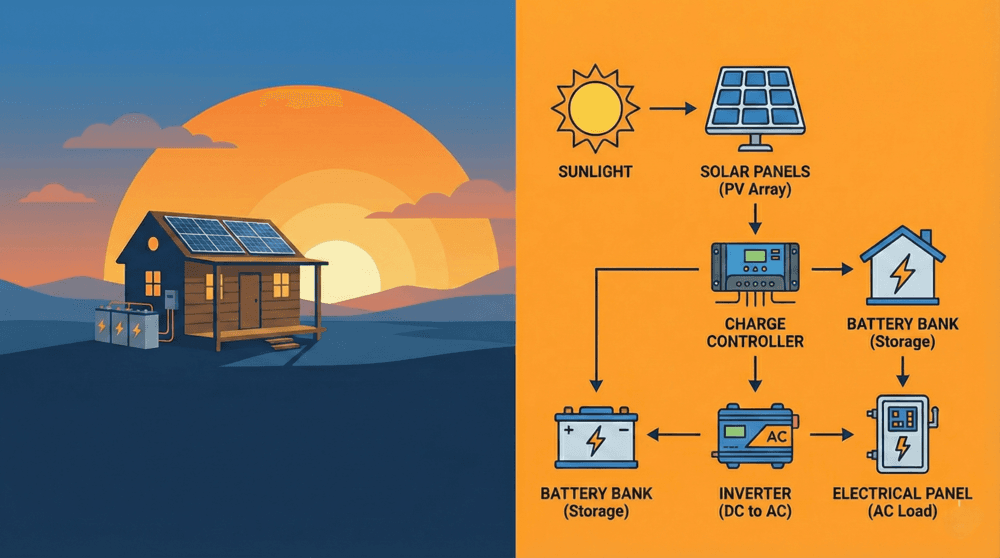
Off-Grid Solar System Requirements: Sizing, Permits & NEC Code Guide
Off-grid solar permit requirements by state: building codes, NEC compliance, bat...
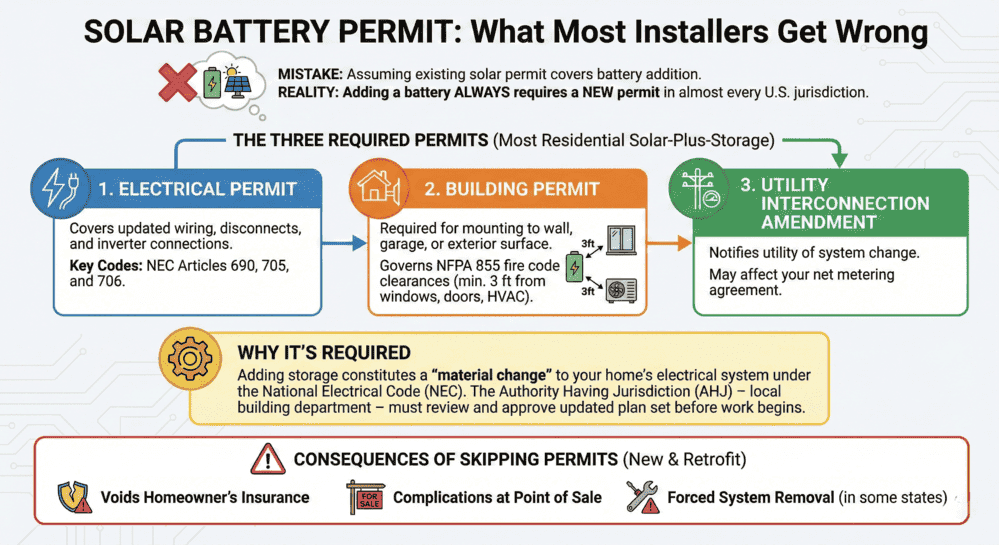
Solar Battery Permit: What Most Installers Get Wrong
Quick Answer: Adding battery storage to a solar system almost always requires ne...
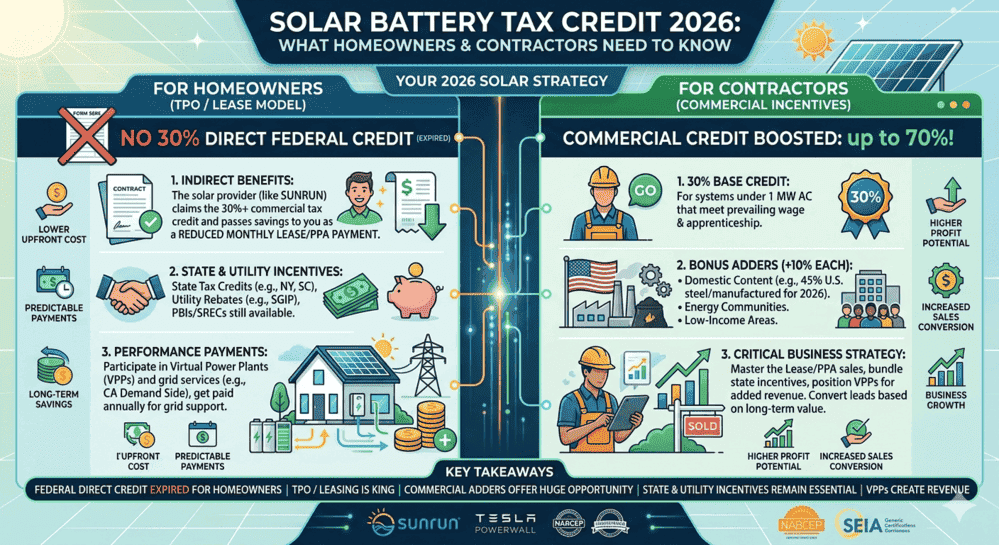
Solar Battery Tax Credit 2026: What Homeowners and Contractors Need to Know
There is no federal solar battery tax credit available to homeowners in 2026. Th...