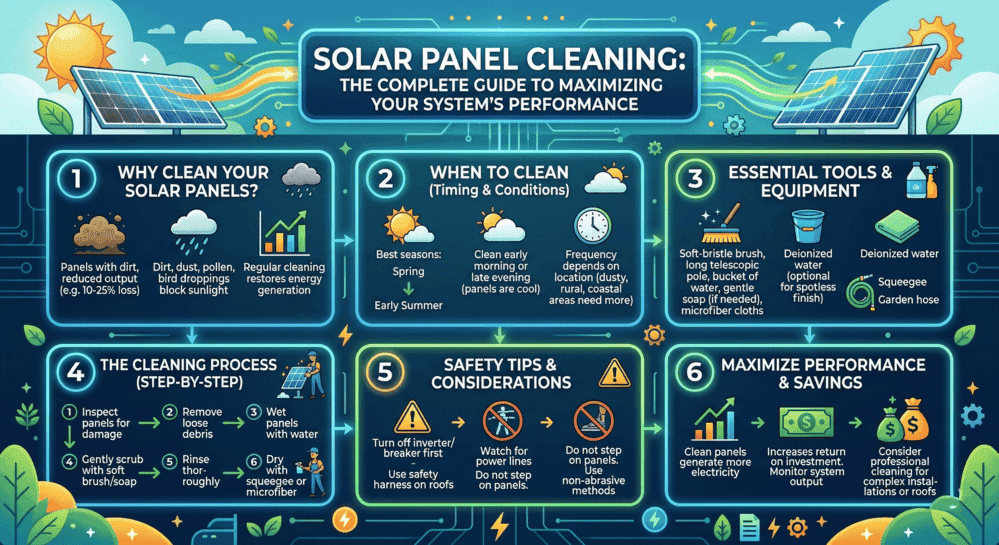
Dirty solar panels lose 2% to 25% of their energy output depending on the type and severity of soiling. Dust, pollen, bird droppings, and wildfire ash block sunlight from reaching the photovoltaic cells, and that lost production translates directly into lost savings on your electricity bill. Regular cleaning restores your system to its full rated capacity and keeps your actual output aligned with the production estimates in your solar permit design.
The best way to clean solar panels is with a soft-bristle brush, mild biodegradable soap, and a standard garden hose. Clean early morning or evening when panels are cool. Never use a pressure washer, abrasive scrubber, or ammonia-based cleaner. Work from the ground using a telescoping extension pole whenever possible.
Most residential solar panels should be cleaned one to two times per year. Homes in dusty, coastal, or agricultural areas may need quarterly cleaning. Panels tilted at five degrees or more benefit from natural rain washing between manual cleanings, but rain alone does not remove sticky residue like bird droppings or tree sap.
Professional solar panel cleaning costs $100 to $300 per visit, or roughly $5 to $15 per panel. For homeowners comfortable working from ground level, DIY cleaning costs under $50 in equipment. Before installation, understanding your permit requirements ensures a smooth start. This guide walks through every step of the cleaning process, compares methods and costs, covers warranty considerations, and explains how soiling affects your system relative to its permitted design estimates.
Do Solar Panels Need to Be Cleaned?
Yes. Dirty solar panels produce less electricity. When dust, grime, or organic material blocks sunlight from reaching the photovoltaic cells, your system cannot generate at its full rated capacity. According to an IEA soiling losses report, an estimated 4% to 7% of global solar energy yield is lost to soiling, with losses varying significantly by location and climate. NREL soiling research from 255 monitoring sites across the United States shows soiling losses ranging from under 1% in rainy regions to over 5% annually in arid areas. As the U.S. solar market continues to grow, according to SEIA industry data, the cumulative impact of soiling on national energy output becomes increasingly significant.
A University of Malaga study found that dust on panel surfaces causes average daily irradiation losses of around 4%, and during extended dry periods without rain, daily losses can exceed 20%. Solar panel maintenance professionals report that customers typically see a 10% to 25% improvement in output after a cleaning, depending on how dirty the panels were and how long since the last service. For a typical 6-kilowatt residential system, even moderate soiling losses of 10% to 15% can reduce annual savings by $120 to $180 or more, depending on local electricity rates and system output.
How Dirty Panels Affect Energy Production
Solar panels generate electricity when photons from sunlight strike the semiconductor material inside each cell. Any layer of material sitting on the glass surface, whether dust, pollen, bird droppings, or mineral deposits from hard water, reduces the amount of light reaching those cells. A proper shading analysis during system design accounts for external obstructions, but soiling adds an additional variable that accumulates over time. Light dust may only reduce output by 1% to 2%, but heavy soiling from agricultural dust, wildfire ash, or coastal salt spray can cut production by 15% to 30% in severe cases.
Bird droppings are especially problematic because they create concentrated shading on individual cells. Unlike a thin dust layer that reduces output evenly, a bird dropping can create a hot spot that forces the entire string of cells in that section to underperform. Systems using panel-level optimization, such as those compared in our microinverters vs string guide, can mitigate some of this impact by allowing unaffected panels to continue operating at full capacity.
Common Types of Soiling
| Soiling Type | Impact Level | Common Regions |
| Dust and dirt | Low to moderate (1-5%) | Desert Southwest, agricultural areas, near highways |
| Pollen | Low to moderate (2-5%) | Southeast, Midwest, Pacific Northwest (spring) |
| Bird droppings | High (5-15% per affected cell string) | Nationwide, especially near trees and power lines |
| Tree sap and leaf debris | Moderate to high (3-10%) | Wooded areas, forested suburbs |
| Wildfire ash | High (10-25%) | California, Pacific Northwest, Mountain West |
| Coastal salt spray | Moderate (3-8%) | Coastal regions within 5 miles of ocean |
| Industrial pollution | Moderate (3-8%) | Near factories, highways, construction sites |
| Hard water mineral deposits | Moderate (3-10%) | Areas with high mineral content in tap water |
How Often Should You Clean Solar Panels?
Most homeowners should clean their solar panels once or twice per year to maintain optimal performance. However, the ideal frequency depends on your local climate, surrounding environment, and how your panels are tilted. A UC San Diego study found that panels tilted at least five degrees allow rain and gravity to remove much of the light dust that accumulates day to day, reducing the need for manual cleaning. On average, panels in the study lost slightly less than 0.05% of their efficiency per day from normal dust accumulation. Your permit plan sets include production estimates based on clean panels, so understanding cleaning frequency helps you maintain those projected savings.
Cleaning Frequency by Climate Zone
| Climate Zone | Recommended Frequency | Primary Soiling Concern |
| Desert Southwest (AZ, NV, NM, West TX) | 2-4 times per year | Dust, sand, limited rainfall to self-clean |
| Gulf Coast and Southeast (FL, LA, GA, SC) | 1-2 times per year | Pollen, humidity, occasional hurricane debris |
| Pacific Coast (CA, OR, WA) | 1-2 times per year; more after fire season | Wildfire ash, coastal salt, pollen |
| Midwest and Great Plains (OH, IL, IN, IA) | 1-2 times per year | Agricultural dust, pollen, seasonal storms |
| Northeast and Mid-Atlantic (NY, PA, MA, NJ) | 1 time per year (spring recommended) | Snow melt residue, pollen, tree sap |
| Mountain West (CO, UT, MT, ID) | 1-2 times per year | Dust, wildfire ash, snow residue |
Homeowners in the Gulf Coast region should also review state-specific guidance. For example, our Florida solar permits guide covers local AHJ requirements that may affect system maintenance expectations in high-humidity climates.
Signs Your Panels Need Cleaning
If your solar monitoring system shows a noticeable drop in production that cannot be explained by weather or seasonal changes, soiling is a likely cause. Visible dirt, streaks, or bird droppings on the panel surface are obvious indicators. A good practice is to visually inspect your panels from the ground each season and compare current production numbers to historical averages for the same month. If production has dropped more than 5% compared to previous years under similar conditions, scheduling a cleaning is worth considering.
Many modern solar energy systems include monitoring apps that track daily and monthly production in real time. These tools make it easy to spot performance dips and correlate them with potential soiling events such as dust storms, wildfire smoke, or extended dry periods. If your system does not include monitoring, checking your utility bill for unexpected increases in grid energy purchases can also signal that your panels are underperforming due to soiling.
Solar Permit Solutions
Need Solar Permit Plans?
Professional, permit-ready solar plan sets delivered fast. Residential and commercial projects across all 50 states.
How to Clean Solar Panels: Step-by-Step Guide
Before you begin, check your solar panel manufacturer’s documentation for any specific cleaning instructions. Some manufacturers recommend particular products or methods to maintain warranty compliance.
Step 1: Choose the right time. Clean panels early in the morning or in the evening when they are cool. Spraying cold water on hot panels can cause thermal shock, potentially cracking the tempered glass. Overcast days also work well. Never clean panels during peak sun hours when the surface temperature can exceed 150 degrees Fahrenheit.
Step 2: Shut down your system. Follow the manufacturer’s shutdown procedure before cleaning, consistent with your AHJ requirements. This typically involves turning off the inverter and disconnecting the system from the grid at the main breaker or rapid shutdown compliance switch, in accordance with NEC electrical safety standards. This reduces the risk of electrical hazard while working with water near the system.
Step 3: Rinse with a garden hose. Using a standard garden hose with a gentle spray nozzle, rinse the entire panel surface to remove loose dust and debris. Do not use a pressure washer. High-pressure water can damage panel seals, loosen mounting hardware, and force water into electrical connections.
Step 4: Scrub gently with a soft brush. Dip a soft-bristle brush or non-abrasive sponge into a bucket of water mixed with a small amount of mild biodegradable soap. Using a long-handled extension pole, gently scrub the panel surface from the ground. Work in straight, overlapping strokes. Do not use steel wool, abrasive pads, or hard-bristle brushes.
Step 5: Rinse thoroughly. Rinse all soap residue off the panels with clean water. Soap film left behind attracts dust and creates streaks that can reduce light transmission. If your tap water has high mineral content, consider using a water softener or deionized water for the final rinse to prevent mineral deposits and water spotting.
Step 6: Allow to air dry. Let the panels air dry completely. If you notice water spots forming, you can use a clean squeegee or microfiber cloth on a pole to wipe panels dry, but avoid putting any downward pressure on the glass surface.
Tools and Equipment You Will Need
A garden hose with a gentle spray nozzle, a soft-bristle brush or microfiber sponge designed for solar panel cleaning, a telescoping extension pole long enough to reach your panels from the ground, a bucket, mild biodegradable dish soap or a dedicated solar panel cleaning solution, and optionally a squeegee attachment. If your home has hard water, a portable water softener or deionized water supply will prevent mineral deposits.
Water Quality Requirements
The quality of water you use matters more than most homeowners realize. Water with high mineral content, often called hard water, leaves behind calcium and magnesium deposits on the glass when it evaporates. These deposits reduce light transmission and are more difficult to remove than the original dirt. The EPA water conservation program recommends using water efficiently in all household applications, and solar panel cleaning is no exception. Use water with low mineral content and near-neutral pH whenever possible. Distilled water, deionized water, or water passed through a softener system is ideal for the final rinse. If you must use tap water, squeegee the panels dry immediately after rinsing to prevent spotting.
Products to Never Use on Solar Panels
Pressure washers can damage seals, loosen mounting hardware, and force water into electrical connections. Abrasive cleaners and scouring pads scratch the anti-reflective coating on the glass, permanently reducing performance. Ammonia-based cleaners like Windex can leave chemical residue that degrades over time. Bleach and other harsh chemicals can corrode aluminum frames and damage silicone seals. Alkali-based detergents and acid-based cleaners attack both the glass coating and the panel frame materials. If you need something stronger than soap and water for stubborn stains, isopropyl alcohol at a concentration of less than 10% can be used sparingly.
DIY Solar Panel Cleaning vs. Hiring a Professional
For single-story homes where panels can be reached from the ground with an extension pole, DIY cleaning is practical and cost-effective. For multi-story homes, steep roof pitches, or homeowners who are not comfortable working at height, professional cleaning is the safer and more effective choice. Professional crews follow OSHA rooftop standards for fall protection and are trained to work safely at elevation.
| Factor | DIY Cleaning | Professional Cleaning |
| Cost | $20-$50 (equipment purchase, one-time) | $100-$300 per visit ($5-$15 per panel) |
| Time | 30-60 minutes for most residential systems | 1-2 hours (includes setup and safety equipment) |
| Safety | Safe from ground level; risky on rooftops | OSHA-certified, fall protection, insured |
| Effectiveness | Good for light soiling; may miss stubborn spots | Purified water systems, professional-grade tools |
| Warranty risk | Potential risk if improper products used | Lower risk; professionals know manufacturer requirements |
| Best for | Ground-level or single-story access, light dust | Multi-story, steep roofs, heavy soiling, post-storm |
When hiring a professional, verify that the company carries liability insurance and ask for a copy of their policy. A reputable solar cleaning company will use deionized water systems and soft, non-abrasive tools specifically designed for solar panels. Some solar installers offer cleaning as part of their maintenance package, so check with the company that installed your system first.
Does Rain Clean Solar Panels?
Rain helps, but it is not a substitute for proper cleaning. Light rain can rinse away loose dust, especially on panels tilted at five degrees or more where water runs off naturally. However, rain alone does not remove sticky residue like bird droppings, tree sap, or baked-on grime. In some cases, light rain can actually make panels dirtier by mixing with dust to form a muddy film that dries onto the surface.
Homeowners in regions with regular heavy rainfall, such as the Southeast or Pacific Northwest, may be able to extend the interval between manual cleanings. But even in rainy climates, an annual cleaning is still recommended to address the sticky deposits that rain cannot remove. One homeowner in a temperate rainforest region noticed a 10% performance drop after three years without cleaning, despite frequent rainfall, due to a stubborn haze that had built up on the panel surfaces over time.
Panel tilt angle also plays a role. Research from Google’s own solar installations confirmed that tilted panels require less frequent cleaning than flat-mounted panels because gravity helps rain and dew carry debris off the surface. If your panels are installed flat, such as on a low-slope commercial roof, you should plan for more frequent cleanings since water will pool and evaporate rather than running off.
Solar Panel Cleaning Methods Compared
| Method | How It Works | Cost | Best For |
| Manual (brush + soap) | Soft brush, mild soap, garden hose from ground | $20-$50 one-time | Most residential systems |
| Soap-free brushes/sponges | Specialized microfiber tools designed for panels | $30-$80 one-time | Eco-conscious homeowners; residue-free cleaning |
| Professional service | Deionized water systems, specialized tools, insured crew | $100-$300 per visit | Multi-story, steep roofs, heavy soiling |
| Automated sprinkler systems | Timer-controlled sprinklers mounted near panels | $400-$800 installed | Dry climates with frequent dust |
| Robotic cleaners | Autonomous devices that travel across panel surfaces | $500-$1,200 | Large arrays, commercial installations |
| Waterless electrostatic (emerging) | Electrode system repels dust without water or contact | Not yet consumer-available | Future residential and utility-scale applications |
For most residential homeowners, manual cleaning with a soft brush and garden hose is the most practical and cost-effective approach. Automated and robotic systems make more financial sense for larger residential installations or commercial arrays where the cost of manual labor outweighs the equipment investment.
Emerging waterless cleaning technology highlighted in MIT electrostatic research uses electrostatic repulsion to cause dust particles to detach from the panel surface without any water or physical contact. An electrode passes above the panel, charges the dust particles, and a corresponding charge on the panel repels them. This technology is not yet available for consumer use, but it highlights the direction the industry is heading, particularly for utility-scale solar farms in desert regions where the solar industry currently uses an estimated 10 billion gallons of water per year for panel cleaning alone.
How Cleaning Affects Your Solar Panel Warranty
Most solar panel manufacturers include cleaning and maintenance guidelines in their warranty documentation. Using prohibited cleaning methods or chemicals can void your warranty. Common warranty-voiding actions include using pressure washers, walking or standing on panels (which causes micro-cracking in the cells), and applying abrasive or corrosive chemicals. Before cleaning, always review your panel manufacturer’s specific guidelines and ensure compliance with local building codes, typically found in the installation manual or on the manufacturer’s website.
Solar panel warranties generally cover 25 years of performance, guaranteeing that the panels will produce at least 80% to 85% of their rated output by the end of that period. The DOE solar planning guide recommends confirming warranty terms before installation to understand your long-term maintenance obligations. Scratches or damage from improper cleaning permanently reduce the panel’s ability to transmit light, and this type of damage is not covered under standard warranty terms. If you hire a professional cleaning company, confirm that they follow manufacturer-approved methods and carry insurance to cover any accidental damage.
Solar Panel Cleaning and Your Permit Design Estimates
When a solar permit plan set is designed for your home, the production estimates are calculated based on clean, unobstructed panels operating at their rated efficiency. These estimates factor in your roof orientation, tilt angle, local irradiance data, shading analysis, and equipment specifications to determine how much electricity your system should produce annually. Those numbers are what the authority having jurisdiction reviews during the permitting process, and they form the basis for your expected energy savings and utility offset calculations outlined in your interconnection agreement.
If your panels are heavily soiled, your actual production will fall below these permitted design estimates. Homeowners who notice a gap between their expected and actual production often assume there is a system malfunction, when in many cases the issue is simply soiling. Keeping your panels clean ensures that your system delivers the performance it was designed and permitted to provide. If you are still seeing production below your design estimates after cleaning, it may be time to schedule a professional inspection and compare current output against your as-built drawings to check for equipment issues.
Cleaning Commercial and Ground-Mounted Solar Panels
Commercial solar installations and ground-mounted residential systems have different cleaning considerations than standard rooftop arrays. Businesses planning large-scale installations should factor cleaning into their commercial solar design from the start. Ground-mounted panels are easier and safer to access, which makes DIY cleaning more practical, but they also tend to accumulate more ground-level dust, grass clippings, and mud splash during rain events. Commercial rooftop arrays on flat commercial buildings are particularly prone to soiling because the low tilt angle means rain does not run off as effectively.
For commercial systems, the decision to clean should be based on a cost-benefit analysis that compares the cost of cleaning against the value of recovered energy production. Larger systems with higher output per panel make cleaning more financially justifiable. Commercial cleaning companies often use specialized equipment such as deionized water-fed poles, rolling platforms for flat roofs, and in some cases semi-automated brush systems. The system does not necessarily need to be shut down for cleaning, but all applicable rooftop safety precautions should be followed, especially in wet conditions.
Conclusion
Solar panel cleaning is one of the simplest and most effective ways to protect your investment and keep your system producing at its full potential. While panels are built to withstand decades of outdoor exposure, the dirt, dust, pollen, and debris that accumulate on their surface can quietly erode your energy production and savings over time.
The key takeaways are straightforward. Clean your panels once or twice a year, or more often if you live in a dusty, coastal, or agricultural area. Use soft brushes, mild soap, and low-pressure water, and clean when panels are cool. Avoid pressure washers, abrasive tools, and harsh chemicals. If your panels are on a steep or multi-story roof, hire a professional with insurance and manufacturer-approved methods.
Regular cleaning keeps your actual energy output aligned with the production estimates in your solar permit design, which means you get the full return on the system that was engineered for your home by following permitting best practices from the start. Combined with periodic monitoring and professional inspections every five to ten years, a simple cleaning routine ensures your solar panels deliver reliable, cost-effective energy for their entire 25-year lifespan and beyond.
From installation timeline through decades of operation, whether you handle cleaning yourself with a garden hose and soft brush or schedule a professional service once or twice a year, the effort is minimal compared to the long-term energy savings and system protection it provides. Treat solar panel cleaning the same way you treat other routine home maintenance tasks like clearing gutters or replacing HVAC filters. It takes a small investment of time and attention, but it pays dividends in consistent, reliable clean energy production year after year.
Frequently Asked Questions
Can you use Dawn dish soap to clean solar panels?
Yes. Dawn dish soap is mild, effective, and biodegradable. Use a small amount mixed with water and rinse the panels thoroughly afterward to prevent any soap film from drying on the surface. Soap residue attracts dust and reduces light transmission.
Can you pressure wash solar panels? No. Pressure washers can damage the panel seals, loosen mounting hardware, and force water into electrical connections. The high-pressure stream can also cause micro-cracking in the glass that permanently reduces performance. Always use a standard garden hose with a gentle spray nozzle.
How do you clean solar panels covered in snow? Snow typically slides off tilted panels as it melts, and the dark panel surface absorbs heat to accelerate the process. If snow persists, use a soft roof rake with a foam or plastic blade to gently push snow off from the lower edge upward. Never use a metal shovel, standard broom, or any abrasive tool on panel surfaces.
Does cleaning solar panels void the warranty? Not if you follow the manufacturer’s recommended methods. Using approved soft brushes, mild soap, and low-pressure water will not affect your warranty. However, using pressure washers, abrasive tools, harsh chemicals, or walking on the panels can void warranty coverage. Always review your specific manufacturer’s cleaning guidelines.
Is it worth paying for professional solar panel cleaning? For most homeowners, professional cleaning makes sense if panels are on a steep or multi-story roof, if you are not comfortable working at height, or if soiling is heavy. At $100 to $300 per cleaning, the cost is typically recovered through improved energy production within a few months, especially for systems in dusty or low-rainfall areas.
Can hard water damage solar panels? Hard water does not damage the panels themselves, but it leaves mineral deposits on the glass surface when it evaporates. These deposits reduce light transmission and are more difficult to remove than the original dirt. Using deionized water, distilled water, or a water softener for the final rinse prevents this issue.
What is the best time of day to clean solar panels? Early morning and late evening are ideal because the panels are cool. Cleaning hot panels with cold water can cause thermal shock and cracking. Overcast days also work well. Avoid cleaning during peak afternoon sun when panel surface temperatures are highest.
How do you clean ground-mounted solar panels? Ground-mounted panels are cleaned the same way as rooftop panels but are safer and easier to access. Use a soft brush, mild soap, and garden hose. Because ground-mounted panels are closer to dirt and vegetation, they may require slightly more frequent cleaning, especially after rain events that splash mud onto the lower panel edges.
Need Solar Permit Plans?
Professional, permit-ready solar plan sets delivered fast. Residential and commercial projects across all 50 states.
SPS Editorial Team
Solar Permit Solutions
Solar Permit Solutions provides professional solar permit design services for residential, commercial, and off-grid installations across all 50 states. Our team ensures permit-ready plan sets delivered fast.
Related Articles
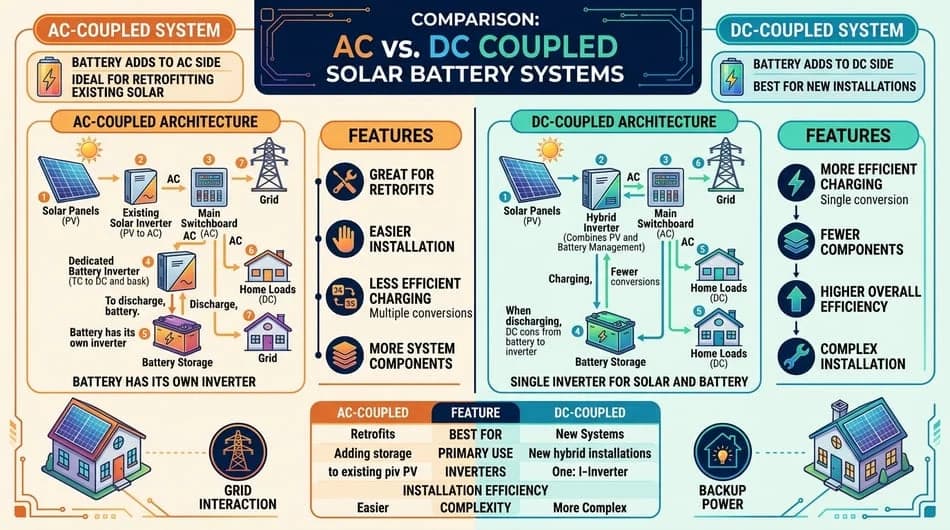
AC vs DC Coupled Solar Batteries: Which Should You Choose?
AC vs DC coupled solar batteries compared: efficiency, costs ($8K-$18K), and ins...
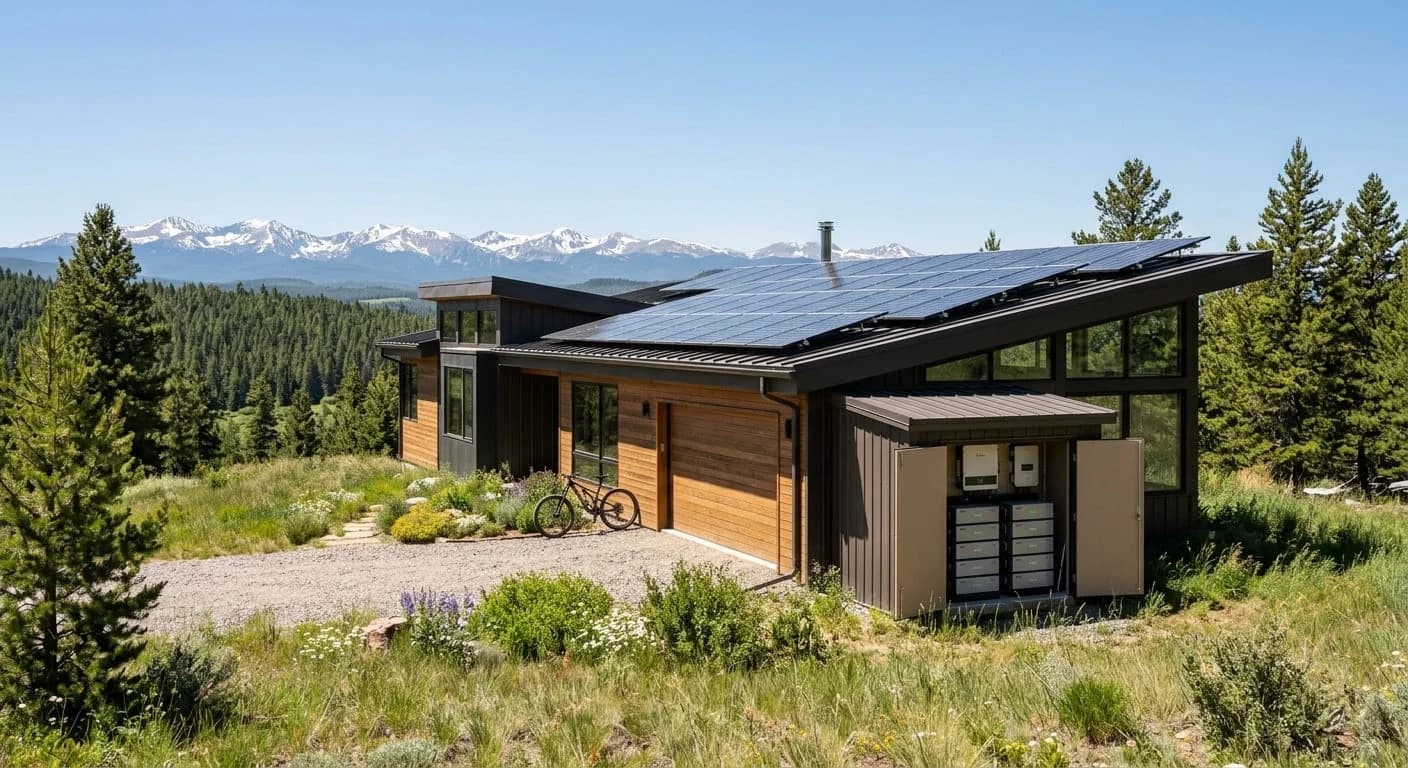
How Many Solar Panels Do I Need to Run Off the Grid?
Most off-grid homes need about 8 to 16 solar panels rated at 400 watts, dependin...
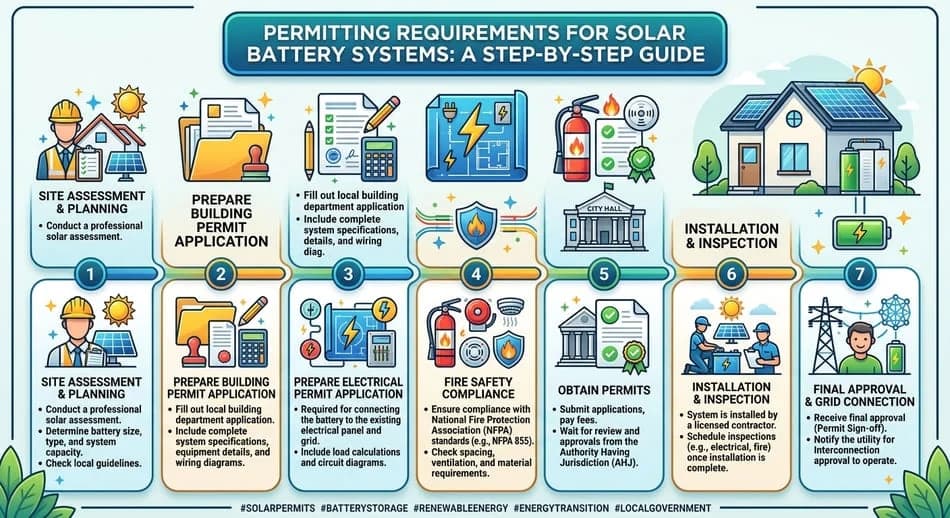
Solar Battery Permit Requirements: What You Need to Know
A solar battery usually needs local approval and a utility review before it can ...