
Yes, solar contractors need licenses to legally install solar panels in virtually all U.S. states, though specific requirements vary significantly by jurisdiction. Seven states, California, Florida, Nevada, Arizona, Virginia, Connecticut, and Louisiana, offer specialized solar contractor licenses, while other states require electrical contractor or general contractor credentials to perform solar installations.
Solar contractor licensing requirements by state differ in three main categories: dedicated solar licenses (like California’s C-46), electrical contractor licenses (Texas, North Carolina), and general contractor licenses (Georgia, Illinois). Most states mandate 2-4 years of documented field experience, passing state-administered examinations covering National Electrical Code (NEC) compliance, and proof of liability insurance before issuing credentials.
Understanding state-specific solar licensing requirements is legally mandatory for contractors, as operating without proper credentials results in project shutdowns, substantial fines ($1,000-$25,000+ per violation), and potential legal liability. Each state maintains unique credentialing frameworks governed by different regulatory bodies, from California’s Contractors State License Board (CSLB) to Texas’s Department of Licensing and Regulation (TDLR) to Nevada’s State Contractors Board.
This comprehensive guide covers solar contractor licensing requirements across all major solar markets, including application processes, examination requirements, experience prerequisites, insurance mandates, and costs for each state. Whether you’re establishing solar operations in a single state or expanding into multiple jurisdictions, understanding these licensing frameworks ensures legal compliance and positions your business for sustainable growth in the expanding solar energy market.
Arizona Solar Contractor Licenses
Arizona mandates that photovoltaic (PV) installation professionals hold an electrician’s credential, particularly the A-17, C11, L11, or K11 classification. Solar installation contractors in Arizona must secure proper licensing to legally install, repair, or maintain solar PV systems. The Arizona Registrar of Contractors serves as the regulatory authority governing solar contractor credentialing requirements throughout the state.
Top City for Solar in Arizona
Phoenix leads as the premier city for solar energy according to industry data from the Solar Energy Industries Association (SEIA), perfectly embodying its reputation as the “Valley of the Sun.” Accompanying Phoenix among Arizona’s top solar markets are Scottsdale, Mesa, Tucson, Chandler, Gilbert, Tempe, Glendale, and Peoria, all demonstrating strong solar adoption and favorable conditions for installations.
California Solar Contractor Licenses
California requires solar PV installation professionals to obtain a C-46 credential, a specialized classification created exclusively for solar contractors. This contractor classification permits professionals to install, alter, and service solar energy systems while maintaining compliance with California’s solar regulatory framework and photovoltaic industry standards.
Applicants seeking the C-46 credential must satisfy the California Contractors State License Board’s (CSLB) experience prerequisites, which typically encompass a combination of formal education, hands-on field experience, and apprenticeship training. Furthermore, candidates must successfully complete a CSLB-administered examination that evaluates their understanding of applicable laws, regulatory requirements, and industry best practices. The California Contractors State License Board (CSLB) serves as the issuing authority for solar contractor credentials.
California Cities With the Most New Solar Installations
California continues to dominate as the nation’s leader in solar energy deployment, with particular metropolitan areas driving significant adoption growth. Los Angeles, San Diego, San Jose, Fresno, Orange, Irvine, Santa Ana, Bakersfield, and Anaheim rank among the top 30 cities for solar installations according to recent industry data. Despite this strong performance, recent modifications to net metering regulations under NEM 3.0 have created headwinds for California’s solar industry.
Florida Solar Contractor Licenses
Florida mandates specific licensing credentials for solar installation contractors. Solar PV professionals operating in Florida must secure one of these two license classifications:
Certified Solar Contractor License (CVC): This comprehensive solar contractor credential authorizes work on residential and commercial solar thermal water heating, solar pool heating systems, and photovoltaic (solar electric, or PV) installations.
Certified Electrical Contractor License (EC): Licensed electrical contractors in Florida are authorized to execute solar PV installations, given that electrical work constitutes a fundamental component of solar panel systems and necessitates an EC credential. These contractors may need to subcontract roofing components to a certified solar contractor when mandated by local building authorities.
Florida requires four years of documented field experience for all contractor licenses, with at least one year in a supervisory capacity. Applicants may substitute up to three years of relevant college coursework toward experience requirements. Florida’s solar contractor licensing process also mandates passing both a solar PV trade examination and a business and financial management assessment. The Construction Industry Licensing Board (CILB) and the Electrical Contractor’s Licensing Board jointly oversee Florida’s solar contractor credentialing.
Cities in Florida With the Shortest Solar Payback Period
Largo, Clearwater, Kissimmee, Leesburg, Ocala, Orlando, Tampa, Brandon, Panama City, and Bonita Springs demonstrate solar payback periods ranging from 6.4 to 8.3 years, according to data from the National Renewable Energy Laboratory (NREL). Additionally, Jacksonville, Cape Coral, Orlando, Port St. Lucie, Deerfield Beach, Fort Lauderdale, Plantation, and Boca Raton rank among the leading 75 cities for solar energy adoption in Florida, making them attractive markets for residential solar design projects.

Solar Permit Solutions
Solar Contractor? We Design Your Plans.
Outsource your permit plan sets to our team. PE-stamped, code-compliant, fast turnaround so you can focus on installation.
Georgia Solar Contractor Licenses
Georgia lacks a dedicated state-level credential specifically for solar panel installations. Nevertheless, contractors executing solar projects in Georgia generally must hold a valid contractor’s license from the Georgia State Licensing Board for Residential and General Contractors.
Ideal Locations in Georgia for Solar Panels
Augusta, Columbus, Warner Robins, Athens, Atlanta, Macon, Savannah, and Roswell represent some of Georgia’s premier cities for renewable energy installations based on industry analysis.
Illinois Solar Contractor License
Illinois has not established a specific state-level credential exclusively for solar contractors. However, contractors performing solar PV work in Illinois typically must secure a valid contractor’s license through the Illinois Department of Financial and Professional Regulation (IDFPR).
Prospective licensed contractors in Illinois must fulfill the IDFPR’s experience standards, which may comprise a blend of formal education, practical field experience, and/or apprenticeship training. Candidates must successfully pass a licensing examination assessing their knowledge of applicable laws, regulatory requirements, and industry practices. Additionally, applicants must provide documentation of liability insurance and workers’ compensation coverage (where applicable).
Best Cities in Illinois for Solar Panels
Chicago ranks 48th on industry rankings for solar energy adoption, while Naperville, Schaumburg, Cicero, Rockford, Bolingbrook, and Evanston follow at lower positions on the list.
Nevada Solar Contractor Licenses
Nevada mandates that solar energy contractors obtain licensing through the Nevada State Contractors Board. Photovoltaic work requires Classification C-2 of electrical contracting, specifically subclassification C-2g for photovoltaic systems. This classification covers the installation, modification, and repair of photovoltaic cells, battery systems, and inverters that convert solar energy to electricity, with limitations on work beyond the main service panel.
Nevada’s solar contractor licensing examinations evaluate knowledge aligned with guidelines, standards, and training protocols recommended by organizations including the Interstate Renewable Energy Council, the North American Board of Certified Energy Practitioners (NABCEP), and other nationally recognized authorities dedicated to advancing solar PV installer quality standards.
Best City for Solar Power in Nevada
Las Vegas secures the second position on leading solar power city rankings, followed by Henderson, North Las Vegas, Reno, and Sparks in subsequent positions.
New Jersey Solar Contractors Licenses
New Jersey establishes specific licensing prerequisites for solar contractors. Solar photovoltaic system installers in the state must obtain Home Improvement Contractor (HIC) registration. This registration verifies that contractors satisfy requisite standards for residential solar installations.
Beyond HIC registration, solar contractors may require an electrical contractor license. The New Jersey Board of Examiners of Electrical Contractors issues this credential, which is mandatory for contractors executing electrical work as an integral component of DIY solar installations.
Best Cities for Solar Power in New Jersey
Newark, Jersey City, Elizabeth, Paterson, Clifton, and Trenton represent New Jersey’s leading cities for solar panel installations, though they occupy lower rankings on national solar city lists.
New York Solar Contractor Licenses
While New York State has not established a dedicated solar license, various Authorities Having Jurisdiction (AHJs) mandate that solar contractors hold either an electrical or home improvement license. Most AHJs maintain reciprocal arrangements and accept contractor licenses from other jurisdictions. Nonetheless, contractor licensing standards differ by county.
New York City specifically requires solar PV contractors to secure an electrical permit issued to an NYC-licensed master electrician alongside a construction work permit issued to an NYC general contractor.
Best Locations for Solar Projects in New York
New York City ranks 13th on industry lists for solar energy adoption, with Yonkers, Buffalo, New Rochelle, Albany, Syracuse, and Rochester occupying positions further down the rankings.
North Carolina Solar Contractor Licenses
NCGS 87-43 mandates that individuals installing, repairing, or maintaining solar systems hold electrical contractor licenses. The State Board of Examiners of Electrical Contractors administers solar licensing standards for contractors throughout North Carolina.
Best Cities in North Carolina for Solar Panel Installation
North Carolina’s exceptional solar resource makes numerous cities highly suitable for solar energy installations. Charlotte, Fayetteville, High Point, Wilmington, Greensboro, Raleigh, Winston-Salem, Gastonia, Concord, Cary, Durham, and Asheville all rank among the state’s premier solar markets.
Texas Solar Licenses for Contractors
Texas requires solar PV contractors to maintain a Texas Electrical Contractor license from the Texas Department of Licensing and Regulation (TDLR) and employ Texas-licensed electricians. Companies may sell racking systems without electrical licensing, as contractor credentialing requirements apply exclusively to installations, repairs, and system modifications.
Ideal Cities in Texas for Solar Energy Systems
Texas possesses abundant solar resources, establishing numerous statewide locations as optimal for solar panel installations. Houston, San Antonio, and El Paso secure positions among the nation’s top ten solar energy cities. Austin, Fort Worth, Dallas, Lubbock, Amarillo, Midland, Odessa, Corpus Christi, Garland, Plano, Abilene, and Tyler closely follow, illustrating Texas’s extensive potential for solar energy deployment.
Virginia Contractor Licenses
The Virginia Department of Professional and Occupational Regulation provides a specialty designation called Alternative Energy Systems (AES). Virginia solar contractors pursuing this specialty must successfully complete a specialized examination. Contractors holding Class A, B, or C licenses qualify to declare the AES specialty.
Alternative energy system contracting encompasses installing, repairing, or upgrading alternative energy generation systems and related equipment from the customer’s electric meter. Solar systems generating over 100 kW require contractors to maintain the highway/heavy classification instead of the alternative energy specialty, often necessitating additional structural load analysis for large-scale installations.
Top Cities for Solar Panels in Virginia
Virginia Beach, Roanoke, Chesapeake, Richmond, Norfolk, Hampton, Lynchburg, Suffolk, Portsmouth, and Newport News represent some of Virginia’s optimal locations for solar installations, according to industry data from the Solar Energy Industries Association (SEIA).
Conclusion
Navigating solar contractor licensing requirements across different states demands careful attention to jurisdiction-specific regulations and compliance standards. Each state maintains unique credentialing frameworks, from California’s specialized C-46 license to Nevada’s C-2g photovoltaic subclassification to Texas’s electrical contractor mandate. Understanding these distinctions ensures your solar business operates legally while avoiding costly project delays, penalties, or legal complications.
Whether you’re expanding into new markets or establishing operations in your first state, prioritizing proper licensing credentials protects both your business and your clients. States with streamlined permitting processes and solar-friendly incentives offer attractive opportunities for growth, while markets with robust solar adoption, like California’s major metropolitan areas or Texas’s top-tier cities, present significant revenue potential. Understanding utility interconnection requirements and federal tax incentives available to solar customers can also help contractors better serve their clients.
Staying current with evolving regulations, NEC code updates, and state-specific examination requirements positions your solar contracting business for long-term success. Whether dealing with HOA regulations or understanding utility application processes, licensed contractors must navigate various compliance requirements. By investing in proper licensing and maintaining compliance across all jurisdictions where you operate, you establish credibility, ensure installation quality, and build a foundation for sustainable business growth. Contractors may also find value in solar education resources to stay informed about industry developments and understanding end-of-life solar panel regulations demonstrates commitment to environmental responsibility.
At Solar Permit Solutions, we understand the complexities of multi-state solar operations. Our comprehensive permit design, engineering stamps, and interconnection support services help licensed contractors streamline project execution while maintaining full regulatory compliance.
FAQs
Solar Contractor? We Design Your Plans.
Outsource your permit plan sets to our team. PE-stamped, code-compliant, fast turnaround so you can focus on installation.
Frequently Asked Questions
Yes, virtually all states require some form of contractor licensing to legally install solar panels. The specific license type varies by state; some require specialized solar contractor licenses (like California's C-46 or Florida's CVC), while others mandate electrical contractor licenses (such as Texas, North Carolina, and Arizona). A few states like Georgia and Illinois require general contractor licenses rather than solar-specific credentials. Operating without proper licensing can result in substantial fines, project shutdowns, and legal liability. Always verify your state's specific requirements through the appropriate licensing board before performing solar installations.
Seven states currently offer dedicated solar contractor licenses: Arizona (A-17, C11, L11, or K11 electrician classifications), California (C-46 Solar license), Connecticut, Florida (CVC, Certified Solar Contractor), Idaho, Louisiana, Nevada (C-2g Photovoltaic subclassification), and Virginia (Alternative Energy Systems specialty). These specialized credentials typically require solar-specific examination content covering photovoltaic system design, NEC solar requirements, interconnection standards, and state-specific regulations. Other states require electrical contractor or general contractor licenses that encompass solar installation work within broader credentialing categories.
The timeline for obtaining a solar contractor license typically ranges from 3 to 6 months, depending on your state's requirements and your existing qualifications. Most states require 2-4 years of documented field experience before you can apply, with some allowing college education to substitute for a portion of experience requirements. After meeting prerequisites, you'll need time to prepare for and schedule licensing examinations, submit applications with required documentation, and wait for board processing and approval. States like California and Florida have more comprehensive examination requirements that may extend preparation time, while expedited processing options exist in certain jurisdictions for applicants with extensive experience or advanced certifications like NABCEP credentials.
In most states, licensed electricians can legally install solar panels without obtaining a separate solar-specific license, though requirements vary significantly by jurisdiction. States like Texas, North Carolina, and Arizona allow electrical contractors to perform complete solar installations under their existing electrical licenses. However, California requires the specialized C-46 solar license even for licensed electricians, while Florida allows electrical contractors (EC license) to install the electrical components but may require subcontracting roofing work to CVC-licensed solar contractors. Some jurisdictions also impose additional requirements such as solar-specific continuing education or supplemental examinations. Always verify your state's specific regulations, as unauthorized solar work can invalidate warranties, violate building codes, and create liability issues regardless of electrical licensing status.
Solar contractor licensing costs vary substantially by state, typically ranging from $500 to $3,000 for initial licensing, excluding examination fees and educational requirements. Application fees generally run $200-$500, while licensing examinations cost $100-$400 per attempt depending on the testing organization and exam complexity. Many states also require proof of liability insurance ($1-3 million coverage) and workers' compensation insurance, adding $2,000-$10,000+ annually depending on your company size and claims history. Additional expenses include continuing education courses ($200-$800 annually), license renewal fees every 1-2 years ($150-$400), and potential bond requirements ($5,000-$25,000 bond value with premiums of 1-3% annually). California's C-46 license, for example, involves roughly $450 in initial fees plus insurance requirements, while Nevada's C-2g classification requires similar investments with additional NABCEP-aligned examination preparation.
California's C-46 Solar Contractor license is a specialized classification specifically designed for solar energy system installations, authorizing contractors to install, modify, and maintain photovoltaic systems, solar thermal collectors, and energy storage systems. This differs from a general C-10 Electrical Contractor license, which covers broad electrical work including residential, commercial, and industrial electrical installations. While C-10 contractors can perform the electrical components of solar installations, the C-46 license provides comprehensive authorization for complete solar projects including mounting systems, racking, module installation, and system commissioning. The C-46 examination emphasizes solar-specific knowledge including PV system design, solar-specific NEC articles (690, 691, 705, 706), utility interconnection requirements, and California's Title 24 building energy efficiency standards. Many successful solar contractors hold both licenses to provide maximum installation flexibility and competitive advantage in California's robust solar market.
Yes, battery storage system installations typically fall under solar contractor licensing requirements, though specific regulations vary by state and system size. Most states treating battery storage as an integral component of solar energy systems require the same licensing credentials for energy storage installations as for photovoltaic arrays. California's C-46 license explicitly covers energy storage systems, while states requiring electrical contractor licenses for solar work extend those requirements to battery installations due to the complex electrical integration involved. Some jurisdictions impose additional requirements for large-scale battery systems exceeding certain kilowatt-hour capacities, potentially requiring special permits or higher-level contractor classifications. NEC Articles 706 (Energy Storage Systems) compliance is mandatory regardless of your state, necessitating thorough understanding of battery chemistry, fire safety protocols, thermal management, and emergency shutdown systems. As battery storage adoption accelerates, expect increasing regulatory scrutiny and potentially new specialized credentials for energy storage contractors.

SPS Editorial Team
Solar Permit Solutions
Solar Permit Solutions provides professional solar permit design services for residential, commercial, and off-grid installations across all 50 states. Our team ensures permit-ready plan sets delivered fast.
Related Articles
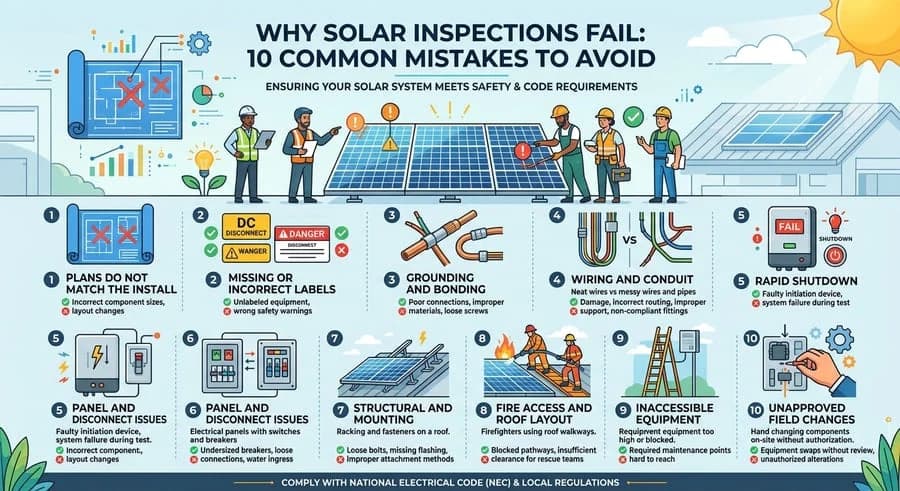
Why Solar Inspections Fail: 10 Common Mistakes to Avoid
Discover the 9 critical reasons solar inspections fail and how to avoid costly m...
Solar Grounding And Bonding: How To Pass Inspection Every Time
Learn how to pass solar grounding and bonding inspections every time. Avoid comm...
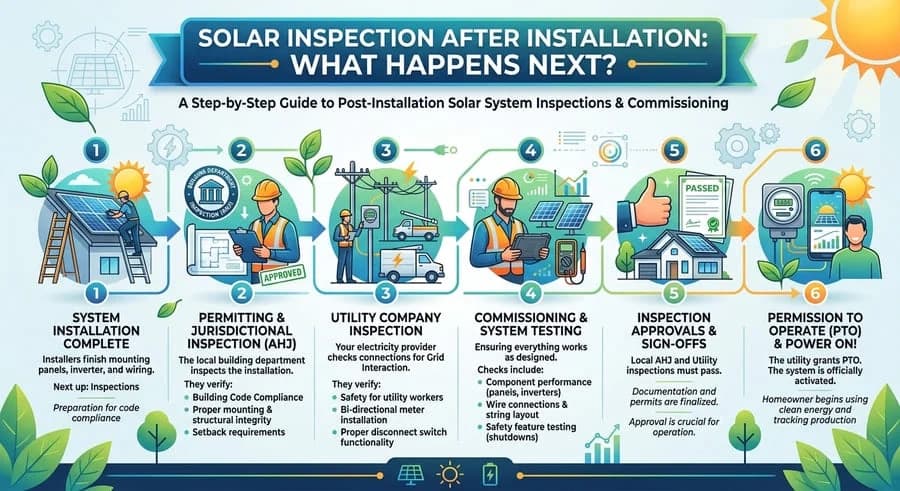
Solar Inspection After Installation: What Happens Next?
Learn how to pass your solar inspection by following essential tips for obtainin...