
Community solar allows you to receive credits on your electric bill for solar energy produced by an off-site solar array in your community, no rooftop installation required. Subscribers typically save 10% on electricity costs compared to standard utility rates, making solar accessible to renters, apartment dwellers, and homeowners who cannot or prefer not to install panels on their property.
What You’ll Learn in This Guide:
What community solar is: A subscription-based program where you buy electricity from a shared solar installation instead of owning panels
How it works: You subscribe to a local solar project, panels generate energy for the grid, and you receive monthly bill credits for your share
Who can participate: Renters, condo owners, apartment residents, and homeowners—anyone in a participating utility service area
Cost structure: Two monthly bills (utility + community solar provider) that together cost less than your current electric bill
Savings potential: Approximately 10% reduction in electricity costs, though this varies by state and utility provider
Environmental impact: Reduces local fossil fuel dependence while supporting renewable energy infrastructure in your area
Why Community Solar Matters Now:
Millions of Americans cannot access traditional residential solar installations due to property type, rental agreements, unsuitable roofs, or homeowner association restrictions. Community solar, also called “shared solar,” solves this problem by placing solar arrays in fields, parking lots, or on commercial buildings within your utility territory. You subscribe to a portion of the array’s energy production and receive kilowatt-hour (kWh) credits on your utility bill, the same measurement unit you see on your regular electric statement.
Key difference from other options: Unlike crowdfunding (no direct bill credits), retail green power (often more expensive and non-local), or solar co-ops (group purchase of individual rooftop systems), community solar provides direct bill credits from locally-produced renewable energy without equipment ownership or installation responsibilities.

Understanding Community Solar
Ever wondered if you could earn solar energy credits without installing panels on your property? Community solar makes this possible!
By joining a community solar program, you’ll earn bill credits based on your allocated portion of a solar installation’s power generation. These solar panels operate at an off-site location within your local area. Community solar presents an ideal solution for those unable, or unwilling, to mount solar panels at their residence or workplace.
Benefits of Joining Community Solar
Lower Your Energy Costs – Across many regions, reduce your electricity expenses, typically by 10% compared to standard utility rates.
Support Clean Energy with Your Choices – Champion broader renewable energy accessibility within your region.
Generate Community Impact – Contribute to building and maintaining local solar installations and their community advantages.
Decrease Fossil Fuel Dependency – Contribute to lowering your area utility’s reliance on fossil fuel sources.
The Community Solar Process
Community Solar: Rooftop Installation Not Required
Do you fall into the category of millions of Americans unable to mount solar panels on your rooftop? Here’s encouraging news: solar energy benefits remain accessible, through community solar!
Community solar, alternatively known as “shared solar,” enables universal solar savings. This includes apartment residents, condo owners, renters, and property owners who cannot, or prefer not to, add solar to their rooftops.
So where are the panels installed if not on your property? Throughout your local area! These solar installations occupy locations within your region, such as open land, building structures, or parking facilities.
The process explained: You enroll in a local community solar program. Following enrollment, you receive the advantages and cost savings from your designated portion of the power they generate! The expense typically runs lower than standard utility company charges.
Three Phases of Community Solar
Phase 1: Customer Enrollment in Community Solar You join a community solar program and submit payment (typically on a monthly basis) for participation.
Phase 2: Energy Production from Solar Panels The solar panels, positioned elsewhere within your utility service zone, generate renewable energy. This energy feeds directly into the power grid, similar to how off-grid solar systems produce power for independent properties.
Phase 3: Utility Company Distributes to Consumers The utility distributes electricity to consumers. Community solar participants earn credits on their power bills for their designated community solar portion.
Key Participants in Community Solar
Utility Company: Your electric provider delivers power to residential customers, including your home. The utility also processes your community solar credits onto your monthly statement. Utilities may be investor-owned entities, cooperatives, or municipal operations.
Subscription Management Company: The subscription management company runs the community solar installation you join. They assist participants and communicate to the utility your allocated solar energy portion. This allows the utility to determine your appropriate credit amount. These installations require proper electrical safety components and infrastructure to ensure reliable operation.
The utility and subscription management company typically operate as separate organizations. Occasionally, they function as a single entity.
Consumer or Participant: This is your role!
State-Level Variations
Community solar program regulations differ across states and utilities. Certain states impose varying capacity restrictions, resulting in different subscriber pricing structures. Other states maintain distinct rules regarding subscription eligibility. Several states permit subscription within your utility service area or neighboring ones.
Individual states establish their own electricity service regulations. However, community solar fundamentals stay consistent: deploy solar panels throughout the community and enable residents to receive credits for their share of energy production.
State-level community solar regulations evolve regularly as new laws pass. The following map displays community solar programs and policies across the United States and territories, indicating which states maintain active community solar programs or legislation, along with states designating specific provisions for income-qualified communities.

What Defines a Community Solar Subscription?
Imagine your community solar subscription like purchasing from your neighborhood family-run hardware shop rather than a national chain retailer. Your investment in the community solar program supports employment in your locality. It funded the solar provider’s panel installation and generated additional local positions connected to or supporting solar businesses in the area. Additionally, you recognize that solar represents a smart decision for the planet’s future wellbeing. Therefore, participating in a community solar program benefits everyone.
Typically, a community solar subscription involves purchasing electricity from the community solar program rather than your utility provider. You don’t possess the solar panels, yet you receive credits for the power they generate.
Understanding Kilowatt-Hours
Your electric bill’s community solar credit appears in kilowatt-hours (kWh). This matches the same unit displayed on your standard utility power bill.
While uncommon, a community solar program may offer you the chance to purchase an actual segment of the solar installation. Under this arrangement, you’re purchasing all power that your solar installation segment produces. Based on how many kilowatts (kW) you purchase, you’ll receive a specific amount of kWh generated monthly and credited to your power bill. Understanding these renewable energy systems helps clarify how energy production translates to billing credits.

Solar Permit Solutions
Need Solar Permit Plans?
Professional, permit-ready solar plan sets delivered fast. Residential and commercial projects across all 50 states.
Community Solar Payment Structure
Unlike homeowners installing panels on their property, community solar participants don’t engage with a solar design and installation service. Rather, they invest in an established solar installation within their community.
Community solar participants pay fees to the subscription management company, the organization overseeing the community solar system’s memberships. This payment occurs either as a lump sum or monthly.
The subscription management company informs your utility provider of your community solar share’s monthly electricity production. This enables the utility to know your electric bill credit amount. The process remains this straightforward and hassle-free for achieving monthly savings with solar power.
Community solar credit amounts differ by state and occasionally by utility provider. Generally, it’s calculated by multiplying the kilowatt-hours (kWh) your community solar system share produces. These systems utilize reliable inverter technology to convert solar energy into usable electricity for the grid.
Most often, you’ll receive two monthly statements: one from your utility provider and one from your community solar company. Don’t be concerned: two statements cost less than one!
Through community solar, your expenses should fall below your existing electric bill. This depends on your provider and utility service area, however. Connect with fellow participants. Consult a solar expert to learn their knowledge about the program. Conduct thorough research.
Understanding Your Utility Statement
Your utility statement displays charges for utility electricity less the credits from your community solar allocation. Usually, you’ll get a separate statement from your community solar company.
Solar’s Contribution to Your Energy Expenses
Your community solar company should explain what percentage of your consumed energy will originate from solar. To determine your monthly or annual electricity consumption, review a recent utility statement.
As a rule, you shouldn’t join a community solar allocation exceeding 100% of your complete energy consumption. Any energy purchased beyond 100% might receive reimbursement from the energy company at year’s end, though likely at a reduced rate compared to your original payment.
Remember that regulations surrounding this differ by state and occasionally by utility. For more information on solar energy topics, visit the Department of Energy’s solar resources.
What Community Solar Is Not
Sometimes, you’ll encounter offerings that resemble community solar but differ. Here are things community solar does not include:
It’s not collective purchasing for rooftop solar panels. We support these collective purchases! Actually, we coordinate them nationwide! We term them solar co-ops. Others label them solarize initiatives. However, collective purchases differ significantly from community solar, so avoid confusion. These collectives unite neighbors to utilize their combined purchasing strength for competitive rooftop solar panel pricing. Collective members each purchase their individual solar system and mount the panels on their residence.
It’s not retail energy supply. Certain states permit customers to select an energy provider besides the regional utility company. Some providers offer “retail supply” or “green power,” typically indicating hydroelectric, wind, or solar energy. These options frequently cost more than utility charges. They’re usually not local and may originate from multiple states away.
It’s not crowdfunding. Crowdfunding initiatives gather funds to construct a solar program. Community members contribute money toward it, or invest in it. Crowdfunding contributors may earn investment returns, but they don’t receive direct kWh credits for the program’s electricity production.
How Community Solar Works with Rooftop Solar
Most community solar rules and programs permit you to gain advantages from both rooftop solar and community solar. Program-specific details will differ.
Generally, you can join community solar to address whatever electricity consumption your rooftop solar doesn’t address. Through this approach, 100% of your energy requirements can be fulfilled with locally generated solar power. Professional Solar Permit Solutions can help you determine the optimal combination for your energy needs, ensuring proper structural engineering calculations and load analysis if you’re considering rooftop installation alongside community solar participation.
Conclusion
Take Action on Community Solar Today
Community solar represents a powerful opportunity to embrace renewable energy without the barriers of traditional rooftop installation. Whether you’re renting an apartment, living in a condo, or simply prefer not to modify your property, community solar opens the door to clean energy savings and environmental impact.
By participating in a community solar program, you’re making a tangible difference on multiple levels. You’re reducing your electricity costs while simultaneously supporting local job creation and decreasing your community’s dependence on fossil fuels. Your subscription contributes to building a more sustainable energy infrastructure that benefits everyone in your area. These installations require proper conduit practices and electrical connections to ensure safe, reliable operation.
The process is straightforward: enroll in a local program, start receiving bill credits for your share of solar energy production, and enjoy the financial savings, all without the hassle of installation, maintenance, or upfront equipment costs. With community solar expanding across more states and utility territories, now is the ideal time to explore options in your area.
Don’t let the limitations of your living situation prevent you from participating in the clean energy revolution. Research community solar programs available in your utility service area, compare offerings from different subscription management companies, and connect with current subscribers to learn about their experiences. Your journey toward cleaner, more affordable energy can begin today.
For more information about solar energy solutions and professional guidance, visit our blog for expert insights on topics ranging from conduit selection to system design.
FAQs
Is community solar really better for the environment than just buying “green power” from my utility?
Yes, community solar typically provides greater environmental benefits than retail green power options. Community solar installations are physical solar arrays built within your local area, directly adding new renewable energy capacity to your regional grid. This reduces your utility’s need to generate or purchase electricity from fossil fuel sources. In contrast, retail green power programs often involve purchasing renewable energy credits (RECs) from existing facilities that may be located far from your community, and these purchases don’t necessarily result in new renewable infrastructure development. Additionally, community solar creates local jobs, keeps energy dollars within your community, and provides visible proof of renewable energy expansion. By subscribing to community solar, you’re directly funding new solar installations that produce measurable environmental benefits right in your neighborhood.
Need Solar Permit Plans?
Professional, permit-ready solar plan sets delivered fast. Residential and commercial projects across all 50 states.
Frequently Asked Questions
Savings vary depending on your location, utility rates, and the specific community solar program you join. Most subscribers save approximately 10% on their electricity costs compared to standard utility rates. To calculate your potential savings, examine your current monthly electric bills and contact local community solar providers for their specific pricing structures. Keep in mind that you'll receive two bills—one from your utility and one from your community solar company—but the combined total should be less than your current single utility bill. Always review the subscription agreement carefully and speak with existing subscribers in your area to understand realistic savings expectations.
Cancellation policies differ significantly between community solar programs and states. Some programs offer flexible month-to-month subscriptions that you can cancel with minimal notice, while others may require longer-term commitments ranging from one to several years. Early termination fees may apply depending on your contract terms. Before enrolling, carefully review the subscription agreement's cancellation clauses and ask the subscription management company about their specific policies. If you're planning to move within your utility service area, many programs allow you to transfer your subscription to your new address. However, moving outside the utility service territory typically requires cancellation.
Your community solar subscription continues operating year-round, though energy production naturally fluctuates with seasonal changes and weather conditions. During periods of lower solar production—such as winter months or extended cloudy weather—your solar panels will generate fewer kilowatt-hours, resulting in smaller credits on your utility bill. Conversely, sunny summer months typically produce higher credits. Your utility company continues supplying all your electricity needs regardless of solar production levels. The credits you receive simply reduce your overall utility charges. Most subscription management companies help you size your subscription appropriately to account for these seasonal variations, ensuring you're not over-subscribed during high-production months.
Credit requirements vary by subscription management company and program. Some community solar providers perform credit checks and may require a minimum credit score for approval, similar to utility companies establishing new service. Other programs, particularly those focused on making solar accessible to low- and moderate-income households, may have more flexible requirements or offer income-qualified subscriptions with reduced barriers to entry. If you're concerned about credit requirements, contact multiple community solar providers in your area to compare their eligibility criteria. Some states have specific legislation encouraging community solar access for income-qualified residents, which may provide additional options regardless of credit history.
Yes, community solar typically provides greater environmental benefits than retail green power options. Community solar installations are physical solar arrays built within your local area, directly adding new renewable energy capacity to your regional grid. This reduces your utility's need to generate or purchase electricity from fossil fuel sources. In contrast, retail green power programs often involve purchasing renewable energy credits (RECs) from existing facilities that may be located far from your community, and these purchases don't necessarily result in new renewable infrastructure development. Additionally, community solar creates local jobs, keeps energy dollars within your community, and provides visible proof of renewable energy expansion. By subscribing to community solar, you're directly funding new solar installations that produce measurable environmental benefits right in your neighborhood.

SPS Editorial Team
Solar Permit Solutions
Solar Permit Solutions provides professional solar permit design services for residential, commercial, and off-grid installations across all 50 states. Our team ensures permit-ready plan sets delivered fast.
Related Articles
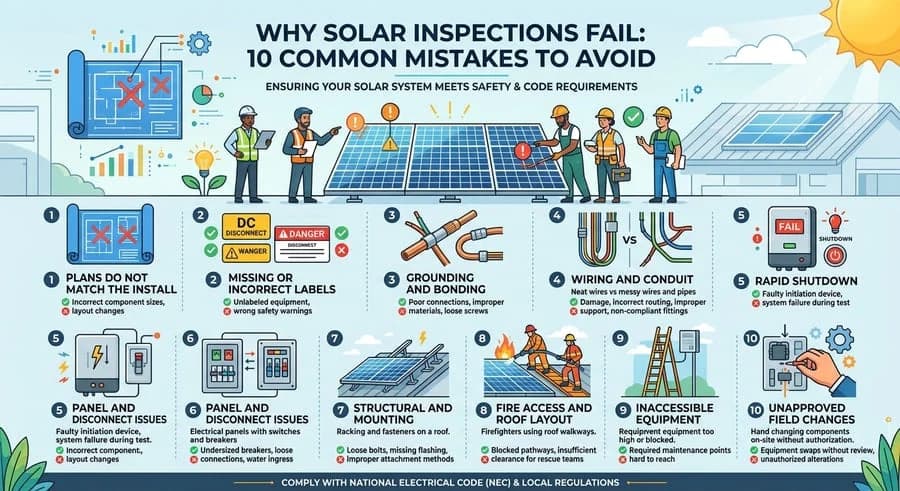
Why Solar Inspections Fail: 10 Common Mistakes to Avoid
Discover the 9 critical reasons solar inspections fail and how to avoid costly m...
Solar Grounding And Bonding: How To Pass Inspection Every Time
Learn how to pass solar grounding and bonding inspections every time. Avoid comm...
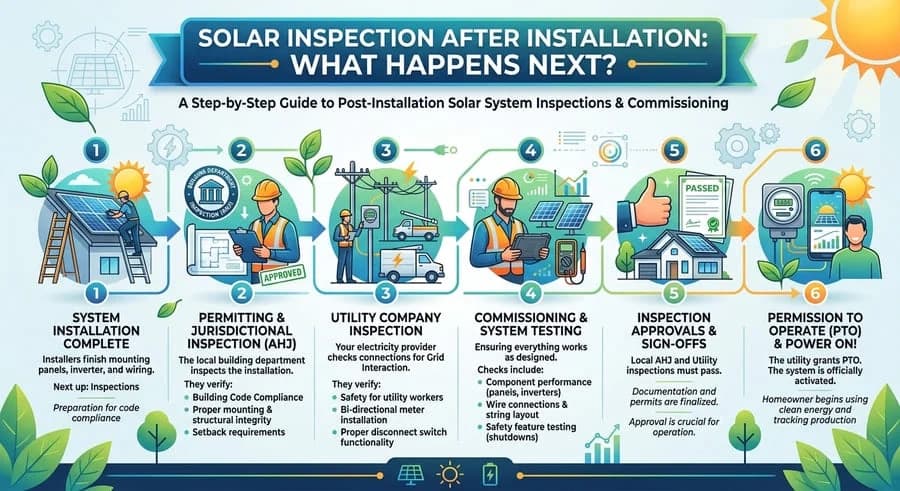
Solar Inspection After Installation: What Happens Next?
Learn how to pass your solar inspection by following essential tips for obtainin...