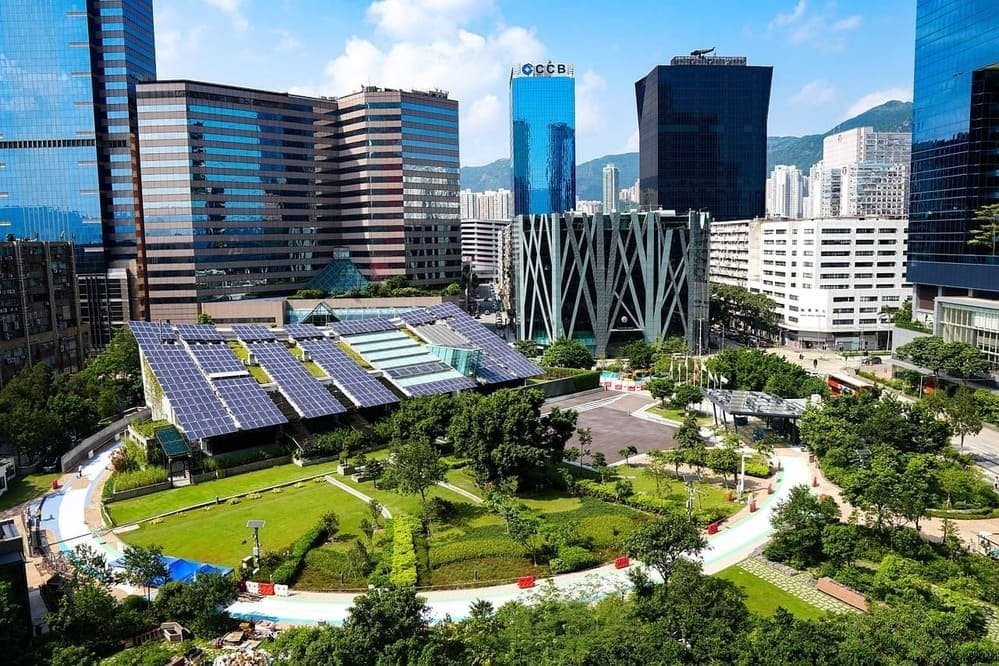
Commercial solar panel installation is the process of designing, permitting, and deploying photovoltaic (PV) systems on commercial properties to generate clean electricity and reduce operational costs. Unlike residential installations, commercial solar projects involve multiple stakeholders, complex engineering requirements, and access to substantial tax incentives, including the 30% Investment Tax Credit (ITC) and MACRS depreciation.
Key takeaways about commercial solar installation:
- Average cost: $1.46 per watt, significantly lower than residential solar at $3.03 per watt
- Payback period: Typically 5-10 years with most systems lasting 25-30+ years
- Installation types: Three main configurations exist: rooftop mounts (most common), ground mounts, and solar carports
- Primary benefits: 50-90% reduction in electricity bills, protection against utility rate increases, enhanced property value, and improved corporate sustainability credentials
- Ideal candidates: Manufacturing facilities, schools, hotels, healthcare centers, retail properties, agricultural operations, and municipal buildings
Commercial solar systems work by converting sunlight into direct current (DC) electricity through photovoltaic cells, then transforming it to alternating current (AC) power via inverters for business use. Excess energy feeds back to the utility grid through net metering, generating bill credits.
This comprehensive guide covers target markets, marketing strategies, stakeholder management, financing options including Power Purchase Agreements (PPAs), installation considerations for different mounting types, and proposal development best practices to help solar installation companies successfully navigate the commercial PV market.
Commercial Solar Fundamentals:
A commercial solar power installation features photovoltaic arrays positioned strategically on your building’s roof or adjacent property grounds.
These solar arrays contain photovoltaic (PV) cells that transform sunlight into direct current (DC) power. This generated electricity travels to solar inverters, which transform the DC output into alternating current (AC) power, the standard electrical format required for commercial operations according to National Renewable Energy Laboratory standards.
From the inverters, electricity routes through your facility’s main electrical distribution panel, supplying power throughout your business infrastructure. When your system generates surplus energy beyond your operational requirements, this excess feeds into the utility network, earning compensation via net metering arrangements. Your utility meter monitors bidirectional electricity flow, tracking both power drawn from and supplied to the grid.

Exploring Commercial Solar System Types
Three principal installation methods exist for commercial solar projects. While rooftop systems represent the most prevalent choice, ground-mounted installations and parking canopy arrays provide popular alternatives.
Rooftop systems adapt to various architectural surfaces: composition shingle, corrugated metal, standing-seam metal panels, and flat rubber membrane roofs that support weighted ballast mounting frameworks. Specialized mounting brackets facilitate secure panel integration on metal roofing materials. For detailed guidance on system configurations, explore our commercial solar design services.
Ground-based installations and solar parking structures offer practical solutions for facilities lacking adequate roof capacity or organizations that prefer maintaining unobstructed rooflines. For smaller-scale applications or property owners interested in understanding foundational solar concepts, our residential solar design resources provide valuable insights that translate to commercial projects.
Pros and Cons of Commercial Solar Installation Types
Roof Mount
Pros:
- Utilizes existing unused roof space without consuming valuable land
- Lower installation costs due to existing structure support
- Less vulnerable to vandalism or accidental damage
- No additional property footprint or land use permits required
- Reduced visual impact from ground level
Cons:
- The roof must have adequate structural capacity and remaining lifespan
- Roof maintenance or replacement requires panel removal and reinstallation
- Limited by roof orientation, pitch, and shading obstacles
- More complex and costly to expand system capacity later
- Potentially higher labor costs due to rooftop access requirements
Ground Mount
Pros:
- Optimal panel positioning for maximum sun exposure and energy production
- Easier installation, maintenance, and cleaning access
- System expansion is straightforward with available land
- No roof structural concerns or warranty complications
- Better cooling performance resulting in higher efficiency
Cons:
- Requires dedicated land that could serve other business purposes
- Higher installation costs for racking foundations and structures
- More susceptible to vandalism, debris, and physical damage
- May require additional fencing, security, or landscaping
- Potential zoning restrictions or land use permit complications
Carport/Canopy
Pros:
- Dual-purpose structure providing both solar generation and covered parking
- Enhances property value and employee/customer experience
- Ideal for electric vehicle charging station integration
- Optimal panel angle and orientation without building constraints
- Protects vehicles from weather while generating clean energy
Cons:
- Highest upfront cost due to structural framework requirements
- Requires substantial parking lot space and careful site planning
- More complex permitting process and building code compliance
- Longer installation timeline compared to other mounting types
- Potential height restrictions and aesthetic approval requirements
Breaking Into the Commercial Solar Installation Market
The commercial solar panel installation industry represents a high-growth opportunity for photovoltaic businesses seeking expansion. This sector provides access to large-scale contracts and premium corporate clientele. Positioning your firm as a commercial solar specialist elevates your market reputation while deepening your technical expertise in renewable energy systems and power solutions, as highlighted in recent IEA renewable energy reports.
Commercial and industrial (C&I) solar deployments function very differently than residential projects. These distinctions touch every aspect of operations, from lead generation strategies to post-installation customer relationships after system energization. Mastering these fundamental differences positions your organization for success in the commercial and industrial solar marketplace.
This guide equips solar installation companies with actionable insights for navigating the commercial PV sector while avoiding common pitfalls.
Solar Permit Solutions
Commercial Solar Design Services
Professional permit plan sets for commercial installations. PE-stamped, code-compliant, fast delivery.
Ideal Customer Segments for Industrial Solar Installations
Identifying optimal prospects for commercial solar systems is foundational to business development. Priority market segments include:
Public & Municipal Entities: Municipal water authorities, wastewater management facilities, schools, higher education campuses, and government office buildings.
Commercial Enterprises: Hotel and resort properties, farming operations, manufacturing facilities, healthcare providers, business office parks, retail shopping centers, and houses of worship.
Locating the right decision-makers, such as chief executives, finance directors, environmental program managers, or facilities supervisors, accelerates the sales process for industrial solar installation projects.
Defining Your Ideal Commercial Solar Client Profile
Strategic market targeting requires identifying which organizations derive the greatest benefit from solar energy systems. Municipal utilities, wastewater facilities, educational institutions, commercial retailers, and local government agencies represent high-potential starting points. Hotels, agricultural enterprises, industrial manufacturers, medical facilities, and religious organizations also make excellent candidates. The next critical step involves determining who holds purchasing authority, whether that’s a CEO, CFO, plant director, city manager, sustainability officer, or similar executive.
Lead Generation Strategies for Commercial Solar Companies
High-performing commercial solar installation firms leverage integrated marketing approaches combining digital and traditional channels:
Online Marketing: Strategic keyword targeting for organic search, sponsored advertising campaigns, social media engagement, and automated email sequences.
Industry Networking: Trade conference participation, expo booth presence, and collaborative partnerships with business associations and organizations like the American Solar Energy Society.
Thought Leadership: Customer case studies, testimonial content, and technical white papers that demonstrate commercial PV installation value.
Tailoring your messaging to address core business concerns, particularly financial returns and operational cost reduction, enables effective engagement with commercial solar prospects.
Critical Competencies for Commercial Solar Professionals
Industrial-scale solar projects require longer development cycles and more sophisticated engineering than residential work. Essential evaluation areas include:
Regulatory Navigation: Ensuring compliance with municipal land use codes and building permit processes. Understanding solar permitting timelines is critical for project planning.
Technical Engineering: Accounting for electrical infrastructure capacity and load requirement calculations. Our guide on mastering electrical fundamentals provides essential insights.
Capital Structuring: Evaluating grant opportunities, tax incentive programs, and Power Purchase Agreement (PPA) options.
Professional solar engineering service providers offer design review services and permit-ready plan sets that expedite the approval process for commercial solar installations. Learn more about our professional services.

Managing Multiple Stakeholders in Commercial Solar Projects
Commercial PV initiatives involve diverse stakeholder groups, creating more intricate sales and approval workflows. Important considerations:
Ownership vs. Occupancy Dynamics: Determining utility bill responsibility and how solar benefits impact tenant lease agreements.
Special Permit Requirements: Projects on brownfield sites, school properties, or public land may require additional regulatory approvals. The EPA’s green power guidance provides valuable resources.
Funding Authorization Processes: Various projects need grant awards, governing board approvals, or municipal voter authorization before proceeding.
Developing strong, lasting relationships with key stakeholders proves essential for securing and maintaining commercial solar contracts.
Professional solar engineering service providers deliver comprehensive support, including permit-ready drawings, professional engineering stamps, and utility interconnection documentation for commercial solar projects.
Understanding Stakeholder Complexity in Commercial PV Deployments
Commercial solar projects typically involve more decision-makers than residential installations, introducing additional complexity. Before submitting project proposals, identify all key stakeholders and map out the approval chain. Resources like SolSmart’s permitting guidelines can help streamline this process.
For educational facility installations, scheduling work during seasonal breaks improves site safety and minimizes operational disruption. Solar arrays on remediated landfill properties require Environmental Protection Agency permits.
Building ownership structures fundamentally shapes project proposals. Many situations involve separate property owners and tenants. Critical questions include: Who pays monthly utility bills? Does the tenant understand solar’s cost-saving impact? Analyzing lease structures and ownership relationships sharpens your proposal development.
Some commercial clients qualify for specialized funding like the REAP grant program. Nonprofit projects often need board-level approval, while certain municipal solar initiatives may require public votes.
Building strong client relationships remains paramount in solar sales. Just as with residential customers, consistent communication and professional service delivery strengthen commercial solar partnerships.

Evaluating Energy Needs for Commercial and Industrial Solar Installation
When beginning a commercial solar panel installation or industrial solar installation, understanding the facility’s energy needs is essential. This typically involves analyzing electricity bills from the past year or longer to assess energy consumption patterns and determine how solar can reduce operating costs. Many commercial and industrial energy consumers incur demand charges, making it critical to design a system that optimizes energy production and reduces peak demand.
Once you have a clear picture of energy usage, the next step is determining whether a ground-mounted or rooftop system is the best fit. Evaluating all major project factors early on helps with accurate pricing, prevents unexpected change orders, and minimizes installation delays. For properties in remote locations or those seeking complete energy independence, consider exploring off-grid solar system design options. Let’s examine key considerations when planning commercial PV installations.
- Interconnection Challenges: Are there any obstacles to securing interconnection approvals for the commercial solar panel installation? Utility requirements, transformer upgrades, or grid constraints may impact the project timeline. Understanding solar interconnection methods is essential.
- Facility Upgrades: Are there upcoming building or electrical upgrades that could affect the installation? If major renovations are planned, integrating solar during those updates might be more cost-effective.
- Future Energy Demands: Is the facility planning to electrify vehicle fleets, install heat pumps, or expand operations? Anticipating changes in energy demand ensures the system is sized appropriately.
- Shading Analysis: Are there shading issues at the installation site? If so, are mitigation strategies like tree trimming, panel orientation adjustments, or microinverters necessary?
- Additional Clean Energy Technologies: Would the client benefit from solar-integrated EV chargers, a battery storage system, or a solar carport for their parking lot? The World Bank’s energy initiatives highlight the importance of integrated renewable solutions.
- Financial Incentives & Funding: Does the project need to meet specific criteria for financing, tax credits, or grant eligibility?
- Payment & Financing Options: Can the client afford the upfront investment, or would a solar financing option, such as a solar power purchase agreement, be a better fit?
Key Factors For Rooftop Commercial Solar Panel Installations
For rooftop commercial solar panel installations, structural and logistical factors must be considered:
- Roof Obstructions: Are there HVAC systems, vents, or skylights that will affect panel placement?
- Roof Orientation: If the roof’s tilt or direction is suboptimal, are there ways to optimize solar energy production?
- Load-Bearing Capacity: Can the roof support the additional weight of the solar system, or is structural reinforcement required?
- Roof Warranty Compliance: Does the manufacturer’s warranty impose restrictions on penetrations or ballast-mounted systems for flat and pitched roofs?
Ground-Mounted Commercial & Industrial Solar Panel Installation
For ground-mounted commercial solar panel installations and industrial solar installations, site conditions play a crucial role:
- Land Clearing: Is the site ready for installation, or will trees, vegetation, or debris need to be removed?
- Topography Considerations: Are there slopes or uneven terrain that may require grading or specialized racking solutions?
- Land Use Restrictions: Are there protected areas, easements, or zoning restrictions that affect where the system can be placed?
- Soil & Geologic Conditions: Does the soil type, rock formations, or water table depth impact racking options and equipment deployment?
By carefully evaluating these factors early in the project, you can streamline the development process, prevent costly setbacks, and ensure a successful commercial PV installation.
Key Factors For Carport Commercial Solar Panel Installations
For carport commercial solar panel installations, structural engineering and site planning factors must be considered:
- Structural Load Requirements: Does the carport design account for combined dead loads (solar panels, racking, and canopy structure) and live loads (wind, snow, and seismic forces)? Carport structures require robust steel or aluminum frameworks with deep foundations to support both the covering and solar array weight, typically requiring engineering certifications that exceed standard rooftop installation requirements.
- Parking Layout & Vehicle Clearance: Does the carport configuration provide adequate clearance height (minimum 8-9 feet for standard vehicles, 14+ feet for delivery trucks or RVs) while maintaining optimal solar panel tilt angles? Site planning must balance parking space efficiency, drive aisle widths, ADA compliance, and panel orientation to maximize both parking capacity and energy production without creating operational conflicts.
- Electrical Infrastructure & EV Integration: Is the electrical design coordinated to support both solar generation and potential electric vehicle charging stations? Carport installations offer ideal opportunities for integrated EV charging infrastructure, requiring strategic conduit routing, adequate transformer capacity, and electrical panel sizing that accommodates both immediate solar output and future charging demands while maintaining code compliance for accessible charging station placement.
Funding Solutions for Commercial & Industrial Solar Panel Projects
Securing financing for commercial or industrial solar installations requires familiarity with incentive programs, federal tax advantages, and utility credit mechanisms. These economic elements play a decisive role in shaping organizational ROI and ongoing utility cost reductions. Though parallels exist with residential solar financing structures, commercial PV projects offer unique benefits, especially for taxable entities capable of capitalizing on time-sensitive tax deductions and asset depreciation strategies.
Federal Tax Benefits for Commercial Solar Installation Projects
Organizations implementing commercial or industrial solar systems can access the 30% Investment Tax Credit (ITC), which remains available for installations commissioned by December 31, 2027. This substantial incentive applies to diverse property types: hospitality facilities, corporate complexes, manufacturing sites, agricultural properties, and retail locations, and pairs with powerful depreciation mechanisms. Learn more about federal solar tax credits.
- Bonus Depreciation: Qualifying installations allow businesses to write off the entire system value during year one, combining with the ITC for amplified immediate tax relief.
- Modified Accelerated Cost-Recovery System (MACRS): This mechanism enables 5-year depreciation schedules for solar assets, decreasing taxable earnings and enhancing investment returns.
- Safe Harbor Provision: Initiatives commencing construction or allocating 5% of project budgets before December 31, 2025, can preserve the 30% ITC rate regardless of completion timing.
Emerging regulations introduce domestic manufacturing standards and exclude systems incorporating components from Foreign Entities of Concern (FEOC) starting in 2026. These evolving requirements may influence commercial solar projects, especially larger-scale developments.
Power Purchase Agreements for Commercial Solar Financing
Power Purchase Agreements (PPAs) represent a prevalent funding mechanism for commercial solar deployments, enabling organizations to access solar electricity without capital expenditure. Under PPA structures:
- Third-party ownership: An external entity holds and services the solar installation.
- Fixed-rate electricity: The host organization purchases generated power at predetermined pricing, typically below conventional utility tariffs.
- Tax advantage transfer: The system owner captures available tax credits and depreciation write-offs.
PPAs suit organizations seeking utility cost reduction while avoiding asset management responsibilities and maintenance obligations.
Additional Incentive Programs for Commercial PV Projects
Federal tax credits represent just one component of available financial support. Numerous commercial solar installations qualify for regional and state-level programs that strengthen project viability. Organizations should investigate:
- Regional utility programs: State governments and power companies frequently provide direct rebates, output-based incentives (PBIs), or solar renewable energy certificates (SRECs) that reduce initial capital requirements for commercial PV systems.
- REAP Grants & Loans: The USDA’s Rural Energy for America Program extends grant funding and loan guarantees to farming operations and rural small enterprises deploying industrial solar installations or alternative energy technologies.
- Renewable Energy Credits (RECs): Solar-generating businesses may accumulate RECs for sale to utilities or intermediaries, creating supplementary income streams that enhance industrial solar installation profitability.
Through strategic utilization of these programs, organizations can optimize financial outcomes from commercial and industrial solar deployments, decrease operational energy expenses, and secure funding mechanisms that augment federal tax advantages. For comprehensive support, explore Solar Permit Solutions.
Developing a Commercial Solar Panel Installation Proposal
Crafting a comprehensive and visually engaging commercial solar panel installation proposal is critical for winning contracts and showcasing professional capabilities. Your proposal must present detailed information, rely on quantitative data, and align with the prospect’s power consumption requirements and investment objectives. Leveraging specialized solar design platforms can simplify development by integrating performance forecasts, economic analyses, and professional-grade imagery. For those interested in understanding the fundamentals of solar system assembly, our guide on building your own solar power system offers foundational knowledge applicable to commercial projects.
Core Components of a Professional Commercial PV Installation Proposal
1. Visual Identity & Document Design
- Feature organizational branding elements, including logo, color scheme, and professional photography.
- Employ straightforward language within a polished document structure.
- Integrate data visualizations and diagrams that demonstrate system output, cost savings, and investment returns (ROI).
2. Power Consumption Assessment & System Configuration
- Perform a comprehensive energy usage evaluation utilizing the prospect’s past utility billing information.
- Identify the optimal commercial solar panel installation approach: rooftop or ground-level, determined by structural assessments and property conditions.
- Resolve shading obstacles, rooftop barriers, or property usage limitations through advanced solar simulation software. Understanding solar three-line diagrams helps clarify system layouts.
3. Economic Analysis & Available Incentives
- Present itemized pricing covering hardware, installation services, regulatory compliance, and ongoing service considerations.
- Emphasize accessible solar benefits, such as:
- 30% Investment Tax Credit (ITC) for qualifying organizations where applicable.
- Accelerated depreciation or MACRS tax advantages.
- Regional rebates or production-based incentives from energy providers.
- REAP grant funding and financing for farming or rural enterprises.
- Present financing alternatives, encompassing power purchase agreements (PPAs) and solar lending programs.
4. Project Schedule & Regulatory Compliance
- Establish a transparent implementation roadmap featuring critical phases, including regulatory approval, equipment acquisition, grid connection, and system activation.
- Enumerate necessary authorizations and clearances, covering utility interconnection contracts and municipal code requirements. Our solar permit expediting services can help accelerate approvals.
5. Equipment Specifications & Technology Rationale
- Define the solar modules, power conversion equipment, and mounting infrastructure selected for the installation.
- Explain equipment choices through the lens of performance efficiency, dependability, and sustained operational capability. Resources from the IEEE Power & Energy Society provide technical benchmarks. Understanding supply-side connections ensures proper system integration.
6. Professional Credentials & Track Record
- Present your project team, highlighting pertinent NABCEP credentials, completed project portfolio, and sector specialization.
- Showcase prior industrial solar deployments to establish authority and trustworthiness. Review our blog resources for additional industry insights.
Conclusion
The commercial solar panel installation industry presents substantial opportunities for growth-oriented solar companies ready to expand beyond residential markets. Success in this sector demands understanding the unique complexities of commercial projects, from navigating multi-stakeholder approval processes to engineering systems that address demand charges and future energy needs.
By identifying ideal market segments, implementing strategic marketing approaches, and mastering the technical requirements of commercial installations, your organization can establish itself as a trusted commercial solar provider. Whether pursuing rooftop, ground-mount, or carport configurations, each project type offers distinct advantages that align with different client needs and property constraints.
Financial incentives like the 30% Investment Tax Credit, MACRS depreciation, and regional grant programs make commercial solar installations increasingly attractive investments for businesses. Coupled with power purchase agreements and creative financing solutions, these mechanisms enable organizations of all sizes to access clean energy benefits without prohibitive upfront costs.
Developing comprehensive, data-driven proposals that address energy consumption patterns, financial returns, and regulatory requirements positions your company to win contracts and build lasting client relationships. As the commercial solar market continues expanding, installers who invest in professional expertise, quality equipment selections, and stakeholder relationship management will capture the greatest share of this lucrative sector. Additional resources from Energy Star and Green Building Advisor can further enhance your technical knowledge.
The transition to commercial solar represents more than just business expansion; it’s an opportunity to deliver meaningful operational savings and environmental impact to organizations across diverse industries while establishing your firm as a leader in the renewable energy marketplace. Contact us to learn how we can support your commercial solar projects.
FAQs
Commercial Solar Design Services
Professional permit plan sets for commercial installations. PE-stamped, code-compliant, fast delivery.
Frequently Asked Questions
Commercial solar installation timelines vary significantly based on project complexity, ranging from 3 to 9 months on average. The process includes several phases: initial site assessment and energy analysis (2-4 weeks), system design and engineering (3-6 weeks), permitting and utility approvals (4-12 weeks), equipment procurement (4-8 weeks), and physical installation (2-6 weeks). Larger ground-mount systems or those requiring Environmental Protection Agency approvals for landfill sites may extend beyond this timeframe. Projects on schools or municipal properties often face longer approval processes due to board authorizations or public voting requirements. Working with experienced commercial solar installers who understand local permitting processes can significantly reduce timeline delays.
Commercial solar installations typically achieve payback periods between 5 and 10 years, though this varies based on several factors, including system size, local electricity rates, available incentives, and financing structure. Businesses in regions with high utility costs and strong incentive programs often see faster returns. The 30% Investment Tax Credit (ITC) combined with MACRS depreciation can substantially accelerate payback by reducing the effective system cost by 50% or more in the first year for qualifying businesses. After the payback period, systems continue generating value for 25-30+ years, representing decades of nearly free electricity and protection against rising utility rates.
Most commercial buildings can accommodate rooftop solar, but a professional structural assessment is essential. Key factors include roof age and condition (ideally 10+ years of remaining lifespan), load-bearing capacity to support panel weight (typically 3-5 pounds per square foot), roof orientation and pitch, and potential obstructions like HVAC equipment or skylights. Flat rubber roofs can utilize ballasted mounting systems that require no roof penetrations, preserving warranties. Buildings with inadequate roof capacity or upcoming roof replacements may benefit from ground-mount or carport alternatives. Professional solar engineering service providers can conduct comprehensive structural evaluations to determine feasibility and identify any necessary reinforcements.
Power Purchase Agreements enable businesses to access solar energy with zero upfront investment. Under a PPA structure, a third-party company finances, owns, installs, and maintains the solar system on your property. Your organization simply purchases the electricity generated at a predetermined rate, typically 10-30% below utility rates, locked in for 15-25 years. The system owner claims all tax credits and depreciation benefits while assuming maintenance responsibilities and performance risk. PPAs are ideal for nonprofits, municipalities, or businesses that cannot utilize tax incentives directly, or for organizations preferring to avoid capital expenditure while still reducing energy costs and meeting sustainability goals.
Demand charges are fees based on your facility's peak electricity usage during specific time intervals (typically 15-30 minute windows), often representing 30-70% of commercial utility bills. Unlike residential customers who pay only for total energy consumed, commercial and industrial customers incur these additional charges based on their highest power draw. Commercial solar systems reduce demand charges by generating electricity during peak production hours (typically coinciding with business operations), thereby lowering the amount of power drawn from the grid during high-demand periods. For maximum demand charge reduction, systems can be paired with battery storage to further flatten peak usage. Proper system sizing that accounts for demand charge structures can significantly improve ROI, making energy consumption analysis critical during the commercial solar design phase.

SPS Editorial Team
Solar Permit Solutions
Solar Permit Solutions provides professional solar permit design services for residential, commercial, and off-grid installations across all 50 states. Our team ensures permit-ready plan sets delivered fast.
Related Articles
Solar Permit Requirements In Florida: Complete Step-By-Step Guide
Solar Permit Solutions breaks down Florida’s permit requirements by county...
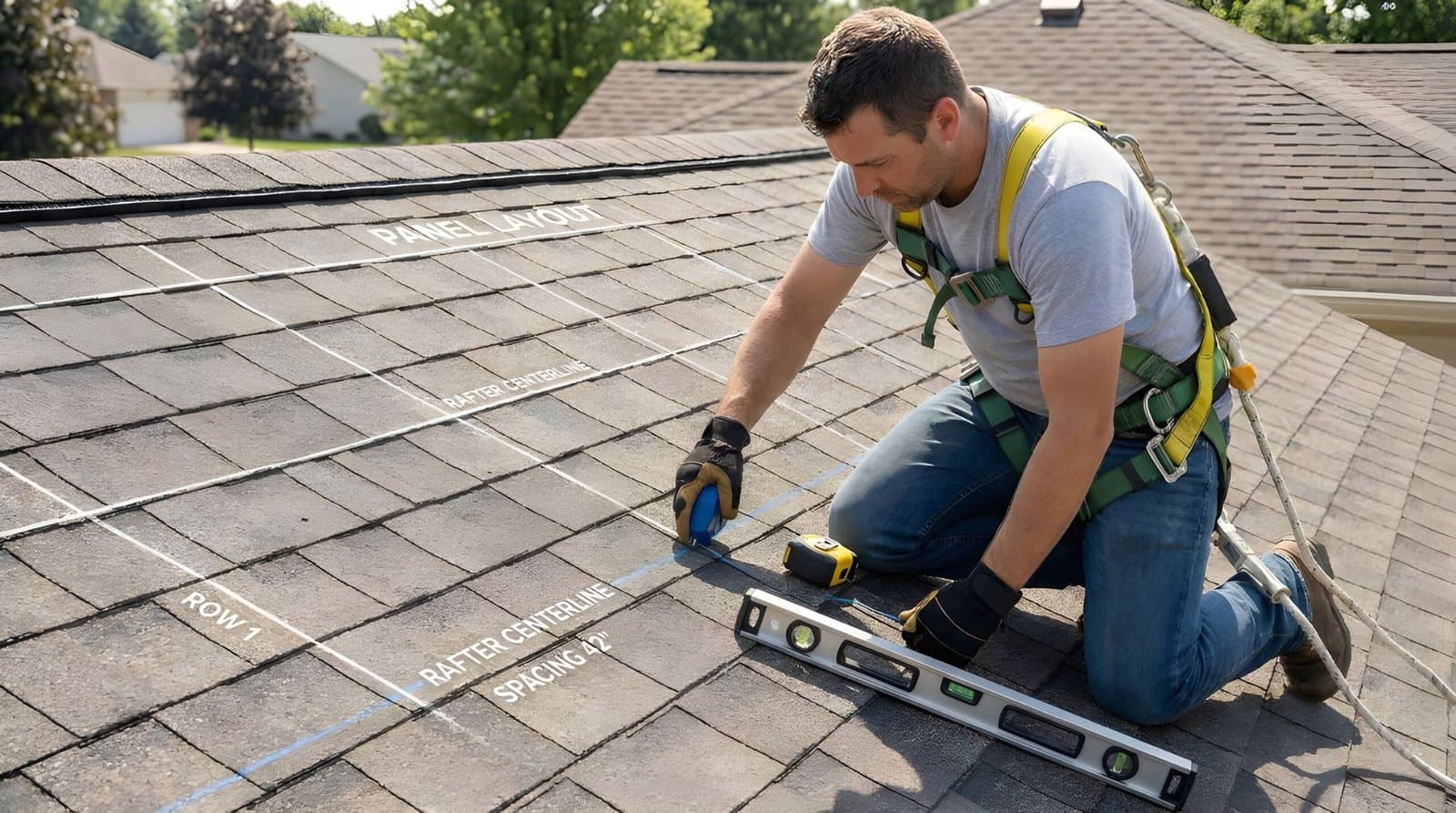
How to Mount Solar Panels on a Roof: Mounting Systems, Rails, and DIY Tips
Learn how to mount solar panels yourself with this complete guide. Covers compon...
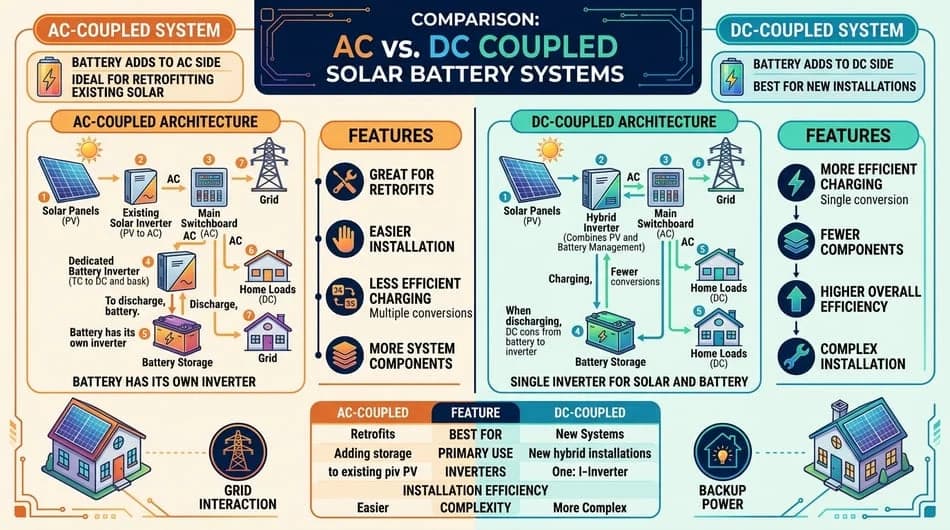
AC vs DC Coupled Solar Batteries: Which Should You Choose?
AC vs DC coupled solar batteries compared: efficiency, costs ($8K-$18K), and ins...